
 The largest hearing room the Senate has in the Hart Building was standing-room only on Tuesday when the Senate Judiciary Committee held its hearing on the resolution proposed by Sen. Tom Udall (D-N.M.) that would amend the First Amendment and give Congress unlimited, plenary power to restrict political speech and political activity.
In a historic and unprecedented event, both majority leader Harry Reid (D-Nev.) and minority leader Mitch McConnell (R-Ky.) appeared as the first two witnesses. They had starkly different presentations, with Reid complaining about so-called “dark money” and corporations and special interests “meddling” in congressional races. He clearly doesn’t like the fact that Americans have the ability to criticize him and his policies.
McConnell went back to first principles, talking about the First Amendment and the fundamental importance of protecting political speech, as did Floyd Abrams, the well-known First Amendment lawyer who won the historic New York Times Co. v. Sullivan case. As Abrams said, the purpose of this proposed amendment is clearly “limiting speech intended to affect elections.” He observed that the title of the amendment, “Restore Democracy to the American People,” is based on the false notion that our democracy has already been lost. According to Abrams, “the notion that democracy would be advanced – saved, ‘restored’ – by limiting speech is nothing but a perversion of the English language.”
The Democratic witnesses in favor of the amendment seemed obsessed with the Koch brothers, including a state senator from North Carolina who made bizarre claims about supposed Koch-financed efforts to implement a voter ID law to “suppress” the votes of racial minorities.
It was almost funny – Democrats can’t even hold a hearing about the First Amendment without working in their talking points about voter ID and “vote suppression.” All of the Republican senators who spoke, including Sens. Charles Grassley (R-Iowa) and Ted Cruz (R-Tex.), made stirring statement about the importance of preserving the Bill of Rights. I won’t summarize their statements but they are worth watching (here and here).
What was most interesting was something that happened before the hearing started that shows just how dangerous it would be to give Congress the power Udall, Reid and 39 other Democratic senators are seeking (there are 41 cosponsors of this resolution) and how they don’t believe the rules should apply to them. I was standing in line outside the hearing room waiting to get in and get a seat. There was a sign prominently taped to the wall where we were all standing that warned attendees of all of the things not allowed in the hearing room, like standing, shouting, applauding, and most importantly, “no signs.”
I was at the head of the line when a large cart loaded with boxes came down the hallway, accompanied by six or seven individuals, many holding protest signs like “Restore the First Amendment – Get Oil Money out of Elections” and “Big $$ out of Politics.” The boxes had prominently pasted on their side the names of liberal advocacy groups and PACs including People for the American Way, the Daily Kos, Public Citizen, Wolf PAC, Moveon.org, the Coffee Party, and Common Cause. The boxes were apparently full of petitions supporting Udall’s censorship amendment. As the cart headed into the hearing room with the protest signs held high, I reminded the Democratic committee staffer supervising entry that these individuals were violating the posted rules about no signs and no protests. She just ignored me and looked away.
About thirty photographers and reporters facing the entry started snapping pictures of the advocacy group representatives the moment they came in as the cart was trundled up to the front of the hearing room. Several of the advocacy representatives went to sit down, but not before standing up with their signs held high and posing for more photos from the media.
I have no doubt that if I had attempted to walk into the hearing room with signs protesting this amendment, as opposed to supporting it, I would have been stopped by the committee staffer, and if I had persisted, she would have called over the Capitol policeman who was also standing at the entrance studiously not seeing the liberal protestors violating the posted rules.
 It is true that Chairman Patrick Leahy (D-Vt.) warned the attendees after the hearing started about no sign waiving or protests and one individual was eventually ejected; however, Leahy only did that after the cameras were turned on for anyone watching the hearing on the committee website. It was his committee staff who, after all, allowed their supporters to come in early with their protest signs and helped to stage-manage protests prior to the start of the hearing for the benefit of the photographers in the hearing room. You can see one of those photos here – notice there are no staffers or Capitol Police hurrying over to eject the CodePink demonstrators from the hearing room.
So it seems that some Democratic senators want to amend the Constitution so that the American people give them the power to set the rules for raising and spending money on political campaigns and independent expenditures that speak in support of, or opposition to, candidates. However, at the very hearing at which this amendment was introduced, some of these senators were prepared to apply the Senate’s own rules to only one side of the debate. Not something that inspires confidence that any such rules on political activity and political speech would ever be enforced in a nonpartisan, unbiased, and objective manner.
Hans A. von Spakovsky is a Senior Legal Fellow at The Heritage Foundation. Along with John Fund, he is the coauthor of “Who’s Counting? How Fraudsters and Bureaucrats Put Your Vote at Risk” (Encounter 2012) and the upcoming “Obama’s Enforcer: Eric Holder’s Justice Department” (HarperCollins/Broadside June 2014).
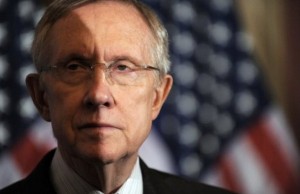 Tea Party Patriots filed an ethics complaint against Senate Majority Leader Harry Reid, D-Nev., alleging he has abused his power in a campaign to smear conservative donors.
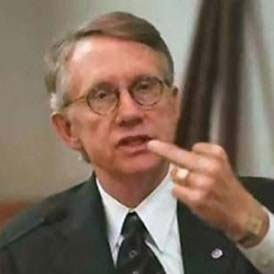 Cleta Mitchell, an attorney representing the Tea Party Patriots, says the complaints were timed to coincide with a Senate Judiciary Committee meeting Tuesday, where congressional leaders, including Reid, clashed over a proposed constitutional amendment to curb political spending.


 For six years the world has scratched its head about President Obama’s foreign policy doctrine. Is it “leading from behind,” as he himself has said on occasion, stepping back in hopes that an international coalition will take charge? Is it using American military or economic power to topple dictators? Is it killing enemies with drone strikes and spying on allies with advanced technology? Is it using words instead of weapons?
 And while Obama was busy offering up Krispy Kremes, others were eating his lunch. He claims Putin was foiled in Ukraine because he mustered an international community to criticize him, but he neglects to mention that Crimea is now part of Russia and eastern Ukraine is under its operational control. The other peoples along Russia’s border, in countries like Poland or Romania or the Baltics, certainly don’t think Putin is finished.
 President Obama, in his first public comments on the controversial trade of five Taliban prisoners for Sgt. Bowe Bergdahl since the deal was announced, acknowledged Tuesday there’s “absolutely” a risk that the former Guantanamo inmates will try to return to the battlefield — but nevertheless defended the deal as in America’s interest.
 Obama said they saw an opportunity to bring Bergdahl back and seized it, and that the U.S. government will bring a soldier back regardless of circumstances.
 The release of Sgt. Bowe Bergdahl, said to be America’s last POW, comes amidst criticism and concern. Barack Obama, as president, is supposed to notify Congress 30 days in advance of any prisoner’s release from Gitmo. His decision to exchange five of the most notorious Taliban terrorist leaders held at Guantanamo Bay for Bergdahl, without following the protocol put into place for prisoner release, is criticism that such a move is
 A petition on the White House website asking President Obama to demand the release of a Marine sergeant in a Mexico prison has garnered more than 100,000 online signatures — a threshold that typically elicits an administration response.
 He also said he was stripped naked and chained to a bed, with his feet on one end and his hands on another.
 On Thursday, the day before a double resignation at the White House, ABC’s Jon Karl grilled Jay Carney over Barack Obama’s confidence in Eric Shinseki. Less than 24 hours later, the press secretary and Veterans Administration head had both quit. During the back-and-forth, Karl pressed, “But does the President right now have confidence in Sec. Shinseki, yes or no? It’s a very simple yes or no question. You told us last week he did have confidence, does he have confidence now?” [See video below.]
 More than once, Karl has tangled with Carney. But World News and Good Morning America on
  Next week, the Obama administration is planning to unveil a climate action plan that it intends to implement without legislative approval. It’s a creative approach to governing,
 The White House is scrambling to contain the damage from inadvertently outing the top CIA official in Afghanistan, a rare blunder that potentially puts that individual at risk.
 A new and important study of religion in America has, among other things, a good deal to say about members of The Church of Jesus Christ of Latter-day Saints. Recently published under the title American Grace: How Religion Divides and Unites Us, the sociological study was conducted by scholars Robert D. Putnam and David E. Campbell and yields valuable insight to the nature and social effects of American religion. Drawing from in-depth new surveys, the study’s authors affirm that in many respects, religion in America exerts a healthy influence upon American society — one that typically promotes generosity, trust, neighborliness, and civic engagement. And while Mormons are a relatively small component of American society, the study data reveals that they play a conspicuous part in American religious life.
 Mormons are relatively friendly to other religious groups.
 House Minority Leader Nancy Pelosi on Wednesday reluctantly picked her team for a GOP-led Benghazi investigative committee, saying that Democrats’ participation was the only way to assure Americans of a “fair process.”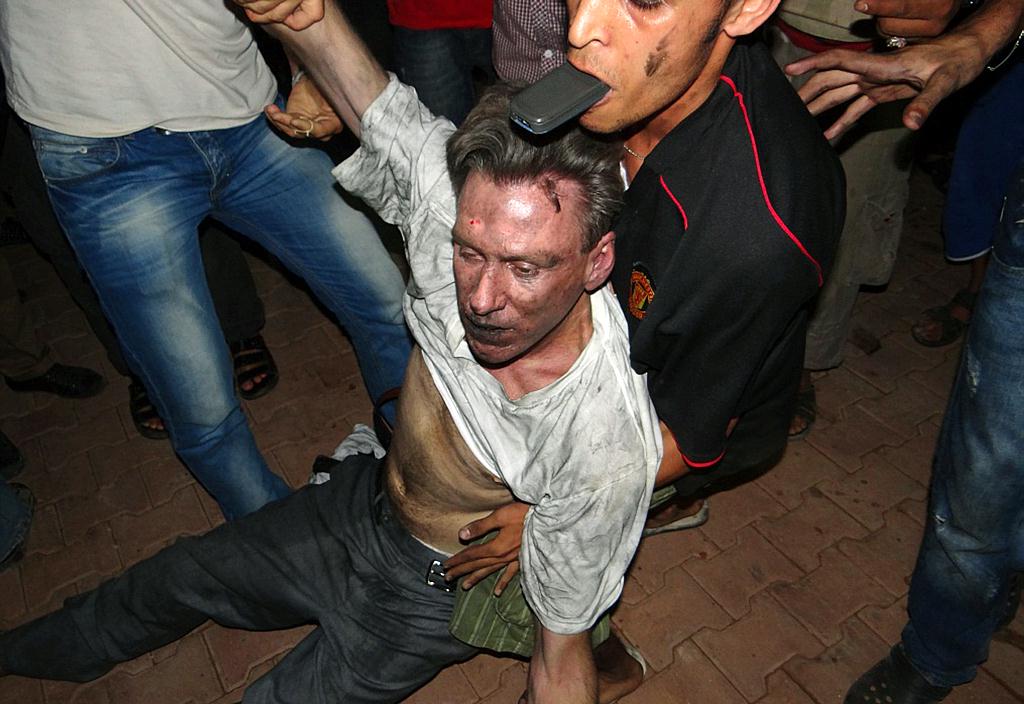
 The White House is refusing to confirm whether President Barack Obama followed up on his pledge to take a 5 percent pay cut due to sequestration last year.
 The mother of a U.S. Marine being held in a Mexican jail after he crossed the border with guns in his pickup truck said her son’s current ordeal is more traumatic than the two tours of duty he served in Afghanistan.
 International outrage is mounting over the death sentence a Sudanese judge ordered for the pregnant wife of an American citizen — all because she refuses to renounce her Christian faith.
 The Obama administration, battling to tamp down yet another scandal, announced the resignation Friday afternoon of a top Veterans Affairs official amid mounting questions over patient deaths possibly tied to delayed care.
 When it comes to Washington controversies, most American voters think Benghazi, the IRS and the government’s electronic surveillance program are serious matters. A Fox News poll also finds that less than four in 10 voters trust the federal government.
 In a ruling with stunning implications on political speech in Wisconsin and beyond, the 7th Circuit U.S. Court of Appeals declared portions of state campaign finance laws restricting issue ads unconstitutional.
 And how well do these dire climate projections do in reality? In fact, the climate models the administration relied on for its proposals projected the earth would warm 0.3 degree Celsius over the past 17 years—which did not happen, Loris reports. During that time, carbon dioxide emissions did increase—yet the projected warming did not happen.
Recent Comments