• Home
  • Mission
  • Federalist Papers
  • Foundation
  • U.S. Constitution
  • Bill of Rights

Federalist Press | Defending Liberty — Informing America

Breaking News and Political Commentary

  • All Stories
  • Economy
  • Elections
  • Entitlement
  • Ethics
  • Foreign
  • Gender
  • Religion
  • Sci-Tech

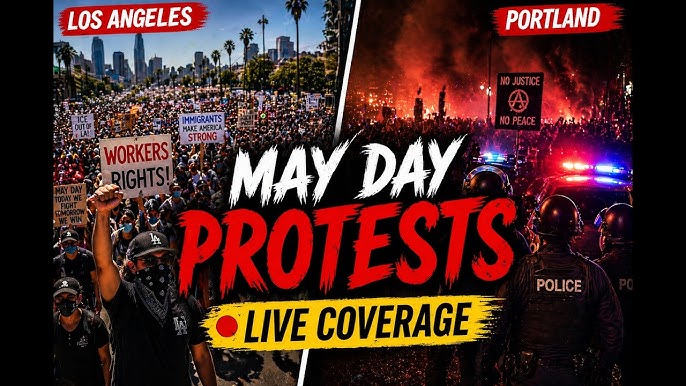
May Day in America: A Radical Tradition Returns—and Raises Hard Questions

May 3, 2026 By Editor Leave a Comment

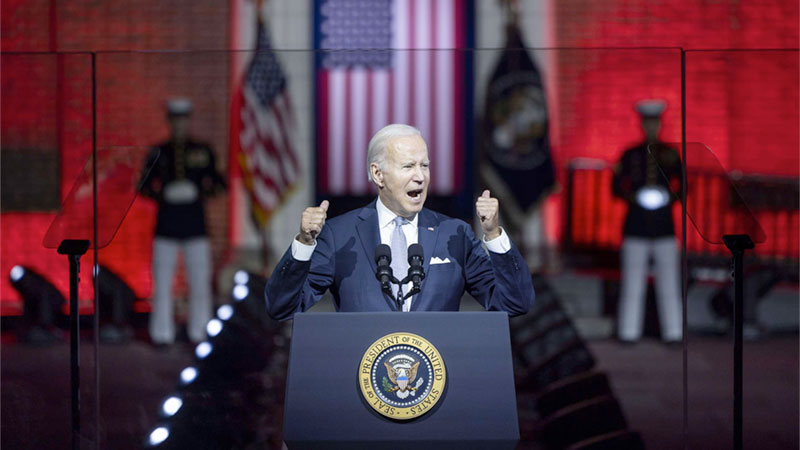
Pres. Joe Biden delivered his ‘Battle for the Soul of the Nation’ speech where he falsely accused that “Donald Trump and the MAGA Republicans represent an extremism that threatens the very foundations of our republic.”

What is May Day? May 1 has always meant more than a date on the calendar.

Internationally, May Day grew out of labor activism in the late 19th century. Over time, in many parts of the world, it became associated with socialist and communist movements, mass demonstrations, and political messaging about class, power, revolution and the role of the state.

Due to its constitutional form of government which guarantees personal and financial liberty to its citizens, the United States largely kept its distance from that legacy. Of late, that distance is narrowing.

From Labor Holiday to Political Signal

This year’s May Day events are not small or isolated. Reports point to large, coordinated demonstrations across the country, backed by networks of advocacy groups with significant budgets and infrastructure.

Supporters describe this as democratic participation—people organizing around issues regarding wages, housing, immigration, and healthcare.

Clear-eyed observers see something else: a return of ideas that have a long, contentious history—ideas about restructuring the economy, redistributing power, and expanding the role of centralized authority.

Whatever one’s view, May Day in America is no longer just about labor. It has become a signal of where the democrat party intends to take the nation.

The Historical Record That Shapes the Debate

Any serious discussion of May Day’s modern meaning runs into history.

In the 20th century, regimes that adopted Marxist-Leninist systems promised equality and liberation. In practice, those systems produced:

  • Concentrated political power
  • Lethal restrictions on dissent and press
  • State control over major sectors of the economy
  • Economic dislocation and, in most cases, severe human suffering

Those outcomes are nearly identical everywhere. They are part of the record, and they inform why most Americans are wary when modern movements invoke similar language about sweeping economic transformation.

The core tension is familiar:

How much power should be centralized in pursuit of equality—and what guardrails prevent that power from being abused?

What Today’s Activism Is Arguing

Contemporary May Day activism tends to focus on a set of recurring themes:

  • Wage stagnation and cost of living
  • Housing affordability
  • Healthcare access
  • Immigration and labor protections
  • The influence of large corporations

These concerns are real and widely debated. Made real by the prior policies actions of the democrat party. Democrats propose policies and legislation to ‘repair’ problems, and the repairs invariably lead to greater problems for citizens. Democrats them point the finger of blame at republicans for those outcomes, enabled by a Leftist national press and waves of Leftist ‘experts,’ and propose additional remedies, which lead to more severe problems. We have seen dozens of these cycles in the past 80 years, like sewage being flushed down a toilet, drawing the nation deeper and ever deeper into fiscal, social, moral and political waste. We are up to our necks in it.

Still, activists and pundits push for more fundamental changes to the system they are intentionally breaking: public or collective ownership in key sectors, expansive redistribution, and a major shift in the balance of power between labor and capital, and the way the team lines are drawn. Under their rubric, everyone turns out to be labor, until the revolution is well underway, then nearly everyone turns out to be ‘rich,’ subjecting them to the wrath and rape of the new leadership.

That’s where critics draw lines, arguing that Leftist demands of redistribution of wealth and power echo earlier and recurring theories about organizing society primarily around class and collective outcomes–a few elite leaders rule over the masses of subjects. It’s the same BS, recycled with new false promises.

Institutions, Incentives, and Influence

The growth of large-scale protest movements also raises questions about how they are organized and amplified. Major demonstrations require:

  • Funding and staffing
  • Communications and media strategy
  • Logistics and supplies for tens of thousands
  • Legal and political coordination

In the U.S., those resources often come from a mix of nonprofits, advocacy organizations, unions, and ‘philanthropic’ foundations. Supporters view this as normal civic engagement. Realists ask why funding is coming from globalist billionaires with communist, socialist and The Communist Party of China (CPC/CCP).

The same debate extends to American institutions that influence public conversation:

  • Education: Schools and universities are central to how ideas are introduced and debated. Results demonstrate that most campuses have become ideologically Left.
  • Media: Coverage choices and framing can elevate certain narratives over others. Most television programming and Hollywood films promote woke, anti-God, anti-American, anti-family, anti-white agendas.
  • Labor organizations: Unions exist to play a significant role in advocating for workers and shaping policy. In practice they have supported democrats and other Leftists who undermine constitutional liberties.

Why the Skepticism Persists

Skepticism toward modern May Day activism often comes down to three concerns:

1. Concentration of Power

Even well-intentioned policies can concentrate authority. The question is whether institutions are designed with sufficient checks to prevent overreach. All policy decisions must be governed by the overriding question, At whose expense will this action operate?

2. Tradeoffs and Outcomes

Policies that expand public control invariably affect incentives, investment, and growth. The balance between equity and dynamism always bears in the direction of the Left accumulating more wealth and power.

3. Pluralism vs. Uniformity

A diverse society contains competing values and preferences. The concern is whether sweeping, system-wide changes leave room for that diversity—or push toward uniform solutions, concentrating power and wealth in the left.

A Constitutional Framework

The United States has historically navigated these tensions through a framework that emphasizes:

  • Individual rights
  • Separation of powers
  • Federalism (state and local variation)
  • A mixed economy with both public and private roles

That framework evolved over time, but recent debates about more regulation, social programs, and market structure have abandoned those valued principles that transformed America from a weak agricultural countryside to the strongest, wealthiest, and most benevolent nation in world history.

Yet, American democrats choose to worship at the altar of May Day activism is the latest chapter of redistribution of wealth and power, or government authorized stealing.

What Comes Next

The renewed prominence of May Day in the U.S. suggests a deeper shift: economic questions are once again at the center of political life.

Ideas about equality, equity, fairness, and opportunity were asked and answered in our constitution. That’s how America became the richest, strongest nation in the world so quickly, and why we hold at bay the evil totalitarian governments who constantly seek to expand their borders so they can steal the resources of their neighbors to fund their sinking Marxist economies.

Filed Under: All Stories, Bias, Crime, Economy, Elections, Entitlement, Ethics, Featured

RFK Jr. Confirmed as HHS Secretary in Historic Senate Vote

February 13, 2025 By Editor Leave a Comment

Washington, D.C. – February 13, 2025 – In a move that has sent shockwaves through both political and public health circles, the U.S. Senate has confirmed Robert F. Kennedy Jr. as the next Secretary of Health and Human Services (HHS). The controversial environmental lawyer and longtime critic of government health policies was confirmed in a razor-thin 51-49 vote, marking one of the most contentious cabinet confirmations in recent history.

A Divisive Nomination

Kennedy, an outspoken advocate on vaccine safety, environmental health, and corporate accountability, faced intense scrutiny throughout the confirmation process. His nomination by President Trump was met with strong resistance from democrats, as well as some members of the medical and scientific communities, many of whom criticized his past statements on vaccines and public health agencies. However, his supporters praised his willingness to challenge entrenched institutions and prioritize individual medical freedoms.

“The Department of Health and Human Services must be led by someone who understands the concerns of everyday Americans and is not beholden to Big Pharma,” Kennedy said in his post-confirmation remarks. “I am committed to transparency, accountability, and restoring trust in our public health institutions.”

A Contentious Senate Battle

The confirmation hearings were marked by heated exchanges, particularly over Kennedy’s views on vaccine mandates, pandemic policies, and the role of pharmaceutical companies in shaping federal health regulations. Democratic Senators largely opposed his nomination, railing against Kennedy up until the final vote, arguing that his leadership could undermine public trust in vaccines and weaken the department’s pandemic preparedness.

Meanwhile, Republicans and some independent lawmakers rallied behind Kennedy, citing his advocacy for medical choice and corporate accountability.

What This Means for HHS

Kennedy’s appointment signals a dramatic shift in the leadership of one of the most powerful federal agencies, responsible for overseeing the CDC, FDA, and NIH, among others. His tenure is expected to bring sweeping changes to vaccine policies, public health funding, and regulatory oversight of pharmaceutical companies.

Public health officials have expressed concerns about the potential implications of his leadership. Dr. Anthony Fauci, the former director of the National Institute of Allergy and Infectious Diseases, cautioned that Kennedy’s policies could “roll back decades of progress in disease prevention and public health initiatives.”

On the other hand, Kennedy’s supporters view his appointment as a necessary disruption to a system they argue has grown too cozy with corporate interests. “This is a win for medical freedom and government accountability,” said Senator Rand Paul (R-KY), a vocal advocate of Kennedy’s nomination.

What Comes Next?

As he takes the helm at HHS, Kennedy faces the immediate challenge of balancing his reformist agenda with the practical realities of leading a vast federal bureaucracy. His positions on vaccine policy, pharmaceutical regulation, and environmental health will likely be tested in the coming months, as lawmakers, health professionals, and advocacy groups watch closely.

For now, RFK Jr.’s confirmation marks a turning point in U.S. health policy—one that promises to be as controversial as the man himself.

By James Thompson. James Thompson is an author and ghostwriter, and a political analyst.

Filed Under: All Stories, Economy, Ethics

Tulsi Gabbard Confirmed as Director of National Intelligence

February 12, 2025 By Editor Leave a Comment

On February 12, 2025, the U.S. Senate confirmed former Representative Tulsi Gabbard as the Director of National Intelligence (DNI) in a 52-48 vote. The confirmation saw all Republicans, except the quickly fading Mitch McConnell, supporting the nomination.

Gabbard, a former Democratic congresswoman from Hawaii and combat veteran, was pitched as a polarizing figure by her former democratic colleagues, who attempted to create an issue of her past foreign policy positions, and limited experience in intelligence. They tried to block her confirmation highlighting previous comments about Russia, and possible support for whistleblower Edward Snowden.

Despite these reservations, President Donald Trump heartily endorsed Gabbard, praising her courage and patriotism. During her swearing-in ceremony at the White House, Trump stated, “Tulsi brings a unique perspective to the intelligence community, and I am confident she will serve our nation with distinction.”

In her new role, Gabbard will oversee 18 intelligence agencies, including the CIA and FBI. She has pledged to align the intelligence community with the administration’s vision and to restore public trust, and to abandon its recent widespread practices of weaponizing government agencies against political conservatives. Gabbard committed to focusing on national security and rebuilding confidence in U.S. intelligence agencies.

The confirmation underscores the deepening divisions in Washington regarding national security appointments, and reflects President Trump’s influence over his party and the national direction. As Gabbard assumes her duties, the nation will closely watch how she navigates the challenges ahead in her capacity as the nation’s top intelligence official.

By James Thompson. James Thompson is an author and ghostwriter, and a political analyst.

Filed Under: All Stories

Atty Gen Pam Bondi’s First Actions in Office

February 6, 2025 By Editor Leave a Comment

On February 4, 2025, the U.S. Senate confirmed Pam Bondi as the nation’s 87th Attorney General with a 54-46 vote, marking the appointment of a steadfast ally of President Donald Trump to lead the Department of Justice. Bondi, who previously served as Florida’s Attorney General from 2011 to 2019, was sworn in the following day by Supreme Court Justice Clarence Thomas at the White House.

Upon assuming office, Attorney General Bondi swiftly implemented a series of directives aimed at realigning the Justice Department’s priorities with the current administration’s agenda. One of her initial actions was to establish a “Weaponization Working Group” tasked with investigating political biases in prior investigations against President Trump and his supporters, including those related to the January 6 Capitol attack.

In a significant policy shift, Bondi announced a reorientation of the Department’s focus from combating corporate corruption and Russian oligarchs to targeting drug cartels and transnational criminal organizations. This move includes prioritizing Foreign Corrupt Practices Act (FCPA) investigations related to cartels and disbanding Task Force KleptoCapture, which was established to enforce sanctions on Russian oligarchs.

Bondi also issued a directive allowing Justice Department attorneys to be disciplined or dismissed if they refuse to comply with advancing legal arguments on behalf of the administration. This measure aims to align the Department’s actions with President Trump’s policies and includes reviewing criminal and civil cases against Trump during his time out of office. Additionally, Bondi plans to reduce enforcement of U.S. foreign influence laws, focusing on cases resembling traditional espionage and shifting to civil enforcement.

Further emphasizing the administration’s stance on immigration, Bondi ordered a 60-day suspension of federal funding to sanctuary jurisdictions that refuse to cooperate with federal immigration authorities. This directive halts all Department of Justice funds to these jurisdictions and disallows new contracts or grants supporting services to removable or illegal aliens. The move aligns with Republican initiatives to pressure local governments to comply with federal immigration policies.

In a move reflecting the administration’s focus on religious liberty, President Trump announced at the National Prayer Breakfast that Attorney General Bondi will lead efforts to eliminate “anti-Christian bias” within the federal government. This initiative includes establishing a task force to address discrimination against Christians and fully prosecute related violence and vandalism. Plans are also underway to form a Presidential Commission on Religious Liberty and a Faith Office in the White House to defend the rights of Christians nationwide.

These initial actions by Attorney General Bondi signal a significant shift in the Department of Justice’s priorities, aligning closely with President Trump’s policy objectives and addressing concerns raised by his supporters regarding previous investigations and enforcement practices.

By James Thompson. James Thompson is an author and ghostwriter, and a political analyst.

Filed Under: All Stories

Cabinet Pick Scoreboard

February 5, 2025 By Editor Leave a Comment

This is where we stand on President Trump’s nominated cabinet secretaries

As of February 5, 2025, President Donald Trump’s Cabinet nominations have seen significant progress, with several key positions confirmed and others advancing through the Senate confirmation process.

Confirmed Appointments:

  • Secretary of State: Marco Rubio was unanimously confirmed by the Senate on January 20, 2025, and sworn in the following day.
  • Secretary of the Treasury: Scott Bessent received Senate confirmation with a 68–29 vote on January 27, 2025, and assumed office on January 28.
  • Secretary of Defense: Pete Hegseth was confirmed on January 24, 2025, with a 51–50 vote, where Vice President J.D. Vance cast the tie-breaking vote. He was sworn in on January 25.
  • Attorney General: Pam Bondi was confirmed by the Senate with a 54–46 vote on February 4, 2025.
  • Secretary of the Interior: Doug Burgum was confirmed on January 30, 2025, with a 79–18 vote and sworn in on February 1.
  • Secretary of Transportation: Sean Duffy was confirmed on January 28, 2025, with a 77–22 vote and sworn in the same day.
  • Secretary of Energy: Chris Wright was confirmed on February 3, 2025, with a 59–38 vote.
  • Secretary of Veterans Affairs: Doug Collins was confirmed on February 4, 2025, with a 77–23 vote.
  • Secretary of Homeland Security: Kristi Noem was confirmed on January 25, 2025, with a 59–34 vote and sworn in the same day.
  • Administrator of the Environmental Protection Agency: Lee Zeldin was confirmed on January 29, 2025, with a 56–42 vote.
  • Director of the Central Intelligence Agency: John Ratcliffe was confirmed on January 23, 2025, with a 74–25 vote.

Advancing Nominations:

  • Secretary of Health and Human Services: Robert F. Kennedy Jr. passed the Senate Finance Committee with a 14–13 vote on February 4, 2025, moving his nomination to the full Senate.
  • Director of National Intelligence: Tulsi Gabbard’s nomination advanced from the Senate Intelligence Committee with a 9–8 vote on February 4, 2025, and awaits a full Senate vote.

The confirmation process has been marked by both bipartisan support and contention, reflecting the diverse backgrounds and views of the nominees. The administration continues to work with the Senate to finalize the remaining appointments.

By James Thompson. James Thompson is an author and ghostwriter, and a political analyst.

Filed Under: All Stories

Trump and Musk Announce Plans to Shut Down USAID

February 3, 2025 By Editor 1 Comment

In a significant move to restructure U.S. foreign aid, President Donald Trump and tech entrepreneur Elon Musk have announced plans to shut down the United States Agency for International Development (USAID). This decision is part of a broader initiative led by Musk’s Department of Government Efficiency (DOGE) to streamline federal operations and reduce government spending.

On February 3, 2025, USAID staff received directives to avoid the agency’s Washington headquarters. Over 600 employees reported being locked out of the agency’s computer systems. These actions followed Musk’s statement that he had discussed USAID’s future with President Trump, concluding that the agency was “beyond repair” and should be dismantled.

Established in 1961, USAID has been a cornerstone of U.S. foreign policy, overseeing humanitarian, development, and security programs in approximately 120 countries. In 2023, the agency managed a budget of $72 billion, making it one of the world’s largest contributors to international aid.

The decision to dismantle USAID has been met with controversy. Over the weekend, the Trump administration placed two top security chiefs at USAID on leave after they refused to grant DOGE personnel access to classified materials. This move has raised concerns about the legality and oversight of DOGE’s actions within federal agencies.

Critics argue that the administration lacks the constitutional authority to unilaterally dissolve USAID without congressional approval. Democratic lawmakers have expressed alarm over Musk’s access to sensitive government information and the potential implications for U.S. national security.

As the situation develops, the future of U.S. foreign aid and the role of private sector leaders in government operations remain subjects of intense debate, although President Trump appears to enjoy strong public support to shut down bloated and wasteful government programs.

By James Thompson. James Thompson is an author and ghostwriter, and a political analyst.

Filed Under: All Stories

Mid-Air Collision Near Reagan National Airport Leaves Multiple Fatalities

January 30, 2025 By Editor Leave a Comment

Washington, D.C., January 30, 2025 — A tragic mid-air collision occurred last night near Ronald Reagan Washington National Airport, involving a regional jet and a U.S. Army Black Hawk helicopter. The incident resulted in multiple fatalities and has prompted a comprehensive investigation by federal authorities.

The regional jet, operated by American Airlines, was en route from Wichita, Kansas, carrying 64 passengers and crew members. As it approached Reagan National Airport, it collided with the military helicopter, leading to a catastrophic crash. Emergency responders were dispatched immediately, but the severity of the impact left little chance for survivors.

Potomac plane crash on video: Rescue operation underway near DC airport after apparent helicopter collision

In response to the collision, Reagan National Airport temporarily grounded all flights to manage the emergency and ensure passenger safety. The Federal Aviation Administration (FAA) and the National Transportation Safety Board (NTSB) have launched a joint investigation to determine the cause of the accident. Preliminary reports suggest that both aircraft were operating within their designated flight paths, but the exact circumstances leading to the collision remain unclear.

This incident marks a significant tragedy in the history of aviation accidents in the Washington, D.C. area. The last major collision involving a commercial airliner and a military aircraft near the capital occurred in 1949, when Eastern Air Lines Flight 537 collided with a Bolivian Air Force P-38 fighter, resulting in 55 fatalities.

Authorities have not yet released the identities of the victims, pending notification of their families. Both American Airlines and the U.S. Army have expressed their condolences and are cooperating fully with the investigation.

As the investigation unfolds, officials will examine flight data records, air traffic control communications, and maintenance logs to piece together the events that led to this devastating accident. The aviation community and the nation await answers as to how such a tragedy could occur in controlled airspace near one of the country’s busiest airports.

The NTSB is expected to provide a preliminary report in the coming weeks, with a full investigation potentially taking several months. In the meantime, flight operations at Reagan National Airport have resumed, with heightened safety protocols in place.

This collision serves as a somber reminder of the inherent risks in aviation and the critical importance of rigorous safety measures to protect both military and civilian lives.

President Trump’s Response

In the aftermath of the collision, President Donald Trump addressed the nation, expressing profound sorrow over the tragic event. He stated, “This is an hour of anguish for our nation. We mourn the loss of all souls aboard the aircraft and extend our deepest condolences to their families.”

During his remarks, President Trump also commented on the circumstances leading to the collision. He suggested that the military helicopter involved “should have been grounded” due to weather conditions, implying that operational decisions may have contributed to the tragedy.

Furthermore, the President criticized certain aviation policies, attributing the incident to what he described as “failed diversity and inclusion initiatives” within air traffic control operations. He argued that these policies have led to a decline in the quality of personnel managing critical flight operations.

These statements have sparked a range of reactions. Some officials and experts have cautioned against drawing premature conclusions before the completion of the official investigation. They emphasize the importance of relying on thorough investigative processes to determine the actual causes of the collision.

As the nation grapples with this tragedy, the focus remains on supporting the affected families and ensuring a meticulous investigation to prevent such incidents in the future.

For a complete view of President Trump’s briefing, you can watch the full address below:


By James Thompson. James Thompson is an author and ghostwriter, and a political analyst.

Filed Under: All Stories

History and Interpretation of Birthright Citizenship in the United States

January 29, 2025 By Editor Leave a Comment

Birthright citizenship, a concept deeply rooted in American law and history, has long been defined by the Fourteenth Amendment, which was ratified in 1868 in the aftermath of the Civil War. At its core, the amendment was designed to grant citizenship to formerly enslaved individuals and their descendants, ensuring their full legal status within the United States. However, the precise meaning of the phrase “and subject to the jurisdiction thereof” has been a subject of legal and political debate for over a century.

Origins of the Fourteenth Amendment

Section 1 of the Fourteenth Amendment states: “All persons born or naturalized in the United States, and subject to the jurisdiction thereof, are citizens of the United States and of the State wherein they reside.” The primary intent of this provision was to override the Supreme Court’s infamous 1857 decision in Dred Scott v. Sandford, which had denied citizenship to former slaves. By explicitly granting birthright citizenship, the amendment sought to solidify equal protection under the law for all individuals born on American soil.

Interpreting ‘Subject to the Jurisdiction Thereof’

While the amendment broadly affirms citizenship for those born in the U.S., the phrase “subject to the jurisdiction thereof” has been a point of contention. Many legal scholars and government officials, including past and present White House administrations, interpret this clause as excluding certain groups from automatic citizenship at birth, e.g., children born to foreign nationals, who are subject to the jurisdiction of their home nation.

The original debates in Congress surrounding the amendment indicate that its framers intended to exclude individuals who, while born in the United States, remained subject to foreign powers. Senator Lyman Trumbull, a key figure in drafting the amendment, explicitly stated that this provision meant “not owing allegiance to anybody else.” This interpretation suggests that individuals who are born in the U.S. to foreign diplomats or enemy combatants would not be considered American citizens.

Historical Applications and Supreme Court Rulings

The Supreme Court addressed birthright citizenship in the 1898 case United States v. Wong Kim Ark. The case involved Wong Kim Ark, a child born in San Francisco to Chinese parents who were not eligible to become citizens, although they lived in the U.S. legally, but were not subject to the jurisdiction of China. The ruling affirmed that a child born in the U.S. to legally present non-citizen parents was, in fact, a U.S. citizen. However, the ruling did not directly address the status of children born to undocumented immigrants or those with temporary or no legal status. As a result, foreign nationals who enter the country temporarily or unlawfully, and “citizenship tourists” have become a common occurrence. Citizenship tourists are foreign nationals who plan their vacations to America at the time they are expected to give birth, and deliver the baby in an American hospital, resulting in an “anchor baby,” wherein the parents can apply for citizenship due to having an American citizen child. This practice has been horrifically abused by foreign nationals seeking and ‘end run’ around the immigration laws of the U.S.

In recent years, various legal scholars and policymakers have argued that children born to undocumented immigrants should not automatically receive citizenship. They claim that such individuals, being under the jurisdiction of their parents’ home countries, are not fully subject to U.S. law as intended by the amendment’s drafters. On the other side, proponents of a broad interpretation of birthright citizenship argue that the phrase “subject to the jurisdiction thereof” simply means being subject to U.S. laws, excluding only children of diplomats and hostile foreign entities.

Political and Policy Implications

The debate over birthright citizenship has remained at the forefront of American politics, with various administrations exploring potential executive or legislative action to clarify or modify its application. Liberal administrations have sought to expand the policy of birthright citizenship, seeking to flood the U.S. with what they perceive as liberal voters. Conservative administrations have sought to limit the policy to avoid the economic hardships created by tens of millions entering the country and consuming all available welfare resources. Some policymakers have proposed that Congress pass legislation explicitly redefining the scope of the Fourteenth Amendment’s citizenship clause. Others argue that any substantial change would require a constitutional amendment, a process that is both legally complex and politically difficult.

President Donald Trump has issued an executive order ending automatic birthright citizenship for temporary or illegal aliens as well as citizenship tourists. The administration knew there would be substantial legal attacks on the EO from liberals, and is testing the interpretation of “and subject to the jurisdiction thereof” in the federal courts, to obtain a final ruling on the matter from the U.S. Supreme Court.

As discussions over immigration and national identity continue, the interpretation of the Fourteenth Amendment remains a key issue in legal and policy debates. Whether courts will further define or alter the application of birthright citizenship remains to be seen, but the historical and legal questions surrounding this cornerstone of American identity are unlikely to be resolved anytime soon.


By James Thompson. James Thompson is an author and ghostwriter, and a political analyst. He served as Articles Editor on B.Y.U. Law Review.

Filed Under: All Stories

White House Press Secretary Karoline Leavitt Addresses Key Issues in Debut Press Conference

January 28, 2025 By Editor Leave a Comment

January 28, 2025 – Washington, D.C.

The White House held its first press conference under the newly appointed Press Secretary Karoline Leavitt today, marking her debut in the role. Leavitt, known for her sharp communication skills and direct approach, addressed a range of pressing topics, including recent concerns about unidentified drones spotted over the East Coast.

Leavitt began by expressing her gratitude to President [Insert President’s Name] for the opportunity to serve as the nation’s spokesperson and vowed to uphold transparency and accountability in her new position.

Clarification on Drones Over the East Coast

One of the most urgent issues addressed during the press conference was the growing public concern over multiple drone sightings reported along the East Coast in recent weeks. Social media has been rife with speculation, with theories ranging from private surveillance operations to foreign interference.

Leavitt clarified that the drones were part of a government-authorized aerial survey program aimed at monitoring critical infrastructure and mapping coastal erosion. She assured the public that there is no evidence of malicious intent or foreign involvement.

“These drones are part of a federal initiative to gather data on environmental changes and infrastructure resilience, particularly in light of recent extreme weather events. Public safety and national security remain our top priorities,” Leavitt stated.

The press secretary emphasized that all operations were conducted with proper clearance and oversight, and no personal data was collected during the surveys. She acknowledged the public’s concerns about transparency and pledged to release further details about the program to reassure communities.

A Promising Start

Leavitt also addressed other significant topics during the press conference, including the administration’s plans for economic recovery, ongoing international relations, and efforts to combat climate change. She fielded tough questions from reporters with confidence, showcasing her ability to navigate the challenging dynamics of the White House press corps.

The press secretary’s debut comes at a critical time for the administration, as it faces growing scrutiny over its policies and communication strategies. Leavitt’s performance was widely regarded as composed and authoritative, signaling a strong start in her new role.

As questions linger about drone activity and other emerging issues, Leavitt’s promise of transparency will undoubtedly be tested. For now, her debut suggests a commitment to keeping the public informed and engaged in the workings of the White House.

This historic press briefing marks the beginning of what is expected to be an impactful tenure for Karoline Leavitt. The nation will be watching closely as she continues to navigate the challenges and opportunities of her position.


By James Thompson. James Thompson is an author and ghostwriter, and a political analyst.

Sponsor: Carbon Grove; Nature’s Solution, Engineered For Tomorrow.

Filed Under: All Stories

Trump Will Reinstate Troops Forced Out Over COVID Vaccine

January 27, 2025 By Editor Leave a Comment

In a sweeping executive order announced today, President Donald Trump has fulfilled a key campaign promise by reinstating thousands of service members who were discharged for refusing to comply with COVID-19 vaccine mandates. The move has sparked nationwide debate, highlighting the political and cultural divisions that have shaped the military and the country over the past few years–all of which will end under Trump’s leadership.

Reinstating Service Members

The executive order mandates the reinstatement of more than 8,000 U.S. service members who were discharged between 2021 and 2023 under the Biden administration’s vaccine mandate for military personnel. President Trump’s order not only restores these service members to their previous ranks, but ensures they receive full back pay, benefits, and an official apology from the Department of Defense.

Newly confirmed Defense Secretary Pete Hegseth, a former Fox News contributor and a vocal advocate for military reform, praised the move during a press briefing. “These troops were unfairly discharged for exercising their personal freedoms,” Hegseth stated. “Under this administration, we’re correcting this wrong and ensuring our armed forces remain focused on mission readiness rather than political agendas.”

Hegseth further emphasized the importance of rebuilding trust within the ranks of the military, stating that the reinstated troops would be welcomed back with respect and honor for their service.

The Controversial Vaccine Mandate

The Biden administration’s vaccine mandate for the military was introduced in 2021 as part of a broader strategy to combat the COVID-19 pandemic. At the time, officials argued that the mandate was necessary to protect the health and readiness of the force. However, the policy faced significant backlash, particularly from conservative lawmakers, veterans’ groups, and service members who opposed the mandate on scientific, medical, personal, or religious grounds.

From 2021 to 2023, more than 8,000 troops were discharged for refusing the vaccine. After the mandate was repealed in 2023, only 43 of those discharged chose to re-enlist. President Trump’s executive order aims to provide an avenue for the remaining individuals to return to service, if they so choose.

A Broader Military Overhaul

The reinstatement of discharged service members is just one aspect of President Trump’s broader efforts to reshape the U.S. military. In addition to this executive order, the president is expected to issue additional directives aimed at reversing policies implemented under the previous administration. These include:

  • Ending Diversity, Equity, and Inclusion (DEI) Programs: The Trump administration argues that DEI initiatives within the Pentagon have distracted from the military’s core mission. Secretary Hegseth stated that these programs would be eliminated to refocus on “warfighting excellence.”
  • Banning Open Service by Transgender Individuals: President Trump plans to reinstate a ban on transgender individuals serving openly in the military, citing concerns about unit cohesion and medical readiness.
  • Border Security Initiatives: Another executive order is expected to deploy additional troops to the southern border, signaling a renewed focus on national security and immigration enforcement.

Reactions from Advocates and Critics

The reinstatement order has drawn both praise and criticism from various corners. Supporters view it as a necessary correction to what they see as overreach during the pandemic. Many conservative lawmakers and veterans’ groups applauded the move, arguing that it upholds personal freedoms and honors the sacrifices of those who served.

Critics, however, have raised concerns about the implications of the order. Public health experts warn that rolling back vaccine requirements could undermine future efforts to safeguard military readiness during pandemics or other health crises. Meanwhile, progressive advocacy groups have criticized the administration’s broader military reforms, calling them a step backward for “inclusivity and modernization.”

Forward March

As the Trump administration moves forward with its military overhaul, Americans have high expectations about how these changes will impact the armed forces’ morale, cohesion, and readiness. The reinstatement of discharged troops represents a significant logistical challenge, as many former service members have transitioned to civilian life or pursued new careers.

Nevertheless, the administration’s actions signal a clear departure from the policies of the previous administration, emphasizing a return to what it describes as traditional military values, and a lethal fighting force as its number one mission.

For now, all eyes are on the Department of Defense as it implements the executive order and works to reintegrate thousands of service members into the ranks.

By James Thompson. James Thompson is an author and ghostwriter, and a political analyst.

Sponsor: Carbon Grove; Nature’s Solution, Engineered For Tomorrow.

Filed Under: All Stories

Colombia Reverses Course on Accepting Illegal Immigrants Back After Trump Sanctions

January 26, 2025 By Editor Leave a Comment

In a dramatic policy shift, Colombia has agreed to repatriate its illegal immigrants following the imposition of sanctions by the President Trump. The reversal comes after high tension between the two nations over the refusal of Colombian authorities to accept the return of their nationals deported from the United States.

The situation escalated when President Donald Trump announced sanctions against Colombia, targeting economic and diplomatic avenues critical to the South American nation. The sanctions included suspensions of certain trade benefits and foreign aid packages, pressuring Colombia to address the growing issue of its nationals remaining in the U.S. illegally.

Initially, Colombian officials resisted, citing logistical challenges and economic concerns as reasons for their reluctance to facilitate the return of their citizens. However, the sanctions’ immediate economic impact, coupled with diplomatic isolation, prompted a change in tone from Bogotá.

In a surprising gesture of cooperation, Colombia announced that it would not only accept the return of its nationals, but also make its presidential jet available to assist in their repatriation. A statement from Colombia’s government highlighted their renewed commitment to maintaining strong bilateral relations with the United States, emphasizing the importance of resolving immigration disputes through collaboration.

“We value our partnership with the United States and recognize the need for a constructive approach to shared challenges,” said a spokesperson for Colombia’s foreign ministry. “We are prepared to facilitate the safe and humane return of our nationals using all available resources, including the presidential jet.”

The Trump administration welcomed the move as a significant victory for its hard-line immigration policies. “This is a clear message to nations around the world: the United States will not tolerate the refusal to accept their own citizens back,” Trump said during a press briefing. “Our pressure works, and we will continue to prioritize the security and sovereignty of our country.”

The development underscores the challenges faced by the U.S. in addressing immigration issues with foreign governments, particularly when dealing with nations that have limited capacity or willingness to accept deportees. The use of sanctions as a negotiating tool, while controversial for some, appears to have achieved its intended outcome in this case.

The first group of Colombian nationals is expected to return via the presidential aircraft within the coming days. Both nations expressed optimism about strengthening their relationship moving forward, though liberal analysts warn that similar disputes with other countries may arise if clear frameworks for deportation agreements are not established.

The situation has sparked debate on the effectiveness of using economic sanctions to address immigration issues, with liberal critics arguing that such measures disproportionately harm ordinary citizens. Supporters, however, see this as a necessary step to ensure accountability and cooperation from foreign governments.

As Colombia prepares for the return of its citizens, many of whom were released from their prisons and mental facilities and dumped at the U.S. border, the spotlight remains on how this decision will impact its internal policies and its long-term relations with the United States.

By James Thompson. James Thompson is an author and ghostwriter, and a political analyst.

Filed Under: All Stories

Ax Falls on DEI and Saves $420 Million

January 26, 2025 By Editor Leave a Comment

President Donald Trump’s executive order terminating all federal diversity, equity, and inclusion (DEI) programs has already sidelined 395 government bureaucrats, a senior administration official told reporters. 

Trump’s newly created Department of Government Efficiency (DOGE), headed up by Elon Musk, wrote on X Friday that approximately $420 million in current/impending contracts, mainly focused on DEI initiatives, had also been canceled. 

After Trump signed the order on the day of his inauguration, the federal Office of Personnel Management (OPM) notified heads of agencies and departments that they must begin taking steps to close all DEI offices by the end of the day Wednesday, and place government workers in those offices on paid leave. It is not yet clear when or if they will be terminated.

Trump signing executive order

President Trump’s executive order terminating all diversity, equity, and inclusion (DEI) programs in the federal government has left 395 workers on paid leave, a senior administration official told Fox News Digital on Saturday. (Anna Moneymaker/Getty Images)

Acting Director of the Office of Personnel Management Charles Ezell sent a memo to heads and acting heads of departments and agencies on Tuesday evening directing them that by the end of business on Jan. 22, they were to inform all agency employees of the DEI shutdown. In addition, they were instructed to tell workers directly involved in DEI they were being placed on paid leave immediately, take down all DEI-related websites and social media accounts, cancel any related contracts or training, and ask employees to report any efforts to disguise DEI programs by using coded or imprecise language.

The memo also directed the heads of agencies and departments that by noon on Jan. 23, they were to provide OPM with lists of all DEI offices, employees, and related contracts in effect as of Nov. 5, 2024.

DHHS Assistant Sec. Rachel Levine with Sam Brinton, a “nonbinary” member of the Biden Energy Department who was later arrested for stealing women’s luggage at airports.

By Friday, Jan. 24, at 5 p.m., agency heads were required to submit to OPM a written plan for executing a reduction-in-force action regarding DEI employees and a list of all contract descriptions or personnel position descriptions that were changed since Nov. 5, 2024, to obscure their connection to DEI programs.

Department of Homeland Security Diversity equity inclusion

After Trump signed the order on the day of his inauguration, the federal Office of Personnel Management (OPM) notified heads of agencies and departments that they must begin taking steps to close all DEI offices by the end of the day on Wednesday, and place government workers in those offices on paid leave. (Fox News Digital-Hannah Grossman)

The executive order was among dozens Trump signed on his first day in office, including the government only recognizing two genders and withdrawing from the Paris climate agreement. 

He also issued two other executive actions on Tuesday targeting DEI – an executive order to end discrimination in the workplace and higher education through race and sex-based preferences under the guise of DEI and a memo to eliminate a Biden administration policy that prioritized DEI hiring at the Federal Aviation Administration.

Elon Musk at Congress

Elon Musk’s Department of Government Efficiency (DOGE) said it had canceled around $420 million in DEI-related contracts this week. (Anna Moneymaker/Getty Images)

Trump’s Monday executive order rescinded President Joe Biden’s one on promoting diversity initiatives, “Advancing Racial Equity and Support for Underserved Communities Through the Federal Government,” which he signed on his first day in office. 

By Brie Stimson

Filed Under: All Stories

Pete Hegseth Confirmed as Secretary of Defense: A New Era for U.S. Military Leadership

January 24, 2025 By Editor Leave a Comment

In a historic move, the U.S. Senate has confirmed Pete Hegseth as the new Secretary of Defense, marking a significant shift in leadership at the Pentagon. At the last minute, Senate President J.D. Vance cast the deciding vote to confirm Hegseth. Hegseth, a former Army National Guard officer and Fox News contributor, brings a combination of military experience and outspoken political views to one of the most critical positions in the U.S. government, overseeing a staff of 3,000 in the Pentagon, and approximately 3 million military personnel.

A Veteran and Media Personality

Hegseth, a Princeton University graduate, served in the Army National Guard with deployments to Guantanamo Bay, Iraq, and Afghanistan. His military service, which includes earning two Bronze Stars, has been a cornerstone of his public persona. Following his time in uniform, Hegseth gained national attention as a commentator on military and political issues, becoming a prominent voice on Fox News. His outspoken advocacy for veterans’ issues and conservative policies earned him a strong following and the ear of influential political figures.

Policy Priorities and Vision

During his confirmation hearings, Hegseth emphasized a commitment to strengthening U.S. military readiness and addressing what he described as “woke culture” within the armed forces. He has been vocal about his desire to refocus the military on its core mission of national defense, advocating for increased funding for modernization efforts, enhancing troop training, and bolstering cybersecurity capabilities.

Pete Hegseth, U.S. President-elect Donald Trump’s nominee to be secretary of defense, testifies before a Senate Committee on Armed Services confirmation hearing on Capitol Hill in Washington, U.S., January 14, 2025. REUTERS/Elizabeth Frantz

Hegseth also highlighted the importance of confronting global threats, particularly from China and Russia, while maintaining a strong commitment to NATO and other allied partnerships. “Our adversaries are watching closely,” he said during his testimony. “We must ensure that America’s military remains the most lethal and capable force in the world.”

A Controversial Choice

Hegseth’s nomination was met with mixed reactions. Supporters applauded his military background and his alignment with conservative values, arguing that his leadership would reinvigorate the Pentagon and prioritize national security and lethal readiness over the DEI policies emphasized by the prior administration. Critics, however, raised concerns about his lack of high-level government experience and his conservative values on social and political issues.

Democratic senators questioned his ability to separate political ideology from the nonpartisan responsibilities of the Secretary of Defense. In response, Hegseth pledged to serve all service members, regardless of their backgrounds or beliefs, and to focus on unifying the military under a common mission.

The Road Ahead

As Secretary of Defense, Hegseth faces a range of challenges, including ongoing conflicts, emerging threats in space and cyberspace, and the need to modernize aging equipment and infrastructure. Additionally, he will need to navigate complex political dynamics within Washington while maintaining the trust of U.S. allies abroad.

Hegseth’s confirmation marks a pivotal moment for the Department of Defense. His leadership will be closely watched as he works to implement his vision for a stronger, more focused lethal military force. There is no doubt that his tenure will leave a lasting impact on the U.S. armed forces and national security.

Pete Hegseth’s confirmation as Secretary of Defense reflects a broader conversation about the future of U.S. military leadership and the role of political ideology in shaping defense policy. As he steps into this critical role, the nation will look to him to uphold the values and security of the United States in an increasingly uncertain world.

By James Thompson. James Thompson is an author and ghostwriter, and a political analyst.

Filed Under: All Stories

Trump Brings Relief to Hurricane and Fire Victims

January 24, 2025 By Editor Leave a Comment

US President Donald Trump speaks while visiting a neighborhood affected by Hurricane Helene in Swannanoa, North Carolina, on January 24, 2025. (Photo by Mandel NGAN / AFP) (Photo by MANDEL NGAN/AFP via Getty Images)

On Friday, January 24, 2025, President Donald Trump and First Lady Melania Trump embarked on their first official trip since the President’s second-term inauguration, visiting areas in North Carolina and California that have recently suffered significant natural disasters.

North Carolina Visit

The President’s first stop was Asheville, North Carolina, a city severely impacted by Hurricane Helene in September 2024. The hurricane caused extensive flooding, property damage, and displacement of residents. During his visit, President Trump surveyed the damage and met with local officials and affected residents to discuss ongoing recovery efforts. He expressed his dissatisfaction with the federal relief response, criticizing the Federal Emergency Management Agency (FEMA) for bureaucratic inefficiencies and proposing the possibility of eliminating the agency in favor of direct state-managed disaster responses.

California Visit

Following his time in North Carolina, President Trump traveled to Los Angeles, California, where recent wildfires have devastated communities, leading to widespread evacuations and property loss. The Hughes Fire, which ignited earlier this week, has burned over 10,000 acres and forced 50,000 residents to evacuate. The President toured the affected areas, met with first responders, and spoke with displaced residents. He criticized state officials’ handling of the disaster, particularly targeting California Governor Gavin Newsom’s water management policies, and suggested that federal disaster aid might be contingent upon changes in state practices.

Policy Proposals and Political Context

Throughout his visits, President Trump emphasized a shift toward state-managed disaster responses, expressing a desire to reduce the inefficiencies of federal involvement through agencies like FEMA. He appointed Michael Whatley from the Republican National Committee to assist with North Carolina’s recovery efforts, despite Whatley not holding an official governmental role. These moves indicate a potential change in traditional federal disaster response strategies, reducing concerns about the politicization of aid distribution.

The President’s visits underscore the ongoing challenges faced by communities in North Carolina and California as they work to recover from recent natural disasters. The proposed policy changes and critiques of current disaster management approaches have sparked discussions about the future of federal and state roles in emergency response and recovery efforts.

By James Thompson. James Thompson is an author and ghostwriter, and a political analyst.

Filed Under: All Stories

President Trump Signs Executive Order Releasing All Files on JFK, MLK, and RFK Assassinations

January 23, 2025 By Editor Leave a Comment

In a landmark move that could reshape the narrative surrounding some of the most pivotal moments in American history, President Donald Trump has signed an executive order mandating the release of all classified documents related to the assassinations of President John F. Kennedy, civil rights leader Martin Luther King Jr., and Senator Robert F. Kennedy. This move seeks to provide long-awaited transparency regarding these events, which have fueled conspiracy theories, speculation, and calls for disclosure for decades.

The Push for Transparency

The executive order directs federal agencies, including the CIA, FBI, and National Archives, to release all remaining classified documents without redactions, barring a direct and explicit threat to national security. Trump’s decision comes amid continued public pressure to uncover the truth behind these assassinations, which shaped the political and cultural trajectory of the United States.

During his announcement, Trump stated, “The American people deserve to know the full truth about these historic tragedies. Transparency is the foundation of a functioning democracy, and this action ensures that we honor that principle.”

The Assassinations and Their Impact

                  1.   John F. Kennedy: The 35th President of the United States was assassinated on November 22, 1963, in Dallas, Texas. The official investigation concluded that Lee Harvey Oswald acted alone, but the event has been plagued by theories involving the CIA, the Mafia, Lyndon Johnson, Fidel Castro, and other entities.

                  2.   Martin Luther King Jr.: The civil rights leader was fatally shot on April 4, 1968, in Memphis, Tennessee. While James Earl Ray confessed to the killing, questions remain about whether he acted alone, or as part of a broader conspiracy.

                  3.   Robert F. Kennedy: The younger brother of JFK, former U.S. Attorney General, and a U.S. Senator, Robert Kennedy was assassinated on June 5, 1968, in Los Angeles, California. Sirhan Sirhan was convicted of the crime, but theories about a second gunman and other potential co-conspirators persist.

Implications of the Document Release

The release of these files has the potential to reshape public understanding of these tragedies. Advocates for full disclosure argue that the documents could shed light on inconsistencies in the official narratives, identify previously unknown players, and clarify the roles of governmental agencies in the investigations.

Critics, however, caution that the release might lead to the spread of misinformation, as incomplete or out-of-context information could fuel new conspiracy theories. Furthermore, some historians and national security experts warn that even decades-old files could reveal sources or methods still relevant today. These objections are utter nonsense, of course, and a thinly veiled attempt to obscure the truth of the assassinations.

Public and Scholarly Reactions

Reactions to the executive order have been mixed. Advocacy groups like the Assassination Archives and Research Center (AARC) have applauded the decision, seeing it as a long-overdue victory for government transparency and accountability. “This is a momentous step toward uncovering the truth about these pivotal events,” said an AARC spokesperson.

On the other hand, some officials have expressed concerns about the impact on national security and international relations. “We must carefully assess the implications of releasing sensitive material,” said one intelligence expert.

What Happens Next?

Under the executive order, agencies have been given a deadline to complete the declassification process, with strict limits on the use of national security exemptions. The National Archives has been tasked with overseeing the release and ensuring that documents are made publicly accessible in a digital format.

This decision by President Trump may set a precedent for future administrations to adopt a more transparent approach to historical events. As historians, journalists, and the public prepare to delve into these newly released files, the world watches to see what revelations might emerge—and how they might reshape our understanding of American history.

President Trump’s decision to release all remaining files related to the JFK, MLK, and RFK assassinations marks a bold step toward government transparency. While the implications remain to be seen, the release of these documents promises to reignite debates, uncover new insights, and perhaps even answer some of the lingering questions that have haunted the nation for decades.

UAPs are next.

By James Thompson. James Thompson is an author and ghostwriter, and a political analyst.

Filed Under: All Stories

Trump Revokes Security Clearances of 51 Ex-Intelligence Officials Who Signed Hunter Biden Laptop Declaration

January 22, 2025 By Editor Leave a Comment

Executive order says the signatories ‘willfully weaponized’ the intelligence community’s credibility to manipulate the political process.

Trump Revokes Security Clearances of 51 Ex-Intelligence Officials Who Signed Hunter Biden Laptop Letter
U.S. President Donald Trump signs an executive order to withdraw the United States from the World Health Organization, in the Oval Office of the White House in Washington on Jan. 20, 2025. Jim Watson/POOL/AFP via Getty Images

President Donald Trump signed an executive order on Monday revoking the security clearances of 51 former U.S. intelligence officials who signed a letter discrediting credible reports about emails found on Hunter Biden’s laptop.

The letter was issued just weeks ahead of the 2020 presidential election in which Hunter Biden’s father, then-candidate former Vice President Joe Biden, was a contender. The signatories said that a news report about emails found on the laptop that Hunter Biden allegedly abandoned at a Delaware repair shop were false and “part of a Russian disinformation campaign.”

The emails detailed some of the younger Biden’s foreign business dealings with China and in Ukraine. None showed direct evidence of his father benefiting from the deals as vice president. Presidential candidate Biden denied any wrongdoing.

Many lewd photo of Hunter Biden were on the laptop he left in a computer repair shop.

Trump’s executive order said that the signatories had “willfully weaponized” the intelligence community’s credibility to manipulate the political process by discrediting the reports ahead of the 2020 election.

The 51 intelligence officials include former Director of National Intelligence James Clapper, Jr., former CIA Acting Director Michael J. Morell, former Central Intelligence Agency director John Brennan, and former Defense Secretary Leon Panetta. Two of the 51 have since died.

The order accused the officials of engaging in partisan politics and instructed the director of national intelligence to produce a report within 90 days outlining “any additional inappropriate activity that occurred within the Intelligence Community, by anyone contracted by the Intelligence Community or by anyone who held a security clearance” related to the letter, and potential disciplinary actions.

The order also revoked the security clearance of former national security advisor John Bolton due to his 2019 memoir, which the White House said was “rife with sensitive information drawn from his time in government.”

It stated that Bolton’s memoir posed “a grave risk” of exposing classified material and undermined future presidents’ ability to request candid advice on matters of national security from their staff.

Letter on Hunter Biden’s Laptop

The letter—which was written in response to a New York Post report on data said to have been obtained from a laptop abandoned by Hunter Biden at a Delaware repair shop—stated that emails referenced in the news story had “all the classic earmarks of a Russian information operation.”

At the same time, Director of National Intelligence John Ratcliffe told Fox News that the emails were not Russian disinformation—a statement that the FBI did not contest.

The New York Post story alleged that Hunter Biden introduced his father, when he was vice president, to a top executive at Burisma Holdings, a Ukrainian energy company on whose board the younger Biden sat.

After the letter was released, many prominent Democrats cited legacy media reports on the letter in response to questions raised in Congress about the emails.

In 2020, then-candidate Biden also cited the letter during a debate against opponent Trump.

It wasn’t until 2023, long after the 2020 election, that the letter’s credibility crumbled when Morell testified to Congress that then-Biden campaign adviser Antony Blinken “triggered” him to organize it in a bid to “help Vice President Biden in the debate.”

Trump’s order stated that senior CIA officials were aware of the contents of the letter, and that multiple signatories held clearances at the time while maintaining “contractual relationships” with the CIA.

“This fabrication of the imprimatur of the Intelligence Community to suppress information essential to the American people during a Presidential election is an egregious breach of trust reminiscent of a third world country,” the order stated.

By Aldgra Fredly. Bill Pan contributed to this report.

Filed Under: All Stories

Jury finds CNN Committed Defamation against Navy Veteran

January 22, 2025 By Editor Leave a Comment

Navy veteran and CNN reach settlement on punitive damages after jury ruled against network

U.S. Navy veteran Zachary Young alleged that CNN smeared him by implying he illegally profited when helping people flee Afghanistan on the "black market" during the Biden administration's military withdrawal from the country in 2021.

A jury found that CNN committed defamation against U.S. Navy veteran Zachary Young and is responsible for punitive damages on Friday after more than eight hours of deliberation. 

The six-person jury ruled Young was awarded $4 million in lost earnings, $1 million in personal damages such as pain and suffering and said that punitive damages are warranted against CNN. 

As the jury was gearing up to determine punitive damages, 14th Judicial Circuit Court Judge William S. Henry announced that Young and CNN reached a settlement for the amount that would be awarded to the Navy veteran. 

The settlement amount was not disclosed. The settlement announcement came after an expert witness suggested $150 million was a fair amount to punish CNN. 

U.S. Navy veteran Zachary Young alleged that CNN smeared him by implying he illegally profited when helping people flee Afghanistan on the “black market” during the Biden administration’s military withdrawal from the country in 2021.

Young alleged that CNN smeared him by implying he illegally profited when helping people flee Afghanistan on the “black market” during the Biden administration’s military withdrawal from the country in 2021. Young believes CNN “destroyed his reputation and business” by branding him an illegal profiteer” who exploited “desperate Afghans” during a November 11, 2021, report by Alex Marquardt that first aired on CNN’s “The Lead with Jake Tapper.” 

The decision comes after 3-plus years of litigation and a wild, sometimes chaotic, 8-day trial. 14th Judicial Circuit Court Judge William S. Henry, who presided over the trial in Bay County, Florida, previously ruled that Young “did not act illegally or criminally,” despite what the network reported on air. 

The verdict sent shock waves through the courtroom.

CNN said it will take “useful lessons” from the decision. 

“We remain proud of our journalists and are 100% committed to strong, fearless and fair-minded reporting at CNN, though we will of course take what useful lessons we can from this case,” a CNN spokesperson told Fox News Digital. 

Prior to the settlement, Judge Henry read instructions to the jury as they prepared to determine punitive damages.  

“You should consider this additional evidence, along with the evidence presented, and you should decide any disputed factual issues by the greater weight of the evidence. The greater weight of the evidence means the more persuasive and convincing force and effect of the entire evidence in the case,” Judge Henry said. 

“In order to decide the amount of punitive damages, if any, to be assessed as punishment against the defendant,” he continued. “This amount would be in addition to the compensatory damages you have previously awarded.”

Judge Henry instructed jurors to consider “the nature, extent and degree of misconduct and the related circumstances” including, “whether the wrongful conduct was motivated solely by unreasonable financial gain,” “whether the unreasonably dangerous nature of the conduct together with the high likelihood of injury resulting from the conduct was actually known by the defendant,” “whether at the time… the defendant had a specific intent to harm the plaintiff,” and if the conduct “did, in fact, harm plaintiff.” 

Judge Henry also said the “financial resources” of CNN should be taken into consideration. 

“You may not award an amount that would financially destroy the defendant,” Judge Henry said.  

“You may, in your discretion, decline to award punitive damages. When determining the amount, if any, punitive damages to be awarded, you may impose punitive damages to punish the defendant only for the specific conduct you have concluded caused plaintiff hard,” Judge Henry said. “You may not award punitive damages to punish defendant for anything other than the conduct that injured plaintiff.” 

The Bay County jurors never had to make that decision, as a settlement was reached. 

Alex Marquardt

CNN correspondent Alex Marquardt was shown allegedly attempting to call Zachary Young in the segment at the center of the lawsuit.

Young’s lead counsel Vel Freedman urged jurors to punish CNN during a powerful closing statement on Thursday. 

“It was a calculated attack by CNN on his character that has inflicted deep and lasting wounds,” Freedman said. 

CNN’s Jake Tapper first teased the 2021 segment at the center of the suit by warning CNN viewers of “desperate Afghans still trying to escape the country being preyed on by folks demanding that they pay up big time to get out.”

Later in the show, Tapper reminded viewers that the story about “desperate Afghans” being “preyed upon” was up next. 

Tapper’s teasers ended up being a key part of the trial, as jurors asked to take another look at them during the deliberation process. 

Once the much-hyped segment began, Tapper said Marquardt found “Afghans trying to get out of the country face a black market full of promises, demands of exorbitant fees, and no guarantee of safety or success.”

Tapper tossed to Marquardt, who said “desperate Afghans are being exploited” and need to pay “exorbitant, often impossible amounts” to flee the country. 

Marquardt then singled out Young, putting a picture of his face on the screen and saying his company was asking for $75,000 to transport a vehicle of passengers to Pakistan or $14,500 per person to end up in the United Arab Emirates.

CNN faces a defamation lawsuit as the network gears up for Thursday’s presidential debate between President Biden and former President Trump.

The segment at the heart of the trial first aired on “The Lead with Jake Tapper.” (CNN/Screenshot)

CNN faces a defamation lawsuit as the network gears up for Thursday’s presidential debate between President Biden and former President Trump.

CNN host Jake Tapper and correspondent Alex Marquardt during the segment at the center of the defamation lawsuit.  (CNN/Screenshot)

“Prices well beyond the reach of most Afghans,” Marquardt told viewers.

CNN then aired Marquardt allegedly attempting to call Young, who did not answer the phone. 

“In a text message, he told CNN that Afghans trying to leave are expected to have sponsors pay for them,” Marquardt said, adding that Young told the network evacuation costs are “highly volatile and based on environmental realities.”

Marquardt then said Young “repeatedly declined to break down the cost or say if he’s making money,” before playing a clip of an anonymous sympathetic man who couldn’t afford to have his family evacuated from Afghanistan.

Marquardt went back to Young, saying he received another text message. 

“In another message, that person offering those evacuations, Zachary Young, he wrote, ‘Availability is extremely limited, and demand is high’… he goes on to say, ‘That’s how economics works, unfortunately,’” Marquardt told viewers.

Tapper responded, “Unfortunately, hmm,” before thanking Marquardt for the report. 

No other people or companies were named other than Young.

The phone call became a point of contention during the trial, as the plaintiff suggested Marquardt didn’t really place a call to Young and behind-the-scenes footage of the segment showed Marquardt joking it was “theater” to colleagues. But Marquardt testified that he called the number he believed to belong to Young and dismissed the “theater” joke as a reference to “Saturday Night Live.”

The segment was shared on social media and also repackaged for CNN’s website. The Marquardt report was re-aired Nov. 13 on Jim Acosta’s CNN show and multiple times on CNN International. 

Every second of the segment was picked apart during the trial, with CNN’s legal team insisting Young was not a major element of the story and the plaintiff’s team suggesting the “black market” implication essentially ruined Young’s career as a defense contractor, where that language was specifically mentioned as grounds for termination in a contract he signed. 

Young’s legal team obtained damning CNN internal messages through discovery repeatedly showing staffers expressing overt hostility towards the Navy veteran. Among those presented to the jury included one calling him a “s–tbag” and an “a–hole,” one saying he has a “punchable face.”

U.S. Navy veteran Zachary Young warned a CNN reporter that his story was "inaccurate" and he would "seek legal damages" if published, according to text messages shown to jurors.

U.S. Navy veteran Zachary Young warned a CNN reporter that his story was “inaccurate” and he would “seek legal damages” if published, according to text messages shown to jurors. (Screenshot/Fox News Digital)

Marquardt’s own message telling a colleague “we’re gonna nail this Zachary Young mf—er” was often cited throughout the trial.

Marquardt’s own message telling a colleague “we’re gonna nail this Zachary Young mf—er” was often cited throughout the trial.

At one point, CNN senior national security editor Thomas Lumley was grilled in court after internal messages showed he was highly skeptical of the “pretty flawed” report. Lumley was called as a witness after internal messages showed he felt the report was “full of holes like Swiss cheese.” 

Young, who became emotional on the witness stand when discussing the segment’s impact on his marriage, also testified that he rescued at least 22 women from Afghanistan, but that information was never reported by CNN. 

U.S. Navy veteran Zachary Young teared up on the witness stand on Wednesday.

U.S. Navy veteran Zachary Young teared up on the witness stand last week.  (Jessica Costescu)

CNN issued an on-air apology on March 25, 2022, when substitute anchor Pamela Brown was sitting in Tapper’s chair. However, several CNN staffers who took the witness stand said he didn’t feel the apology was necessary and Adam Levine testified that the apology was only issued for legal purposes. 

Freedman also reminded jurors that many CNN staffers testified that the “black market” term was accurate, and others said the network’s on-air apology was not necessary.

“None of them are sorry. All of them said they would do it again,” Freedman told jurors on Thursday. 

The trial also included Judge Henry scolding CNN lead counsel David Axelrod, who is not the on-air pundit with the same name, several times and forcing him to apologize to Young on the spot for calling him a “liar” when evidence proved he didn’t lie about failing to earn work in his field on the heels of the CNN segment airing. 

Axelrod had insisted a document showing Young still had a security clearance was proof he was able to find work after the CNN segment aired, but it ultimately came out that the security clearance was dropped in 2022. 

Brian Flood

 By Brian Flood , Joseph A. Wulfsohn

Filed Under: All Stories

DAY 1: President Trump Signs Scores of Executive Orders

January 21, 2025 By Editor Leave a Comment

PROMISES MADE, PROMISES KEPT

Almost immediately after being sworn in as the 47th President of the United States of America, President Donald Trump commenced his second term by signing a series of executive orders aimed at reversing policies from the previous administration and implementing his “America First” agenda.

Key Executive Orders Signed:

   •   Withdrawal from International Agreements: President Trump withdrew the United States from the Paris Climate Accord and the World Health Organization, signaling a shift in the nation’s approach to climate change and global health collaboration.

   •   Immigration and Border Security: A national emergency was declared at the U.S.-Mexico border, reinstating the “Remain in Mexico” policy and designating Mexican drug cartels as foreign terrorist organizations. Additionally, the President signed an order ending “Birthright Citizenship,” a practice unique to the US.

   •   Energy Policies: The President lifted restrictions on domestic oil drilling and halted permits for new wind energy projects, emphasizing a focus on traditional energy sources. This includes lifting Biden administration bans on drilling in the resource-rich regions of Alaska.

   •   Government Operations: An order was issued for federal employees to return to their offices, reversing remote work policies. Additionally, the Department of Government Efficiency was established, with Elon Musk appointed to lead efforts in reducing government waste.

   •   Trade Measures: Significant tariffs were proposed on imports from China, Mexico, and Canada, with the creation of an “External Revenue Service” to manage the tariff income.

   •   Social Policies: Executive orders were signed to eliminate diversity, equity, and inclusion programs within the federal government, promoting a “colorblind and merit-based” society. Biological men were likewise banned from participating in women’s sports, and the federal government will henceforth recognize on two genders; male and female.

   •   Pardons: Approximately 1,500 individuals connected to the January 6 Capitol election protest received presidential pardons.

These actions reflect President Trump’s commitment to reshaping federal policies in line with his administration’s priorities. Of course, several of his executive orders are anticipated to face legal challenges from leftist groups who oppose his “America First” and “Merit Based” policies, and some may require legislative support for full implementation.

Watch video of President Trump signing executive orders while taking questions from members of the press:

Filed Under: All Stories

Trump Proclaims ‘The Golden Age of America Begins Right Now’

January 20, 2025 By Editor Leave a Comment

In inaugural address, new president pledges to put America first and end government’s failure to serve the people

President Donald Trump speaks during the 60th Presidential Inauguration in the Rotunda of the U.S. Capitol in Washington, Monday, Jan. 20, 2025. (Chip Somodevilla/Pool Photo via AP)

President Donald Trump’s second inaugural address gave clues about what he will focus on — and how he sees the country.

“The golden age of America begins right now,” Trump said. “From this day forward, our country will flourish.”

He said the country will be the “envy of the world,” and that it would “not be taken advantage of.”

Trump promised during the campaign to push for tariffs on foreign goods, to expand drilling and deport immigrants without legal status in the country.

In his inaugural address, he said he would sign a “series of executive orders” that focus on immigration and the economy. Trump said he would declare a “national emergency at our southern border,” halting immigration and deporting “criminal immigrants.”

“We will do it at a level nobody has ever seen before,” Trump promised.

President Trump also said he would declare a “national energy emergency,” would rescind the Green New Deal and the electric vehicle mandate and create an “External Revenue Service” to level tariffs against other countries’ goods.

President Trump argues those measures would help build American “prosperity,” though he said post-election that it would be “hard” to lower prices. Prices and inflation were consistently shown to be many Americans’ top concerns.

Culture issues and immigration were always the fuel to Trump’s political rise. Immigration has been a key priority of his base. Fifty-two percent of Americans are in favor of mass deportations.

Trump said he would make it U.S. policy that there are only two genders — “male and female.” LGBTQ+ rights were a flashpoint in the 2024 presidential campaign.

Trump has also promised political retribution, though it’s unclear how far or if he will follow through on that.

“The scales of justice will be rebalanced,” Trump vowed in his address and said the “weaponization” will end.

President Trump also promised to rename the Gulf of Mexico, the Gulf of America, Mt. Denali in Alaska back to Mt. McKinley and that the country would wrest control of the Panama Canal.

“My legacy will be as a peacemaker and unifier,” Trump said. “That’s what I want to be — a peacemaker and a unifier.”

Of course, many of the things Trump is calling for are not supported by all Americans. The latest NPR poll, for example, found Americans split evenly on deportations and think tariffs will hurt the economy more than help it.

Democrats like outgoing President Joe Biden and Kamala Harris were visibly upset as President Trump seemed to grind their noses in their many failures of the American people.

Watch President Trump’s Inauguration Speech:

Filed Under: All Stories

Trump Saves TikTok Day Before He’s Sworn In

January 19, 2025 By Editor Leave a Comment

ART OF THE DEAL – TikTok begins restoring service after Trump vows Day 1 executive order / makes pro-America promise

TikTok CEO thanks Trump for ‘commitment’ to keeping app available as ban looms

TikTok said it was in the process of restoring operations in the U.S. Sunday, after President-elect Trump promised to issue an executive order to extend TikTok operations on Inauguration Day. 

Some U.S. users reported being able to regain access to the app following Saturday’s blackout. 

Trump wrote on TRUTH Social that he is “asking companies not to let TikTok stay dark!” 

“I will issue an executive order on Monday to extend the period of time before the law’s prohibitions take effect, so that we can make a deal to protect our national security,” the president-elect continued. “The order will also confirm that there will be no liability for any company that helped keep TikTok from going dark before my order.”

“Americans deserve to see our exciting Inauguration on Monday, as well as other events and conversations,” Trump said.

Trump is expected to be sworn in around noon ET Monday at the U.S. Capitol, officially taking office as the 47th president. 

His Sunday post did not clarify how soon the extension would take effect or specify how long it would last. 

As for the proposed national security deal, Trump said he would like “the United States to have a 50% ownership position in a joint venture.” 

“By doing this, we save TikTok, keep it in good hands and allow it to [stay] up. Without U.S. approval, there is no TikTok. With our approval, it is worth hundreds of billions of dollars – maybe trillions,” Trump wrote. “Therefore, my initial thought is a joint venture between the current owners and/or new owners whereby the U.S. gets a 50% ownership in a joint venture set up between the U.S. and whichever purchase we so choose.” 

TikTok’s account on X dedicated to releasing policy updates posted a statement later Sunday saying: “In agreement with our service providers, TikTok is in the process of restoring service.” 

“We thank President Trump for providing the necessary clarity and assurance to our service providers that they will face no penalties providing TikTok to over 170 million Americans and allowing over 7 million small businesses to thrive,” the statement said. “It’s a strong stand for the First Amendment and against arbitrary censorship. We will work with President Trump on a long-term solution that keeps TikTok in the United States.” 

Apple and Google’s app stores no longer had the TikTok app available as of 10:50 p.m. EST Saturday. President Biden signed a bipartisan law last spring mandating that TikTok’s China-based parent company, ByteDance, sell the platform by Sunday or else the platform would be banned in the United States.

The following pop-up message appeared for users who tried to access the TikTok app earlier Sunday: “Sorry, TikTok isn’t available right now. A law banning TikTok has been enacted in the U.S. Unfortunately, that means you can’t use TikTok for now.” 

“We are fortunate that President Trump has indicated that he will work with us on a solution to reinstate TikTok once he takes office. Please stay tuned!” the message added. 

Earlier Sunday, Trump issued a two-word message on TRUTH Social: “SAVE TIKTOK!”

Instead of utilizing the nine-month grace period to sell TikTok to an approved buyer, ByteDance, as well as TikTok, sued. 

The law was upheld Friday by the U.S. Supreme Court, which pointed to national security risks due to the app’s connection to China. 

Trump previously indicated that he must “review” the ban before choosing a course of action and that he’d “most likely” grant TikTok a 90-day extension from the Jan. 19 deadline. 

Under the law, the sitting president can extend the deadline by 90 days if a sale is in progress. ByteDance has previously rebuffed the idea of selling TikTok. 

In a video posted on Friday, TikTok CEO Shou Zi Chew praised Trump for his “commitment to work with us to find a solution that keeps TikTok available in the United States. This is a strong stand for the First Amendment and against arbitrary censorship.”

Alexandra Koch, Bradford Betz, Landon Mion and Brie Stimson contributed to this report.

Filed Under: All Stories, Economy, Elections, Entitlement, Ethics, Foreign, Gender, Religion, Sci-Tech

Next Page »

Federalist Press Dispatch

Get breaking political news, investigations, and uncensored analysis delivered directly to your inbox.

Please wait...

Thank you for subscribing to the Federalist Press Dispatch.

Get free info to help your life

Get free info to help your life

Simple bite-sized guides for life, money, civics, and more . . . because some stuff school just didn’t cover.

Brit Axton Mysteries Series

Brit Axton Mysteries Series

Brit Axton Mysteries is a series of young adult adventure novels that lead young Brit Axton and her friends on whirlwind adventures to uncover hidden secrets and long lost treasures.

Byrna Non-lethal Self Protection

Byrna Non-lethal Self Protection

Byrna offers non-lethal self protection at an affordable price. Watch the short video, or click to learn more!

Understanding Cryptocurrency: Essentials for Building Wealth in Digital Currency

Understanding Cryptocurrency: Essentials for Building Wealth in Digital Currency

Understanding Cryptocurrency serves as a definitive guide for novice investors looking to understand the world of cryptocurrency and harness its potential for financial growth and prosperity.

Real Estate Wealth Strategies During High Inflation

Real Estate Wealth Strategies During High Inflation

Real Estate Wealth Strategies During High Inflation is a comprehensive guide on navigating the real estate market, offering strategies and insights for successful investing, during high inflation and interest rates.

Follow us

  • parler
  • welcome-widgets-menus
  • facebook
  • envato

Privacy Policy

Terms of Service

Economy

Tens of Billions Lost: Inside the Expanding Web of Dem Government Fraud From Minnesota to California

The Myth of the “Mandatory” Government Shutdown

YOU’RE FIRED! It’s Time to Pull the Plug and Drain the Swamp

Elections

Virginia Supreme Court Blows Up Democrat Power Grab Over Congressional Maps

The “Authoritarian” Narrative vs. Reality: Why Trump’s Positions Are Historically Mainstream

Election Autopsy: What Yesterday’s Results Revealed

Foreign

Pro-Palestine-Anti-Israel Terrorist behind Attack on Penn. Gov. Shapiro

JONATHAN TURLEY: Biden DOJ behind even the Times in pursuing alleged Hunter corruption

The Human Cost of the Southern Border Crisis: Trafficking, Exploitation, and the U.S. Demand

Crime

After the Gunfire: What Comes Next for a Nation on Edge

Tens of Billions Lost: Inside the Expanding Web of Dem Government Fraud From Minnesota to California

How Did This Happen? The Security Breakdown That Put the President Within Reach

Science Tech

Trump’s Decisive Strike: Ending Iran’s Nuclear Threat and Exposing Decades of Diplomatic Failure

Unlocking the Unseen: UAP Propulsion, Hidden Fields, and the Dimensional Fabric of Reality

“Forced to Comply: The Lasting Consequences of America’s COVID Vaccine Mandates”

Reader Responses

  • Linda Livaudais on Trump’s UFO Disclosure Has Changed the Conversation — But Not Yet Answered the Biggest Question
  • T059736 on Trump and Musk Announce Plans to Shut Down USAID
  • C.Josef.D on ‘Pay to Play’ at Clinton Foundation Under Investigation
  • John D Cole on Biden Says ‘You ain’t black’ If You Don’t Vote for Him
  • Ed on U.S. Attorney Huber Moving to Indict Clintons and Others

Copyright © 2026 by Federalist Press · All rights reserved · Website design by RoadRunner CRM · Content Wiriting by GhostWriter · Log in