• Home
  • Mission
  • Federalist Papers
  • Foundation
  • U.S. Constitution
  • Bill of Rights

Federalist Press | Defending Liberty — Informing America

Breaking News and Political Commentary

  • All Stories
  • Economy
  • Elections
  • Entitlement
  • Ethics
  • Foreign
  • Gender
  • Religion
  • Sci-Tech

Trump’s ISIS Strike in Nigeria Sends a Message: America Can Still Hunt Terrorists Anywhere

May 16, 2026 By Editor Leave a Comment

Abu-Bilal al-Minuki thought Africa could hide him. He was wrong.

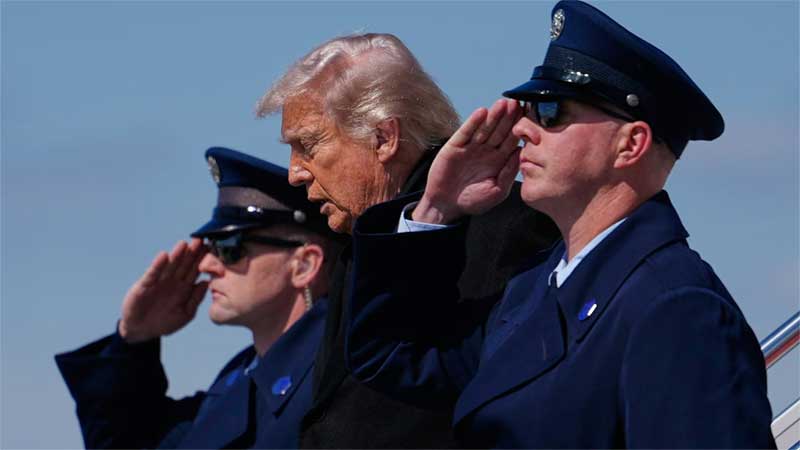
President Donald Trump announced Friday night that U.S. forces, working with the Armed Forces of Nigeria, killed al-Minuki in what he called a “meticulously planned and very complex mission.” Trump described al-Minuki as the second-in-command of ISIS globally and “the most active terrorist in the world.” Fox News reported that Trump said the operation was “flawlessly executed” and that al-Minuki had been helping plan operations targeting Americans.

This was not a symbolic strike against a low-level militant. According to U.S. Africa Command, al-Minuki was the “director of global operations for ISIS,” and multiple terrorists, including other senior ISIS leaders, were killed in the operation. AFRICOM’s initial assessment found no civilian casualties and no U.S. or Nigerian losses.

Nigerian President Bola Tinubu confirmed the strike, saying al-Minuki was killed along with several lieutenants at his compound in the Lake Chad Basin. The Associated Press reported that the Nigerian military described the mission as a “highly complex precision air-land operation” carried out during three hours of darkness without casualties or loss of assets.

That is what seriousness looks like.

For years, Americans have been told that ISIS was “defeated,” that terrorism was yesterday’s war, and that the real work of national security involved managing narratives at home while pretending jihadist networks abroad were fading into irrelevance. But ISIS did not disappear. It adapted. It migrated. It embedded itself across Africa, especially through ISIS West Africa Province and other affiliates operating in Nigeria, the Sahel, and the Lake Chad region.

Al-Minuki was not some obscure figure pulled from the shadows for political theater. In June 2023, the U.S. State Department formally designated Abu Bakr ibn Muhammad ibn Ali al-Mainuki — also known as Abu-Bilal al-Minuki, Abubakar Mainok, and Abor Mainok — as a Specially Designated Global Terrorist and identified him as a leader of ISIS.

The significance of this strike is therefore twofold.

First, it removes a major terrorist commander from the battlefield. AP reported that al-Minuki was viewed as a key figure in ISIS organizing and finance and had been plotting attacks against the United States and U.S. interests.

Second, it signals that the Trump administration is willing to project power into places where terrorist networks believe distance, chaos, weak borders, and corrupt or overwhelmed governments can protect them. That matters.

Africa has become one of the central battlegrounds in the post-caliphate phase of ISIS. After the collapse of the group’s territorial stronghold in Iraq and Syria, ISIS affiliates in Africa became some of the movement’s most active and dangerous branches. Nigeria has been fighting jihadist factions for years, including Boko Haram and ISIS-linked militants, while entire regions have been destabilized by kidnapping, massacres, insurgency, and religious violence.

The Lake Chad Basin is not a footnote. It is one of the world’s most important terror corridors.

The operation also exposes a hard truth many in Washington would rather avoid: counterterrorism is not over. The battlefield has shifted, but the enemy has not given up. ISIS no longer needs a caliphate capital to remain dangerous. It needs financing, propaganda, operational planners, safe havens, and regional affiliates. Al-Minuki reportedly sat near the center of that web.

There are still questions. Some analysts dispute whether al-Minuki was truly the global “number two” in ISIS, and AP noted that his exact rank cannot be independently verified. But even cautious experts acknowledged the strike’s importance. One Nigeria-focused analyst told AP that, if confirmed, the killing would be enormous because it would be the first time security forces had killed someone so highly ranked in ISWAP.

That is the responsible way to read this story: do not exaggerate what cannot yet be independently proven, but do not minimize what is clearly a major counterterrorism success.

The broader message is unmistakable. America does not need endless wars to kill terrorists. It needs intelligence, allies, resolve, and a commander-in-chief willing to authorize decisive action.

This operation appears to have had all four.

For Federalist Press readers, the takeaway is simple: peace through strength is not a slogan. It is a strategy. Terrorists understand power. They understand fear. They understand consequences. And only those.

And today, the world’s jihadist networks have been reminded that if they plot against Americans, there may be nowhere far enough to hide.

Filed Under: Foreign, Featured, Religion, Sci-Tech

There Is No Constitutional Requirement to Shut Down the Government

May 12, 2026 By Editor Leave a Comment

Why Should America Shut Down Because Democrats Refuse to Fund ICE?

For decades, Americans have been subjected to the same tired political ritual: Congressional Democrats fail to pass another bloated spending package, the media declares a “government shutdown crisis,” blames Republicans, and ordinary citizens are told to panic while Washington politicians point fingers at one another.

But beneath all the manufactured hysteria lies a simple constitutional truth that few in Washington want the public to fully understand:

There is no constitutional requirement to shut down the United States government simply because Congress cannot agree on a massive omnibus spending bill.

Government shutdowns are not acts of God. They are political choices.

And increasingly, they are being weaponized by Democrats willing to inflict economic pain, administrative chaos, and public fear in order to force Americans to accept policies the public increasingly reject — particularly on immigration and border enforcement.

Most Americans do not realize that government shutdowns are not explicitly mandated by the Constitution. In fact, for much of modern American history, temporary funding gaps did not automatically trigger massive federal closures. The modern shutdown regime largely originated from legal opinions issued during the Carter administration by Attorney General Benjamin Civiletti, who adopted an extremely strict interpretation of the Antideficiency Act in 1980 and 1981. What Americans now experience as a “government shutdown crisis” is therefore not purely constitutional — it is largely the product of later bureaucratic and legal interpretation.

At the center of the current standoff is funding for ICE and broader immigration enforcement operations. Many Democrats have spent years demonizing immigration officers, opposing deportation efforts, defending sanctuary jurisdictions, and resisting meaningful border security measures even as tens of millions of illegal crossings have strained cities, schools, hospitals, and law enforcement resources across the country.

I.C.E. arrests dozens of illegal immigrants as democrats howl

Now, as another shutdown threat looms, Americans are once again being told that unless Congress caves to Leftist open-borders demands, the federal government must partially close its doors.

Why?

Why should Americans suffer because one political party refuses to support enforcement of existing immigration law? Law that Democrats voted for. Law that Schumer and Biden vociferously supported . . . before they needed replacement democrat voters.

Why should Border Patrol agents, ICE personnel, military families, federal workers, travelers, and small businesses become collateral damage in an ideological battle over policies designed to discourage deportation and weaken immigration enforcement?

The Constitution does not require this political hostage-taking. There are no Supreme Court rulings that demand the government be shut down and workers go unpaid in the absence of a spending bill. It is merely tradition, NOT LAW

In reality, essential government functions continue during shutdowns anyway. Military operations continue. Air traffic control continues. Social Security payments largely continue. Federal law enforcement continues. Border agents often continue working, although many without paychecks while Democrats continue holding press conferences.

The “shutdown apocalypse” narrative has always been exaggerated, for democrat political leverage. Most news and media carry to narrative’s water to assist democrats in their blackmail tactics.

And the American people are growing tired of being used as pawns in Washington’s endless theater.

What makes the current fight especially revealing is that it exposes a deeper political calculation many Americans have long suspected: that mass illegal immigration is no longer viewed by some political leaders as a crisis to solve, but as a long-term political strategy to reshape the electorate and expand dependency on government systems.

Whether one agrees with that assessment or not, the perception exists because Democrats consistently oppose nearly every serious effort to tighten border enforcement while simultaneously demanding ever-expanding taxpayer support systems for illegal entrants already inside the country while resisting every effort to deport illegals.

Americans are noticing. And they are asking legitimate questions.

If Congress truly cannot avoid shutdowns, then perhaps lawmakers themselves should finally bear some of the consequences they routinely impose on everyone else.

Senators, including John Kennedy and Majority Leader John Thune have floated proposals to suspend congressional pay during shutdowns. That should only be the beginning.

No congressional salaries during shutdowns.

No taxpayer-funded travel.

No luxury congressional recesses.

No congressional medical care.

No omnibus bills dropped on the public at midnight.

No exemptions for the political class while ordinary Americans absorb the uncertainty and disruption.

If ICE agents and military personnel can work without guaranteed pay during political standoffs, senators and representatives should not continue collecting salaries and luxury taxpayer-funded benefits while manufacturing the crisis.

Washington’s shutdown culture persists because politicians experience very little personal consequence from creating chaos.

That must change.

The American people are exhausted by the manipulation, the fearmongering, the Left’s lies, and the endless manufactured emergencies. Government exists to serve the nation — not to hold it hostage every fiscal year in pursuit of ideological demands that most citizens never voted for in the first place.

There is no constitutional requirement to shut down the government.

But there may soon be a political requirement to hold accountable the people who keep threatening to do it.

The Federalist Press smiles while daydreaming about temporary incarceration for any member of congress who votes against funding the government.

Filed Under: Crime, Elections, Entitlement, Ethics, Featured, Foreign

California Democrat Mayor Pleads Guilty in Explosive Chinese Foreign Agent Case

May 11, 2026 By Editor Leave a Comment

One of the most disturbing stories of foreign infiltration in American politics just exploded into public view — and the corporate media will likely do everything possible to bury it.

Eileen Wang, the Democrat mayor of Arcadia, California, has agreed to plead guilty to acting as an illegal foreign agent for the Chinese Communist Party, according to the U.S. Department of Justice.

Let that sink in.

A sitting American mayor — an elected official entrusted with public authority inside the United States — admitted to secretly advancing the interests of a hostile foreign government tied directly to the Chinese Communist Party.

According to federal prosecutors, Wang and her former fiancé, Yaoning “Mike” Sun, operated a Chinese-language media platform that published propaganda approved and directed by officials connected to the People’s Republic of China. Prosecutors say the operation promoted CCP narratives inside the United States while concealing the foreign relationship from the American public.

The case is not some vague accusation from political opponents. It is a federal criminal prosecution backed by a plea agreement.

The Justice Department states that Wang has agreed to plead guilty to acting as an illegal foreign agent — a felony carrying a potential prison sentence of up to ten years.

Even more alarming is the broader context surrounding the case.

Her former campaign adviser and fiancé, Yaoning “Mike” Sun, was already sentenced to federal prison after admitting he operated on behalf of the Chinese government while helping cultivate political influence in California. Prosecutors described efforts to promote pro-Beijing propaganda and assist politicians viewed as favorable to CCP interests.

This is exactly the kind of foreign infiltration Americans were warned about for years — and routinely told not to worry about.

For decades, establishment politicians and media commentators dismissed concerns about CCP influence as paranoia or “xenophobia.” Americans who warned about Chinese political operations were mocked as conspiracy theorists.

Now a California Democrat mayor is pleading guilty in federal court.

The pattern is becoming impossible to ignore.

From the Eric Swalwell controversy involving a Chinese intelligence-linked operative, to the longtime questions surrounding Chinese influence networks in California politics, to New York officials accused of improper foreign relationships, Americans are watching a deeply troubling trend emerge: powerful Democratic political circles repeatedly appearing vulnerable to CCP cultivation and influence operations.

And the danger goes far beyond one local politician.

The CCP does not think in election cycles. It thinks in decades.

China’s strategy has long focused on quietly building influence inside universities, media organizations, corporations, local governments, and political networks across the West. The goal is not necessarily dramatic espionage. Often it is subtler: shaping narratives, cultivating sympathetic officials, discouraging criticism of Beijing, and slowly normalizing pro-CCP positions inside American institutions.

That is what makes the Arcadia case so significant. This was not a spy thriller involving stolen missile secrets. It was influence warfare. And influence warfare may be the CCP’s most successful weapon against the United States.

Americans should ask themselves a very uncomfortable question: If federal prosecutors had uncovered a Republican mayor secretly coordinating propaganda activities with Russian government officials, would the media treat this as a local curiosity — or as the scandal of the decade?

Because when the foreign influence operation involves Communist China and Democratic political networks, the national media suddenly becomes remarkably restrained.

But ordinary Americans are noticing. And they are increasingly realizing that the greatest threats to American sovereignty may not always arrive with tanks or missiles.

Sometimes they arrive through political relationships, media influence, and elected officials who quietly begin serving interests that are not America’s own.

Filed Under: Featured, Crime, Elections, Ethics, Foreign, Gender

Sen. Kelly Under Pentagon Review After Revealing Classified Briefing Details to Enemies

May 11, 2026 By Editor Leave a Comment

The political and military firestorm surrounding Arizona Democratic Senator Mark Kelly intensified Sunday after Secretary of Defense Pete Hegseth announced that Pentagon legal counsel will review Kelly’s public comments following a classified congressional briefing on U.S. weapons stockpiles.

During a national television appearance, Kelly revealed what he had just learned in a classified meeting, describing depleted American missile inventories, specifically referencing Tomahawk missiles, Patriot interceptors, THAAD systems, and other strategic weapons platforms.

Secretary Hegseth responded publicly, accusing Kelly of “blabbing” details from a classified briefing and questioning whether the senator had violated his oath.

The controversy is the latest chapter in an escalating conflict between Kelly and the U.S. military that has already placed the Arizona senator under intense scrutiny.

Months earlier, Kelly participated in a public video directed at U.S. military personnel encouraging service members to refuse “illegal orders.” The message crossed a dangerous line by encouraging troops to second-guess the lawful chain of command during a period of heightened geopolitical instability.

Secretary of War Pete Hegseth rebukes Kelly for revealing classified information to U.S. combat enemies.

The American military is built on discipline, civilian control, and obedience to lawful command structures. While illegal orders should never be followed, critics argue that elected politicians publicly encouraging troops to scrutinize presidential directives creates ambiguity inside the ranks at precisely the wrong moment—the precise outcome Kelly advocated. They warn that once political actors begin inserting themselves between commanders and enlisted personnel, the chain of command itself becomes vulnerable to politicization.

Kelly’s critics also point to the irony of a retired Navy officer and astronaut — someone entrusted for decades with some of America’s most sensitive military and aerospace programs — now facing allegations that he publicly disclosed information just discussed in a classified setting.

Whether the Pentagon review ultimately produces legal consequences remains unclear. Legal analysts note that members of Congress possess broad speech protections, while retired military officers remain subject to certain military conduct standards under federal law.

Still, the optics are extraordinary.

An Arizona senator who once flew combat missions for the United States is now under Pentagon review after publicly discussing sensitive military readiness issues during a time of global instability and rising tensions with China and Iran.

For many Americans, the question is no longer simply whether Kelly’s comments were technically classified. The deeper question is why a sitting U.S. senator appears increasingly comfortable undermining confidence in America’s military leadership while publicly airing vulnerabilities that adversaries would eagerly exploit.

Filed Under: Featured, Crime, Elections, Ethics, Foreign

Why Is the United States Still Allowing Iran to Threaten the Strait of Hormuz?

May 6, 2026 By Editor Leave a Comment

Cargo ship in Strait of Hormuz reports being attacked as peace negotiations continue

For decades, the United States has treated the Iranian regime as a problem to be managed. The result has been decades of escalation, proxy warfare, regional instability, and recurring crises centered around one of the most strategically important waterways on earth: the Strait of Hormuz.

At some point, Americans are entitled to ask a simple question: Why is an Islamic revolutionary regime that openly calls for confrontation with the West still allowed to project this much power?

From Monarchy to Revolution

Modern Iran was not always governed by the Islamic clerical regime that exists today. Before 1979, Iran was ruled by Shah Mohammad Reza Pahlavi, a pro-Western monarch aligned closely with the United States. That order collapsed during the Iranian Revolution, when Ayatollah Ruhollah Khomeini and his Islamist movement seized power and transformed Iran into an Islamic Republic governed by revolutionary religious doctrine.

The revolution was not merely political. It was ideological.

The new regime defined itself in opposition to:

  • Western influence
  • Secular government
  • American power in the Middle East
  • The existence of Israel and its regional allies

That worldview still defines the regime today.

The Structure of Power in Iran

Iran presents itself as a republic, with elections and civilian institutions. But ultimate authority does not rest with elected officials. Real power lies with:

  • The Supreme Leader
  • The Islamic Revolutionary Guard Corps (IRGC)
  • Senior clerical and security networks loyal to the revolutionary system

The IRGC in particular has become one of the most powerful organizations in the region:

  • Military force
  • Intelligence apparatus
  • Economic empire
  • Foreign operations network

Its influence extends through proxy groups and allied militias across the Middle East.

Why Negotiations Are So Difficult

American administrations from both parties have repeatedly attempted diplomacy with Tehran. But negotiations with Iran are uniquely difficult for one central reason:

The regime views confrontation with the United States as part of its ideological identity.

This is not merely a dispute over sanctions, territory, or trade. For many within the regime’s core leadership structure, opposition to American influence is foundational to the revolution itself.

That reality complicates every negotiation. Even when agreements are reached, there remains deep skepticism in Washington and among U.S. allies about whether Tehran ultimately seeks coexistence—or simply strategic advantage. President trump believes the latter. He has publicly voiced his understanding of the regime, that it will never voluntarily lay down its arms, including nuclear arms, and accept peace in any form. It must be forced into such a position.

The Strait of Hormuz: A Pressure Point

The Strait of Hormuz remains one of Iran’s last, and most powerful leverage points.

A significant percentage of global energy shipments pass through the narrow waterway. Even limited disruption can:

  • Spike oil prices
  • Rattle financial markets
  • Threaten global supply chains

Iran understands this.

And it has repeatedly used the threat of disruption as a geopolitical tool.

From Washington’s perspective, that creates a persistent dilemma:

  • Respond too aggressively and risk broader regional war and damage to Iran’s civilian population
  • Respond too weakly and invite continued escalation

A Regime Under Pressure

Years of sanctions, internal unrest, economic strain, and regional conflict have placed enormous pressure on the Iranian system. At the same time, recent leadership losses and internal fragmentation have fueled speculation about divisions within the regime itself. Trump’s Department of War has eliminated the two top tiers of leadership in the regime, and it is difficult to locate survivors to engage in negotiations.

Some analysts argue that the current (third) leadership tier is more rigid and ideological than pragmatic. Others believe there are factions within the broader system that would prefer reduced confrontation and economic normalization.

The challenge for American policymakers is determining whether meaningful moderation is possible within the current structure—or whether the regime’s core ideology makes that unlikely.

The Strategic Debate in Washington

This has led to an increasingly sharp debate among foreign-policy analysts and national-security officials.

One side argues:

  • Iran responds only to overwhelming pressure
  • Deterrence must be restored decisively
  • Continued restraint emboldens the regime

The other warns:

  • Escalation could ignite a wider regional conflict
  • Regime instability carries unpredictable consequences
  • Military action may strengthen hardliners rather than weaken them

Underlying both arguments is the same concern: The current situation is unsustainable.

The Bigger Question

For years, the United States has attempted to contain, negotiate with, sanction, pressure, and deter the Iranian regime—often simultaneously. And yet the core conflict remains unresolved.

Iran continues to:

  • Support regional proxy networks
  • Threaten maritime stability
  • Challenge American influence
  • Advance strategic capabilities despite international pressure

Which raises the uncomfortable possibility that the problem is not tactical. It is structural.

The Bottom Line

The Iranian regime was born out of revolution and sustained through ideology, security power, and confrontation with the West. That history matters because it shapes every negotiation taking place today.

The debate now facing the United States is no longer whether Iran is a challenge. It is whether decades of limited containment have merely prolonged a deeper conflict that neither side truly believes can be permanently resolved.

And as tensions rise once again in the Strait of Hormuz, that question is becoming harder to avoid. President Trump has signaled that he very much understands this. What is surprising is his patience with a regime that he knows lies as often as they breath, and has no intention of restricting its modus operandi of the past 60 years. Surely, he understands that only death of all leadership will allow cooler heads to take over and finally allow peace to come to the region.

Filed Under: Foreign, Economy, Featured, Sci-Tech

May Day in America: A Radical Marxist Tradition Reemerges

May 1, 2026 By Editor Leave a Comment

May 1 has long carried meaning far beyond the calendar.

Known internationally as May Day, it began as a labor movement commemoration in the late 19th century, tied to the fight for workers’ rights. But over time, in much of the world, it became deeply associated with socialist and communist movements, state power, and ‘revolutionary’ politics.

For decades, Americans largely kept their distance from tat legacy. As today’s democrat party embracing Marxism, that distance appears to be shrinking.

A Holiday with a Complicated History

In countries shaped by communist regimes, May Day was not just a celebration, it was a demonstration of power.

Mass parades. Coordinated messaging. Displays of unity under centralized authority. Yes, we saw Soviet missiles paraded in the streets of Moscow as a reminder that the decadence of individualism would soon be crushed by the collective powers.

Behind those displays, history tells a dark story.

The 20th century saw the rise of regimes that embraced Marxist ideology, from the Soviet Union to Maoist China, to Eastern Europe and beyond. The results, widely documented, included:

  • Economic collapse
  • Political repression
  • Suppression of dissent
  • Widespread human suffering on a massive scale, including the death of 100,000,000 people

The promise was equality and liberation.

The reality was control and coercion.

That legacy still shapes how most Americans view May Day today.

A New Wave of Activism

In 2026, May Day has taken on renewed significance in the United States.

According to recent reporting, hundreds of organizations, collectively generating billions in revenue, have organized thousands of protests across the nation tied to the day’s themes.

The scale is notable:

  • Nationwide coordination
  • Large coalitions of advocacy groups
  • Messaging focused on economic ‘justice,’ labor rights, immigration, and social policy

Supporters describe this as grassroots mobilization. Critics see something more structured, and more ideological.

The Debate Over Modern Movements

The core question is not whether people have a right to protest. They do. The question is what ideas and goals are driving these movements, and where those ideas lead.

Some activists openly embrace frameworks rooted in Marxist and socialist thought, particularly in critiques of:

  • Capitalism
  • Wealth distribution
  • Corporate power
  • Traditional economic structures

Others reject those labels entirely, framing their goals as pragmatic reforms. But the overlap in language, goals, and organizing strategies has sparked a broader national debate:

Are these movements pushing reform—or a deeper transformation of the American system?

Follow the Structure

One of the more striking elements of modern activism is its level of organization. Large-scale demonstrations do not happen spontaneously. They require:

  • Funding
  • Infrastructure
  • Communication networks
  • Coordinated messaging

Reports highlighting the financial scale of some participating organizations have raised questions about:

  • How these groups are funded
  • How resources are allocated
  • Whether their agendas align with the broader public

These are the kinds of questions that should be asked of any large, influential movement.

Why the Pushback Exists

Skepticism toward May Day activism in the U.S. is not simply about policy disagreements. It is rooted in historical memory. Many Americans associate Marxism not with theory, but with outcomes:

  • Centralized control over economic life
  • Oppression and reduced individual autonomy
  • Political systems that suppressed opposition

That history makes some wary of any movement that appears to draw inspiration, even indirectly, from those ideas.

A Country Built on a Different Model

The United States was founded on a different set of assumptions.

  • Individual rights over collective identity
  • Families as the foundational unit of society
  • Very limited government over centralized control
  • Market-driven opportunity over state-directed outcomes

Those principles have been debated, refined, and challenged over time, but they remain foundational, and have catapulted America to the most powerful, wealthy, and benevolent nation in the world, ever.

Movements that call for sweeping structural change inevitably raise questions about how far those principles should be altered, or whether they should be replaced altogether.

The Meaning of May Day Today

For some Americans, May Day is a call to action; an opportunity to advocate for workers, fairness, and reform.

However, these calls are obviously farcical, because workers and fairness have been strongly represented in our constitutional republic, elevating all American citizens through adherence to our constitutional principles of individual freedom and the individual pursuit of life, liberty and happiness.

What is the Left demanding? What is their aim? Redistribute wealth, which is to steal the wealth of those who have worked hard and risked all, and give it to those who sit around and complain. They hate corporations, and demand that their wealth be confiscated and given to lazy people. Of course, corporations are owned by collectives of hard working Americans, whose retirement plans have funded corporate enterprises, the returns on which will fund retirement. The anti-corporate, anti-liberty howlings of the Marxist Left are preposterous to everyday Americans, and if given their way, would reduce America to the status of a third world wasteland.

Filed Under: Entitlement, Economy, Elections, Featured, Foreign

Negotiations Slow, Tensions Rising: Where U.S.–Iran Talks Stand

April 28, 2026 By Editor Leave a Comment

As the conflict between the United States and Iran enters another volatile phase, hopes for a diplomatic breakthrough are fading fast. Negotiating with terrorists is always difficult, and this particular brand of terrorist really cares nothing about the people of Iran. It cares about one thing only: remaining in power, so it can live to fight another day, and drop nuclear bombs on the Great Satan, and the Little Satan, Israel and the United States.

How can the U.S. come to terms with such people? Is there anything that could be accomplished in negotiations to dissuade these terrorists from their course of apocalyptic glory?

Behind the scenes, multiple rounds of negotiations have taken place over the past several weeks, often through intermediaries in countries like Oman and Pakistan. But despite the urgency of the situation, those talks have produced little in the way of meaningful progress.

Instead, what has emerged is a widening gap between two sides that appear increasingly unwilling to compromise. America will never allow Iran to develop nuclear weapons to send to America. It will simply never happen—not under the Trump administration, anyway.

A Deadlock Taking Shape

Recent diplomatic efforts have centered on one fundamental question: what comes first—de-escalation or concessions?

Iran has reportedly pushed for a phased approach, proposing that immediate tensions be reduced—particularly in the Strait of Hormuz—before any serious discussions take place on its nuclear program.

The United States, however, has taken a different position. Officials have made clear that any lasting agreement must address Iran’s nuclear ambitions directly, insisting that Tehran cannot be allowed to retain capabilities that could lead to weapons development.

That fundamental disagreement has left negotiations stuck.

The Strait of Hormuz: Leverage and Pressure

At the center of the standoff is one of the most strategically important waterways in the world: the Strait of Hormuz.

Iran has signaled a willingness to reopen the strait—currently disrupted by conflict and military activity—but only under conditions that would delay or sideline nuclear negotiations.

For Tehran, the strait represents leverage. For Washington, it represents risk.

With global oil supplies heavily dependent on the passage, disruptions have already driven energy prices higher and rattled international markets. That dynamic has turned what might otherwise be a diplomatic issue into a global economic concern.

Talks That Went Nowhere

Earlier negotiations in Islamabad, mediated by regional actors, ended without agreement. Since then, both sides have continued to communicate—indirectly—but neither has shown signs of backing down from core demands.

The U.S. position remains firm: no deal without meaningful limits on Iran’s nuclear program.

Iran’s position is equally clear: no concessions under any circumstances.

That leaves little room for compromise.

A Strategy of Delay—or Endurance?

Analysts increasingly believe Iran may be pursuing a strategy of delay—stretching out negotiations while absorbing economic pressure and waiting for political conditions to shift. Others argue the opposite: that Iran is simply signaling it will endure rather than concede.

Either way, the result is the same.

Time is passing. The situation is not improving.

Pressure Mounting on Both Sides

For the United States, prolonged negotiations without results carry political and strategic risks. A drawn-out conflict impacts energy markets, strains alliances, and raises questions about deterrence.

For Iran, the costs are even more immediate. Sanctions, blockades, and restricted oil exports are placing severe pressure on its economy, with inflation soaring and growth contracting.

Neither side is in a comfortable position. And yet neither appears ready to move.

The Window for Diplomacy

Despite the deadlock, officials on both sides continue to signal that diplomacy is not entirely off the table.

There is still an “open window” for negotiations—at least in theory. But that window may be narrowing. With tensions high, military forces active in the region, and economic pressure intensifying, the margin for error is shrinking.

And in situations like this, stalemates rarely last forever. They either break—or they escalate.

What Comes Next

For now, the situation remains unresolved. No agreement. No clear path forward. No sign that either side is prepared to fundamentally change course. That uncertainty is now the defining feature of the moment. Because while negotiations may still be ongoing, the reality is becoming harder to ignore:

Talks are happening, yes. But they are not working. It’s obvious that it’s time for another round of precision strikes to remove the old guard from power.

Filed Under: Bias, Foreign

Did AOC Really Say Republicans Want to “Rig Elections” by Allowing Only U.S. Citizens to Vote?

April 26, 2026 By Editor Leave a Comment

A viral quote circulating widely on social media claims that Representative Alexandria Ocasio-Cortez declared that Republicans are “trying to rig elections by only allowing U.S. citizens to vote.” The statement has sparked outrage, confusion, and debate across political circles.

But did she actually say it?

As of now, there is no verifiable record of Ocasio-Cortez making that exact statement in any official speech, interview, or public post. The quote appears to be a reworded version of broader arguments she and other Democrats have made regarding voting laws and election policy.

Ocasio-Cortez has been a vocal critic of Republican-backed election reforms, particularly those targeting fraud, and requiring involving voter identification requirements and restrictions on mail-in voting. In multiple instances, she has argued that such measures can suppress voter participation and disproportionately affect minorities and women, whom she declares have little ability to obtain government issued ID . . . for unclear reasons.

However, that falls a little short of explicitly stating that requiring U.S. citizenship to vote is, in itself, an attempt to “rig” elections.

Under federal law, only U.S. citizens are permitted to vote in federal elections. The political disagreement centers not on whether citizenship should be required (Democrats avoid the issue), but on how voting laws are structured and enforced at the state level.

So why is this quote spreading? In today’s media environment, complex political positions are often reduced to simplified soundbites. Statements about “voter suppression” or “election integrity” can easily be reframed in ways that inflame public reaction, especially when shared rapidly across social media platforms.

That appears to be what happened here. The viral quote takes a broader political argument and condenses it into a provocative line that, while accurately reflecting the position of Ocasio-Cortez and and Left, does not accurately reflect any confirmed statement made by her specifically.

That doesn’t mean the underlying debate is any less significant. Questions surrounding election integrity, voter access, and the balance between security and participation remain at the center of American political discourse. Republicans have consistently argued that stronger safeguards are necessary to ensure fair elections, while Democrats have warned that those policies will definitely restrict legitimate voters.

Of course, those who claim that minorities and women are incapable of obtaining valid IDs have failed entirely to produce any evidence of that claim. In fact, polls that ask minorities if they have valid government issued IDs consistently reveal that no one finds obstacles in obtain them.

Non-citizens cannot vote, and that is the law. Roadblocks to illegals voting are more than justified.

We who seek to remain informed and involved, whatever our political leanings may be, might well wonder–if there are American adults who have so little ability that they find obtaining a government issued ID an insurmountable task, perhaps they are better off sitting out the big decisions that affect out nation so profoundly. Perhaps they are easily manipulated and gullible. Perhaps that is exactly why the Left wants them to vote.

Filed Under: Bias, Elections, Entitlement, Ethics, Foreign

The Vanishing General and the Eleven

April 24, 2026 By Editor Leave a Comment

Inside the Growing Mystery of America’s Missing and Dead Scientists

By James Thompson | Feature article contributor

The disappearance of retired Air Force Maj. Gen. William Neil McCasland has evolved from a troubling local case into something far larger—an unresolved mystery now drawing the attention of the FBI, the White House, Congress, and multiple federal agencies.

At the center of that mystery is a simple but unsettling question:

Did one man vanish, or is he part of a pattern?

On the morning of February 27, 2026, McCasland was at his Albuquerque home. At approximately 10:00 a.m., he spoke with a repairman. At 11:10 a.m., his wife left for a medical appointment. When she returned at 12:04 p.m., he was gone. There were no signs of a struggle. No confirmed witnesses. No clear direction of travel.

Law enforcement responded immediately, and the FBI quickly became involved. Investigators conducted an extensive canvass, reviewing doorbell and security footage from hundreds of homes throughout the neighborhood. What they found—or rather, did not find—has become one of the most confounding elements of the case.

There is no confirmed video showing McCasland leaving his home or the surrounding area. In a modern residential neighborhood saturated with surveillance, that absence is striking.

Inside the home, investigators found his phone, his prescription glasses, and his wearable devices such as his smart watch. Missing were his wallet, hiking boots, and a .38-caliber revolver. That combination has resisted easy explanation.

Leaving a phone behind for a short neighborhood run is not unusual. But leaving behind prescription glasses raises real questions. At the same time, taking a firearm suggests intention, preparation. Was he afraid of someone? Did he have a suicidal intent? Did a kidnapper take the gun?

Taken together, the pattern does not align cleanly with any single scenario. It is not what one would expect from a routine run. It does not neatly fit a medical emergency. And it is inconsistent with most planned disappearances.

It is a behavioral contradiction—and it is at the heart of the mystery.

McCasland is not an ordinary missing person. He served as commander of the Air Force Research Laboratory, commanding a multi-billion-dollar exotic research budget, later holding senior roles in Pentagon special programs and space acquisition. Yes, he ran the research lab at Wright-Patterson AFB (where the Roswell debris was taken). These positions placed him inside the ecosystem of the U.S. government’s most sensitive technologies—advanced aerospace systems, exotic weapons research, and highly classified programs.

His name has also circulated in UFO discussions through past communications involving Tom DeLonge, who claimed McCasland recounted his work with captured UFOs and non-human remains.

What has transformed this case into a national story is not just who McCasland is, but who else has recently disappeared or died.

Across the past several years, at least eleven individuals tied to high-level scientific or defense-related work have died or gone missing under unusual circumstances. The list includes researchers, engineers, and professionals connected to institutions such as NASA’s Jet Propulsion Laboratory, Los Alamos–adjacent environments, MIT, and Caltech, along with several cases centered in New Mexico.

Amy Eskridge, a propulsion researcher focused on advanced aerospace concepts, died in 2022. Her death was ruled a suicide, though her work and reported concerns about harassment have fueled ongoing speculation.

Michael David Hicks, a NASA-affiliated scientist working on asteroid-related technology, died in 2023 under circumstances that have not been fully detailed publicly.

Frank Maiwald, a longtime engineer involved in advanced Earth observation systems, died in 2024.

Monica Reza, one of the most striking cases, was a NASA and Aerojet Rocketdyne engineer specializing in advanced materials used in rocket propulsion. She helped develop high-performance alloys designed to increase thrust while reducing weight. She disappeared in 2025 while hiking. According to reports, she was within sight of a companion—just feet away—when she suddenly vanished. Her work overlapped with projects funded through the same defense research ecosystem that McCasland later oversaw.

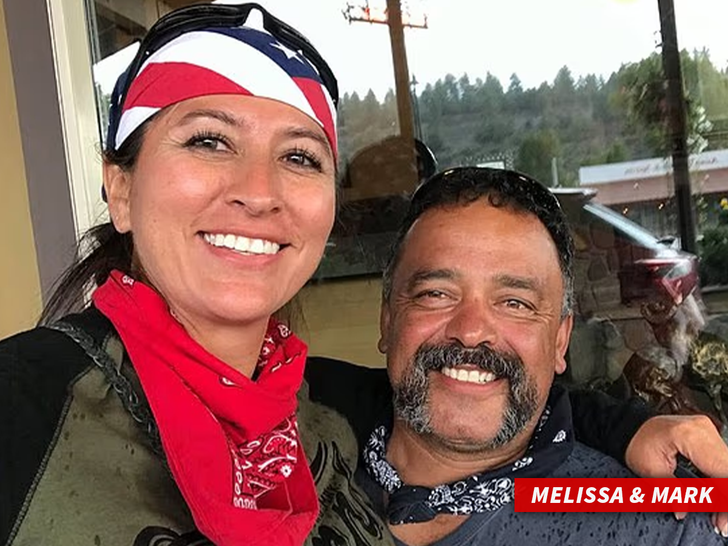
Melissa Casias, connected to Los Alamos National Laboratory, disappeared in New Mexico in 2025 and has not been found.

Anthony Chavez and Steven Garcia, also in New Mexico, are part of a cluster of disappearances that have drawn attention due to their geographic proximity.

Jason Thomas, a pharmaceutical scientist, was later found dead after initially being reported missing.

Nuno Loureiro, a leading plasma physicist, was killed in what authorities have described as a targeted act of violence.

Carl Grillmair, a Caltech astrophysicist, was shot outside his home in 2026.

And then there is McCasland.

At first glance, the list appears alarming: aerospace engineers, propulsion experts, nuclear-adjacent personnel, and defense-connected scientists. Many had exposure to advanced or sensitive technologies. Some held security clearances. A few have been loosely linked to discussions of unidentified aerial phenomena.

This has led some analysts and officials to raise the possibility of foreign intelligence targeting, technological espionage, or suppression of sensitive knowledge.

The federal government is now taking those questions seriously. The FBI is reviewing the cases collectively, and the White House has directed agencies to identify any potential commonalities. Congress has also begun seeking answers.

But there is a competing view, one grounded in caution. Investigators note that several of the deaths have known explanations. Some incidents involve personal conflicts or isolated acts of violence. The individuals worked in different fields and institutions, and there is currently no confirmed evidence that all of the cases are connected.

Some experts argue that what appears to be a pattern may instead be coincidence amplified by attention.
Even so, McCasland’s case stands apart. Because of the tight one-hour timeline. Because of the absence of surveillance confirmation. Because of the items left behind versus those taken. And because of where it happened. He did not vanish in wilderness. He did not disappear while traveling. He vanished from his own neighborhood—with no confirmed trace.

At its core, the issue now confronting investigators is not just what happened to one man. It is whether the United States is witnessing a series of unrelated tragedies or the early signs of a deeper vulnerability. In today’s world, the most valuable assets are not always documents or systems. They are people—individuals who understand advanced propulsion, materials science, classified research programs, and emerging defense technologies.

If even a small number of those individuals were being targeted, the implications would be profound.

For now, the facts remain unchanged. A retired general with deep access to some of the nation’s most sensitive programs walked out of view and has not been seen again. At the same time, a growing list of scientists and researchers connected in varying ways to that same broad ecosystem has raised questions that no one has yet been able to definitively answer.

It may prove to be coincidence. But until that is established with evidence, the question will remain: Is this a collection of isolated events, or the outline of something far more serious?


James Thompson is an author and ghostwriter, and a political analyst. He is an analyst of UAP reports, and has authored the book Worlds Without Number.

Filed Under: Crime, Ethics, Foreign, Sci-Tech

The Faces of Domestic Terrorism: A Wave of Self-Radicalized Islamist Attacks in America

March 13, 2026 By Editor Leave a Comment

By James Thompson

In the wake of U.S. military strikes against Iran, a series of violent incidents across the United States has raised renewed concerns among many security analysts about the resurgence of self-radicalized Islamist terrorism.

Within a matter of days, multiple attacks and attempted attacks unfolded in different parts of the country: a synagogue assault in Michigan, a deadly shooting at a military training program in Virginia, an Islamist motivated attack in Texas, and an attempted bombing in New York City involving homemade explosives.

At first glance the incidents appear unrelated. They occurred in different states, involved different suspects, and targeted different victims. Yet investigators say a closer look reveals a disturbing common thread: several of the suspects appear to have embraced jihadist ideology and were inspired by propaganda associated with the Islamic State and similar extremist movements.

The pattern reflects a phenomenon that counterterrorism experts have warned about for years—the rise of self-activated Islamist extremists who act independently, but draw ideological inspiration from global jihadist movements.

The most alarming recent plot unfolded in New York City.

On March 7, two young men—18-year-old Emir Balat and 19-year-old Ibrahim Kayumi—were arrested after allegedly throwing improvised explosive devices into a crowd near Gracie Mansion, the official residence of the city’s mayor. Authorities say the devices were real bombs packed with volatile explosive material and metal fragments capable of causing serious injury or death to large crowds of. bystanders.

The attack occurred during a protest outside the mayor’s residence. According to federal investigators, the two suspects had constructed multiple improvised explosive devices and transported them across state lines before throwing them toward the crowd.

Emir Balat and Ibrahim Kayumi were seen throwing improvised explosive devices into a crowd near Gracie Mansion.
Fortunately, the bombs failed to detonate fully, and no one was killed.

The criminal complaint alleges that the two men had consumed ISIS propaganda online and openly expressed admiration for the terrorist organization. Investigators say one of the suspects stated he hoped to carry out an attack “bigger” than the Boston Marathon bombing.
Authorities believe the pair were not formally directed by ISIS leadership, but had been self-radicalized through online extremist content, a pathway that has become increasingly common in recent years.

While the New York plot was foiled, violence elsewhere in the country proved deadly.

In Virginia, a gunman opened fire inside a Reserve Officers’ Training Corps classroom at Old Dominion University, killing a retired military instructor and injuring two others. Investigators quickly discovered that the suspect had previously been convicted for supporting ISIS and had spent time in federal prison.

The choice of target, an American military training program, appeared deliberate. According to investigators, the attack was framed by the suspect as retaliation against the United States and its military actions overseas.
Mohamed Jalloh carried out a shooting at Old Dominion University on Thursday that killed 1 person and injured 2 others. The shooter is dead, officials said.

For counterterrorism officials, the symbolism is unmistakable: a jihadist sympathizer targeting representatives of the U.S. armed forces.

Another attack occurred in West Bloomfield Township, Michigan, where a man drove a truck into a synagogue complex that included a preschool and community center. More than one hundred children were inside the building at the time.

Armed security personnel prevented the attacker from entering the facility, stopping what authorities believe could have been a catastrophic mass-casualty attack.

Ayman Mohamad Ghazali, a 41-year-old Lebanon-born naturalized U.S. citizen, has been identified by the Department of Homeland Security as the suspect behind the attack on Temple Israel synagogue in West Bloomfield, Michigan

Investigators later revealed that the suspect had expressed anger about Israeli and American actions in Iran and the region. Authorities believe the synagogue was deliberately chosen as an antisemitic target of the terrorists rage.

Meanwhile, authorities in Texas are still investigating a mass shooting that witnesses say involved extremist Islamic ideology.

Texas gunman Ndiaga Diagne, a Senegalese immigrant-turned US citizen was wearing a sweatshirt that said ‘Property of Allah,’ and a shirt with an Iranian flag design.

Taken together, the incidents illustrate the continuing evolution of jihadist terrorism inside Western countries.

Unlike the large, centrally planned attacks associated with al-Qaeda in the early 2000s, today’s extremist violence is often decentralized. Groups like ISIS have spent years cultivating sympathizers and extremist reactionaries around the world to act independently, using whatever weapons are available, and targeting civilians, government facilities, or military personnel.

This strategy requires no direct command structure. Instead, individuals radicalized online interpret global events—wars, military strikes, or political conflicts—as personal calls to action.

Security analysts say moments of geopolitical tension can act as powerful catalysts for this process.

The recent escalation involving Iran has dominated global media and online discourse. Extremist propaganda channels have already begun portraying the conflict as evidence of a broader war between Islam and the West, a narrative designed to provoke retaliation by Islamist sympathizers abroad. For individuals already consuming radical content, that messaging can serve as a trigger.

At the same time, investigators caution against assuming that the recent attacks were coordinated or directed by a single organization. There is currently no evidence that the suspects communicated with one another or operated as part of a structured network. Instead, the emerging picture appears to be one of parallel radicalization.

This decentralized threat presents a major challenge for law enforcement. Traditional intelligence methods are designed to detect organized conspiracies, not individuals who radicalize quietly online and act alone.

For that reason, officials say the greatest danger may come not from large terrorist networks but from isolated individuals who decide, sometimes suddenly, to turn mistaken ideology into violence.

As investigators continue to examine the recent incidents, security agencies across the nation have quietly increased protection around synagogues, government buildings, military facilities, and public events.

This has become quite difficult in the wake of Democratic Party efforts to leave the American people vulnerable to such attacks by defunding the Department of Homeland Security at such a critical time.

Whether the recent attacks represent the beginning of a broader wave, or merely a troubling cluster of isolated incidents, remains uncertain. What is becoming increasingly clear is that global conflicts can have immediate domestic consequences.

In an era of instant communication and online radicalization, the ideological battlefields of the Middle East no longer remain confined overseas. Now, their echoes are heard in American cities.

The government must shift its strategies to combat this development in its effort to protect American citizens from the violence that accompanies Islamist propaganda.


James Thompson is an author and ghostwriter, and a political analyst.


Sponsored by BasicInfo123 — simple bite-sized guides for life, money, civics, and more—because some stuff school just didn’t cover.

Filed Under: Bias, Crime, Elections, Entitlement, Ethics, Foreign, Gender, Religion

Missing General, Missing Answers: The Strange Disappearance of Retired Maj. Gen. Neil McCasland

March 11, 2026 By Editor Leave a Comment

By James Thompson | Feature article contributor

The disappearance of retired U.S. Air Force Maj. Gen. William Neil McCasland has become one of the strangest missing-person cases in the country: a former commander of the Air Force Research Laboratory, a Pentagon special-programs official, and a figure long discussed in UFO-disclosure circles vanished from Albuquerque in late February, leaving investigators, journalists, and online observers asking the same question: where did he go?

McCasland, 68, was last seen around 11 a.m. on February 27 near Quail Run Court NE in Albuquerque, according to the Bernalillo County Sheriff’s Office. Authorities issued a Silver Alert, saying they were concerned for his safety because of medical issues. The FBI later joined the search, and by March 11 investigators had asked more than 600 nearby homeowners to turn over security-camera footage. As of the latest public updates, there had been no confirmed sightings and no announced resolution.

That alone would make the case serious. What makes it extraordinary is who McCasland is.

According to his official Air Force biography, McCasland commanded the Air Force Research Laboratory at Wright-Patterson Air Force Base, overseeing a $2.2 billion science-and-technology program and another $2.2 billion in customer-funded research and development. He also served as Director of Space Acquisition in the Office of the Under Secretary of the Air Force and then as Director of Special Programs in the Office of the Under Secretary of Defense for Acquisition, Technology and Logistics. Those roles placed him near some of the government’s most sensitive defense and space programs.

That background is why NewsNation correspondent Ross Coulthart has called the disappearance a “grave national security crisis.” In public comments summarized by Newsweek, Coulthart argued that McCasland is a man with “some of the most sensitive secrets of the United States in his head,” and said the case raises the question of whether foul play should be considered. He also pointed to the FBI’s involvement as a sign the matter is being treated with unusual seriousness.

The UFO angle comes from two overlapping threads.

The first is institutional. Wright-Patterson has long occupied a central place in UFO lore because of claims, disputed and never officially confirmed, that Roswell-related debris was sent there decades ago. McCasland’s official record confirms that he later ran the Air Force Research Laboratory there, but that does not by itself establish that he had access to extraterrestrial materials or hidden UFO programs.

The second thread is documentary. In a 2016 email published by WikiLeaks, musician and UFO activist Tom DeLonge told John Podesta that McCasland “was in charge of that exact laboratory” at Wright-Patterson and said McCasland was “very, very aware” of the material DeLonge was investigating and had helped assemble his advisory team. Those emails are real documents in the WikiLeaks archive, but DeLonge’s claims inside them were his own; they were not official government confirmation, and McCasland has not publicly validated them.

The timing has intensified the intrigue.

On February 19, President Donald Trump said he would direct federal agencies to begin identifying and releasing government files related to aliens, unidentified aerial phenomena, and UFOs. Reuters reported that Trump said there was strong public interest in the topic, while DefenseScoop noted that transparency advocates greeted the announcement with both hope and skepticism, stressing that a real disclosure effort would require sustained cross-agency follow-through rather than a single headline-grabbing statement. McCasland disappeared roughly a week later, and Coulthart has publicly highlighted that sequence.

That chronology is undeniably striking. But chronology is not causation.

At this point, there is no public evidence that McCasland’s disappearance is connected to Trump’s disclosure directive, to UFO secrecy, or to any foreign-intelligence operation. Public reporting from local authorities has emphasized the missing-person search itself, and KOAT reported that investigators had not uncovered evidence of foul play a week into the case. The fact that Coulthart and others believe the circumstances are suspicious is newsworthy; it is not the same thing as proof.

Still, the possibilities are unsettling.

One possibility is the simplest: a medical emergency or disorientation. The Silver Alert exists precisely because authorities believed McCasland may have been vulnerable, and in many missing-person cases the most mundane explanation is the correct one. That remains a leading possibility based on what police have publicly said.

A second possibility is accidental death in terrain that has not yet yielded answers. Albuquerque’s foothills and open areas can complicate searches, and officials have suggested investigators are pursuing tips from people who may have been in the Sandias or nearby areas around the time he disappeared. That theory is grim, but it does not require a conspiracy to explain why a person can vanish so quickly.

A third possibility is voluntary disappearance, though there is little public evidence for it. Reports have emphasized that McCasland left without his phone, and the broad law-enforcement response suggests his disappearance was considered out of character and alarming from the start.

The most dramatic possibility is foul play tied to what McCasland knew. That is the scenario that has electrified UFO circles and national-security watchers alike. Coulthart has openly argued that someone with McCasland’s background would be of obvious interest to hostile foreign powers. But again, that remains speculation unless investigators produce evidence supporting it.

What makes the case so potent is not just the mystery of one missing man. It is the symbolic collision of three storylines Americans already distrust: black-budget military secrecy, decades of arguments over UFO disclosure, and a political moment in which the president has just promised to open sealed files. When a retired general with deep access to classified aerospace and special-programs work disappears days after that promise, people are going to suspect more than coincidence, whether or not the facts ever justify it.

For now, the hard facts are narrower than the rumors. Neil McCasland is missing. He held unusually sensitive positions in the Air Force and Pentagon. Ross Coulthart has argued the disappearance could have national-security implications. Trump did, in fact, order agencies to begin identifying UFO-related files for release shortly before McCasland vanished. And authorities still have not publicly explained what happened.

Everything beyond that is inference.

And that is exactly why this case has become so compelling.


James Thompson is an author and ghostwriter, and a political analyst. He is an analyst of UAP reports, and have authored the book Worlds Without Number.


Sponsored by BasicInfo123 — simple bite-sized guides for life, money, civics, and more—because some stuff school just didn’t cover.

Filed Under: Crime, Ethics, Foreign, Sci-Tech

UK Recognition of ‘Palestine’ Raises Questions About History, Security, and the Future of Gaza

September 21, 2025 By Editor Leave a Comment

By James Thompson

The recent announcement by the United Kingdom that it recognizes the “State of Palestine” has once again raised global debate about the historical, political, and security realities in the Middle East. While the term “Palestine” is often invoked, the actual political geography tells another story. What exists is the Gaza Strip, a narrow coastal enclave that has become synonymous with terrorism, instability, and human suffering—not a functioning sovereign state.

Ancient and Modern Roots of Israel

The Jewish people trace their roots in the land of Israel back thousands of years. From the biblical kingdoms of Israel and Judah to the destruction of the Second Temple by Rome in 70 AD, Jewish presence in the land has been a constant. Despite centuries of exile and dispersion, Jewish communities maintained ties to Jerusalem and other holy sites.

The modern reestablishment of Israel followed centuries of persecution culminating in the Holocaust, in which six million Jews were systematically murdered by Nazi Germany. In 1947, the United Nations voted to partition the British Mandate of Palestine into Jewish and Arab states. The Jewish leadership accepted; the Arab world did not. On May 14, 1948, David Ben-Gurion proclaimed the independence of the State of Israel. The next day, five Arab armies invaded, vowing to wipe Israel off the map. Against all odds, Israel prevailed.

The Six-Day War and Its Results

In 1967, the Six-Day War altered the regional landscape. Surrounded by hostile neighbors—Egypt, Syria, and Jordan—Israel launched preemptive strikes to defend itself from imminent attack. In six days, Israel captured the Sinai Peninsula, the Golan Heights, East Jerusalem, and the West Bank. The Gaza Strip, previously administered by Egypt, also came under Israeli control. This war not only secured Israel’s survival but also restored Jewish access to the Western Wall in Jerusalem for the first time in nearly 2,000 years.

Decades of Terrorism

While Israel built a thriving democracy and economy, waves of terrorism followed. From the hijackings of the 1970s to suicide bombings during the Second Intifada, Israelis endured relentless assaults on buses, restaurants, and schools. The rise of Hamas, an Iranian-backed Islamist terror group, turned Gaza into a launch pad for rockets and attacks against Israeli civilians. Daily barrages have forced millions of Israelis to live under constant threat, rushing into bomb shelters at the sound of sirens.

The October 7th Massacre

The deadliest attack in modern Israeli history came on October 7, 2023. Hamas militants poured out of Gaza in a coordinated assault on southern Israel. They massacred families in their homes, raped women, beheaded infants, and kidnapped over 200 people—including children and the elderly. More than 1,200 Israelis were murdered in one day, shocking the world and proving that Hamas’s aim is not peace, but annihilation.

On October 7, 2023 Islamic terrorists from Gaza and other bordering sites attacked helpless Israelis going about their daily routines, murdering thousands, including chopping babies up and raping and murdering women and children

The Problem of Gaza

No Arab country has offered to take responsibility for Gaza’s people. Egypt, which shares a border, keeps it sealed. Jordan, Lebanon, and Saudi Arabia, despite their rhetoric, refuse to absorb refugees from the enclave. The reality is that Gaza has become a weaponized territory designed to bleed Israel.

Gaza’s location also presents strategic complications. Wedged along the Mediterranean, it effectively narrows Israel’s access to the sea and creates a long-term security threat. Israel’s withdrawal from Gaza in 2005, intended as a step toward peace, led not to stability but to Hamas’s takeover and an escalation of daily rocket fire.

Some argue that the only long-term solution is for Gaza to become part of Israel again, repopulated by Israelis who can build cities, seaports, and commercial beaches that would benefit the entire nation. Others propose compromise solutions—such as dividing Gaza, with the northern half integrated into Israel proper and populated by Israelis, and the southern half left for Arab administration. Such a move would give Israel greater security and greater open access to critical Mediterranean trade routes while still providing Arab residents a less deadly alternative zone.

The UK’s recognition of “Palestine” may make headlines, but it sidesteps the brutal reality: Gaza is not a state but a terror enclave. Israel, the only true democracy in the Middle East, continues to fight for its survival against enemies that reject its very existence. Until the world acknowledges this reality—and until Gaza ceases to be a hub of violence—the dream of peace will remain distant.


James Thompson is an author and ghostwriter, and a political analyst.


Sponsored by BasicInfo123 — simple bite-sized guides for life, money, civics, and more—because some stuff school just didn’t cover.


Filed Under: Bias, Ethics, Foreign, Religion

A Global War on Faith: Anti-Religious Attacks Escalate in America and Beyond

September 8, 2025 By Editor Leave a Comment

By Federalist Press Investigative Team

Houses of worship, once untouchable sanctuaries of community and conscience, are becoming battlefields in a global war against religion. From arson and vandalism to deadly shootings, the evidence is clear: hostility toward faith is on the rise. Yet the institutions most responsible for protecting society—the press, educators, and governments—often look away, downplay, or worse, subtly encourage the targeting of believers.

This exposé examines the escalation of anti-religious violence, how radical ideologies are weaponizing young people against faith, and why silence from the cultural establishment makes them complicit.

The Numbers Don’t Lie

The FBI’s most recent Hate Crime Statistics Report shows that religious bias accounts for roughly 20% of all reported hate crimes, second only to racial bias. Anti-Jewish incidents lead the category, but anti-Christian and anti-Muslim cases have climbed sharply. Reports of church vandalism and synagogue desecrations increased by double digits in the past decade, yet coverage in major outlets like The New York Times and CNN remains sparse.

Meanwhile, Catholic Vote reported over 320 attacks on Catholic churches since 2020, including dozens of arsons. Evangelical churches, particularly those opposed to progressive social agendas, face firebombings and smashed windows. In Canada, over 70 churches were torched in a single summer, most cases unresolved.


The School Shootings the Media Buried

Nowhere is the pattern more chilling than in school shootings explicitly targeting Christian institutions.

  • The Covenant School, Nashville (2023): A transgender-identified shooter murdered three children and three staff members at a Christian elementary school. Authorities confirmed the shooter left a manifesto targeting Christians, yet its full release has been blocked by courts—amid suspicions that its contents would reveal explicit anti-Christian animus tied to radical gender ideology. The shooter’s Transifesto is still being suppressed from the public.
  • Minneapolis was shaken when gunfire erupted outside Annunciation Catholic Church on Wednesday, Aug. 27 – the fourth major shooting in less than 24 hours. The school attack, which terrified students and parents, capped a violent spree that left at least three people dead and more than a dozen others wounded across the city. The transgender-identified shooter left behind his Tranifesto, spewing his hate of children and Christians.
  • Colorado Springs (2019, thwarted): A trans-identified individual was arrested with a hit list and plans to target local churches, citing hatred of Christians in online postings.
  • Other incidents: Smaller cases in Kentucky and California also revealed trans-identified suspects threatening or attacking churches and faith schools.

Mainstream coverage? Muted. Instead of highlighting the anti-religious motivation, networks portrayed the perpetrators as victims of “societal rejection,” effectively excusing their violence. Imagine the coverage if the reverse were true—if a religious extremist had targeted an LGBT school. The double standard is glaring.

Teachers’ Union Programs: Undermining Faith in the Classroom

Much of the cultural hostility toward religion is seeded not in the streets, but in the classroom. Teachers’ unions, long dominated by progressive leadership, have increasingly used their influence to push policies and programs that portray traditional religious beliefs as outdated, intolerant, or even harmful.

  • NEA & Gender Ideology Training: The National Education Association (NEA), the nation’s largest teachers’ union, hosts workshops that encourage teachers to “affirm student identities” without parental knowledge. In practice, this often means withholding information from Christian or religious parents whose values conflict with gender-transition policies. By treating parental involvement as dangerous, these programs drive a wedge between children and their families’ faith traditions.
  • Anti-“Religious Privilege” Curricula: The American Federation of Teachers (AFT) has endorsed classroom materials that frame Christianity—especially in its traditional or conservative forms—as a source of systemic oppression. Training documents encourage educators to identify “religious privilege” as a barrier to equity, painting devout families as inherently problematic.
  • Partnerships With Activist Nonprofits: Both NEA and AFT have partnered with outside organizations such as GLSEN (Gay, Lesbian & Straight Education Network) and the Human Rights Campaign to develop curricula. While framed as “anti-bullying” or “inclusive,” many of these programs depict faith-based objections to gender or sexual ideology as examples of hate, effectively stigmatizing religious students and families.
  • Cultural Reframing Exercises: Some union-backed training materials go so far as to suggest exercises where children are encouraged to question their families’ religious values and “deconstruct” traditional moral frameworks. Faith is treated as something to be unlearned, rather than a legitimate foundation for personal identity.

Critics argue these programs do more than just “educate.” They function as soft conversion tactics—encouraging children to view their parents’ religion as oppressive, while offering radical ideology as the enlightened alternative. The result is a generation of young people alienated from faith and more susceptible to radicalization online, where anger and identity confusion can be weaponized into activism—or in extreme cases, violence.

Europe and Beyond: Faith Erased, Freedom Eroded

In Europe, secular governments do little to protect churches that are vandalized weekly. France has seen over 1,000 annual attacks on Christian sites in recent years. Germany’s Jewish communities face surging antisemitic crimes. The U.K. documents increasing assaults on both Muslims and Christians, yet arrests and prosecutions are rare.

Globally, the situation is bloodier. Boko Haram massacres Christians in Nigeria. Hindu-Muslim violence leaves houses of worship smoldering in India. In China, churches are bulldozed and mosques fitted with surveillance cameras. The message is the same everywhere: religion is dangerous, and faith must bow to ideology.

The Media Cover-Up

When attacks occur, media coverage follows a predictable script:

  • If the victims are Christian, the crime is treated as an isolated event, stripped of ideological context.
  • If the perpetrator is tied to progressive causes (as in Nashville), coverage softens or shifts blame to “society.”
  • If the crime fits an anti-right narrative, it dominates headlines for weeks.

By burying the truth, the press signals that attacks on certain faiths are tolerable—or even deserved.

Why It Matters

This is more than vandalism. More than crime. These are attacks on freedom itself. The right to worship freely is the cornerstone of any free society. When churches burn and Christian children are gunned down—while governments hide manifestos and teachers’ unions undermine families—we are watching the unraveling of liberty.

History is unambiguous: totalitarian regimes always begin by erasing religion. Stalin dynamited churches. Mao banned temples. Hitler vilified Jews. Today’s radicals, whether in classrooms, legislatures, or social media mobs, are following the same playbook.

A Call to Defend Faith

The faithful must no longer remain silent. Religious communities must demand that governments enforce laws equally, that perpetrators be prosecuted without ideological cover, and that media outlets stop burying the truth. Parents must reclaim schools from unions that treat their faith as an enemy.

The war on faith is not hypothetical—it is here, it is growing, and it will not stop until believers themselves refuse to bow.

Filed Under: Bias, Crime, Ethics, Foreign, Religion

Trump’s Big Beautiful Bill Passes Congress in Landmark Victory

July 3, 2025 By Editor Leave a Comment

In a stunning and historic move, Congress has just passed President Donald J. Trump’s long-awaited Big Beautiful Bill, delivering a major legislative win for his administration and a decisive step toward fulfilling key promises of his second term. The bill, touted by President Trump as “the most beautiful piece of legislation our nation has ever seen,” passed both chambers after weeks of intense debate and negotiation.

What’s in the Bill?

The Big Beautiful Bill is sweeping in scope. Among its most significant provisions:

  • Border Security and Immigration Reform: The bill allocates record funding for the completion of the southern border wall, bolsters border patrol forces, and implements stricter measures to prevent illegal immigration while streamlining legal immigration for merit-based applicants.
  • Tax Relief: It introduces further tax cuts aimed at middle-class families and small businesses, building on the success of the 2017 Tax Cuts and Jobs Act.
  • Energy Independence: The bill rolls back excessive regulations on domestic energy production, supporting American oil, gas, and coal industries while expanding incentives for clean nuclear and next-generation technologies.
  • Restoration of Law and Order: It provides significant funding for law enforcement and first responders, with provisions aimed at reducing violent crime in major cities.

A Hard-Fought Victory

Passage of the bill was far from certain. Democrats mounted fierce opposition, criticizing the bill as being too focused on Trump’s campaign priorities. Yet in the end, a coalition of Republicans and moderate Democrats, responding to public pressure for action on border security, inflation relief, and national security, propelled the bill across the finish line.

Speaker of the House, who had initially wavered, ultimately praised the final product: “This is a bill that puts Americans first. It strengthens our economy, secures our borders, and supports our communities.”

Senate Majority Leader echoed the sentiment: “We’ve delivered on what the American people asked for: safety, prosperity, and common-sense governance.”

Trump’s Reaction

President Trump, speaking from the White House Rose Garden moments after the vote, hailed the legislation as “a win for all Americans” and “proof that when we put America First, nothing can stop us.”

He added: “This Big Beautiful Bill is going to make our country stronger, safer, richer, and greater than ever before. I want to thank Congress for working together, despite differences, to do what’s right for our people.”

The Road Ahead

The Big Beautiful Bill now heads to President Trump’s desk, where he is expected to sign it into law within days. Implementation will begin immediately, with federal agencies already preparing to roll out new programs and allocate funding according to the bill’s provisions.

Critics, including progressive lawmakers and left-wing media outlets, have vowed legal challenges to portions of the bill, particularly those related to immigration enforcement and energy policy. However, the Trump administration appears confident that the law will withstand scrutiny.

For now, the passage of the Big Beautiful Bill marks a pivotal moment in the Trump presidency—one that supporters are calling a defining achievement and a major step in delivering on the promises that brought him to the White House once again.

James Thompson is an author and ghostwriter, and a political analyst.

Filed Under: Economy, Elections, Entitlement, Ethics, Foreign, Gender

Trump’s Decisive Strike: Ending Iran’s Nuclear Threat and Exposing Decades of Diplomatic Failure

June 26, 2025 By Editor Leave a Comment

By James Thompson | June 26, 2025

Secretary of Defense Pete Hegseth details the devastating massive destruction done to the Iranian Nuclear Weapons Development program by America’s ‘Bunker Buster’ bombs

In a bold and historic move, President Donald J. Trump ordered a series of precision strikes on Iran’s nuclear weapons development facilities this week, bringing an end to what has long been one of the greatest threats to peace in the Middle East and global stability. The success of the operation has been widely praised by allies and even reluctantly acknowledged by some critics, marking a turning point in the decades-long struggle to stop Iran’s radical regime from obtaining weapons of mass destruction.

Military releases videos of bunker buster bombs impacting and obliterating Iranian nuclear weapons development facilities

A History of Hostility

Since the Islamic Revolution of 1979 and the fall of the U.S.-backed Shah, Iran has operated as a hardline theocracy under the control of Shiite clerics, exporting terrorism and extremism throughout the Middle East and beyond. The Ayatollah-led regime quickly moved to establish itself as a leading sponsor of global terror, funding and arming proxy groups such as Hezbollah in Lebanon, Hamas in Gaza, the Houthis in Yemen, and various Shiite militias in Iraq and Syria.

Iranian-backed insurgents and terror cells have been responsible for the deaths of hundreds of American troops and civilians, through roadside bombs, embassy bombings, hostage crises, and direct military confrontations. Their hatred for the West—and especially the United States and Israel—is woven into the regime’s core ideology. Notably, Iranian leaders have called for the destruction of both nations, and have plotted or attempted the assassination of foreign officials on American soil.

Democratic Appeasement and Strategic Failures

Despite Iran’s unrelenting aggression, Democratic presidents have repeatedly chosen appeasement over strength. President Barack Obama’s Iran Nuclear Deal (JCPOA) in 2015 gave the regime billions in sanctions relief and unfreezing of assets, including a now-infamous $1.7 billion in cash—literally flown in on pallets—without any permanent dismantlement of Iran’s nuclear program.

President Joe Biden returned to that same philosophy of weakness. Early in his term, he reversed Trump-era sanctions, released billions in Iranian oil revenues, and attempted to re-enter the JCPOA, even as Iran was caught enriching uranium far beyond civilian-use levels. Biden’s move effectively financed renewed Iranian aggression and hastened their nuclear ambitions, all while U.S. allies in the region warned of the consequences. The results were predictable: escalation in terrorism, open threats to Israel, and bold moves by Tehran to expand its nuclear infrastructure deep underground.

Trump’s Warning and the Turning Point

As tensions escalated in early 2025, Iran crossed multiple red lines, including expelling international nuclear inspectors and threatening to unveil a working nuclear weapon. Last week, Israel launched a preliminary strike on Iranian military targets. In response, Iran vowed retaliation and doubled down on its weapons program.

President Trump, having warned Iran repeatedly to abandon its nuclear pursuits, authorized a coordinated U.S. military operation targeting the heart of Iran’s weapons development infrastructure. B-2 stealth bombers, armed with GBU-57 Massive Ordnance Penetrators—so-called “bunker buster” bombs—successfully penetrated Iran’s heavily fortified underground nuclear sites near Fordow and Natanz. Intelligence confirms those facilities were completely destroyed.

Downplaying Success: Democrats in Denial

In the wake of the operation, Democratic leaders scrambled to contain the political fallout. Senate Majority Leader Chuck Schumer and House Minority Leader Hakeem Jeffries condemned the operation as “reckless” and “destabilizing,” despite bipartisan briefings confirming the accuracy and effectiveness of the strikes. Some Democrats even floated the possibility of launching another impeachment effort, a move widely ridiculed as political theater in the face of a clear national security victory.

Mainstream media outlets have echoed similar talking points, downplaying the impact of the strike, questioning the intelligence used, and expressing concern for “regional tensions”—while failing to acknowledge that those tensions stem from decades of failed diplomacy and Iran’s unchecked aggression.

A Global Victory and Affirmation of Leadership

Despite political resistance at home, the global response has largely been supportive. Leaders from Israel, the United Kingdom, and several Arab nations privately and publicly applauded the elimination of Iran’s nuclear threat. Even some European leaders—who previously clung to the Iran deal—acknowledged the reality that diplomacy had failed, and that firm action was necessary.

President Trump and members of his administration are being widely credited with removing a major threat to world peace. The Pentagon confirmed that civilian casualties were avoided due to careful targeting and real-time surveillance, and satellite imagery verifies the complete collapse of Iran’s nuclear weapons infrastructure.

This successful operation will go down as a pivotal moment in modern geopolitical history—one that reaffirmed the importance of strength, clarity, and resolve in the face of tyranny.

For further background and buildup to these events, read our original June 21 article: “Trump Orders Iran Strikes After Israel Assaults Nuclear Facilities” — an in-depth look at the escalating crisis and how Iran’s dangerous ambitions were finally stopped.


Federalist Press will continue to report on the fallout and geopolitical ramifications of the mission that ended Iran’s nuclear dream. Subscribe for updates on Middle East security, U.S. foreign policy, and America’s defense of freedom.

James Thompson is an author and ghostwriter, and a political analyst.

Filed Under: Foreign, Religion, Sci-Tech

BREAKING: President Trump Orders Devastating Airstrikes on Iran’s Nuclear Weapons Facilities in Historic Preemptive Strike

June 21, 2025 By Editor Leave a Comment

By James Thompson
June 21, 2025

In a powerful and decisive move that may reshape the future of the Middle East, President Donald J. Trump has ordered precision airstrikes on Iran’s nuclear weapons program, delivering a crippling blow to the Islamic regime’s long-standing goal of acquiring a nuclear bomb. The strikes, carried out late last night, targeted multiple fortified facilities using America’s most advanced military aircraft and bunker-penetrating weaponry.

A Historic Response to a Global Threat

The action follows months of mounting aggression from Iran and its proxies, and comes on the heels of Iran-backed Palestinian terrorist attacks on Israel in October 2024, which left over 1,000 civilians dead in one of the most savage acts of terrorism in recent history.

Iran has continued to escalate the regional conflict since then, launching or directing attacks on U.S. troops in Iraq and Syria, arming Hezbollah and the Houthis, and vowing to destroy Israel. For years, Tehran has been enriching uranium far beyond limits allowed under past international agreements. Despite repeated warnings from Western leaders and the IAEA, Iran has inched dangerously close to producing weapons-grade material.

President Trump, citing the imminent threat of nuclear war, authorized the operation under the doctrine of preemptive self-defense.

Precision Strikes on Iran’s Most Protected Facilities

The operation—codenamed Operation Iron Dagger—began just before dawn local time in Iran. Multiple U.S. B-2 Spirit stealth bombers, launched from bases in Missouri and Diego Garcia, penetrated Iranian airspace undetected, escorted by electronic warfare aircraft that blinded Iranian radar systems.

The B-2s dropped a combination of GBU-57A/B Massive Ordnance Penetrators (MOPs)—a 30,000-pound bunker-buster bomb designed to destroy deeply buried facilities—and GBU-31 JDAMs for surface-level infrastructure. The targets included:

  • Fordow Fuel Enrichment Plant – built into a mountain near Qom, this facility is heavily fortified and buried deep underground. U.S. bunker busters were used to collapse large sections of the underground halls.
  • Natanz Nuclear Complex – the centerpiece of Iran’s uranium enrichment program. Satellite images show heavy damage to centrifuge halls and support buildings.
  • Arak Heavy Water Reactor – believed to be capable of producing plutonium for weapons. Airstrikes disabled key components and cooling systems.

Additional sites associated with nuclear weaponization, including research facilities near Isfahan and missile development hubs near Parchin, were also targeted with precision munitions.

Pentagon officials confirmed that no U.S. aircraft were lost in the operation, and that secondary explosions indicated the presence of nuclear materials and high-value weapon components.

Strategic Shockwaves and Political Firestorm

The immediate aftermath of the strike sent shockwaves throughout the region. While Israel and America’s Gulf allies praised the move, labeling it a “historic act of global leadership,” Iran responded with rage.

Supreme Leader Ayatollah Ali Khamenei vowed revenge, calling the strikes “an act of war” and threatening retaliation against both American and Israeli targets. However, Iran’s air defenses were humiliated, and the regime now faces the total collapse of its nuclear ambitions.

In Washington, Democrats reacted with fury.

Speaker Emerita Nancy Pelosi called the strike “reckless warmongering” and urged for President Trump’s impeachment. Representative Adam Schiff warned that “Trump’s unilateral attack may draw the U.S. into full-scale war,” while Senator Bernie Sanders accused the president of “undermining decades of diplomatic work for the sake of political distraction.”

A group of Democrat lawmakers has already introduced draft articles of impeachment, citing failure to obtain congressional authorization under the War Powers Act.

A Message to Iran—and the World

In a statement from the White House, President Trump defended his decision:

“The world has waited long enough. Iran has murdered Americans, sponsored terrorism, and defied every warning about its nuclear program. We gave them every chance. Today, we ensured they will never hold the world hostage with a nuclear weapon.”

This strike marks the most forceful U.S. action against Iran since the killing of Qassem Soleimani in 2020. But unlike that strike, this one wasn’t aimed at a single man—it was aimed at the heart of Iran’s nuclear threat.

The Trump administration’s bold action signals the end of the Obama-Biden era of appeasement. Billions of dollars funneled to Tehran under the Iran Deal were used to build bunkers, fund terrorism, and prepare for war. Today, those bunkers are rubble. The world is safer—for now.

As the dust settles, one truth remains: strength deters tyrants. And today, America showed strength.

James Thompson is an author and ghostwriter, and a political analyst.

Filed Under: Foreign, Religion

Jamie Lee Curtis Wept Over Kanye’s Antisemitism—But Where Is Her Outrage Now?

June 4, 2025 By Editor Leave a Comment

By James Thompson | June 4, 2025

Jamie Lee Curtis addresses her online response to Kanye West’s antisemitic posts on social media, saying West’s posts were “just abhorrent.”

In 2022, actress Jamie Lee Curtis became a viral symbol of righteous outrage after rapper Kanye West posted a now-infamous tweet threatening to go “death con 3 on JEWISH PEOPLE.” Although the ‘threat’ was a hollow, big-mouth pronouncement that West was going to expose unfair treatment by Jewish music industry people, the Oscar winner condemned the comment as “abhorrent,” linking it to the atrocities of the Holocaust, and even broke into tears during a televised interview. At the time, Curtis’s response was praised as a courageous stand against hate.

But today, amid a tsunami of antisemitic harassment and violence—largely coming from far-left movements cloaked in anti-Zionist rhetoric—Curtis has been notably silent.

Across America, Jewish students are being harassed, threatened, and even physically attacked on college campuses. At pro-Palestine/Hamas rallies chants like “death to the Jews” and “Hitler was right” have been caught on camera. Jewish students at schools like Columbia, NYU, and UC Berkeley have reported needing security escorts, hiding in libraries, and being locked out of their dorms—simply for being Jewish.

Yet, Jamie Lee Curtis, along with many other left-leaning celebrities who loudly denounced Kanye West, now says nothing.

“Silence isn’t neutrality—it’s complicity,” said Noah Silverman, a Jewish student at UCLA. “When celebrities speak out against antisemitism only when it comes from the right, it tells us that our safety is conditional. If the threat comes from the ‘wrong kind’ of oppressor, it doesn’t matter.”

This glaring double standard has not gone unnoticed. Critics accuse Curtis and others in Hollywood of moral grandstanding when it suits their left-leaning narrative—but failing to call out hate when it emerges from within their own ideological circles.

“The left has built an entire identity around inclusivity, tolerance, and human rights,” said Bari Weiss, founder of The Free Press. “But when Jewish lives are threatened by people waving socialist flags instead of Confederate ones, suddenly the moral clarity vanishes.”

Curtis has continued posting regularly on social media about various progressive causes—climate change, women’s rights (although nothing about men in women’s sports), LGBTQ+ advocacy—but has made no public comment about the surge in antisemitic incidents tied to recent pro-Palestinian protests. Her silence has sparked backlash, especially from Jewish activists who once applauded her principled stand against Kanye West.

“The hypocrisy is staggering,” said Jonathan Feldman, an analyst at the Jewish Policy Institute. “Jamie Lee Curtis cried on live television over a tweet. But when Jewish college students are hiding from mobs, she can’t spare even a sentence?”

To be clear, no one is suggesting that all criticism of the state of Israel is antisemitic. But when protests devolve into calls for genocide and physical violence against Jewish individuals—when Jewish identity itself becomes the target—celebrities who previously championed “never again” owe the public more than silence.

Selective outrage isn’t justice. It’s performance. It looks like tacit approval.

And for those like Curtis, whose voice carries influence, that silence speaks volumes.


James Thompson is an author and ghostwriter, and a political analyst.

Filed Under: Bias, Elections, Entitlement, Foreign, Religion

Trump confirms ‘comprehensive’ trade deal with UK

May 8, 2025 By Editor Leave a Comment

By Danielle Wallace , Bradford Betz

President Donald Trump on Thursday morning confirmed a new “full and comprehensive” trade deal with the United Kingdom. 

“The agreement with the United Kingdom is a full and comprehensive one that will cement the relationship between the United States and the United Kingdom for many years to come,” Trump wrote on TRUTH Social on Thursday. “Because of our long time history and allegiance together, it is a great honor to have the United Kingdom as our FIRST announcement. Many other deals, which are in serious stages of negotiation, to follow!

“This should be a very big and exciting day for the United States of America and the United Kingdom,” Trump added. “The Golden Age of America is coming!” 

Trump wrote Wednesday that a deal would be announced during a news conference from the Oval Office,but he did not specify which nation the agreement was with at the time. 

“Big News Conference tomorrow morning at 10:00 A.M., The Oval Office, concerning a MAJOR TRADE DEAL WITH REPRESENTATIVES OF A BIG, AND HIGHLY RESPECTED, COUNTRY. THE FIRST OF MANY!!!” Trump wrote.

president trump

President Donald Trump on Wednesday teased the announcement of a new trade deal that is expected to be between the United States and Britain on Thursday, according to the New York Times. (REUTERS/Leah Millis / Reuters)

The New York Times, citing three people familiar with the plans, first reported that Trump was expected to announce a trade deal with the U.K. 

As of April 5, the U.S. has imposed a 10% reciprocal tariff on imports from the U.K. The Trump administration’s 25% global tariff on cars took effect on April 3, impacting all imported vehicles, even from traditional U.S. allies, including the U.K. A 25% tariff on U.S. imports of steel, aluminum and derivative products took effect on March 12. 

Prior to April 2025, most U.K. goods exported to the U.S. were subject to standard, relatively low tariffs, mostly ranging from 0 to 2.5%, with higher rates only for specific products like steel, aluminum, and some vehicles. The U.K., meanwhile, imposed tariffs on U.S. imports based on the World Trade Organization’s “Most Favored Nation” or MFN rules. 

The U.K.’s average MFN applied tariff rate was 3.8% in 2023, according to the most recent data available. The UK has some high tariffs that affect U.S. exports, such as rates of up to 25% for some fish and seafood products, 10% for trucks, 10% for passenger vehicles, and up to 6.5% for certain mineral or chemical fertilizers.

The U.S. goods trade surplus with the U.K. was $11.9 billion in 2024 – a 17.4%, or $1.8 billion, increase over 2023.

The deal announced Thursday is the second for Britain in a week after it clinched a free trade pact with India.

Trump signs executive orders at the White House

President Donald Trump speaks to the media after signing executive orders in the Oval Office. (Saul Loeb/AFP via Getty Images / Getty Images)

A U.K. official said on Tuesday that Britain and the U.S. had made good progress on a trade deal that would likely include lower tariff quotas on steel and autos.

The news of a U.S.-U.K. trade deal comes as U.S. and Chinese officials prepare to hold talks in Switzerland on Saturday, which could mark the first step in resolving a potentially damaging trade war between the world’s top two economies.

Donald Trump at 100 days celebration

The April jobs report, which was released just following President Donald Trump’s first 100 days in office, came in better than expected with 177,000 new payrolls. (Scott Olson/Getty Images / Getty Images)

Trump’s trade war has shaken up financial markets and raised fears of a recession, with central bankers and business executives wrestling with often chaotic policymaking that is rippling through world supply chains and a whole host of industries.

The International Monetary Fund last month slashed its growth forecasts for the United States, China and most countries, citing the impact of U.S. tariffs and warning that rising trade tensions would further slow growth.

Reuters contributed to this report. 

Filed Under: Economy, Foreign

Unmasked: Biden and Dems Lied about Border

April 29, 2025 By Editor Leave a Comment

Over the past four years the United States experienced an unprecedented surge in illegal immigration across its southern border, as President Joe Biden’s administration dismantled many of the prior administration’s stringent border security measures. Despite repeated assurances to the American people that “the border is secure,” tens of millions of unvetted migrants entered the nation under Biden’s watch, or . . . invitation, straining resources and fueling a national debate about the rule of law, sovereignty, and public safety.

Shortly after taking office in January 2021, President Biden reversed key Trump-era policies that had effectively halted illegal immigration. Among these were killing the “Remain in Mexico” policy (officially known as the Migrant Protection Protocols), the halting of border wall construction, and the suspension of Title 42, a public health order that allowed for rapid expulsion of illegal entrants during the COVID-19 pandemic.

Biden signs dozens of Executive Orders overturning Trump’s border security efforts

At the same time, Biden and his top officials, including Department of Homeland Security Secretary Alejandro Mayorkas, publicly insisted that the southern border was “closed” and “secure.” In March 2021, Mayorkas stated, “The border is secure. The border is closed,” even as apprehension numbers surged to record highs.

President Biden himself echoed this sentiment. In January 2023, he declared, “I think the border is secure,” during remarks to the press, despite more than 2 million migrant encounters being reported in fiscal year 2022 alone. Of course, Democrats view illegal aliens as future Democrat voters, as Biden’s ‘Freudian slip’ referring to mass immigration influx of ‘Hispanic voters’ on May 9, 2024 indicated.

Prominent Democratic leaders rallied behind this narrative. Senator Chuck Schumer (D-NY) emphasized in November 2022, “We need immigrants… We have a population that is not reproducing on its own with the same level that it used to. We need a path to citizenship.” Meanwhile, House Minority Leader Hakeem Jeffries (D-NY) insisted, “There is no crisis at the southern border that Republicans would have you believe.”

Facing growing public concern, the Biden administration shifted its messaging, claiming that the only way to fix the “challenges” at the border was through new legislation. In February 2024, Biden stated during a speech, “We need Congress to act. We need a comprehensive immigration reform that will once and for all fix this broken system.”

However, critics pointed out that the proposed “fixes” in Democratic-sponsored legislation would essentially codify the mass influx of illegal aliens, providing expedited paths to citizenship and offering extensive protections for individuals who entered the country unlawfully.

The contrast with the Trump administration’s record could not be more stark. Upon entering office in 2017, President Donald Trump swiftly enacted executive orders to ramp up border security, reinstate and expand detention facilities, build hundreds of miles of new border wall, and negotiate agreements with Mexico and Central American countries to stem the flow of migrants.

President Trump visits border wall as it is being constructed

Illegal crossings plummeted during Trump’s tenure. By mid-2020, with policies like “Remain in Mexico” firmly in place and aggressive enforcement measures underway, the southern border saw some of the lowest levels of illegal migration in decades.

As Trump returned to the White House for his second term in 2025, he wasted no time reinstating his proven policies. Within weeks, construction on the border wall resumed at an accelerated pace, and diplomatic efforts reestablished cooperative security agreements with neighboring nations. The “catch and release” practices that had flourished under Biden were once again halted, and apprehended illegal immigrants were swiftly processed and removed.

Border Patrol data for early 2025 already shows a dramatic decrease in illegal crossings, able to be counted on fingers, demonstrating that decisive leadership and enforcement can reestablish control of the border quickly and effectively.

In short, the Biden administration’s policies opened the floodgates to millions of unvetted foreigners entering the United States, even as officials insisted the border was “secure.” In contrast, President Trump’s border policies – both in his first and second terms – demonstrated that a strong, lawful approach can effectively safeguard the nation’s sovereignty.

Now, as President Trump seeks to return all of those illegal aliens to their countries of origin, Democrats are fighting in the courts and in the streets to stop him.


James Thompson is an author and ghostwriter, and a political analyst.

Filed Under: Bias, Elections, Entitlement, Foreign

Pope Francis, First Latin American Pontiff, Dies at 88

April 21, 2025 By Editor Leave a Comment

April 21, 2025 — Vatican City​

Pope Francis, the 266th leader of the Roman Catholic Church and its first Latin American pontiff, passed away on Easter Monday at the age of 88. The Vatican announced that he died peacefully at 7:35 a.m. local time in his residence at the Domus Sanctae Marthae, following complications from chronic lung disease and double pneumonia.

Born Jorge Mario Bergoglio in Buenos Aires, Argentina, Pope Francis was elected in March 2013 after the resignation of Pope Benedict XVI. His papacy was marked by a commitment to humility, social justice, and outreach to marginalized communities. He was known for his ultra-liberal stances on issues such as climate change, economic inequality, and interfaith dialogue.

Despite recent health challenges, including a 28-day hospitalization for a severe respiratory infection, Pope Francis made his final public appearance on Easter Sunday, delivering the traditional “Urbi et Orbi” blessing to thousands gathered in St. Peter’s Square.

Global leaders have paid tribute to Pope Francis’s legacy. U.S. Vice President J.D. Vance, who met with the Pope shortly before his passing, expressed his condolences, stating, “My heart goes out to the millions of Christians all over the world who loved him.” European Commission President Ursula von der Leyen described him as an inspiration “far beyond the Catholic Church,” and Indian Prime Minister Narendra Modi remembered him as a leader committed to “inclusive and all-round development.”

Pope Francis meets with the Prophet and other leaders of the Church of Jesus Christ of Latter-day Saints.

In accordance with his wishes for a modest funeral, Pope Francis will be laid to rest in the Basilica of St. Mary Major in Rome, making him the first pope since Leo XIII in 1903 to be buried outside the Vatican . The Vatican has announced that his body will be moved to St. Peter’s Basilica by Wednesday for public viewing ​

The Catholic Church now enters a period of mourning and preparation for the conclave to elect the next pope, expected to commence between May 6 and May 11. Cardinal Kevin Farrell, the Camerlengo of the Holy Roman Church, will oversee the interim period until a new pontiff is chosen.

Pope Francis’s enduring legacy is one of compassion, humility, and a steadfast commitment to serving the most vulnerable members of society.​


James Thompson is an author and ghostwriter, and a political analyst.

Filed Under: Foreign, Religion

Next Page »

Federalist Press Dispatch

Get breaking political news, investigations, and uncensored analysis delivered directly to your inbox.

Please wait...

Thank you for subscribing to the Federalist Press Dispatch.

Get free info to help your life

Get free info to help your life

Simple bite-sized guides for life, money, civics, and more . . . because some stuff school just didn’t cover.

Brit Axton Mysteries Series

Brit Axton Mysteries Series

Brit Axton Mysteries is a series of young adult adventure novels that lead young Brit Axton and her friends on whirlwind adventures to uncover hidden secrets and long lost treasures.

Byrna Non-lethal Self Protection

Byrna Non-lethal Self Protection

Byrna offers non-lethal self protection at an affordable price. Watch the short video, or click to learn more!

Understanding Cryptocurrency: Essentials for Building Wealth in Digital Currency

Understanding Cryptocurrency: Essentials for Building Wealth in Digital Currency

Understanding Cryptocurrency serves as a definitive guide for novice investors looking to understand the world of cryptocurrency and harness its potential for financial growth and prosperity.

Real Estate Wealth Strategies During High Inflation

Real Estate Wealth Strategies During High Inflation

Real Estate Wealth Strategies During High Inflation is a comprehensive guide on navigating the real estate market, offering strategies and insights for successful investing, during high inflation and interest rates.

Follow us

  • parler
  • welcome-widgets-menus
  • facebook
  • envato

Privacy Policy

Terms of Service

Economy

Tens of Billions Lost: Inside the Expanding Web of Dem Government Fraud From Minnesota to California

The Myth of the “Mandatory” Government Shutdown

YOU’RE FIRED! It’s Time to Pull the Plug and Drain the Swamp

Elections

Virginia Supreme Court Blows Up Democrat Power Grab Over Congressional Maps

The “Authoritarian” Narrative vs. Reality: Why Trump’s Positions Are Historically Mainstream

Election Autopsy: What Yesterday’s Results Revealed

Foreign

Pro-Palestine-Anti-Israel Terrorist behind Attack on Penn. Gov. Shapiro

JONATHAN TURLEY: Biden DOJ behind even the Times in pursuing alleged Hunter corruption

The Human Cost of the Southern Border Crisis: Trafficking, Exploitation, and the U.S. Demand

Crime

After the Gunfire: What Comes Next for a Nation on Edge

Tens of Billions Lost: Inside the Expanding Web of Dem Government Fraud From Minnesota to California

How Did This Happen? The Security Breakdown That Put the President Within Reach

Science Tech

Trump’s Decisive Strike: Ending Iran’s Nuclear Threat and Exposing Decades of Diplomatic Failure

Unlocking the Unseen: UAP Propulsion, Hidden Fields, and the Dimensional Fabric of Reality

“Forced to Comply: The Lasting Consequences of America’s COVID Vaccine Mandates”

Reader Responses

  • T059736 on Trump and Musk Announce Plans to Shut Down USAID
  • C.Josef.D on ‘Pay to Play’ at Clinton Foundation Under Investigation
  • John D Cole on Biden Says ‘You ain’t black’ If You Don’t Vote for Him
  • Ed on U.S. Attorney Huber Moving to Indict Clintons and Others
  • Fredrick Ward on U.S. Attorney Huber Moving to Indict Clintons and Others

Copyright © 2026 by Federalist Press · All rights reserved · Website design by RoadRunner CRM · Content Wiriting by GhostWriter · Log in