
George Orwell didn’t write Animal Farm as a children’s story.
He wrote it as a warning.
A warning about what happens when noble-sounding ideas—equality, fairness, collective good—are placed in the hands of those eager to manipulate them for power.
Today, May Day, when Marxists celebrate communism, Hollywood has released its own version of Animal Farm. As you probably already suspect, it twists the message and warning of Orwell’s work into the opposite, in fine Orwellian style.
Do yourself a favor. Read the book. Pass it on to your kids, and grand kids.
And decades after its publication, the message remains as sharp—and as uncomfortable—as ever.
The Revolution That Was Supposed to Change Everything
At the start of Animal Farm, the animals live under the rule of Mr. Jones, a negligent and exploitative farmer. Inspired by the vision of Old Major, a wise and respected boar, the animals rise up and overthrow human control.
Their goal is simple:
- Equality
- Freedom from oppression
- A system where all animals share in the fruits of their labor
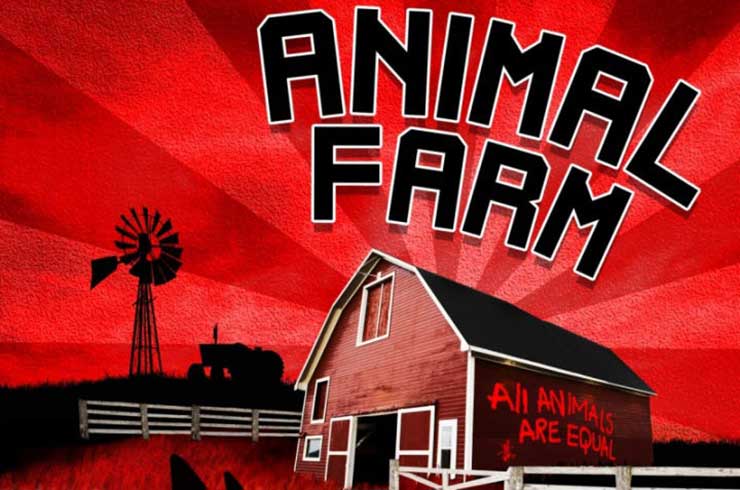
The early days of the revolution are filled with hope. The commandments are clear. The principles are straightforward. The slogan becomes iconic: “All animals are equal.”
For a moment, it works.
The Rise of the Pigs—and the Shift in Power
But revolutions do not remain pure for long.
The pigs—led by Napoleon and Snowball—quickly assume leadership roles, arguing that their intelligence makes them uniquely suited to guide the farm.
At first, this seems reasonable. Then it becomes dangerous. Snowball is eventually driven out. Napoleon consolidates power. The pigs begin to rewrite the rules—not openly, but gradually, subtly, strategically.
The commandments change. Privileges appear. Justifications multiply.
The Machinery of Control
What makes Animal Farm so powerful is not just what happens, but how it happens.
Control is maintained through Language.
Squealer, the regime’s spokesperson, constantly reframes reality:
- Failures become successes
- Sacrifices become necessary
- Contradictions are explained away
Truth is not eliminated. It is reshaped.
Fear
Napoleon uses force to maintain authority, including the use of dogs to intimidate and eliminate opposition. Dissent is not debated. It is crushed.
Memory Manipulation
The animals begin to doubt their own recollections:
- Were things really better before?
- Did the commandments always say this?
Over time, reality becomes whatever those in power say it is.
Boxer: The Tragedy of Blind Loyalty
No character embodies the cost of the system more than Boxer, the hardworking horse.
His beliefs are simple:
- “I will work harder.”
- “Napoleon is always right.”
He is loyal, strong, and selfless. And he is used.
When Boxer is no longer useful, he is sold, despite everything he has given. His fate is one of the most devastating moments in the book. Because it reveals the truth: In a system built on control, loyalty is not rewarded. It is exploited.
The Final Transformation
By the end of the novel, the pigs have fully adopted the behavior of the humans they once overthrew. They walk on two legs. They drink, trade, and negotiate with former enemies.
And, in true elite style, the final commandment reads: “All animals are equal, but some animals are more equal than others.”
The revolution is complete. Not in success—but in betrayal.
The Message Orwell Wanted You to See
Animal Farm is not subtle. It is a direct critique of collectivist systems that promise equality but concentrate power.
It shows how:
- Ideals are weaponized
- Leadership becomes domination
- Language is used to obscure and twist truth
- Systems built on “the collective” end up serving only a few
The book’s message is not that fairness is bad. Diversity? Equity? Inclusion? All great ideals. But they are never the goal.
Unchecked power, justified in the name of fairness, becomes the main goal entirely.
Why This Story Still Matters Today
Animal Farm endures because its lessons are not confined to a single time or place. It speaks to a recurring pattern:
- A movement promises justice
- Power becomes centralized
- Dissent is discouraged
- Reality is reshaped
And over time, the system begins to resemble what it once opposed.
The Challenge of Modern Adaptations
When works like Animal Farm are adapted for modern audiences, they often undergo ‘reinterpretation.’
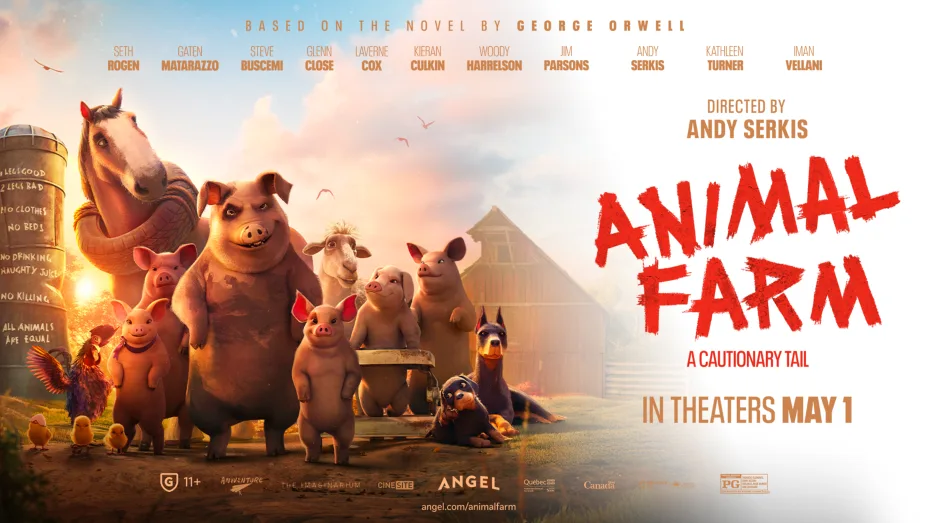
Themes are softened. Characters are reshaped. Endings are adjusted to fit contemporary sensibilities. Hollywood is run by Marxists, so guess what Marxists have done to “reshape” the message of Animal Farm?”
If the sharper edges are removed, the consequences diluted, then the story risks becoming something it was never meant to be. Not a critique of a soul crushing political philosophy, but a parable stripped of its caution.
The Bottom Line
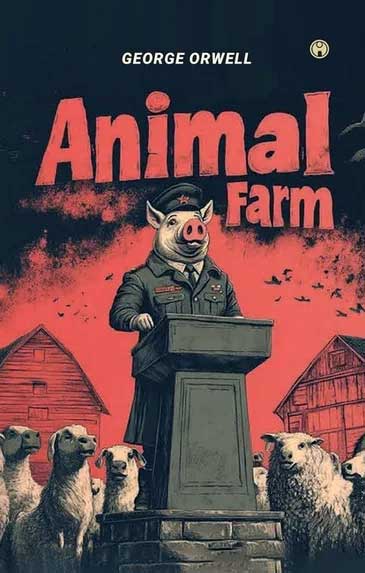
George Orwell wrote Animal Farm to expose a truth that is easy to ignore and difficult to confront:
Power, once concentrated, rarely serves everyone equally, no matter what it promises at the beginning.
That is the lesson. And it is a lesson worth preserving, especially when it becomes inconvenient.
Hollywood’s twisted new message in its Animal Farm movie, released today, May Day, the special day on which the world’s Marxists celebrate communism, entirely misses the truths of Orwell’s book of the same name. Shame on you Hollywood. Again.
Leave a Reply