
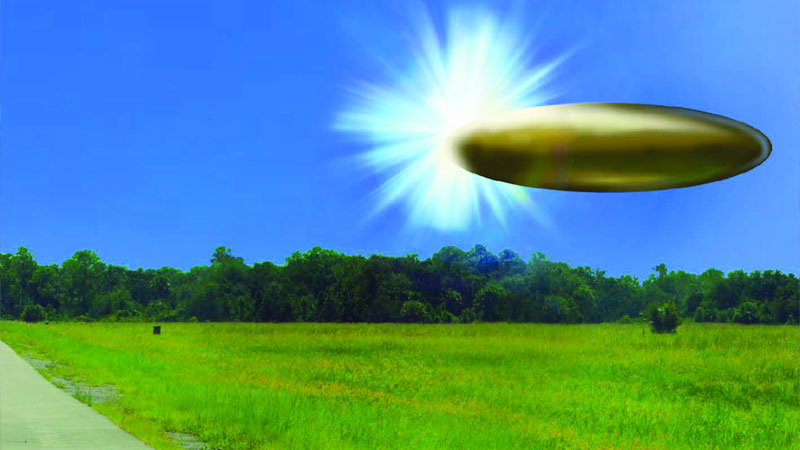
For decades, Americans who took UFOs seriously were told they were chasing swamp gas, weather balloons, camera artifacts, or fantasy. That era has ended.
The Trump administration’s first major release of UFO/UAP files does not prove that aliens are visiting earth. It does not settle whether these craft are extraterrestrial, interdimensional, spiritual, military, adversarial, or something even stranger. But it does something historically important: it places the official stamp of the United States government on the fact that the phenomenon itself is real enough to warrant public review.
On May 8, the Department of War announced the initial release of declassified Unidentified Anomalous Phenomena files through the new PURSUE system, describing it as part of a rolling, interagency transparency effort involving the White House, ODNI, DOE, AARO, NASA, the FBI, and intelligence agencies. See released documents and videos> Officials said future releases will continue.
That matters because much of the public has already seen some of these videos, reports, and claims in leaked or fragmented form. The difference now is authentication. A leaked video can be dismissed. A government-hosted archive cannot be waved away so easily.
CBS reported that the first release included 162 files from the FBI, Department of Defense, NASA, and State Department, including eyewitness testimony, photos, videos, and reports reaching back decades. The batch included 120 PDFs, 28 videos, and 14 image files.
The official position remains cautious. The government has not said these objects are alien spacecraft. NASA has said it has no data proving UAP are alien technology, and AARO has maintained that it has found no evidence confirming extraterrestrial technology.
But “no proof of aliens” is not the same thing as “nothing to see here.” To put it in plain terms, the government could have 1,000 hi-resolution videos of hundreds of UFOs, with 3-foot tall gray beings with large black eyes walking out and looking around, and it still would not constitute “proof of aliens,” because there would remain a possibility that it is something else.
What could they be? That remains to be seen. But the government will not call it extraterrestrial without more evidence than videos, and sightings by military personnel.
Retired Rear Adm. Tim Gallaudet, former Oceanographer of the Navy, has become one of the more serious voices pushing the conversation beyond ridicule. In a recent interview, Gallaudet said he has not personally seen an alien, but believes some craft appear to be under “higher order non-human intelligence” control, citing objects that move between ocean and atmosphere without visible disturbance and at speeds far beyond known human technology.
Gallaudet is not a random internet personality. He is a retired admiral, and his comments echo a growing chorus of military pilots, intelligence officials, researchers, and members of Congress who are in a position to argue that the public has not been told the full story.
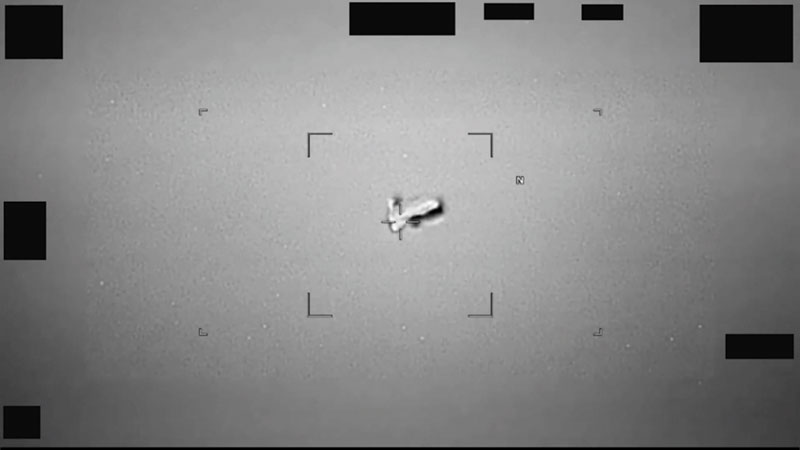
Still, the first Trump tranche has disappointed some serious UAP researchers. Christopher Mellon, former deputy assistant secretary of defense for intelligence, called the release meaningful but incomplete, warning that “data alone is not disclosure.” DefenseScoop reported that several experts praised the move while criticizing the lack of metadata, context, sensor information, chain of custody, altitude, coordinates, and official analysis.
That is the heart of the matter. The government has released material. It has not yet released the full analytical framework needed to understand it. Nevertheless, this first release is only a tiny fraction of the materials that are yet to come.
For Federalist Press readers, the proper posture is neither gullibility nor reflexive denial. The serious conservative instinct should be this: demand transparency, demand evidence, demand accountability, and resist being managed by institutions that spent decades ridiculing citizens for asking questions they now admit were legitimate.
There is also a deeper cultural and spiritual dimension that continues to arise in the subject. In Worlds Without Number, J.L. Thompson argues that belief in life beyond earth should not be shocking at all to people of faith. The book cites many sources to frame the universe as filled with God’s creations and inhabited worlds.
But Thompson also urges caution. The book does not simply equate UFOs with noble visitors from other planets. It repeatedly warns that the phenomenon includes “high strangeness,” occult-like messages, spiritual confusion, and deceptive possibilities.
That may be the most important distinction in the entire debate. The existence of other worlds does not automatically explain the strange behavior of UAP. Nor does advanced technology automatically imply benevolent motives.
If the objects are foreign technology, the national security implications are enormous. If they are American black-budget systems, then the secrecy problem is enormous. If they are controlled by non-human intelligence, then the implications are civilizational. And if the phenomenon includes a psychological or spiritual component, then the stakes may be even higher than politics.
Trump’s release has not answered those questions. But it has changed the burden of proof.
The question is no longer whether responsible people may discuss UFOs. They can. The question is whether the government will now provide enough serious evidence for the public to separate aircraft, drones, balloons, sensor errors, and hoaxes from the truly unexplained.
Until then, the public should keep watching — carefully, soberly, and without surrendering its judgment to either official denial or internet hysteria.
Linda Livaudais says
You have said it all so profoundly eloquent.! Your article is a very telling proof that those who know….know! Great read!