
Inside the Growing Mystery of America’s Missing and Dead Scientists
By James Thompson | Feature article contributor
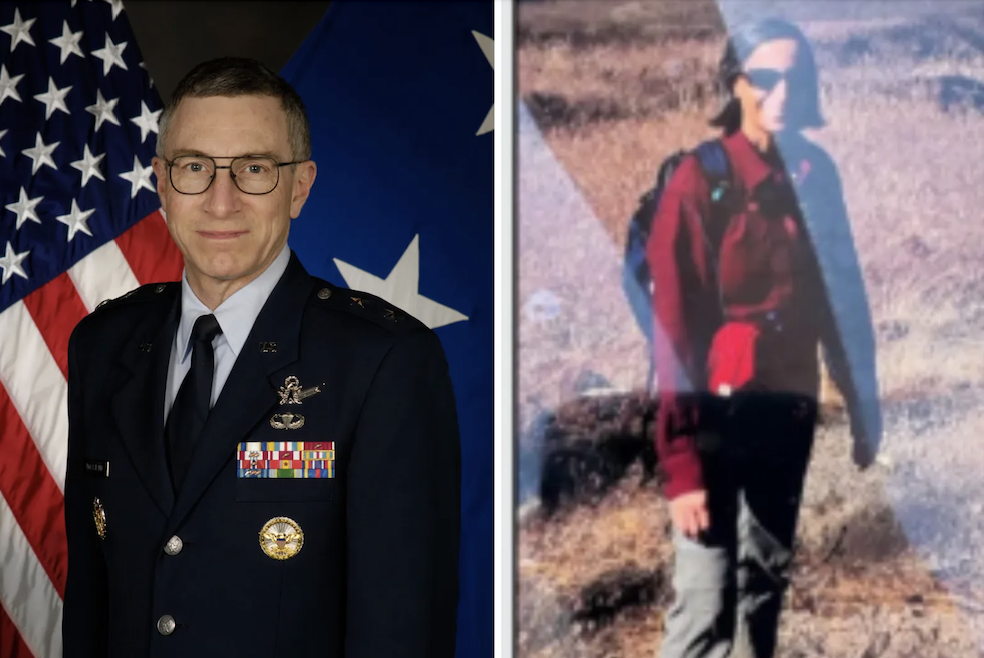
The disappearance of retired Air Force Maj. Gen. William Neil McCasland has evolved from a troubling local case into something far larger—an unresolved mystery now drawing the attention of the FBI, the White House, Congress, and multiple federal agencies.
At the center of that mystery is a simple but unsettling question:
Did one man vanish, or is he part of a pattern?
On the morning of February 27, 2026, McCasland was at his Albuquerque home. At approximately 10:00 a.m., he spoke with a repairman. At 11:10 a.m., his wife left for a medical appointment. When she returned at 12:04 p.m., he was gone. There were no signs of a struggle. No confirmed witnesses. No clear direction of travel.
Law enforcement responded immediately, and the FBI quickly became involved. Investigators conducted an extensive canvass, reviewing doorbell and security footage from hundreds of homes throughout the neighborhood. What they found—or rather, did not find—has become one of the most confounding elements of the case.
There is no confirmed video showing McCasland leaving his home or the surrounding area. In a modern residential neighborhood saturated with surveillance, that absence is striking.
Inside the home, investigators found his phone, his prescription glasses, and his wearable devices such as his smart watch. Missing were his wallet, hiking boots, and a .38-caliber revolver. That combination has resisted easy explanation.
Leaving a phone behind for a short neighborhood run is not unusual. But leaving behind prescription glasses raises real questions. At the same time, taking a firearm suggests intention, preparation. Was he afraid of someone? Did he have a suicidal intent? Did a kidnapper take the gun?
Taken together, the pattern does not align cleanly with any single scenario. It is not what one would expect from a routine run. It does not neatly fit a medical emergency. And it is inconsistent with most planned disappearances.
It is a behavioral contradiction—and it is at the heart of the mystery.
McCasland is not an ordinary missing person. He served as commander of the Air Force Research Laboratory, commanding a multi-billion-dollar exotic research budget, later holding senior roles in Pentagon special programs and space acquisition. Yes, he ran the research lab at Wright-Patterson AFB (where the Roswell debris was taken). These positions placed him inside the ecosystem of the U.S. government’s most sensitive technologies—advanced aerospace systems, exotic weapons research, and highly classified programs.
His name has also circulated in UFO discussions through past communications involving Tom DeLonge, who claimed McCasland recounted his work with captured UFOs and non-human remains.
What has transformed this case into a national story is not just who McCasland is, but who else has recently disappeared or died.
Across the past several years, at least eleven individuals tied to high-level scientific or defense-related work have died or gone missing under unusual circumstances. The list includes researchers, engineers, and professionals connected to institutions such as NASA’s Jet Propulsion Laboratory, Los Alamos–adjacent environments, MIT, and Caltech, along with several cases centered in New Mexico.
Amy Eskridge, a propulsion researcher focused on advanced aerospace concepts, died in 2022. Her death was ruled a suicide, though her work and reported concerns about harassment have fueled ongoing speculation.
Michael David Hicks, a NASA-affiliated scientist working on asteroid-related technology, died in 2023 under circumstances that have not been fully detailed publicly.
Frank Maiwald, a longtime engineer involved in advanced Earth observation systems, died in 2024.
Monica Reza, one of the most striking cases, was a NASA and Aerojet Rocketdyne engineer specializing in advanced materials used in rocket propulsion. She helped develop high-performance alloys designed to increase thrust while reducing weight. She disappeared in 2025 while hiking. According to reports, she was within sight of a companion—just feet away—when she suddenly vanished. Her work overlapped with projects funded through the same defense research ecosystem that McCasland later oversaw.
Melissa Casias, connected to Los Alamos National Laboratory, disappeared in New Mexico in 2025 and has not been found.
Anthony Chavez and Steven Garcia, also in New Mexico, are part of a cluster of disappearances that have drawn attention due to their geographic proximity.
Jason Thomas, a pharmaceutical scientist, was later found dead after initially being reported missing.
Nuno Loureiro, a leading plasma physicist, was killed in what authorities have described as a targeted act of violence.
Carl Grillmair, a Caltech astrophysicist, was shot outside his home in 2026.
And then there is McCasland.
At first glance, the list appears alarming: aerospace engineers, propulsion experts, nuclear-adjacent personnel, and defense-connected scientists. Many had exposure to advanced or sensitive technologies. Some held security clearances. A few have been loosely linked to discussions of unidentified aerial phenomena.
This has led some analysts and officials to raise the possibility of foreign intelligence targeting, technological espionage, or suppression of sensitive knowledge.
The federal government is now taking those questions seriously. The FBI is reviewing the cases collectively, and the White House has directed agencies to identify any potential commonalities. Congress has also begun seeking answers.
But there is a competing view, one grounded in caution. Investigators note that several of the deaths have known explanations. Some incidents involve personal conflicts or isolated acts of violence. The individuals worked in different fields and institutions, and there is currently no confirmed evidence that all of the cases are connected.
Some experts argue that what appears to be a pattern may instead be coincidence amplified by attention.
Even so, McCasland’s case stands apart. Because of the tight one-hour timeline. Because of the absence of surveillance confirmation. Because of the items left behind versus those taken. And because of where it happened. He did not vanish in wilderness. He did not disappear while traveling. He vanished from his own neighborhood—with no confirmed trace.
At its core, the issue now confronting investigators is not just what happened to one man. It is whether the United States is witnessing a series of unrelated tragedies or the early signs of a deeper vulnerability. In today’s world, the most valuable assets are not always documents or systems. They are people—individuals who understand advanced propulsion, materials science, classified research programs, and emerging defense technologies.
If even a small number of those individuals were being targeted, the implications would be profound.
For now, the facts remain unchanged. A retired general with deep access to some of the nation’s most sensitive programs walked out of view and has not been seen again. At the same time, a growing list of scientists and researchers connected in varying ways to that same broad ecosystem has raised questions that no one has yet been able to definitively answer.
It may prove to be coincidence. But until that is established with evidence, the question will remain: Is this a collection of isolated events, or the outline of something far more serious?
James Thompson is an author and ghostwriter, and a political analyst. He is an analyst of UAP reports, and has authored the book Worlds Without Number.
Leave a Reply