• Home
  • Mission
  • Federalist Papers
  • Foundation
  • U.S. Constitution
  • Bill of Rights

Federalist Press | Defending Liberty — Informing America

Breaking News and Political Commentary

  • All Stories
  • Economy
  • Elections
  • Entitlement
  • Ethics
  • Foreign
  • Gender
  • Religion
  • Sci-Tech

Do Liberal Women View Lindsay Clancy Murders Akin to Late Term Abortions?

August 29, 2026 By Editor Leave a Comment

As the Lindsay Clancy jury deliberates, hundreds of supporters dressed in pink have turned a horrific triple killing into a national debate over motherhood, mental illness—and criminal responsibility

Three children are dead. Their mother killed them. Those two facts are not disputed by either side in a Massachusetts courtroom.

Cora Clancy was five years old. Her brother Dawson was three. Their baby brother, Callan, was eight months old. On January 24, 2023, their mother, Lindsay Clancy, strangled all three children with exercise bands in the basement of the family’s Duxbury home after she sent her husband to pick up medication and takeout food. After murdering her three children, Clancy then attempted to kill herself, ultimately leaving herself paralyzed.

What the jury must decide is something considerably more complicated: Was Lindsay Clancy legally responsible for what she did?

After five weeks of testimony, the case went to a Plymouth Superior Court jury Thursday. The panel deliberated for several hours Thursday and approximately seven more Friday without reaching a verdict. Jurors requested to examine prescription medications and the knife involved in Clancy’s suicide attempt before being dismissed for the weekend. Deliberations resume Monday morning.

The jury has five potential outcomes before it: first-degree murder, second-degree murder, manslaughter, outright acquittal, or a finding that Clancy was not criminally responsible because of mental illness. A first-degree murder conviction could result in life imprisonment without parole; a finding of no criminal responsibility could result in confinement in a psychiatric institution rather than prison.

The defense: This was psychosis, not murder in the legal sense

Nobody seriously disputes that Clancy was suffering psychologically before the killings.

She had sought psychiatric treatment, experienced suicidal thoughts, contacted crisis resources and underwent hospitalization. Her defense maintains that she developed postpartum psychosis following the birth of Callan and was subjected to an ineffective and excessive succession of psychiatric medications. Defense experts testified that she was psychotic when she killed her children and therefore incapable of appreciating the wrongfulness of what she was doing.

Defense attorney Kevin Reddington consequently isn’t asking the jury to believe someone else killed Cora, Dawson and Callan. He acknowledges that Clancy did it. His contention is that mental disease had so profoundly destroyed her rational capacity that Massachusetts law cannot hold her criminally responsible.

That could be a legitimate legal defense, and it deserves to be considered on the evidence rather than dismissed because the crime is horrifying.

But prosecutors have presented a profoundly different interpretation.

Prosecutors say there was planning

The prosecution contends Clancy was depressed and psychologically troubled but not psychotic to the degree required to eliminate criminal responsibility.

Prosecutors emphasize the sequence preceding the killings. Clancy sent her husband Patrick awayt from the house to obtain medication for one of the children and collect dinner. While he was away, she had the opportunity she needed to kill the children. She strangled them individually with exercise bands before attempting suicide.

Prosecution experts also challenged Clancy’s subsequent account that she heard a voice directing her to kill the children. Forensic psychologist Kirk Heilbrun testified that he doubted she was suffering an acute psychotic episode and concluded that she understood the wrongfulness of her conduct. Other prosecution experts pointed to inconsistencies in her descriptions of what happened.

That conflict—not whether Clancy killed her children—is the case the jury is deciding.

Then came the women in pink

Outside the courthouse, however, something unusual happened.

Hundreds of Clancy supporters assembled wearing bright pink. Associated Press reporters estimated approximately 300 women and a few men participated in one demonstration. Shirts carried messages including “Believe,” “She Needed Help” and “Peace For Lindsay.” Some supporters traveled considerable distances to attend.

These supporters have said nothing about Cora, Dawson and Callan in this extraordinary public spectacle.

Whatever ultimately happened inside Lindsay Clancy’s mind, three human beings incapable of defending themselves were brutally murdered. The oldest had barely begun school. The youngest had lived only eight months.

A society can demand better psychiatric treatment for mothers while remembering their murdered children. Those propositions do not conflict.

When the accused becomes the symbol

The unsettling feature of the demonstrations is not concern about postpartum psychosis. That concern is legitimate and potentially lifesaving. The uncomfortable question is why the person who killed three children became the visual centerpiece of the movement.

There are countless women who have suffered postpartum depression and psychosis without killing anyone. Their experiences deserve attention. So do women who recognized frightening symptoms and sought emergency intervention, families who protected mothers and babies during psychiatric crises, and physicians attempting to recognize an uncommon but extremely dangerous condition.

Making Clancy herself the symbol creates an unavoidable moral ambiguity.

One recent commentary from the political left demonstrates how far that reframing can go. Left Voice, a self-described revolutionary socialist publication, published an essay with the remarkable headline “In the Trial of Lindsay Clancy, Capitalism Is the Guilty Party.” Its authors argued that the capitalist healthcare system—not Clancy—was the true guilty party.

That is no longer simply an argument that mental illness can eliminate legal responsibility. It relocates moral responsibility from the individual who performed a murderous act onto “the system.” It echoes Luigi Mangione shooting United Healthcare CEO Brian Thompson in the back, and the large cast of young liberal supporters of that “heroic” act of murder.

And that deserves examination.

Compassion cannot require forgetting the victims

Mental illness is real. Postpartum psychosis is real. A human being suffering a genuine psychotic break may be incapable of understanding reality in a way that fundamentally changes criminal responsibility. American law has recognized versions of that principle for generations.

The jury, not demonstrators, commentators or politicians, must determine whether the evidence proves that happened here. But compassion for a mentally ill defendant need not require the moral displacement of her victims.

There is something deeply uncomfortable about seeing hundreds of people assembling around the person who admittedly murdered three defenseless children while the children’s names risk becoming secondary characters in their own deaths.

Cora. Dawson. Callan. They were not abstractions in a debate about America’s healthcare system. They were children. Beloved by their decimated father and extended family members.

Is there a broader cultural question?

The spectacle also raises a difficult cultural question that extends beyond this particular defendant.

Modern political debate increasingly frames traditional obligations through the vocabulary of autonomy. Marriage can be discussed primarily in terms of personal fulfillment. Pregnancy becomes a question of bodily autonomy. Parenthood is frequently discussed in terms of its economic and psychological burdens. Abortion politics, particularly regarding later stages of pregnancy, places the competing moral claims of mother and unborn child at the center of an intense national disagreement.

The Clancy case is legally and morally different from abortion, and it would be inaccurate to claim that the women outside the courthouse necessarily connect the two.

Nevertheless, a conservative cultural critique can legitimately ask whether something happens to a society when the language of adult autonomy consistently becomes louder than the language of obligation toward dependent children.

That is a philosophical question, not evidence concerning Clancy’s guilt.

But this case makes the question difficult to avoid.

Now twelve jurors must decide

The jury of nine women and three men has already spent more than ten hours examining an enormous record developed during five weeks of testimony. Their early requests for prescription medications suggest, although we should not speculate too far, that they are carefully considering the medical evidence central to Clancy’s defense.

They return Monday. Their responsibility is narrower than America’s. They must determine Lindsay Clancy’s criminal responsibility under Massachusetts law.

The rest of us confront a different question. Can we acknowledge severe mental illness without romanticizing the person who commits an atrocity? Can we identify failures in psychiatric medicine without automatically transferring responsibility from individuals to institutions? Can we have compassion for a desperately ill mother while reserving our deepest compassion for three children whose lives were taken from them?

We should be capable of all three. Whatever verdict eventually comes from Plymouth Superior Court, one fact should never become obscured by pink shirts, political ideology, psychiatric terminology or television cameras.

Cora Clancy was five. Dawson was three. Callan was eight months old. They deserve to remain at the center of this story.

Filed Under: Crime, Ethics, Featured, Gender, Sci-Tech

Trump UAP Disclosure: Five Tranches Later, UFO Disclosure Is No Longer Fringe

August 17, 2026 By Editor Leave a Comment

The most important revelation may not be a single photograph or video. It is that the United States government has finally acknowledged, in public and at scale, that it has spent decades collecting and studying phenomena it often could not explain.

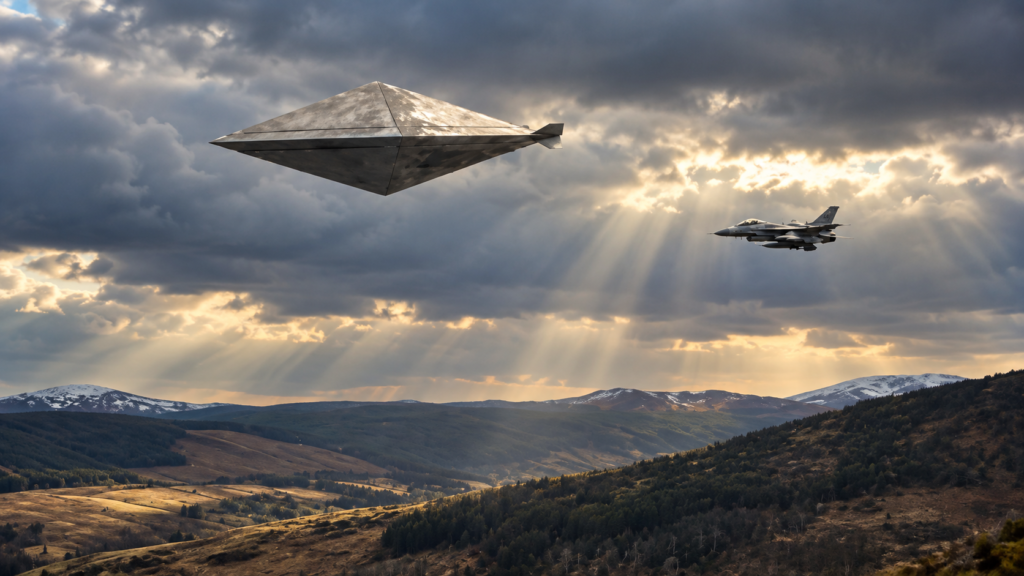
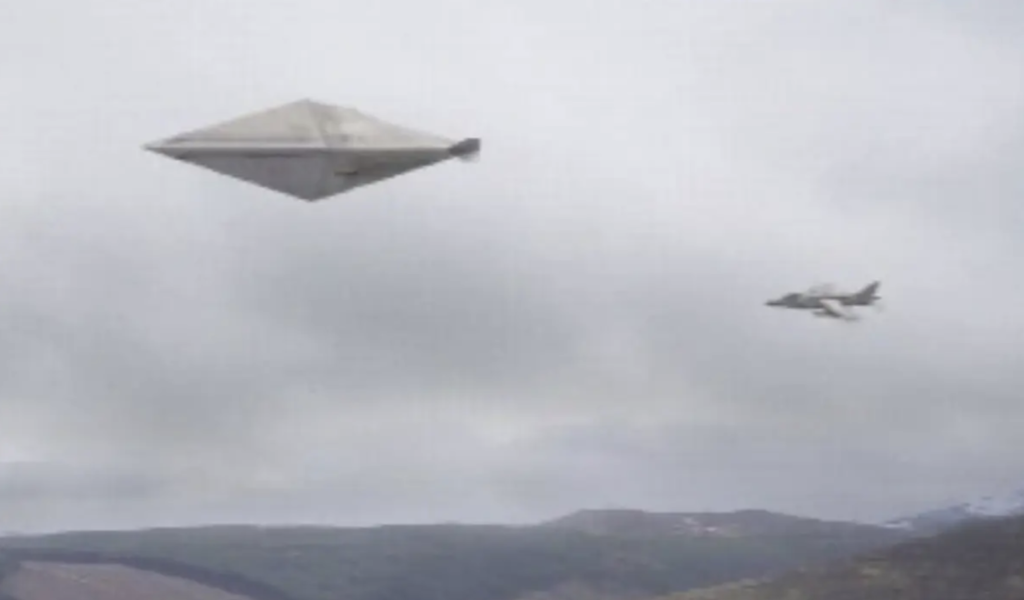
UAP seen and photographed by civilians on ground, and chased by RAF jet over Scottish Highlands in August 1990.

Something extraordinary has happened in Washington over the past several months, and it risks being missed because Americans have been conditioned to expect “disclosure” to arrive as a single spectacular photograph of an alien spacecraft or a president standing behind a podium announcing that mankind is not alone.

That is not what has happened. In fact, from what President Trump has said in the past, it appears that he and his tops officials have not been read officially into the government’s legacy UAP programs yet, but are exerting force within the government to obtain all of the records.

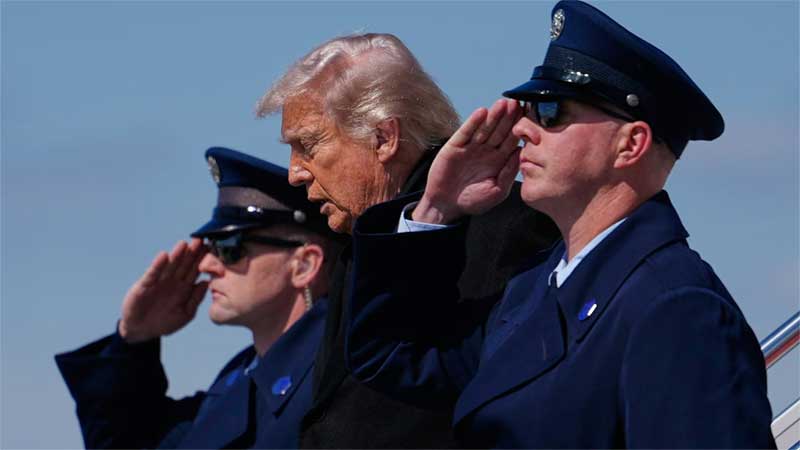
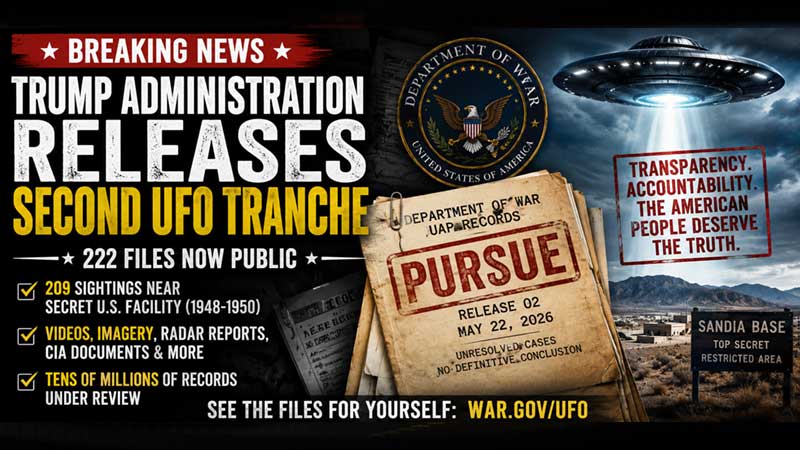
Instead, President Donald Trump directed the federal government to begin identifying, reviewing, declassifying, and releasing records involving UFOs and Unidentified Anomalous Phenomena. Five separate tranches have now been published through the Department of War’s Presidential Unsealing and Reporting System for UAP Encounters—PURSUE—beginning May 8 and continuing through the fifth release on August 7. The Department says the effort involves dozens of agencies, tens of millions of records, material extending across many decades, and additional releases expected on a rolling basis. See documents>

That statement alone represents remarkable progress.

LARGE “DISC” UAP / ACTIVITY : UAP NAVIGATES THROUGH CLOUDS / DETECTION : AIR FORCE / 23 NOV 2020

For generations, Americans who suspected that the government had taken UFO reports seriously were routinely portrayed as conspiracy theorists. Yet the government’s own disclosure portal now openly acknowledges that agencies throughout the national-security establishment possess decades of UAP-related records, that many remain unresolved, and that officials are conducting a government-wide effort to locate and release them. The Department explicitly states that the cases published through PURSUE remain unresolved because officials cannot make definitive determinations about what was observed.

That does not mean the Pentagon has announced that extraterrestrials are visiting Earth.

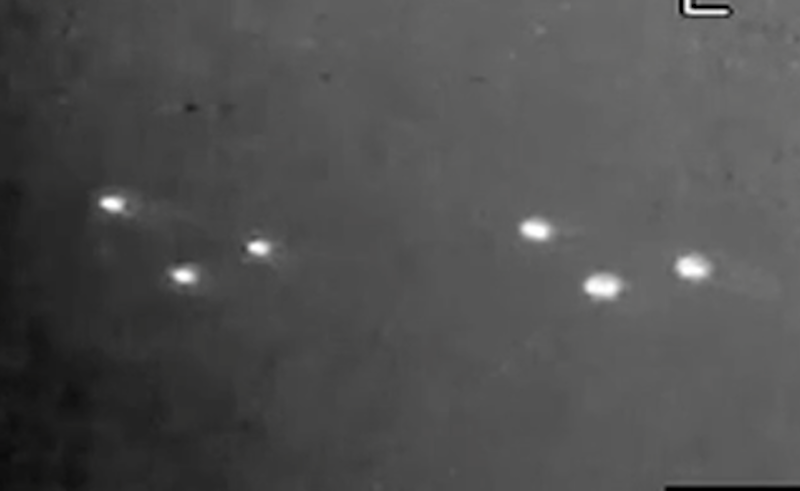
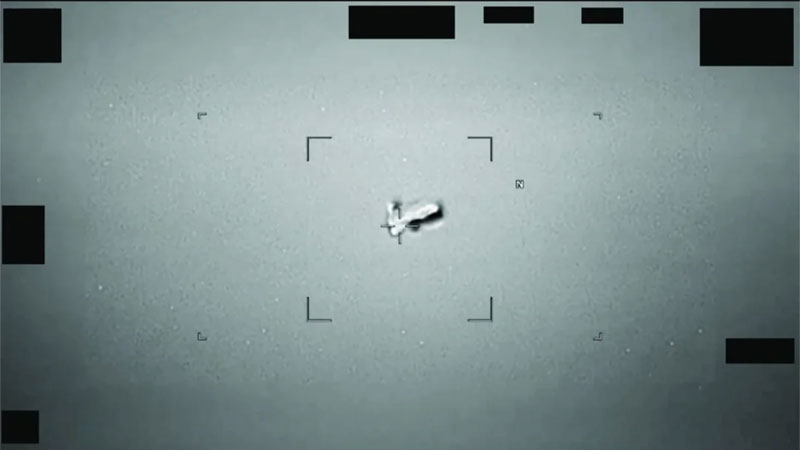
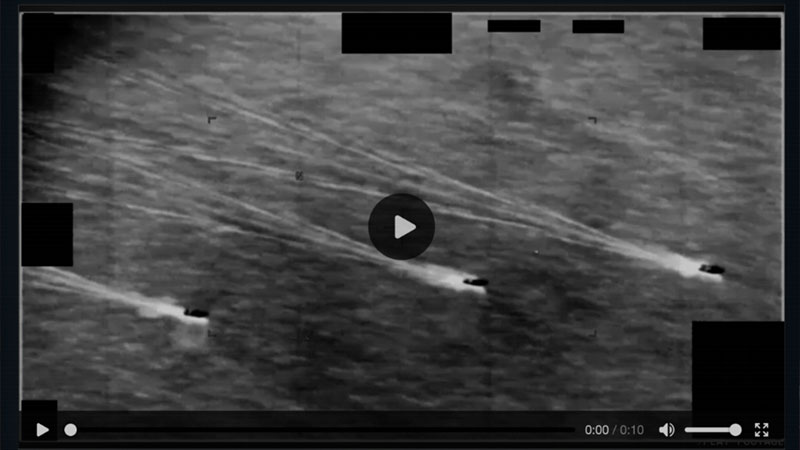
Incident: “Cold Orbs” UAP in Gulf of Oman Date: 8 September 2021 Platform: U.S. Air Force AC-130J Ghostrider Evidence: EO/IR sensor imagery and multiple released video sequences Public Release: 7 August 2026 Status: Unresolved / no definitive public identification On 8 September 2021, the crew of a U.S. Air Force AC-130J Ghostrider operating over the Gulf of Oman recorded a series of unusual objects using the aircraft’s electro-optical/infrared (EO/IR) sensor systems. The incident has become known as the “Cold Orbs” UAP encounter because the objects appeared as small spherical targets with unusual infrared characteristics.

It means something more modest, but historically important: the phenomenon was real enough to investigate, important enough to classify, persistent enough to generate records across generations, and unresolved enough that the government is now asking outside scientists and researchers to help evaluate the evidence.

That is a very different world from the one Americans inhabited only a decade ago.

The Fifth Tranche May Be the Most Interesting Yet

Veteran UFO historian Richard Dolan, who has studied the government’s handling of this subject for more than three decades, spent hours reviewing all 41 files in the fifth release. His assessment was unusually positive. Dolan called Tranche Five the most interesting of the releases so far, while simultaneously criticizing the government for continuing to withhold important dates, locations, telemetry, and identifying details necessary for rigorous independent analysis.

That balance is important.

The fifth tranche is not the smoking gun many disclosure advocates have spent years anticipating. It contains incomplete records, artist reconstructions, ambiguous imagery, and cases lacking enough data to reach definitive conclusions.

But it also contains material that deserves serious attention.

Perhaps the most striking involves a September 2021 encounter over the Gulf of Oman involving a U.S. Special Operations Forces AC-130J gunship. Newly released infrared footage and an accompanying intelligence report describe approximately 25 UAP observations during a live-fire exercise. The report characterized some of the objects as “cold orbs,” estimated their speeds at approximately 250 to 1,300 miles per hour, and reported aggressive maneuvering and apparent reactions to the aircraft’s cannon fire.

Scientific American—hardly a publication known for sensational UFO reporting—highlighted the Gulf of Oman material because it originated from a sophisticated U.S. military platform operating infrared sensors during an actual military exercise.

Dolan also drew attention to expanded footage associated with the USS Omaha encounter, an incident already familiar to serious UAP researchers. Earlier leaked material showed an oval or spherical object apparently descending toward the Pacific Ocean. Tranche Five provides additional video surrounding that event, giving analysts more context than the brief clips previously available.


Declassified Pentagon UAP files, Gulf of Oman 2021: an AC-130 gunship crew reports ~25 “cold orbs” at 250–1300 mph — on six phone videos. DEEP FILE 001.

The release also contains CENTCOM footage, FBI witness interviews describing large triangular objects, and historical military documents dating back to the early years of the modern UFO era. Dolan’s conclusion was not that Tranche Five proves extraterrestrial visitation, but that anyone dismissing the release as containing “nothing” has failed to examine what is actually there.

That seems about right.

The Historical Documents May Ultimately Matter More Than the Videos

Modern audiences naturally gravitate toward photographs and video. Yet some of the most important evidence in the five tranches may be the paper trail.

The releases include military memoranda, intelligence reports, astronaut material, FBI records, pilot accounts, investigative files, and photographs extending back into the 1940s. Taken together, they establish beyond serious dispute that elements of the U.S. government have been collecting and evaluating UFO reports for roughly eighty years.

That history matters because the official public posture toward UFOs was often far more dismissive than the private bureaucratic record now being exposed.

Director Dan Farah, whose documentary The Age of Disclosure featured dozens of former and current senior government, military, and intelligence officials, argues that the historical files demonstrate just how seriously the government treated the problem internally. Farah singled out an Apollo 17 photograph in the first tranche showing a triangular arrangement of unidentified objects above the lunar horizon as particularly intriguing, though the image itself remains open to competing interpretations.

More important than any single photograph is the cumulative pattern.

Military organizations were writing memoranda about unusual aerial objects in the 1940s.

Pilots were reporting extraordinary encounters.

Intelligence agencies were collecting witness accounts.

Nuclear and military installations repeatedly appeared in UAP files.

Modern warships and aircraft continued recording unexplained objects decades later.

And today, rather than dismissing these records as meaningless, the government is publicly cataloging and releasing them.

That is progress.

What Has Changed Most Is Washington

The transformation of the political environment may ultimately be more significant than any individual release.

UAP disclosure has become genuinely bipartisan.

On the Republican side, Representatives Anna Paulina Luna, Eric Burlison, and Tim Burchett have been among the most visible advocates for transparency. Democratic Representatives Jared Moskowitz and André Carson have also pushed disclosure efforts. In the Senate, Chuck Schumer, Mike Rounds, and Kirsten Gillibrand have backed legislation and oversight intended to force additional government records into the open.

Years before Trump’s PURSUE initiative, Schumer and Rounds introduced legislation modeled partly on the JFK Records Act that sought a formal government collection of UAP records and contemplated government control over recovered technology of unknown origin and biological evidence of non-human intelligence if such materials existed in private hands.

That is not the language of a government that considers the entire subject frivolous.

Congressional interest has only intensified.

A major Disclosure Forum held on Capitol Hill this summer brought lawmakers together with former intelligence officials, scientists, military personnel, whistleblowers, and researchers. Participants discussed not merely sightings but whistleblower protections, classification, alleged crash-retrieval programs, national security, and how government should respond if more consequential information eventually becomes public.

Congresswoman Luna made one particularly revealing comment about the degree of White House engagement, praising senior presidential adviser Stephen Miller as “absolutely incredible on this topic” and saying disclosure advocates were providing the administration with names of individuals who might receive immunity in order to come forward.

Whether those witnesses ultimately substantiate extraordinary claims remains to be seen.

But it is increasingly difficult to argue that the disclosure effort consists only of UFO enthusiasts shouting from the political sidelines.

It now reaches deeply into Congress and the executive branch.

Trump Appears Serious About the Process

President Trump’s February directive instructed the Secretary of War and other departments and agencies to identify and release government material involving UFOs, UAP, extraterrestrial life, and related subjects. The Department of War subsequently stated that it is coordinating with the Office of the Director of National Intelligence on an unprecedented government-wide review of tens of millions of records. Secretary Pete Hegseth has publicly described the effort as part of an administration commitment to unprecedented transparency.

That does not tell us what Trump personally believes UFOs are.

It tells us something arguably more important: he has ordered the government to look.

Farah says senior cabinet officials have been pressing agencies and military branches for evidence and records, while encountering resistance from portions of the national-security bureaucracy. Those assertions come from Farah and his sources rather than from independently released government documentation, but they are consistent with the administration’s acknowledgement that the review involves a massive, decentralized archive spread across many agencies.

Ross Coulthart has similarly argued that Trump appears serious about exposing secrets held within the national-security establishment, while continuing to press officials and whistleblowers for greater disclosure.

The significance is difficult to overstate.

For decades, disclosure advocates complained that presidents expressed curiosity about UFOs but eventually surrendered to the bureaucracy.

This administration has created an actual public release mechanism.

Five tranches later, it is still operating.

There Is Still Plenty to Criticize

Disclosure advocates should resist the temptation to treat every government release as proof of their preferred theory.

Many files remain incomplete.

Some photographs are ambiguous.

Some objects will almost certainly prove to be balloons, drones, sensor artifacts, satellites, aircraft, or natural phenomena.

The government itself emphasizes that “unresolved” means precisely that—unresolved—not extraterrestrial.

Dolan’s criticism is especially important: independent analysts often cannot properly evaluate cases because crucial metadata remains redacted or absent.

If the government truly wants private-sector scientists to analyze the evidence, it must eventually provide better-quality original sensor data, telemetry, complete incident timelines, radar records, chain-of-custody information, and sufficient contextual material to permit real scientific evaluation.

A fuzzy video without metadata may generate curiosity.

It does not settle anything.

Yet Look How Far We Have Come

That criticism should not obscure what has changed.

Within a remarkably short period of time, the United States has moved from institutional ridicule of the UFO subject to:

a presidential directive ordering disclosure;

a permanent government website releasing UAP records;

five successive public tranches;

Cabinet-level involvement;

cooperation from the Office of the Director of National Intelligence;

bipartisan congressional pressure;

formal legislation concerning UAP records;

government acknowledgement of decades of investigations;

and military videos and reports being openly released for public examination.

The stigma is collapsing.

Whatever the final explanation for UAP turns out to be, the question itself is no longer politically unserious.

Scientists are examining the material.

Members of Congress are demanding records.

Military personnel are speaking publicly.

Government agencies are publishing evidence.

And the President of the United States has explicitly told his administration to pursue the truth.

That may ultimately be the most important disclosure of all.

We still do not know what some of these objects are.

We do know, finally and officially, that the government has been asking the same question for a very long time.

And for perhaps the first time in modern history, it is beginning to let the American people look over its shoulder while it searches for the answer.

Filed Under: Featured, Sci-Tech

Trump Administration Releases Fifth Tranche of UFO Files as Transparency Initiative Continues

August 7, 2026 By Editor Leave a Comment

Newly declassified records focus on mysterious triangular craft, eyewitness testimony, and additional FBI investigative files as public scrutiny intensifies.

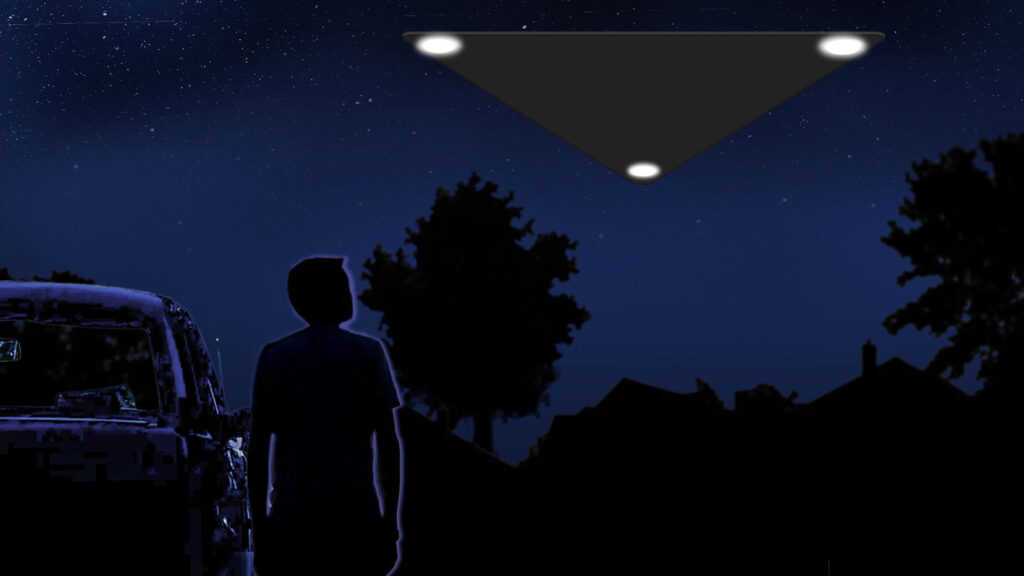
Artistic interpretation of a reported incident potentially involving unidentified anomalous phenomena (UAP) in June or July of 2011.

The Trump administration has released the fifth tranche of declassified UFO and UAP records through the Department of War’s Presidential Unsealing and Reporting System for UAP Encounters (PURSUE), continuing what has become one of the most ambitious government transparency efforts ever undertaken on the subject of unidentified aerial phenomena. link>

Although previous releases included military videos, NASA imagery, historical intelligence files, and incidents involving nuclear facilities, the newest release appears to concentrate on one of the most persistent mysteries in UFO research: large triangular craft.

For decades, reports of massive silent triangles have occupied a unique place in UFO literature. Whether they represent advanced military technology, misidentified conventional aircraft, atmospheric phenomena, or something more exotic remains unknown.

The newest release is likely to ensure that debate continues.

The “Triangle Edition”

Early reviewers have already begun referring to the latest collection as the “Triangle Edition.” Community discussions note that multiple newly released FBI interview summaries describe witnesses reporting nearly identical triangular objects observed years apart in different locations.

Among the newly released accounts:

  • A witness described a large triangular craft with bright white lights positioned at each corner.
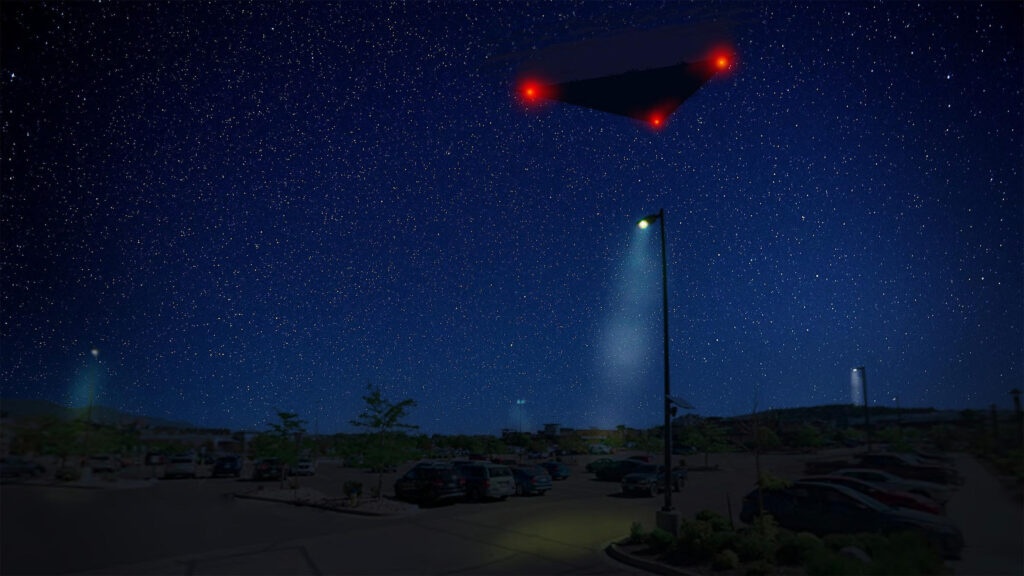
  • Another reported a triangle displaying red corner lights while moving silently across the sky.
  • One observer stated the object appeared capable of accelerating almost instantaneously while surrounded by what appeared to be waves or distortions in the surrounding air.

None of these reports establishes what the witnesses actually observed. They do, however, reveal remarkable similarities between reports collected independently over many years.

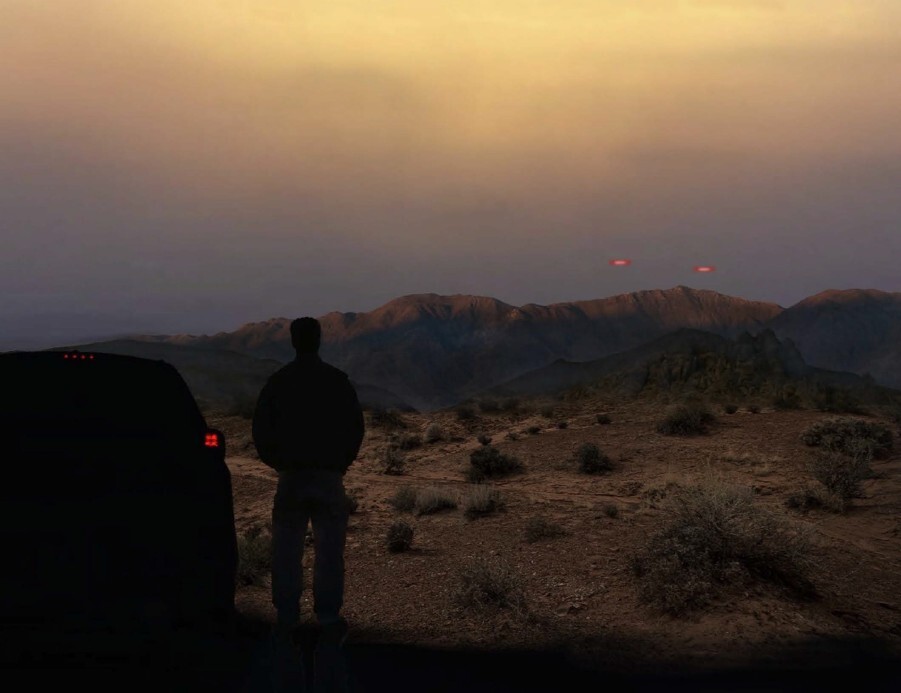
Artistic interpretation of a reported incident potentially involving unidentified anomalous phenomena (UAP) near Colorado Springs, Colorado in 2023.

Former Pentagon Employee Describes Extraordinary Sighting

Perhaps the most widely discussed document released today is an FBI interview with a former Pentagon employee who described witnessing an unusual object over Colorado in 2023.

According to the interview summary, the witness and his wife observed what he described as a translucent triangular craft flying silently only a few hundred feet overhead.

The witness reportedly stated the object lacked conventional aircraft features such as wings, engine nacelles, or visible propulsion. It appeared surrounded by a faint haze and emitted a silver-blue glow before rapidly changing orientation and disappearing within seconds.

Because the witness lived near an airport and was familiar with conventional aircraft, investigators noted that he believed the object behaved unlike any airplane or drone he had previously observed.

Continuing a Historic Release Program

Today’s publication follows four earlier releases that collectively opened thousands of pages of government material to public examination.

Those previous tranches included:

  • historical FBI memoranda,
  • military cockpit videos,
  • NASA photographs,
  • astronaut observations,
  • Department of Energy reports,
  • audio recordings,
  • intelligence summaries,
  • Project Sign documents,
  • and investigations involving unidentified objects observed near sensitive military and nuclear installations.

One of the most discussed cases from the fourth tranche involved an unidentified object reported near the Pantex Plant in Texas, America’s principal nuclear-weapons assembly facility. Another included a 1949 conference examining the mysterious “green fireballs” reported over Los Alamos.

What People Are Saying

Reaction to the fifth release has been mixed.

Many UFO researchers have welcomed the continued flow of primary-source documents, arguing that allowing independent researchers to review original government files represents a significant improvement over decades of official secrecy. Others remain cautious.

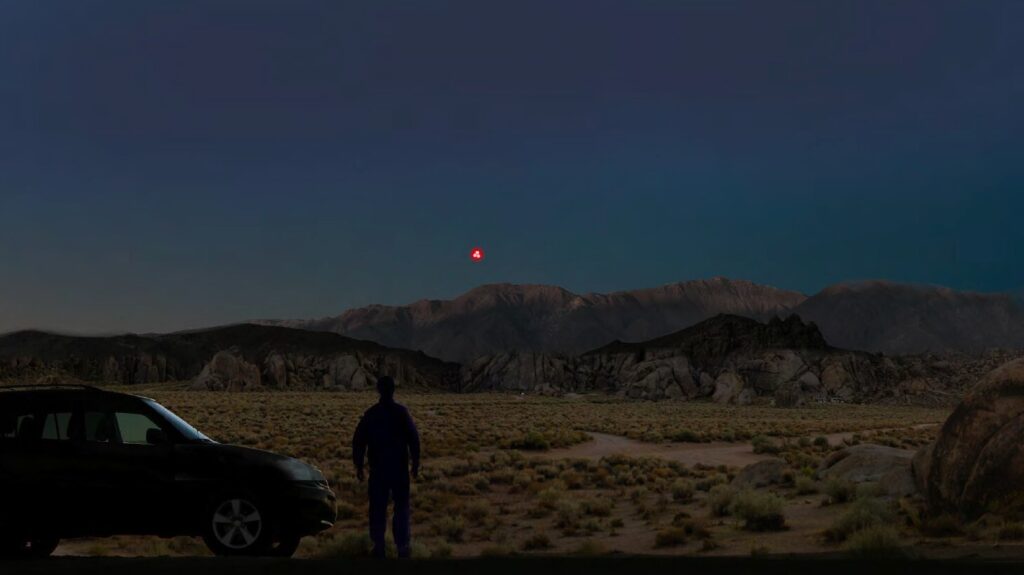
Artistic interpretation of a reported incident potentially involving unidentified anomalous phenomena (UAP) in the western United States in 2026.

Some observers have expressed disappointment that several releases continue to include digital reconstructions or artist’s renderings alongside authentic documents, arguing that recreated imagery should be clearly distinguished from original evidence to avoid confusion.

Many commentators also note that while the collection contains intriguing witness testimony, it still falls short of providing definitive proof regarding the origin of the reported objects.

Transparency Remains the Biggest Story

Perhaps the most significant development is not any individual sighting. It is the release process itself.

For decades, Americans were told that UFO files either did not exist, contained nothing of interest, or could not be made public.

Under PURSUE, the federal government has now released hundreds of documents, photographs, videos, and investigative records for anyone to examine. That does not mean every mystery points to extraterrestrial intelligence.

An artistic interpretation of a reported incident potentially involving unidentified anomalous phenomena (UAP) in the western United States in 2026.

Many cases may eventually prove to involve drones, classified aircraft, atmospheric phenomena, sensor artifacts, or simple misidentification. Others remain unresolved.

The Department of War has repeatedly emphasized that these records are being released to encourage public review and independent analysis—not to endorse any particular explanation.

What Readers Should Examine First

For readers visiting the PURSUE archive, several items from the fifth tranche appear especially noteworthy:

  • The FBI interview describing the 2023 translucent triangular object witnessed by a former Pentagon employee.
  • The multiple reports describing large triangular craft with illuminated corners and silent flight characteristics.
  • The accompanying FBI interview summaries documenting how investigators recorded and evaluated witness testimony.

Whether these reports ultimately point to advanced human technology, natural phenomena, or something not yet understood, one conclusion continues to grow stronger with each release: The American public now has access to a body of official records that, only months ago, remained locked behind classification barriers. The debate over what they mean is only beginning.

Filed Under: Featured, Religion, Sci-Tech

Vaccines Save Lives. They Also Injure Some Children. Both Facts Can Be True.

August 4, 2026 By Editor Leave a Comment

There is something of a pro-vax / anti-vax vibe in the air in America. There shouldn’t be. But Americans need to know that there is a real risk for many children receiving vaccines.

HHS Secretary RFK, Jr. tells Dana Bash ‘Parents should get their children vaccinated for measles’

For years, Americans have been told that vaccines are “safe and effective.” In the broad sense, that statement is true. Vaccines have dramatically reduced or eliminated diseases that once killed or permanently disabled hundreds of thousands of children.

But another statement is also true. Some children are seriously injured by vaccines.

That fact is neither new nor controversial within the medical community. It is the reason Congress established the National Vaccine Injury Compensation Program in 1986. Lawmakers recognized that while vaccines benefit society as a whole, a small number of individuals would inevitably suffer severe adverse reactions through no fault of their own.

The question is not whether vaccine injuries exist. The question is how honestly we discuss them.

A Rare Event Is Still a Tragedy

Parents naturally think in terms of percentages. If a serious adverse reaction occurs once in every million doses, statisticians describe that as “extremely rare.”

The family whose child suffers that reaction describes it differently. To them, the risk is 100 percent.

Modern medicine recognizes several vaccine-related adverse events as genuine complications. These include severe allergic reactions, certain seizure disorders associated with fever, immune-mediated blood disorders, and rare bowel complications following rotavirus vaccination. In uncommon circumstances, these reactions can result in permanent disability or death.

These are not conspiracy theories. They are recognized medical conditions documented by federal health agencies, peer-reviewed research, and the federal vaccine compensation program itself.

Congress Created the Compensation Program for a Reason

The National Vaccine Injury Compensation Program has compensated thousands of claims over the past several decades.

Importantly, not every compensated case represents a definitive scientific finding that a vaccine caused an injury. Many claims are resolved through settlement, and some are compensated because the legal standard differs from the scientific standard.

Nevertheless, the existence of the program acknowledges an important reality: vaccines are not completely risk-free.

No responsible physician claims they are. The proper question is whether the benefits outweigh those risks—not whether the risks exist.

Why the Numbers Are Difficult to Measure

One of the greatest frustrations for both parents and researchers is determining how often serious vaccine injuries actually occur. The United States relies on several surveillance systems, each with strengths and limitations.

The Vaccine Adverse Event Reporting System (VAERS) accepts reports from anyone, making it valuable for identifying potential safety signals. At the same time, reports alone do not establish that a vaccine caused an injury, and many reported events ultimately prove unrelated . . . perhaps. Of course, most reporting and determining functions lean heavily pro-vax, so the numbers are considered unreliable by many.

Other surveillance systems actively study medical records and provide stronger evidence regarding causation, but they examine narrower populations. As a result, there is no perfect accounting system.

Some critics argue that passive reporting inevitably misses many cases because not every adverse event is recognized or reported. Public health officials, meanwhile, caution that raw reports cannot be interpreted as confirmed vaccine injuries because illnesses naturally occur in the same age groups receiving routine immunizations.

Both observations can be true.

Understanding the actual incidence of vaccine injury is therefore more complicated than either side of the debate often acknowledges.

Honest Medicine Requires Honest Conversation

Unfortunately, public discussion has become polarized. Some activists portray every childhood illness following vaccination as proof that vaccines are dangerous. Others behave as though questioning vaccine safety is itself irresponsible.

Neither position serves parents well. Medicine advances by openly examining evidence—not by dismissing uncomfortable questions.

Parents deserve to know that every medical intervention carries some degree of risk, whether it is surgery, anesthesia, prescription medication, or vaccination. Vaccines should not be exempt from that principle. Nor should they be uniquely condemned.

Trust Requires Transparency

Public confidence is not strengthened by pretending that vaccine injuries never occur. It is strengthened by acknowledging them honestly, caring for the families affected, continually improving vaccine safety, and conducting rigorous independent research whenever legitimate questions arise.

The overwhelming majority of children experience nothing more than temporary soreness or fever after vaccination. A very small number experience something far more serious. Those families should never be treated as collateral damage in a political argument. They deserve compassion. They deserve answers.

And they deserve a medical system willing to investigate every credible safety concern with the same determination it brings to preventing infectious disease. Public health does not require blind faith. It requires transparency, accountability, and the willingness to follow evidence wherever it leads—even when that evidence is inconvenient.

Only then can Americans have the confidence that both the benefits and the risks of vaccination are being reported honestly.

Filed Under: Sci-Tech, Bias, Featured

Trump’s Fourth UFO File Release Deepens the Mystery — But the Biggest Story Is Transparency

July 10, 2026 By Editor Leave a Comment

After four tranches of declassified records, Americans finally have what previous administrations refused to provide: access to the evidence itself.

One of the most remarkable transparency initiatives in modern American history quietly continued today as the Trump administration released the fourth tranche of declassified UFO—or, in Pentagon terminology, Unidentified Anomalous Phenomena (UAP)—records through the Department of War’s Presidential Unsealing and Reporting System for UAP Encounters (PURSUE).

Whether one believes these incidents involve advanced foreign technology, secret American programs, natural phenomena, or something more extraordinary, one fact has become increasingly difficult to dispute: The United States government has acknowledged that it possesses hundreds of reports, photographs, videos, radar tracks, pilot accounts, and investigative records documenting aerial phenomena it cannot readily explain.

That alone represents an extraordinary departure from decades of official secrecy.

The Fourth Release Is the Most Diverse Yet

According to the Department of War, today’s release contains approximately 40 newly declassified records, including:

  • 19 videos
  • 14 investigative documents
  • 4 audio recordings
  • 3 still photographs

The material comes from multiple federal agencies, including the Pentagon, NASA, the CIA, the FBI, and the Department of Energy.

Unlike previous releases, this tranche focuses heavily on more recent military encounters and sensor recordings.

The “Star-Shaped” Object

Perhaps the most discussed item is an 18-second military video showing a strange six-pointed or star-shaped object tracked over the Yellow Sea by U.S. Indo-Pacific Command sensors. Officials have offered no definitive explanation.

The object displays an unusual geometry unlike conventional aircraft silhouettes, and investigators have not publicly attributed it to any known platform. Whether the appearance results from optics, imaging artifacts, an unconventional drone, or something else remains unknown. But the footage is already generating significant public interest.

Nuclear Facilities Continue to Appear

Another newly released case involves a 2015 incident over the Pantex Plant in Texas, America’s principal nuclear weapons assembly and disassembly facility.

Military personnel documented an unidentified object operating near one of the nation’s most sensitive strategic installations. For decades, researchers have noted that many of the government’s most intriguing UAP reports seem to cluster around:

  • nuclear missile bases
  • strategic bomber facilities
  • naval strike groups
  • weapons laboratories

Today’s release adds another example to that long-running pattern.

Some Cases Become Less Mysterious

Not every newly released record points toward something extraordinary. One report involving a so-called “jellyfish” object over the Atlantic appears likely to have involved an ordinary balloon. Perhaps. That, too, is valuable. A transparent investigative process should eliminate mundane explanations whenever possible.

The objective is not to prove extraterrestrial visitation. It is to separate the explainable from the genuinely unexplained.

Looking Back at All Four Releases

Viewed together, the four releases paint a fascinating picture.

Among the material released over the past several months are:

  • military cockpit videos
  • infrared tracking footage
  • astronaut observations
  • FBI investigative memoranda
  • NASA imagery
  • law-enforcement reports
  • eyewitness testimony
  • radar records
  • intelligence summaries
  • audio recordings
  • photographs

Several recurring themes have emerged.

Objects displaying unusual flight characteristics

Numerous reports describe objects capable of abrupt, or even instantaneous accelerations, hovering, or movements difficult to reconcile with conventional aircraft.

Military interest

Many sightings originate not from civilians but from trained military personnel operating sophisticated sensor systems.

Nuclear connections

Repeated reports involve strategic military installations and nuclear facilities.

Persistent uncertainty

Perhaps most striking is how often official investigators conclude not that an object was extraterrestrial, but simply that there was insufficient information to identify it as human technology with confidence. That distinction matters.

“Unidentified” does not automatically mean “alien.” Although it could. It simply means investigators could not determine what was observed, and it was unconventional enough to categorize it as unknown.

Transparency Is the Real Story

Some critics have dismissed the releases because none so far contains definitive proof of extraterrestrial life.

That criticism misses the point. President Trump did not promise proof of aliens. He promised transparency.

For decades Americans were told that such files either did not exist or could not be released. Today, thousands of pages of government records, videos, photographs, and investigative files are publicly available for independent analysis.

Scientists, engineers, pilots, historians, and ordinary citizens may now examine much of the same material previously confined to classified archives.

Whether every mystery eventually receives a conventional explanation remains to be seen. But the principle behind the releases is sound.

In a constitutional republic, information should remain classified only when national security genuinely requires it, not simply because disclosure might prove embarrassing or politically inconvenient.

What Readers Should Look At First

For readers visiting the Department of War’s UFO portal, several items stand out:

  1. The newly released six-pointed “star” object video over the Yellow Sea.
  2. The Pantex nuclear facility case, documenting a UAP near one of America’s most sensitive weapons sites.
  3. Military infrared tracking videos from earlier tranches showing unusual objects observed by U.S. aircraft.
  4. Apollo-era records and astronaut observations released during the first tranche, which remain among the most historically interesting materials.
  5. The FBI and Pentagon investigative reports that reveal how seriously many of these incidents were treated internally, regardless of their ultimate explanation.

The Conversation Has Changed

Perhaps the greatest accomplishment of the four releases is not what they prove. It is what they have made possible. For decades, discussions about UFOs were largely confined to speculation and rumor. Today, they increasingly revolve around authentic government records, military sensor data, and official investigative files available for public scrutiny.

Whether these phenomena ultimately represent advanced foreign technology, misunderstood natural events, classified aerospace programs, or something entirely unexpected, one conclusion is already justified: The American people are far better served by transparency than by secrecy.

And after four successive releases, it appears that the current declassification effort is only beginning. Thank you, President Trump!

Filed Under: Featured, Elections, Ethics, Religion, Sci-Tech

The National Opportunity Corps: A Second Chance for America’s Lost Generation

July 9, 2026 By Editor Leave a Comment

Instead of condemning millions of young Americans to dependency, crime, or dead-end lives, America should offer them something far more powerful: opportunity.

For decades, Americans have argued over who deserves the blame for our nation’s growing social and educational crisis. Politicians blame one another. Teachers blame parents. Parents blame schools. Schools blame society.

Meanwhile, millions of young Americans quietly slip through the cracks.

Some graduate from high school unable to write a coherent paragraph, balance a checkbook, explain the Constitution, or calculate compound interest. Others leave school with little preparation for careers that can provide a solid middle-class life. Many never graduate at all.

The tragedy extends far beyond academics.

America faces severe shortages of electricians, plumbers, welders, HVAC technicians, heavy equipment operators, mechanics, construction workers, and countless other skilled professionals. At the same time, many young adults struggle to find stable careers that offer dignity, purpose, and economic independence.

These two problems should not exist simultaneously. Yet they do.

Rather than spending another generation arguing over who created the crisis, perhaps it is finally time to build a solution worthy of the American people. America should establish a National Opportunity Corps.

Not another welfare program. Not another bureaucracy. Not a military draft. A voluntary national institution dedicated to rebuilding lives and rebuilding America.

A Second Chance

Every American deserves an opportunity to succeed. Not everyone receives one. Some young people grow up in excellent schools with supportive families and strong communities. Others do not.

Some are raised by parents who teach discipline, responsibility, financial literacy, and the value of hard work. Others reach adulthood having never learned these basic life skills.

The National Opportunity Corps would not ask why someone fell behind. It would simply ask: “Are you willing to work for a better future?”

If the answer is yes, America should meet that determination with opportunity.

Education That Actually Prepares People for Life

Participants between roughly eighteen and thirty years old could voluntarily enroll for eighteen to twenty-four months. During that time they would receive housing, meals, healthcare, uniforms, and a modest living allowance.

More importantly, they would receive an education focused on practical success rather than political fashion. Participants would study:

  • English composition and communication
  • Mathematics and practical problem solving
  • American history
  • Constitutional government and civics
  • Economics and free enterprise
  • Financial literacy
  • Budgeting
  • Investing
  • Retirement planning
  • Entrepreneurship
  • Interview skills
  • Leadership
  • Personal responsibility

Many Americans finish twelve years of public education without ever learning how mortgages work, how investments grow over time, or how to build wealth through disciplined saving. These subjects should not be optional. They should form the foundation of adult life.

Learn a Trade. Build a Future.

Classroom education would occupy only part of each day. The remainder would be devoted to learning marketable skills through apprenticeships supervised by experienced professionals.

Participants could pursue nationally recognized certifications in fields including:

  • Plumbing
  • Electrical work
  • HVAC
  • Carpentry
  • Welding
  • Diesel mechanics
  • Aviation maintenance
  • Heavy equipment operation
  • Construction management
  • Manufacturing
  • Cybersecurity
  • Information technology

America does not merely need more college graduates. It desperately needs more highly skilled workers. Many trades now provide incomes that exceed those of countless four-year college graduates while requiring little or no student debt.

Building America While Building Character

The National Opportunity Corps should not exist solely inside classrooms. Participants should help rebuild America itself.

Working alongside engineers, contractors, conservation specialists, and veterans’ organizations, corps members could restore public lands, assist communities recovering from natural disasters, improve parks and trails, rehabilitate housing, and undertake infrastructure projects that strengthen the nation.

Such work teaches far more than technical skills. It teaches pride. Responsibility. Teamwork. Leadership.

These are qualities that cannot be downloaded from a smartphone. They must be learned through experience.

Rewarding Success

One of the most innovative features of the National Opportunity Corps should be its savings program.

Rather than paying participants large weekly wages, much of their compensation would be deposited automatically into an investment account held in trust throughout their enrollment. When they graduate successfully, they would receive those accumulated funds.

For many graduates, this could mean leaving the program with enough money to purchase professional tools, secure housing, begin college, launch a small business, or make a down payment on a first home.

Instead of graduating into debt, they would graduate with assets. That single difference could alter the trajectory of an entire lifetime.

A Program That Pays for Itself

Critics will undoubtedly ask how America can afford such a program. The better question is: How can America afford not it?

Every year taxpayers spend enormous sums addressing the consequences of educational failure, chronic unemployment, addiction, crime, incarceration, homelessness, and long-term dependency.

Transforming even a fraction of those lives into productive careers would reduce future public costs while increasing tax revenue, economic growth, and civic stability.

This is not merely compassionate. It is fiscally prudent.

Restoring the American Dream

For generations, the American Dream rested upon a simple promise. If you were willing to work hard, learn useful skills, obey the law, and take responsibility for your own future, success remained within reach.

That promise has become more difficult for many Americans to realize. The answer is not to lower expectations. Nor is it to convince young Americans that government can redistribute prosperity.

The answer is to restore the institutions that help people create prosperity for themselves. Opportunity. Education. Discipline. Responsibility. Meaningful work.

Those principles built the strongest middle class in human history. They can do so again.

A Challenge Worth Accepting

President Donald Trump has often spoken about restoring American manufacturing, rebuilding the skilled trades, revitalizing forgotten communities, and renewing national pride. He has also talked about the tragedy of children growing up in fatherless homes, and of generational poverty.

The National Opportunity Corps would advance each of those goals. It would strengthen the workforce. Reduce dependency. Address skilled labor shortages. Revitalize communities.

And most importantly, it would give countless young Americans something many have never truly been offered: A genuine second chance.

America has never suffered from a shortage of talent. It has sometimes suffered from a shortage of opportunity. The National Opportunity Corps would help bridge that gap.

Not by promising equal outcomes. But by ensuring that every American willing to work, learn, and persevere has another chance to build a productive, independent, and meaningful life.

That is not merely good public policy. It is an investment in the future of the Republic itself.

President Donald J. Trump — please consider a program like this to provide many millions of young Americans with the opportunity to reset their lives, and climb out of the rut that decades of foolish Washington policies have thrust them into.


James Thompson is an author and well known ghostwriter, and a political analyst.

Filed Under: Featured, Crime, Economy, Elections, Entitlement, Gender, Sci-Tech

Peace Through Strength: Trump Forces Iran into Submission

June 14, 2026 By Editor Leave a Comment

For nearly half a century, the Islamic Republic of Iran has been one of the world’s most dangerous sources of instability.

Since the Ayatollahs seized power during the 1979 Iranian Revolution, the regime has financed terrorism, armed proxy militias, threatened its neighbors, chanted “Death to America,” pledged the destruction of Israel, attacked shipping lanes, sponsored regional warfare, and pursued nuclear capabilities that much of the world feared would eventually produce an Iranian atomic bomb.

Presidents came and went. Administrations negotiated. Diplomats issued statements. The United Nations passed resolutions. European leaders pleaded. The Iranian regime laughed at them all, and continued forward in its apocalyptic death cult march.

Now, for the first time in decades, that trajectory appears to have changed.

Multiple international sources, including officials in Pakistan and reports from several major news organizations, indicate that a major peace agreement has been reached between the United States and Iran following months of escalating confrontation and sustained military pressure. While final details are still emerging and formal signing ceremonies remain pending, the broad outlines are becoming clear.

Iran’s leadership has come to the negotiating table after discovering that President Donald Trump was prepared to do what previous administrations would not. He took their nuclear ambitions seriously. And he acted accordingly.

For years, critics warned that Iran’s nuclear program represented more than a scientific endeavor. It was a strategic weapon. A shield behind which the regime could expand its terrorist influence throughout the Middle East while threatening its enemies with unprecedented consequences.

Israeli intelligence repeatedly warned that Tehran was moving steadily toward nuclear weapons capability. American intelligence officials expressed concern. Regional allies sounded alarms. Yet the world largely continued negotiating while Iran continued enriching uranium.

Then came Trump. Unlike many Western leaders who treated Iran’s threats as rhetorical posturing, Trump treated them as declarations of intent.

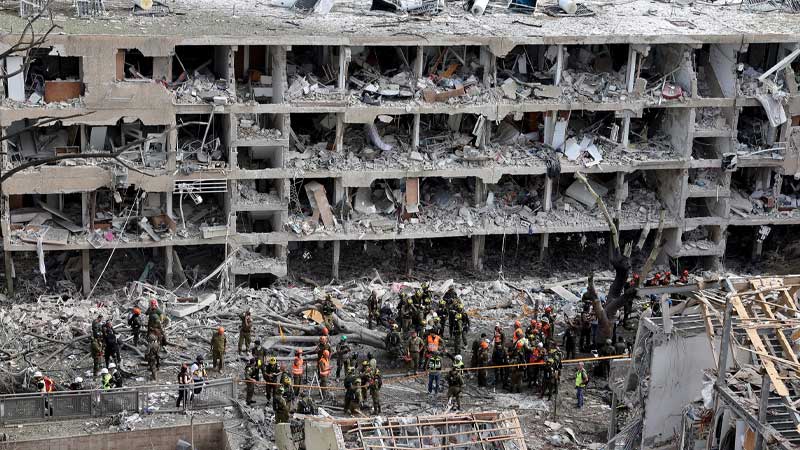
When intelligence assessments concluded that Iran was nearing critical nuclear thresholds, the administration authorized direct military action against key nuclear facilities. The strikes were devastating.

Facilities that had taken years to construct were damaged or destroyed. Equipment was lost. Research programs were interrupted. Nuclear scientists were killed. Infrastructure was crippled.

Trump orders attacks on three sites tied to Iran’s nuclear program

According to administration officials, when Iranian efforts to restore portions of the program were detected, additional strikes followed.

The message was unmistakable: The United States would not permit Iran to cross the nuclear threshold.

For years, foreign-policy experts warned that such actions would trigger regional catastrophe. Instead, something unexpected (to them) happened. Iran blinked. The regime that had spent decades projecting strength suddenly faced a reality it could not ignore.

Its economy was strained. Its military infrastructure was vulnerable. Its nuclear investments were increasingly at risk. Its regional proxies had suffered significant setbacks. And the United States had demonstrated a willingness to act repeatedly rather than merely threaten action.

That combination changed the strategic equation.

History may ultimately record this moment as one of the clearest examples of what Ronald Reagan famously called “peace through strength.”

The principle is simple: Aggressors rarely negotiate seriously when they believe their opponents lack resolve. Negotiations become meaningful only when consequences become unavoidable.

That is precisely what occurred here. The significance extends far beyond Iran. For decades, critics of American strength foolishly argued that military power creates instability.

Yet some of the most dangerous regimes in modern history have altered course only after encountering overwhelming force. The Soviet Union negotiated from weakness. Libya abandoned its nuclear ambitions after witnessing American power.

And now Iran appears to be making concessions that years of diplomatic engagement alone failed to produce. None of this means the danger has disappeared. The Iranian regime remains the same regime, three layers down after Trump and Israel killed their first two tiers of leadership. Its remaining leadership remains in place. Its ideology has not fundamentally changed. Its history of deception gives every reason for caution.

Verification will matter. Inspections will matter. Enforcement will matter. Trust will not be enough.

But even acknowledging those realities, the achievement is significant.

For nearly fifty years, Iran’s nuclear ambitions represented one of the most persistent threats to stability in the Middle East and beyond.

Today, for the first time in a generation, there is reason to believe that threat may be moving toward resolution. Critics will undoubtedly complain that Trump’s methods were too aggressive. They always do. Yet those same critics spent years defending Democrat negotiations that produced little more than temporary delays while Iran continued advancing its nuclear and ballistic capabilities.

The lesson may be uncomfortable for Washington’s foreign-policy establishment. In ways, diplomacy remains essential. But diplomacy works best when backed by strength.

Words matter. Agreements matter. Negotiations matter. But when dealing with regimes that openly announce hostile intentions, and have lied and deceived for several decades, or longer, strength matters more.

The Ayatollahs spent decades betting that America lacked the will to stop them. That bet appears to have failed, in the form of Donald Trump.

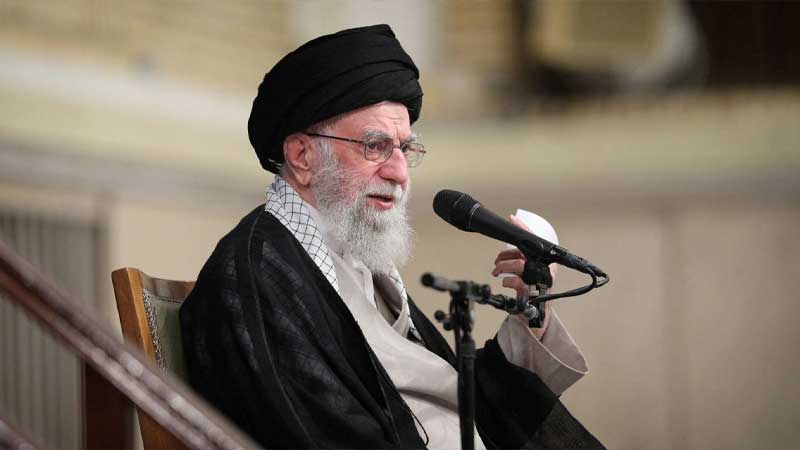
Ayatollah Ali Hosseini Khamenei, who ruled Iran with an iron fist as its supreme leader for nearly four decades, facing off against the US and Israel while crushing dissent and advancing a controversial nuclear program at home, was killed in America’s first volley.

And if the emerging agreement holds, one of the world’s most dangerous nuclear confrontations may have been resolved not through accommodation, but through determination.

For millions of people across the Middle East—and for Americans who have watched this conflict unfold for nearly half a century—that would be a remarkable achievement indeed.

Filed Under: Elections, Featured, Foreign, Religion, Sci-Tech

The Climate Scare Revisited: What Happened to the Predictions?

June 12, 2026 By Editor Leave a Comment

For more than half a century, Americans have been told that environmental catastrophe is just around the corner. The names changed. The slogans changed. The predictions changed.

But the underlying message remained remarkably consistent: Trust the experts. Expand government power. Spend vast sums of money. And act immediately before it is too late.

Yet after decades of increasingly dramatic warnings, many Americans are beginning to ask a simple question: How many of those predictions actually came true? The answer is not nearly as clear as the climate establishment would like the public to believe.

Many readers are old enough to remember when the scientific consensus appeared to point in the opposite direction. During the 1970s, major media outlets warned of global cooling and a possible coming ice age. Television specials discussed advancing glaciers and shrinking growing seasons. One famous program hosted by Leonard Nimoy warned viewers that climate change could bring dramatic cooling and widespread disruption.

The science was settled. The National Oceanic and Atmospheric Administration (NOOA) provided incontrovertible data that we were headed into a mini ice age.

Until it wasn’t. After a few years of study, the data turned out to indicate there was no global cooling problem. In fact, the earth had been on a 400 year natural warming cycle, which predated the industrial age and burning of fossil fuels.

So, then came global warming. Then climate change. Then climate emergency.

The terminology had evolved, and the direction had changed, but the dead certainty remained.

For the next few decades the public heard that the polar bears were disappearing, that Arctic ice would soon vanish entirely, that entire island nations would be underwater, that major coastal cities would be flooded, and that civilization itself faced imminent danger.

Of course, those most dramatic timelines have passed without the predicted outcomes. Not even close.

Miami remains standing. New York remains standing. London remains standing. The Netherlands remains inhabited. The great coastal cities of the world continue to function much as they always have, and no one suffers from wet feet.

Sea levels have risen only slightly, if at all, a couple of inches over decades rather than the catastrophic multi-foot increases frequently promised by climate alarmists and envisioned by the public.

Meanwhile, some of the world’s wealthiest climate advocates continue purchasing beachfront properties while warning others that the coastlines are in imminent danger. That obvious contradiction has not escaped public notice.

The Earth itself tells a more complicated story than political slogans allow. Long before automobiles, coal-fired power plants, or industrial civilization, Earth experienced dramatic warming and cooling periods.

The Medieval Warm Period brought conditions that allowed farming farther north than today in some regions.

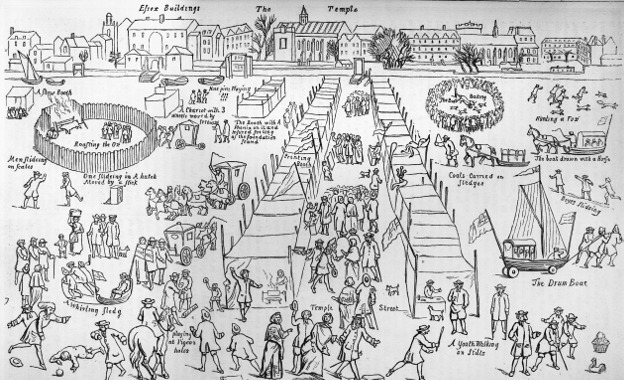
The Little Ice Age brought colder temperatures that famously froze over of the Thames River in England and affected weather patterns throughout Europe and North America.

A winter fair used to be held on the frozen Thames River in London every year, and even elephants could walk across the thick ice. These annual affairs came to an end even before the rise of the industrial age due to a natural warming trend of the earth, which could reverse in the near future, depending on solar activity.

Climate has always changed. It always will.

Many researchers have argued that solar activity, ocean cycles, volcanic activity, atmospheric oscillations, and other natural factors play larger roles than the public is often led to believe. Various long-term climate-cycle theories have been proposed, some extending over centuries. Scientists continue to debate the precise causes and magnitude of these influences, but few dispute that natural variability plays a significant role in Earth’s climate system.

That reality raises an important question: How much of modern warming is natural? Is any of it man made?

The honest answer is that nobody can isolate every contributing factor with absolute certainty. What is certain is that climate is an extraordinarily complex system influenced by countless interacting variables.

What have we learned about climate alarmists in these years? Think Climategate.

In 2009, leaked emails from prominent climate researchers shocked many Americans. The public saw something deeply troubling: discussions about controlling narratives, influencing publication decisions, and managing how data would be presented. In other words — lying about the amount of global warming was have experienced.

The famous phrase “hide the decline” became a symbol of a deeper problem. Trust.

Whether or not the researchers believed they were acting appropriately, many citizens concluded that some climate scientists had become advocates first, and scientists second. That damage to public confidence has never healed.

The controversy also exposed another reality that was rarely discussed publicly at the time. Climate datasets are routinely adjusted. Historical temperature records are revised. Measurement stations are corrected. Observations are recalibrated.

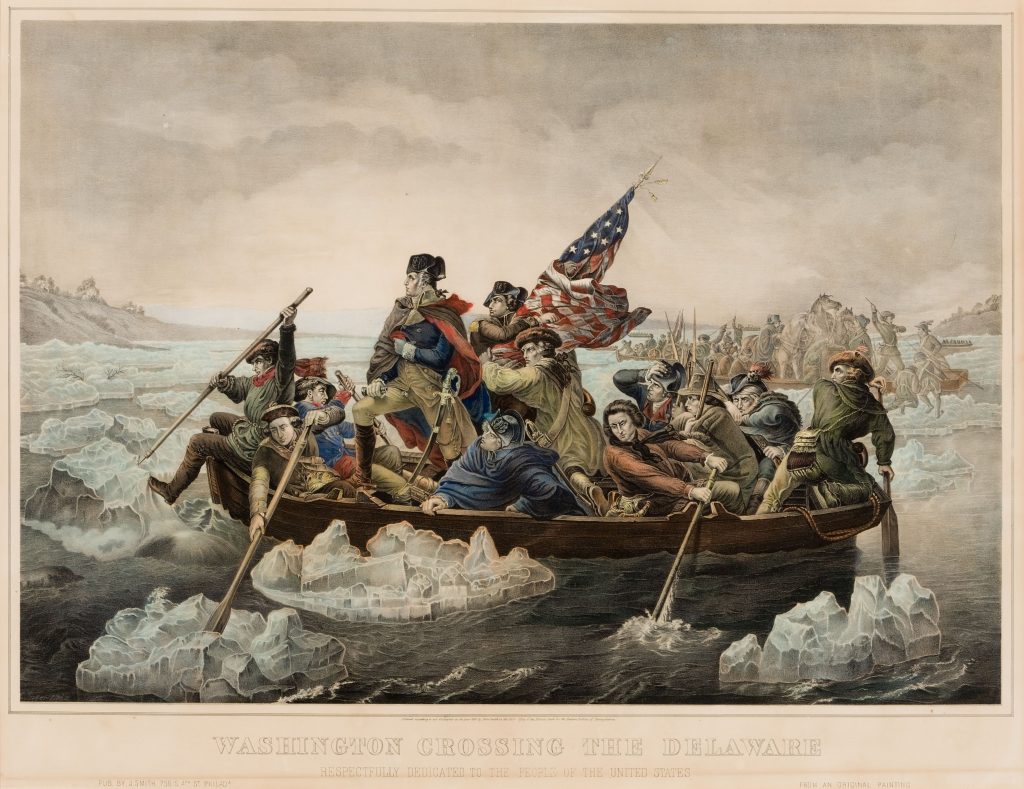
At the same time the Thames River would freeze in London, the Delaware was likewise known to freeze and be choked with ice during the American Revolution. These annual deep freezes ceased before the rise of the industrial age.

Scientists argue these adjustments improve accuracy. Critics note that many adjustments appear to amplify modern warming trends relative to earlier records, without the predicted results materializing.

Regardless of one’s position, the public learned that the data were not as simple or straightforward as they had been led to believe. There was no ‘settled science.’

Perhaps the most important lesson of the past twenty years, however, is not scientific. It is economic.

Climate policy has become one of the largest transfers of wealth and authority in modern history. Trillions of dollars now flow through climate initiatives, green-energy subsidies, carbon-credit markets, government grants, international agreements, research institutions, universities, nonprofit organizations, consulting firms, and advocacy groups.

Entire bureaucracies depend upon climate funding. Entire industries depend upon climate regulations. Entire political movements depend upon climate urgency.

These gigantic transfers of power and wealth to Leftist advocacy groups deserve scrutiny, seeing that they produce no improvements in global climate.

Whenever enormous amounts of money and political power become attached to a particular conclusion, skepticism becomes a civic responsibility.

The fishing industry provides one example. For years, American fishermen complained that vast regulatory systems increasingly restricted their access to waters that had sustained coastal communities for generations. Meanwhile, America became heavily dependent on imported seafood despite possessing some of the richest fishing grounds on Earth. In fact, the “imported” fish were actually being harvested from the same waters that had been restricted by Obama and Biden executive orders, but not by American fishermen. See our article of June 11, 2026, Trump Throws a Lifeline to America’s Fishermen.

Whether one agrees with every policy decision, the broader pattern is difficult to ignore: climate and environmental concerns have repeatedly been used to justify expanding regulatory authority over land, energy production, transportation, agriculture, and natural resources.

The result has been a steady transfer of decision-making power away from local communities and toward distant bureaucracies.

Even some former climate alarmists have begun moderating their views. Prominent voices who once predicted near-term catastrophe increasingly acknowledge humanity’s remarkable ability to adapt, innovate, and solve problems. Several, like climate activist billionaire Bill Gates, have warned that exaggerated claims may ultimately undermine public trust by creating expectations that reality does not support.

That may be the greatest danger facing the climate movement today. Not skepticism. Not debate. Not criticism. But credibility.

Science advances through questioning assumptions, challenging theories, testing evidence, and revising conclusions when new information emerges. Politics often works differently. Politics rewards certainty. Politics rewards fear. Politics rewards urgency. Politics rewards crisis. And for decades, climate politics has frequently operated as though uncertainty itself were forbidden.

Americans deserve better. They deserve honest data. They deserve transparent methods. They deserve open scientific debate. They deserve acknowledgment of natural climate variability.

And they deserve the freedom to question institutions that have repeatedly demanded trust while accumulating extraordinary wealth, power and influence.

The Earth will continue warming and cooling as it always has, in natural cycles, dictated by the sun and other natural influences.

The real question is whether those claiming to ‘save the planet’ are willing to submit their own assumptions, incentives, and predictions to the same scrutiny they demand from everyone else.

Filed Under: Featured, Bias, Sci-Tech

Trump’s Third UFO File Dump Raises the Stakes Again

June 12, 2026 By Editor Leave a Comment

FBI reconstruction image from the Western U.S. federal-agent orb sighting

The Trump administration has released its third tranche of UFO and UAP records under PURSUE, and this latest document dump may be the most intriguing yet.

Unlike earlier releases dominated heavily by military imagery, older files, and historical reports, Release 03 includes a striking mix of government documents, FBI-collected witness videos, NASA audio recordings, digital reconstructions, and reports involving unexplained orb-like objects seen by federal agents and private citizens.

The Department of War released the third tranche on June 12, following earlier releases on May 8 and May 22. The PURSUE archive now stands as one of the most significant official UFO transparency efforts in American history.

The latest release reportedly includes 53 documents, 10 images, six videos, and three NASA audio recordings from the CIA, FBI, NASA, the Department of Defense, and other agencies.

Several of the most compelling files involve orb sightings.

One case, titled “Northeastern Orb Sighting,” involves two bright lights moving together in the sky in July 2025. Witnesses reportedly described the objects as silent, smooth, and moving in tandem, almost as if flying in formation or tethered together.

Another video, “Orbs Over the Pond,” reportedly shows a luminous object hovering near a secluded pond in the northeastern United States in October 2024. The object was described as a plasma-like sphere that changed shape and brightness, at times appearing to separate into smaller points of light. According to the government’s description, the object remained generally stationary for roughly 45 minutes before disappearing.

That is not the kind of report easily dismissed as a passing aircraft.

Perhaps even more dramatic are the files involving federal law-enforcement agents in the western United States in October 2023. Five federal agents reportedly gave accounts to the Pentagon’s All-domain Anomaly Resolution Office after witnessing strange lights and orbs. One agent described red lights that accelerated instantly and moved in smooth coordination. Another described smaller orbs being released from a larger orange light. Another compared the effect to grapes being expelled from a basketball.

That imagery is remarkable. So is the fact that the FBI produced digital renderings to reconstruct what the agents described.

The third tranche also includes a newly public 2008 Zimbabwe case in which a UFO was reportedly seen hovering over Harare International Airport. According to reporting on the declassified cable, the object was described as disc-like, with a hollow center and rotating lights underneath. Beams were reportedly seen emanating from it before it rapidly ascended and vanished.

The location is significant. Zimbabwe already occupies an important place in UFO history because of the famous 1994 Ruwa school encounter, where dozens of children reported seeing a craft and beings near their school. The newly released airport case does not prove a connection, but it adds another serious government-documented incident to a country already associated with one of the most discussed mass-sighting cases in modern UFO history.

One of the most historically revealing files in Release 03 concerns the CIA’s Scientific Advisory Panel on Unidentified Flying Objects from 1952 and 1953. That panel reportedly concluded that flying saucers did not present a physical threat but recommended an official debunking policy to strip the subject of its mystery.

That may be one of the most important revelations in the entire release.

For decades, Americans suspected that the government was not merely studying UFOs, but also shaping public perception of them. A government-backed debunking posture would help explain why ridicule became so deeply embedded in the subject. Witnesses were not simply ignored. They were often socially conditioned to remain silent.

That culture is now collapsing.

The Trump administration’s PURSUE releases do not prove that aliens are visiting Earth. They do not prove crash retrievals. They do not prove non-human technology. But they do prove something historically important: the federal government collected, studied, classified, archived, and is now publicly releasing unresolved cases it cannot definitively explain. That alone changes the conversation.

For years, serious witnesses were mocked. Pilots stayed quiet. Military personnel hesitated. Law-enforcement officers, scientists, contractors, and ordinary citizens often kept extraordinary experiences to themselves for fear of being ridiculed or professionally damaged. Now the government itself is saying: here are the files, here are the videos, here are the witness accounts, and here are the unresolved cases.

That does not mean every object is extraordinary. Some may be drones. Some may be aircraft. Some may be atmospheric phenomena. Some may be camera artifacts, sensor errors, or misidentified ordinary objects.

But some remain unexplained. And the American people have every right to ask why. Why do so many reports involve orbs? Why do so many sightings occur near sensitive military, aerospace, nuclear, or government sites? Why did government panels recommend debunking rather than open inquiry? Why were many of these records hidden for decades? And why is the public only now being allowed to review material that taxpayers paid to collect?

The third PURSUE release does not end the UFO debate. It deepens it. It shows that the phenomenon is not confined to fringe witnesses or grainy internet videos. It appears in official cables, FBI files, military reports, NASA audio, historical panels, eyewitness interviews, and government reconstructions.

That is the story.

The official stamp of government authenticity does not tell us what these things are. But it tells us the mystery is real. And with each new tranche, the old answer — “nothing to see here” — becomes harder to believe.

Filed Under: Religion, Featured, Sci-Tech

Hollywood Feels the Shift: Spielberg’s New UFO Film Arrives During America’s Disclosure Era

May 28, 2026 By Editor Leave a Comment

Steven Spielberg appears to sense what much of America is beginning to feel: Something has changed.

This week, a chilling preview was released for Spielberg’s highly anticipated UFO-themed film Disclosure Day, reigniting national fascination with extraterrestrials, government secrecy, and unexplained aerial phenomena.

Under normal circumstances, another Spielberg alien movie would simply be entertainment news. But these are not normal circumstances.

The film arrives at precisely the moment the American government itself is openly releasing UFO-related records through the Trump administration’s new PURSUE archive, while whistleblowers, intelligence officials, military pilots, and lawmakers increasingly speak publicly about unidentified aerial phenomena as a legitimate national-security issue rather than a fringe obsession.

That timing matters. For decades, UFOs lived primarily in science fiction. Hollywood explored the subject because government and academia largely refused to do so openly. Movies like Close Encounters of the Third Kind and E.T. The Extraterrestrial allowed Americans to imagine possibilities the culture officially discouraged them from discussing seriously.

Now the line between fiction and official inquiry is becoming increasingly blurred. Congress has held hearings. Military video, sensor and radar footage has been authenticated. Radar operators and fighter pilots have spoken publicly.

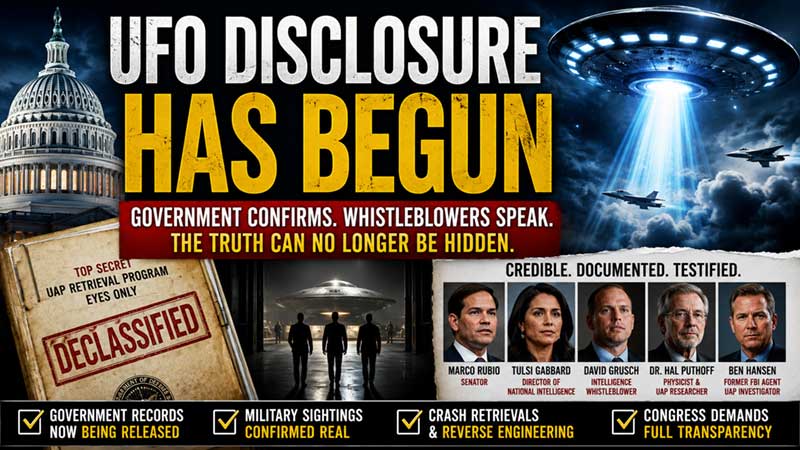
Whistleblowers such as David Grusch have alleged crash-retrieval and reverse-engineering programs under oath before congress.

Senators, including now Secretary of State Marco Rubio, have stated that high-level officials and intelligence personnel have brought forward serious testimony that cannot simply be dismissed.

And now the Department of War itself is releasing previously classified UAP materials to the public. That changes the atmosphere surrounding everything connected to the phenomenon.

Spielberg, perhaps more than any filmmaker alive, understands the psychology of wonder and fear surrounding the unknown. His original UFO films captured a public simultaneously fascinated and terrified by the possibility that humanity might not be alone.

But in the 1970s and 1980s, UFO fascination still largely belonged to the realm of speculation. Today, millions of Americans increasingly believe the government knows far more than it has admitted publicly. That does not mean every claim is true. It does not mean every video shows extraterrestrial craft. It does not mean Hollywood fiction should be confused with verified reality. But it does mean the stigma barrier has collapsed. That may be the biggest disclosure of all.

For generations, serious witnesses often remained silent because ridicule carried professional and social consequences. Pilots feared losing careers. Military personnel feared security repercussions. Business professionals feared reputational damage. See e.g., our May 20 article Fed Appeals Court Judge Stayed Silent for Decades – Now Witnesses Beginning to Talk.

Now major newspapers, congressional committees, cable news programs, podcasters, documentary filmmakers, local newsrooms, and even legacy Hollywood directors openly discuss the subject without embarrassment.

The cultural shift is undeniable. And perhaps Hollywood recognizes something else as well: Americans are hungry for mystery again.

After years of institutional distrust, political division, censorship debates, bureaucratic secrecy, and collapsing public confidence, the UFO issue touches something deeper in the national psyche. It raises questions larger than politics — questions about reality, secrecy, human identity, technology, spirituality, and mankind’s place in the universe.

That is why disclosure stories increasingly dominate public attention. Not because every person believes aliens have landed. But because millions of Americans now suspect the official story they were given for decades was incomplete, or a complete lie.

Spielberg’s new film may ultimately prove to be fiction. But the world into which it is being released suddenly feels very different from the one that existed when Close Encounters first appeared nearly fifty years ago. Back then, Americans wondered whether the government might know something. Now many Americans are beginning to suspect the government may finally be admitting it.

Filed Under: Featured, Religion, Sci-Tech

UFO Disclosure Has Crossed the Line From Fringe to Official Reality

May 25, 2026 By Editor Leave a Comment

For most of the modern era, Americans who spoke seriously about UFOs were told to sit down, be quiet, and stop embarrassing themselves.

That era is ending.

Not because every extraordinary claim has been proven. Not because the public has been shown a landed craft in a government hangar. Not because anyone in authority has officially announced that mankind is not alone. But because the United States government has now placed its own stamp of legitimacy on a subject it spent generations mocking.

That changes everything.

In recent weeks, the Trump administration’s Department of War has begun releasing declassified UFO/UAP materials through the new PURSUE archive, with an initial tranche on May 8 and a second tranche on May 22. See Releases. Reuters reported that the second release included 222 files, including reports of discs, fireballs, green orbs, and a 116-page file describing 209 sightings near Sandia, New Mexico, from 1948 to 1950.

The files do not prove extraterrestrial visitation. But they do prove that the enigmatic phenomenon is serious enough to have been documented, studied, classified, and now released under official authority.

That is the historic shift.

For decades, the public was told UFOs were swamp gas, weather balloons, hoaxes, delusions, or science-fiction residue. Now the government, through President Trump, is effectively saying: these records are real, these witnesses were real, these investigations were real, and the American people are entitled to see them.

Meanwhile, the public conversation has exploded. Fox News recently reported comments from physicist and longtime intelligence-linked researcher Dr. Hal Puthoff, who claimed on a podcast alongside The Age of Disclosure director Dan Farah that people involved in crash recoveries have described “at least four” distinct types of extraterrestrial life recovered from UFO incidents. Puthoff said he had not personally had direct access to such bodies, but that he believed the highly credible people who told him.

The Age of Disclosure Official Trailer

That distinction matters. It is not direct public proof. But it is also not anonymous internet chatter. Puthoff has spent decades in the orbit of classified research, intelligence-adjacent programs, and the UAP disclosure movement. When someone with that background says credible insiders are describing multiple recovered non-human biological types, it should not be dismissed with a sneer.

Nor does Puthoff stand alone. Former intelligence officer David Grusch testified before Congress in 2023 that he had been informed, through his official duties, of a multi-decade UAP crash-retrieval and reverse-engineering program to which he was denied access. Grusch said he believed the United States possessed UAP materials based on interviews with dozens of people, and he testified that “non-human biologics” had allegedly been recovered from craft.

Again, the public has not been shown the hardware. But Congress heard the testimony under oath. That alone moved the subject into a different category.

Former Sen. Marco Rubio, currently Secretary of State and National Security Advisor, has also said that officials with high clearances and serious positions have brought forward accounts of UAP programs and first-hand claims. Rubio’s view has generally been cautious but unmistakably serious: the testimony of credentialed people should not simply be ignored because the subject sounds strange.

The bipartisan nature of the pressure is also striking. Senate leaders including Chuck Schumer and Mike Rounds previously pushed UAP disclosure legislation modeled on the JFK assassination records process, requiring agencies to identify and preserve UAP-related records for eventual public release.

This is not merely a fringe demand. It has become a congressional oversight issue.

That is why documentaries like The Age of Disclosure, The Phenomenon, and The Program have resonated so widely. The documentaes gathered a roster of military, intelligence, and government figures who argue that the public has been kept in the dark about non-human intelligence, recovered materials, and secret reverse-engineering efforts. Even critics have had to admit the films reflect a serious cultural shift: the witnesses are no longer carnival figures; many are former government and intelligence officials, defense insiders, and people with direct knowledge of classified systems.

Ben Hansen, former FBI agent, television host, and longtime UAP investigator, has also treated the Trump-era release as significant rather than disappointing. In public commentary, Hansen has emphasized that mass sighting events and older government records deserve renewed attention, especially now that official files are being brought into public view.

The real question is whether the most sensitive evidence has ever been placed where ordinary scientific review, congressional oversight, or public accountability could reach it. That is precisely what whistleblowers allege has not yet happened.

This is where the public mood has changed. The old ridicule machine is no longer working. Too many credible witnesses have come forward. Too many military videos have been government authenticated. Too many government agencies have admitted that some cases remain unsolvable. Too many lawmakers have concluded that the secrecy itself is now a legitimate national-security concern.

Some are leery of the phenomenon on ‘spiritual’ grounds. As argued in Worlds Without Number, the UAP issue must be approached with both openness and caution. The book notes that some scripture already describes “worlds without number” and teaches that the inhabitants of those worlds are God’s children, meaning the idea of life beyond Earth is not theologically shocking to many.

But the book also warns against simplistic conclusions. It emphasizes that the UAP phenomenon includes “high strangeness,” spiritual confusion, deceptive messaging, and experiences that may not fit neatly into a simple nuts-and-bolts extraterrestrial spacecraft model. That may be the wisest framework for this moment.

The evidence now strongly supports the reality of an unexplained phenomenon. The testimony from credentialed officials strongly suggests that some people inside government believe recovered craft and biological materials exist. The government’s own releases strongly confirm that this subject has been studied seriously for decades.

But what the phenomenon ultimately is remains unsettled.

Extraterrestrial visitors? Interdimensional intelligence? Secret human technology? A spiritual deception? Some combination of physical, psychological, and paranormal elements?

The honest answer is that we do not yet know. But the public is no longer willing to be patted on the head and told there is nothing to see.

The age of ridicule is ending. The age of disclosure has begun.


James Thompson is an author and ghostwriter, and a political analyst. He is an analyst of UAP reports, and author of the book Worlds Without Number.

Filed Under: Sci-Tech, Featured, Religion

Trump Administration Releases Second UFO Tranche — and One File Contains 209 Reports Near a Secret U.S. Facility

May 22, 2026 By Editor Leave a Comment

UAP Formation over submarines in Iran, 26 Aug 2022 over water [CALLSIGN]

The Trump administration has released the second tranche of declassified UFO/UAP records under the new Presidential Unsealing and Reporting System for UAP Encounters, or PURSUE — and the latest batch appears to be far more than a curiosity dump. See Release Documents

The Department of War posted the new release on May 22, 2026, following the first PURSUE tranche released on May 8. The agency describes the records as unresolved cases involving UAP, meaning the government has not made a definitive determination about the nature of the objects or phenomena involved. The Department says additional tranches will continue to be released on a rolling basis.

The second release includes 222 files involving alleged UFO sightings, including references to “green orbs,” “discs,” and “fireballs.” One of the most striking documents is a 116-page file concerning sightings and investigations near a top-secret facility in Sandia, New Mexico, from 1948 to 1950. The Department reportedly says that file contains 209 sightings near the military base.

That alone should command public attention.

For decades, Americans were told that serious UFO questions belonged on the fringe. Now the federal government is not merely admitting that records exist, it is publicly hosting them, organizing them, and inviting the public to review them.

The Department of War’s PURSUE page states that President Trump directed the Secretary of War and other agencies to begin identifying and releasing government files related to “alien and extraterrestrial life,” UAP, UFOs, and related information. The Department says the process involves coordination among dozens of agencies and the review of tens of millions of records, many of them decades old and still on paper.

Defense Secretary Pete Hegseth framed the release as a transparency measure, saying the files had “long fueled justified speculation” and that “it’s time the American people see it for themselves.”

The second tranche also includes imagery and video material, including screenshots likely derived from infrared sensors, a CIA report about a sighting in the USSR, a first-hand UAP narrative, NASA-related material, an enhanced unidentified-object report from a PANTEX radar tower, and images showing objects in formation and over water.

Importantly, none of this means the government has confirmed extraterrestrial visitors. Experts reviewing the first batch found new videos of known sightings but no conclusive proof of alien technology or extraterrestrial life.

But that is not the same as saying there is nothing here. The more important development is institutional. These files are not appearing through leaks, anonymous message boards, or blurry third-hand claims. They are being released through an official government portal under a presidential transparency directive.

That changes the public conversation.

For years, skeptics could dismiss UFO witnesses by saying, “If this were real, the government would say something.” Now the government is saying something — not that every sighting is alien, but that many cases remain unresolved and deserve serious review.

The Department of War is even inviting private-sector analysis, noting that unresolved cases may remain unexplained because of insufficient data and that outside expertise is welcome.

That is a major shift. Although, it would be helpful if the DOW released the original videos and sensor recordings with the metadata intact so citizen and scientific analysis can be performed with a modicum of accuracy.

This means the old policy of silence, ridicule, and bureaucratic burial is weakening. It also means the public now has a direct reason to go to the official PURSUE archive and examine the material for itself.

That may be the most important part of the story.

The American people paid for these investigations. The American people funded the military, intelligence, and scientific agencies that collected these reports. And the American people have every right to see what their government has hidden, withheld, classified, or ignored for decades.

The second PURSUE release does not answer every question. It raises more. But at least we are able to ask better informed questions.

Why were there hundreds of reports near sensitive military sites? Why do so many sightings cluster around defense, nuclear, aerospace, and intelligence facilities? Why did the government spend decades collecting and classifying reports it often publicly mocked? And why are Americans only now being allowed to review records that should have been available long ago?

Whatever one believes about the ultimate origin of UAP, the transparency itself is historic. The files are now public. The questions are now legitimate.

And the era of telling Americans not to look up may finally be ending.


James Thompson is an author and ghostwriter, and a political analyst. He is an analyst of UAP reports, and author of the book Worlds Without Number.

Filed Under: Sci-Tech, Featured

Fed Appeals Court Judge Stayed Silent for Decades. Now Witnesses Beginning to Talk.

May 20, 2026 By Editor Leave a Comment

For generations, Americans who claimed to witness unexplained aerial craft often learned one lesson quickly: Keep your mouth shut.

Pilots whispered. Police officers quietly told family members. Military personnel shared stories only behind closed doors. Farmers, truck drivers, hunters, business owners, judges, ministers and ordinary citizens often buried extraordinary experiences for one reason above all others: ridicule.

If you spoke openly about seeing something in the sky that appeared beyond known human technology, you risked being labeled unstable, attention-seeking, gullible, or worse.

In some professions, people feared reputational harm. In others, they feared losing credibility, advancement, or employment altogether.

That Iron Curtain of Silence may finally be beginning to crack.

As government transparency around UFOs and UAPs has increased, including President Trump’s declassification efforts, military footage releases, congressional hearings, intelligence briefings, and a dramatic shift in public discussion, more serious witnesses appear increasingly willing to recount experiences they once kept to themselves.

One recent example comes from Wyoming.

Richard Barrett, a retired Cheyenne attorney, recently shared an extraordinary experience he says he and his father witnessed in April 1991 while driving home late at night from Gillette. Cowboy State Daily. His father was not an anonymous bystander. He was James E. Barrett, former Wyoming Attorney General and later a judge on the U.S. Court of Appeals for the 10th Circuit.

Barrett now shares that the two men encountered a massive, silent, illuminated craft over Wyoming Highway 59 that appeared far beyond anything they could explain. For years, they stayed quiet.

Why? Because serious people often fear being dismissed as irrational.

That fear was real. But Barrett says the recent government release of UAP-related materials and broader transparency efforts made him feel more comfortable discussing the event publicly after decades of silence.

Richard and James Barrett in 1992. The son and father kept their UFO sighting to themselves for many years. (Courtesy Richard Barrett)

That matters. Not necessarily because one story proves what UFOs are. But because it underscores a larger cultural shift: People who once felt forced into silence now increasingly believe they can speak without immediate mockery.

And that may reveal something important.

Over many years of investigating UFO reports, researchers, journalists, and ordinary citizens have often noticed a common pattern: people frequently admit they know someone they trust — a pilot, veteran, family member, law enforcement officer, neighbor, or friend — who says they witnessed something they could not explain.

Not vague lights. Not distant aircraft. Not obvious weather anomalies. But objects or craft described as silent, accelerating unnaturally, maneuvering sharply, hovering without visible propulsion, or behaving in ways that seemed beyond conventional aviation or human understanding of physics.

Of course, not every story is accurate. Memory can fail. Perception can be flawed. Some sightings later turn out to be military systems, atmospheric effects, drones, balloons, or misidentifications.

But dismissing all witnesses as delusional or unserious has become harder to sustain. Especially when military aviators, radar operators, intelligence personnel, commercial pilots, and highly credible professionals have also stepped forward. Many with video and sensor data evidencing their claims.

For decades, the official culture often leaned toward silence, secrecy, or quiet dismissal. Now transparency, whether driven by presidential pressure, congressional oversight, military acknowledgment, or public demand, is changing that atmosphere.

That is healthy. A free society should not fear testimony.

People should be able to recount what they saw, what they experienced, and what they cannot explain, without automatic ridicule.

That does not mean blind belief. It means open inquiry. Open discussion.

If millions of Americans have witnessed unexplained phenomena, then honest discussion matters. If many stayed silent because of shame, fear, or professional risk, then breaking that silence matters.

And if nearly every family, workplace, church, military unit, or community seems to know someone with an encounter story they never fully told, perhaps the real mystery is not merely what is in the skies. Perhaps it is how many people have been quietly carrying these experiences alone. Shivering in the shadows.

The shadows are lifting. The question now is whether America is finally ready to listen.

Filed Under: Sci-Tech, Featured

Trump’s ISIS Strike in Nigeria Sends a Message: America Can Still Hunt Terrorists Anywhere

May 16, 2026 By Editor Leave a Comment

Abu-Bilal al-Minuki thought Africa could hide him. He was wrong.

President Donald Trump announced Friday night that U.S. forces, working with the Armed Forces of Nigeria, killed al-Minuki in what he called a “meticulously planned and very complex mission.” Trump described al-Minuki as the second-in-command of ISIS globally and “the most active terrorist in the world.” Fox News reported that Trump said the operation was “flawlessly executed” and that al-Minuki had been helping plan operations targeting Americans.

This was not a symbolic strike against a low-level militant. According to U.S. Africa Command, al-Minuki was the “director of global operations for ISIS,” and multiple terrorists, including other senior ISIS leaders, were killed in the operation. AFRICOM’s initial assessment found no civilian casualties and no U.S. or Nigerian losses.

Nigerian President Bola Tinubu confirmed the strike, saying al-Minuki was killed along with several lieutenants at his compound in the Lake Chad Basin. The Associated Press reported that the Nigerian military described the mission as a “highly complex precision air-land operation” carried out during three hours of darkness without casualties or loss of assets.

That is what seriousness looks like.

For years, Americans have been told that ISIS was “defeated,” that terrorism was yesterday’s war, and that the real work of national security involved managing narratives at home while pretending jihadist networks abroad were fading into irrelevance. But ISIS did not disappear. It adapted. It migrated. It embedded itself across Africa, especially through ISIS West Africa Province and other affiliates operating in Nigeria, the Sahel, and the Lake Chad region.

Al-Minuki was not some obscure figure pulled from the shadows for political theater. In June 2023, the U.S. State Department formally designated Abu Bakr ibn Muhammad ibn Ali al-Mainuki — also known as Abu-Bilal al-Minuki, Abubakar Mainok, and Abor Mainok — as a Specially Designated Global Terrorist and identified him as a leader of ISIS.

The significance of this strike is therefore twofold.

First, it removes a major terrorist commander from the battlefield. AP reported that al-Minuki was viewed as a key figure in ISIS organizing and finance and had been plotting attacks against the United States and U.S. interests.

Second, it signals that the Trump administration is willing to project power into places where terrorist networks believe distance, chaos, weak borders, and corrupt or overwhelmed governments can protect them. That matters.

Africa has become one of the central battlegrounds in the post-caliphate phase of ISIS. After the collapse of the group’s territorial stronghold in Iraq and Syria, ISIS affiliates in Africa became some of the movement’s most active and dangerous branches. Nigeria has been fighting jihadist factions for years, including Boko Haram and ISIS-linked militants, while entire regions have been destabilized by kidnapping, massacres, insurgency, and religious violence.

The Lake Chad Basin is not a footnote. It is one of the world’s most important terror corridors.

The operation also exposes a hard truth many in Washington would rather avoid: counterterrorism is not over. The battlefield has shifted, but the enemy has not given up. ISIS no longer needs a caliphate capital to remain dangerous. It needs financing, propaganda, operational planners, safe havens, and regional affiliates. Al-Minuki reportedly sat near the center of that web.

There are still questions. Some analysts dispute whether al-Minuki was truly the global “number two” in ISIS, and AP noted that his exact rank cannot be independently verified. But even cautious experts acknowledged the strike’s importance. One Nigeria-focused analyst told AP that, if confirmed, the killing would be enormous because it would be the first time security forces had killed someone so highly ranked in ISWAP.

That is the responsible way to read this story: do not exaggerate what cannot yet be independently proven, but do not minimize what is clearly a major counterterrorism success.

The broader message is unmistakable. America does not need endless wars to kill terrorists. It needs intelligence, allies, resolve, and a commander-in-chief willing to authorize decisive action.

This operation appears to have had all four.

For Federalist Press readers, the takeaway is simple: peace through strength is not a slogan. It is a strategy. Terrorists understand power. They understand fear. They understand consequences. And only those.

And today, the world’s jihadist networks have been reminded that if they plot against Americans, there may be nowhere far enough to hide.

Filed Under: Foreign, Featured, Religion, Sci-Tech

Trump’s UFO Disclosure Has Changed the Conversation — But Not Yet Answered the Biggest Question

May 15, 2026 By Editor 1 Comment

Actual site photo with FBI Lab rendered graphic overlay depicting corroborating eyewitness reports from September 2023 of an apparent ellipsoid bronze metallic object materializing out of a bright light in the sky, 130-195 feet in length, and disappearing instantaneously.

For decades, Americans who took UFOs seriously were told they were chasing swamp gas, weather balloons, camera artifacts, or fantasy. That era has ended.

The Trump administration’s first major release of UFO/UAP files does not prove that aliens are visiting earth. It does not settle whether these craft are extraterrestrial, interdimensional, spiritual, military, adversarial, or something even stranger. But it does something historically important: it places the official stamp of the United States government on the fact that the phenomenon itself is real enough to warrant public review.

On May 8, the Department of War announced the initial release of declassified Unidentified Anomalous Phenomena files through the new PURSUE system, describing it as part of a rolling, interagency transparency effort involving the White House, ODNI, DOE, AARO, NASA, the FBI, and intelligence agencies. See released documents and videos> Officials said future releases will continue.

That matters because much of the public has already seen some of these videos, reports, and claims in leaked or fragmented form. The difference now is authentication. A leaked video can be dismissed. A government-hosted archive cannot be waved away so easily.

CBS reported that the first release included 162 files from the FBI, Department of Defense, NASA, and State Department, including eyewitness testimony, photos, videos, and reports reaching back decades. The batch included 120 PDFs, 28 videos, and 14 image files.

The official position remains cautious. The government has not said these objects are alien spacecraft. NASA has said it has no data proving UAP are alien technology, and AARO has maintained that it has found no evidence confirming extraterrestrial technology.

But “no proof of aliens” is not the same thing as “nothing to see here.” To put it in plain terms, the government could have 1,000 hi-resolution videos of hundreds of UFOs, with 3-foot tall gray beings with large black eyes walking out and looking around, and it still would not constitute “proof of aliens,” because there would remain a possibility that it is something else.

What could they be? That remains to be seen. But the government will not call it extraterrestrial without more evidence than videos, and sightings by military personnel.

Retired Rear Adm. Tim Gallaudet, former Oceanographer of the Navy, has become one of the more serious voices pushing the conversation beyond ridicule. In a recent interview, Gallaudet said he has not personally seen an alien, but believes some craft appear to be under “higher order non-human intelligence” control, citing objects that move between ocean and atmosphere without visible disturbance and at speeds far beyond known human technology.

Gallaudet is not a random internet personality. He is a retired admiral, and his comments echo a growing chorus of military pilots, intelligence officials, researchers, and members of Congress who are in a position to argue that the public has not been told the full story.

U.S. Indo-Pacific Command reported UAP that resembles a football-shaped body near Japan.

Still, the first Trump tranche has disappointed some serious UAP researchers. Christopher Mellon, former deputy assistant secretary of defense for intelligence, called the release meaningful but incomplete, warning that “data alone is not disclosure.” DefenseScoop reported that several experts praised the move while criticizing the lack of metadata, context, sensor information, chain of custody, altitude, coordinates, and official analysis.

That is the heart of the matter. The government has released material. It has not yet released the full analytical framework needed to understand it. Nevertheless, this first release is only a tiny fraction of the materials that are yet to come.
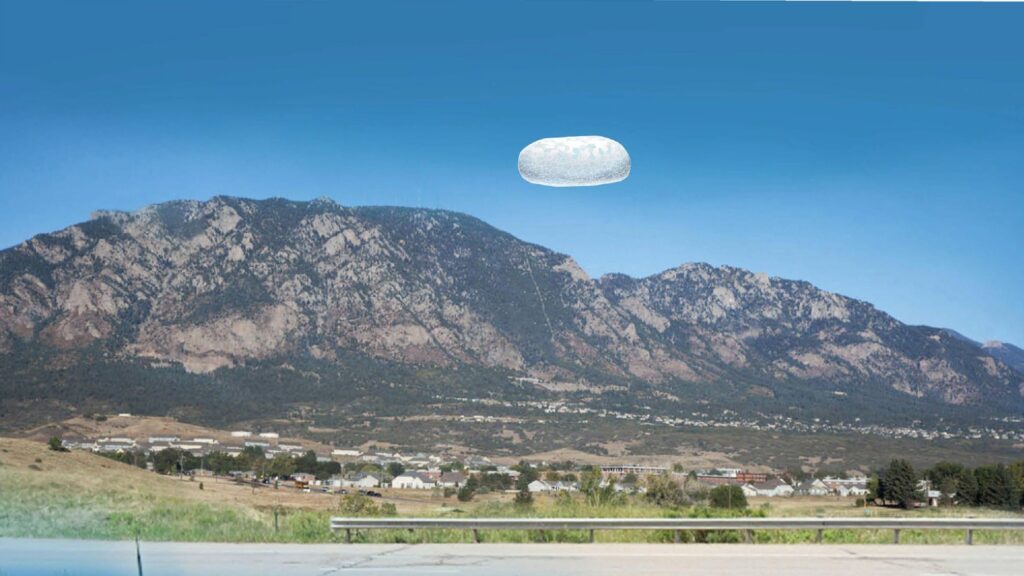
For Federalist Press readers, the proper posture is neither gullibility nor reflexive denial. The serious conservative instinct should be this: demand transparency, demand evidence, demand accountability, and resist being managed by institutions that spent decades ridiculing citizens for asking questions they now admit were legitimate.

There is also a deeper cultural and spiritual dimension that continues to arise in the subject. In Worlds Without Number, J.L. Thompson argues that belief in life beyond earth should not be shocking at all to people of faith. The book cites many sources to frame the universe as filled with God’s creations and inhabited worlds.

But Thompson also urges caution. The book does not simply equate UFOs with noble visitors from other planets. It repeatedly warns that the phenomenon includes “high strangeness,” occult-like messages, spiritual confusion, and deceptive possibilities.

That may be the most important distinction in the entire debate. The existence of other worlds does not automatically explain the strange behavior of UAP. Nor does advanced technology automatically imply benevolent motives.

If the objects are foreign technology, the national security implications are enormous. If they are American black-budget systems, then the secrecy problem is enormous. If they are controlled by non-human intelligence, then the implications are civilizational. And if the phenomenon includes a psychological or spiritual component, then the stakes may be even higher than politics.

Trump’s release has not answered those questions. But it has changed the burden of proof.

The question is no longer whether responsible people may discuss UFOs. They can. The question is whether the government will now provide enough serious evidence for the public to separate aircraft, drones, balloons, sensor errors, and hoaxes from the truly unexplained.

Until then, the public should keep watching — carefully, soberly, and without surrendering its judgment to either official denial or internet hysteria.

Filed Under: Sci-Tech, Featured, Religion

Trump Releases First Major UFO/UAP Files — “The People Can Decide for Themselves What the Hell Is Going On”

May 8, 2026 By Editor Leave a Comment

In one of the most extraordinary government disclosures in modern American history, President Donald Trump announced Friday that his administration has officially begun releasing long-classified government files related to UFOs, UAPs, extraterrestrial life, and unexplained aerial phenomena.

The announcement came directly from Trump on Truth Social, where he declared that the Department of War had released the “first tranche” of files to the American public as part of what the administration is calling the Presidential Unsealing and Reporting System for UAP Encounters, or “PURSUE.”

Trump’s message was vintage Trump — blunt, provocative, and impossible to ignore.

“As for my promise to you, the Department of War has released the first tranche of the UFO/UAP files to the Public for their review and study,” Trump wrote. “Whereas previous Administrations have failed to be transparent on this subject, with these new Documents and Videos, the people can decide for themselves, ‘WHAT THE HELL IS GOING ON?’”

Here is the live link: UFO Release>

The files are now publicly available through a newly launched government portal at WAR.GOV/UFO.

The release marks the first major government disclosure effort specifically focused on unexplained aerial phenomena and alleged extraterrestrial-related material since decades of classified investigations stretching back to Roswell, Project Blue Book, Area 51 speculation, military pilot encounters, and secret Pentagon programs that the government spent years denying even existed.

And unlike previous carefully worded Pentagon briefings, this rollout appears designed to maximize public curiosity rather than suppress it.

The newly released materials reportedly include:

  • military pilot encounter reports
  • radar tracking incidents
  • infrared and cockpit videos
  • FBI investigative files
  • NASA and Apollo-era records
  • intelligence community documents
  • witness testimony
  • previously unseen photographs
  • unexplained “metallic orb” incidents
  • objects observed near military installations
  • sightings near the Pacific and Indo-Pacific regions
  • historical records dating back nearly 80 years

Several reports describe objects demonstrating flight characteristics that appear inconsistent with known aerospace technology.

One report allegedly details a football-shaped object tracked near Japan by U.S. Indo-Pacific Command personnel. Another references strange luminous objects observed during Apollo-era space missions. Other files reportedly discuss glowing aerial spheres, unexplained formations, and sudden high-speed disappearances observed by military personnel.

Notably, the administration has stopped short of claiming definitive proof of extraterrestrial life.

Instead, officials are framing the release around “maximum transparency.”

Defense Secretary Pete Hegseth stated that secrecy surrounding the files had fueled decades of justified public speculation and argued that Americans have a right to review the information for themselves. DNI Tulsi Gabbard similarly stated that the Intelligence Community is now coordinating declassification efforts across multiple agencies, including NASA, the FBI, the Department of Energy, and military intelligence divisions.

For many Americans, the release represents vindication after decades of ridicule directed toward military pilots, intelligence officials, radar operators, scientists, and civilians who claimed to witness phenomena they could not explain.

For decades, anyone discussing UFOs risked being labeled unstable, conspiratorial, or irrational.

Yet over the last several years, the entire tone of the conversation changed.

The U.S. Navy authenticated leaked UAP videos.
Congress held hearings featuring military witnesses.
Pentagon officials admitted many cases remain unexplained.
Former intelligence personnel alleged hidden retrieval programs exist.
Pilots described objects performing maneuvers beyond known aircraft capabilities.

Now, for the first time, the federal government is effectively telling the public:
Here are the files. Decide for yourselves.

That alone is historic.

The implications are enormous.

If even a small percentage of the released material ultimately proves authentic and technologically unexplainable, it could represent one of the most important revelations in human history. If, alternatively, many sightings turn out to involve classified military systems, foreign adversary technology, sensor distortions, or misidentifications, the release may still fundamentally reshape public understanding of decades of secrecy.

Either way, the era of reflexive dismissal appears to be ending.

Critics, however, are already accusing the administration of political theater.

Some left-wing commentators claim the UFO disclosures are intended to distract from foreign policy tensions, economic concerns, or ongoing political controversies. Others argue the release is designed to energize Trump’s populist base by positioning him as the anti-establishment president willing to expose secrets hidden by the permanent bureaucracy.

But those criticisms may miss the larger point.

The public interest in UFOs and unexplained aerial phenomena has persisted for generations precisely because the government repeatedly denied, concealed, ridiculed, and compartmentalized information related to the subject. The secrecy itself fueled the distrust.

Trump appears to understand that instinctively.

His administration has already pursued high-profile transparency efforts involving assassination records, intelligence documents, and classified archives. The UFO/UAP rollout now adds another layer to that strategy — one aimed directly at the American public’s growing distrust of permanent government institutions.

And judging by public reaction online, the strategy is working.

Social media exploded within minutes of the announcement. UFO researchers, military analysts, skeptics, podcasters, journalists, and millions of ordinary Americans immediately began dissecting the newly released records frame by frame.

Some are convinced this is the beginning of full disclosure.

Others believe the government is still hiding the most explosive material.

But almost everyone agrees on one thing:

This is unlike anything the United States government has ever done before.

Whether the files ultimately reveal advanced foreign technology, hidden military programs, natural phenomena, spiritual deception, extraterrestrial intelligence, or simply decades of government confusion, one reality is now unavoidable:

The conversation has permanently changed.

And for the first time in American history, the government itself has opened the vault and invited the public inside.

Filed Under: Featured, Ethics, Sci-Tech

Why Is the United States Still Allowing Iran to Threaten the Strait of Hormuz?

May 6, 2026 By Editor Leave a Comment

Cargo ship in Strait of Hormuz reports being attacked as peace negotiations continue

For decades, the United States has treated the Iranian regime as a problem to be managed. The result has been decades of escalation, proxy warfare, regional instability, and recurring crises centered around one of the most strategically important waterways on earth: the Strait of Hormuz.

At some point, Americans are entitled to ask a simple question: Why is an Islamic revolutionary regime that openly calls for confrontation with the West still allowed to project this much power?

From Monarchy to Revolution

Modern Iran was not always governed by the Islamic clerical regime that exists today. Before 1979, Iran was ruled by Shah Mohammad Reza Pahlavi, a pro-Western monarch aligned closely with the United States. That order collapsed during the Iranian Revolution, when Ayatollah Ruhollah Khomeini and his Islamist movement seized power and transformed Iran into an Islamic Republic governed by revolutionary religious doctrine.

The revolution was not merely political. It was ideological.

The new regime defined itself in opposition to:

  • Western influence
  • Secular government
  • American power in the Middle East
  • The existence of Israel and its regional allies

That worldview still defines the regime today.

The Structure of Power in Iran

Iran presents itself as a republic, with elections and civilian institutions. But ultimate authority does not rest with elected officials. Real power lies with:

  • The Supreme Leader
  • The Islamic Revolutionary Guard Corps (IRGC)
  • Senior clerical and security networks loyal to the revolutionary system

The IRGC in particular has become one of the most powerful organizations in the region:

  • Military force
  • Intelligence apparatus
  • Economic empire
  • Foreign operations network

Its influence extends through proxy groups and allied militias across the Middle East.

Why Negotiations Are So Difficult

American administrations from both parties have repeatedly attempted diplomacy with Tehran. But negotiations with Iran are uniquely difficult for one central reason:

The regime views confrontation with the United States as part of its ideological identity.

This is not merely a dispute over sanctions, territory, or trade. For many within the regime’s core leadership structure, opposition to American influence is foundational to the revolution itself.

That reality complicates every negotiation. Even when agreements are reached, there remains deep skepticism in Washington and among U.S. allies about whether Tehran ultimately seeks coexistence—or simply strategic advantage. President trump believes the latter. He has publicly voiced his understanding of the regime, that it will never voluntarily lay down its arms, including nuclear arms, and accept peace in any form. It must be forced into such a position.

The Strait of Hormuz: A Pressure Point

The Strait of Hormuz remains one of Iran’s last, and most powerful leverage points.

A significant percentage of global energy shipments pass through the narrow waterway. Even limited disruption can:

  • Spike oil prices
  • Rattle financial markets
  • Threaten global supply chains

Iran understands this.

And it has repeatedly used the threat of disruption as a geopolitical tool.

From Washington’s perspective, that creates a persistent dilemma:

  • Respond too aggressively and risk broader regional war and damage to Iran’s civilian population
  • Respond too weakly and invite continued escalation

A Regime Under Pressure

Years of sanctions, internal unrest, economic strain, and regional conflict have placed enormous pressure on the Iranian system. At the same time, recent leadership losses and internal fragmentation have fueled speculation about divisions within the regime itself. Trump’s Department of War has eliminated the two top tiers of leadership in the regime, and it is difficult to locate survivors to engage in negotiations.

Some analysts argue that the current (third) leadership tier is more rigid and ideological than pragmatic. Others believe there are factions within the broader system that would prefer reduced confrontation and economic normalization.

The challenge for American policymakers is determining whether meaningful moderation is possible within the current structure—or whether the regime’s core ideology makes that unlikely.

The Strategic Debate in Washington

This has led to an increasingly sharp debate among foreign-policy analysts and national-security officials.

One side argues:

  • Iran responds only to overwhelming pressure
  • Deterrence must be restored decisively
  • Continued restraint emboldens the regime

The other warns:

  • Escalation could ignite a wider regional conflict
  • Regime instability carries unpredictable consequences
  • Military action may strengthen hardliners rather than weaken them

Underlying both arguments is the same concern: The current situation is unsustainable.

The Bigger Question

For years, the United States has attempted to contain, negotiate with, sanction, pressure, and deter the Iranian regime—often simultaneously. And yet the core conflict remains unresolved.

Iran continues to:

  • Support regional proxy networks
  • Threaten maritime stability
  • Challenge American influence
  • Advance strategic capabilities despite international pressure

Which raises the uncomfortable possibility that the problem is not tactical. It is structural.

The Bottom Line

The Iranian regime was born out of revolution and sustained through ideology, security power, and confrontation with the West. That history matters because it shapes every negotiation taking place today.

The debate now facing the United States is no longer whether Iran is a challenge. It is whether decades of limited containment have merely prolonged a deeper conflict that neither side truly believes can be permanently resolved.

And as tensions rise once again in the Strait of Hormuz, that question is becoming harder to avoid. President Trump has signaled that he very much understands this. What is surprising is his patience with a regime that he knows lies as often as they breath, and has no intention of restricting its modus operandi of the past 60 years. Surely, he understands that only death of all leadership will allow cooler heads to take over and finally allow peace to come to the region.

Filed Under: Foreign, Economy, Featured, Sci-Tech

The Vanishing General and the Eleven

April 24, 2026 By Editor Leave a Comment

Inside the Growing Mystery of America’s Missing and Dead Scientists

By James Thompson | Feature article contributor

The disappearance of retired Air Force Maj. Gen. William Neil McCasland has evolved from a troubling local case into something far larger—an unresolved mystery now drawing the attention of the FBI, the White House, Congress, and multiple federal agencies.

At the center of that mystery is a simple but unsettling question:

Did one man vanish, or is he part of a pattern?

On the morning of February 27, 2026, McCasland was at his Albuquerque home. At approximately 10:00 a.m., he spoke with a repairman. At 11:10 a.m., his wife left for a medical appointment. When she returned at 12:04 p.m., he was gone. There were no signs of a struggle. No confirmed witnesses. No clear direction of travel.


Law enforcement responded immediately, and the FBI quickly became involved. Investigators conducted an extensive canvass, reviewing doorbell and security footage from hundreds of homes throughout the neighborhood. What they found—or rather, did not find—has become one of the most confounding elements of the case.

There is no confirmed video showing McCasland leaving his home or the surrounding area. In a modern residential neighborhood saturated with surveillance, that absence is striking.

Inside the home, investigators found his phone, his prescription glasses, and his wearable devices such as his smart watch. Missing were his wallet, hiking boots, and a .38-caliber revolver. That combination has resisted easy explanation.

Leaving a phone behind for a short neighborhood run is not unusual. But leaving behind prescription glasses raises real questions. At the same time, taking a firearm suggests intention, preparation. Was he afraid of someone? Did he have a suicidal intent? Did a kidnapper take the gun?

Taken together, the pattern does not align cleanly with any single scenario. It is not what one would expect from a routine run. It does not neatly fit a medical emergency. And it is inconsistent with most planned disappearances.

It is a behavioral contradiction—and it is at the heart of the mystery.

McCasland is not an ordinary missing person. He served as commander of the Air Force Research Laboratory, commanding a multi-billion-dollar exotic research budget, later holding senior roles in Pentagon special programs and space acquisition. Yes, he ran the research lab at Wright-Patterson AFB (where the Roswell debris was taken). These positions placed him inside the ecosystem of the U.S. government’s most sensitive technologies—advanced aerospace systems, exotic weapons research, and highly classified programs.

His name has also circulated in UFO discussions through past communications involving Tom DeLonge, who claimed McCasland recounted his work with captured UFOs and non-human remains.

What has transformed this case into a national story is not just who McCasland is, but who else has recently disappeared or died.

Across the past several years, at least eleven individuals tied to high-level scientific or defense-related work have died or gone missing under unusual circumstances. The list includes researchers, engineers, and professionals connected to institutions such as NASA’s Jet Propulsion Laboratory, Los Alamos–adjacent environments, MIT, and Caltech, along with several cases centered in New Mexico.

Amy Eskridge, a propulsion researcher focused on advanced aerospace concepts, died in 2022. Her death was ruled a suicide, though her work and reported concerns about harassment have fueled ongoing speculation.

Michael David Hicks, a NASA-affiliated scientist working on asteroid-related technology, died in 2023 under circumstances that have not been fully detailed publicly.

Frank Maiwald, a longtime engineer involved in advanced Earth observation systems, died in 2024.

Monica Reza, one of the most striking cases, was a NASA and Aerojet Rocketdyne engineer specializing in advanced materials used in rocket propulsion. She helped develop high-performance alloys designed to increase thrust while reducing weight. She disappeared in 2025 while hiking. According to reports, she was within sight of a companion—just feet away—when she suddenly vanished. Her work overlapped with projects funded through the same defense research ecosystem that McCasland later oversaw.

Melissa Casias, connected to Los Alamos National Laboratory, disappeared in New Mexico in 2025 and has not been found.

Anthony Chavez and Steven Garcia, also in New Mexico, are part of a cluster of disappearances that have drawn attention due to their geographic proximity.

Jason Thomas, a pharmaceutical scientist, was later found dead after initially being reported missing.

Nuno Loureiro, a leading plasma physicist, was killed in what authorities have described as a targeted act of violence.

Carl Grillmair, a Caltech astrophysicist, was shot outside his home in 2026.

And then there is McCasland.

At first glance, the list appears alarming: aerospace engineers, propulsion experts, nuclear-adjacent personnel, and defense-connected scientists. Many had exposure to advanced or sensitive technologies. Some held security clearances. A few have been loosely linked to discussions of unidentified aerial phenomena.

This has led some analysts and officials to raise the possibility of foreign intelligence targeting, technological espionage, or suppression of sensitive knowledge.

The federal government is now taking those questions seriously. The FBI is reviewing the cases collectively, and the White House has directed agencies to identify any potential commonalities. Congress has also begun seeking answers.

But there is a competing view, one grounded in caution. Investigators note that several of the deaths have known explanations. Some incidents involve personal conflicts or isolated acts of violence. The individuals worked in different fields and institutions, and there is currently no confirmed evidence that all of the cases are connected.

Some experts argue that what appears to be a pattern may instead be coincidence amplified by attention.

Even so, McCasland’s case stands apart. Because of the tight one-hour timeline. Because of the absence of surveillance confirmation. Because of the items left behind versus those taken. And because of where it happened. He did not vanish in wilderness. He did not disappear while traveling. He vanished from his own neighborhood—with no confirmed trace.

At its core, the issue now confronting investigators is not just what happened to one man. It is whether the United States is witnessing a series of unrelated tragedies or the early signs of a deeper vulnerability. In today’s world, the most valuable assets are not always documents or systems. They are people—individuals who understand advanced propulsion, materials science, classified research programs, and emerging defense technologies.

If even a small number of those individuals were being targeted, the implications would be profound.

For now, the facts remain unchanged. A retired general with deep access to some of the nation’s most sensitive programs walked out of view and has not been seen again. At the same time, a growing list of scientists and researchers connected in varying ways to that same broad ecosystem has raised questions that no one has yet been able to definitively answer.

It may prove to be coincidence. But until that is established with evidence, the question will remain: Is this a collection of isolated events, or the outline of something far more serious?


James Thompson is an author and ghostwriter, and a political analyst. He is an analyst of UAP reports, and has authored the book Worlds Without Number.

Filed Under: Crime, Ethics, Foreign, Sci-Tech

Missing General, Missing Answers: The Strange Disappearance of Retired Maj. Gen. Neil McCasland

March 11, 2026 By Editor Leave a Comment

By James Thompson | Feature article contributor

The disappearance of retired U.S. Air Force Maj. Gen. William Neil McCasland has become one of the strangest missing-person cases in the country: a former commander of the Air Force Research Laboratory, a Pentagon special-programs official, and a figure long discussed in UFO-disclosure circles vanished from Albuquerque in late February, leaving investigators, journalists, and online observers asking the same question: where did he go?

McCasland, 68, was last seen around 11 a.m. on February 27 near Quail Run Court NE in Albuquerque, according to the Bernalillo County Sheriff’s Office. Authorities issued a Silver Alert, saying they were concerned for his safety because of medical issues. The FBI later joined the search, and by March 11 investigators had asked more than 600 nearby homeowners to turn over security-camera footage. As of the latest public updates, there had been no confirmed sightings and no announced resolution.

That alone would make the case serious. What makes it extraordinary is who McCasland is.

According to his official Air Force biography, McCasland commanded the Air Force Research Laboratory at Wright-Patterson Air Force Base, overseeing a $2.2 billion science-and-technology program and another $2.2 billion in customer-funded research and development. He also served as Director of Space Acquisition in the Office of the Under Secretary of the Air Force and then as Director of Special Programs in the Office of the Under Secretary of Defense for Acquisition, Technology and Logistics. Those roles placed him near some of the government’s most sensitive defense and space programs.

That background is why NewsNation correspondent Ross Coulthart has called the disappearance a “grave national security crisis.” In public comments summarized by Newsweek, Coulthart argued that McCasland is a man with “some of the most sensitive secrets of the United States in his head,” and said the case raises the question of whether foul play should be considered. He also pointed to the FBI’s involvement as a sign the matter is being treated with unusual seriousness.

The UFO angle comes from two overlapping threads.

The first is institutional. Wright-Patterson has long occupied a central place in UFO lore because of claims, disputed and never officially confirmed, that Roswell-related debris was sent there decades ago. McCasland’s official record confirms that he later ran the Air Force Research Laboratory there, but that does not by itself establish that he had access to extraterrestrial materials or hidden UFO programs.

The second thread is documentary. In a 2016 email published by WikiLeaks, musician and UFO activist Tom DeLonge told John Podesta that McCasland “was in charge of that exact laboratory” at Wright-Patterson and said McCasland was “very, very aware” of the material DeLonge was investigating and had helped assemble his advisory team. Those emails are real documents in the WikiLeaks archive, but DeLonge’s claims inside them were his own; they were not official government confirmation, and McCasland has not publicly validated them.

The timing has intensified the intrigue.

On February 19, President Donald Trump said he would direct federal agencies to begin identifying and releasing government files related to aliens, unidentified aerial phenomena, and UFOs. Reuters reported that Trump said there was strong public interest in the topic, while DefenseScoop noted that transparency advocates greeted the announcement with both hope and skepticism, stressing that a real disclosure effort would require sustained cross-agency follow-through rather than a single headline-grabbing statement. McCasland disappeared roughly a week later, and Coulthart has publicly highlighted that sequence.

That chronology is undeniably striking. But chronology is not causation.

At this point, there is no public evidence that McCasland’s disappearance is connected to Trump’s disclosure directive, to UFO secrecy, or to any foreign-intelligence operation. Public reporting from local authorities has emphasized the missing-person search itself, and KOAT reported that investigators had not uncovered evidence of foul play a week into the case. The fact that Coulthart and others believe the circumstances are suspicious is newsworthy; it is not the same thing as proof.

Still, the possibilities are unsettling.

One possibility is the simplest: a medical emergency or disorientation. The Silver Alert exists precisely because authorities believed McCasland may have been vulnerable, and in many missing-person cases the most mundane explanation is the correct one. That remains a leading possibility based on what police have publicly said.

A second possibility is accidental death in terrain that has not yet yielded answers. Albuquerque’s foothills and open areas can complicate searches, and officials have suggested investigators are pursuing tips from people who may have been in the Sandias or nearby areas around the time he disappeared. That theory is grim, but it does not require a conspiracy to explain why a person can vanish so quickly.

A third possibility is voluntary disappearance, though there is little public evidence for it. Reports have emphasized that McCasland left without his phone, and the broad law-enforcement response suggests his disappearance was considered out of character and alarming from the start.

The most dramatic possibility is foul play tied to what McCasland knew. That is the scenario that has electrified UFO circles and national-security watchers alike. Coulthart has openly argued that someone with McCasland’s background would be of obvious interest to hostile foreign powers. But again, that remains speculation unless investigators produce evidence supporting it.

What makes the case so potent is not just the mystery of one missing man. It is the symbolic collision of three storylines Americans already distrust: black-budget military secrecy, decades of arguments over UFO disclosure, and a political moment in which the president has just promised to open sealed files. When a retired general with deep access to classified aerospace and special-programs work disappears days after that promise, people are going to suspect more than coincidence, whether or not the facts ever justify it.

For now, the hard facts are narrower than the rumors. Neil McCasland is missing. He held unusually sensitive positions in the Air Force and Pentagon. Ross Coulthart has argued the disappearance could have national-security implications. Trump did, in fact, order agencies to begin identifying UFO-related files for release shortly before McCasland vanished. And authorities still have not publicly explained what happened.

Everything beyond that is inference.

And that is exactly why this case has become so compelling.


James Thompson is an author and ghostwriter, and a political analyst. He is an analyst of UAP reports, and have authored the book Worlds Without Number.


Sponsored by BasicInfo123 — simple bite-sized guides for life, money, civics, and more—because some stuff school just didn’t cover.

Filed Under: Crime, Ethics, Foreign, Sci-Tech

Trump’s Decisive Strike: Ending Iran’s Nuclear Threat and Exposing Decades of Diplomatic Failure

June 26, 2025 By Editor Leave a Comment

By James Thompson | June 26, 2025

Secretary of Defense Pete Hegseth details the devastating massive destruction done to the Iranian Nuclear Weapons Development program by America’s ‘Bunker Buster’ bombs

In a bold and historic move, President Donald J. Trump ordered a series of precision strikes on Iran’s nuclear weapons development facilities this week, bringing an end to what has long been one of the greatest threats to peace in the Middle East and global stability. The success of the operation has been widely praised by allies and even reluctantly acknowledged by some critics, marking a turning point in the decades-long struggle to stop Iran’s radical regime from obtaining weapons of mass destruction.

Military releases videos of bunker buster bombs impacting and obliterating Iranian nuclear weapons development facilities

A History of Hostility

Since the Islamic Revolution of 1979 and the fall of the U.S.-backed Shah, Iran has operated as a hardline theocracy under the control of Shiite clerics, exporting terrorism and extremism throughout the Middle East and beyond. The Ayatollah-led regime quickly moved to establish itself as a leading sponsor of global terror, funding and arming proxy groups such as Hezbollah in Lebanon, Hamas in Gaza, the Houthis in Yemen, and various Shiite militias in Iraq and Syria.

Iranian-backed insurgents and terror cells have been responsible for the deaths of hundreds of American troops and civilians, through roadside bombs, embassy bombings, hostage crises, and direct military confrontations. Their hatred for the West—and especially the United States and Israel—is woven into the regime’s core ideology. Notably, Iranian leaders have called for the destruction of both nations, and have plotted or attempted the assassination of foreign officials on American soil.

Democratic Appeasement and Strategic Failures

Despite Iran’s unrelenting aggression, Democratic presidents have repeatedly chosen appeasement over strength. President Barack Obama’s Iran Nuclear Deal (JCPOA) in 2015 gave the regime billions in sanctions relief and unfreezing of assets, including a now-infamous $1.7 billion in cash—literally flown in on pallets—without any permanent dismantlement of Iran’s nuclear program.

President Joe Biden returned to that same philosophy of weakness. Early in his term, he reversed Trump-era sanctions, released billions in Iranian oil revenues, and attempted to re-enter the JCPOA, even as Iran was caught enriching uranium far beyond civilian-use levels. Biden’s move effectively financed renewed Iranian aggression and hastened their nuclear ambitions, all while U.S. allies in the region warned of the consequences. The results were predictable: escalation in terrorism, open threats to Israel, and bold moves by Tehran to expand its nuclear infrastructure deep underground.

Trump’s Warning and the Turning Point

As tensions escalated in early 2025, Iran crossed multiple red lines, including expelling international nuclear inspectors and threatening to unveil a working nuclear weapon. Last week, Israel launched a preliminary strike on Iranian military targets. In response, Iran vowed retaliation and doubled down on its weapons program.

President Trump, having warned Iran repeatedly to abandon its nuclear pursuits, authorized a coordinated U.S. military operation targeting the heart of Iran’s weapons development infrastructure. B-2 stealth bombers, armed with GBU-57 Massive Ordnance Penetrators—so-called “bunker buster” bombs—successfully penetrated Iran’s heavily fortified underground nuclear sites near Fordow and Natanz. Intelligence confirms those facilities were completely destroyed.

Downplaying Success: Democrats in Denial

In the wake of the operation, Democratic leaders scrambled to contain the political fallout. Senate Majority Leader Chuck Schumer and House Minority Leader Hakeem Jeffries condemned the operation as “reckless” and “destabilizing,” despite bipartisan briefings confirming the accuracy and effectiveness of the strikes. Some Democrats even floated the possibility of launching another impeachment effort, a move widely ridiculed as political theater in the face of a clear national security victory.

Mainstream media outlets have echoed similar talking points, downplaying the impact of the strike, questioning the intelligence used, and expressing concern for “regional tensions”—while failing to acknowledge that those tensions stem from decades of failed diplomacy and Iran’s unchecked aggression.

A Global Victory and Affirmation of Leadership

Despite political resistance at home, the global response has largely been supportive. Leaders from Israel, the United Kingdom, and several Arab nations privately and publicly applauded the elimination of Iran’s nuclear threat. Even some European leaders—who previously clung to the Iran deal—acknowledged the reality that diplomacy had failed, and that firm action was necessary.

President Trump and members of his administration are being widely credited with removing a major threat to world peace. The Pentagon confirmed that civilian casualties were avoided due to careful targeting and real-time surveillance, and satellite imagery verifies the complete collapse of Iran’s nuclear weapons infrastructure.

This successful operation will go down as a pivotal moment in modern geopolitical history—one that reaffirmed the importance of strength, clarity, and resolve in the face of tyranny.

For further background and buildup to these events, read our original June 21 article: “Trump Orders Iran Strikes After Israel Assaults Nuclear Facilities” — an in-depth look at the escalating crisis and how Iran’s dangerous ambitions were finally stopped.


Federalist Press will continue to report on the fallout and geopolitical ramifications of the mission that ended Iran’s nuclear dream. Subscribe for updates on Middle East security, U.S. foreign policy, and America’s defense of freedom.

James Thompson is an author and ghostwriter, and a political analyst.

Filed Under: Foreign, Religion, Sci-Tech

Next Page »

Federalist Press Dispatch

Get breaking political news, investigations, and uncensored analysis delivered directly to your inbox.

Please wait...

Thank you for subscribing to the Federalist Press Dispatch.

Get free info to help your life

Get free info to help your life

Simple bite-sized guides for life, money, civics, and more . . . because some stuff school just didn’t cover.

Brit Axton Mysteries Series

Brit Axton Mysteries Series

Brit Axton Mysteries is a series of young adult adventure novels that lead young Brit Axton and her friends on whirlwind adventures to uncover hidden secrets and long lost treasures.

Byrna Non-lethal Self Protection

Byrna Non-lethal Self Protection

Byrna offers non-lethal self protection at an affordable price. Watch the short video, or click to learn more!

Understanding Cryptocurrency: Essentials for Building Wealth in Digital Currency

Understanding Cryptocurrency: Essentials for Building Wealth in Digital Currency

Understanding Cryptocurrency serves as a definitive guide for novice investors looking to understand the world of cryptocurrency and harness its potential for financial growth and prosperity.

Real Estate Wealth Strategies During High Inflation

Real Estate Wealth Strategies During High Inflation

Real Estate Wealth Strategies During High Inflation is a comprehensive guide on navigating the real estate market, offering strategies and insights for successful investing, during high inflation and interest rates.

Follow us

  • parler
  • welcome-widgets-menus
  • facebook
  • envato

Privacy Policy

Terms of Service

Economy

When Bill Maher Starts Worrying About Socialism, Democrats Should Pay Attention

Democratic Socialists and Democrats: Is there any Difference?

Stop Financing Degrees That Cannot Repay Their Loans

Elections

The Politics of Envy: Why “Tax the Rich” Is an Economic Dead End

When Bill Maher Starts Worrying About Socialism, Democrats Should Pay Attention

Democratic Socialists and Democrats: Is there any Difference?

Foreign

May Day in America: A Radical Marxist Tradition Reemerges

Negotiations Slow, Tensions Rising: Where U.S.–Iran Talks Stand

Did AOC Really Say Republicans Want to “Rig Elections” by Allowing Only U.S. Citizens to Vote?

Crime

When Bill Maher Starts Worrying About Socialism, Democrats Should Pay Attention

Democratic Socialists and Democrats: Is there any Difference?

Envy Is the Fuel of Socialism

Science Tech

Peace Through Strength: Trump Forces Iran into Submission

The Climate Scare Revisited: What Happened to the Predictions?

Trump’s Third UFO File Dump Raises the Stakes Again

Reader Responses

  • Linda Livaudais on Trump’s UFO Disclosure Has Changed the Conversation — But Not Yet Answered the Biggest Question
  • T059736 on Trump and Musk Announce Plans to Shut Down USAID
  • C.Josef.D on ‘Pay to Play’ at Clinton Foundation Under Investigation
  • John D Cole on Biden Says ‘You ain’t black’ If You Don’t Vote for Him
  • Ed on U.S. Attorney Huber Moving to Indict Clintons and Others

Copyright © 2026 by Federalist Press · All rights reserved · Website design by RoadRunner CRM · Content Wiriting by GhostWriter · Log in