

For years, the national conversation about gun violence has been loud, emotional, and often driven by headline-grabbing events. Each time a criminal uses a gun, the Left seizes the story to decry regular citizens’ right to keep and bear arms, and ignore the key human element in the matter.
But the underlying human data tells a far more precise and uncomfortable story. Gun violence in America is not evenly distributed. It is not random. And it does not affect all communities in the same way.
It is concentrated, geographically, demographically, socially, and racially. And nowhere is that more evident than in the disparities surrounding gun homicide.
A Disproportionate Impact
Across multiple datasets, one pattern stands out clearly:
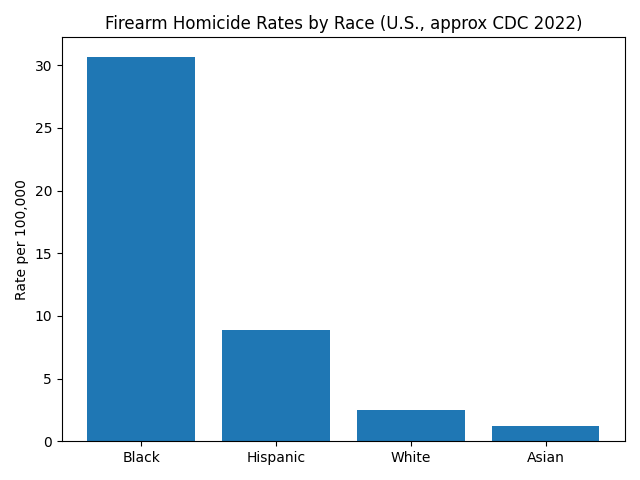
Young Black Americans experience dramatically higher rates of gun abuse and homicide victimization than any other group in the country. They also demonstrate that young Black Americans perpetrate those crimes.
In recent years:
- Black Americans have accounted for well over half of all gun homicide victims, despite being a much smaller share of the overall population
- The rate of gun homicide victimization among Black Americans is many times higher than that of White Americans
These are not marginal differences. They are stark.
They point to a crisis that is not broadly national in the way it is often portrayed—but intensely concentrated in specific communities.
Two Different Realities
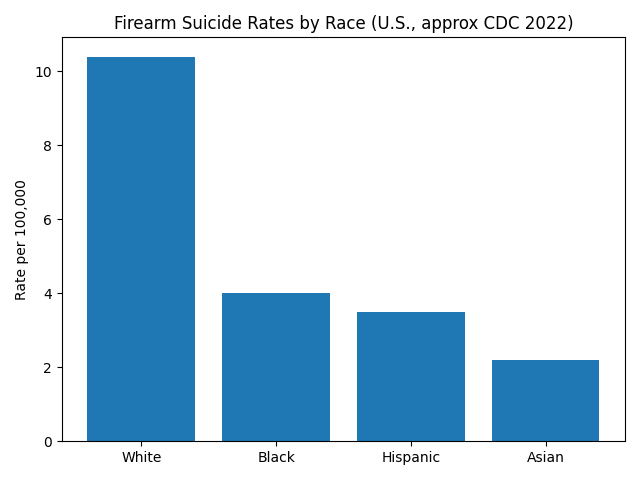
At the same time, a very different pattern emerges when looking at overall firearm deaths.
- White Americans, particularly middle-aged and older men, make up the majority of gun suicide victims
- Black Americans, particularly younger men, are disproportionately affected by gun homicide
In other words:
There are effectively two different gun violence realities in America—one driven by suicide, the other by homicide—and they affect different populations in different ways.
Treating them as the same problem obscures both.
Who Is Committing the Violence?
FBI and related data show that:
- Gun homicides are overwhelmingly committed by men, especially younger men
- Victims and offenders tend to come from the same communities and networks
- Most violent crime is intra-racial—people are typically harmed by others within their own demographic and geographic group. Blacks shoot or kill Blacks. Hispanics shoot or kill Hispanics.
This last point is critical. The data does not describe widespread cross-group violence. It describes localized, community-based cycles of violence.
Where It Happens
Gun violence is not spread evenly across the country. It is heavily concentrated:
- In specific cities
- Within specific neighborhoods
- Often within just a handful of blocks
Researchers have consistently found that a relatively small number of locations account for a disproportionately large share of shootings. This concentration explains much of the demographic disparity. These highly concentrated areas are generally within minority neighborhoods in democrat controlled areas of large cities.
When violence is concentrated in certain areas—and those areas have particular population compositions—the impact is concentrated as well.
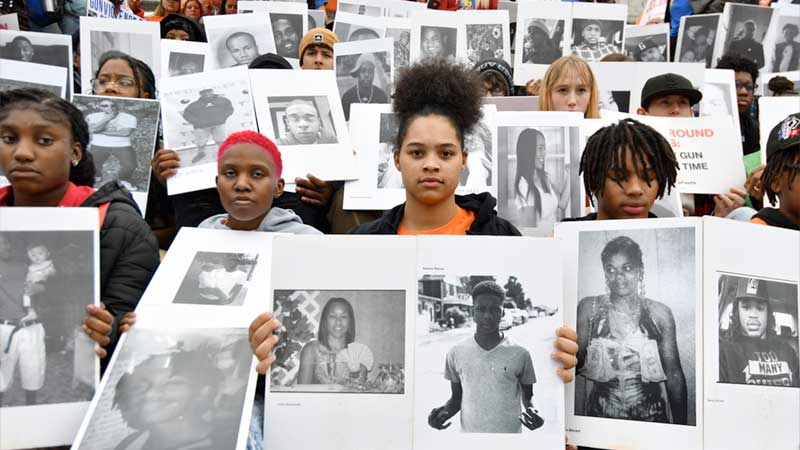
Chicago is often cited as a stark example of how gun violence concentrates in specific places and communities. In recent years, the city has recorded hundreds of homicides annually and several thousand shooting incidents, with the burden falling disproportionately on a relatively small number of neighborhoods on the South and West Sides. Within those areas, victims are overwhelmingly young Black men, and most incidents occur between people who know each other or share the same local networks. Weekend violence—particularly in warmer months—can spike sharply, with dozens of people shot in a single weekend and multiple fatalities reported in the span of just a few days.
These figures include both fatal and non-fatal shootings, reflecting not only loss of life but a broader cycle of injury, retaliation, and trauma that extends far beyond any single incident. The result is a persistent, localized crisis that shapes daily life for many residents and underscores how gun violence in America is often a concentrated, community-level problem rather than a uniform national one.
Why These Disparities Exist
The data shows the pattern. The harder question is why. Research across multiple fields points to a combination of factors:
1. Concentrated Poverty and Limited Opportunity
Areas with long-term economic disadvantage often experience:
- Fewer job opportunities
- Lower upward mobility
- Higher exposure to crime
These conditions create environments where violence is more likely to emerge and persist.
2. Social and Institutional Breakdown
In high-violence areas, there are often:
- Weaker local institutions
- Fewer community resources
- Less capacity to mediate conflicts
- Fatherless households
Without strong stabilizing forces, disputes escalate more easily.
3. Network Effects and Retaliation Cycles
Gun violence often spreads through small social networks:
- Conflicts between individuals or groups escalate
- Retaliation leads to further violence
- Cycles become self-sustaining
This is why a relatively small number of individuals can be connected to a large share of violent incidents.
4. Exposure to Violence
Repeated exposure to violence:
- Normalizes it
- Increases stress and impulsivity
- Makes escalation more likely
In many communities, especially inner-city Black communities, violence becomes part of the environment rather than an exception.
5. Access to Illegal Firearms
These concentrated areas of gun violence are invariably the highest regulated gun ownership. Where illegal gun markets are active, conflicts are more likely to become deadly. The presence of a firearm in a violent and lawless neighborhood dramatically increases the likelihood that a dispute will result in a fatal outcome.
Why This Matters
If the goal is to reduce gun violence, the conversation has to start with reality. That means recognizing:
- Where violence is concentrated
- Who commits it
- Who is most affected
- And what conditions allow it to persist
Broad national narratives, while politically powerful, often fail to address the actual contours of the problem.
The Bottom Line
Gun violence in America is not one crisis.
It is several:
- A concentrated urban homicide problem affecting minority communities
- A widespread suicide problem affecting different populations
- A set of local conditions that shape outcomes far more than national averages suggest
Understanding those distinctions is not optional. It is the only way to move from contrived debate to workable solutions. No one wants young Black men shooting young Black men. It appears to be acceptable to blue city leaders, but the rest of us are appalled, and would love to see more of President Trump’s national guard clean-up actions go into these blue war zones and make them safe for all of the residents.
Leave a Reply