• Home
  • Mission
  • Federalist Papers
  • Foundation
  • U.S. Constitution
  • Bill of Rights

Federalist Press | Defending Liberty — Informing America

Breaking News and Political Commentary

  • All Stories
  • Economy
  • Elections
  • Entitlement
  • Ethics
  • Foreign
  • Gender
  • Religion
  • Sci-Tech

The Faces of Domestic Terrorism: A Wave of Self-Radicalized Islamist Attacks in America

March 13, 2026 By Editor Leave a Comment

By James Thompson

In the wake of U.S. military strikes against Iran, a series of violent incidents across the United States has raised renewed concerns among many security analysts about the resurgence of self-radicalized Islamist terrorism.

Within a matter of days, multiple attacks and attempted attacks unfolded in different parts of the country: a synagogue assault in Michigan, a deadly shooting at a military training program in Virginia, an Islamist motivated attack in Texas, and an attempted bombing in New York City involving homemade explosives.

At first glance the incidents appear unrelated. They occurred in different states, involved different suspects, and targeted different victims. Yet investigators say a closer look reveals a disturbing common thread: several of the suspects appear to have embraced jihadist ideology and were inspired by propaganda associated with the Islamic State and similar extremist movements.

The pattern reflects a phenomenon that counterterrorism experts have warned about for years—the rise of self-activated Islamist extremists who act independently, but draw ideological inspiration from global jihadist movements.

The most alarming recent plot unfolded in New York City.

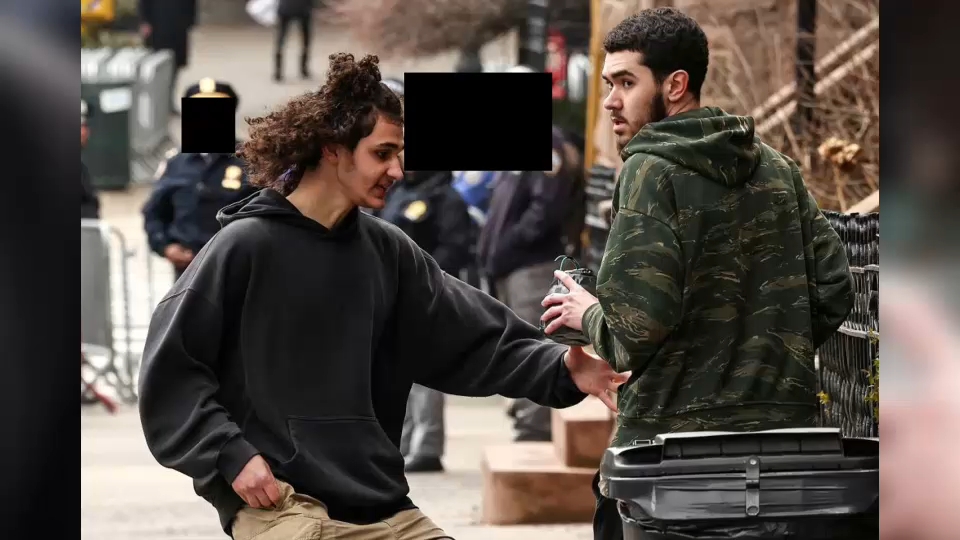
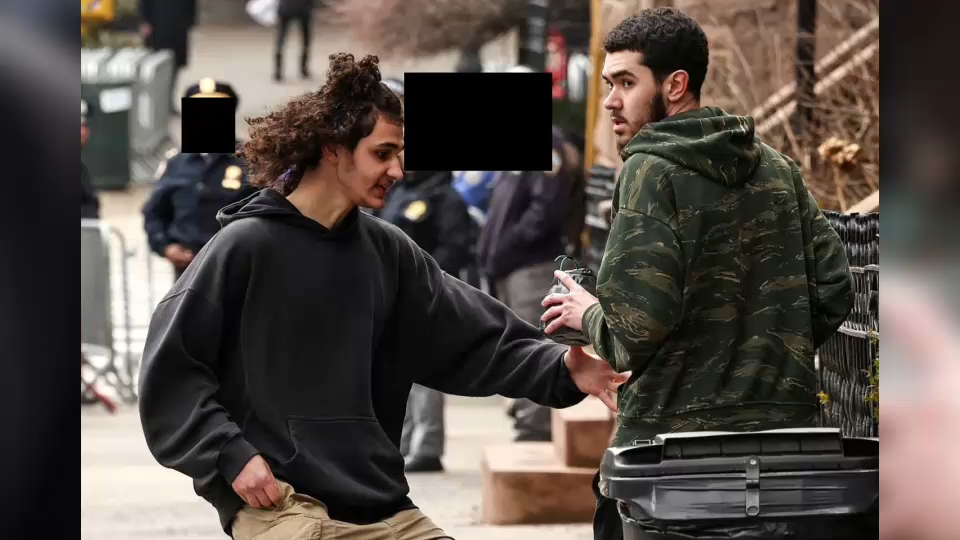
On March 7, two young men—18-year-old Emir Balat and 19-year-old Ibrahim Kayumi—were arrested after allegedly throwing improvised explosive devices into a crowd near Gracie Mansion, the official residence of the city’s mayor. Authorities say the devices were real bombs packed with volatile explosive material and metal fragments capable of causing serious injury or death to large crowds of. bystanders.

The attack occurred during a protest outside the mayor’s residence. According to federal investigators, the two suspects had constructed multiple improvised explosive devices and transported them across state lines before throwing them toward the crowd.
Emir Balat and Ibrahim Kayumi were seen throwing improvised explosive devices into a crowd near Gracie Mansion.

Fortunately, the bombs failed to detonate fully, and no one was killed.

The criminal complaint alleges that the two men had consumed ISIS propaganda online and openly expressed admiration for the terrorist organization. Investigators say one of the suspects stated he hoped to carry out an attack “bigger” than the Boston Marathon bombing.

Authorities believe the pair were not formally directed by ISIS leadership, but had been self-radicalized through online extremist content, a pathway that has become increasingly common in recent years.

While the New York plot was foiled, violence elsewhere in the country proved deadly.

In Virginia, a gunman opened fire inside a Reserve Officers’ Training Corps classroom at Old Dominion University, killing a retired military instructor and injuring two others. Investigators quickly discovered that the suspect had previously been convicted for supporting ISIS and had spent time in federal prison.

The choice of target, an American military training program, appeared deliberate. According to investigators, the attack was framed by the suspect as retaliation against the United States and its military actions overseas.

Mohamed Jalloh carried out a shooting at Old Dominion University on Thursday that killed 1 person and injured 2 others. The shooter is dead, officials said.

For counterterrorism officials, the symbolism is unmistakable: a jihadist sympathizer targeting representatives of the U.S. armed forces.

Another attack occurred in West Bloomfield Township, Michigan, where a man drove a truck into a synagogue complex that included a preschool and community center. More than one hundred children were inside the building at the time.

Armed security personnel prevented the attacker from entering the facility, stopping what authorities believe could have been a catastrophic mass-casualty attack.

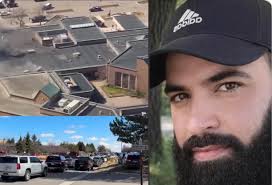
Ayman Mohamad Ghazali, a 41-year-old Lebanon-born naturalized U.S. citizen, has been identified by the Department of Homeland Security as the suspect behind the attack on Temple Israel synagogue in West Bloomfield, Michigan

Investigators later revealed that the suspect had expressed anger about Israeli and American actions in Iran and the region. Authorities believe the synagogue was deliberately chosen as an antisemitic target of the terrorists rage.

Meanwhile, authorities in Texas are still investigating a mass shooting that witnesses say involved extremist Islamic ideology.

Texas gunman Ndiaga Diagne, a Senegalese immigrant-turned US citizen was wearing a sweatshirt that said ‘Property of Allah,’ and a shirt with an Iranian flag design.

Taken together, the incidents illustrate the continuing evolution of jihadist terrorism inside Western countries.

Unlike the large, centrally planned attacks associated with al-Qaeda in the early 2000s, today’s extremist violence is often decentralized. Groups like ISIS have spent years cultivating sympathizers and extremist reactionaries around the world to act independently, using whatever weapons are available, and targeting civilians, government facilities, or military personnel.

This strategy requires no direct command structure. Instead, individuals radicalized online interpret global events—wars, military strikes, or political conflicts—as personal calls to action.

Security analysts say moments of geopolitical tension can act as powerful catalysts for this process.

The recent escalation involving Iran has dominated global media and online discourse. Extremist propaganda channels have already begun portraying the conflict as evidence of a broader war between Islam and the West, a narrative designed to provoke retaliation by Islamist sympathizers abroad. For individuals already consuming radical content, that messaging can serve as a trigger.

At the same time, investigators caution against assuming that the recent attacks were coordinated or directed by a single organization. There is currently no evidence that the suspects communicated with one another or operated as part of a structured network. Instead, the emerging picture appears to be one of parallel radicalization.

This decentralized threat presents a major challenge for law enforcement. Traditional intelligence methods are designed to detect organized conspiracies, not individuals who radicalize quietly online and act alone.

For that reason, officials say the greatest danger may come not from large terrorist networks but from isolated individuals who decide, sometimes suddenly, to turn mistaken ideology into violence.

As investigators continue to examine the recent incidents, security agencies across the nation have quietly increased protection around synagogues, government buildings, military facilities, and public events.

This has become quite difficult in the wake of Democratic Party efforts to leave the American people vulnerable to such attacks by defunding the Department of Homeland Security at such a critical time.

Whether the recent attacks represent the beginning of a broader wave, or merely a troubling cluster of isolated incidents, remains uncertain. What is becoming increasingly clear is that global conflicts can have immediate domestic consequences.

In an era of instant communication and online radicalization, the ideological battlefields of the Middle East no longer remain confined overseas. Now, their echoes are heard in American cities.

The government must shift its strategies to combat this development in its effort to protect American citizens from the violence that accompanies Islamist propaganda.


James Thompson is an author and ghostwriter, and a political analyst.


Sponsored by BasicInfo123 — simple bite-sized guides for life, money, civics, and more—because some stuff school just didn’t cover.

Filed Under: Bias, Crime, Elections, Entitlement, Ethics, Foreign, Gender, Religion

Missing General, Missing Answers: The Strange Disappearance of Retired Maj. Gen. Neil McCasland

March 11, 2026 By Editor Leave a Comment

By James Thompson | Feature article contributor

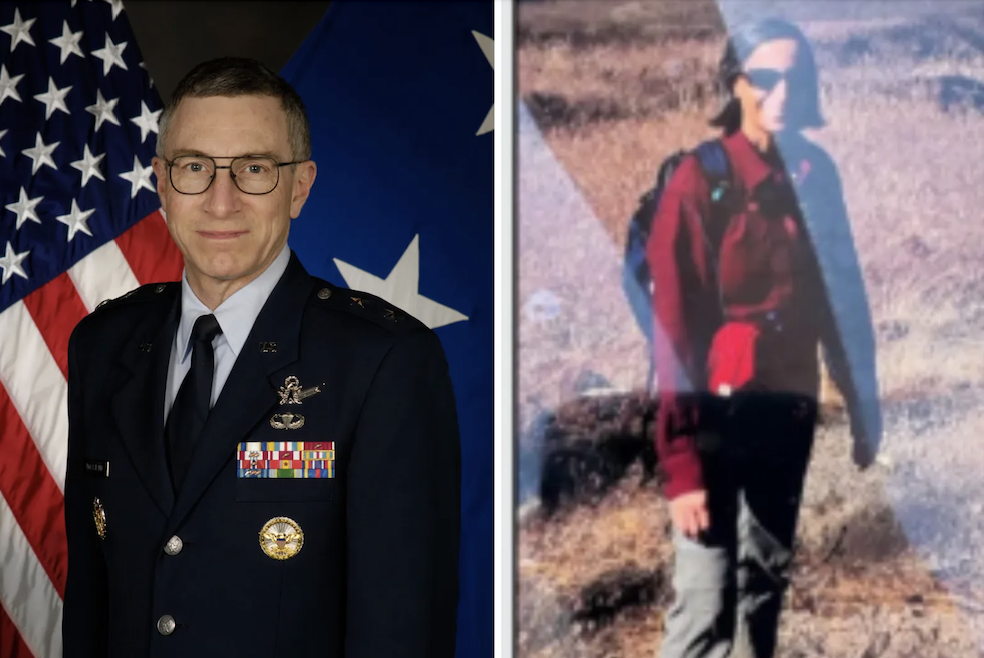
The disappearance of retired U.S. Air Force Maj. Gen. William Neil McCasland has become one of the strangest missing-person cases in the country: a former commander of the Air Force Research Laboratory, a Pentagon special-programs official, and a figure long discussed in UFO-disclosure circles vanished from Albuquerque in late February, leaving investigators, journalists, and online observers asking the same question: where did he go?

McCasland, 68, was last seen around 11 a.m. on February 27 near Quail Run Court NE in Albuquerque, according to the Bernalillo County Sheriff’s Office. Authorities issued a Silver Alert, saying they were concerned for his safety because of medical issues. The FBI later joined the search, and by March 11 investigators had asked more than 600 nearby homeowners to turn over security-camera footage. As of the latest public updates, there had been no confirmed sightings and no announced resolution.

That alone would make the case serious. What makes it extraordinary is who McCasland is.

According to his official Air Force biography, McCasland commanded the Air Force Research Laboratory at Wright-Patterson Air Force Base, overseeing a $2.2 billion science-and-technology program and another $2.2 billion in customer-funded research and development. He also served as Director of Space Acquisition in the Office of the Under Secretary of the Air Force and then as Director of Special Programs in the Office of the Under Secretary of Defense for Acquisition, Technology and Logistics. Those roles placed him near some of the government’s most sensitive defense and space programs.

That background is why NewsNation correspondent Ross Coulthart has called the disappearance a “grave national security crisis.” In public comments summarized by Newsweek, Coulthart argued that McCasland is a man with “some of the most sensitive secrets of the United States in his head,” and said the case raises the question of whether foul play should be considered. He also pointed to the FBI’s involvement as a sign the matter is being treated with unusual seriousness.

The UFO angle comes from two overlapping threads.

The first is institutional. Wright-Patterson has long occupied a central place in UFO lore because of claims, disputed and never officially confirmed, that Roswell-related debris was sent there decades ago. McCasland’s official record confirms that he later ran the Air Force Research Laboratory there, but that does not by itself establish that he had access to extraterrestrial materials or hidden UFO programs.

The second thread is documentary. In a 2016 email published by WikiLeaks, musician and UFO activist Tom DeLonge told John Podesta that McCasland “was in charge of that exact laboratory” at Wright-Patterson and said McCasland was “very, very aware” of the material DeLonge was investigating and had helped assemble his advisory team. Those emails are real documents in the WikiLeaks archive, but DeLonge’s claims inside them were his own; they were not official government confirmation, and McCasland has not publicly validated them.

The timing has intensified the intrigue.

On February 19, President Donald Trump said he would direct federal agencies to begin identifying and releasing government files related to aliens, unidentified aerial phenomena, and UFOs. Reuters reported that Trump said there was strong public interest in the topic, while DefenseScoop noted that transparency advocates greeted the announcement with both hope and skepticism, stressing that a real disclosure effort would require sustained cross-agency follow-through rather than a single headline-grabbing statement. McCasland disappeared roughly a week later, and Coulthart has publicly highlighted that sequence.

That chronology is undeniably striking. But chronology is not causation.

At this point, there is no public evidence that McCasland’s disappearance is connected to Trump’s disclosure directive, to UFO secrecy, or to any foreign-intelligence operation. Public reporting from local authorities has emphasized the missing-person search itself, and KOAT reported that investigators had not uncovered evidence of foul play a week into the case. The fact that Coulthart and others believe the circumstances are suspicious is newsworthy; it is not the same thing as proof.

Still, the possibilities are unsettling.

One possibility is the simplest: a medical emergency or disorientation. The Silver Alert exists precisely because authorities believed McCasland may have been vulnerable, and in many missing-person cases the most mundane explanation is the correct one. That remains a leading possibility based on what police have publicly said.

A second possibility is accidental death in terrain that has not yet yielded answers. Albuquerque’s foothills and open areas can complicate searches, and officials have suggested investigators are pursuing tips from people who may have been in the Sandias or nearby areas around the time he disappeared. That theory is grim, but it does not require a conspiracy to explain why a person can vanish so quickly.

A third possibility is voluntary disappearance, though there is little public evidence for it. Reports have emphasized that McCasland left without his phone, and the broad law-enforcement response suggests his disappearance was considered out of character and alarming from the start.

The most dramatic possibility is foul play tied to what McCasland knew. That is the scenario that has electrified UFO circles and national-security watchers alike. Coulthart has openly argued that someone with McCasland’s background would be of obvious interest to hostile foreign powers. But again, that remains speculation unless investigators produce evidence supporting it.

What makes the case so potent is not just the mystery of one missing man. It is the symbolic collision of three storylines Americans already distrust: black-budget military secrecy, decades of arguments over UFO disclosure, and a political moment in which the president has just promised to open sealed files. When a retired general with deep access to classified aerospace and special-programs work disappears days after that promise, people are going to suspect more than coincidence, whether or not the facts ever justify it.

For now, the hard facts are narrower than the rumors. Neil McCasland is missing. He held unusually sensitive positions in the Air Force and Pentagon. Ross Coulthart has argued the disappearance could have national-security implications. Trump did, in fact, order agencies to begin identifying UFO-related files for release shortly before McCasland vanished. And authorities still have not publicly explained what happened.

Everything beyond that is inference.

And that is exactly why this case has become so compelling.


James Thompson is an author and ghostwriter, and a political analyst. He is an analyst of UAP reports, and have authored the book Worlds Without Number.


Sponsored by BasicInfo123 — simple bite-sized guides for life, money, civics, and more—because some stuff school just didn’t cover.

Filed Under: Crime, Ethics, Foreign, Sci-Tech

UK Recognition of ‘Palestine’ Raises Questions About History, Security, and the Future of Gaza

September 21, 2025 By Editor Leave a Comment

By James Thompson

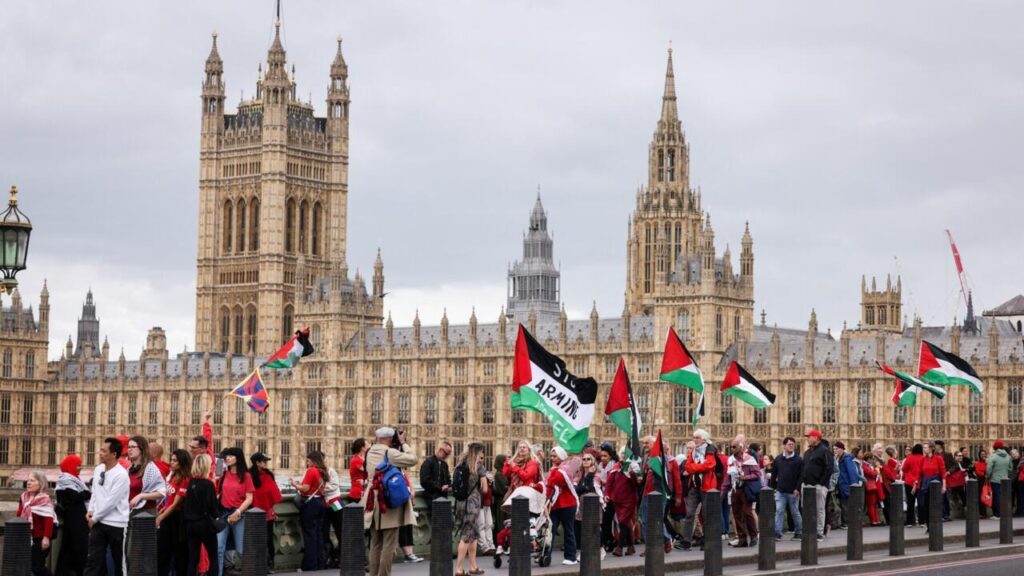
The recent announcement by the United Kingdom that it recognizes the “State of Palestine” has once again raised global debate about the historical, political, and security realities in the Middle East. While the term “Palestine” is often invoked, the actual political geography tells another story. What exists is the Gaza Strip, a narrow coastal enclave that has become synonymous with terrorism, instability, and human suffering—not a functioning sovereign state.

Ancient and Modern Roots of Israel

The Jewish people trace their roots in the land of Israel back thousands of years. From the biblical kingdoms of Israel and Judah to the destruction of the Second Temple by Rome in 70 AD, Jewish presence in the land has been a constant. Despite centuries of exile and dispersion, Jewish communities maintained ties to Jerusalem and other holy sites.

The modern reestablishment of Israel followed centuries of persecution culminating in the Holocaust, in which six million Jews were systematically murdered by Nazi Germany. In 1947, the United Nations voted to partition the British Mandate of Palestine into Jewish and Arab states. The Jewish leadership accepted; the Arab world did not. On May 14, 1948, David Ben-Gurion proclaimed the independence of the State of Israel. The next day, five Arab armies invaded, vowing to wipe Israel off the map. Against all odds, Israel prevailed.

The Six-Day War and Its Results

In 1967, the Six-Day War altered the regional landscape. Surrounded by hostile neighbors—Egypt, Syria, and Jordan—Israel launched preemptive strikes to defend itself from imminent attack. In six days, Israel captured the Sinai Peninsula, the Golan Heights, East Jerusalem, and the West Bank. The Gaza Strip, previously administered by Egypt, also came under Israeli control. This war not only secured Israel’s survival but also restored Jewish access to the Western Wall in Jerusalem for the first time in nearly 2,000 years.

Decades of Terrorism

While Israel built a thriving democracy and economy, waves of terrorism followed. From the hijackings of the 1970s to suicide bombings during the Second Intifada, Israelis endured relentless assaults on buses, restaurants, and schools. The rise of Hamas, an Iranian-backed Islamist terror group, turned Gaza into a launch pad for rockets and attacks against Israeli civilians. Daily barrages have forced millions of Israelis to live under constant threat, rushing into bomb shelters at the sound of sirens.

The October 7th Massacre

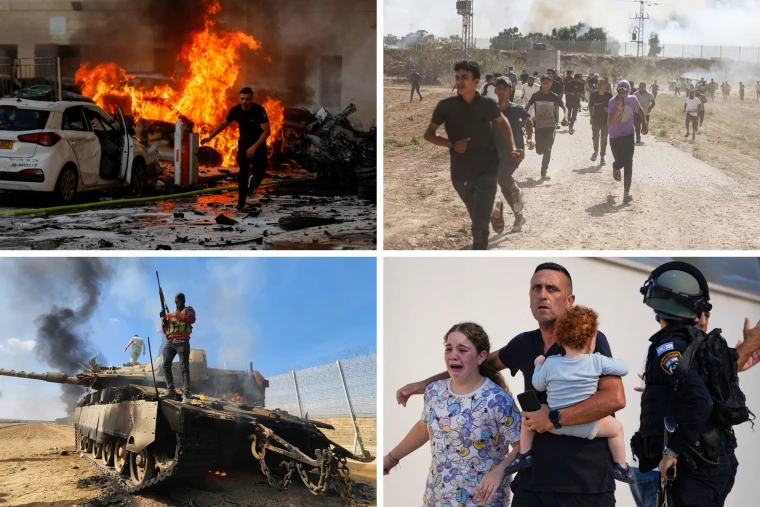
The deadliest attack in modern Israeli history came on October 7, 2023. Hamas militants poured out of Gaza in a coordinated assault on southern Israel. They massacred families in their homes, raped women, beheaded infants, and kidnapped over 200 people—including children and the elderly. More than 1,200 Israelis were murdered in one day, shocking the world and proving that Hamas’s aim is not peace, but annihilation.

On October 7, 2023 Islamic terrorists from Gaza and other bordering sites attacked helpless Israelis going about their daily routines, murdering thousands, including chopping babies up and raping and murdering women and children

The Problem of Gaza

No Arab country has offered to take responsibility for Gaza’s people. Egypt, which shares a border, keeps it sealed. Jordan, Lebanon, and Saudi Arabia, despite their rhetoric, refuse to absorb refugees from the enclave. The reality is that Gaza has become a weaponized territory designed to bleed Israel.

Gaza’s location also presents strategic complications. Wedged along the Mediterranean, it effectively narrows Israel’s access to the sea and creates a long-term security threat. Israel’s withdrawal from Gaza in 2005, intended as a step toward peace, led not to stability but to Hamas’s takeover and an escalation of daily rocket fire.

Some argue that the only long-term solution is for Gaza to become part of Israel again, repopulated by Israelis who can build cities, seaports, and commercial beaches that would benefit the entire nation. Others propose compromise solutions—such as dividing Gaza, with the northern half integrated into Israel proper and populated by Israelis, and the southern half left for Arab administration. Such a move would give Israel greater security and greater open access to critical Mediterranean trade routes while still providing Arab residents a less deadly alternative zone.

The UK’s recognition of “Palestine” may make headlines, but it sidesteps the brutal reality: Gaza is not a state but a terror enclave. Israel, the only true democracy in the Middle East, continues to fight for its survival against enemies that reject its very existence. Until the world acknowledges this reality—and until Gaza ceases to be a hub of violence—the dream of peace will remain distant.


James Thompson is an author and ghostwriter, and a political analyst.


Sponsored by BasicInfo123 — simple bite-sized guides for life, money, civics, and more—because some stuff school just didn’t cover.


Filed Under: Bias, Ethics, Foreign, Religion

A Global War on Faith: Anti-Religious Attacks Escalate in America and Beyond

September 8, 2025 By Editor Leave a Comment

By Federalist Press Investigative Team

Houses of worship, once untouchable sanctuaries of community and conscience, are becoming battlefields in a global war against religion. From arson and vandalism to deadly shootings, the evidence is clear: hostility toward faith is on the rise. Yet the institutions most responsible for protecting society—the press, educators, and governments—often look away, downplay, or worse, subtly encourage the targeting of believers.

This exposé examines the escalation of anti-religious violence, how radical ideologies are weaponizing young people against faith, and why silence from the cultural establishment makes them complicit.

The Numbers Don’t Lie

The FBI’s most recent Hate Crime Statistics Report shows that religious bias accounts for roughly 20% of all reported hate crimes, second only to racial bias. Anti-Jewish incidents lead the category, but anti-Christian and anti-Muslim cases have climbed sharply. Reports of church vandalism and synagogue desecrations increased by double digits in the past decade, yet coverage in major outlets like The New York Times and CNN remains sparse.

Meanwhile, Catholic Vote reported over 320 attacks on Catholic churches since 2020, including dozens of arsons. Evangelical churches, particularly those opposed to progressive social agendas, face firebombings and smashed windows. In Canada, over 70 churches were torched in a single summer, most cases unresolved.


The School Shootings the Media Buried

Nowhere is the pattern more chilling than in school shootings explicitly targeting Christian institutions.

  • The Covenant School, Nashville (2023): A transgender-identified shooter murdered three children and three staff members at a Christian elementary school. Authorities confirmed the shooter left a manifesto targeting Christians, yet its full release has been blocked by courts—amid suspicions that its contents would reveal explicit anti-Christian animus tied to radical gender ideology. The shooter’s Transifesto is still being suppressed from the public.
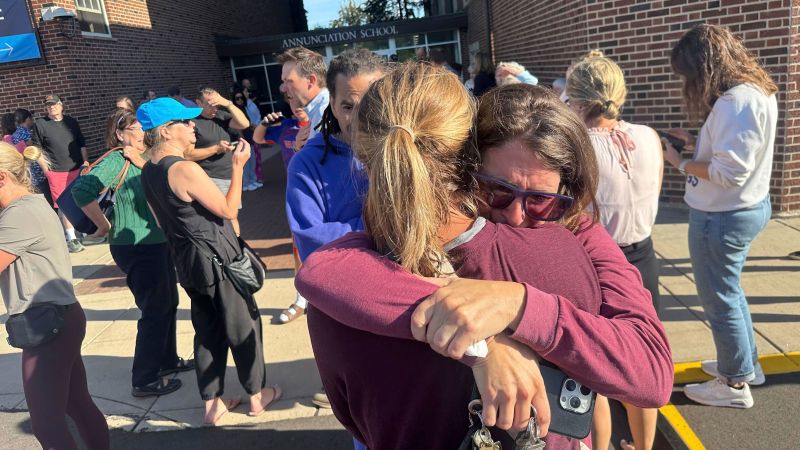
  • Minneapolis was shaken when gunfire erupted outside Annunciation Catholic Church on Wednesday, Aug. 27 – the fourth major shooting in less than 24 hours. The school attack, which terrified students and parents, capped a violent spree that left at least three people dead and more than a dozen others wounded across the city. The transgender-identified shooter left behind his Tranifesto, spewing his hate of children and Christians.
  • Colorado Springs (2019, thwarted): A trans-identified individual was arrested with a hit list and plans to target local churches, citing hatred of Christians in online postings.
  • Other incidents: Smaller cases in Kentucky and California also revealed trans-identified suspects threatening or attacking churches and faith schools.

Mainstream coverage? Muted. Instead of highlighting the anti-religious motivation, networks portrayed the perpetrators as victims of “societal rejection,” effectively excusing their violence. Imagine the coverage if the reverse were true—if a religious extremist had targeted an LGBT school. The double standard is glaring.

Teachers’ Union Programs: Undermining Faith in the Classroom

Much of the cultural hostility toward religion is seeded not in the streets, but in the classroom. Teachers’ unions, long dominated by progressive leadership, have increasingly used their influence to push policies and programs that portray traditional religious beliefs as outdated, intolerant, or even harmful.

  • NEA & Gender Ideology Training: The National Education Association (NEA), the nation’s largest teachers’ union, hosts workshops that encourage teachers to “affirm student identities” without parental knowledge. In practice, this often means withholding information from Christian or religious parents whose values conflict with gender-transition policies. By treating parental involvement as dangerous, these programs drive a wedge between children and their families’ faith traditions.
  • Anti-“Religious Privilege” Curricula: The American Federation of Teachers (AFT) has endorsed classroom materials that frame Christianity—especially in its traditional or conservative forms—as a source of systemic oppression. Training documents encourage educators to identify “religious privilege” as a barrier to equity, painting devout families as inherently problematic.
  • Partnerships With Activist Nonprofits: Both NEA and AFT have partnered with outside organizations such as GLSEN (Gay, Lesbian & Straight Education Network) and the Human Rights Campaign to develop curricula. While framed as “anti-bullying” or “inclusive,” many of these programs depict faith-based objections to gender or sexual ideology as examples of hate, effectively stigmatizing religious students and families.
  • Cultural Reframing Exercises: Some union-backed training materials go so far as to suggest exercises where children are encouraged to question their families’ religious values and “deconstruct” traditional moral frameworks. Faith is treated as something to be unlearned, rather than a legitimate foundation for personal identity.

Critics argue these programs do more than just “educate.” They function as soft conversion tactics—encouraging children to view their parents’ religion as oppressive, while offering radical ideology as the enlightened alternative. The result is a generation of young people alienated from faith and more susceptible to radicalization online, where anger and identity confusion can be weaponized into activism—or in extreme cases, violence.

Europe and Beyond: Faith Erased, Freedom Eroded

In Europe, secular governments do little to protect churches that are vandalized weekly. France has seen over 1,000 annual attacks on Christian sites in recent years. Germany’s Jewish communities face surging antisemitic crimes. The U.K. documents increasing assaults on both Muslims and Christians, yet arrests and prosecutions are rare.

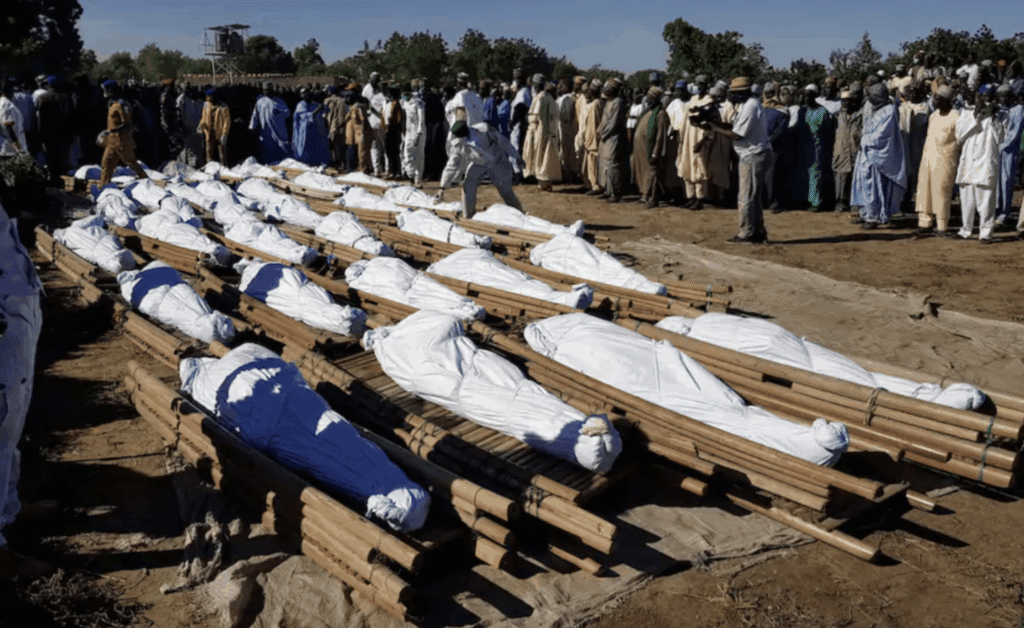
Globally, the situation is bloodier. Boko Haram massacres Christians in Nigeria. Hindu-Muslim violence leaves houses of worship smoldering in India. In China, churches are bulldozed and mosques fitted with surveillance cameras. The message is the same everywhere: religion is dangerous, and faith must bow to ideology.

The Media Cover-Up

When attacks occur, media coverage follows a predictable script:

  • If the victims are Christian, the crime is treated as an isolated event, stripped of ideological context.
  • If the perpetrator is tied to progressive causes (as in Nashville), coverage softens or shifts blame to “society.”
  • If the crime fits an anti-right narrative, it dominates headlines for weeks.

By burying the truth, the press signals that attacks on certain faiths are tolerable—or even deserved.

Why It Matters

This is more than vandalism. More than crime. These are attacks on freedom itself. The right to worship freely is the cornerstone of any free society. When churches burn and Christian children are gunned down—while governments hide manifestos and teachers’ unions undermine families—we are watching the unraveling of liberty.

History is unambiguous: totalitarian regimes always begin by erasing religion. Stalin dynamited churches. Mao banned temples. Hitler vilified Jews. Today’s radicals, whether in classrooms, legislatures, or social media mobs, are following the same playbook.

A Call to Defend Faith

The faithful must no longer remain silent. Religious communities must demand that governments enforce laws equally, that perpetrators be prosecuted without ideological cover, and that media outlets stop burying the truth. Parents must reclaim schools from unions that treat their faith as an enemy.

The war on faith is not hypothetical—it is here, it is growing, and it will not stop until believers themselves refuse to bow.

Filed Under: Bias, Crime, Ethics, Foreign, Religion

Trump’s Big Beautiful Bill Passes Congress in Landmark Victory

July 3, 2025 By Editor Leave a Comment

In a stunning and historic move, Congress has just passed President Donald J. Trump’s long-awaited Big Beautiful Bill, delivering a major legislative win for his administration and a decisive step toward fulfilling key promises of his second term. The bill, touted by President Trump as “the most beautiful piece of legislation our nation has ever seen,” passed both chambers after weeks of intense debate and negotiation.

What’s in the Bill?

The Big Beautiful Bill is sweeping in scope. Among its most significant provisions:

  • Border Security and Immigration Reform: The bill allocates record funding for the completion of the southern border wall, bolsters border patrol forces, and implements stricter measures to prevent illegal immigration while streamlining legal immigration for merit-based applicants.
  • Tax Relief: It introduces further tax cuts aimed at middle-class families and small businesses, building on the success of the 2017 Tax Cuts and Jobs Act.
  • Energy Independence: The bill rolls back excessive regulations on domestic energy production, supporting American oil, gas, and coal industries while expanding incentives for clean nuclear and next-generation technologies.
  • Restoration of Law and Order: It provides significant funding for law enforcement and first responders, with provisions aimed at reducing violent crime in major cities.

A Hard-Fought Victory

Passage of the bill was far from certain. Democrats mounted fierce opposition, criticizing the bill as being too focused on Trump’s campaign priorities. Yet in the end, a coalition of Republicans and moderate Democrats, responding to public pressure for action on border security, inflation relief, and national security, propelled the bill across the finish line.

Speaker of the House, who had initially wavered, ultimately praised the final product: “This is a bill that puts Americans first. It strengthens our economy, secures our borders, and supports our communities.”

Senate Majority Leader echoed the sentiment: “We’ve delivered on what the American people asked for: safety, prosperity, and common-sense governance.”

Trump’s Reaction

President Trump, speaking from the White House Rose Garden moments after the vote, hailed the legislation as “a win for all Americans” and “proof that when we put America First, nothing can stop us.”

He added: “This Big Beautiful Bill is going to make our country stronger, safer, richer, and greater than ever before. I want to thank Congress for working together, despite differences, to do what’s right for our people.”

The Road Ahead

The Big Beautiful Bill now heads to President Trump’s desk, where he is expected to sign it into law within days. Implementation will begin immediately, with federal agencies already preparing to roll out new programs and allocate funding according to the bill’s provisions.

Critics, including progressive lawmakers and left-wing media outlets, have vowed legal challenges to portions of the bill, particularly those related to immigration enforcement and energy policy. However, the Trump administration appears confident that the law will withstand scrutiny.

For now, the passage of the Big Beautiful Bill marks a pivotal moment in the Trump presidency—one that supporters are calling a defining achievement and a major step in delivering on the promises that brought him to the White House once again.

James Thompson is an author and ghostwriter, and a political analyst.

Filed Under: Economy, Elections, Entitlement, Ethics, Foreign, Gender

Trump’s Decisive Strike: Ending Iran’s Nuclear Threat and Exposing Decades of Diplomatic Failure

June 26, 2025 By Editor Leave a Comment

By James Thompson | June 26, 2025

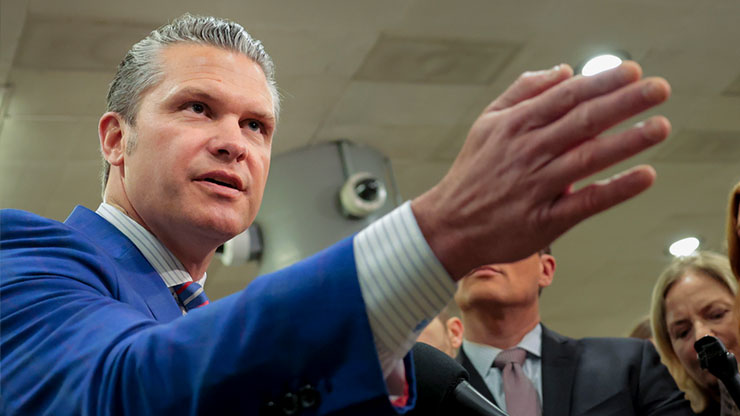
Secretary of Defense Pete Hegseth details the devastating massive destruction done to the Iranian Nuclear Weapons Development program by America’s ‘Bunker Buster’ bombs

In a bold and historic move, President Donald J. Trump ordered a series of precision strikes on Iran’s nuclear weapons development facilities this week, bringing an end to what has long been one of the greatest threats to peace in the Middle East and global stability. The success of the operation has been widely praised by allies and even reluctantly acknowledged by some critics, marking a turning point in the decades-long struggle to stop Iran’s radical regime from obtaining weapons of mass destruction.

Military releases videos of bunker buster bombs impacting and obliterating Iranian nuclear weapons development facilities

A History of Hostility

Since the Islamic Revolution of 1979 and the fall of the U.S.-backed Shah, Iran has operated as a hardline theocracy under the control of Shiite clerics, exporting terrorism and extremism throughout the Middle East and beyond. The Ayatollah-led regime quickly moved to establish itself as a leading sponsor of global terror, funding and arming proxy groups such as Hezbollah in Lebanon, Hamas in Gaza, the Houthis in Yemen, and various Shiite militias in Iraq and Syria.

Iranian-backed insurgents and terror cells have been responsible for the deaths of hundreds of American troops and civilians, through roadside bombs, embassy bombings, hostage crises, and direct military confrontations. Their hatred for the West—and especially the United States and Israel—is woven into the regime’s core ideology. Notably, Iranian leaders have called for the destruction of both nations, and have plotted or attempted the assassination of foreign officials on American soil.

Democratic Appeasement and Strategic Failures

Despite Iran’s unrelenting aggression, Democratic presidents have repeatedly chosen appeasement over strength. President Barack Obama’s Iran Nuclear Deal (JCPOA) in 2015 gave the regime billions in sanctions relief and unfreezing of assets, including a now-infamous $1.7 billion in cash—literally flown in on pallets—without any permanent dismantlement of Iran’s nuclear program.

President Joe Biden returned to that same philosophy of weakness. Early in his term, he reversed Trump-era sanctions, released billions in Iranian oil revenues, and attempted to re-enter the JCPOA, even as Iran was caught enriching uranium far beyond civilian-use levels. Biden’s move effectively financed renewed Iranian aggression and hastened their nuclear ambitions, all while U.S. allies in the region warned of the consequences. The results were predictable: escalation in terrorism, open threats to Israel, and bold moves by Tehran to expand its nuclear infrastructure deep underground.

Trump’s Warning and the Turning Point

As tensions escalated in early 2025, Iran crossed multiple red lines, including expelling international nuclear inspectors and threatening to unveil a working nuclear weapon. Last week, Israel launched a preliminary strike on Iranian military targets. In response, Iran vowed retaliation and doubled down on its weapons program.

President Trump, having warned Iran repeatedly to abandon its nuclear pursuits, authorized a coordinated U.S. military operation targeting the heart of Iran’s weapons development infrastructure. B-2 stealth bombers, armed with GBU-57 Massive Ordnance Penetrators—so-called “bunker buster” bombs—successfully penetrated Iran’s heavily fortified underground nuclear sites near Fordow and Natanz. Intelligence confirms those facilities were completely destroyed.

Downplaying Success: Democrats in Denial

In the wake of the operation, Democratic leaders scrambled to contain the political fallout. Senate Majority Leader Chuck Schumer and House Minority Leader Hakeem Jeffries condemned the operation as “reckless” and “destabilizing,” despite bipartisan briefings confirming the accuracy and effectiveness of the strikes. Some Democrats even floated the possibility of launching another impeachment effort, a move widely ridiculed as political theater in the face of a clear national security victory.

Mainstream media outlets have echoed similar talking points, downplaying the impact of the strike, questioning the intelligence used, and expressing concern for “regional tensions”—while failing to acknowledge that those tensions stem from decades of failed diplomacy and Iran’s unchecked aggression.

A Global Victory and Affirmation of Leadership

Despite political resistance at home, the global response has largely been supportive. Leaders from Israel, the United Kingdom, and several Arab nations privately and publicly applauded the elimination of Iran’s nuclear threat. Even some European leaders—who previously clung to the Iran deal—acknowledged the reality that diplomacy had failed, and that firm action was necessary.

President Trump and members of his administration are being widely credited with removing a major threat to world peace. The Pentagon confirmed that civilian casualties were avoided due to careful targeting and real-time surveillance, and satellite imagery verifies the complete collapse of Iran’s nuclear weapons infrastructure.

This successful operation will go down as a pivotal moment in modern geopolitical history—one that reaffirmed the importance of strength, clarity, and resolve in the face of tyranny.

For further background and buildup to these events, read our original June 21 article: “Trump Orders Iran Strikes After Israel Assaults Nuclear Facilities” — an in-depth look at the escalating crisis and how Iran’s dangerous ambitions were finally stopped.


Federalist Press will continue to report on the fallout and geopolitical ramifications of the mission that ended Iran’s nuclear dream. Subscribe for updates on Middle East security, U.S. foreign policy, and America’s defense of freedom.

James Thompson is an author and ghostwriter, and a political analyst.

Filed Under: Foreign, Religion, Sci-Tech

BREAKING: President Trump Orders Devastating Airstrikes on Iran’s Nuclear Weapons Facilities in Historic Preemptive Strike

June 21, 2025 By Editor Leave a Comment

By James Thompson
June 21, 2025

In a powerful and decisive move that may reshape the future of the Middle East, President Donald J. Trump has ordered precision airstrikes on Iran’s nuclear weapons program, delivering a crippling blow to the Islamic regime’s long-standing goal of acquiring a nuclear bomb. The strikes, carried out late last night, targeted multiple fortified facilities using America’s most advanced military aircraft and bunker-penetrating weaponry.

A Historic Response to a Global Threat

The action follows months of mounting aggression from Iran and its proxies, and comes on the heels of Iran-backed Palestinian terrorist attacks on Israel in October 2024, which left over 1,000 civilians dead in one of the most savage acts of terrorism in recent history.

Iran has continued to escalate the regional conflict since then, launching or directing attacks on U.S. troops in Iraq and Syria, arming Hezbollah and the Houthis, and vowing to destroy Israel. For years, Tehran has been enriching uranium far beyond limits allowed under past international agreements. Despite repeated warnings from Western leaders and the IAEA, Iran has inched dangerously close to producing weapons-grade material.

President Trump, citing the imminent threat of nuclear war, authorized the operation under the doctrine of preemptive self-defense.

Precision Strikes on Iran’s Most Protected Facilities

The operation—codenamed Operation Iron Dagger—began just before dawn local time in Iran. Multiple U.S. B-2 Spirit stealth bombers, launched from bases in Missouri and Diego Garcia, penetrated Iranian airspace undetected, escorted by electronic warfare aircraft that blinded Iranian radar systems.

The B-2s dropped a combination of GBU-57A/B Massive Ordnance Penetrators (MOPs)—a 30,000-pound bunker-buster bomb designed to destroy deeply buried facilities—and GBU-31 JDAMs for surface-level infrastructure. The targets included:

  • Fordow Fuel Enrichment Plant – built into a mountain near Qom, this facility is heavily fortified and buried deep underground. U.S. bunker busters were used to collapse large sections of the underground halls.
  • Natanz Nuclear Complex – the centerpiece of Iran’s uranium enrichment program. Satellite images show heavy damage to centrifuge halls and support buildings.
  • Arak Heavy Water Reactor – believed to be capable of producing plutonium for weapons. Airstrikes disabled key components and cooling systems.

Additional sites associated with nuclear weaponization, including research facilities near Isfahan and missile development hubs near Parchin, were also targeted with precision munitions.

Pentagon officials confirmed that no U.S. aircraft were lost in the operation, and that secondary explosions indicated the presence of nuclear materials and high-value weapon components.

Strategic Shockwaves and Political Firestorm

The immediate aftermath of the strike sent shockwaves throughout the region. While Israel and America’s Gulf allies praised the move, labeling it a “historic act of global leadership,” Iran responded with rage.

Supreme Leader Ayatollah Ali Khamenei vowed revenge, calling the strikes “an act of war” and threatening retaliation against both American and Israeli targets. However, Iran’s air defenses were humiliated, and the regime now faces the total collapse of its nuclear ambitions.

In Washington, Democrats reacted with fury.

Speaker Emerita Nancy Pelosi called the strike “reckless warmongering” and urged for President Trump’s impeachment. Representative Adam Schiff warned that “Trump’s unilateral attack may draw the U.S. into full-scale war,” while Senator Bernie Sanders accused the president of “undermining decades of diplomatic work for the sake of political distraction.”

A group of Democrat lawmakers has already introduced draft articles of impeachment, citing failure to obtain congressional authorization under the War Powers Act.

A Message to Iran—and the World

In a statement from the White House, President Trump defended his decision:

“The world has waited long enough. Iran has murdered Americans, sponsored terrorism, and defied every warning about its nuclear program. We gave them every chance. Today, we ensured they will never hold the world hostage with a nuclear weapon.”

This strike marks the most forceful U.S. action against Iran since the killing of Qassem Soleimani in 2020. But unlike that strike, this one wasn’t aimed at a single man—it was aimed at the heart of Iran’s nuclear threat.

The Trump administration’s bold action signals the end of the Obama-Biden era of appeasement. Billions of dollars funneled to Tehran under the Iran Deal were used to build bunkers, fund terrorism, and prepare for war. Today, those bunkers are rubble. The world is safer—for now.

As the dust settles, one truth remains: strength deters tyrants. And today, America showed strength.

James Thompson is an author and ghostwriter, and a political analyst.

Filed Under: Foreign, Religion

Jamie Lee Curtis Wept Over Kanye’s Antisemitism—But Where Is Her Outrage Now?

June 4, 2025 By Editor Leave a Comment

By James Thompson | June 4, 2025

Jamie Lee Curtis addresses her online response to Kanye West’s antisemitic posts on social media, saying West’s posts were “just abhorrent.”

In 2022, actress Jamie Lee Curtis became a viral symbol of righteous outrage after rapper Kanye West posted a now-infamous tweet threatening to go “death con 3 on JEWISH PEOPLE.” Although the ‘threat’ was a hollow, big-mouth pronouncement that West was going to expose unfair treatment by Jewish music industry people, the Oscar winner condemned the comment as “abhorrent,” linking it to the atrocities of the Holocaust, and even broke into tears during a televised interview. At the time, Curtis’s response was praised as a courageous stand against hate.

But today, amid a tsunami of antisemitic harassment and violence—largely coming from far-left movements cloaked in anti-Zionist rhetoric—Curtis has been notably silent.

Across America, Jewish students are being harassed, threatened, and even physically attacked on college campuses. At pro-Palestine/Hamas rallies chants like “death to the Jews” and “Hitler was right” have been caught on camera. Jewish students at schools like Columbia, NYU, and UC Berkeley have reported needing security escorts, hiding in libraries, and being locked out of their dorms—simply for being Jewish.

Yet, Jamie Lee Curtis, along with many other left-leaning celebrities who loudly denounced Kanye West, now says nothing.

“Silence isn’t neutrality—it’s complicity,” said Noah Silverman, a Jewish student at UCLA. “When celebrities speak out against antisemitism only when it comes from the right, it tells us that our safety is conditional. If the threat comes from the ‘wrong kind’ of oppressor, it doesn’t matter.”

This glaring double standard has not gone unnoticed. Critics accuse Curtis and others in Hollywood of moral grandstanding when it suits their left-leaning narrative—but failing to call out hate when it emerges from within their own ideological circles.

“The left has built an entire identity around inclusivity, tolerance, and human rights,” said Bari Weiss, founder of The Free Press. “But when Jewish lives are threatened by people waving socialist flags instead of Confederate ones, suddenly the moral clarity vanishes.”

Curtis has continued posting regularly on social media about various progressive causes—climate change, women’s rights (although nothing about men in women’s sports), LGBTQ+ advocacy—but has made no public comment about the surge in antisemitic incidents tied to recent pro-Palestinian protests. Her silence has sparked backlash, especially from Jewish activists who once applauded her principled stand against Kanye West.

“The hypocrisy is staggering,” said Jonathan Feldman, an analyst at the Jewish Policy Institute. “Jamie Lee Curtis cried on live television over a tweet. But when Jewish college students are hiding from mobs, she can’t spare even a sentence?”

To be clear, no one is suggesting that all criticism of the state of Israel is antisemitic. But when protests devolve into calls for genocide and physical violence against Jewish individuals—when Jewish identity itself becomes the target—celebrities who previously championed “never again” owe the public more than silence.

Selective outrage isn’t justice. It’s performance. It looks like tacit approval.

And for those like Curtis, whose voice carries influence, that silence speaks volumes.


James Thompson is an author and ghostwriter, and a political analyst.

Filed Under: Bias, Elections, Entitlement, Foreign, Religion

Trump confirms ‘comprehensive’ trade deal with UK

May 8, 2025 By Editor Leave a Comment

By Danielle Wallace , Bradford Betz

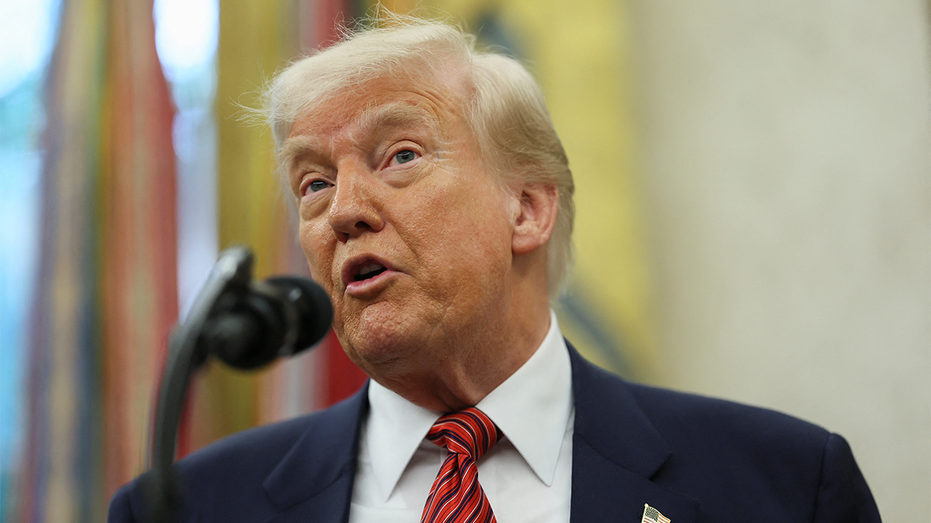
President Donald Trump on Thursday morning confirmed a new “full and comprehensive” trade deal with the United Kingdom. 

“The agreement with the United Kingdom is a full and comprehensive one that will cement the relationship between the United States and the United Kingdom for many years to come,” Trump wrote on TRUTH Social on Thursday. “Because of our long time history and allegiance together, it is a great honor to have the United Kingdom as our FIRST announcement. Many other deals, which are in serious stages of negotiation, to follow!

“This should be a very big and exciting day for the United States of America and the United Kingdom,” Trump added. “The Golden Age of America is coming!” 

Trump wrote Wednesday that a deal would be announced during a news conference from the Oval Office,but he did not specify which nation the agreement was with at the time. 

“Big News Conference tomorrow morning at 10:00 A.M., The Oval Office, concerning a MAJOR TRADE DEAL WITH REPRESENTATIVES OF A BIG, AND HIGHLY RESPECTED, COUNTRY. THE FIRST OF MANY!!!” Trump wrote.

president trump

President Donald Trump on Wednesday teased the announcement of a new trade deal that is expected to be between the United States and Britain on Thursday, according to the New York Times. (REUTERS/Leah Millis / Reuters)

The New York Times, citing three people familiar with the plans, first reported that Trump was expected to announce a trade deal with the U.K. 

As of April 5, the U.S. has imposed a 10% reciprocal tariff on imports from the U.K. The Trump administration’s 25% global tariff on cars took effect on April 3, impacting all imported vehicles, even from traditional U.S. allies, including the U.K. A 25% tariff on U.S. imports of steel, aluminum and derivative products took effect on March 12. 

Prior to April 2025, most U.K. goods exported to the U.S. were subject to standard, relatively low tariffs, mostly ranging from 0 to 2.5%, with higher rates only for specific products like steel, aluminum, and some vehicles. The U.K., meanwhile, imposed tariffs on U.S. imports based on the World Trade Organization’s “Most Favored Nation” or MFN rules. 

The U.K.’s average MFN applied tariff rate was 3.8% in 2023, according to the most recent data available. The UK has some high tariffs that affect U.S. exports, such as rates of up to 25% for some fish and seafood products, 10% for trucks, 10% for passenger vehicles, and up to 6.5% for certain mineral or chemical fertilizers.

The U.S. goods trade surplus with the U.K. was $11.9 billion in 2024 – a 17.4%, or $1.8 billion, increase over 2023.

The deal announced Thursday is the second for Britain in a week after it clinched a free trade pact with India.

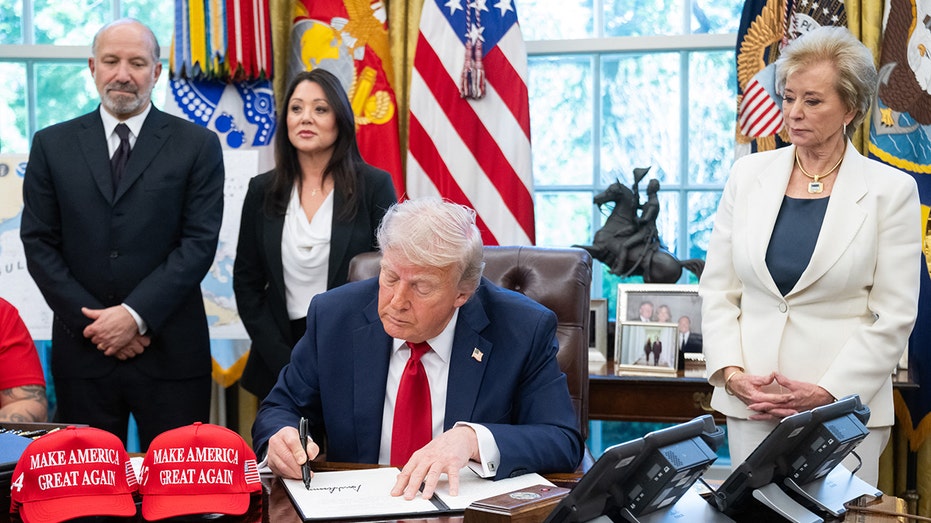
Trump signs executive orders at the White House

President Donald Trump speaks to the media after signing executive orders in the Oval Office. (Saul Loeb/AFP via Getty Images / Getty Images)

A U.K. official said on Tuesday that Britain and the U.S. had made good progress on a trade deal that would likely include lower tariff quotas on steel and autos.

The news of a U.S.-U.K. trade deal comes as U.S. and Chinese officials prepare to hold talks in Switzerland on Saturday, which could mark the first step in resolving a potentially damaging trade war between the world’s top two economies.

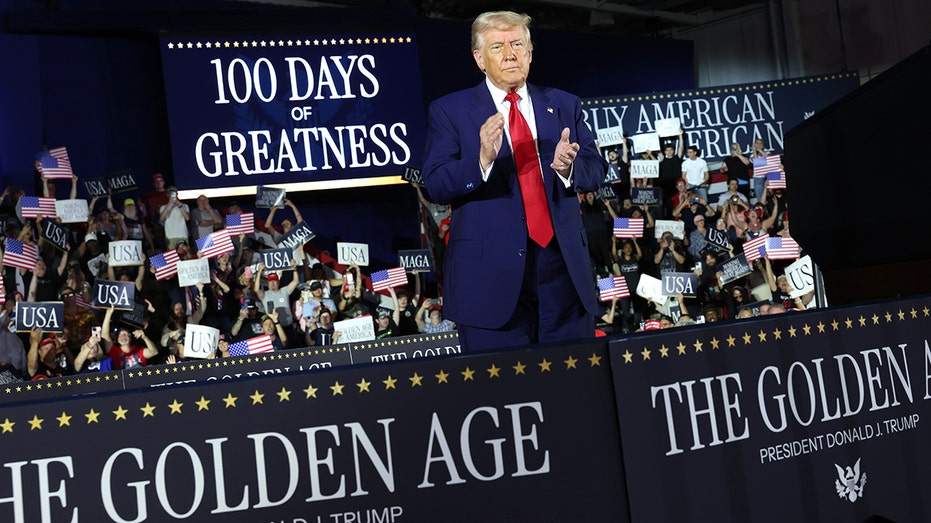
Donald Trump at 100 days celebration

The April jobs report, which was released just following President Donald Trump’s first 100 days in office, came in better than expected with 177,000 new payrolls. (Scott Olson/Getty Images / Getty Images)

Trump’s trade war has shaken up financial markets and raised fears of a recession, with central bankers and business executives wrestling with often chaotic policymaking that is rippling through world supply chains and a whole host of industries.

The International Monetary Fund last month slashed its growth forecasts for the United States, China and most countries, citing the impact of U.S. tariffs and warning that rising trade tensions would further slow growth.

Reuters contributed to this report. 

Filed Under: Economy, Foreign

Unmasked: Biden and Dems Lied about Border

April 29, 2025 By Editor Leave a Comment

Over the past four years the United States experienced an unprecedented surge in illegal immigration across its southern border, as President Joe Biden’s administration dismantled many of the prior administration’s stringent border security measures. Despite repeated assurances to the American people that “the border is secure,” tens of millions of unvetted migrants entered the nation under Biden’s watch, or . . . invitation, straining resources and fueling a national debate about the rule of law, sovereignty, and public safety.

Shortly after taking office in January 2021, President Biden reversed key Trump-era policies that had effectively halted illegal immigration. Among these were killing the “Remain in Mexico” policy (officially known as the Migrant Protection Protocols), the halting of border wall construction, and the suspension of Title 42, a public health order that allowed for rapid expulsion of illegal entrants during the COVID-19 pandemic.

Biden signs dozens of Executive Orders overturning Trump’s border security efforts

At the same time, Biden and his top officials, including Department of Homeland Security Secretary Alejandro Mayorkas, publicly insisted that the southern border was “closed” and “secure.” In March 2021, Mayorkas stated, “The border is secure. The border is closed,” even as apprehension numbers surged to record highs.

President Biden himself echoed this sentiment. In January 2023, he declared, “I think the border is secure,” during remarks to the press, despite more than 2 million migrant encounters being reported in fiscal year 2022 alone. Of course, Democrats view illegal aliens as future Democrat voters, as Biden’s ‘Freudian slip’ referring to mass immigration influx of ‘Hispanic voters’ on May 9, 2024 indicated.

Prominent Democratic leaders rallied behind this narrative. Senator Chuck Schumer (D-NY) emphasized in November 2022, “We need immigrants… We have a population that is not reproducing on its own with the same level that it used to. We need a path to citizenship.” Meanwhile, House Minority Leader Hakeem Jeffries (D-NY) insisted, “There is no crisis at the southern border that Republicans would have you believe.”

Facing growing public concern, the Biden administration shifted its messaging, claiming that the only way to fix the “challenges” at the border was through new legislation. In February 2024, Biden stated during a speech, “We need Congress to act. We need a comprehensive immigration reform that will once and for all fix this broken system.”

However, critics pointed out that the proposed “fixes” in Democratic-sponsored legislation would essentially codify the mass influx of illegal aliens, providing expedited paths to citizenship and offering extensive protections for individuals who entered the country unlawfully.

The contrast with the Trump administration’s record could not be more stark. Upon entering office in 2017, President Donald Trump swiftly enacted executive orders to ramp up border security, reinstate and expand detention facilities, build hundreds of miles of new border wall, and negotiate agreements with Mexico and Central American countries to stem the flow of migrants.

President Trump visits border wall as it is being constructed

Illegal crossings plummeted during Trump’s tenure. By mid-2020, with policies like “Remain in Mexico” firmly in place and aggressive enforcement measures underway, the southern border saw some of the lowest levels of illegal migration in decades.

As Trump returned to the White House for his second term in 2025, he wasted no time reinstating his proven policies. Within weeks, construction on the border wall resumed at an accelerated pace, and diplomatic efforts reestablished cooperative security agreements with neighboring nations. The “catch and release” practices that had flourished under Biden were once again halted, and apprehended illegal immigrants were swiftly processed and removed.

Border Patrol data for early 2025 already shows a dramatic decrease in illegal crossings, able to be counted on fingers, demonstrating that decisive leadership and enforcement can reestablish control of the border quickly and effectively.

In short, the Biden administration’s policies opened the floodgates to millions of unvetted foreigners entering the United States, even as officials insisted the border was “secure.” In contrast, President Trump’s border policies – both in his first and second terms – demonstrated that a strong, lawful approach can effectively safeguard the nation’s sovereignty.

Now, as President Trump seeks to return all of those illegal aliens to their countries of origin, Democrats are fighting in the courts and in the streets to stop him.


James Thompson is an author and ghostwriter, and a political analyst.

Filed Under: Bias, Elections, Entitlement, Foreign

Pope Francis, First Latin American Pontiff, Dies at 88

April 21, 2025 By Editor Leave a Comment

April 21, 2025 — Vatican City​

Pope Francis, the 266th leader of the Roman Catholic Church and its first Latin American pontiff, passed away on Easter Monday at the age of 88. The Vatican announced that he died peacefully at 7:35 a.m. local time in his residence at the Domus Sanctae Marthae, following complications from chronic lung disease and double pneumonia.

Born Jorge Mario Bergoglio in Buenos Aires, Argentina, Pope Francis was elected in March 2013 after the resignation of Pope Benedict XVI. His papacy was marked by a commitment to humility, social justice, and outreach to marginalized communities. He was known for his ultra-liberal stances on issues such as climate change, economic inequality, and interfaith dialogue.

Despite recent health challenges, including a 28-day hospitalization for a severe respiratory infection, Pope Francis made his final public appearance on Easter Sunday, delivering the traditional “Urbi et Orbi” blessing to thousands gathered in St. Peter’s Square.

Global leaders have paid tribute to Pope Francis’s legacy. U.S. Vice President J.D. Vance, who met with the Pope shortly before his passing, expressed his condolences, stating, “My heart goes out to the millions of Christians all over the world who loved him.” European Commission President Ursula von der Leyen described him as an inspiration “far beyond the Catholic Church,” and Indian Prime Minister Narendra Modi remembered him as a leader committed to “inclusive and all-round development.”

Pope Francis meets with the Prophet and other leaders of the Church of Jesus Christ of Latter-day Saints.

In accordance with his wishes for a modest funeral, Pope Francis will be laid to rest in the Basilica of St. Mary Major in Rome, making him the first pope since Leo XIII in 1903 to be buried outside the Vatican . The Vatican has announced that his body will be moved to St. Peter’s Basilica by Wednesday for public viewing ​

The Catholic Church now enters a period of mourning and preparation for the conclave to elect the next pope, expected to commence between May 6 and May 11. Cardinal Kevin Farrell, the Camerlengo of the Holy Roman Church, will oversee the interim period until a new pontiff is chosen.

Pope Francis’s enduring legacy is one of compassion, humility, and a steadfast commitment to serving the most vulnerable members of society.​


James Thompson is an author and ghostwriter, and a political analyst.

Filed Under: Foreign, Religion

Pro-Palestine-Anti-Israel Terrorist behind Attack on Penn. Gov. Shapiro

April 16, 2025 By Editor Leave a Comment

Arson Attack on Pennsylvania Governor’s Residence Raises Concerns Over Leftist Antisemitism and Political Violence

By James Thompson | April 16, 2025

Admitted suspect is 38-year-old Cody Allen Balmer of Penbrook, Pennsylvania

In the early hours of April 13, 2025, Pennsylvania Governor Josh Shapiro, his family, and guests were forced to evacuate their official residence in Harrisburg after an arson attack caused significant damage to the historic mansion. The incident occurred shortly after the family had celebrated the first night of Passover.

The suspect, 38-year-old Cody Allen Balmer of Penbrook, Pennsylvania, was apprehended and charged with multiple felonies, including attempted murder, aggravated arson, burglary, and terrorism. Balmer scaled the mansion’s fence, broke a window with a hammer, and threw Molotov cocktails into the residence, igniting fires in the dining and piano rooms. Governor Shapiro, his family, and their pets were awakened and rushed out of the mansion by state troopers, and escaped unharmed. ​

During police interviews, Balmer confessed to the attack, citing anger over Governor Shapiro’s support for Israel amid the ongoing Gaza conflict. He expressed a desire to physically harm the governor for his pro-Israel stance, stating he intended to beat Shapiro with his hammer if he had encountered him. A police search of Balmer’s living quarters revealed that he is enamored of the Leftist Argentine Marxist revolutionary, Che Guevara.

Pennsylvania governor’s mansion is left burnt and destroyed, looking like a Tesla dealership

Authorities are further investigating the motive behind the attack, including the stated antisemitic intent, given that Governor Shapiro is Jewish and the attack occurred during Passover. While no hate crime charges have been filed yet, Dauphin County District Attorney Fran Chardo indicated that Balmer’s statements about Palestine could be used as evidence that he targeted Shapiro because of his faith. ​

Balmer has a history of mental health issues and prior legal troubles, including domestic abuse charges from 2023. His mother reported that he struggled with bipolar disorder and schizophrenia and had gone off his medication. ​

Governor Shapiro condemned the attack, emphasizing his commitment to public service and his faith. He stated, “No one will deter me or my family or any Pennsylvanian from celebrating their faith openly and proudly.” ​

The incident has sparked discussions about the rise in political violence of the Left, and widespread antisemitic riots and harmful acts in the United States. It underscores the need for vigilance and a comprehensive approach to addressing leftist hate-fueled violence.​

Balmer remains in custody without bail, with a preliminary hearing scheduled for April 23. The investigation continues as authorities seek to understand the full scope and further motivation behind the attack.


James Thompson is an author and ghostwriter, and a political analyst.

Filed Under: Bias, Crime, Elections, Foreign

JONATHAN TURLEY: Biden DOJ behind even the Times in pursuing alleged Hunter corruption

April 6, 2025 By Editor Leave a Comment

Biden DOJ was full of Sgt. Schultzes when it came to obvious corruption

By Jonathan Turley

For years, some of us have written about the Biden family’s multimillion-dollar influence-peddling operation and the Justice Department’s refusal to charge Hunter Biden with being an unregistered foreign agent. Now, years later, The New York Times has found evidence suggesting that the former president’s son was acting as a foreign agent as early as the Obama administration, when his father was vice president.

Last August, the New York Times ran a story about Hunter Biden seeking help from the government for his client, the Ukrainian energy company Burisma. A recent follow-up story had damaging new details:

Hunter Biden sought assistance from the U.S. government for a potentially lucrative energy project in Italy while his father was vice president, according to newly released records and interviews.

The records, which the Biden administration had withheld for years, indicate that Hunter Biden wrote at least one letter to the U.S. ambassador to Italy in 2016 seeking assistance for the Ukrainian gas company Burisma, where he was a board member…

The State Department did not release the actual text of the letter.

That is precisely what many of us have been writing about in asking why Hunter Biden was not charged with being an unregistered foreign agent, as Paul Manafort, Bob Menendez and others were under similar circumstances.

Hunter Biden NY Post laptop illustration

(Hunter Biden’s scandalous laptop was falsely dismissed as Russian disinformation.)

The Foreign Agents Registration Act (FARA) covers anyone acting as “agent of a foreign principal,” including but not limited to (1) attempting to influence federal officials or the public on domestic or foreign policy or the political or public interests in favor of a foreign country; (2) collecting or disbursing money and or other things of value within the United States; or (3) representing the interests of the foreign principal before U.S. Government officials or agencies.

It is sweeping. So is the definition of what a “foreign principal” encompasses, including “a foreign government, a foreign political party, any person outside the United States (except U.S. citizens who are domiciled within the United States), and any entity organized under the laws of a foreign country or having its principal place of business in a foreign country.”

As I previously wrote, Special Counsel Robert Mueller seemed to charge by the gross under the act. He hit a line of Trump associates with such allegations from Manafort to Michael Flynn to George Papadopoulos to Rick Gates. The Justice Department used FARA to conduct searches on the homes and files of former Trump counsel Rudy Giuliani, Republican attorney Victoria Toensing and others.

Joe Biden, Hunter Biden

President Joe Biden and his son, Hunter. (Getty Images)

However, the Justice Department and Special Counsel David Weiss seemed to tie themselves into knots to avoid tripping the wire on FARA even as it discussed Hunter Biden’s work for foreign clients.

The government also resisted FOIA requests from the Times and other media. More from the above article:

The request was initially filed under the Freedom of Information Act, or FOIA, in June 2021. After nearly eight months, the State Department had not released any records, and The Times sued. About 18 months later, the department moved to close the case after releasing thousands of pages of records — none of which shed light on Hunter Biden’s outreach to the U.S. government.

The Times challenged the thoroughness of the search, noting that the department had failed to produce responsive records contained in a cache of files connected to a laptop that Mr. Biden had abandoned at a Delaware repair shop. The department resumed the search and periodic productions, but had produced few documents related to Mr. Biden until the week after his father ended his re-election campaign and endorsed Vice President Harris for the Democratic nomination.

Now we have a copy of a key letter from Hunter Biden that gives us an insight into the evidence buried for years:

The State Department last week released a letter he wrote while his father was serving as vice president in which he sought assistance from the U.S. government for the Ukrainian energy company Burisma.

In the previously unpublished June 2016 letter on Burisma letterhead to the U.S. ambassador to Italy, Mr. Biden requested “support and guidance” in arranging a meeting with an Italian official to resolve regulatory hurdles to geothermal energy projects Burisma was pursuing in the Tuscany region…

The letter requested help arranging a meeting between Burisma officials and Enrico Rossi, the president of the Tuscany regional government at the time, “to introduce geothermal projects led by Burisma Group, to highlight their social and economic benefits for local communities and develop a common action plan that would lead to further development of the Tuscany Region.”

How could any Justice Department official, let alone a special counsel, read that letter and not see the glaring disconnect between the handling of the case involving Joe Biden’s son and others like Manafort?

Paul Manafort, Donald Trump

Former Trump campaign chairman Paul Manafort and Former President Donald Trump. (Getty Images)

The letter references a trip on which Hunter Biden, as was his pattern, used official travel with his father to make these business connections. The letter mentions meeting a key ambassador on Air Force Two as he seeks assistance for his client.

The ambassador then sent a follow-up letter saying he knew the president of Tuscany and identified a Commerce Department official working at the U.S. embassy who could help “see where our interests may overlap.”

It was another example of alleged influence peddling through his father and work for a foreign client in lobbying the government.

During this period, the Justice Department seemed to be on a hair-trigger for FARA charges. Yet, when it came to Hunter Biden, the entire department seemed composed of legal Sgt. Schultzes.

Many in the media attacked those of us who have been writing about this corruption stretching back to the Obama administration. Many simply insisted that there was no evidence, while taking no steps to find out. While the media was unrelenting in investigating Trump allegations of Russian collusion and business improprieties, it took a largely passive stance in pursuing this story.

Even The New York Times, which can be credited with pursuing this FOIA information, did comparably little with the ample evidence of corruption by the Bidens in securing millions through influence peddling.

What remains is a corruption scandal involving not only what the Bidens did but also what the Justice Department did not do over this extended period. It appears to heed the advice not of whistleblowers but politicians like former Sen. Claire McCaskill (D-Mo.) that “everybody needs to back off” the influence-peddling story.

Of course, Joe Biden ultimately broke his repeated promise not to pardon his son. What was most notable, however, was that not only did he pardon him for any crimes from human trafficking to tax evasion but also for a period running from Jan. 1, 2014 to Dec. 1, 2024.

This letter explains why such a sweeping, extended pardon was needed. Yet, in the end, the greatest indictment from this scandal was of the Justice Department itself.


Jonathan Turley is a Fox News Media contributor and the Shapiro Professor of Public Interest Law at George Washington University. He is the author of “The Indispensable Right: Free Speech in an Age of Rage” (Simon & Schuster, June 18, 2024).

Filed Under: Bias, Crime, Elections, Ethics, Foreign

The Human Cost of the Southern Border Crisis: Trafficking, Exploitation, and the U.S. Demand

March 26, 2025 By Editor Leave a Comment

The U.S.–Mexico border continues to be a focal point in the ongoing crises of human and drug trafficking, as transnational criminal organizations exploit vulnerable populations and fuel dangerous markets within the United States. While political debates often center around national security, the most devastating costs are borne by the individuals who are trafficked—many of whom suffer unspeakable abuse both during their journey and after arriving in the United States.

A Dangerous Journey: The Human Toll of Trafficking

Every year, thousands of migrants, including women and children, are smuggled across the southern U.S. border. Many do not arrive willingly. Instead, they fall victim to sophisticated trafficking networks that promise safety and opportunity but deliver exploitation, violence, and enslavement.

Sexual exploitation is one of the most pervasive and horrifying realities for trafficked women and girls. Victims are often raped repeatedly during the journey by smugglers—known as coyotes—or sold into sex trafficking rings operating in both Mexico and the U.S. Some are forced to take contraceptives before the journey because rape is expected. Once in the U.S., many are forced into prostitution under threats to their families back home.

Children are not spared. Unaccompanied minors are particularly vulnerable to forced labor, abuse in detention centers, or being handed over to traffickers posing as relatives. Some are recruited into gangs or compelled to work under exploitative conditions in agriculture, construction, or illicit economies.

For many, the border is just the beginning of a longer cycle of abuse.

A Market for Misery: What Happens After Arrival

Once trafficked individuals arrive in the U.S., they often vanish into underground networks. Some end up in illegal massage parlors, domestic servitude, or sweatshops, where they work under threats of deportation, violence, or harm to loved ones. Many don’t speak English and are unaware of their rights, making them easy to control.

In states with large migrant labor forces, such as California, Texas, and Florida, trafficked people are often exploited in farms, factories, and restaurants. Their wages are withheld, identification documents confiscated, and movements monitored.

Psychological trauma is pervasive. Victims frequently suffer from PTSD, depression, anxiety, and substance abuse—often a result of forced drug use or attempts to cope with ongoing abuse. Without support systems, many are retraumatized and trapped in cycles of poverty and exploitation.

The Drug Trade: A Parallel Tragedy

Alongside human trafficking, drug trafficking surges across the southern border. Fentanyl—up to 50 times stronger than heroin—has become the leading cause of overdose deaths in the U.S., often smuggled in small, hard-to-detect quantities through legal border crossings by mules or hidden in vehicles.

The same cartels trafficking people are deeply involved in narcotics. Sometimes, the two crises intersect: human mules—including minors—are forced to carry drugs into the U.S., often without knowledge of what they’re transporting. If caught, they face criminal charges. If successful, they remain indebted to the cartels, who continue to exploit them.

Who’s Buying? The U.S. Demand for Illicit Goods and Labor

The trafficking crisis is not just a foreign issue—it’s fed by American demand.

The sex trade thrives in every major U.S. city, from New York to Los Angeles. Online platforms, underground brothels, and illegal massage parlors generate billions in profit annually. Many of the women involved are not there by choice.

The drug epidemic is also homegrown. From prescription opioid dependency to street fentanyl, the demand for narcotics keeps traffickers in business. U.S. consumers spent over $150 billion on illegal drugs in a recent year, fueling the cartels’ operations.

And in sectors where cheap labor is in demand—agriculture, hospitality, food service—undocumented and trafficked workers are routinely employed. Many businesses turn a blind eye to exploitation or benefit from labor arrangements that wouldn’t hold up under scrutiny.

The Hidden Cost: A Broken System and Broken Lives

The systems meant to protect trafficked individuals often fail them. Shelters and legal services are underfunded, and immigration proceedings can take years. Some survivors are deported, returning to the same dangerous conditions they fled. Others remain in hiding, unable to access medical care or education, fearful of law enforcement and immigration authorities.

Efforts to address the crisis—such as increased border enforcement, stricter immigration policies, and anti-trafficking laws—have been uneven and politically charged. Without a coordinated approach that includes disrupting trafficking networks, reducing U.S. demand, and supporting survivors, the cycle will continue.

More Than a Border Crisis

What’s unfolding at the southern U.S. border is not just a geopolitical issue—it’s a humanitarian catastrophe.

Behind every statistic is a human being: a young girl forced into sex work, a teenager carrying fentanyl across the desert, a father trapped in debt bondage on a farm. And behind every act of trafficking is a buyer—someone in the U.S. willing to pay for cheap drugs, sex, or labor, regardless of the cost to another person’s life.

Until both supply and demand are addressed, the crisis will persist—hidden in plain sight, leaving shattered lives on both sides of the border. This is why President Donald Trump has been so determined to close the border to illicit traffickers, and the sooner all Americans realize the problems that accompany an open border, the quicker all of the victims will receive relief.

If you or someone you know is a victim of trafficking, call the National Human Trafficking Hotline at 1-888-373-7888 or text “HELP” to 233733.


By James Thompson. James Thompson is an author and ghostwriter, and a political analyst.

Filed Under: Crime, Economy, Elections, Entitlement, Ethics, Foreign

Trump Saves TikTok Day Before He’s Sworn In

January 19, 2025 By Editor Leave a Comment

ART OF THE DEAL – TikTok begins restoring service after Trump vows Day 1 executive order / makes pro-America promise

TikTok CEO thanks Trump for ‘commitment’ to keeping app available as ban looms

TikTok said it was in the process of restoring operations in the U.S. Sunday, after President-elect Trump promised to issue an executive order to extend TikTok operations on Inauguration Day. 

Some U.S. users reported being able to regain access to the app following Saturday’s blackout. 

Trump wrote on TRUTH Social that he is “asking companies not to let TikTok stay dark!” 

“I will issue an executive order on Monday to extend the period of time before the law’s prohibitions take effect, so that we can make a deal to protect our national security,” the president-elect continued. “The order will also confirm that there will be no liability for any company that helped keep TikTok from going dark before my order.”

“Americans deserve to see our exciting Inauguration on Monday, as well as other events and conversations,” Trump said.

Trump is expected to be sworn in around noon ET Monday at the U.S. Capitol, officially taking office as the 47th president. 

His Sunday post did not clarify how soon the extension would take effect or specify how long it would last. 

As for the proposed national security deal, Trump said he would like “the United States to have a 50% ownership position in a joint venture.” 

“By doing this, we save TikTok, keep it in good hands and allow it to [stay] up. Without U.S. approval, there is no TikTok. With our approval, it is worth hundreds of billions of dollars – maybe trillions,” Trump wrote. “Therefore, my initial thought is a joint venture between the current owners and/or new owners whereby the U.S. gets a 50% ownership in a joint venture set up between the U.S. and whichever purchase we so choose.” 

TikTok’s account on X dedicated to releasing policy updates posted a statement later Sunday saying: “In agreement with our service providers, TikTok is in the process of restoring service.” 

“We thank President Trump for providing the necessary clarity and assurance to our service providers that they will face no penalties providing TikTok to over 170 million Americans and allowing over 7 million small businesses to thrive,” the statement said. “It’s a strong stand for the First Amendment and against arbitrary censorship. We will work with President Trump on a long-term solution that keeps TikTok in the United States.” 

Apple and Google’s app stores no longer had the TikTok app available as of 10:50 p.m. EST Saturday. President Biden signed a bipartisan law last spring mandating that TikTok’s China-based parent company, ByteDance, sell the platform by Sunday or else the platform would be banned in the United States.

The following pop-up message appeared for users who tried to access the TikTok app earlier Sunday: “Sorry, TikTok isn’t available right now. A law banning TikTok has been enacted in the U.S. Unfortunately, that means you can’t use TikTok for now.” 

“We are fortunate that President Trump has indicated that he will work with us on a solution to reinstate TikTok once he takes office. Please stay tuned!” the message added. 

Earlier Sunday, Trump issued a two-word message on TRUTH Social: “SAVE TIKTOK!”

Instead of utilizing the nine-month grace period to sell TikTok to an approved buyer, ByteDance, as well as TikTok, sued. 

The law was upheld Friday by the U.S. Supreme Court, which pointed to national security risks due to the app’s connection to China. 

Trump previously indicated that he must “review” the ban before choosing a course of action and that he’d “most likely” grant TikTok a 90-day extension from the Jan. 19 deadline. 

Under the law, the sitting president can extend the deadline by 90 days if a sale is in progress. ByteDance has previously rebuffed the idea of selling TikTok. 

In a video posted on Friday, TikTok CEO Shou Zi Chew praised Trump for his “commitment to work with us to find a solution that keeps TikTok available in the United States. This is a strong stand for the First Amendment and against arbitrary censorship.”

Alexandra Koch, Bradford Betz, Landon Mion and Brie Stimson contributed to this report.

Filed Under: All Stories, Economy, Elections, Entitlement, Ethics, Foreign, Gender, Religion, Sci-Tech

UAP Recovery Video Shows ‘egg-shaped’ Object

January 19, 2025 By Editor Leave a Comment

NewsNation has obtained exclusive footage capturing an egg-shaped craft, recorded during a UAP retrieval operation.

The egg resembles the UAP encountered by U.S. Navy fighters off the east coast of the U.S. in 2015, suggesting a connection between these unidentified objects.

NewsNation was told that the video was sent to the organization responsible for monitoring UAPs, and until now it has never been shown to the public, making a U.S. Air Force veteran’s mission even more critical.

Whistleblower Jake Barber believes he was involved in the recovery of alien technology while working for a long-rumored secret UFO retrieval program.

  • Jake Barber believes he saw nonhuman tech
  • Exclusive footage shows egg-shaped craft
  • Craft resembles UAP encountered by Navy 

When asked to describe the object, Barber told NewsNation’s Ross Coulthart. “I saw an egg, a white egg.”

“Just visually looking at the object on the ground, you could tell that it was extraordinary and anomalous,” Barber said. “It was not human.”

He added: “It’s inconsistent with anything I’d ever seen before. I can also tell you that the reaction by my team, we all knew we were dealing with something extraordinary.”

Former Navy rear admiral supports UFO whistleblower claims

Other whistleblowers, including Lue Elizondo and David Grusch, have alleged a secret government UFO program exists but Barber says he knows it’s true because he’s part of it.

NewsNation has also obtained exclusive, never-before-seen video of one of these alleged UFO crash retrievals. That video and the full interviews aired in Saturday’s special report, “Hunting UFOs: The Crash Retrieval Whistleblower.”

In June 2023, NewsNation was the first television network to present an interview with Grusch. The account has led to multiple Congressional hearings.

For a full analysis of UAPs, we highly recommend the book Worlds Without Number>

By Ross Coulthart; Updated: Jan 18, 2025 / 08:57 PM CST

Filed Under: All Stories, Economy, Elections, Entitlement, Ethics, Foreign, Religion, Sci-Tech

Meta Fact-checkers May Close Doors

January 16, 2025 By Editor Leave a Comment

Fact-checkers said Meta’s decision will have significant impact on their business operations

Mark Zuckerberg reveals pressure brought by Biden Administration to curtail free speech, and that “fact-checking” led to false narratives prevailing

In a move that will help restore free speech to social media, a network of fact-checkers is set to lose a major source of revenue and may even close shop after Facebook parent company Meta announced it would terminate their contracts and move towards a system closer to X’s Community Notes.

“We don’t have much time left. At this rate, we are done in a few months,” claims Check Your Fact managing editor, Jesse Stiller.

“We were blindsided by this. This was totally unexpected and out of left field for us. We weren’t aware this decision was being considered until Mark dropped the video overnight. We have no idea what the future looks like for the website going forward,” he added.

On January 7, 2025, Meta revealed that it would end its fact-checking program and lift some content moderation policies to “restore free expression” across its platforms, including Facebook and Instagram.

Prior to the announcement, Meta repeatedly stressed they were committed to supporting a long-term independent fact-checking industry to address “misinformation” online.

In an April 2022 blog post, Meta claimed it had built the “largest global fact-checking network of any platform” and contributed more than $100 million to fact-checking programs since 2016.

Meta did not reply when asked how much money it had given to third-party fact-checkers before announcing the end of the program in early January 2025.

According to the company’s website, Meta began prioritizing “additional support and resources” for fact-checkers in early 2020 to combat health “misinformation.”

As part of this initiative, Meta launched a $1 million emergency grant program in partnership with the International Fact-Checking Network (IFCN) to tackle information about the COVID-19 pandemic

IFCN created the CoronaVirusFacts Alliance, in which nearly 100 fact-checking organizations in more than 70 countries produced over 11,000 fact-checks about COVID-19 across 40 languages. Seven fact-checking organization projects specifically focused on vaccine “misinformation.”

In August, Zuckerberg admitted that the Biden White House had pressured Meta to censor some health information during the pandemic.

Zuckerberg told podcast host Joe Rogan in January that members of the Biden administration would “scream” and “curse” at his employees, demanding they take down information, especially during the rollout of the COVID-19 vaccine program.

Meta later gave the IFCN a $1 million “Climate Misinformation Grant.” The grant, in part, provided funding to organizations working to combat “climate misinformation” and supported collaborative partnerships between fact-checkers and “climate experts.”

The company also provided funding for fact-checkers to “increase their capacity to promote reliable information” ahead of the 2022 elections in various countries, including the U.S., Australia, France and India.

In the United States, Meta worked with the following third-party fact-checkers: AFP – Hub, Check Your Fact, Factcheck.org, Lead Stories, PolitiFact, Science Feedback, Reuters Fact Check, TelevisaUnivision, The Dispatch and USA Today.

All 10 of these partners are expected to lose their funding. It is unclear when or if Meta’s changes will affect overseas fact-checkers.

In a recent interview with Fox News Digital, Meta’s chief global affairs officer, Joel Kaplan, claimed that these fact-checkers failed to remain neutral.

“We went to independent, third-party fact-checkers,” Kaplan said. “It has become clear there is too much political bias in what they choose to fact-check because, basically, they get to fact-check whatever they see on the platform.”

Since the pivot away from third-party fact-checking, several of these fact-checking organizations with financial ties to the tech conglomerate have issued statements critical of Zuckerberg and Meta’s claims of political bias.

Previously, these groups were often paid for each published fact-check using Meta’s platforms and tools.

For example, PolitiFact, according to its financial disclosures, earned over five percent of its 2024 revenue from the partnership.

PolitiFact said that the organization, one of the original participants in Meta’s third-party fact-checking program, will be affected by the company’s decision to discontinue it.

They also pointed Fox News Digital to comments made by PolitiFact parent Poynter Institute President Neil Brown, who called Meta’s decision a “disappointing cop-out” that “perpetuates a misunderstanding of its own program.”

“Facts are not censorship. Fact-checkers never censored anything. And Meta always held the cards. It’s time to quit invoking inflammatory and false language in describing the role of journalists and fact-checking,” Brown said.

Lead Stories, a Facebook fact-checker employing several former CNN alumni, told The New York Times that it is now doing a large chunk of its work for TikTok’s parent company, Bytedance. Meta was previously the fact-checker’s primary client.

The company was shocked by Zuckerberg’s announcement, considering Lead Stories signed a new yearlong contract with Meta just three weeks ago. Lead Stories admitted that it would see a drop in revenue after severing ties with Meta—a reality that will result in a “staffing reduction,” according to co-founder Alan Duke.

“Cutting fact-checkers from social platforms is like disbanding your fire department,” he told CNN in early January.

In a statement to Fox News Digital, Kristin Roberts, the chief content officer of Gannet Media (USA Today’s parent company), said, “Fact-based journalism is what USA Today does best.”

“We are the nation’s trusted news source because we provide unbiased and essential content for all people. Truth and facts serve everyone — not the right or the left — and that’s what we will continue to deliver,” she continued.

The company did not provide information on its financial relationship with Meta.

TelevisaUnivision, Lead Stories, Factcheck.org, AFP – Hub, The Dispatch and Science Feedback did not return Fox News Digital’s request for comment.

Reuters declined to comment.

By Nikolas Lanum, Fox News

Filed Under: All Stories, Economy, Elections, Entitlement, Ethics, Foreign, Gender, Religion, Sci-Tech

Pam Bondi Appears Before Senate Committee for Attorney General Confirmation

January 15, 2025 By Editor Leave a Comment

In a highly anticipated hearing, former Florida Attorney General Pam Bondi, President Trump’s nominee for U.S. Attorney General, appeared before the Senate Judiciary Committee this week, seeking confirmation for her new role. Bondi, a staunch conservative known for her vigorous advocacy on issues such as consumer protection and public safety, addressed the committee with clarity and conviction, emphasizing her commitment to uphold the rule of law and protect the rights of American citizens.

Bondi’s stellar track record as Florida’s Attorney General showcased her dedication to fighting against human trafficking, opioid addiction, and fraud. She articulated her vision for a nation where law enforcement is supported and empowered, promising to lead the Department of Justice with integrity and a focus on restoring public trust in the legal system. Committee members noted her extensive experience and her ability to navigate complex legal matters, which they believe will serve her well in this new capacity.

Throughout her testimony, Bondi faced some tough questions from committee members, particularly regarding her stance on controversial issues such as immigration enforcement and criminal justice reform. However, her responses reflected a balanced approach rooted in conservative principles, emphasizing the importance of maintaining law and order while also considering the underlying social issues that contribute to crime.

Supporters of Bondi have rallied behind her nomination, highlighting her unwavering commitment to conservative values and her proven leadership skills. As the Senate prepares to vote on her confirmation, many believe that Bondi’s appointment would mark a significant step toward a more robust and principled Department of Justice, one that prioritizes the safety and security of American families.

The confirmation process will closely be watched, as Bondi’s appointment could signal a shift towards a more aggressive stance on crime and a renewed focus on protecting the rights of victims.

Legal Career

Pam Bondi’s legal career has equipped her with a wealth of experience and a robust skill set that are critical for her role as Attorney General. Serving as Florida’s Attorney General from 2011 to 2019, Bondi handled a wide range of legal issues, including consumer protection, public safety, and criminal justice. Her tenure was marked by significant initiatives against human trafficking and the opioid crisis, demonstrating her ability to tackle pressing societal issues head-on.

Bondi’s experience in the courtroom, both as a prosecutor and in civil litigation, has honed her legal acumen and understanding of the judicial system. This background allows her to navigate complex legal frameworks and advocate effectively for the law. Additionally, her leadership in high-profile cases has provided her with the skills necessary to manage large teams and coordinate across various governmental agencies.

Moreover, Bondi’s strong communication skills and ability to engage with the public have been vital in building trust and transparency within her office. Her commitment to educating citizens about their rights and promoting community safety further illustrates her readiness to lead the Department of Justice.

Overall, Bondi’s extensive legal background, combined with her passion for public service, positions her as a capable candidate for the role of Attorney General, ready to address the challenges facing the nation.

New Challenges

As Pam Bondi steps into her role as U.S. Attorney General, she is likely to encounter several significant challenges. One primary challenge will be navigating the complex political landscape, particularly in a divided Congress. She will need to build bipartisan support for her initiatives while remaining true to her conservative principles, which can be a delicate balancing act.

Another significant challenge will be addressing the ongoing issues of crime and public safety, especially in light of rising concerns over violent crime and drug-related offenses. Bondi must develop effective strategies that not only enforce the law but also foster community trust and cooperation, which is essential for successful law enforcement.

Additionally, Bondi will face scrutiny over her policies concerning immigration and criminal justice reform. Critics may challenge her approaches, demanding transparency and accountability, which could lead to contentious debates. Ensuring that her policies are both effective and fair while managing public expectations will be crucial.

Lastly, the ongoing opioid crisis and its ramifications will require her immediate attention. She will need to implement comprehensive solutions that involve collaboration with states and local authorities, balancing enforcement with treatment and prevention efforts.

Overall, while Bondi’s experience positions her well for the role, these challenges will require her to navigate a complex and often contentious environment.

Watch the full confirmation hearing:

Filed Under: All Stories, Economy, Elections, Entitlement, Ethics, Foreign, Gender, Religion, Sci-Tech

Pete Hegseth Appears before Senate

January 14, 2025 By Editor Leave a Comment

Pete Hegseth, U.S. President-elect Donald Trump’s nominee to be secretary of defense, testifies before a Senate Committee on Armed Services confirmation hearing on Capitol Hill in Washington, U.S., January 14, 2025.

On January 14, 2025, Pete Hegseth, President-elect Donald Trump’s nominee for Secretary of Defense, appeared before the Senate Armed Services Committee for his confirmation hearing. Hegseth, a former Army National Guard officer and Fox News host, entered the chamber to chants of “USA” from many in attendance, then faced rigorous questioning from senators concerning his qualifications, past conduct, and views on military policies.

Allegations and Controversies

Hegseth confronted inquiries about several serious allegations, including a 2017 sexual assault claim, which he has denied, asserting the encounter was consensual. Additionally, concerns were raised about his past financial management and reported instances of heavy drinking. Hegseth addressed these issues by labeling them as part of a “smear campaign” and emphasized his commitment to maintaining high standards within the Department of Defense.

Views on Women in Combat

A significant portion of the hearing focused on Hegseth’s previous statements opposing women serving in combat roles. Senator Joni Ernst, a Republican from Iowa and a retired lieutenant colonel, questioned him on this stance. Hegseth responded by affirming that women should have access to combat roles, provided that rigorous standards are upheld, and committed to reviewing these standards to ensure they remain uncompromised.

Commitment to Addressing Sexual Assault in the Military

Senator Ernst also pressed Hegseth on combating sexual assault within the military. Hegseth pledged to appoint a senior-level official dedicated to sexual assault prevention and response, signaling his commitment to addressing this critical issue.

Protests and Public Reaction

The hearing was marked by disruptions from protesters, some dressed in camouflage, who were removed by Capitol Police. These interruptions underscored the contentious nature of Hegseth’s nomination and the polarized public opinion surrounding his potential appointment.

Support and Opposition

While Republican senators, including Ernst, appeared supportive, focusing on Hegseth’s commitment to military standards and his alignment with President-elect Trump’s defense policies, Democratic senators expressed skepticism. They questioned his qualifications, lack of senior leadership experience, and past controversial remarks, particularly concerning women and minority service members.

Sen. Markwayne Mullin, R-Okla., called out Democratic senators’ “hypocritical” line of questioning of Secretary of Defense nominee Pete Hegseth during his confirmation hearing. “I think it’s so hypocritical of senators, especially on the other side, to be talking about his qualifications,” Mullin said of his Democratic colleagues before starting his line of questioning for Hegseth. “And yet your qualifications aren’t any better.”

Next Steps

The Senate Armed Services Committee is expected to vote on Hegseth’s nomination in the coming days. Given the Republican majority in both the committee and the Senate, his confirmation appears likely, barring any unforeseen developments. For those interested in viewing the proceedings, the full hearing is available online.

Filed Under: All Stories, Economy, Elections, Entitlement, Ethics, Foreign, Gender, Religion, Sci-Tech

This Easter

March 25, 2024 By Editor Leave a Comment

What is it that we celebrate on Easter?

The New Testament of the Bible contains the story of the life of Jesus Christ. Within its pages is recounted how He was crucified on Friday, and his body was hastily removed from the cross and placed into a tomb hewn into the rock, with very little time to appropriately prepare the body for final burial before the Jewish Sabbath started at sunset.

It was early Sunday morning when Mary Magdalene and other women disciples arrived at the tomb to see the sepulcher and prepare His body. Suddenly there was a great earthquake and an angel of the Lord descended from heaven, and came and rolled back the stone from the door, and sat on it. His countenance was like lightning, and his raiment white as snow.

The angel said to the women, “Fear not: for I know that you seek Jesus, which was crucified. He is not here: for he is arisen. Come, see the place where the Lord lay.” He then instructed her to go and tell Jesus’ disciples that He was risen from the dead and that He would go before them to Galilee; and there they would see Him.

The others ran to tell the Apostles what they had seen and heard, but Mary stood at the door of the sepulcher weeping. As she wept, she stooped down, and looked into the sepulcher, and saw two angels in white sitting, one at the head and the other at the feet where the body of Jesus had lain.

They said to her, “Woman, why are you weeping?”

She said, “Because they have taken away my Lord, and I know not where they have laid him.”

And when she had spoken she turned back, and saw Jesus standing, but knew not that it was Him. He spoke to her and said, “Woman, why are you crying? Whom do you seek?”

She, supposing him to be the gardener, said, “Sir, if you have borne him away, tell me where you have laid him, and I will take him away.”

Jesus looked upon her with compassion, and said, “Mary.”

Suddenly recognizing His voice, she turned herself and said to him, “Rabboni,” which is to say, Master.

Mary ran to him and embraced him, but Jesus said to her, “Touch me not; for I am not yet ascended to my Father: but go to my brethren, and say to them, ‘I ascend unto my Father, and your Father; and to my God, and your God.’”

Watch this short video about the events that we celebrate at this season

What is the significance of this event nearly 2,000 years later? Each of us must decide its implications and importance for ourselves, and apply its lessons and realities in our own lives as we interpret the message for ourselves. John, the Apostle who recorded this version of the incident gives us his own explanation of why he recorded it: “But these are written, that ye might believe that Jesus is the Christ, the Son of God; and that believing, ye might have life through his name.”

Let us remember Him this Easter.


James Thompson is a Christian author, political commentator, and professional ghostwriter. His latest book, The Miracle of Faith, is available on Amazon or at Publisher.

Filed Under: All Stories, Foreign, Religion, Sci-Tech

« Previous Page
Next Page »

Federalist Press Dispatch

Get breaking political news, investigations, and uncensored analysis delivered directly to your inbox.

Please wait...

Thank you for subscribing to the Federalist Press Dispatch.

Get free info to help your life

Get free info to help your life

Simple bite-sized guides for life, money, civics, and more . . . because some stuff school just didn’t cover.

Brit Axton Mysteries Series

Brit Axton Mysteries Series

Brit Axton Mysteries is a series of young adult adventure novels that lead young Brit Axton and her friends on whirlwind adventures to uncover hidden secrets and long lost treasures.

Byrna Non-lethal Self Protection

Byrna Non-lethal Self Protection

Byrna offers non-lethal self protection at an affordable price. Watch the short video, or click to learn more!

Understanding Cryptocurrency: Essentials for Building Wealth in Digital Currency

Understanding Cryptocurrency: Essentials for Building Wealth in Digital Currency

Understanding Cryptocurrency serves as a definitive guide for novice investors looking to understand the world of cryptocurrency and harness its potential for financial growth and prosperity.

Real Estate Wealth Strategies During High Inflation

Real Estate Wealth Strategies During High Inflation

Real Estate Wealth Strategies During High Inflation is a comprehensive guide on navigating the real estate market, offering strategies and insights for successful investing, during high inflation and interest rates.

Follow us

  • parler
  • welcome-widgets-menus
  • facebook
  • envato

Privacy Policy

Terms of Service

Economy

The National Opportunity Corps: A Second Chance for America’s Lost Generation

The Bloody Record of Socialism: Why America Must Reject the Siren Song of the Radical Left

Trump Throws a Lifeline to America’s Fishermen

Elections

The Battle for Lindsey Graham’s Senate Seat Begins

Trump’s Fourth UFO File Release Deepens the Mystery — But the Biggest Story Is Transparency

The National Opportunity Corps: A Second Chance for America’s Lost Generation

Foreign

The Faces of Domestic Terrorism: A Wave of Self-Radicalized Islamist Attacks in America

Missing General, Missing Answers: The Strange Disappearance of Retired Maj. Gen. Neil McCasland

UK Recognition of ‘Palestine’ Raises Questions About History, Security, and the Future of Gaza

Crime

The SPLC and the Profits of Division

Europe Is Finally Learning the Lesson Trump Tried to Teach

Missing Los Alamos Scientist Found Dead — But Serious Questions Remain

Science Tech

Hollywood Feels the Shift: Spielberg’s New UFO Film Arrives During America’s Disclosure Era

UFO Disclosure Has Crossed the Line From Fringe to Official Reality

Trump Administration Releases Second UFO Tranche — and One File Contains 209 Reports Near a Secret U.S. Facility

Reader Responses

  • Linda Livaudais on Trump’s UFO Disclosure Has Changed the Conversation — But Not Yet Answered the Biggest Question
  • T059736 on Trump and Musk Announce Plans to Shut Down USAID
  • C.Josef.D on ‘Pay to Play’ at Clinton Foundation Under Investigation
  • John D Cole on Biden Says ‘You ain’t black’ If You Don’t Vote for Him
  • Ed on U.S. Attorney Huber Moving to Indict Clintons and Others

Copyright © 2026 by Federalist Press · All rights reserved · Website design by RoadRunner CRM · Content Wiriting by GhostWriter · Log in