
Every law creates winners and losers. Good government begins by honestly acknowledging both.
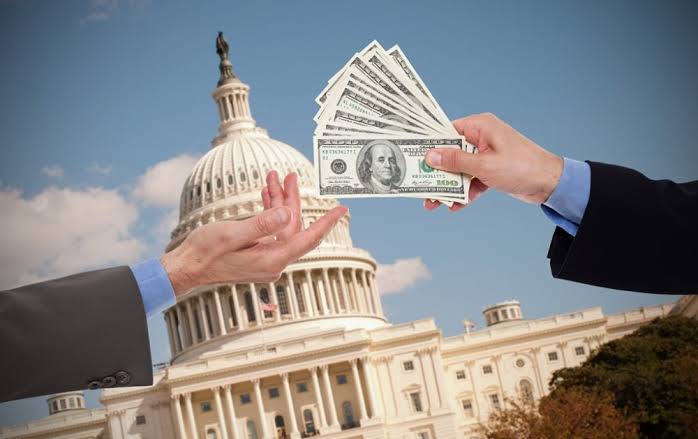
One of the great weaknesses of modern American politics is that too many public debates begin with compassion, but end without arithmetic. Every election cycle, Americans hear a familiar list of promises: free college, free childcare, free healthcare, student loan forgiveness, rent control, expanded housing subsidies, guaranteed income, climate subsidies, new entitlement programs, higher minimum wages, new regulations, and expanded workplace mandates. The list changes, but the sales pitch remains remarkably consistent.
Supporters almost always ask the same question: “Who will benefit?” It is an important question, but it is only half of the equation. The question too often left unanswered is far more important: At whose expense?
Every law has a cost. Every regulation shifts burdens. Every subsidy comes from someone else’s earnings. Every new government program consumes resources that would otherwise remain in private hands. Economics does not permit free lunches simply because politicians promise them.
Government possesses no independent wealth. It produces no goods. It manufactures no products. Every dollar Washington spends first belongs to someone. It comes from taxpayers, borrowing, inflation, or future generations. Politicians often describe spending as though government itself is writing the check. It isn’t. Your neighbors are—or your children eventually will be. That reality rarely appears in campaign speeches.
Consider healthcare. Supporters of expanded federal healthcare argue that medical care should be available to everyone regardless of income. That is a legitimate moral aspiration. But every proposal must still answer practical questions. Who pays physicians? Who finances hospitals? What taxes increase? What services become rationed? How long do patients wait? How much innovation declines when government sets prices? These are not arguments against helping the sick. They are questions every responsible legislature must answer before expanding government obligations.
The same is true of student loan forgiveness. Canceling student debt sounds compassionate until someone asks, at whose expense? The debt does not disappear. It transfers. Construction workers who never attended college, electricians, truck drivers, retirees, and taxpayers who already repaid their own loans ultimately absorb the obligation. Debt forgiven by government is simply debt shifted to others.
Rent control provides another example. Few ideas sound kinder than making housing more affordable. Yet economists across the political spectrum have long observed that strict rent controls often discourage new housing construction, reduce maintenance, and ultimately shrink housing supply. The intended beneficiaries may receive lower rents, but future renters frequently encounter fewer apartments and higher long-term costs. Once again, the obvious question remains: At whose expense?
Minimum wage increases illustrate the same principle. Everyone wants workers to earn higher wages, and better pay is a worthy objective. But labor markets also operate according to economic reality. If government requires wages substantially above what many small businesses can sustain, employers reduce hiring, automate jobs, cut employee hours, or raise prices. Some workers benefit, consumers pay more, and others never receive the job in the first place. Good intentions cannot repeal the laws of supply and demand.
Environmental regulation presents similar trade-offs. Most Americans support clean air, clean water, and responsible stewardship of natural resources. Yet every major regulation carries economic costs. Electricity becomes more expensive. Fuel prices increase. Manufacturing costs rise. Housing becomes more costly to build. Consumers ultimately bear much of the financial burden. That does not mean environmental protections are unwise. It simply means honest policymaking requires acknowledging both the benefits and the costs.
Perhaps the most overlooked trade-offs involve expanding legal rights. Whenever government creates a new legal entitlement, someone else frequently acquires a new legal obligation. Employers, schools, businesses, religious organizations, parents, and taxpayers all may assume new responsibilities. One person’s newly created legal right often becomes another person’s legal duty. Responsible lawmakers should examine both sides of that equation before legislating.
America’s Founders understood these realities well. They rarely spoke of unlimited government. Quite the opposite. James Madison warned repeatedly that factions would seek political power to advance their own interests at the expense of others. The Constitution therefore limits what government may do—not because compassion is undesirable, but because concentrated political power can become dangerous. Every expansion of governmental authority should be viewed with caution, not because government never helps, but because government almost never relinquishes power once it acquires it.
The genius of free markets is not that they produce perfect outcomes. They do not. Rather, they allow millions of individuals to make voluntary decisions based upon prices, risks, incentives, and personal responsibility, instead of centralized political commands. Markets force difficult choices. Politics often conceals them. Politicians can promise benefits today while postponing the costs until tomorrow. Economics, however, eventually demands payment.
America desperately needs compassion. It also desperately needs honesty. Every proposed law should face one unavoidable question before becoming law: Who pays? Whose freedom is reduced? Whose taxes increase? Whose opportunities disappear? Whose business becomes harder to operate? Whose children inherit the debt?
These questions are not obstacles to good government. They are the beginning of good government. Every benefit has a cost. Every promise has a price. Before Congress passes another trillion-dollar program or another sweeping regulatory scheme, Americans deserve one simple answer that too few politicians are willing to provide: At whose expense?
Leave a Reply