
Government Shutdowns Aren’t Inevitable — They’re a Choice (for now)
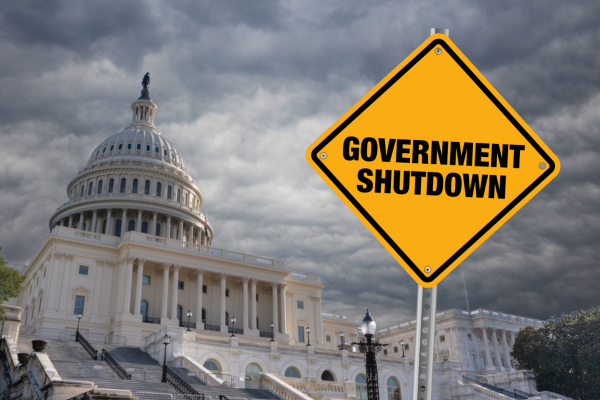
As Congress battles over federal spending—particularly funding for U.S. Immigration and Customs Enforcement (ICE) within the Department of Homeland Security (DHS)—Americans are once again warned that failure to pass a budget will “shut down the government.”
That phrase is repeated as though it were constitutional doctrine. It isn’t.
A government shutdown is not an unavoidable command of the Constitution. It is the product of executive interpretation—one that has never been definitively tested in court. And perhaps it’s time we reconsider it.
The Constitution Does Not Require Administrative Paralysis
Article I of the Constitution states that no money shall be drawn from the Treasury except through appropriations made by law. That is a vital check on executive power.
But it does not say that if Congress fails to pass a budget on time, the executive branch must cease functioning.
The modern shutdown framework largely stems from interpretations of the Antideficiency Act, reinforced by opinions issued in the 1980s by the Office of Legal Counsel (OLC) within the Department of Justice.
Those opinions concluded that agencies must halt “non-essential” activities during a funding lapse.
But OLC memos are not Supreme Court rulings.
And the issue has never been squarely resolved by the Supreme Court of the United States.
What we call a “shutdown” today is not a constitutional inevitability. It is a policy practice built on executive guidance.
Even During Shutdowns, the Government Doesn’t Actually Shut Down
Consider ICE and DHS—the very agencies at the center of today’s negotiations.
When appropriations lapse, immigration enforcement continues. Border Patrol continues. National security functions continue. Law enforcement continues. Why? Because those functions are deemed “excepted” for the safety of human life and protection of property.
In other words, the most critical sovereign functions of government continue regardless of funding disputes.
What shuts down are regulatory offices, administrative processing, parks, and large swaths of civilian bureaucracy. The government contracts. It does not collapse.
Shutdowns Are Political Leverage
Let’s be candid: shutdowns create pressure. They generate headlines. They force urgency. They create a bludgeon that Democrats use (leveraged by a complicit media) to force political concessions from Republicans.
But urgency is not the same thing as legal necessity. Congress has already authorized DHS. It has already authorized ICE. These agencies do not cease to exist when legislators miss a deadline.
The real question is whether a temporary lapse in appropriations requires the executive branch to halt lawful operations—or whether government could continue at prior funding levels until Congress resolves its dispute.
There is nothing in the Constitution that demands administrative paralysis.
What a Shutdown Really Means for Americans
If funding lapses:
- ICE enforcement continues.
- Border security continues.
- Military operations continue.
- Mandatory spending programs continue.
What stops are many administrative functions that directly affect citizens and businesses—permits, processing, federal contracts, and civil services.
Federal employees are furloughed. Contractors lose income. The public absorbs the disruption. All because lawmakers failed to agree.
Time to Rethink the Assumption
The idea that “government must shut down” has hardened into political folklore. But it rests on executive interpretation—not constitutional command.
One could imagine alternative frameworks:
- Automatic continuing resolutions at prior-year levels
- Spending caps triggered without halting operations
- Tiered funding that preserves continuity
Other democracies manage budget impasses without deliberately suspending visible governance.
Perhaps we should ask why ours cannot. Budget negotiations—especially those involving ICE and border enforcement—are serious matters. Congress absolutely controls the purse.
But the American people should not be collateral damage in a political standoff. A shutdown is not destiny. It is a choice. And choices can be reconsidered.
Of course, in the event of a shutdown, it would be an excellent opportunity for the president to permanently furlough 80% of the non-military federal employees and finally DRAIN THE SWAMP!
James Thompson is an author and ghostwriter, and a political analyst.
Sponsored by BasicInfo123 — simple bite-sized guides for life, money, civics, and more—because some stuff school just didn’t cover.
Leave a Reply