
What is it, truly, that we remember on Easter?
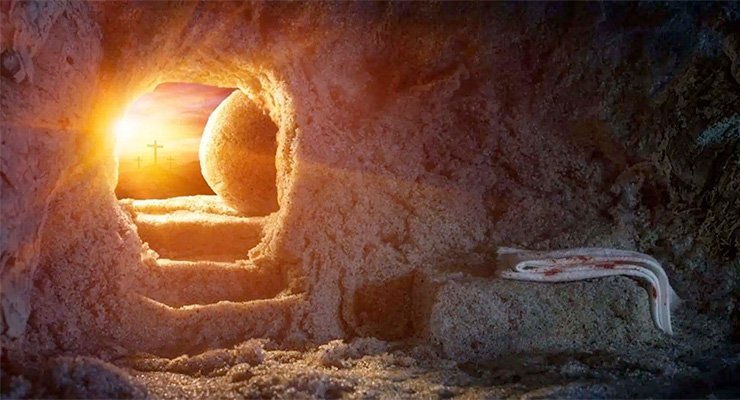
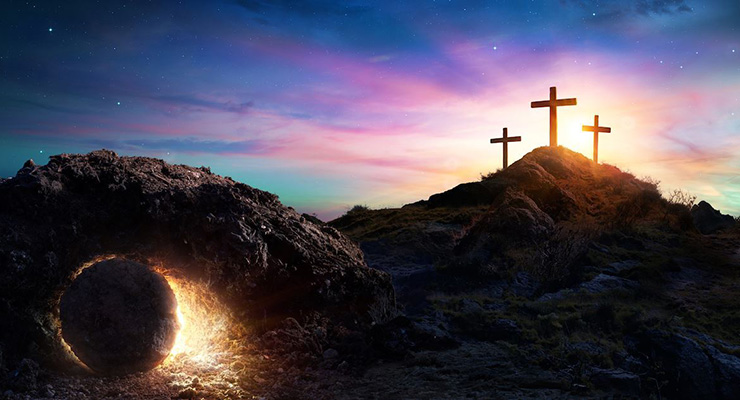
The New Testament preserves the final days of Jesus of Nazareth—His suffering, His crucifixion, and His death upon the cross. As the Sabbath approached, His body was taken down and placed quickly into a borrowed tomb, carved from stone. A heavy rock sealed the entrance, and silence settled over the place where hope itself seemed to have been buried.
What is it, truly, that we remember on Easter?
For His followers, it was a moment of confusion and grief. The One they had trusted, the One they believed to be the very Messiah, now lay lifeless behind stone and darkness.
But the story did not end there.
At the first light of the third day, women came to the tomb, intending to complete the burial preparations that had been rushed. Instead, they found the stone rolled away.
The tomb was empty.
Angelic messengers stood as witnesses of something that had never before occurred in human history. They spoke plainly: Jesus, who had been crucified, was no longer there—He had risen.
At first, the news seemed too extraordinary to accept. Yet one by one, those who had known Him began to see for themselves. Among them was Mary Magdalene, who lingered at the tomb in sorrow, not yet understanding what had taken place.
Through her tears, she encountered a man she did not at first recognize. Only when He spoke her name, “Mary,” did realization come.
It was Him.
Alive.
Not restored merely to mortal life, but risen—changed, glorified, no longer subject to death.
What does this mean for us today?
Across nearly two millennia, this moment has stood as the central claim of Christianity: that death is not the end, that something greater lies beyond, and that Jesus Christ was not simply a teacher or prophet, but the literal Son of God.
Easter is not only a remembrance of that event, but an invitation to consider its meaning.
If the resurrection is real, then it changes everything.
It is real.
It speaks to hope in the face of loss, to purpose beyond mortality, and to the assurance that life continues in ways we do not yet fully understand.
Each person must decide for themselves what to make of it.
But the message recorded by those who witnessed these events remains simple and direct—that these things were written so that we might believe, and that through that belief, we might find life.
This Easter, whatever else we may celebrate, let us pause and remember Him. And believe.
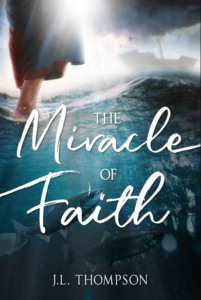
James Thompson is a Christian author, political commentator, and professional ghostwriter. His latest book, The Miracle of Faith, is available on Amazon or at Publisher.
Leave a Reply