• Home
  • Mission
  • Federalist Papers
  • Foundation
  • U.S. Constitution
  • Bill of Rights

Federalist Press | Defending Liberty — Informing America

Breaking News and Political Commentary

  • All Stories
  • Economy
  • Elections
  • Entitlement
  • Ethics
  • Foreign
  • Gender
  • Religion
  • Sci-Tech

Jamie Lee Curtis Wept Over Kanye’s Antisemitism—But Where Is Her Outrage Now?

June 4, 2025 By Editor Leave a Comment

By James Thompson | June 4, 2025

Jamie Lee Curtis addresses her online response to Kanye West’s antisemitic posts on social media, saying West’s posts were “just abhorrent.”

In 2022, actress Jamie Lee Curtis became a viral symbol of righteous outrage after rapper Kanye West posted a now-infamous tweet threatening to go “death con 3 on JEWISH PEOPLE.” Although the ‘threat’ was a hollow, big-mouth pronouncement that West was going to expose unfair treatment by Jewish music industry people, the Oscar winner condemned the comment as “abhorrent,” linking it to the atrocities of the Holocaust, and even broke into tears during a televised interview. At the time, Curtis’s response was praised as a courageous stand against hate.

But today, amid a tsunami of antisemitic harassment and violence—largely coming from far-left movements cloaked in anti-Zionist rhetoric—Curtis has been notably silent.

Across America, Jewish students are being harassed, threatened, and even physically attacked on college campuses. At pro-Palestine/Hamas rallies chants like “death to the Jews” and “Hitler was right” have been caught on camera. Jewish students at schools like Columbia, NYU, and UC Berkeley have reported needing security escorts, hiding in libraries, and being locked out of their dorms—simply for being Jewish.

Yet, Jamie Lee Curtis, along with many other left-leaning celebrities who loudly denounced Kanye West, now says nothing.

“Silence isn’t neutrality—it’s complicity,” said Noah Silverman, a Jewish student at UCLA. “When celebrities speak out against antisemitism only when it comes from the right, it tells us that our safety is conditional. If the threat comes from the ‘wrong kind’ of oppressor, it doesn’t matter.”

This glaring double standard has not gone unnoticed. Critics accuse Curtis and others in Hollywood of moral grandstanding when it suits their left-leaning narrative—but failing to call out hate when it emerges from within their own ideological circles.

“The left has built an entire identity around inclusivity, tolerance, and human rights,” said Bari Weiss, founder of The Free Press. “But when Jewish lives are threatened by people waving socialist flags instead of Confederate ones, suddenly the moral clarity vanishes.”

Curtis has continued posting regularly on social media about various progressive causes—climate change, women’s rights (although nothing about men in women’s sports), LGBTQ+ advocacy—but has made no public comment about the surge in antisemitic incidents tied to recent pro-Palestinian protests. Her silence has sparked backlash, especially from Jewish activists who once applauded her principled stand against Kanye West.

“The hypocrisy is staggering,” said Jonathan Feldman, an analyst at the Jewish Policy Institute. “Jamie Lee Curtis cried on live television over a tweet. But when Jewish college students are hiding from mobs, she can’t spare even a sentence?”

To be clear, no one is suggesting that all criticism of the state of Israel is antisemitic. But when protests devolve into calls for genocide and physical violence against Jewish individuals—when Jewish identity itself becomes the target—celebrities who previously championed “never again” owe the public more than silence.

Selective outrage isn’t justice. It’s performance. It looks like tacit approval.

And for those like Curtis, whose voice carries influence, that silence speaks volumes.


James Thompson is an author and ghostwriter, and a political analyst.

Filed Under: Bias, Elections, Entitlement, Foreign, Religion

$4.7 trillion in untraceable Treasury payments

May 25, 2025 By Editor Leave a Comment

Nearly one-third of Treasury payments a year lack proper identification codes, Treasury Secretary Scott Bessent testified to Congress

By Deirdre Heavey

Earlier this year, Elon Musk’s Department of Government Efficiency (DOGE) uncovered $4.7 trillion in untraceable Treasury Department payments. 

Prior to the discovery, Treasury Account Symbol (TAS) identification codes were optional for $4.7 trillion in Treasury Department payments, so they were often left blank and were untraceable. The field is now required to increase “insight into where the money is actually going,” the Treasury Department and DOGE announced in February. 

“Of the 1.5 billion payments that we send out every year, they are required to have a TAS, a Treasury Account Symbol. We discovered that more than one third of those payments did not have a TAS number,” Treasury Secretary Scott Bessent said before the House Appropriations Subcommittee on Financial Services and General Government earlier this month. 

Fox News Digital asked Republican senators on Capitol Hill to respond to the approximately 500,000 in untraceable payments made by the Treasury Department each year. 

“I’m not surprised at all, unfortunately,” Sen. Roger Marshall, R-Kansas, said before adding, “They were leaving complete fields undone when they were filling out their financials, so this is a common theme. I’m not surprised.”

Sen. Eric Schmitt, R-Missouri, called for an investigation into where those payments actually went. 

“There’s so much waste. There’s so much fraud, There’s so much abuse in our government,” Schmitt told Fox News Digital. “I’m glad there was a laser-like focus on it. We ought to make many of those reforms permanent, but there probably ought to be some investigations here about where this money actually went. I mean this is taxpayer money. People work hard.”

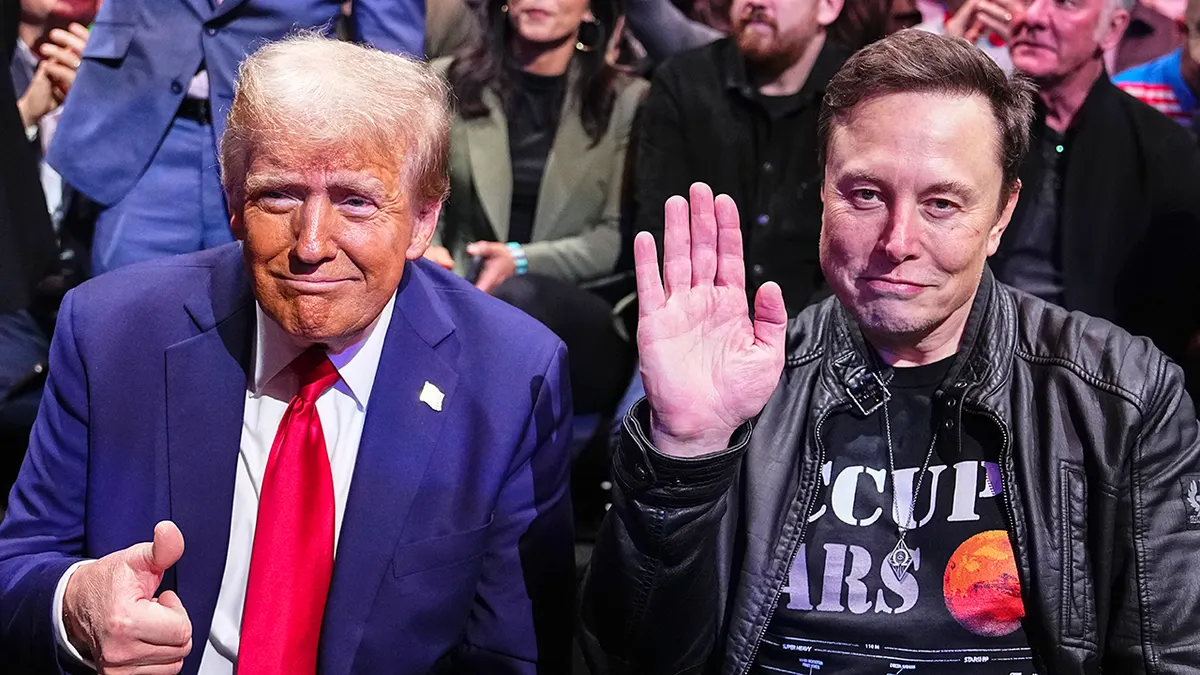
Donald Trump and Elon Musk

President Donald Trump and Elon Musk have worked to eliminate waste, fraud and abuse through the Department of Government Efficiency (DOGE).  (Jeff Bottari/Zuffa LLC)

After DOGE and the Treasury Department uncovered $4.7 trillion in untraceable funds, Marshall and Sen. Rick Scott of Florida introduced a bill in March requiring the Treasury Department to track all payments. 

The Locating Every Disbursement in Government Expenditure Records (LEDGER) Act seeks to increase transparency in how the Treasury Department spends taxpayer money. 

“When you hear about this story that they didn’t know where the money was going, it makes you mad because this is somebody’s money, this is taxpayers’ money when we have almost $37 trillion in debt, so this makes no sense at all,” Scott said. 

Elon Musk in "tech" shirt

Elon Musk shows off his t-shirt reading “Tech Support” while speaking at the first cabinet meeting hosted by President Donald Trump, at the White House in Washington, D.C., Feb. 26, 2025. (REUTERS/Brian Snyder)

The Congressional Budget projects that interest payments on America’s national debt will total $952 billion in fiscal year 2025. That’s $102 billion more than the United States’ defense budget at $850 billion. 

“We paid out more last year on our debt, $36 trillion in debt, with $950 billion in interest going to bondholders all over the world, including in China. That $950 billion didn’t go to build a bridge or an F-35. We paid more on the interest on debt than we did to fund our military,” said Sen. Dan Sullivan, R-Alaska. 

“That is an inflection point that when most countries hit, you look at history, that’s when great powers start to decline. So we have to get those savings.”

Filed Under: Crime, Economy, Elections, Entitlement, Ethics

“Forced to Comply: The Lasting Consequences of America’s COVID Vaccine Mandates”

May 21, 2025 By Editor Leave a Comment

By James Thompson

In the aftermath of the COVID-19 pandemic, the American public is only beginning to reckon with the social, political, and personal costs of what most now view as an era of coercive overreach by the Democrat federal government and its media allies. One of the most striking recent reversals has come from Dilbert creator Scott Adams, who—after years of vehemently defending aggressive vaccination policies—has admitted, in the shadow of a personal cancer diagnosis, that the government-led push to vaccinate every American “at all costs” was deeply misguided.

Adams has acknowledged that those who refused the vaccine—the so-called “anti-vaxxers” vilified by pundits and politicians alike—are now enjoying the benefit of natural immunity, unburdened by the vaccine-related side effects that have become a topic of growing scientific concern. “They were right,” Adams said, noting that natural immunity, which was largely dismissed by officials early in the pandemic, has proven to be effective. “The smartest, happiest people are the ones who didn’t get the vaccination and are still alive.”

This statement reflects a larger shift in public sentiment, as millions who were fired, ostracized, banned from travel, forced to close their businesses, forced to stay home from school, or denied hospital visits with dying relatives begin to demand answers—and accountability.

A Mandate, Not a Choice

Under the Biden administration, vaccine mandates swept through the federal government, the military, public schools, hospitals, and large corporations. President Biden himself declared in July 2021: “You’re not going to get COVID if you have these vaccinations.” That bold promise, however, did not hold. Biden contracted COVID multiple times despite being vaccinated and boosted, undermining the very narrative his administration used to justify its draconian policies.

President Joe Biden received one of many COVID-19 vaccinations

The White House, in conjunction with the CDC and mainstream media, created a culture of forced compliance. Americans were not merely encouraged to get vaccinated—they were compelled. In Orwellian fashion, objectors were ridiculed as science-deniers, conspiracy theorists, or threats to public safety. Democratic leaders across the country echoed the federal position, with cities like New York and Los Angeles enacting some of the strictest vaccine mandates in the world, including forced mask wearing and six-foot personal bubble zones in public–which were entirely without scientific basis.

But the real-world consequences were far from hypothetical. Teachers were fired. Nurses who worked through the height of the pandemic were terminated. Business closed permanently. Military personnel were discharged. Students were barred from campuses. Families were separated from loved ones in their final moments. Freedom of movement and association—basic rights in any free society—were suspended indefinitely in the name of safety. Leftists, drunk with their new-found power, ruled with jack-booted thuggery, destroying the lives of millions of Americans in the process.

Media Complicity and the Censorship Machine

Much of this was aided and abetted by a compliant press corps. Networks like CBS, NBC, ABC, CNBC, CNN and MSNBC rarely challenged the official narrative. Tech platforms like Facebook and Twitter throttled dissenting voices, deplatformed doctors, and labeled emerging science as “misinformation”—even when those claims were later validated. Dissent became dangerous, and speech was tightly policed.

Public trust eroded further as vaccine efficacy became increasingly unclear. The original promise of complete protection gave way to a shifting goalpost: fewer symptoms, fewer hospitalizations. And with that shift came the creeping realization that the public had been misled.

The Human Cost

The Biden administration’s mandates exacted a steep toll. Americans who dared question the prevailing orthodoxy were not only widely shamed, but often economically ruined. Many are still trying to rebuild.

Some justice is slowly being served. President Donald Trump has made efforts to reinstate military personnel discharged for refusing the vaccine, acknowledging the injustice. But these are small reparations for a crisis of trust that cut deep into the fabric of American life.

A Lesson for the Future

The pandemic response revealed the ease with which government with totalitarian leanings and media institutions could exert massive control over the lives of everyday Americans. What was marketed as “science” often functioned as mere ideology. And those who asked inconvenient questions were not engaged—they were erased.

As figures like Scott Adams reflect on their own role in enabling these draconian, Big Brother policies, a larger question remains: Will there be accountability? Who will we see being perp-walked on television for their unconstitutional betrayals of the American people? And will Americans ever again be allowed to question authority without being crushed by it?

In the end, COVID-19 may be remembered not only for the virus itself—but for the way it exposed the easy willingness of a government to seize control, and the cost of a media complex that cheered it on. The left should be held to account for everything they did to the American people, and at a minimum, should never be afforded even a modicum of trust by their victims.


James Thompson is an author and ghostwriter, and a political analyst.
Filed Under: Elections, Ethics, Sci-Tech

Gas Prices Plunge as Trump’s Return Spurs Energy Boom, Economic Ripple Effects

May 15, 2025 By Editor Leave a Comment

May 15, 2025 — Washington, D.C.

In a dramatic shift from trends seen in recent years, gasoline and oil prices are tumbling across the United States, with some regions now reporting prices at nearly half of what they were on the day President Joe Biden left office. The reversal comes on the heels of former President Donald Trump’s return to the White House for a second term, ushering in sweeping changes to energy policy and geopolitical strategy.

From Boom to Bust and Back Again

During Trump’s first term (2017–2021), the United States experienced a surge in domestic energy production. The administration’s aggressive deregulatory approach and expanded drilling incentives led to historically low gasoline prices, with the national average often hovering around $2 per gallon. The U.S. briefly became a net exporter of oil and natural gas, and the term “American energy independence” became a political catchphrase.

That dynamic shifted sharply under President Biden. Prioritizing climate change mitigation, the Biden administration curtailed domestic fossil fuel production through executive orders, leasing restrictions, and support for renewable alternatives. While supporters applauded the environmental emphasis, critics pointed to rapidly rising energy costs, supply chain disruptions, and surging inflation as direct consequences.

By mid-2022, average U.S. gasoline prices had climbed above $5 per gallon in some states, driven by both policy decisions and global factors such as the war in Ukraine. These price hikes strained household budgets and increased the cost of transporting goods—one of several drivers behind persistent inflation.

A New Energy Landscape in 2025

Since taking office in January 2025, President Trump has rapidly reversed many of his predecessor’s energy policies. Executive orders reopened federal lands to oil and gas drilling, streamlined permitting processes, and greenlit major pipeline projects previously stalled or canceled.

The response from the energy sector was swift. U.S. oil output surged to record levels by May, and gasoline prices began dropping accordingly. As of this week, the national average price for a gallon of regular unleaded gasoline stands at $2.39—down from $4.71 five months ago. In some Southern and Midwestern states, prices have dropped below $2 per gallon.

Economists note that this decline is not only easing pressure on consumers but also helping to lower transportation and manufacturing costs across industries. “Energy is the lifeblood of the economy,” said Dr. Laura Chen, an economist at the Heritage Foundation. “When fuel costs fall, virtually every sector benefits—especially food, shipping, and retail.”

Geopolitical Impacts: Strength at Home and Abroad

Trump’s assertive diplomacy is also being felt on the international stage. In a surprise visit to Saudi Arabia earlier this week, President Trump secured a new multi-nation agreement to increase oil output and stabilize prices. The deal includes cooperation from Gulf states and a tentative framework for easing tensions in the Red Sea corridor.

Analysts say the agreement not only boosts global supply but also undermines adversarial regimes that rely heavily on high oil revenues to fund aggression.

“Russia, Iran, and others use oil money to prop up their economies and fund military campaigns,” said former U.S. Ambassador to Israel David Friedman. “When energy prices fall, their ability to project power shrinks. This is economic deterrence in action.”

The economic and strategic benefits of lower oil prices are expected to continue in the months ahead. Inflation, which had remained stubborn through 2024, has already begun to decline, with the Consumer Price Index showing a 0.4% decrease in April—the first monthly drop in over two years.

The Road Ahead

While critics warn of environmental consequences and question the long-term viability of fossil fuel reliance, Trump supporters argue that renewed energy production is key to restoring economic stability and global strength.

“America is back in control of its energy future,” said the White House Press Secretary in a briefing Tuesday. “We’re putting American jobs, American security, and American families first.”

As oil rigs come back online and gas stations reflect lower prices, the political and economic narrative surrounding U.S. energy policy is once again shifting—with major implications for inflation, international stability, and everyday life.


James Thompson is an author and ghostwriter, and a political analyst.

Filed Under: Economy, Elections

Trump confirms ‘comprehensive’ trade deal with UK

May 8, 2025 By Editor Leave a Comment

By Danielle Wallace , Bradford Betz

President Donald Trump on Thursday morning confirmed a new “full and comprehensive” trade deal with the United Kingdom. 

“The agreement with the United Kingdom is a full and comprehensive one that will cement the relationship between the United States and the United Kingdom for many years to come,” Trump wrote on TRUTH Social on Thursday. “Because of our long time history and allegiance together, it is a great honor to have the United Kingdom as our FIRST announcement. Many other deals, which are in serious stages of negotiation, to follow!

“This should be a very big and exciting day for the United States of America and the United Kingdom,” Trump added. “The Golden Age of America is coming!” 

Trump wrote Wednesday that a deal would be announced during a news conference from the Oval Office,but he did not specify which nation the agreement was with at the time. 

“Big News Conference tomorrow morning at 10:00 A.M., The Oval Office, concerning a MAJOR TRADE DEAL WITH REPRESENTATIVES OF A BIG, AND HIGHLY RESPECTED, COUNTRY. THE FIRST OF MANY!!!” Trump wrote.

president trump

President Donald Trump on Wednesday teased the announcement of a new trade deal that is expected to be between the United States and Britain on Thursday, according to the New York Times. (REUTERS/Leah Millis / Reuters)

The New York Times, citing three people familiar with the plans, first reported that Trump was expected to announce a trade deal with the U.K. 

As of April 5, the U.S. has imposed a 10% reciprocal tariff on imports from the U.K. The Trump administration’s 25% global tariff on cars took effect on April 3, impacting all imported vehicles, even from traditional U.S. allies, including the U.K. A 25% tariff on U.S. imports of steel, aluminum and derivative products took effect on March 12. 

Prior to April 2025, most U.K. goods exported to the U.S. were subject to standard, relatively low tariffs, mostly ranging from 0 to 2.5%, with higher rates only for specific products like steel, aluminum, and some vehicles. The U.K., meanwhile, imposed tariffs on U.S. imports based on the World Trade Organization’s “Most Favored Nation” or MFN rules. 

The U.K.’s average MFN applied tariff rate was 3.8% in 2023, according to the most recent data available. The UK has some high tariffs that affect U.S. exports, such as rates of up to 25% for some fish and seafood products, 10% for trucks, 10% for passenger vehicles, and up to 6.5% for certain mineral or chemical fertilizers.

The U.S. goods trade surplus with the U.K. was $11.9 billion in 2024 – a 17.4%, or $1.8 billion, increase over 2023.

The deal announced Thursday is the second for Britain in a week after it clinched a free trade pact with India.

Trump signs executive orders at the White House

President Donald Trump speaks to the media after signing executive orders in the Oval Office. (Saul Loeb/AFP via Getty Images / Getty Images)

A U.K. official said on Tuesday that Britain and the U.S. had made good progress on a trade deal that would likely include lower tariff quotas on steel and autos.

The news of a U.S.-U.K. trade deal comes as U.S. and Chinese officials prepare to hold talks in Switzerland on Saturday, which could mark the first step in resolving a potentially damaging trade war between the world’s top two economies.

Donald Trump at 100 days celebration

The April jobs report, which was released just following President Donald Trump’s first 100 days in office, came in better than expected with 177,000 new payrolls. (Scott Olson/Getty Images / Getty Images)

Trump’s trade war has shaken up financial markets and raised fears of a recession, with central bankers and business executives wrestling with often chaotic policymaking that is rippling through world supply chains and a whole host of industries.

The International Monetary Fund last month slashed its growth forecasts for the United States, China and most countries, citing the impact of U.S. tariffs and warning that rising trade tensions would further slow growth.

Reuters contributed to this report. 

Filed Under: Economy, Foreign

Reviving the American Family: Could Financial Incentives Strengthen the Nation’s Social Fabric?

April 30, 2025 By Editor Leave a Comment

By James Thompson | April 30, 2025

In an era marked by declining birth rates, rising abortion numbers, and growing social disconnection, a bold proposal has emerged from President Trump’s recent announcement: a $5,000 financial bonus for American women who give birth. The initiative, pitched as a means to offset the rising costs of childbirth and child-rearing, aims to address a critical issue facing the United States—population decline and the fraying of the traditional nuclear family.

A Nation in Demographic Decline

The United States, like much of the Western world, is facing a fertility crisis. With the birth rate well below the replacement level of 2.1 children per woman, America risks long-term demographic collapse, a shrinking labor force, and escalating economic dependency ratios. The nuclear family—once the cornerstone of American society—has steadily unraveled, impacted by economic pressures, cultural shifts, and policies that critics say often discourage family formation rather than support it.

A Financial Solution to a Cultural Crisis?

The proposed $5,000 childbirth bonus, though controversial, is rooted in the belief that financial strain is a primary reason many young couples delay or avoid having children. The payment would be a one-time, tax-free benefit available to American citizens upon the birth of a child, regardless of marital status—though proponents argue it will naturally incentivize more stable, two-parent households.

In addition to this bonus, I would propose voluntary options for sterilization: a $10,000 bonus for men under 40 undergoing vasectomies, and a $40,000 payout for women under 40 choosing hysterectomies. While at first glance these policies may seem contradictory, supporters argue the structure could lead to a more responsible, future-focused society—one in which individuals make long-term reproductive decisions based on personal stability and readiness, rather than ‘circumstance.’

Addressing the Legacy of Reproductive Targeting

This program also seeks to address longstanding criticisms of how reproductive services have been distributed in America. For decades, abortion clinics have been disproportionately concentrated in low-income, urban neighborhoods—many with high minority populations. Critics from across the political spectrum have raised concerns that this pattern reflects not just a public health strategy, but a deeper history of population control and systemic neglect.

Some argue that progressive cultural messaging—particularly on the far left—has encouraged sexual behavior disconnected from long-term commitment, especially within minority communities. The result is a cycle of unplanned pregnancies, fatherlessness, and generational poverty.

In that context, incentivizing childbirth within a stable family unit could serve as a counterbalance—one that not only encourages population growth, but also promotes personal responsibility and economic mobility. At the same time, offering substantial payments for voluntary sterilization could empower individuals who are not prepared for parenthood to make a firm, independent choice, potentially breaking generational cycles of instability.

Potential Impacts Across Demographics

Because the program is entirely voluntary and available to all citizens, participation will likely vary across different racial, religious, and economic groups. For some, the childbirth bonus may provide the final financial push needed to begin a family. For others, particularly those struggling with poverty or long-term uncertainty, the sterilization incentives may be a welcome option for control over their reproductive future.

Supporters argue that both outcomes—more children born into prepared, stable homes, and fewer unplanned pregnancies—represent a net gain for society.

Critics Raise Concerns

Of course, the proposal is not without its detractors. Some warn that tying large financial rewards to reproductive decisions could create perverse incentives, or further entrench divisions between the “deserving” and “undeserving” poor. Others worry the sterilization payments echo dark chapters of American history, when forced sterilizations targeted vulnerable communities under the guise of social improvement.

To mitigate such concerns, the program’s designers stress transparency, informed consent, and counseling for all participants.

A New Direction—or a Step Too Far?

Whether the $5,000 childbirth bonus and its accompanying policies become law remains to be seen. But they have ignited a national conversation—about family, responsibility, and the role of government in shaping both.

In a time when American identity and structure are being fiercely debated, bold solutions may be necessary to reverse troubling trends. If these policies succeed in strengthening the traditional family, lifting communities out of generational instability, and restoring a culture that values children and commitment, they could mark the beginning of a new American revival.

James Thompson is an author and ghostwriter, and a political analyst.

Filed Under: Ethics, Religion

Unmasked: Biden and Dems Lied about Border

April 29, 2025 By Editor Leave a Comment

Over the past four years the United States experienced an unprecedented surge in illegal immigration across its southern border, as President Joe Biden’s administration dismantled many of the prior administration’s stringent border security measures. Despite repeated assurances to the American people that “the border is secure,” tens of millions of unvetted migrants entered the nation under Biden’s watch, or . . . invitation, straining resources and fueling a national debate about the rule of law, sovereignty, and public safety.

Shortly after taking office in January 2021, President Biden reversed key Trump-era policies that had effectively halted illegal immigration. Among these were killing the “Remain in Mexico” policy (officially known as the Migrant Protection Protocols), the halting of border wall construction, and the suspension of Title 42, a public health order that allowed for rapid expulsion of illegal entrants during the COVID-19 pandemic.

Biden signs dozens of Executive Orders overturning Trump’s border security efforts

At the same time, Biden and his top officials, including Department of Homeland Security Secretary Alejandro Mayorkas, publicly insisted that the southern border was “closed” and “secure.” In March 2021, Mayorkas stated, “The border is secure. The border is closed,” even as apprehension numbers surged to record highs.

President Biden himself echoed this sentiment. In January 2023, he declared, “I think the border is secure,” during remarks to the press, despite more than 2 million migrant encounters being reported in fiscal year 2022 alone. Of course, Democrats view illegal aliens as future Democrat voters, as Biden’s ‘Freudian slip’ referring to mass immigration influx of ‘Hispanic voters’ on May 9, 2024 indicated.

Prominent Democratic leaders rallied behind this narrative. Senator Chuck Schumer (D-NY) emphasized in November 2022, “We need immigrants… We have a population that is not reproducing on its own with the same level that it used to. We need a path to citizenship.” Meanwhile, House Minority Leader Hakeem Jeffries (D-NY) insisted, “There is no crisis at the southern border that Republicans would have you believe.”

Facing growing public concern, the Biden administration shifted its messaging, claiming that the only way to fix the “challenges” at the border was through new legislation. In February 2024, Biden stated during a speech, “We need Congress to act. We need a comprehensive immigration reform that will once and for all fix this broken system.”

However, critics pointed out that the proposed “fixes” in Democratic-sponsored legislation would essentially codify the mass influx of illegal aliens, providing expedited paths to citizenship and offering extensive protections for individuals who entered the country unlawfully.

The contrast with the Trump administration’s record could not be more stark. Upon entering office in 2017, President Donald Trump swiftly enacted executive orders to ramp up border security, reinstate and expand detention facilities, build hundreds of miles of new border wall, and negotiate agreements with Mexico and Central American countries to stem the flow of migrants.

President Trump visits border wall as it is being constructed

Illegal crossings plummeted during Trump’s tenure. By mid-2020, with policies like “Remain in Mexico” firmly in place and aggressive enforcement measures underway, the southern border saw some of the lowest levels of illegal migration in decades.

As Trump returned to the White House for his second term in 2025, he wasted no time reinstating his proven policies. Within weeks, construction on the border wall resumed at an accelerated pace, and diplomatic efforts reestablished cooperative security agreements with neighboring nations. The “catch and release” practices that had flourished under Biden were once again halted, and apprehended illegal immigrants were swiftly processed and removed.

Border Patrol data for early 2025 already shows a dramatic decrease in illegal crossings, able to be counted on fingers, demonstrating that decisive leadership and enforcement can reestablish control of the border quickly and effectively.

In short, the Biden administration’s policies opened the floodgates to millions of unvetted foreigners entering the United States, even as officials insisted the border was “secure.” In contrast, President Trump’s border policies – both in his first and second terms – demonstrated that a strong, lawful approach can effectively safeguard the nation’s sovereignty.

Now, as President Trump seeks to return all of those illegal aliens to their countries of origin, Democrats are fighting in the courts and in the streets to stop him.


James Thompson is an author and ghostwriter, and a political analyst.

Filed Under: Bias, Elections, Entitlement, Foreign

Perhaps Biden was Right: Domestic Terrorism is the Greatest Threat

April 22, 2025 By Editor Leave a Comment

President Joe Biden speaks outside Independence Hall, Thursday, Sept. 1, 2022, in Philadelphia. (AP Photo/Matt Slocum)

Over the past decade, the United States has witnessed a surge in politically motivated violence and unrest from the Left, encompassing a range of incidents from mass protests to targeted violent attacks. These events have gravely raised concerns about the state of civil discourse, and the potential normalization of violence in political expression.

The 2020 George Floyd Protests and Subsequent Unrest

In the wake of serial criminal George Floyd’s death in May 2020, nationwide Democratic protests demanding ‘racial justice’ and police reform erupted. Several escalated into violence, resulting in significant property damage and confrontations with law enforcement. Cities like Minneapolis, Atlanta, and Washington, D.C., experienced extreme unrest and violence, with mass arson, looting, and clashes between rioters and police. Most media coverage during this period only emphasized the ‘peaceful’ nature of the protests, even while cities burned and numerous innocent citizens were hospitalized, or worse. Indeed, the “summer of love” was a massive scene of violence and destruction, gutting entire regions of cities, and costing taxpayers hundreds of billions of dollars.​

Legal Actions Against Former President Donald Trump and Supporters

Former President Donald Trump and his allies have faced numerous legal challenges, which have been nothing more than politically motivated “lawfare.” These include investigations and prosecutions related to classified documents, election interference, and other allegations, including overvaluing assets for commercial bank loans–something the banks testified was untrue. Some of Trump’s top advisers were cast into federal prisons, for refusing to break executive privilege. These actions have been obvious attempts to undermine Trump’s political influence, and deter his supporters.

Assassination Attempts on Former President Trump

Former President Trump has been the target of assassination attempts, notably:​

  • July 13, 2024 – Butler, Pennsylvania: During a campaign rally, a gunman opened fire, hitting Trump in the ear as he turned to look at a chart. Without that turn, Trump would have been instantly killed. Rapid fire shots killed one attendee, and injured two others. The assailant was neutralized by Secret Service agents.​
  • September 15, 2024 – West Palm Beach, Florida: An armed Democrat was apprehended near Trump’s golf course before he could carry out an attack. Authorities recovered weapons and a note detailing his intentions.​ He will be going to trial.

These incidents prompted increased security measures and investigations into potential lapses in protective protocols.​

Violence Against Tesla Dealerships and Vehicles

Tesla has become a focal point for protests and acts of vandalism, reportedly linked to opposition against CEO Elon Musk’s political affiliations and his involvement with the White House’s DOGE Office. Notable incidents include:​

  • Kansas City, Missouri (March 17, 2025): A 19-year-old college student, Owen McIntire, was charged with using a Molotov cocktail to set fire to Tesla Cybertrucks, causing over $214,000 in damages.​
  • Salem, Oregon (January 20, 2025): Molotov cocktails were thrown at a Tesla store, resulting in significant fire damage.​
  • Tigard, Oregon (March 6, 2025): A Tesla dealership was targeted in a shooting incident, with multiple shots fired at the building.​

These attacks have prompted federal investigations, with authorities labeling them as acts of domestic terrorism.​

Rising Antisemitism and Campus Unrest

Antisemitic incidents in the United States reached a record high in 2024, with 9,354 reported events, a 5% increase from the previous year. Notably, 58% of these incidents were tied to anger over Israel, marking the first time Israel-related antisemitism exceeded half of the total. University campuses have become hotspots for antisemitism, with Jewish students often facing hostility. For instance, at DePaul University in Chicago, two Jewish students were attacked during a pro-Israel demonstration. Additionally, Columbia University faced criticism for its handling of antisemitic incidents, leading to a lawsuit and subsequent settlement that included adopting the IHRA working definition of antisemitism and enhancing procedures for handling discrimination complaints.​

Pro-Hama Terrorist Protests and Associated Violence

Since October 2023, the United States has seen a surge in pro-Palestinian and pro-Hamas protests, particularly on college campuses. These demonstrations have often escalated into violence and antisemitic incidents. For example, at Columbia University, protesters barricaded themselves inside Hamilton Hall, leading to confrontations with law enforcement. Similarly, at the University of California, Los Angeles (UCLA), clashes between pro-Palestinian demonstrators and counter-protesters resulted in arrests and injuries. These events have raised concerns about the safety of Jewish students and the potential for foreign conflicts to inflame domestic tensions.​

Public Opinion on Political Violence

Recent studies indicate a concerning trend in public attitudes toward political violence. A 2025 survey from 2 weeks ago revealed that over 50% of Democrats view violence, including the assassinations of top Republican figures, as a justifiable means to achieve political objectives. Of course, the brutal slaying of UnitedHealthcare CEO Brian Thompson by progressive Luigi Mangione has been praised as an act of political self-sacrifice by Democrats and the Left, who have filled his defense coffers with nearly $1 million to get him off–much as they contributed to the bail and defense funds of the rioters discussed above, when urged by Vice President Kamala Harris.

Leftist assassin, Luigi Mangione guns down UnitedHealthcare CEO Brian Thompson

The escalation of politically motivated violence in the United States poses a significant challenge to democratic institutions and civil discourse. Addressing this issue requires a multifaceted approach, including allowing free speech, promoting respectful dialogue, ensuring accountability for violent actions, and reinforcing the principles of nonviolent political engagement.​ If the Left can become civil again, America can become great for all–again. If they insist of this course of domestic terror, violence can only beget violence, and this DOJ will not hesitate to fill our prisons with these domestic terrorists.

James Thompson is an author and ghostwriter, and a political analyst.

Filed Under: Bias, Crime

Pope Francis, First Latin American Pontiff, Dies at 88

April 21, 2025 By Editor Leave a Comment

April 21, 2025 — Vatican City​

Pope Francis, the 266th leader of the Roman Catholic Church and its first Latin American pontiff, passed away on Easter Monday at the age of 88. The Vatican announced that he died peacefully at 7:35 a.m. local time in his residence at the Domus Sanctae Marthae, following complications from chronic lung disease and double pneumonia.

Born Jorge Mario Bergoglio in Buenos Aires, Argentina, Pope Francis was elected in March 2013 after the resignation of Pope Benedict XVI. His papacy was marked by a commitment to humility, social justice, and outreach to marginalized communities. He was known for his ultra-liberal stances on issues such as climate change, economic inequality, and interfaith dialogue.

Despite recent health challenges, including a 28-day hospitalization for a severe respiratory infection, Pope Francis made his final public appearance on Easter Sunday, delivering the traditional “Urbi et Orbi” blessing to thousands gathered in St. Peter’s Square.

Global leaders have paid tribute to Pope Francis’s legacy. U.S. Vice President J.D. Vance, who met with the Pope shortly before his passing, expressed his condolences, stating, “My heart goes out to the millions of Christians all over the world who loved him.” European Commission President Ursula von der Leyen described him as an inspiration “far beyond the Catholic Church,” and Indian Prime Minister Narendra Modi remembered him as a leader committed to “inclusive and all-round development.”

Pope Francis meets with the Prophet and other leaders of the Church of Jesus Christ of Latter-day Saints.

In accordance with his wishes for a modest funeral, Pope Francis will be laid to rest in the Basilica of St. Mary Major in Rome, making him the first pope since Leo XIII in 1903 to be buried outside the Vatican . The Vatican has announced that his body will be moved to St. Peter’s Basilica by Wednesday for public viewing ​

The Catholic Church now enters a period of mourning and preparation for the conclave to elect the next pope, expected to commence between May 6 and May 11. Cardinal Kevin Farrell, the Camerlengo of the Holy Roman Church, will oversee the interim period until a new pontiff is chosen.

Pope Francis’s enduring legacy is one of compassion, humility, and a steadfast commitment to serving the most vulnerable members of society.​


James Thompson is an author and ghostwriter, and a political analyst.

Filed Under: Foreign, Religion

Dems Oppose Americans on Every Issue

April 18, 2025 By Editor Leave a Comment

Out of Step: How the Democratic Party always chooses what hurts Americans

By James Thompson | April 18, 2025

In today’s hyper-partisan political climate, Americans of all stripes are seeking leaders who stand for common-sense values, personal freedom, and public safety. Yet again and again, the Democratic Party finds itself not just outside the mainstream, but in open opposition to it. On issue after issue, from border security to gender ideology, Democrats continue to champion extreme or minority viewpoints that alienate the average American.

What issues? Below are twenty-one areas where Democratic policies consistently conflict with the will of the people.

1. Transgender Athletes in Women’s Sports
While the majority of Americans believe biological males should not compete in women’s sports, the Democratic Party insists on pushing for full inclusion regardless of fairness or safety concerns. Even as female athletes speak out, they are dismissed or silenced by party leaders who equate disagreement with discrimination.

2. Drag Performances in Schools
Events featuring drag performers reading to children in schools and libraries have drawn nationwide backlash, yet Democratic politicians double down in support. Parents who voice concern are labeled intolerant, even as they advocate for age-appropriate environments.

3. School Choice
Despite overwhelming support across racial and socioeconomic lines for school choice and charter programs, Democrats have opposed these initiatives, often bowing to pressure from powerful teachers’ unions that fear losing influence over the public education system.

4. Gun Rights
While gun control remains a Democratic priority, most Americans continue to support the constitutional right to bear arms for self-defense and enforcement of constitutional rights. Instead of addressing crime at its roots, Democrats target law-abiding gun owners with restrictions that have little effect on actual violence. In fact, most gun violence is committed by those who support the Democratic Party–so perhaps the best answer is to limit their access to weapons.

5. Border Security
Vast swaths of the country support strong border enforcement. But Democrats have pushed back against nearly every effort to secure our borders—from opposing the border wall to undercutting ICE and defunding enforcement programs. They clearly want illegal aliens to flood our nation, most likely because a permanent underclass tends to keep their policies alive.

6. Sanctuary Cities
Democratic-run cities have declared themselves “sanctuaries” for illegal immigrants, openly flouting federal law. These policies have been directly linked to increased crime, yet the party continues to protect even criminal non-citizens from deportation.

7. Welfare for Illegal Immigrants
At a time when many American citizens struggle to access housing and healthcare, Democrats fight to expand welfare, education, and even housing benefits for those in the country illegally.

8. Voter ID Laws
Over 75% of Americans support requiring photo ID to vote. Democrats oppose such laws, claiming voter suppression, yet they cannot explain why something required for everyday life—banking, flying, buying alcohol—should be off-limits at the ballot box. They clearly believe that illegal votes are keeping them in office, and fight vigorously to keep them voting.

9. Radical Education Curricula
From critical race theory to gender ideology, Democratic-backed curricula have left many parents shocked at what their children are being taught by public schools. Rather than engaging parents, Democrats brand them as domestic threats, sicking the FBI on them as terrorists, when they push back.

10. Anti-Israel Sentiment
Support for Israel used to be bipartisan, but Democratic voices have grown increasingly critical—even sympathetic to terror groups like Hamas. While Israel defends its citizens, Democrats focus on condemning its military responses to attacks across its border. Large liberal universities are no longer subtle in their support of terror groups, and allow their Jewish students to be threatened and attacked daily

11. Defunding the Police
Major Democratic cities embraced defund-the-police rhetoric, only to experience spikes in violent crime. Despite public backlash, party activists and politicians continue to call for police abolition.

12. Abortion Funding
Even Americans who support abortion rights usually oppose using taxpayer dollars to fund it–especially late-term abortion. Democrats have pushed to remove long-standing restrictions like the Hyde Amendment, placing the burden on all taxpayers to fund abortions.

13. Court Packing
Rather than respecting the judiciary’s independence, Democrats propose expanding the Supreme Court when rulings don’t go their way—a move that most Americans view as a blatant power grab.

14. Anti-Free Speech Legislation
Democrats increasingly advocate for laws that criminalize what they term “hate speech,” raising alarms about First Amendment violations. Americans overwhelmingly value free speech, even when it’s offensive. This movement is nothing more than an attempt to silence any opinions that oppose Democrats’ neo-Marxist views and positions.

15. Transgender Policies in Schools
Mandating gender-neutral bathrooms, pronoun use, and juvenile transitions without parental consent has become a cornerstone of Democratic policy in schools—deeply concerning to parents whose rights are being stripped by the party at every turn.

16. Soft-on-Crime Policies
From eliminating cash bail to downgrading felonies, Democrats have supported criminal justice reforms that result in dangerous offenders being released back onto the streets, sometimes multiple times a week.

17. Immigration Enforcement
Democrats have fought to limit deportations and dismantle immigration enforcement, portraying even criminal deportees as ‘victims.’ This has led to numerous tragedies that could have been prevented through lawful enforcement. Yet, the party speaks out only for illegals, including criminals, gang members, and assassins, remaining silent about their victims.

18. Favoring Illegal Criminals Over Victims
Too often, Democrats appear more concerned with the treatment of illegal aliens who commit crimes than with the justice owed to their victims. Families devastated by crimes committed by illegal immigrants are left with no answers while Democratic politicians grandstand on protecting offenders.

19. Economic Nationalism
Democrats have uniformly rejected tariffs and other economic policies that aim to strengthen American industry, after they facilitated the death of American industry. Their policies left the U.S. overly dependent on foreign manufacturing, including steel, pharmaceutical, rare earth metals, and microcircuits, and vulnerable to global instability.

20. Attacks on Parental Rights
From education to healthcare, Democrats increasingly push policies that erode the role of parents in making decisions for their children, replacing them with state or bureaucratic oversight. Their ‘Great Society’ policies of the 1960s destroyed the American black family, and now they are trying to use the same tactics to destroy all traditional families ala Marxist techniques.

21. Rejection of Moderation
Polling shows even Democratic voters wish their party would adopt more moderate stances on these unpopular, and anti-American policies. Yet the leadership seems intent on appeasing radical activists rather than governing from the center.

Americans want safe neighborhoods, a good economy, fair elections, strong borders, and the freedom to raise their families according to their traditional American values. The Democratic Party, once the self-proclaimed voice of working-class Americans, has been exposed as the party of fringe ideologies, bureaucratic overreach, and misplaced priorities. Until the party realigns with the mainstream, it will continue to lose the trust of those it claims to represent.


James Thompson is an author and ghostwriter, and a political analyst.

Filed Under: Bias, Crime, Economy, Elections, Entitlement, Ethics, Gender, Religion

Pro-Palestine-Anti-Israel Terrorist behind Attack on Penn. Gov. Shapiro

April 16, 2025 By Editor Leave a Comment

Arson Attack on Pennsylvania Governor’s Residence Raises Concerns Over Leftist Antisemitism and Political Violence

By James Thompson | April 16, 2025

Admitted suspect is 38-year-old Cody Allen Balmer of Penbrook, Pennsylvania

In the early hours of April 13, 2025, Pennsylvania Governor Josh Shapiro, his family, and guests were forced to evacuate their official residence in Harrisburg after an arson attack caused significant damage to the historic mansion. The incident occurred shortly after the family had celebrated the first night of Passover.

The suspect, 38-year-old Cody Allen Balmer of Penbrook, Pennsylvania, was apprehended and charged with multiple felonies, including attempted murder, aggravated arson, burglary, and terrorism. Balmer scaled the mansion’s fence, broke a window with a hammer, and threw Molotov cocktails into the residence, igniting fires in the dining and piano rooms. Governor Shapiro, his family, and their pets were awakened and rushed out of the mansion by state troopers, and escaped unharmed. ​

During police interviews, Balmer confessed to the attack, citing anger over Governor Shapiro’s support for Israel amid the ongoing Gaza conflict. He expressed a desire to physically harm the governor for his pro-Israel stance, stating he intended to beat Shapiro with his hammer if he had encountered him. A police search of Balmer’s living quarters revealed that he is enamored of the Leftist Argentine Marxist revolutionary, Che Guevara.

Pennsylvania governor’s mansion is left burnt and destroyed, looking like a Tesla dealership

Authorities are further investigating the motive behind the attack, including the stated antisemitic intent, given that Governor Shapiro is Jewish and the attack occurred during Passover. While no hate crime charges have been filed yet, Dauphin County District Attorney Fran Chardo indicated that Balmer’s statements about Palestine could be used as evidence that he targeted Shapiro because of his faith. ​

Balmer has a history of mental health issues and prior legal troubles, including domestic abuse charges from 2023. His mother reported that he struggled with bipolar disorder and schizophrenia and had gone off his medication. ​

Governor Shapiro condemned the attack, emphasizing his commitment to public service and his faith. He stated, “No one will deter me or my family or any Pennsylvanian from celebrating their faith openly and proudly.” ​

The incident has sparked discussions about the rise in political violence of the Left, and widespread antisemitic riots and harmful acts in the United States. It underscores the need for vigilance and a comprehensive approach to addressing leftist hate-fueled violence.​

Balmer remains in custody without bail, with a preliminary hearing scheduled for April 23. The investigation continues as authorities seek to understand the full scope and further motivation behind the attack.


James Thompson is an author and ghostwriter, and a political analyst.

Filed Under: Bias, Crime, Elections, Foreign

America’s Debt Crisis: How Interest on the National Debt Is Devouring Our Budget

April 15, 2025 By Editor Leave a Comment

By James Thompson | April 15, 2025


Why is President Trump enlisting the help of the world’s smartest people to cut fraud, waste abuse, corruption, and overspending? With Democrats taking to the streets in violence chanting “HANDS OFF,” we should take a moment to observe the issues related to spending and debt.

The United States is facing a mounting financial crisis—not from a war, a natural disaster, or a market collapse—but from the very thing that’s supposed to sustain it: the national budget. With the national debt now surpassing $34 trillion, the country is paying more in interest on its debt each year than on critical public services such as defense, education, or infrastructure.

To understand the severity of this situation, imagine a typical American family making $75,000 a year. Now imagine they’ve accumulated over $430,000 in credit card debt—more than five times their annual income. Each year, they must pay nearly $10,000 just in interest to avoid default. That $10,000 doesn’t reduce the principal; it simply keeps the creditors at bay.

This is America’s reality on a much larger scale.

The Interest Bill Is Surging

In fiscal year 2024, the federal government spent over $870 billion just on interest payments. According to projections from the Congressional Budget Office (CBO), interest on the debt will soon surpass $1 trillion per year—making it the single largest line item in the federal budget by the early 2030s, ahead of defense and Medicare.

These payments don’t improve roads, build schools, or provide health care. They’re simply the cost of past borrowing. And just like a family stuck in a cycle of making minimum payments on their credit card debt each month, the nation is increasingly unable to afford anything beyond its debt obligations.

What Got Us Here?

The national debt has grown as the federal government has spent more that it takes in–year after year, for decades. Major drivers include:

  • Uncontrolled spending on entitlements and social programs, without corresponding revenue increases.
  • Wars and defense expenditures funded through borrowing rather than tax hikes.
  • Emergency responses, such as COVID-19 stimulus packages, that were initially necessary in the short term, but piled on out of habit thereafter, adding trillions to the debt.

And now, with interest rates significantly higher than they were before Biden inflation hit so hard, those debts are now much more expensive to maintain.

Why It Matters

Paying so much of the federal budget on interest reduces the government’s ability to invest in the future. It’s the equivalent of a family cutting their food, health care, and college savings just to make minimum payments on their cards. Where did all of the borrowed money go? Frivolous spending–usually pork belly projects to purchase your vote for politicians bringing home the bacon. Over time, this creates:

  • Reduced government flexibility in responding to emergencies.
  • Less public investment in innovation, infrastructure, and education.
  • Higher borrowing costs as investors demand more interest to lend to a financially strained nation.
  • Risk of fiscal crisis, where the government either defaults or must resort to drastic spending cuts and tax increases.

The Family Analogy: A Closer Look

Let’s revisit the metaphor.

U.S. GovernmentTypical American Family
Revenue: ~$4.9 trillion/yearIncome: $75,000/year
Debt: $34+ trillionCredit card debt: $430,000+
Annual interest: ~$870 billionAnnual interest: ~$10,000
Surplus/Deficit: ~$1.7 trillionSpending exceeds income by 35%

Just like a family in this situation would need to drastically cut spending, increase income, or both—so too must the federal government consider its fiscal trajectory.

What Can Be Done?

Fixing the debt crisis isn’t easy, but experts propose several paths forward:

  • Entitlement reform: Restructuring Social Security and Medicare to remain solvent without bankrupting the budget.
  • Spending caps and balanced budget amendments: Forcing fiscal discipline through legislation.
  • Tax reform: Closing loopholes and broadening the tax base without necessarily raising rates.
  • Economic growth: Encouraging policies that increase productivity and GDP, thereby improving the debt-to-GDP ratio.

However, all of these require political courage and bipartisan cooperation—both in short supply.

The Bottom Line

The U.S. isn’t broke . . . yet—but it’s acting like a maxed-out household living off borrowed money and barely keeping up with the interest payments. Without a course correction, Americans will soon see more of their tax dollars go toward paying for yesterday’s decisions rather than building tomorrow’s prosperity, or even funding today’s necessitites.

In the end, just as no family can indefinitely survive by paying interest on an ever-growing credit card balance, neither can a nation. Unlike the family that spent its future money on drunken foolishness, the government can’t file for bankruptcy protection.

James Thompson is an author and ghostwriter, and a political analyst.
Filed Under: Economy, Elections, Entitlement

Prices and Inflation Already Down Under Trump

April 15, 2025 By Editor Leave a Comment

From Inflation Surge to Economic Shift: Analyzing the Transition from Biden to Trump

By James Thompson, Financial Correspondent
April 15, 2025

The United States experienced significant inflationary pressures during President Joe Biden’s tenure, with the annual inflation rate peaking at 9.1% in June 2022—the highest in over four decades. This surge was attributed to expansive fiscal policies, including the $780 billion so-called “Inflation Reduction Act,” which was nothing more than a money grab for Democrat party climate change and healthcare groups. The boondoggle did nothing to curb inflation, of course, and in fact, flooded the money supply, causing soaring inflation.

In addition to this problem, Biden and the Democrats passed the $1.9 trillion American Rescue Plan, which injected way too much liquidity into the economy. This influx of funds, coupled with supply chain disruptions and labor shortages, strained the supply-demand balance, leading to price surges.​ Additionally, energy policies emphasizing a transition to ‘renewable’ sources and away from solid sources led to reduced investments in traditional energy sectors, contributing to decreased domestic oil production, and influencing fuel prices, and by extension, transportation and goods costs.​ Pretty much every policy implemented by Biden and the Democrats lit a torch to the American economy, burning it nearly to the ground.

Upon assuming office on January 20, President Donald Trump implemented a series of policies aimed at curbing inflation and reducing consumer prices. Notably, he signed executive orders to expand domestic fossil fuel production by lifting restrictions on drilling in Alaska and offshore areas, promoting the “Drill, Baby, Drill” initiative. In the first few weeks of his second term, President Trump signed scores of Executive Orders aimed at eliminating or reducing the economic roadblocks inserted by Biden. These measures are largely aimed to increase energy supply, thus lowering fuel costs. ​

As a direct result of President Trump’s economic polices, already in March 2025, the Consumer Price Index (CPI) rose by only 2.4% year-over-year, down from just 2.8% in February, marking the lowest rate since September 2021. This rapid decline is largely attributed to a significant drop in fuel prices, following the administration’s energy policies.

Initial indicators suggest a significant cooling in inflation, but the depth and long-term effects of Biden’s destructive policies remain uncertain. The interplay between domestic initiatives and global economic dynamics will be crucial in determining the sustained trajectory of inflation and overall economic health.​

James Thompson is an author and ghostwriter, and a political analyst.
Filed Under: Economy, Elections

The Rise of 80-20 Issues: How One-Sided Politics is Reshaping America’s Future

April 14, 2025 By Editor Leave a Comment

By James Thompson

In today’s hyper-polarized political landscape, the divide between parties isn’t just a matter of opinion—it’s often a matter of math. Increasingly, a number of political issues have become what analysts call “80-20 issues,” meaning approximately 80% of the public, or one party, supports a position while the other party opposes or only weakly supports it. These disparities are not only deepening the divide between left and right—they’re reshaping the political map and defining a new battleground of ideas, accountability, and truth.

These issues often have overwhelming public support or clear practical benefits, yet face resistance largely rooted in ideology, special interests, or identity politics. The result is a political gridlock in which one side is perceived as fighting for common sense reform, while the other is seen as obstructing progress—even when doing so goes against the will of their own constituents.

The 80-20 Issues: A Brief Overview

While the full list evolves with current events, here is a summary of approximately 20 major 80-20 issues that reflect the growing one-sidedness in American politics:

  1. Border security and enforcement – Supported by a wide swath of Americans, yet increasingly blocked by Democratic leadership. Trump shut down the border to illegal crossings, and Biden opened it widely, allowing tens of millions of unvetted, military aged men to enter. He claimed it would require an act of congress to close it. Now Trump has closed the border. Democrats have flooded the courts to keep brutal gang enforcers on our streets.
  2. Parental rights in education – Parents want a say in their children’s curricula, but progressive policies often aim to minimize parental input.
  3. School choice – Strong bipartisan support nationally, but consistently opposed by teachers’ unions and their Democratic allies.
  4. Government waste and fraud reform (DOGE) – Broadly favored by Americans, yet Democrats have fought transparency and trimming of bureaucracy.
  5. Voter ID laws – Supported by around 75-80% of Americans, but still mischaracterized by many on the left as discriminatory.
  6. Energy independence – A majority favor policies that promote U.S. oil and gas alongside renewables, while progressive Democrats push for abrupt transitions.
  7. Police funding and public safety – Most Americans want effective, well-funded police forces. “Defund the police” rhetoric persists on the left.
  8. Free speech on college campuses – Conservatives and moderates favor open dialogue, while left-wing administrators often suppress dissenting views.
  9. Biological gender recognition in sports – Common-sense legislation on gender divisions in athletics is supported by majorities, yet dismissed as “anti-trans” by leftist activists.
  10. Term limits for Congress – Supported overwhelmingly by Americans, yet opposed by career politicians, especially those entrenched in Democratic power.
  11. Criminal justice for violent offenders – The public demands tougher sentencing for repeat violent criminals, while many progressive DAs release them to our streets with minimal consequences.
  12. Opposition to child gender transition surgeries – Widely seen as harmful by the public, but aggressively supported by the radical left.
  13. Protection of religious freedoms – Often trampled in favor of progressive causes. Christians are violently endangered by leftist groups, and the trend is global.
  14. Election integrity – From ballot chain-of-custody to mail-in vote security, the public supports safeguards; most Democrats oppose these measures, claiming minorities aren’t bright enough to comply with voting requirements.
  15. Transparency in public schools – Parents want to know what’s being taught, but teachers’ unions and Democratic boards frequently resist disclosure.
  16. Opposition to ESG mandates – Most Americans are wary of politicizing investments, while Democrats push ESG as a corporate and social standard.
  17. Gun rights for law-abiding citizens – While supporting background checks, the public largely supports the right to bear arms, while Democrat politicians oppose the constitutional right, and Democratic states increasingly pass restrictive laws.
  18. Merit-based college admissions – Supported by a majority of Americans, yet affirmative action and equity quotas persist in left-leaning institutions.
  19. Balanced federal budget – A growing national concern, but federal Democrats continue pushing massive spending bills with no offset.
  20. Free speech online and elsewhere – Many fear government collusion with social media companies to suppress dissenting voices—an effort exposed in the Twitter Files, with most censorship aligning with Democratic interests.

Fringe Support and Controversial Alignments

While these core issues dominate headlines, fringe developments further expose the Democratic Party’s vulnerability to radical influences. Take for example:

  • The Mangione Assassination: Some Democratic circles have shown sympathy for David Mangione, the man who murdered a private sector CEO over corporate policies—a shocking alignment with vigilante justice under the guise of activism. Approximately half of the Democratic party says violence, and even assassination, is a valid form of political activity.
  • Support for Hamas: Factions within the Democratic Party, particularly in activist and academic spheres, have expressed explicit support for Hamas—a U.S.-designated terrorist organization. OUr universities have become petri dishes for anti-Israel and Jewish hatred. This stance alienates the broader American public and Jewish community and contradicts U.S. foreign policy and humanitarian values.
  • Opposition to Cleaning Up Government Waste: Perhaps most baffling is the resistance from Democratic lawmakers and party members to anti-corruption initiatives, such as the Department of Government Efficiency (DOGE). Measures that root out fraud, waste, corruption and abuse—often bipartisan goals—have been dismissed as partisan attacks simply because they originated under Trump-era initiatives or figures like Elon Musk.

The Consequences

These issues create a political dynamic in which one party claims the mantle of reason, reform, and accountability—while the other increasingly appears captured by special interests, radical ideology, or a desire to oppose for opposition’s sake.

This 80-20 split isn’t just a political talking point; it’s a warning sign. When one party begins to routinely resist overwhelmingly supported policies, the result is disillusionment, voter apathy, and the rise of independent or populist alternatives. We are seeing it in daily polling, moving further toward traditional, conservative values–especially among young men, and anyone who hasn’t been indoctrinated by the university experience

Whether America can recalibrate remains to be seen. But one thing is clear: the 80-20 issues aren’t going away. In fact, they may be the key fault lines that determine the nation’s future political alignment—and its willingness to restore common sense in the halls of power. For those on the Left who are wondering why their power and influence have eroded so quickly–this is it.

James Thompson is an author and ghostwriter, and a political analyst.
Filed Under: Economy, Elections, Entitlement, Ethics, Gender, Religion

Elon Musk: A Modern Renaissance Genius Under Siege by the Small-Minded Left

April 13, 2025 By Editor Leave a Comment

By James Thompson

Throughout history, the rare individuals who lift civilization forward are rarely celebrated in their time. They are mocked, resisted, persecuted—not for their failures, but for their successes; for daring to expose what is broken, for solving the problems others refuse to admit exist. Elon Musk, perhaps the most brilliant technologist and entrepreneur of our time, is the latest figure to walk this path of visionary persecution.

From revolutionizing electric vehicles and private space travel to waging a new battle against the leviathan of government waste, Musk has achieved more in one lifetime than most nations do in a century. And yet, the very elites who claim to champion “progress” have turned against him with a ferocity that reeks not of principle—but of panic.

The Visionary Who Dares to Cut Fat

In 2024, Musk took on a new role: leading President Trump’s Department of Government Efficiency (DOGE). This agency was formed with one goal—to shine a light on the darkest, most protected corners of federal waste, abuse, and corruption.

The results were staggering. In under two months, DOGE uncovered and dismantled nearly $150 billion in fraud and inefficiency. Entire layers of redundant bureaucracy were eliminated. Government projects that had ballooned into multi-billion-dollar money pits with no results were shuttered. Wasteful programs that had existed solely to enrich consultants, cronies, Democratic candidates, and special interest groups were shut down.

The response from the American taxpayer? Relief. Applause. Hope.

The response from the political left? Fury. Violence.

Why? Because the gravy train had been derailed. Musk and DOGE weren’t just exposing abstract numbers on a spreadsheet—they were uncovering corruption that benefited the very people now calling for his head.

The Left’s Hypocrisy Laid Bare

The Democratic party—once home to self-professed watchdogs of government spending—has now made it clear: the only “waste” they oppose is waste they don’t control. Figures like Chuck Schumer and Nancy Pelosi once thundered about fiscal responsibility, about ending pork-barrel spending and holding bureaucrats accountable.

Now? They scream fascism at Musk and Trump for doing exactly that.

They claim Musk is dangerous, that his audits and efficiency drives are “authoritarian.” But they were silent when trillions were flushed down the drain in foreign wars, DEI initiatives, “green” boondoggles, corporate bailouts, and failed social programs. They claim DOGE threatens democracy—yet it is they who seek to shut down the very man trying to protect the public trust.

This is not principled opposition. It’s fear. Fear that their decades-long scam has finally met its match.

The Galileo of Our Time

Let’s be clear: Elon Musk is no ordinary political appointee. He is not a career bureaucrat. He is not another figurehead who cashes checks and rubber-stamps reports. He doesn’t even get paid for his valuable services.

Musk is a modern Renaissance man—a polymath, an inventor, and a disruptor.

Just like Galileo, who was imprisoned for pointing a telescope at the heavens and speaking truth, Musk is being punished for using data and reason to reveal corruption here on Earth. Just like Leonardo da Vinci, whose mechanical sketches were centuries ahead of their time, Musk’s work in AI, rocketry, and sustainable energy is forcing humanity to catch up to his vision.

And just like Socrates, who was sentenced to death for “corrupting the youth” with free thought, Musk is now demonized for encouraging skepticism, science, and innovation outside the approved channels of the elite.

The Left does not fear Elon Musk because he is wrong—they fear him because he is right, and because he is effective.

Trump and Musk: Enemies of the Establishment

President Trump and Elon Musk, despite wildly different styles, share a dangerous trait in the eyes of the ruling class: they are uncontrolled. They do not owe the donor class. They do not bow to the media. They do not serve the bureaucratic machine. And worst of all—for their enemies—they deliver results.

Trump’s first term of presidency was defined by record-low unemployment, tax relief for the middle class, border enforcement, and deregulation. Musk’s DOGE tenure is now defined by billions in recovered taxpayer dollars and the exposure of massive systemic rot in government.

No wonder the same media and political operatives who tried to destroy Trump are now targeting Musk with the same smear campaigns. They call him a megalomaniac, a troll, a fascist, a Nazi—not because he is, but because he dares to operate outside of their control.

They want Musk silent because his voice carries truth. They want him gone because his existence threatens their grip on power.

The Backwardness of the Musk Detractors

Let’s not mince words: the people protesting Musk are not revolutionaries. They are not champions of the downtrodden. They are useful idiots, clinging to outdated ideologies and faux moral superiority while attacking the very man modernizing their world.

They drive Teslas to impact global climate change, and then vandalize Teslas, and Tesla dealerships and charging stations. They use Starlink internet to post hate toward the man who brought it to their rural communities. They call Musk greedy, while they beg the government to pay off their student loans. They decry authoritarianism, while demanding censorship of those they disagree with.

They are not brave. They are not enlightened. They are the inheritors of the mob that once burned books, silenced scientists, and jailed geniuses. They would have banned da Vinci from his workshops, smashed Galileo’s telescope, and mocked Edison for his “stupid little light bulb.”

They claim to be the future. In truth, they are the past—ignorant, loud, and increasingly irrelevant.

A Future Worth Fighting For

Elon Musk has not merely created companies. He has created paradigm shifts. His work has brought us closer to energy independence, multiplanetary existence, and government accountability. He is a one-man engine of the American Dream.

The establishment is terrified because Musk represents a future where the are free people ask questions. Where the truth is known. Where efficiency matters more than backroom deals. Where government is the servant of the people, and not the other way around. Where power is earned—not inherited.

Musk, like the giants before him, will be vindicated in the pages of history. But today, he needs defenders. Champions. Citizens who refuse to bow to the cowardly cancel mobs and political parasites who thrive in darkness and dysfunction.

Stand With the Visionaries

In every era, the Renaissance has had enemies. The people who push mankind forward must push against the forces of fear, ignorance, and control. Musk is one of those people. So is Trump. Their enemies are not fighting for justice or democracy—they’re fighting for their own survival in a world that no longer needs them.

The question is simple: will we side with the torchbearers of progress, or with those who would snuff that flame to stay in power just a little longer?

History is watching.

The future belongs to the brave. Musk and Trump have demonstrated extraordinary bravery as the Left continues to in their quest to destroy them.


James Thompson is an author and ghostwriter, and a political analyst.

Filed Under: Bias, Sci-Tech

DOGE Initiative Slashes Government Waste: Musk’s Efforts Draw Both Praise and Protests

April 7, 2025 By Editor Leave a Comment

In a bold campaign to eliminate corruption, waste, fraud, and inefficiency in the federal government, tech entrepreneur Elon Musk has partnered with the Department of Government Efficiency (DOGE), a newly-formed task force authorized by President Trump. The initiative, which uses a combination of blockchain transparency tools, AI audit systems, and private-sector accountability standards, has already exposed hundreds of billions in redundant or fraudulent government spending.

Supporters call the results nothing short of revolutionary.

Within the first 60 days of DOGE operations, the agency uncovered a $3.2 billion surplus in unused COVID-era relief funds being funneled through inactive non-profits, uncovered fraudulent contracting schemes in the Department of Transportation, hundreds of billions slated for DEI and “green” propaganda efforts, and flagged over 14,000 cases of ghost employees across federal agencies. Whistleblowers inside DOGE say this is just the beginning.

“Elon Musk has brought the same disruptive innovation that transformed the auto, space, and social media industries to a government that desperately needed accountability,” said DOGE Deputy Director Maria Kent. “The American taxpayer is finally seeing where their money is going—and where it shouldn’t be.”

Yet despite the clear-cut wins for the American taxpayers, DOGE’s mission has been met with organized resistance, primarily from progressive politicians, the left, and activist groups, financed by anti-American globalists like George Soros. Demonstrators have taken to the streets of major U.S. cities, accusing Musk and the Trump administration of using the initiative as a front for authoritarian control, though no evidence of civil liberties violations or overreach has been substantiated.

Some of the criticism has reached extremes. Protesters in San Francisco, Chicago, and Berlin have vandalized Tesla vehicles and set fire to Tesla dealerships in symbolic opposition to Musk’s role in DOGE. Chants likening Musk to Nazis and other authoritarian figures have echoed through university campuses and protest sites, with critics framing the crackdown on corruption as an assault on “social progress.”

The White House has pushed back sharply against the false allegations.

“Calling anti-corruption efforts ‘fascist’ is Orwellian,” said the Press Secretary. “Elon Musk and DOGE are not targeting the poor, the vulnerable, or any individual Americans. They are targeting waste, fraud, and abuse that both Republicans and Democrats should be against. If you’re protesting this, you’re either misinformed—or benefiting from the corruption.”

Data from independent watchdogs supports DOGE’s effectiveness. The non-partisan Civic Budget Institute estimates that DOGE’s work could lead to trillions in savings over the next three years. Already, federal contracts are being restructured with performance clauses and transparency requirements modeled after DOGE protocols.

Still, many leftist critics, including mainstream television news programs, remain unmoved.

Democratic Senator Alicia Moreno (D-NY) called DOGE “a weaponization of technology to push right-wing ideology under the guise of efficiency.” When pressed on which specific programs were being unfairly targeted, she declined to name any, stating instead that the initiative “sends a chilling message.”

Some analysts see the backlash not as a policy disagreement, but as a reaction to Musk himself—a polarizing figure who challenges traditional political and institutional boundaries.

“Elon Musk is an avatar of post-partisan disruption,” said Dr. Leo Hammond, a political science professor at Stanford. “He’s neither left nor right in a conventional sense, and that terrifies people who are invested in the current structure, especially if that structure is bloated and inefficient.”

For now, DOGE appears to be expanding with rapidity. Reports suggest upcoming audits of the Department of Education, the military, Medicare billing systems, and federal environmental grant programs. According to Musk, the DOGE model may eventually be exported to state governments and even foreign allies.

“If we can send rockets to Mars,” Musk tweeted, “we can figure out where the $6 trillion in annual spending actually goes.”

James Thompson is an author and ghostwriter, and a political analyst.

Filed Under: Crime, Economy, Entitlement, Ethics

Left-wing movie director Oliver Stone rips Democrats’ ‘lying’ Russiagate probe against Trump

April 6, 2025 By Editor Leave a Comment

Stone: “I hate what they did with Russiagate, I really do”

Left-wing movie director Oliver Stone slammed Democrats for weaponizing federal law enforcement and “lying” in their attempts to charge the president with Russian collusion during the 2016 election.   

Stone, meanwhile, applauded President Donald Trump for taking steps to find out what really happened, adding that he is “absolutely” right that the federal government has been weaponized to attack political opponents.

Trump recently signed a new executive order directing the FBI to immediately declassify files concerning Crossfire Hurricane, the initial investigation launched in 2016 that sought information on whether members of the Trump campaign were colluding with the Russians to undermine the election. The president has also taken steps to go after the law firms involved in the scandal, including by suspending the security clearances for their attorneys and barring them from entering any federal buildings. 

Left-wing movie director Oliver Stone slammed Democrats for weaponizing federal law enforcement and “lying” in their attempts to charge the president with Russian collusion during the 2016 election.   

Stone, meanwhile, applauded President Donald Trump for taking steps to find out what really happened, adding that he is “absolutely” right that the federal government has been weaponized to attack political opponents.

Trump recently signed a new executive order directing the FBI to immediately declassify files concerning Crossfire Hurricane, the initial investigation launched in 2016 that sought information on whether members of the Trump campaign were colluding with the Russians to undermine the election. The president has also taken steps to go after the law firms involved in the scandal, including by suspending the security clearances for their attorneys and barring them from entering any federal buildings. 

“Russiagate – we paid for it,” Stone said. “I applaud [what Trump is doing], and I hate what they did with Russiagate, I really do. I think it’s – again, the lying, the lying, the lying, and selling that to the American people.”

When asked if he felt Trump was right about there being weaponization of the federal government against conservatives, Stone responded: “There was.”

Stone, who has produced several documentaries supporting Russian narratives about Ukraine, added that the underlying premise behind Russiagate – that Russia is a nefarious actor – is wrong and “un-American.”

“They are potentially our best partners, as are the Chinese. I mean, we have this mentality that they’re the enemy,” Stone said. “That’s all been inculcated by propaganda. If you go out there to China, and you go out to Russia, you don’t hear that kind of vituperative dialogue.”

Trump/Putin split

Russia President Putin and President Trump (Getty Images)

However, while Stone said he agreed with Trump’s approach to taking on those involved with Russiagate, he did lament the president’s attacks on pro-Palestinian protesters over alleged antisemitism.  

“I don’t like this new thing about censorship coming from Trump,” said Stone. “Against the anti – what he calls ‘antisemitic news’ – I mean, I don’t agree. I don’t know where he’s coming from, and it’s not what he promised.”

By Alec Schemmel

Filed Under: Bias, Crime, Elections

JONATHAN TURLEY: Biden DOJ behind even the Times in pursuing alleged Hunter corruption

April 6, 2025 By Editor Leave a Comment

Biden DOJ was full of Sgt. Schultzes when it came to obvious corruption

By Jonathan Turley

For years, some of us have written about the Biden family’s multimillion-dollar influence-peddling operation and the Justice Department’s refusal to charge Hunter Biden with being an unregistered foreign agent. Now, years later, The New York Times has found evidence suggesting that the former president’s son was acting as a foreign agent as early as the Obama administration, when his father was vice president.

Last August, the New York Times ran a story about Hunter Biden seeking help from the government for his client, the Ukrainian energy company Burisma. A recent follow-up story had damaging new details:

Hunter Biden sought assistance from the U.S. government for a potentially lucrative energy project in Italy while his father was vice president, according to newly released records and interviews.

The records, which the Biden administration had withheld for years, indicate that Hunter Biden wrote at least one letter to the U.S. ambassador to Italy in 2016 seeking assistance for the Ukrainian gas company Burisma, where he was a board member…

The State Department did not release the actual text of the letter.

That is precisely what many of us have been writing about in asking why Hunter Biden was not charged with being an unregistered foreign agent, as Paul Manafort, Bob Menendez and others were under similar circumstances.

Hunter Biden NY Post laptop illustration

(Hunter Biden’s scandalous laptop was falsely dismissed as Russian disinformation.)

The Foreign Agents Registration Act (FARA) covers anyone acting as “agent of a foreign principal,” including but not limited to (1) attempting to influence federal officials or the public on domestic or foreign policy or the political or public interests in favor of a foreign country; (2) collecting or disbursing money and or other things of value within the United States; or (3) representing the interests of the foreign principal before U.S. Government officials or agencies.

It is sweeping. So is the definition of what a “foreign principal” encompasses, including “a foreign government, a foreign political party, any person outside the United States (except U.S. citizens who are domiciled within the United States), and any entity organized under the laws of a foreign country or having its principal place of business in a foreign country.”

As I previously wrote, Special Counsel Robert Mueller seemed to charge by the gross under the act. He hit a line of Trump associates with such allegations from Manafort to Michael Flynn to George Papadopoulos to Rick Gates. The Justice Department used FARA to conduct searches on the homes and files of former Trump counsel Rudy Giuliani, Republican attorney Victoria Toensing and others.

Joe Biden, Hunter Biden

President Joe Biden and his son, Hunter. (Getty Images)

However, the Justice Department and Special Counsel David Weiss seemed to tie themselves into knots to avoid tripping the wire on FARA even as it discussed Hunter Biden’s work for foreign clients.

The government also resisted FOIA requests from the Times and other media. More from the above article:

The request was initially filed under the Freedom of Information Act, or FOIA, in June 2021. After nearly eight months, the State Department had not released any records, and The Times sued. About 18 months later, the department moved to close the case after releasing thousands of pages of records — none of which shed light on Hunter Biden’s outreach to the U.S. government.

The Times challenged the thoroughness of the search, noting that the department had failed to produce responsive records contained in a cache of files connected to a laptop that Mr. Biden had abandoned at a Delaware repair shop. The department resumed the search and periodic productions, but had produced few documents related to Mr. Biden until the week after his father ended his re-election campaign and endorsed Vice President Harris for the Democratic nomination.

Now we have a copy of a key letter from Hunter Biden that gives us an insight into the evidence buried for years:

The State Department last week released a letter he wrote while his father was serving as vice president in which he sought assistance from the U.S. government for the Ukrainian energy company Burisma.

In the previously unpublished June 2016 letter on Burisma letterhead to the U.S. ambassador to Italy, Mr. Biden requested “support and guidance” in arranging a meeting with an Italian official to resolve regulatory hurdles to geothermal energy projects Burisma was pursuing in the Tuscany region…

The letter requested help arranging a meeting between Burisma officials and Enrico Rossi, the president of the Tuscany regional government at the time, “to introduce geothermal projects led by Burisma Group, to highlight their social and economic benefits for local communities and develop a common action plan that would lead to further development of the Tuscany Region.”

How could any Justice Department official, let alone a special counsel, read that letter and not see the glaring disconnect between the handling of the case involving Joe Biden’s son and others like Manafort?

Paul Manafort, Donald Trump

Former Trump campaign chairman Paul Manafort and Former President Donald Trump. (Getty Images)

The letter references a trip on which Hunter Biden, as was his pattern, used official travel with his father to make these business connections. The letter mentions meeting a key ambassador on Air Force Two as he seeks assistance for his client.

The ambassador then sent a follow-up letter saying he knew the president of Tuscany and identified a Commerce Department official working at the U.S. embassy who could help “see where our interests may overlap.”

It was another example of alleged influence peddling through his father and work for a foreign client in lobbying the government.

During this period, the Justice Department seemed to be on a hair-trigger for FARA charges. Yet, when it came to Hunter Biden, the entire department seemed composed of legal Sgt. Schultzes.

Many in the media attacked those of us who have been writing about this corruption stretching back to the Obama administration. Many simply insisted that there was no evidence, while taking no steps to find out. While the media was unrelenting in investigating Trump allegations of Russian collusion and business improprieties, it took a largely passive stance in pursuing this story.

Even The New York Times, which can be credited with pursuing this FOIA information, did comparably little with the ample evidence of corruption by the Bidens in securing millions through influence peddling.

What remains is a corruption scandal involving not only what the Bidens did but also what the Justice Department did not do over this extended period. It appears to heed the advice not of whistleblowers but politicians like former Sen. Claire McCaskill (D-Mo.) that “everybody needs to back off” the influence-peddling story.

Of course, Joe Biden ultimately broke his repeated promise not to pardon his son. What was most notable, however, was that not only did he pardon him for any crimes from human trafficking to tax evasion but also for a period running from Jan. 1, 2014 to Dec. 1, 2024.

This letter explains why such a sweeping, extended pardon was needed. Yet, in the end, the greatest indictment from this scandal was of the Justice Department itself.


Jonathan Turley is a Fox News Media contributor and the Shapiro Professor of Public Interest Law at George Washington University. He is the author of “The Indispensable Right: Free Speech in an Age of Rage” (Simon & Schuster, June 18, 2024).

Filed Under: Bias, Crime, Elections, Ethics, Foreign

‘Buy Low, Sell High’: Market Volatility Creates a Golden Opportunity for Long-Term Investors

April 4, 2025 By Editor Leave a Comment

By James Thompson, Financial Correspondent
April 4, 2025

Recent market turbulence triggered by President Trump’s reciprocal tariffs on countries deemed to have long exploited the United States economically has sent shockwaves through Wall Street. Stock averages have taken a noticeable dip, with major indices like the Dow Jones Industrial Average and the S&P 500 posting sharp losses in recent sessions. But while some investors may view the volatility with concern, seasoned market watchers and long-term investors see something very different: opportunity.

A Predictable Reaction to a Bold Policy Shift

The tariffs, part of a broader strategy to renegotiate longstanding trade imbalances, have rattled short-term confidence. Markets typically dislike uncertainty, and the threat of an escalating trade war can understandably spook traders and institutional investors. However, for those with a longer time horizon, the current downturn could represent a classic “buy low” moment.

“This is not the first time we’ve seen markets react strongly to geopolitical and economic maneuvers,” said Linda Caldwell, Chief Investment Officer at RiverRock Capital. “But if you look at the historical data, the market has always bounced back — and often to new highs — once the dust settles.”

A Time-Tested Strategy

The old adage “buy low, sell high” may sound simplistic, but it has been the foundation of countless fortunes. Warren Buffett, one of the most successful investors of all time, famously advised investors to “be fearful when others are greedy and greedy when others are fearful.” In times like these, when fear is high and prices are low, value investors start paying close attention.

With many stocks currently trading well below their recent highs, this could be an ideal moment for investors to enter the market or increase their positions. Sectors particularly affected by tariff news — such as manufacturing, agriculture, and international shipping — may offer deeply discounted shares with strong fundamentals.

Historical Precedent: Recovery Is the Rule, Not the Exception

Looking back, markets have repeatedly demonstrated resilience in the face of political and economic disruptions. After the 2008 financial crisis, for example, markets eventually soared to all-time highs, rewarding investors who held their nerve and stayed invested.

Similarly, during the early months of the COVID-19 pandemic in 2020, stocks plunged amid global uncertainty. Yet by late 2021, markets had not only recovered but were hitting new records. The message is clear: short-term dips can lead to long-term gains.

A Balanced Approach

Of course, investing always carries risk. No one can perfectly time the market, and there is always a chance that stock prices may decline further before recovering. However, for those with a diversified portfolio and a medium- to long-term outlook, the odds are heavily in favor of recovery and growth.

Financial advisors recommend that individual investors focus on quality companies with strong balance sheets and consistent earnings. Exchange-Traded Funds (ETFs) and index funds also provide an easy way to gain broad market exposure with reduced risk.

The Bottom Line

While the headlines may be alarming, and the market fluctuations unsettling, the current downturn may be one of the best investing opportunities in recent memory. Investors willing to act now — with discipline and strategy — could reap significant rewards in the months and years to come.

As always, it’s wise to consult with a financial advisor to craft a strategy that aligns with your personal risk tolerance, goals, and timeline. But for many, this moment of unease may be the exact time to lean in — not retreat.


Disclosure: This article is for informational purposes only and does not constitute financial advice. Investing involves risk, and past performance is no guarantee of future results.

James Thompson is an author and ghostwriter, and a political analyst.

Filed Under: Economy, Sci-Tech

“As Seen on TV”: The Commercials Walking a Fine Line Between Hype and Consumer Fraud

April 3, 2025 By Editor Leave a Comment

By James Thompson — April 3, 2025

Turn on your television at any given hour—especially during daytime or late-night programming—and you’re likely to encounter a barrage of commercials peddling promises so shiny, so reassuring, you might wonder if you’re watching infomercials or fairy tales. But some of these seemingly innocent pitches tread dangerously close to consumer fraud, banking on vague claims, fine print, and the assumption that viewers won’t ask too many questions.

Let’s take a closer look at four repeat offenders: automotive aftermarket warranties, pharmaceutical ads targeting everyday viewers, gold sales companies touting shiny salvation—and a subtle newcomer exploiting elder vulnerability: fixed-price life insurance.

1. The “Worry-Free” Car Warranty That Might Just Worry You More

If you’ve ever owned a car older than a Kardashian marriage, chances are you’ve seen a commercial that begins something like this:
“Did your car’s manufacturer warranty expire? You could be on the hook for thousands in repairs—unless you act now!”

These ads market third-party or “aftermarket” warranties, often suggesting you’ll be covered for nearly every mechanical issue, with repairs available at your preferred local mechanic. Sounds fantastic, right?

Here’s the rub: the fine print often reveals a different story. Many of these plans exclude common repairs, impose strict reimbursement caps, and limit where you can actually get your car serviced. In some cases, consumers find their claims denied for vague reasons like “pre-existing conditions”—on a transmission.

The Federal Trade Commission (FTC) has issued multiple warnings about misleading warranty companies, some of which have been investigated for deceptive practices. The key red flag? Aggressive urgency. “Call now before it’s too late” isn’t just annoying—it’s manipulative.

2. Drug Commercials: Side Effects May Include Confusion and Unqualified Diagnoses

“Ask your doctor if Miraculex is right for you.”
But what if you don’t even know what Miraculex is, or why it might be better than your current medication?

Pharmaceutical ads are now an entrenched part of American TV culture, even though the U.S. is one of only two countries in the world (alongside New Zealand) that allows direct-to-consumer pharmaceutical advertising. But why? Patients don’t prescribe drugs for their ailments—doctors do. These commercials often show happy, healthy people walking on beaches or flying kites—while the voiceover speeds through a mile-long list of side effects, including things like “uncontrollable muscle movements” and “thoughts of death.”

What these ads rarely include? A balanced, medically contextualized explanation of why you might need the drug—or what safer or more cost-effective options exist.

Critics argue that these ads nudge consumers to pressure their doctors into prescribing specific, often expensive, brand-name medications they may not need. And since the average viewer isn’t trained in medicine or pharmacology, these decisions are often made based on emotional appeal or fear—not medical evidence or appropriateness.

3. Gold Sales: “Buy Now!” But… Why Are They Selling?

“Gold has never been worth zero!” scream the commercials, often delivered by retired athletes or actors with gravitas and a knowing look. You’re told to buy gold today—no matter the current price—because it’s a hedge against inflation, government collapse, and apparently, zombies.

What these ads don’t emphasize is that the gold you’re buying is often priced well above the spot market price. How much higher? Sometimes 30–50% more, depending on whether you’re buying collectible coins or bullion through these sellers.

It’s a logical paradox wrapped in a shiny wrapper: if gold is such a surefire investment, why are these companies so eager to part with theirs—and spend millions on advertising to do so?

Some experts point out that gold sales companies often make more money selling gold to people than from gold itself. And because these transactions are often marketed as “emergency preparedness” or part of “diversifying your portfolio,” they can prey on fear and uncertainty, especially among older consumers.

4. “Only $9.99 a Month!”: The Life Insurance Pitch That Forgets to Mention the Payout

One of the more insidious ads sneaking under the radar involves so-called “cheap, guaranteed acceptance” life insurance plans aimed squarely at seniors. These commercials focus almost entirely on the low, fixed monthly premium—“as little as $9.99 a month!”—and often reassure viewers that there are no health questions asked and that acceptance is guaranteed.

What they fail to mention loudly (or at all) is the amount your loved ones will actually receive when you die. In many cases, these policies are graded benefit plans with small payouts—sometimes just $2,000 to $5,000—barely enough to cover basic funeral expenses. And if the insured passes away within the first two years, the payout may only be a refund of premiums, not the full amount.

Worse still, these plans are often marketed to financially vulnerable elderly individuals who assume they’re purchasing something substantial to protect their families. But when that payout comes, families are usually left with far less than expected—and a bitter understanding of just how little $9.99 a month really bought.

The Bottom Line: Don’t Believe the Hype (Without Reading the Fine Print)

Television commercials have always been about persuasion, but today’s slickest pitches walk a razor-thin line between clever marketing and outright manipulation—or worse. In an era of high costs, economic anxiety, and widespread misinformation, consumers are increasingly vulnerable to emotional appeals that promise peace of mind—or financial gain—with a quick phone call.

So the next time a too-good-to-be-true TV ad promises to save your car, cure your ailments, secure your retirement, or give your family “peace of mind,” take a breath. Then do some research, read the fine print, and maybe talk to a real expert before you hand over your cash.

After all, the only thing worse than buyer’s remorse… is realizing the commercial was the only thing that got paid.

Interested in more breakdowns of TV pitches and the truth behind the jingles? Stay tuned—we’ll be watching them so you don’t have to.

James Thompson is an author and ghostwriter, and a political analyst.

Filed Under: Ethics

« Previous Page
Next Page »
Click to talk with us about writing your book >>

Do you want to write a book? James Thompson is a ghostwriter who writes the books of people just like you.

Copyright © 2026 by Federalist Press · All rights reserved · Website design by RoadRunner CRM · Content Wiriting by GhostWriter · Log in