• Home
  • Mission
  • Federalist Papers
  • Foundation
  • U.S. Constitution
  • Bill of Rights

Federalist Press | Defending Liberty — Informing America

Breaking News and Political Commentary

  • All Stories
  • Economy
  • Elections
  • Entitlement
  • Ethics
  • Foreign
  • Gender
  • Religion
  • Sci-Tech

Seniors Beware: Misleading Ads Promise Free Money That Doesn’t Exist

March 28, 2025 By Editor Leave a Comment

March 28, 2025 — Washington, D.C.
By: James Thompson

If you’ve been watching TV or scrolling through your favorite apps lately, you may have come across commercials targeting seniors over 65, promising a prepaid debit card loaded with thousands of dollars — sometimes as much as $3,200 — to spend however they wish. These ads often claim that the money comes from a “Senior Wellness Program” or other government initiatives. However, experts are warning that these advertisements can be highly misleading, and in some cases, downright deceptive.

For seniors trying to make the most of their retirement income, these promises of “free money” may seem too good to pass up. Unfortunately, they often are.

What Are These Ads Really Promoting?

Most of these commercials are actually promoting Medicare Advantage (Part C) plans — private insurance plans that provide Medicare benefits, often with additional perks. While Medicare Advantage plans sometimes offer flex cards or over-the-counter (OTC) allowances, the amounts provided are far from the thousands of dollars these ads claim.

“Many of these ads exploit seniors’ trust by suggesting they can receive large sums of cash to spend freely,” explains Dr. Mark Harris, a Medicare policy expert. “But in reality, the benefits offered are limited and highly regulated, often covering only specific health-related expenses like dental, vision, and medical supplies.”

Typical scam ad appearing during commercial interruption on phone app.

In most legitimate cases:

  • Flex cards or OTC allowances may provide $50 to $200 per quarter for qualified purchases, not thousands of dollars.
  • Benefits are restricted to certain expenses, such as prescription medications, transportation to medical appointments, or healthy food programs.
  • The higher dollar amounts touted in these ads are exaggerated and misleading.

The Danger of Misleading Ads

While some of these advertisements promote legitimate Medicare Advantage plans, others are designed to harvest personal information from unsuspecting seniors. In the worst cases, these misleading promotions can result in:

  • Unauthorized Enrollment: Seniors may be enrolled in plans that don’t fit their healthcare needs or result in losing their existing coverage.
  • Scams and Identity Theft: Fraudulent companies may use these ads to collect sensitive information like Medicare numbers and Social Security details, putting seniors at risk for identity theft.
  • Bait-and-Switch Tactics: Some ads promise extensive benefits but fail to disclose the limited scope of the plans they promote, leading seniors to sign up for coverage that is less comprehensive than their current plan.

Understanding Legitimate Medicare Benefits

While it’s true that some Medicare Advantage plans offer flex cards or wellness benefits, these programs are far more limited than advertised. Here’s what seniors need to know:

Medicare Advantage Flex Cards:

  • A few Medicare Advantage plans offer prepaid debit cards to cover health-related costs, but these cards are not loaded with thousands of dollars.
  • They are usually limited to a few hundred dollars per year, only usable for specific healthcare-related expenses.

OTC Benefits and Grocery Allowances:

  • Some plans offer a small quarterly allowance for over-the-counter medications, healthy groceries, or transportation.
  • These allowances typically range from $50 to $200 per quarter.

Extra Help (Low-Income Subsidy Program):

  • Seniors with limited income and resources may qualify for the Extra Help program to lower prescription drug costs.
  • However, this program provides assistance, not direct cash.

How to Protect Yourself from Scams

1. Verify Through Official Sources
If you see an ad offering large amounts of money through Medicare-related programs, be cautious. Always verify the information through Medicare.gov or call 1-800-MEDICARE to confirm the legitimacy of the offer.

2. Do Not Share Personal Information Over the Phone
Scammers may ask for personal information like your Medicare number or Social Security details. Never provide this information to unsolicited callers or unverified websites.

3. Consult with Your State Health Insurance Assistance Program (SHIP)
SHIP offers free, unbiased counseling for Medicare beneficiaries and can help you navigate your options. They can confirm whether a plan is legitimate and meets your healthcare needs.

4. Avoid High-Pressure Sales Tactics
Be wary of aggressive marketing tactics that pressure you to sign up immediately. Legitimate plans will give you time to review the details and make an informed decision.

Red Flags to Watch For:

Promises of Large Cash Payouts — No legitimate Medicare plan provides unrestricted money to spend as you wish.
Unsolicited Phone Calls or Emails — Scammers often cold-call or email seniors to pressure them into sharing sensitive information.
Urgent or Limited-Time Offers — Be cautious of any offer that demands immediate action or claims to expire quickly.

While it’s natural to want to take advantage of every benefit available to you, it’s essential to stay informed and cautious. Scammers and misleading ads prey on seniors by dangling the promise of free money — but a closer look often reveals the truth. Protect yourself and your loved ones by staying vigilant and verifying any claims before taking action.

“If it sounds too good to be true, it usually is,” says Dr. Harris. “When it comes to your healthcare, always double-check before making a decision.”

Where to Get Help:

If you suspect that you’ve encountered a scam or misleading advertisement, you can report it to:

  • 1-800-MEDICARE (1-800-633-4227)
  • Federal Trade Commission (FTC): ReportFraud.ftc.gov
  • Your Local Senior Medicare Patrol (SMP): SMP programs help seniors detect and prevent fraud.

James Thompson is an author and ghostwriter, and a political analyst.

Filed Under: Crime, Ethics

New JFK Assassination Files Deepen Questions, Add Fuel to Decades-Old Conspiracy Theories

March 27, 2025 By Editor Leave a Comment

March 26, 2025 — Washington, D.C.
By: James Thompson

In a move stirring renewed debate and suspicion, the National Archives last week released a long-awaited batch of previously classified documents related to the assassination of President John F. Kennedy. While some hoped the final files would close the chapter on one of America’s most haunting mysteries, the opposite has occurred. Many of the newly declassified records appear to bolster arguments long made by conspiracy theorists — that the full truth about JFK’s death has been obscured by powerful forces within the U.S. government.

The 2025 release, part of a decades-long process mandated by the President John F. Kennedy Assassination Records Collection Act of 1992, includes more than 1,400 pages of CIA, FBI, and State Department documents. While heavily redacted files have been released in waves since the 1990s, these new records are the most complete to date, shedding light on shadowy intelligence operations, foreign entanglements, and internal government concerns — some of which suggest foreknowledge or complicity in the events surrounding November 22, 1963.


Key Revelations:

1. CIA Surveillance of Oswald Before the Assassination

One of the most explosive findings centers around the CIA’s surveillance of Lee Harvey Oswald prior to the assassination. A formerly top-secret memo reveals that the CIA had opened a 201 file on Oswald in 1960 — well before his defection to the Soviet Union and his subsequent return to the U.S. in 1962.

New details show that Oswald was under active surveillance during his visit to Mexico City in September 1963, where he attempted to obtain visas from both the Cuban and Soviet embassies. Phone intercepts and photos of Oswald — some previously withheld — now confirm that U.S. intelligence agencies had real-time information about his movements. Yet, there is no evidence they acted on these warnings.

Critics argue this undermines claims by the Warren Commission that Oswald was a “lone nut” who escaped the radar of federal agencies. Instead, the picture that emerges is of a man of interest whose activities were well known — and possibly manipulated — by intelligence officials.

2. Questions Around “The Mexico City Tapes”

The new files also provide fresh insight into the mysterious “Mexico City tapes.” For decades, controversy has swirled around audio recordings from the CIA’s wiretaps in Mexico City, where an individual claiming to be Oswald contacted the Soviet embassy. The problem? U.S. officials who listened to the tapes after the assassination said the voice did not match Oswald’s.

Previously redacted memos now confirm that CIA officers raised concerns in real-time about this discrepancy — yet the tapes were conveniently “erased” before they could be analyzed further. The documents suggest that senior officials, including then-CIA Deputy Director Richard Helms, were involved in decisions to suppress or ignore contradictory evidence.


3. Possible Cuban and Mafia Connections

The newly released records reignite long-held suspicions about the intersection of organized crime, anti-Castro Cuban exiles, and U.S. intelligence operations. A declassified memo from 1962 reveals that the CIA was actively pursuing assassination plots against Fidel Castro using Mafia intermediaries — including notorious figures like Sam Giancana and Johnny Roselli.

Another document refers to a “contingency” discussion within the CIA’s Western Hemisphere Division about how to handle “blowback” if such operations were exposed — including the possibility that rogue agents or criminal elements might redirect violence toward U.S. leaders.

One memo, previously hidden under national security exemptions, describes concerns that “individuals involved in Cuba-related operations may possess both the motive and the means” to target American officials seen as “soft on communism.” JFK’s decision to shut down certain anti-Castro missions after the Cuban Missile Crisis caused deep resentment among exiles and operatives alike.


4. Internal Doubts About the Warren Commission

Perhaps most damning are several documents revealing skepticism within the government about the Warren Commission’s lone gunman conclusion. A memo dated 1964 from FBI Assistant Director William Sullivan warned that “the public will not believe Oswald acted alone,” citing conflicting ballistic evidence and the implausibility of Oswald’s shooting accuracy.

An internal CIA communication also reveals that high-ranking agency figures were concerned that the Commission’s work would “open doors best left closed” — particularly regarding covert operations in Latin America and Oswald’s associations with intelligence-linked entities like the Fair Play for Cuba Committee.


Public Reaction and Expert Analysis

In the days since the release, historians, journalists, and citizens have pored over the documents with both fascination and fury. Jefferson Morley, a leading researcher on the CIA’s role in the JFK saga, told The Washington Independent that “this is the most significant release in decades — not because it provides a smoking gun, but because it confirms patterns of deception and obfuscation that can no longer be dismissed.”

Author and former prosecutor Vincent Bugliosi, before his death, maintained that the evidence overwhelmingly supported Oswald acting alone. But critics argue that the new files render such confidence untenable.

Social media has exploded with new theories, drawing connections between names and timelines. Grassroots efforts to build open-source databases are underway to comb through the files for undiscovered threads.


The Lingering Questions

While no single document in the 2025 release definitively proves a conspiracy, the cumulative effect of these revelations paints a picture far more complex than the official narrative of a lone gunman with a mail-order rifle. They raise the possibility — even likelihood — of a broader web of negligence, manipulation, or even cover-up.

If Oswald was being watched so closely, why was no action taken? If key tapes and memos contradicted the lone gunman theory, why were they destroyed or buried? And if government insiders harbored doubts about the official story, why were those concerns never shared with the public?


A Closing Chapter, or a New Beginning?

President Biden, in a brief statement following the release, acknowledged “the public’s right to transparency” while emphasizing “national security concerns that still persist.” Some documents remain redacted or delayed, leading to calls for full disclosure.

For now, the assassination of John F. Kennedy remains a wound in the American psyche — one layered with secrecy, shadows, and unanswered questions. With each release, the official story becomes harder to defend, and the call for a reckoning grows louder.

Whether these new files bring us closer to the truth or simply widen the space for speculation, one thing is clear: the story of JFK’s death — and the power struggles it exposed — is far from over.

By James Thompson. James Thompson is an author and ghostwriter, and a political analyst.

Filed Under: Crime

The Human Cost of the Southern Border Crisis: Trafficking, Exploitation, and the U.S. Demand

March 26, 2025 By Editor Leave a Comment

The U.S.–Mexico border continues to be a focal point in the ongoing crises of human and drug trafficking, as transnational criminal organizations exploit vulnerable populations and fuel dangerous markets within the United States. While political debates often center around national security, the most devastating costs are borne by the individuals who are trafficked—many of whom suffer unspeakable abuse both during their journey and after arriving in the United States.

A Dangerous Journey: The Human Toll of Trafficking

Every year, thousands of migrants, including women and children, are smuggled across the southern U.S. border. Many do not arrive willingly. Instead, they fall victim to sophisticated trafficking networks that promise safety and opportunity but deliver exploitation, violence, and enslavement.

Sexual exploitation is one of the most pervasive and horrifying realities for trafficked women and girls. Victims are often raped repeatedly during the journey by smugglers—known as coyotes—or sold into sex trafficking rings operating in both Mexico and the U.S. Some are forced to take contraceptives before the journey because rape is expected. Once in the U.S., many are forced into prostitution under threats to their families back home.

Children are not spared. Unaccompanied minors are particularly vulnerable to forced labor, abuse in detention centers, or being handed over to traffickers posing as relatives. Some are recruited into gangs or compelled to work under exploitative conditions in agriculture, construction, or illicit economies.

For many, the border is just the beginning of a longer cycle of abuse.

A Market for Misery: What Happens After Arrival

Once trafficked individuals arrive in the U.S., they often vanish into underground networks. Some end up in illegal massage parlors, domestic servitude, or sweatshops, where they work under threats of deportation, violence, or harm to loved ones. Many don’t speak English and are unaware of their rights, making them easy to control.

In states with large migrant labor forces, such as California, Texas, and Florida, trafficked people are often exploited in farms, factories, and restaurants. Their wages are withheld, identification documents confiscated, and movements monitored.

Psychological trauma is pervasive. Victims frequently suffer from PTSD, depression, anxiety, and substance abuse—often a result of forced drug use or attempts to cope with ongoing abuse. Without support systems, many are retraumatized and trapped in cycles of poverty and exploitation.

The Drug Trade: A Parallel Tragedy

Alongside human trafficking, drug trafficking surges across the southern border. Fentanyl—up to 50 times stronger than heroin—has become the leading cause of overdose deaths in the U.S., often smuggled in small, hard-to-detect quantities through legal border crossings by mules or hidden in vehicles.

The same cartels trafficking people are deeply involved in narcotics. Sometimes, the two crises intersect: human mules—including minors—are forced to carry drugs into the U.S., often without knowledge of what they’re transporting. If caught, they face criminal charges. If successful, they remain indebted to the cartels, who continue to exploit them.

Who’s Buying? The U.S. Demand for Illicit Goods and Labor

The trafficking crisis is not just a foreign issue—it’s fed by American demand.

The sex trade thrives in every major U.S. city, from New York to Los Angeles. Online platforms, underground brothels, and illegal massage parlors generate billions in profit annually. Many of the women involved are not there by choice.

The drug epidemic is also homegrown. From prescription opioid dependency to street fentanyl, the demand for narcotics keeps traffickers in business. U.S. consumers spent over $150 billion on illegal drugs in a recent year, fueling the cartels’ operations.

And in sectors where cheap labor is in demand—agriculture, hospitality, food service—undocumented and trafficked workers are routinely employed. Many businesses turn a blind eye to exploitation or benefit from labor arrangements that wouldn’t hold up under scrutiny.

The Hidden Cost: A Broken System and Broken Lives

The systems meant to protect trafficked individuals often fail them. Shelters and legal services are underfunded, and immigration proceedings can take years. Some survivors are deported, returning to the same dangerous conditions they fled. Others remain in hiding, unable to access medical care or education, fearful of law enforcement and immigration authorities.

Efforts to address the crisis—such as increased border enforcement, stricter immigration policies, and anti-trafficking laws—have been uneven and politically charged. Without a coordinated approach that includes disrupting trafficking networks, reducing U.S. demand, and supporting survivors, the cycle will continue.

More Than a Border Crisis

What’s unfolding at the southern U.S. border is not just a geopolitical issue—it’s a humanitarian catastrophe.

Behind every statistic is a human being: a young girl forced into sex work, a teenager carrying fentanyl across the desert, a father trapped in debt bondage on a farm. And behind every act of trafficking is a buyer—someone in the U.S. willing to pay for cheap drugs, sex, or labor, regardless of the cost to another person’s life.

Until both supply and demand are addressed, the crisis will persist—hidden in plain sight, leaving shattered lives on both sides of the border. This is why President Donald Trump has been so determined to close the border to illicit traffickers, and the sooner all Americans realize the problems that accompany an open border, the quicker all of the victims will receive relief.

If you or someone you know is a victim of trafficking, call the National Human Trafficking Hotline at 1-888-373-7888 or text “HELP” to 233733.


By James Thompson. James Thompson is an author and ghostwriter, and a political analyst.

Filed Under: Crime, Economy, Elections, Entitlement, Ethics, Foreign

Kash Patel Confirmed by Senate and Sworn in as New FBI Director

February 21, 2025 By Editor Leave a Comment

The U.S. Senate confirmed Kashyap “Kash” Patel as the new Director of the Federal Bureau of Investigation (FBI). The 51-49 vote, largely along party lines, reflects deep divisions over Patel’s appointment. Patel was sworn in by Attorney General Pam Bondi.

Patel promised to be transparent with Americans and restore faith in the bureau when he takes over, following years of political weaponization by the left.

“The American people deserve an FBI that is transparent, accountable, and committed to justice. The politicalization of our justice system has eroded public trust—but that ends today. My mission as Director is clear: let good cops be cops—and rebuild trust in the FBI. Working alongside the dedicated men and women of the Bureau and our partners, we will rebuild an FBI the American people can be proud of. And to those who seek to harm Americans—consider this your warning. We will hunt you down in every corner of this planet. Mission First. America Always. Let’s get to work,” Patel wrote on X.

Patel, 44, brings a diverse background in law enforcement and national security to his new role. He began his legal career as a public defender in Miami-Dade County, Florida, representing clients in cases ranging from murder to drug trafficking. Later, he served as a federal public defender in the Southern District of Florida.

Transitioning to prosecution, Patel joined the National Security Division of the U.S. Department of Justice in 2013 as a terrorism prosecutor.

During President Donald Trump’s first term, Patel held several key positions, including senior counsel for counterterrorism on the House Intelligence Committee and senior director of the Counterterrorism Directorate at the National Security Council. He was instrumental in challenging investigations into alleged Russian interference in the 2016 election and played a significant role in drafting the 2018 Nunes memo, which criticized the FBI’s surveillance practices.

Patel’s nomination has been met with both praise and criticism. Supporters, such as the National Police Association, commend his commitment to transparency and accountability in law enforcement. New York Post Critics, however, express concern over his perceived political biases and past promotion of conspiracy theories. Senator Dick Durbin voiced fears that Patel’s leadership could politicize the FBI and undermine its integrity. Too late.

In his first address to FBI personnel, Director Patel outlined his priorities, emphasizing the need to restore public trust and ensure the bureau operates without political influence. He pledged to focus on pressing issues such as counterterrorism, cyber threats, and public corruption. Patel also highlighted the importance of collaboration with other law enforcement agencies to effectively combat crime and protect national security.

As he assumes leadership, Patel faces the challenge of uniting a bureau that has been at the center of political controversies in recent years. His tenure will be closely watched by both supporters and detractors, as the FBI continues its mission to uphold and enforce the laws of the United States.

By James Thompson. James Thompson is an author and ghostwriter, and a political analyst.

Filed Under: Crime, Elections

RFK Jr. Confirmed as HHS Secretary in Historic Senate Vote

February 13, 2025 By Editor Leave a Comment

Washington, D.C. – February 13, 2025 – In a move that has sent shockwaves through both political and public health circles, the U.S. Senate has confirmed Robert F. Kennedy Jr. as the next Secretary of Health and Human Services (HHS). The controversial environmental lawyer and longtime critic of government health policies was confirmed in a razor-thin 51-49 vote, marking one of the most contentious cabinet confirmations in recent history.

A Divisive Nomination

Kennedy, an outspoken advocate on vaccine safety, environmental health, and corporate accountability, faced intense scrutiny throughout the confirmation process. His nomination by President Trump was met with strong resistance from democrats, as well as some members of the medical and scientific communities, many of whom criticized his past statements on vaccines and public health agencies. However, his supporters praised his willingness to challenge entrenched institutions and prioritize individual medical freedoms.

“The Department of Health and Human Services must be led by someone who understands the concerns of everyday Americans and is not beholden to Big Pharma,” Kennedy said in his post-confirmation remarks. “I am committed to transparency, accountability, and restoring trust in our public health institutions.”

A Contentious Senate Battle

The confirmation hearings were marked by heated exchanges, particularly over Kennedy’s views on vaccine mandates, pandemic policies, and the role of pharmaceutical companies in shaping federal health regulations. Democratic Senators largely opposed his nomination, railing against Kennedy up until the final vote, arguing that his leadership could undermine public trust in vaccines and weaken the department’s pandemic preparedness.

Meanwhile, Republicans and some independent lawmakers rallied behind Kennedy, citing his advocacy for medical choice and corporate accountability.

What This Means for HHS

Kennedy’s appointment signals a dramatic shift in the leadership of one of the most powerful federal agencies, responsible for overseeing the CDC, FDA, and NIH, among others. His tenure is expected to bring sweeping changes to vaccine policies, public health funding, and regulatory oversight of pharmaceutical companies.

Public health officials have expressed concerns about the potential implications of his leadership. Dr. Anthony Fauci, the former director of the National Institute of Allergy and Infectious Diseases, cautioned that Kennedy’s policies could “roll back decades of progress in disease prevention and public health initiatives.”

On the other hand, Kennedy’s supporters view his appointment as a necessary disruption to a system they argue has grown too cozy with corporate interests. “This is a win for medical freedom and government accountability,” said Senator Rand Paul (R-KY), a vocal advocate of Kennedy’s nomination.

What Comes Next?

As he takes the helm at HHS, Kennedy faces the immediate challenge of balancing his reformist agenda with the practical realities of leading a vast federal bureaucracy. His positions on vaccine policy, pharmaceutical regulation, and environmental health will likely be tested in the coming months, as lawmakers, health professionals, and advocacy groups watch closely.

For now, RFK Jr.’s confirmation marks a turning point in U.S. health policy—one that promises to be as controversial as the man himself.

By James Thompson. James Thompson is an author and ghostwriter, and a political analyst.

Filed Under: All Stories, Economy, Ethics

DHS ‘Claws Back’ $80 Million from NYC Misdirected for Luxury Migrant Hotels

February 12, 2025 By Editor Leave a Comment

In a recent development, the Department of Homeland Security (DHS), under the leadership of Secretary Kristi Noem, has retracted over $80 million in funding previously mis-allocated to New York City for migrant housing and services. This decision follows an internal investigation that led to the termination of four Federal Emergency Management Agency (FEMA) employees, including the agency’s Chief Financial Officer, for unauthorized and extravagant payments to luxury hotels accommodating migrants.

The controversy began when Elon Musk, head of the Department of Government Efficiency (DOGE), alleged that FEMA had unlawfully allocated $59 million to New York City for housing migrants in luxury accommodations. Musk correctly claimed that this expenditure violated federal law and contradicted a presidential executive order.

In response, Secretary Noem announced the immediate termination of the four FEMA employees involved, stating, “I have clawed back the full payment that FEMA deep state activists unilaterally gave to New York City migrant hotels.” She emphasized that under her leadership, DHS will not permit actions that compromise the safety or interests of the American people.

New York City officials expressed surprise and concern over the funding revocation. Mayor Eric Adams and Comptroller Brad Lander described the move as “highway robbery” and are considering legal action to recover the funds. They argue that the majority of the funds were designated for essential migrant services, with only a portion allocated for hotel accommodations.

This incident has intensified tensions between the federal government and New York City, a self-proclaimed ‘Sanctuary City,’ especially in light of the city’s ongoing efforts to manage a significant influx of migrants. The situation also highlights broader debates about the allocation and oversight of federal funds designated for migrant assistance.

By James Thompson. James Thompson is an author and ghostwriter, and a political analyst.

Filed Under: Crime, Elections, Entitlement, Ethics

Tulsi Gabbard Confirmed as Director of National Intelligence

February 12, 2025 By Editor Leave a Comment

On February 12, 2025, the U.S. Senate confirmed former Representative Tulsi Gabbard as the Director of National Intelligence (DNI) in a 52-48 vote. The confirmation saw all Republicans, except the quickly fading Mitch McConnell, supporting the nomination.

Gabbard, a former Democratic congresswoman from Hawaii and combat veteran, was pitched as a polarizing figure by her former democratic colleagues, who attempted to create an issue of her past foreign policy positions, and limited experience in intelligence. They tried to block her confirmation highlighting previous comments about Russia, and possible support for whistleblower Edward Snowden.

Despite these reservations, President Donald Trump heartily endorsed Gabbard, praising her courage and patriotism. During her swearing-in ceremony at the White House, Trump stated, “Tulsi brings a unique perspective to the intelligence community, and I am confident she will serve our nation with distinction.”

In her new role, Gabbard will oversee 18 intelligence agencies, including the CIA and FBI. She has pledged to align the intelligence community with the administration’s vision and to restore public trust, and to abandon its recent widespread practices of weaponizing government agencies against political conservatives. Gabbard committed to focusing on national security and rebuilding confidence in U.S. intelligence agencies.

The confirmation underscores the deepening divisions in Washington regarding national security appointments, and reflects President Trump’s influence over his party and the national direction. As Gabbard assumes her duties, the nation will closely watch how she navigates the challenges ahead in her capacity as the nation’s top intelligence official.

By James Thompson. James Thompson is an author and ghostwriter, and a political analyst.

Filed Under: All Stories

Atty Gen Pam Bondi’s First Actions in Office

February 6, 2025 By Editor Leave a Comment

On February 4, 2025, the U.S. Senate confirmed Pam Bondi as the nation’s 87th Attorney General with a 54-46 vote, marking the appointment of a steadfast ally of President Donald Trump to lead the Department of Justice. Bondi, who previously served as Florida’s Attorney General from 2011 to 2019, was sworn in the following day by Supreme Court Justice Clarence Thomas at the White House.

Upon assuming office, Attorney General Bondi swiftly implemented a series of directives aimed at realigning the Justice Department’s priorities with the current administration’s agenda. One of her initial actions was to establish a “Weaponization Working Group” tasked with investigating political biases in prior investigations against President Trump and his supporters, including those related to the January 6 Capitol attack.

In a significant policy shift, Bondi announced a reorientation of the Department’s focus from combating corporate corruption and Russian oligarchs to targeting drug cartels and transnational criminal organizations. This move includes prioritizing Foreign Corrupt Practices Act (FCPA) investigations related to cartels and disbanding Task Force KleptoCapture, which was established to enforce sanctions on Russian oligarchs.

Bondi also issued a directive allowing Justice Department attorneys to be disciplined or dismissed if they refuse to comply with advancing legal arguments on behalf of the administration. This measure aims to align the Department’s actions with President Trump’s policies and includes reviewing criminal and civil cases against Trump during his time out of office. Additionally, Bondi plans to reduce enforcement of U.S. foreign influence laws, focusing on cases resembling traditional espionage and shifting to civil enforcement.

Further emphasizing the administration’s stance on immigration, Bondi ordered a 60-day suspension of federal funding to sanctuary jurisdictions that refuse to cooperate with federal immigration authorities. This directive halts all Department of Justice funds to these jurisdictions and disallows new contracts or grants supporting services to removable or illegal aliens. The move aligns with Republican initiatives to pressure local governments to comply with federal immigration policies.

In a move reflecting the administration’s focus on religious liberty, President Trump announced at the National Prayer Breakfast that Attorney General Bondi will lead efforts to eliminate “anti-Christian bias” within the federal government. This initiative includes establishing a task force to address discrimination against Christians and fully prosecute related violence and vandalism. Plans are also underway to form a Presidential Commission on Religious Liberty and a Faith Office in the White House to defend the rights of Christians nationwide.

These initial actions by Attorney General Bondi signal a significant shift in the Department of Justice’s priorities, aligning closely with President Trump’s policy objectives and addressing concerns raised by his supporters regarding previous investigations and enforcement practices.

By James Thompson. James Thompson is an author and ghostwriter, and a political analyst.

Filed Under: All Stories

Cabinet Pick Scoreboard

February 5, 2025 By Editor Leave a Comment

This is where we stand on President Trump’s nominated cabinet secretaries

As of February 5, 2025, President Donald Trump’s Cabinet nominations have seen significant progress, with several key positions confirmed and others advancing through the Senate confirmation process.

Confirmed Appointments:

  • Secretary of State: Marco Rubio was unanimously confirmed by the Senate on January 20, 2025, and sworn in the following day.
  • Secretary of the Treasury: Scott Bessent received Senate confirmation with a 68–29 vote on January 27, 2025, and assumed office on January 28.
  • Secretary of Defense: Pete Hegseth was confirmed on January 24, 2025, with a 51–50 vote, where Vice President J.D. Vance cast the tie-breaking vote. He was sworn in on January 25.
  • Attorney General: Pam Bondi was confirmed by the Senate with a 54–46 vote on February 4, 2025.
  • Secretary of the Interior: Doug Burgum was confirmed on January 30, 2025, with a 79–18 vote and sworn in on February 1.
  • Secretary of Transportation: Sean Duffy was confirmed on January 28, 2025, with a 77–22 vote and sworn in the same day.
  • Secretary of Energy: Chris Wright was confirmed on February 3, 2025, with a 59–38 vote.
  • Secretary of Veterans Affairs: Doug Collins was confirmed on February 4, 2025, with a 77–23 vote.
  • Secretary of Homeland Security: Kristi Noem was confirmed on January 25, 2025, with a 59–34 vote and sworn in the same day.
  • Administrator of the Environmental Protection Agency: Lee Zeldin was confirmed on January 29, 2025, with a 56–42 vote.
  • Director of the Central Intelligence Agency: John Ratcliffe was confirmed on January 23, 2025, with a 74–25 vote.

Advancing Nominations:

  • Secretary of Health and Human Services: Robert F. Kennedy Jr. passed the Senate Finance Committee with a 14–13 vote on February 4, 2025, moving his nomination to the full Senate.
  • Director of National Intelligence: Tulsi Gabbard’s nomination advanced from the Senate Intelligence Committee with a 9–8 vote on February 4, 2025, and awaits a full Senate vote.

The confirmation process has been marked by both bipartisan support and contention, reflecting the diverse backgrounds and views of the nominees. The administration continues to work with the Senate to finalize the remaining appointments.

By James Thompson. James Thompson is an author and ghostwriter, and a political analyst.

Filed Under: All Stories

Trump and Musk Announce Plans to Shut Down USAID

February 3, 2025 By Editor 1 Comment

In a significant move to restructure U.S. foreign aid, President Donald Trump and tech entrepreneur Elon Musk have announced plans to shut down the United States Agency for International Development (USAID). This decision is part of a broader initiative led by Musk’s Department of Government Efficiency (DOGE) to streamline federal operations and reduce government spending.

On February 3, 2025, USAID staff received directives to avoid the agency’s Washington headquarters. Over 600 employees reported being locked out of the agency’s computer systems. These actions followed Musk’s statement that he had discussed USAID’s future with President Trump, concluding that the agency was “beyond repair” and should be dismantled.

Established in 1961, USAID has been a cornerstone of U.S. foreign policy, overseeing humanitarian, development, and security programs in approximately 120 countries. In 2023, the agency managed a budget of $72 billion, making it one of the world’s largest contributors to international aid.

The decision to dismantle USAID has been met with controversy. Over the weekend, the Trump administration placed two top security chiefs at USAID on leave after they refused to grant DOGE personnel access to classified materials. This move has raised concerns about the legality and oversight of DOGE’s actions within federal agencies.

Critics argue that the administration lacks the constitutional authority to unilaterally dissolve USAID without congressional approval. Democratic lawmakers have expressed alarm over Musk’s access to sensitive government information and the potential implications for U.S. national security.

As the situation develops, the future of U.S. foreign aid and the role of private sector leaders in government operations remain subjects of intense debate, although President Trump appears to enjoy strong public support to shut down bloated and wasteful government programs.

By James Thompson. James Thompson is an author and ghostwriter, and a political analyst.

Filed Under: All Stories

Mid-Air Collision Near Reagan National Airport Leaves Multiple Fatalities

January 30, 2025 By Editor Leave a Comment

Washington, D.C., January 30, 2025 — A tragic mid-air collision occurred last night near Ronald Reagan Washington National Airport, involving a regional jet and a U.S. Army Black Hawk helicopter. The incident resulted in multiple fatalities and has prompted a comprehensive investigation by federal authorities.

The regional jet, operated by American Airlines, was en route from Wichita, Kansas, carrying 64 passengers and crew members. As it approached Reagan National Airport, it collided with the military helicopter, leading to a catastrophic crash. Emergency responders were dispatched immediately, but the severity of the impact left little chance for survivors.

Potomac plane crash on video: Rescue operation underway near DC airport after apparent helicopter collision

In response to the collision, Reagan National Airport temporarily grounded all flights to manage the emergency and ensure passenger safety. The Federal Aviation Administration (FAA) and the National Transportation Safety Board (NTSB) have launched a joint investigation to determine the cause of the accident. Preliminary reports suggest that both aircraft were operating within their designated flight paths, but the exact circumstances leading to the collision remain unclear.

This incident marks a significant tragedy in the history of aviation accidents in the Washington, D.C. area. The last major collision involving a commercial airliner and a military aircraft near the capital occurred in 1949, when Eastern Air Lines Flight 537 collided with a Bolivian Air Force P-38 fighter, resulting in 55 fatalities.

Authorities have not yet released the identities of the victims, pending notification of their families. Both American Airlines and the U.S. Army have expressed their condolences and are cooperating fully with the investigation.

As the investigation unfolds, officials will examine flight data records, air traffic control communications, and maintenance logs to piece together the events that led to this devastating accident. The aviation community and the nation await answers as to how such a tragedy could occur in controlled airspace near one of the country’s busiest airports.

The NTSB is expected to provide a preliminary report in the coming weeks, with a full investigation potentially taking several months. In the meantime, flight operations at Reagan National Airport have resumed, with heightened safety protocols in place.

This collision serves as a somber reminder of the inherent risks in aviation and the critical importance of rigorous safety measures to protect both military and civilian lives.

President Trump’s Response

In the aftermath of the collision, President Donald Trump addressed the nation, expressing profound sorrow over the tragic event. He stated, “This is an hour of anguish for our nation. We mourn the loss of all souls aboard the aircraft and extend our deepest condolences to their families.”

During his remarks, President Trump also commented on the circumstances leading to the collision. He suggested that the military helicopter involved “should have been grounded” due to weather conditions, implying that operational decisions may have contributed to the tragedy.

Furthermore, the President criticized certain aviation policies, attributing the incident to what he described as “failed diversity and inclusion initiatives” within air traffic control operations. He argued that these policies have led to a decline in the quality of personnel managing critical flight operations.

These statements have sparked a range of reactions. Some officials and experts have cautioned against drawing premature conclusions before the completion of the official investigation. They emphasize the importance of relying on thorough investigative processes to determine the actual causes of the collision.

As the nation grapples with this tragedy, the focus remains on supporting the affected families and ensuring a meticulous investigation to prevent such incidents in the future.

For a complete view of President Trump’s briefing, you can watch the full address below:


By James Thompson. James Thompson is an author and ghostwriter, and a political analyst.

Filed Under: All Stories

History and Interpretation of Birthright Citizenship in the United States

January 29, 2025 By Editor Leave a Comment

Birthright citizenship, a concept deeply rooted in American law and history, has long been defined by the Fourteenth Amendment, which was ratified in 1868 in the aftermath of the Civil War. At its core, the amendment was designed to grant citizenship to formerly enslaved individuals and their descendants, ensuring their full legal status within the United States. However, the precise meaning of the phrase “and subject to the jurisdiction thereof” has been a subject of legal and political debate for over a century.

Origins of the Fourteenth Amendment

Section 1 of the Fourteenth Amendment states: “All persons born or naturalized in the United States, and subject to the jurisdiction thereof, are citizens of the United States and of the State wherein they reside.” The primary intent of this provision was to override the Supreme Court’s infamous 1857 decision in Dred Scott v. Sandford, which had denied citizenship to former slaves. By explicitly granting birthright citizenship, the amendment sought to solidify equal protection under the law for all individuals born on American soil.

Interpreting ‘Subject to the Jurisdiction Thereof’

While the amendment broadly affirms citizenship for those born in the U.S., the phrase “subject to the jurisdiction thereof” has been a point of contention. Many legal scholars and government officials, including past and present White House administrations, interpret this clause as excluding certain groups from automatic citizenship at birth, e.g., children born to foreign nationals, who are subject to the jurisdiction of their home nation.

The original debates in Congress surrounding the amendment indicate that its framers intended to exclude individuals who, while born in the United States, remained subject to foreign powers. Senator Lyman Trumbull, a key figure in drafting the amendment, explicitly stated that this provision meant “not owing allegiance to anybody else.” This interpretation suggests that individuals who are born in the U.S. to foreign diplomats or enemy combatants would not be considered American citizens.

Historical Applications and Supreme Court Rulings

The Supreme Court addressed birthright citizenship in the 1898 case United States v. Wong Kim Ark. The case involved Wong Kim Ark, a child born in San Francisco to Chinese parents who were not eligible to become citizens, although they lived in the U.S. legally, but were not subject to the jurisdiction of China. The ruling affirmed that a child born in the U.S. to legally present non-citizen parents was, in fact, a U.S. citizen. However, the ruling did not directly address the status of children born to undocumented immigrants or those with temporary or no legal status. As a result, foreign nationals who enter the country temporarily or unlawfully, and “citizenship tourists” have become a common occurrence. Citizenship tourists are foreign nationals who plan their vacations to America at the time they are expected to give birth, and deliver the baby in an American hospital, resulting in an “anchor baby,” wherein the parents can apply for citizenship due to having an American citizen child. This practice has been horrifically abused by foreign nationals seeking and ‘end run’ around the immigration laws of the U.S.

In recent years, various legal scholars and policymakers have argued that children born to undocumented immigrants should not automatically receive citizenship. They claim that such individuals, being under the jurisdiction of their parents’ home countries, are not fully subject to U.S. law as intended by the amendment’s drafters. On the other side, proponents of a broad interpretation of birthright citizenship argue that the phrase “subject to the jurisdiction thereof” simply means being subject to U.S. laws, excluding only children of diplomats and hostile foreign entities.

Political and Policy Implications

The debate over birthright citizenship has remained at the forefront of American politics, with various administrations exploring potential executive or legislative action to clarify or modify its application. Liberal administrations have sought to expand the policy of birthright citizenship, seeking to flood the U.S. with what they perceive as liberal voters. Conservative administrations have sought to limit the policy to avoid the economic hardships created by tens of millions entering the country and consuming all available welfare resources. Some policymakers have proposed that Congress pass legislation explicitly redefining the scope of the Fourteenth Amendment’s citizenship clause. Others argue that any substantial change would require a constitutional amendment, a process that is both legally complex and politically difficult.

President Donald Trump has issued an executive order ending automatic birthright citizenship for temporary or illegal aliens as well as citizenship tourists. The administration knew there would be substantial legal attacks on the EO from liberals, and is testing the interpretation of “and subject to the jurisdiction thereof” in the federal courts, to obtain a final ruling on the matter from the U.S. Supreme Court.

As discussions over immigration and national identity continue, the interpretation of the Fourteenth Amendment remains a key issue in legal and policy debates. Whether courts will further define or alter the application of birthright citizenship remains to be seen, but the historical and legal questions surrounding this cornerstone of American identity are unlikely to be resolved anytime soon.


By James Thompson. James Thompson is an author and ghostwriter, and a political analyst. He served as Articles Editor on B.Y.U. Law Review.

Filed Under: All Stories

White House Press Secretary Karoline Leavitt Addresses Key Issues in Debut Press Conference

January 28, 2025 By Editor Leave a Comment

January 28, 2025 – Washington, D.C.

The White House held its first press conference under the newly appointed Press Secretary Karoline Leavitt today, marking her debut in the role. Leavitt, known for her sharp communication skills and direct approach, addressed a range of pressing topics, including recent concerns about unidentified drones spotted over the East Coast.

Leavitt began by expressing her gratitude to President [Insert President’s Name] for the opportunity to serve as the nation’s spokesperson and vowed to uphold transparency and accountability in her new position.

Clarification on Drones Over the East Coast

One of the most urgent issues addressed during the press conference was the growing public concern over multiple drone sightings reported along the East Coast in recent weeks. Social media has been rife with speculation, with theories ranging from private surveillance operations to foreign interference.

Leavitt clarified that the drones were part of a government-authorized aerial survey program aimed at monitoring critical infrastructure and mapping coastal erosion. She assured the public that there is no evidence of malicious intent or foreign involvement.

“These drones are part of a federal initiative to gather data on environmental changes and infrastructure resilience, particularly in light of recent extreme weather events. Public safety and national security remain our top priorities,” Leavitt stated.

The press secretary emphasized that all operations were conducted with proper clearance and oversight, and no personal data was collected during the surveys. She acknowledged the public’s concerns about transparency and pledged to release further details about the program to reassure communities.

A Promising Start

Leavitt also addressed other significant topics during the press conference, including the administration’s plans for economic recovery, ongoing international relations, and efforts to combat climate change. She fielded tough questions from reporters with confidence, showcasing her ability to navigate the challenging dynamics of the White House press corps.

The press secretary’s debut comes at a critical time for the administration, as it faces growing scrutiny over its policies and communication strategies. Leavitt’s performance was widely regarded as composed and authoritative, signaling a strong start in her new role.

As questions linger about drone activity and other emerging issues, Leavitt’s promise of transparency will undoubtedly be tested. For now, her debut suggests a commitment to keeping the public informed and engaged in the workings of the White House.

This historic press briefing marks the beginning of what is expected to be an impactful tenure for Karoline Leavitt. The nation will be watching closely as she continues to navigate the challenges and opportunities of her position.


By James Thompson. James Thompson is an author and ghostwriter, and a political analyst.

Sponsor: Carbon Grove; Nature’s Solution, Engineered For Tomorrow.

Filed Under: All Stories

Trump Will Reinstate Troops Forced Out Over COVID Vaccine

January 27, 2025 By Editor Leave a Comment

In a sweeping executive order announced today, President Donald Trump has fulfilled a key campaign promise by reinstating thousands of service members who were discharged for refusing to comply with COVID-19 vaccine mandates. The move has sparked nationwide debate, highlighting the political and cultural divisions that have shaped the military and the country over the past few years–all of which will end under Trump’s leadership.

Reinstating Service Members

The executive order mandates the reinstatement of more than 8,000 U.S. service members who were discharged between 2021 and 2023 under the Biden administration’s vaccine mandate for military personnel. President Trump’s order not only restores these service members to their previous ranks, but ensures they receive full back pay, benefits, and an official apology from the Department of Defense.

Newly confirmed Defense Secretary Pete Hegseth, a former Fox News contributor and a vocal advocate for military reform, praised the move during a press briefing. “These troops were unfairly discharged for exercising their personal freedoms,” Hegseth stated. “Under this administration, we’re correcting this wrong and ensuring our armed forces remain focused on mission readiness rather than political agendas.”

Hegseth further emphasized the importance of rebuilding trust within the ranks of the military, stating that the reinstated troops would be welcomed back with respect and honor for their service.

The Controversial Vaccine Mandate

The Biden administration’s vaccine mandate for the military was introduced in 2021 as part of a broader strategy to combat the COVID-19 pandemic. At the time, officials argued that the mandate was necessary to protect the health and readiness of the force. However, the policy faced significant backlash, particularly from conservative lawmakers, veterans’ groups, and service members who opposed the mandate on scientific, medical, personal, or religious grounds.

From 2021 to 2023, more than 8,000 troops were discharged for refusing the vaccine. After the mandate was repealed in 2023, only 43 of those discharged chose to re-enlist. President Trump’s executive order aims to provide an avenue for the remaining individuals to return to service, if they so choose.

A Broader Military Overhaul

The reinstatement of discharged service members is just one aspect of President Trump’s broader efforts to reshape the U.S. military. In addition to this executive order, the president is expected to issue additional directives aimed at reversing policies implemented under the previous administration. These include:

  • Ending Diversity, Equity, and Inclusion (DEI) Programs: The Trump administration argues that DEI initiatives within the Pentagon have distracted from the military’s core mission. Secretary Hegseth stated that these programs would be eliminated to refocus on “warfighting excellence.”
  • Banning Open Service by Transgender Individuals: President Trump plans to reinstate a ban on transgender individuals serving openly in the military, citing concerns about unit cohesion and medical readiness.
  • Border Security Initiatives: Another executive order is expected to deploy additional troops to the southern border, signaling a renewed focus on national security and immigration enforcement.

Reactions from Advocates and Critics

The reinstatement order has drawn both praise and criticism from various corners. Supporters view it as a necessary correction to what they see as overreach during the pandemic. Many conservative lawmakers and veterans’ groups applauded the move, arguing that it upholds personal freedoms and honors the sacrifices of those who served.

Critics, however, have raised concerns about the implications of the order. Public health experts warn that rolling back vaccine requirements could undermine future efforts to safeguard military readiness during pandemics or other health crises. Meanwhile, progressive advocacy groups have criticized the administration’s broader military reforms, calling them a step backward for “inclusivity and modernization.”

Forward March

As the Trump administration moves forward with its military overhaul, Americans have high expectations about how these changes will impact the armed forces’ morale, cohesion, and readiness. The reinstatement of discharged troops represents a significant logistical challenge, as many former service members have transitioned to civilian life or pursued new careers.

Nevertheless, the administration’s actions signal a clear departure from the policies of the previous administration, emphasizing a return to what it describes as traditional military values, and a lethal fighting force as its number one mission.

For now, all eyes are on the Department of Defense as it implements the executive order and works to reintegrate thousands of service members into the ranks.

By James Thompson. James Thompson is an author and ghostwriter, and a political analyst.

Sponsor: Carbon Grove; Nature’s Solution, Engineered For Tomorrow.

Filed Under: All Stories

Colombia Reverses Course on Accepting Illegal Immigrants Back After Trump Sanctions

January 26, 2025 By Editor Leave a Comment

In a dramatic policy shift, Colombia has agreed to repatriate its illegal immigrants following the imposition of sanctions by the President Trump. The reversal comes after high tension between the two nations over the refusal of Colombian authorities to accept the return of their nationals deported from the United States.

The situation escalated when President Donald Trump announced sanctions against Colombia, targeting economic and diplomatic avenues critical to the South American nation. The sanctions included suspensions of certain trade benefits and foreign aid packages, pressuring Colombia to address the growing issue of its nationals remaining in the U.S. illegally.

Initially, Colombian officials resisted, citing logistical challenges and economic concerns as reasons for their reluctance to facilitate the return of their citizens. However, the sanctions’ immediate economic impact, coupled with diplomatic isolation, prompted a change in tone from Bogotá.

In a surprising gesture of cooperation, Colombia announced that it would not only accept the return of its nationals, but also make its presidential jet available to assist in their repatriation. A statement from Colombia’s government highlighted their renewed commitment to maintaining strong bilateral relations with the United States, emphasizing the importance of resolving immigration disputes through collaboration.

“We value our partnership with the United States and recognize the need for a constructive approach to shared challenges,” said a spokesperson for Colombia’s foreign ministry. “We are prepared to facilitate the safe and humane return of our nationals using all available resources, including the presidential jet.”

The Trump administration welcomed the move as a significant victory for its hard-line immigration policies. “This is a clear message to nations around the world: the United States will not tolerate the refusal to accept their own citizens back,” Trump said during a press briefing. “Our pressure works, and we will continue to prioritize the security and sovereignty of our country.”

The development underscores the challenges faced by the U.S. in addressing immigration issues with foreign governments, particularly when dealing with nations that have limited capacity or willingness to accept deportees. The use of sanctions as a negotiating tool, while controversial for some, appears to have achieved its intended outcome in this case.

The first group of Colombian nationals is expected to return via the presidential aircraft within the coming days. Both nations expressed optimism about strengthening their relationship moving forward, though liberal analysts warn that similar disputes with other countries may arise if clear frameworks for deportation agreements are not established.

The situation has sparked debate on the effectiveness of using economic sanctions to address immigration issues, with liberal critics arguing that such measures disproportionately harm ordinary citizens. Supporters, however, see this as a necessary step to ensure accountability and cooperation from foreign governments.

As Colombia prepares for the return of its citizens, many of whom were released from their prisons and mental facilities and dumped at the U.S. border, the spotlight remains on how this decision will impact its internal policies and its long-term relations with the United States.

By James Thompson. James Thompson is an author and ghostwriter, and a political analyst.

Filed Under: All Stories

Ax Falls on DEI and Saves $420 Million

January 26, 2025 By Editor Leave a Comment

President Donald Trump’s executive order terminating all federal diversity, equity, and inclusion (DEI) programs has already sidelined 395 government bureaucrats, a senior administration official told reporters. 

Trump’s newly created Department of Government Efficiency (DOGE), headed up by Elon Musk, wrote on X Friday that approximately $420 million in current/impending contracts, mainly focused on DEI initiatives, had also been canceled. 

After Trump signed the order on the day of his inauguration, the federal Office of Personnel Management (OPM) notified heads of agencies and departments that they must begin taking steps to close all DEI offices by the end of the day Wednesday, and place government workers in those offices on paid leave. It is not yet clear when or if they will be terminated.

Trump signing executive order

President Trump’s executive order terminating all diversity, equity, and inclusion (DEI) programs in the federal government has left 395 workers on paid leave, a senior administration official told Fox News Digital on Saturday. (Anna Moneymaker/Getty Images)

Acting Director of the Office of Personnel Management Charles Ezell sent a memo to heads and acting heads of departments and agencies on Tuesday evening directing them that by the end of business on Jan. 22, they were to inform all agency employees of the DEI shutdown. In addition, they were instructed to tell workers directly involved in DEI they were being placed on paid leave immediately, take down all DEI-related websites and social media accounts, cancel any related contracts or training, and ask employees to report any efforts to disguise DEI programs by using coded or imprecise language.

The memo also directed the heads of agencies and departments that by noon on Jan. 23, they were to provide OPM with lists of all DEI offices, employees, and related contracts in effect as of Nov. 5, 2024.

DHHS Assistant Sec. Rachel Levine with Sam Brinton, a “nonbinary” member of the Biden Energy Department who was later arrested for stealing women’s luggage at airports.

By Friday, Jan. 24, at 5 p.m., agency heads were required to submit to OPM a written plan for executing a reduction-in-force action regarding DEI employees and a list of all contract descriptions or personnel position descriptions that were changed since Nov. 5, 2024, to obscure their connection to DEI programs.

Department of Homeland Security Diversity equity inclusion

After Trump signed the order on the day of his inauguration, the federal Office of Personnel Management (OPM) notified heads of agencies and departments that they must begin taking steps to close all DEI offices by the end of the day on Wednesday, and place government workers in those offices on paid leave. (Fox News Digital-Hannah Grossman)

The executive order was among dozens Trump signed on his first day in office, including the government only recognizing two genders and withdrawing from the Paris climate agreement. 

He also issued two other executive actions on Tuesday targeting DEI – an executive order to end discrimination in the workplace and higher education through race and sex-based preferences under the guise of DEI and a memo to eliminate a Biden administration policy that prioritized DEI hiring at the Federal Aviation Administration.

Elon Musk at Congress

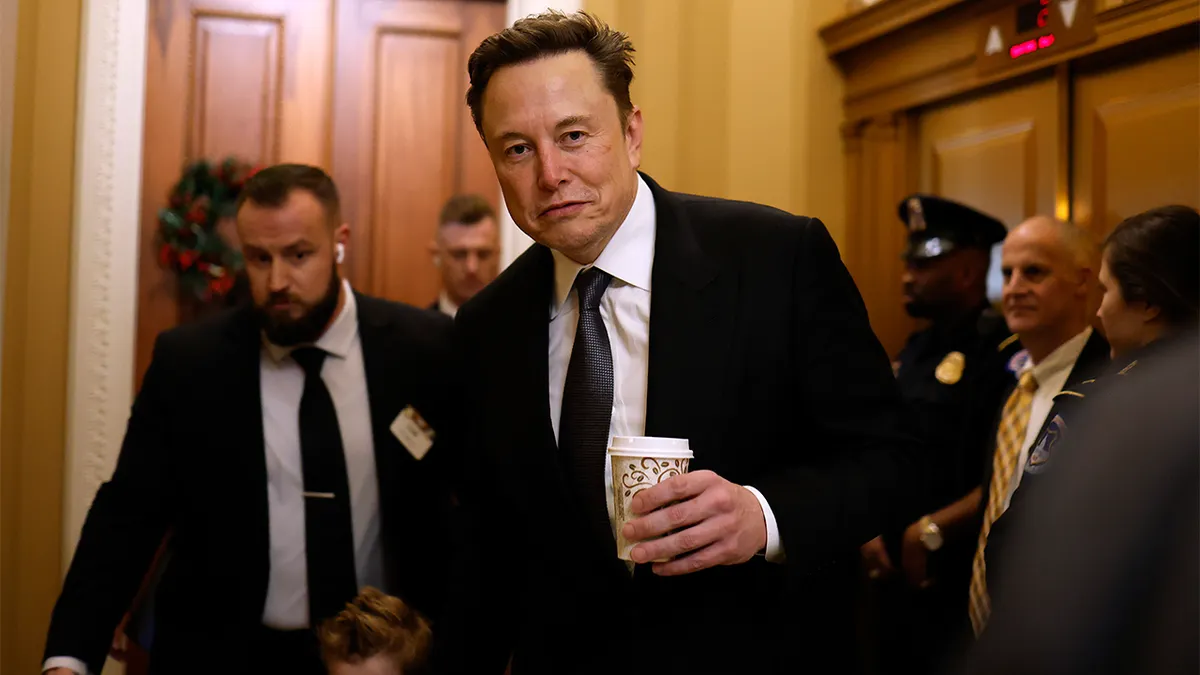
Elon Musk’s Department of Government Efficiency (DOGE) said it had canceled around $420 million in DEI-related contracts this week. (Anna Moneymaker/Getty Images)

Trump’s Monday executive order rescinded President Joe Biden’s one on promoting diversity initiatives, “Advancing Racial Equity and Support for Underserved Communities Through the Federal Government,” which he signed on his first day in office. 

By Brie Stimson

Filed Under: All Stories

Pete Hegseth Confirmed as Secretary of Defense: A New Era for U.S. Military Leadership

January 24, 2025 By Editor Leave a Comment

In a historic move, the U.S. Senate has confirmed Pete Hegseth as the new Secretary of Defense, marking a significant shift in leadership at the Pentagon. At the last minute, Senate President J.D. Vance cast the deciding vote to confirm Hegseth. Hegseth, a former Army National Guard officer and Fox News contributor, brings a combination of military experience and outspoken political views to one of the most critical positions in the U.S. government, overseeing a staff of 3,000 in the Pentagon, and approximately 3 million military personnel.

A Veteran and Media Personality

Hegseth, a Princeton University graduate, served in the Army National Guard with deployments to Guantanamo Bay, Iraq, and Afghanistan. His military service, which includes earning two Bronze Stars, has been a cornerstone of his public persona. Following his time in uniform, Hegseth gained national attention as a commentator on military and political issues, becoming a prominent voice on Fox News. His outspoken advocacy for veterans’ issues and conservative policies earned him a strong following and the ear of influential political figures.

Policy Priorities and Vision

During his confirmation hearings, Hegseth emphasized a commitment to strengthening U.S. military readiness and addressing what he described as “woke culture” within the armed forces. He has been vocal about his desire to refocus the military on its core mission of national defense, advocating for increased funding for modernization efforts, enhancing troop training, and bolstering cybersecurity capabilities.

Pete Hegseth, U.S. President-elect Donald Trump’s nominee to be secretary of defense, testifies before a Senate Committee on Armed Services confirmation hearing on Capitol Hill in Washington, U.S., January 14, 2025. REUTERS/Elizabeth Frantz

Hegseth also highlighted the importance of confronting global threats, particularly from China and Russia, while maintaining a strong commitment to NATO and other allied partnerships. “Our adversaries are watching closely,” he said during his testimony. “We must ensure that America’s military remains the most lethal and capable force in the world.”

A Controversial Choice

Hegseth’s nomination was met with mixed reactions. Supporters applauded his military background and his alignment with conservative values, arguing that his leadership would reinvigorate the Pentagon and prioritize national security and lethal readiness over the DEI policies emphasized by the prior administration. Critics, however, raised concerns about his lack of high-level government experience and his conservative values on social and political issues.

Democratic senators questioned his ability to separate political ideology from the nonpartisan responsibilities of the Secretary of Defense. In response, Hegseth pledged to serve all service members, regardless of their backgrounds or beliefs, and to focus on unifying the military under a common mission.

The Road Ahead

As Secretary of Defense, Hegseth faces a range of challenges, including ongoing conflicts, emerging threats in space and cyberspace, and the need to modernize aging equipment and infrastructure. Additionally, he will need to navigate complex political dynamics within Washington while maintaining the trust of U.S. allies abroad.

Hegseth’s confirmation marks a pivotal moment for the Department of Defense. His leadership will be closely watched as he works to implement his vision for a stronger, more focused lethal military force. There is no doubt that his tenure will leave a lasting impact on the U.S. armed forces and national security.

Pete Hegseth’s confirmation as Secretary of Defense reflects a broader conversation about the future of U.S. military leadership and the role of political ideology in shaping defense policy. As he steps into this critical role, the nation will look to him to uphold the values and security of the United States in an increasingly uncertain world.

By James Thompson. James Thompson is an author and ghostwriter, and a political analyst.

Filed Under: All Stories

Trump Brings Relief to Hurricane and Fire Victims

January 24, 2025 By Editor Leave a Comment

US President Donald Trump speaks while visiting a neighborhood affected by Hurricane Helene in Swannanoa, North Carolina, on January 24, 2025. (Photo by Mandel NGAN / AFP) (Photo by MANDEL NGAN/AFP via Getty Images)

On Friday, January 24, 2025, President Donald Trump and First Lady Melania Trump embarked on their first official trip since the President’s second-term inauguration, visiting areas in North Carolina and California that have recently suffered significant natural disasters.

North Carolina Visit

The President’s first stop was Asheville, North Carolina, a city severely impacted by Hurricane Helene in September 2024. The hurricane caused extensive flooding, property damage, and displacement of residents. During his visit, President Trump surveyed the damage and met with local officials and affected residents to discuss ongoing recovery efforts. He expressed his dissatisfaction with the federal relief response, criticizing the Federal Emergency Management Agency (FEMA) for bureaucratic inefficiencies and proposing the possibility of eliminating the agency in favor of direct state-managed disaster responses.

California Visit

Following his time in North Carolina, President Trump traveled to Los Angeles, California, where recent wildfires have devastated communities, leading to widespread evacuations and property loss. The Hughes Fire, which ignited earlier this week, has burned over 10,000 acres and forced 50,000 residents to evacuate. The President toured the affected areas, met with first responders, and spoke with displaced residents. He criticized state officials’ handling of the disaster, particularly targeting California Governor Gavin Newsom’s water management policies, and suggested that federal disaster aid might be contingent upon changes in state practices.

Policy Proposals and Political Context

Throughout his visits, President Trump emphasized a shift toward state-managed disaster responses, expressing a desire to reduce the inefficiencies of federal involvement through agencies like FEMA. He appointed Michael Whatley from the Republican National Committee to assist with North Carolina’s recovery efforts, despite Whatley not holding an official governmental role. These moves indicate a potential change in traditional federal disaster response strategies, reducing concerns about the politicization of aid distribution.

The President’s visits underscore the ongoing challenges faced by communities in North Carolina and California as they work to recover from recent natural disasters. The proposed policy changes and critiques of current disaster management approaches have sparked discussions about the future of federal and state roles in emergency response and recovery efforts.

By James Thompson. James Thompson is an author and ghostwriter, and a political analyst.

Filed Under: All Stories

President Trump Signs Executive Order Releasing All Files on JFK, MLK, and RFK Assassinations

January 23, 2025 By Editor Leave a Comment

In a landmark move that could reshape the narrative surrounding some of the most pivotal moments in American history, President Donald Trump has signed an executive order mandating the release of all classified documents related to the assassinations of President John F. Kennedy, civil rights leader Martin Luther King Jr., and Senator Robert F. Kennedy. This move seeks to provide long-awaited transparency regarding these events, which have fueled conspiracy theories, speculation, and calls for disclosure for decades.

The Push for Transparency

The executive order directs federal agencies, including the CIA, FBI, and National Archives, to release all remaining classified documents without redactions, barring a direct and explicit threat to national security. Trump’s decision comes amid continued public pressure to uncover the truth behind these assassinations, which shaped the political and cultural trajectory of the United States.

During his announcement, Trump stated, “The American people deserve to know the full truth about these historic tragedies. Transparency is the foundation of a functioning democracy, and this action ensures that we honor that principle.”

The Assassinations and Their Impact

                  1.   John F. Kennedy: The 35th President of the United States was assassinated on November 22, 1963, in Dallas, Texas. The official investigation concluded that Lee Harvey Oswald acted alone, but the event has been plagued by theories involving the CIA, the Mafia, Lyndon Johnson, Fidel Castro, and other entities.

                  2.   Martin Luther King Jr.: The civil rights leader was fatally shot on April 4, 1968, in Memphis, Tennessee. While James Earl Ray confessed to the killing, questions remain about whether he acted alone, or as part of a broader conspiracy.

                  3.   Robert F. Kennedy: The younger brother of JFK, former U.S. Attorney General, and a U.S. Senator, Robert Kennedy was assassinated on June 5, 1968, in Los Angeles, California. Sirhan Sirhan was convicted of the crime, but theories about a second gunman and other potential co-conspirators persist.

Implications of the Document Release

The release of these files has the potential to reshape public understanding of these tragedies. Advocates for full disclosure argue that the documents could shed light on inconsistencies in the official narratives, identify previously unknown players, and clarify the roles of governmental agencies in the investigations.

Critics, however, caution that the release might lead to the spread of misinformation, as incomplete or out-of-context information could fuel new conspiracy theories. Furthermore, some historians and national security experts warn that even decades-old files could reveal sources or methods still relevant today. These objections are utter nonsense, of course, and a thinly veiled attempt to obscure the truth of the assassinations.

Public and Scholarly Reactions

Reactions to the executive order have been mixed. Advocacy groups like the Assassination Archives and Research Center (AARC) have applauded the decision, seeing it as a long-overdue victory for government transparency and accountability. “This is a momentous step toward uncovering the truth about these pivotal events,” said an AARC spokesperson.

On the other hand, some officials have expressed concerns about the impact on national security and international relations. “We must carefully assess the implications of releasing sensitive material,” said one intelligence expert.

What Happens Next?

Under the executive order, agencies have been given a deadline to complete the declassification process, with strict limits on the use of national security exemptions. The National Archives has been tasked with overseeing the release and ensuring that documents are made publicly accessible in a digital format.

This decision by President Trump may set a precedent for future administrations to adopt a more transparent approach to historical events. As historians, journalists, and the public prepare to delve into these newly released files, the world watches to see what revelations might emerge—and how they might reshape our understanding of American history.

President Trump’s decision to release all remaining files related to the JFK, MLK, and RFK assassinations marks a bold step toward government transparency. While the implications remain to be seen, the release of these documents promises to reignite debates, uncover new insights, and perhaps even answer some of the lingering questions that have haunted the nation for decades.

UAPs are next.

By James Thompson. James Thompson is an author and ghostwriter, and a political analyst.

Filed Under: All Stories

Trump Revokes Security Clearances of 51 Ex-Intelligence Officials Who Signed Hunter Biden Laptop Declaration

January 22, 2025 By Editor Leave a Comment

Executive order says the signatories ‘willfully weaponized’ the intelligence community’s credibility to manipulate the political process.

Trump Revokes Security Clearances of 51 Ex-Intelligence Officials Who Signed Hunter Biden Laptop Letter
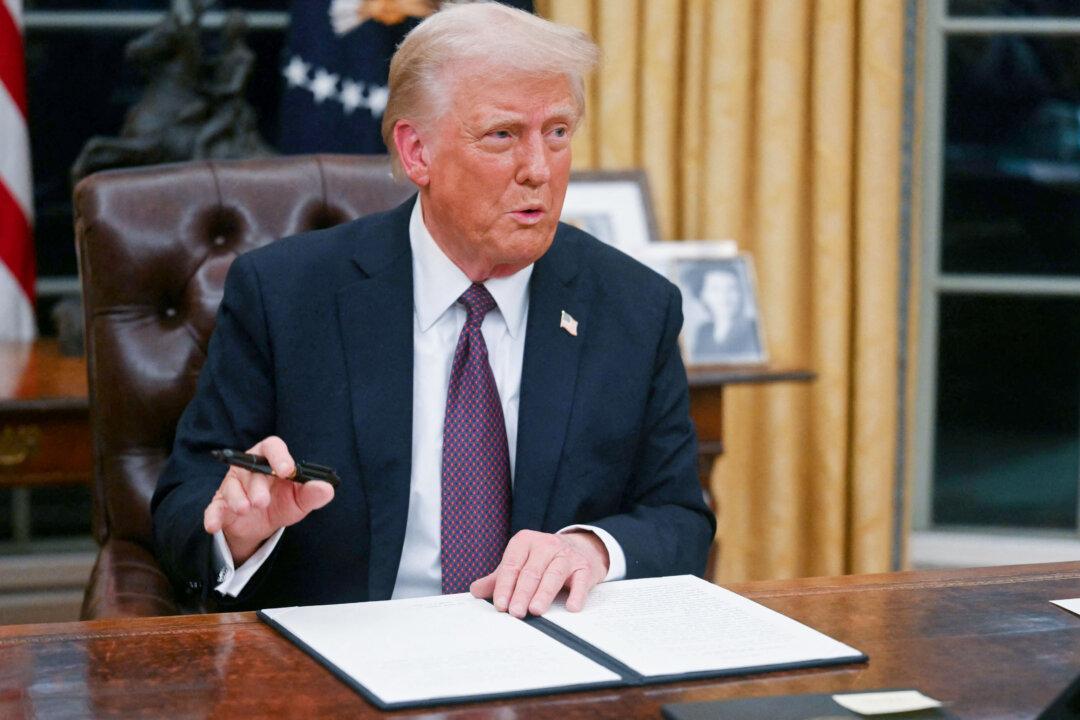
U.S. President Donald Trump signs an executive order to withdraw the United States from the World Health Organization, in the Oval Office of the White House in Washington on Jan. 20, 2025. Jim Watson/POOL/AFP via Getty Images

President Donald Trump signed an executive order on Monday revoking the security clearances of 51 former U.S. intelligence officials who signed a letter discrediting credible reports about emails found on Hunter Biden’s laptop.

The letter was issued just weeks ahead of the 2020 presidential election in which Hunter Biden’s father, then-candidate former Vice President Joe Biden, was a contender. The signatories said that a news report about emails found on the laptop that Hunter Biden allegedly abandoned at a Delaware repair shop were false and “part of a Russian disinformation campaign.”

The emails detailed some of the younger Biden’s foreign business dealings with China and in Ukraine. None showed direct evidence of his father benefiting from the deals as vice president. Presidential candidate Biden denied any wrongdoing.

Many lewd photo of Hunter Biden were on the laptop he left in a computer repair shop.

Trump’s executive order said that the signatories had “willfully weaponized” the intelligence community’s credibility to manipulate the political process by discrediting the reports ahead of the 2020 election.

The 51 intelligence officials include former Director of National Intelligence James Clapper, Jr., former CIA Acting Director Michael J. Morell, former Central Intelligence Agency director John Brennan, and former Defense Secretary Leon Panetta. Two of the 51 have since died.

The order accused the officials of engaging in partisan politics and instructed the director of national intelligence to produce a report within 90 days outlining “any additional inappropriate activity that occurred within the Intelligence Community, by anyone contracted by the Intelligence Community or by anyone who held a security clearance” related to the letter, and potential disciplinary actions.

The order also revoked the security clearance of former national security advisor John Bolton due to his 2019 memoir, which the White House said was “rife with sensitive information drawn from his time in government.”

It stated that Bolton’s memoir posed “a grave risk” of exposing classified material and undermined future presidents’ ability to request candid advice on matters of national security from their staff.

Letter on Hunter Biden’s Laptop

The letter—which was written in response to a New York Post report on data said to have been obtained from a laptop abandoned by Hunter Biden at a Delaware repair shop—stated that emails referenced in the news story had “all the classic earmarks of a Russian information operation.”

At the same time, Director of National Intelligence John Ratcliffe told Fox News that the emails were not Russian disinformation—a statement that the FBI did not contest.

The New York Post story alleged that Hunter Biden introduced his father, when he was vice president, to a top executive at Burisma Holdings, a Ukrainian energy company on whose board the younger Biden sat.

After the letter was released, many prominent Democrats cited legacy media reports on the letter in response to questions raised in Congress about the emails.

In 2020, then-candidate Biden also cited the letter during a debate against opponent Trump.

It wasn’t until 2023, long after the 2020 election, that the letter’s credibility crumbled when Morell testified to Congress that then-Biden campaign adviser Antony Blinken “triggered” him to organize it in a bid to “help Vice President Biden in the debate.”

Trump’s order stated that senior CIA officials were aware of the contents of the letter, and that multiple signatories held clearances at the time while maintaining “contractual relationships” with the CIA.

“This fabrication of the imprimatur of the Intelligence Community to suppress information essential to the American people during a Presidential election is an egregious breach of trust reminiscent of a third world country,” the order stated.

By Aldgra Fredly. Bill Pan contributed to this report.

Filed Under: All Stories

« Previous Page
Next Page »
Click to talk with us about writing your book >>

Do you want to write a book? James Thompson is a ghostwriter who writes the books of people just like you.

Copyright © 2026 by Federalist Press · All rights reserved · Website design by RoadRunner CRM · Content Wiriting by GhostWriter · Log in