
May 1 has long carried meaning far beyond the calendar.
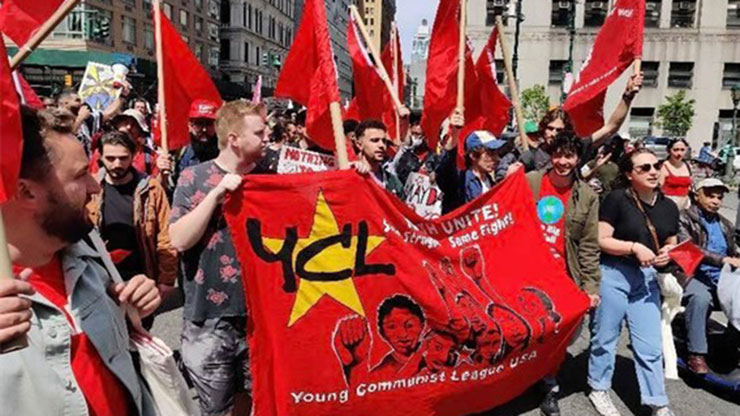
Known internationally as May Day, it began as a labor movement commemoration in the late 19th century, tied to the fight for workers’ rights. But over time, in much of the world, it became deeply associated with socialist and communist movements, state power, and ‘revolutionary’ politics.
For decades, Americans largely kept their distance from tat legacy. As today’s democrat party embracing Marxism, that distance appears to be shrinking.
A Holiday with a Complicated History
In countries shaped by communist regimes, May Day was not just a celebration, it was a demonstration of power.
Mass parades. Coordinated messaging. Displays of unity under centralized authority. Yes, we saw Soviet missiles paraded in the streets of Moscow as a reminder that the decadence of individualism would soon be crushed by the collective powers.
Behind those displays, history tells a dark story.
The 20th century saw the rise of regimes that embraced Marxist ideology, from the Soviet Union to Maoist China, to Eastern Europe and beyond. The results, widely documented, included:
- Economic collapse
- Political repression
- Suppression of dissent
- Widespread human suffering on a massive scale, including the death of 100,000,000 people
The promise was equality and liberation.
The reality was control and coercion.
That legacy still shapes how most Americans view May Day today.
A New Wave of Activism
In 2026, May Day has taken on renewed significance in the United States.
According to recent reporting, hundreds of organizations, collectively generating billions in revenue, have organized thousands of protests across the nation tied to the day’s themes.
The scale is notable:
- Nationwide coordination
- Large coalitions of advocacy groups
- Messaging focused on economic ‘justice,’ labor rights, immigration, and social policy
Supporters describe this as grassroots mobilization. Critics see something more structured, and more ideological.
The Debate Over Modern Movements
The core question is not whether people have a right to protest. They do. The question is what ideas and goals are driving these movements, and where those ideas lead.
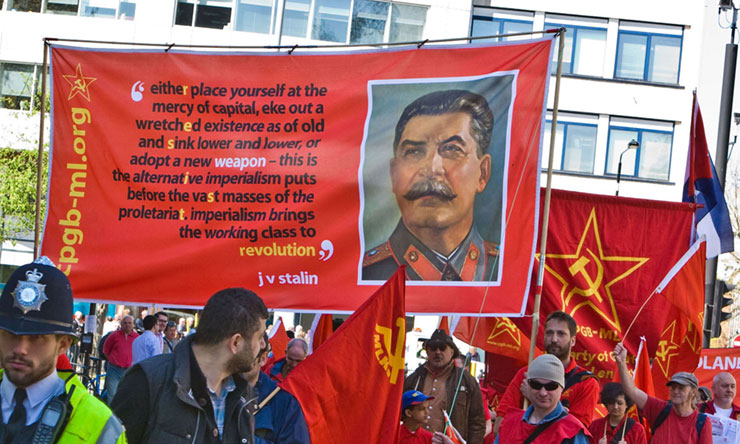
Some activists openly embrace frameworks rooted in Marxist and socialist thought, particularly in critiques of:
- Capitalism
- Wealth distribution
- Corporate power
- Traditional economic structures
Others reject those labels entirely, framing their goals as pragmatic reforms. But the overlap in language, goals, and organizing strategies has sparked a broader national debate:
Are these movements pushing reform—or a deeper transformation of the American system?
Follow the Structure
One of the more striking elements of modern activism is its level of organization. Large-scale demonstrations do not happen spontaneously. They require:
- Funding
- Infrastructure
- Communication networks
- Coordinated messaging
Reports highlighting the financial scale of some participating organizations have raised questions about:
- How these groups are funded
- How resources are allocated
- Whether their agendas align with the broader public
These are the kinds of questions that should be asked of any large, influential movement.
Why the Pushback Exists
Skepticism toward May Day activism in the U.S. is not simply about policy disagreements. It is rooted in historical memory. Many Americans associate Marxism not with theory, but with outcomes:
- Centralized control over economic life
- Oppression and reduced individual autonomy
- Political systems that suppressed opposition
That history makes some wary of any movement that appears to draw inspiration, even indirectly, from those ideas.
A Country Built on a Different Model
The United States was founded on a different set of assumptions.
- Individual rights over collective identity
- Families as the foundational unit of society
- Very limited government over centralized control
- Market-driven opportunity over state-directed outcomes
Those principles have been debated, refined, and challenged over time, but they remain foundational, and have catapulted America to the most powerful, wealthy, and benevolent nation in the world, ever.
Movements that call for sweeping structural change inevitably raise questions about how far those principles should be altered, or whether they should be replaced altogether.
The Meaning of May Day Today
For some Americans, May Day is a call to action; an opportunity to advocate for workers, fairness, and reform.
However, these calls are obviously farcical, because workers and fairness have been strongly represented in our constitutional republic, elevating all American citizens through adherence to our constitutional principles of individual freedom and the individual pursuit of life, liberty and happiness.
What is the Left demanding? What is their aim? Redistribute wealth, which is to steal the wealth of those who have worked hard and risked all, and give it to those who sit around and complain. They hate corporations, and demand that their wealth be confiscated and given to lazy people. Of course, corporations are owned by collectives of hard working Americans, whose retirement plans have funded corporate enterprises, the returns on which will fund retirement. The anti-corporate, anti-liberty howlings of the Marxist Left are preposterous to everyday Americans, and if given their way, would reduce America to the status of a third world wasteland.
Leave a Reply