
The Southern Poverty Law Center built its brand by claiming to fight hate. But this week’s House Judiciary Committee hearing raised a darker question: What happens when an organization becomes more powerful by finding, labeling, amplifying, and monetizing hate than by healing the divisions it claims to oppose?
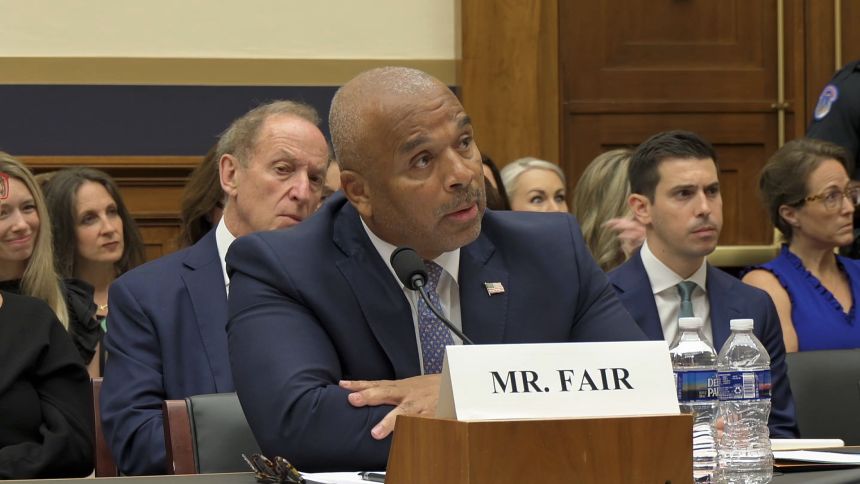
The hearing, titled The Southern Poverty Law Center: Manufacturing Hate, Part II, placed the SPLC under congressional scrutiny over its role in modern civil-rights politics, its influence over public policy, its ideological labeling machine, and disturbing allegations regarding the use of donor funds. Republicans pressed SPLC leadership over whether the organization has become less a neutral civil-rights watchdog and more a partisan political weapon. Democrats largely defended the organization as a necessary opponent of extremism.
That divide tells the story. For decades, the SPLC has used its “hate” and “extremist” labels to shape media narratives, influence corporate behavior, pressure technology platforms, and stigmatize conservative organizations. In theory, tracking genuine violent extremism is a public service. In practice, the SPLC increasingly blurred the line between actual hate groups and mainstream traditional conservatives, Christians, pro-life advocates, parental-rights activists, and constitutional traditionalists.
That is not civil rights. That is Marxist ideological enforcement.
Dr. Alveda King, niece of Martin Luther King Jr., delivered one of the hearing’s most powerful rebukes. King accused the SPLC of “profiteering from division” and warned that organizations claiming to fight hatred can themselves become agents of distrust when they weaponize accusations for political or financial gain. Indeed, the SPLC has profited to the tune of hundreds of millions of dollars as a purveyor of hate.
Dr. King’s testimony cut to the moral heart of the matter. The civil-rights movement led by her uncle appealed to America’s founding promises. It asked the nation to live up to the Declaration of Independence and the Constitution. It appealed to conscience, equal dignity, Christian moral language, and the principle that all men are created equal.
Much of the modern left has taken a very different road. Rather than binding Americans together around shared citizenship, activist institutions divide the country into permanent categories of oppressor and oppressed. They do not heal wounds. They reopen them. They re-injure them, and often. They do not encourage gratitude for constitutional liberty and economic opportunity. They teach suspicion toward the very system that has allowed Americans of every background to rise farther and faster than any people in history.
The SPLC’s critics argue that this is the real business model: find division, intensify division, fundraise from division, then claim moral authority over the chaos.
The abortion issue reveals the contradiction especially clearly.
The SPLC and other left-wing organizations often portray pro-life Americans as extremists, even though the pro-life movement is the traditional centrist view, and includes millions of Christians, conservatives, Catholics, evangelicals, Black pastors, Hispanic families, mothers, fathers, and ordinary citizens who believe unborn children possess human life and dignity.
Dr. King has long argued that abortion has disproportionately harmed Black Americans. Federal data has consistently shown that Black and Brown women account for a disproportionately high share of abortions compared with their share of the population. Pro-life advocates therefore ask a question the modern Left rarely wants to confront: how can a movement claim to defend Black lives while defending an abortion regime that has ended tens of millions of Black lives before birth?
The history of the abortion and birth-control movements makes that question even more uncomfortable. Margaret Sanger and other early population-control advocates operated in an intellectual world deeply influenced by eugenics. Sanger is famously tied to the belief that Black and Brown people are nothing more than “human weeds,” and should be controlled in like manner, giving birth to Planned Parenthood and other abortion providers — always located in the center of minority neighborhoods.
This is why many pro-life Americans view the SPLC’s labeling apparatus as morally inverted. Orwellian doublespeak, Leftist propaganda and lies. It condemns those who defend unborn life while aligning culturally with movements that have treated abortion as liberation, even when the heaviest consequences fall on minority communities.
That is not justice. It is exploitation dressed in Orwellian moral language.
The deeper problem is that far-left organizations have failed to do anything to improve the daily lives of the people they claim to champion. They do not rebuild families. They do not restore safe neighborhoods. They do not improve failing schools. They do not reduce dependency. They do not strengthen churches. They do not create businesses. They do not teach young people discipline, marriage, thrift, faith, responsibility, and hope.
Instead, they often offer resentment. They offer grievance. They offer ideological identity. They offer gender and social confusion. And then they ask for money.
The constitutional vision is better. America’s founding principles offer every citizen — Black, white, Hispanic, Asian, rich, poor, immigrant, native-born, believer, skeptic — the same basic promise: equal protection under law, freedom of speech, freedom of religion, property rights, due process, local self-government, and the opportunity to build a life through work, family, faith, and enterprise.
Those principles do not guarantee equal outcomes. Nothing can. But they create the conditions in which human beings can flourish. They provide opportunities.
That is what the old civil-rights movement understood. It did not ask America to abandon its founding. It asked America to honor it.
The modern activist Left increasingly asks the opposite. It treats the Constitution as an obstacle, traditional religion as a threat, the nuclear family as a problem, free speech as dangerous, and political disagreement as hate.
That worldview does not liberate anyone. It traps Americans in permanent conflict. It permanently traps minorities in a Leftist ghetto.
The SPLC hearing exposed more than one organization’s criminal problems. It exposed a broader industry of division that profits from convincing Americans they are enemies.
The country does not need more hate maps. It needs moral clarity.
It needs constitutional confidence. It needs leaders who believe that Americans of every background can rise together, not activists who grow rich by keeping them divided.
Leave a Reply