
From electricity and the automobile to mainframes, calculators, personal computers and the Internet, technological revolutions have repeatedly frightened Americans before making them richer, more productive and more capable. Artificial intelligence may be the next great test of whether America still has the confidence to build the future.
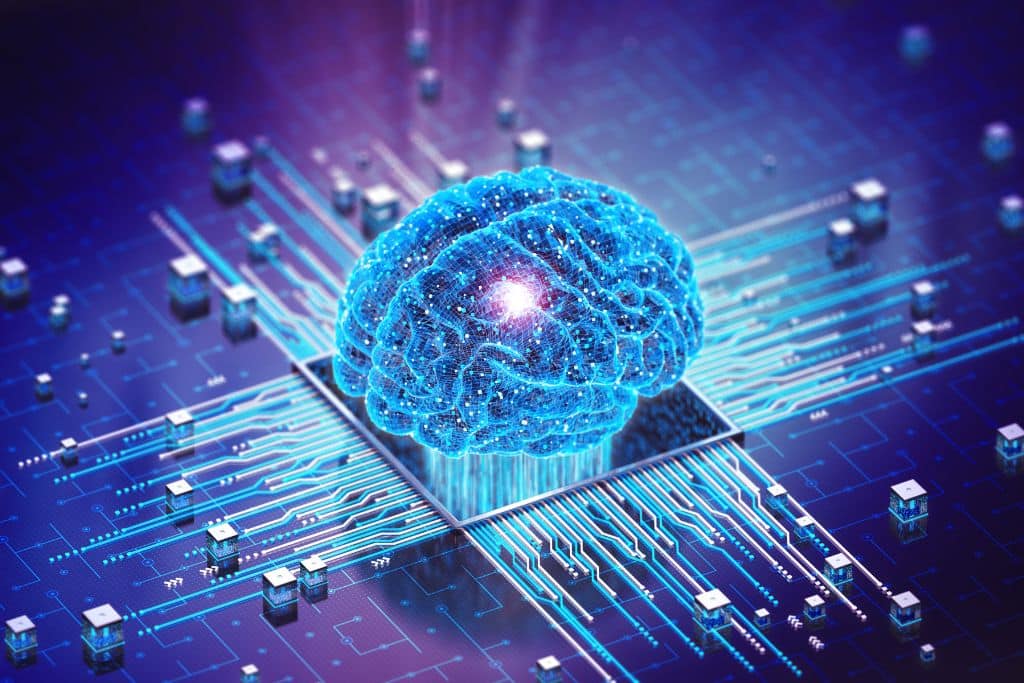
There is a familiar sound echoing across America today. Artificial intelligence is going to eliminate our jobs. Data centers are going to consume all our electricity. Computers are becoming too powerful. The technology is moving too quickly. Government must slow it down. Communities must stop the server farms. Perhaps America would be safer if we simply built less.
We have heard variations of this argument for generations. The technology changes. The fear does not.
For more than a century, Americans have repeatedly been warned that the newest machines would render human beings obsolete, destroy employment, disrupt communities and concentrate intolerable power in the hands of whoever owned the machines. The warnings were not always foolish; technological revolutions really do disrupt industries and livelihoods. But the recurring prediction of permanent mass technological unemployment has repeatedly failed.
Now America is having the argument again, only this time the machine is artificial intelligence—and there is an enormously important difference. The United States is not developing this technology in isolation. It is competing against China for leadership in what may become one of the most consequential technologies since electricity itself.
And there is now evidence that China-linked actors understand perfectly well what is at stake.
The Fear of the Machine Is Older Than the Computer
Fear that machinery would eliminate human labor goes back at least to the Industrial Revolution. The Luddites of early-19th-century Britain became so convinced that new textile machinery threatened their livelihoods that they destroyed machines. Similar fears resurfaced during the Great Depression, after World War II and during the great automation debates of the 1950s and 1960s. The American Historical Association notes that anxiety about “technological unemployment” has accompanied technological change for generations.
The automobile brought its own upheaval. The internal-combustion engine eventually devastated enormous portions of the economy built around horses. Blacksmiths, carriage makers, stable operators, harness makers and countless others saw their businesses transformed or disappear.
But America did not become poorer because it stopped organizing its transportation economy around horses.
It became vastly richer.

Automobiles created assembly-line manufacturing, filling stations, repair shops, dealerships, trucking, road construction, motels, suburbs, drive-in restaurants, automobile insurance and industries nobody standing beside a horse-drawn carriage could possibly have predicted. The technology eliminated some jobs precisely because it allowed human beings to accomplish vastly more with less labor—and that increased productivity generated new wealth and new forms of employment.
Electricity did much the same thing. Electric motors and electrically powered factories replaced older machinery and transformed manufacturing. Electric appliances eliminated countless hours of domestic labor. Refrigeration changed food production and distribution. Electrified offices changed clerical work.
The result wasn’t the end of work. It was the beginning of an economy our ancestors could scarcely have imagined.
Economists have studied this phenomenon extensively. David Autor of MIT observed in the Journal of Economic Perspectives that automation certainly substitutes for some human labor, but it also complements labor, increases output and creates additional demand for labor. That is one reason generations of technological progress have failed to produce the permanent mass unemployment repeatedly predicted.
Then the Computers Were Coming for Us
The computer age generated another round of anxiety.
IBM introduced its revolutionary System/360 family in 1964. These were not cute little desktop machines. They were imposing corporate computers occupying specialized facilities and performing work that previously required rooms full of clerks, bookkeepers and human calculators. IBM itself describes the System/360 as a fundamental change in computing: software developed for one machine in the family could operate on others, allowing organizations to expand their computing capabilities without rebuilding everything from scratch.
Mainframes became more capable. The System/370 followed. Banks computerized accounts. Airlines computerized reservations. Corporations computerized payroll. Governments computerized records.
Once again came the question: What will happen to all the workers?
The anxiety became sufficiently serious that presidential candidate John F. Kennedy warned in 1960 that America stood on the threshold of an automation revolution carrying both the promise of prosperity and the danger of “industrial dislocation, increasing unemployment, and deepening poverty.” The feared permanent employment collapse never occurred. The American economy instead generated millions of additional jobs as computing transformed what workers could accomplish.
Then the computer escaped from the corporate data center.
Pocket calculators arrived. A machine small enough to fit into a student’s hand could perform arithmetic that once required paper, pencil, slide rule and considerable human effort. Surely that would make people intellectually lazy. Surely students would forget how to calculate. Surely accountants would become unnecessary.
Instead, the calculator became another tool.
Then came the personal computer.
The Apple II, Commodore, TRS-80 and IBM PC moved computing onto desks and eventually into homes. Word processors threatened typists. Spreadsheets threatened armies of accounting clerks. Desktop publishing threatened traditional typesetting. Computer-aided design transformed drafting.
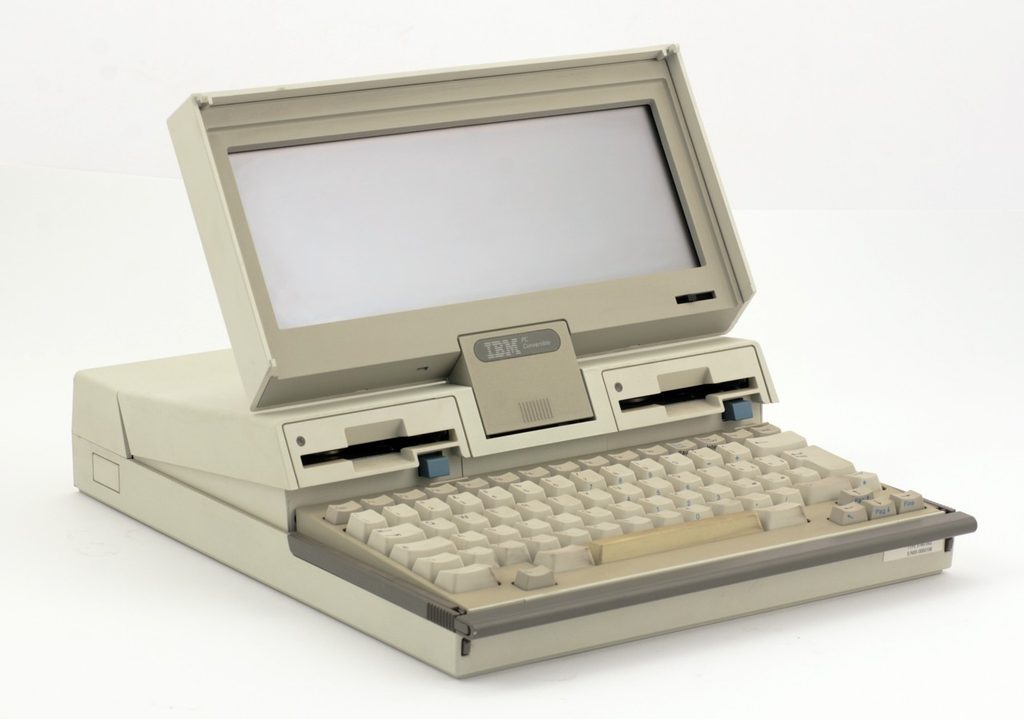
Again, some jobs really did disappear. Others changed beyond recognition.
But the economy didn’t disappear with them.
Then Came the Internet—and Another Revolution
The Internet multiplied the disruption.
Email threatened postal mail. Online news threatened newspapers. Amazon and other online retailers threatened brick-and-mortar stores. Streaming threatened video rental. Digital photography devastated the film-processing business. Smartphones absorbed cameras, calculators, maps, calendars, address books, music players, flashlights and dozens of other formerly separate products.
Entire industries were diminished or destroyed.
And entirely new industries appeared.
Search-engine optimization specialist would have been a meaningless occupation in 1980. So would app developer, cloud architect, cybersecurity analyst, social-media manager, YouTube creator, e-commerce fulfillment specialist and countless other occupations employing people today.
Technological progress does not promise that every existing job will survive. It never has.
It promises something more important: human beings become capable of producing more value with the same amount of time and effort.
That is productivity. And over the long run, productivity is one of the foundations of rising prosperity.
AI Is the Next Tool, Not the End of Humanity
Artificial intelligence is unquestionably more powerful than a pocket calculator. It will disrupt occupations. Some tasks now performed by people will eventually be performed by machines, just as computers replaced filing cabinets and automobiles replaced horse-drawn wagons.
But focusing exclusively on what AI can replace misses what millions of Americans are already discovering it can augment.
A doctor can use AI to help examine medical information. A programmer can use it to inspect code. A small-business owner can analyze data that previously required a consultant. A researcher can process information in minutes that once consumed days. An engineer can test ideas more rapidly. A writer can use it as an editor, researcher and second set of eyes. A student can have concepts explained individually rather than waiting for the next classroom session.
Used properly, AI does not have to substitute for human judgment. It can increase the reach of human judgment.
The important question therefore isn’t merely, “What jobs can AI perform?”
It is also, “What can an American worker accomplish when the worker has AI?”

That distinction may prove as important as asking in 1985 what an accountant could accomplish with a spreadsheet rather than asking how many calculations the spreadsheet could perform without the accountant.
But AI Needs Factories
This brings us to the increasingly contentious subject of data centers.
Artificial intelligence may seem intangible when it appears on a laptop or telephone screen, but the computations behind it are intensely physical. AI requires semiconductors, servers, cooling systems, networking equipment, buildings—and enormous quantities of electricity.
Those data centers are effectively the factories of the information age.
And demand is unquestionably large. The International Energy Agency projects global data-center electricity consumption will roughly double from about 485 terawatt-hours in 2025 to approximately 950 TWh in 2030, with AI-focused facilities growing considerably faster. The United States and China are the two great centers of that expansion.
The U.S. Energy Information Administration now says data-center development is a major driver of America’s renewed electricity-demand growth. EIA expects U.S. electricity generation to reach a record level in 2026 and grow again in 2027, driven in part by data centers and manufacturing.
That is not an argument against AI.
It is an argument for building more energy.
Don’t Ration Electricity. Produce It.
America is an energy-rich continental nation. If AI requires more electricity, the answer should not automatically be to ration computation. It should be to ask how America can generate the additional electricity efficiently, reliably and affordably.
Natural gas can contribute. Nuclear power can contribute. Geothermal can contribute. Solar and wind can contribute where their economics and reliability make sense. New transmission and storage can contribute.
Indeed, the AI boom is already helping revive American nuclear power. NextEra recently secured a federal loan of up to $1.9 billion toward restarting Iowa’s Duane Arnold nuclear plant, with Google contracting for its output. Other projects are pursuing restarts of previously closed nuclear facilities, including Palisades in Michigan and a reactor at Three Mile Island in Pennsylvania.
President Donald Trump has explicitly embraced this build-more approach. His July 2025 executive order accelerating data-center infrastructure identifies natural gas, nuclear, geothermal and other dispatchable power sources as infrastructure that can accompany major data-center projects. It also encourages appropriate federal lands, brownfields and other suitable locations for development.
That is much closer to the American answer to technological progress throughout our history:
Build the infrastructure the new technology requires.
We didn’t respond to the automobile by refusing to manufacture cars because existing roads were inadequate. America built roads.
We didn’t respond to electrification by banning appliances because the existing generating system couldn’t support them. America built generating stations and transmission networks.
We shouldn’t respond to AI by saying our electrical grid was designed for yesterday’s economy and therefore tomorrow’s economy must remain small enough to fit inside it.
Build the power.
Build the transmission.
Build the computing infrastructure.
A Data Center Doesn’t Belong Everywhere
Supporting data centers does not mean every proposed location is sensible.
People who don’t want a giant industrial complex immediately behind their homes aren’t Luddites. Communities can legitimately consider noise, transmission infrastructure, water consumption, land use, tax incentives and effects on local electricity rates. Congress is currently considering bipartisan measures intended to prevent ordinary ratepayers from being saddled with infrastructure costs attributable to large data-center customers.
Those concerns should be addressed rather than mocked.
But data centers possess an advantage many traditional industrial facilities do not: their product is information. They don’t need to sit on Fifth Avenue or beside a suburban subdivision to reach their customers.
There are technical limits to that principle. Latency matters for some computing applications, fiber connectivity matters enormously, and electricity and water infrastructure constrain possible sites. Information doesn’t literally move instantaneously; signals through fiber travel below the vacuum speed of light. But compared with a steel mill that needs raw materials or a retail store that needs customers physically nearby, computing facilities have extraordinary geographic flexibility.
America has enormous stretches of industrial land, brownfields, energy-producing regions and other suitable sites where large computing campuses can be developed with fewer conflicts with residential communities.
The intelligent response is therefore not “No data centers.”
It is “Build them where they make sense, and build the infrastructure to support them.”
And China Is Watching This Argument
Here is where the debate becomes considerably more serious.
China is not sitting around wondering whether artificial intelligence is fashionable. Beijing recognizes advanced AI as a strategic technology with economic, military, intelligence and geopolitical consequences.
And there is now evidence that China-linked actors have attempted to influence the American debate over the infrastructure necessary to develop it.
In June, OpenAI reported that it had disrupted a cluster of accounts that likely originated in China and were being used to generate social-media material for a covert influence operation. The operators posed as Americans from different backgrounds and produced English-language content criticizing U.S. AI and data-center development. OpenAI assessed that the operators were likely associated with a private Chinese technology company working for Chinese provincial-government clients.
Then in August, X reported finding roughly 200 accounts associated with a suspected Chinese bot farm posting in ways that could manipulate legitimate American debate over AI and energy policy. According to Axios, some posts emphasized electricity prices and grid strain or portrayed data-center operators enriching themselves at ordinary Americans’ expense.
That doesn’t mean the mother worried about her electric bill is a Chinese agent.
It doesn’t mean the homeowner opposing a data center next door is working for Beijing.
And it certainly doesn’t prove that every environmental organization or politician skeptical of AI infrastructure is secretly financed by China. Reporting examining some of the broader claims about Chinese funding has found the evidence for those sweeping accusations weak.
But foreign influence operations rarely need to invent an American disagreement. Their more effective strategy is to find an existing disagreement, amplify its most inflammatory arguments, encourage Americans to distrust one another and push the controversy in a direction favorable to the foreign power.
That appears to be precisely why the AI infrastructure debate is attractive.
China Doesn’t Have to Defeat American AI if Americans Defeat It Themselves
Imagine the strategic outcome if the United States spends the next decade making large computing facilities almost impossible to permit, refusing to build enough reliable electricity, allowing transmission projects to languish, frightening investors away from AI infrastructure and treating every increase in electricity demand as evidence that the underlying industry must be stopped.
China would hardly need to sabotage an American data center.
We would have sabotaged ourselves.
The United States has an enormous advantage precisely because it combines scientific talent, capital markets, innovative companies, abundant energy resources, world-class universities, semiconductor expertise and a political tradition that historically allowed entrepreneurs to build things.
Those advantages aren’t permanent laws of nature.
They have to be used.
The Real Lesson of 150 Years of Technological Panic
None of this means artificial intelligence is harmless.
AI can be abused for fraud, propaganda, cybercrime and surveillance. Powerful systems require sensible safeguards. Workers whose occupations change deserve opportunities to acquire new skills. Data-center developers should pay the appropriate costs of the infrastructure they require rather than quietly shifting them onto homeowners. Communities should retain a meaningful voice over land use.
But managing a technology is fundamentally different from fearing it.
America has repeatedly encountered technologies that destroyed old ways of doing things. Electricity did. The automobile did. Automation did. Mainframe computers did. Calculators did. Personal computers did. The Internet did.
The important historical fact is not that nobody was hurt by those transitions. Many people were.
The important fact is that America as a whole became vastly more productive and prosperous because it adopted the technologies rather than trying to preserve the economy that existed before them.
Artificial intelligence presents us with the same choice on a much larger scale.
We can build the computing capacity. We can build the power plants. We can build the electrical grid. We can train Americans to use AI as an amplifier of human intelligence rather than treating it exclusively as a competitor to human labor. We can locate data centers intelligently instead of pretending they must either be built in someone’s backyard or prohibited entirely.
And we can remember that while Americans argue over whether the future is too frightening to build, our principal geopolitical competitor is working very hard to build it.
America did not become the world’s technological leader by being the country most afraid of the next machine. It became the world’s technological leader by inventing it, improving it, powering it, putting it to work—and discovering opportunities that nobody could see before it existed.
Artificial intelligence should be no different.
The question is not whether the AI age is coming. The question is whether America intends to lead it.
Leave a Reply