
 A former model who was featured at the center of a lengthy New York Times report that assailed Donald Trump’s treatment of women said Monday that her account was taken out of context, misquoted and “spun” by the Times in order to portray the Republican presidential candidate in a negative light.
“They spun it to where it appeared negative. I did not have a negative experience with Donald Trump,” Rowanne Brewer Lane told “Fox & Friends.”
Lane briefly dated Trump after the 1990 encounter described in the Times article. But the way she described their relationship and that encounter on Monday was much different than the way it was portrayed in the front-page weekend article that ran under the explosive headline, “Crossing the Line: How Donald Trump Behaved with Women in Private.”
The article opens by describing how Lane, then 26 years old, met Trump at a pool party at Mar-a-Lago, Trump’s Palm Beach, Fla., estate. According to the piece, Trump had barely met her “when he asked her to change out of her clothes.” He gave her a bikini, which she changed into. Lane is quoted as saying, “He brought me out to the pool and said, ‘That is a stunning Trump girl, isn’t it?’”
The Times goes on to describe the incident as “a debasing face-to-face encounter between Mr. Trump and a young woman he hardly knew.”
But Lane told Fox News that was not the case.
“He never made me feel like I was being demeaned in any way,” she said, calling the article “very upsetting.”
“The New York Times told us several times that they would make sure that my story that I was telling came across … that it would not be a hit piece,” she said. “That my story would come across the way that I was telling it … and it absolutely was not.”
Lane said she did in fact meet Trump at that pool party, but said he had simply offered her a swimsuit – she said “okay,” since she hadn’t brought one.
As for Trump’s comment about her being “stunning,” she said, “I was actually flattered” by that, not demeaned. “That’s what I told the Times and they spun it completely differently.”
She described the now-presumptive GOP presidential nominee as a “gentleman” and said she planned to support him in the election.
The Times reporters, meanwhile, defended their story on Monday.
“I think readers of the story can digest what happened to her at Mar-a-Lago,” reporter Michael Barbaro said on CBS’ “This Morning.”
He said, “Recall in my interview with her … she basically expressed that ‘I was taken aback by this.’ And I think that’s how we depicted it.”
“We gathered a variety of voices. And our story is not just Rowanne’s account. It’s the experience of many women,” reporter Megan Twohey said on the same program. According to the article, the reporters interviewed dozens of women who had worked for, dated or interacted with Trump.
In a written statement, a New York Times spokesperson also said: “Ms. Brewer Lane was quoted fairly, accurately and at length. The story provides context for the reader including that the swimsuit scene was the ‘start of a whirlwind romance’ between Ms. Brewer Lane and Mr. Trump.”
Trump, though, took to Twitter to hammer the Times over the piece, following Lane’s comments on Fox News. Trump initially misspelled Lane’s first name as “Roseanne,” before correcting himself.
FoxNews.com
 We have so many opportunities in the workforce, yet women are often still told that we’ve got to run ourselves ragged and forego balance in order to break through the glass ceiling. Why?
 Ted Cruz told reporters Wednesday that he’ll be making a “major announcement” during a 4 p.m. ET rally in Indianapolis, where he’s expected to announce that ex-presidential hopeful and former Hewlett-Packard CEO Carly Fiorina will be his running mate should he win the GOP nomination.
 mashing Pumpkins founder Billy Corgan blasted social justice warriors and spoke up for the American dream in a wide-ranging interview on the Alex Jones Infowars radio show on Tuesday.
 Beginning in 1478, the Spanish Inquisition systematically silenced any citizen who held views that did not align with the king’s. Using the powerful arm of the government, the grand inquisitor, Tomas de Torquemada, and his henchmen sought out all those who held religious, scientific, or moral views that conflicted with the monarch’s, punishing the “heretics” with jail sentences; property confiscation; fines; and in severe cases, torture and execution.
 Police and sheriff’s deputies rushed to Lackland Air Force Base in Texas after they received reports of a shooting Friday.
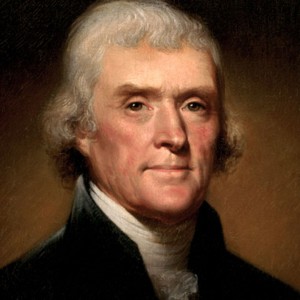 The Myth of Thomas Jefferson and Sally Hemings
 The three Democrats on the Federal Election Commission, in their latest and boldest move to regulate conservative media, voted in unison to punish a movie maker critical of President Obama after he distributed for free his latest work, Dreams of My Real Father: A Story of Reds and Deception.
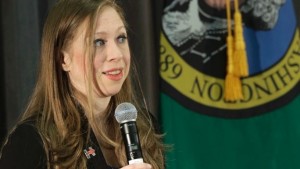 Chelsea Clinton, in an implicit swipe at the impact of President Obama’s health care law, recently told voters that many Americans still are facing “crushing costs” from health insurance even under the Affordable Care Act.

 Mitt Romney Goes Harry Reid On Donald Trump
 A $66 deduction for the personal property tax paid on the Clintons’ 1986 Oldsmobile prompted penetrating questions, like where was the car kept (somewhere in Arkansas) and who was driving it (the senior aides said they did not know).
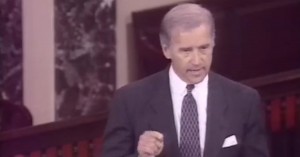 Months before the 1992 presidential election, Joe Biden urged fellow U.S. senators to shut down the nomination process and block President George H.W. Bush’s judicial picks from a confirmation vote.
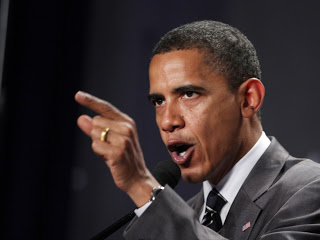 Why have liberals become so intolerant? They think nothing of denying someone as prominent as former Secretary of State Condoleezza Rice from speaking on a
  Today, there is virtually no government program that liberals won’t embrace. Clinton had his Sister Souljah moment when he repudiated extremism in his party. Today liberals can’t get close enough to the “black lives matter” movement.
 Throughout the Bush years, liberals repeated “Bush lied, people died” like a mantra. That slander wasn’t true then and it’s not anymore true now that it has resurfaced. There are many legitimate criticisms of the way the Bush Administration conducted the war in Iraq and even more of the way Obama threw away all the blood and treasure we spent there for the sake of politics, but you have to be malicious or just an imbecile at this point to accuse Bush of lying about WMDs.
 Another senior Iraqi chemical weapons expert in responding to a request in mid-2002 from Uday Husayn for CW for the Fedayeen Saddam estimated that it would take two months to produce mustard and two years for Sarin.”
 Two federal agencies put out misinformation and inconsistent explanations of the government’s role in the Gold King Mine blowout and water contamination in Colorado last summer, a congressional report says.
 What a shock.
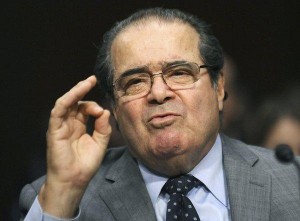 Supreme Court Justice Antonin Scalia, the judicial standard-bearer of the conservative movement and the court’s most provocative member, died Saturday. He was 79.
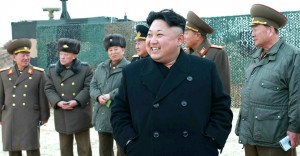 North Korea has again successfully put a satellite into orbit, demonstrating the same technology needed to launch an intercontinental ballistic missile (ICBM) and showing that its long-range missile program is becoming increasingly reliable.
 A divided Supreme Court on Tuesday abruptly halted President Obama’s controversial new power plant regulations, dealing a blow to the administration’s sweeping plan to address global warming.
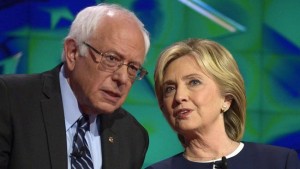 Hillary Clinton and Bernie Sanders clashed sharply Thursday over who is more progressive, at a debate that saw the former secretary of state ratcheting up her criticism of the Vermont senator on several fronts – even accusing him of engineering an “artful smear” with suggestions she could be “bought” by donors.
We have so many opportunities in the workforce, yet women are often still told that we’ve got to run ourselves ragged and forego balance in order to break through the glass ceiling. Why?
Part of the reason work-life balance is difficult to achieve is because our society places so much weight on the financial success of one’s career.
For women, this has been particularly difficult because of the claim that we are underpaid compared with men and the notion that we have to work twice as hard to get to a level playing field. The ubiquitous statistic that women earn 77 cents for every dollar men earn is a compelling story that points to systemic discrimination against women.