
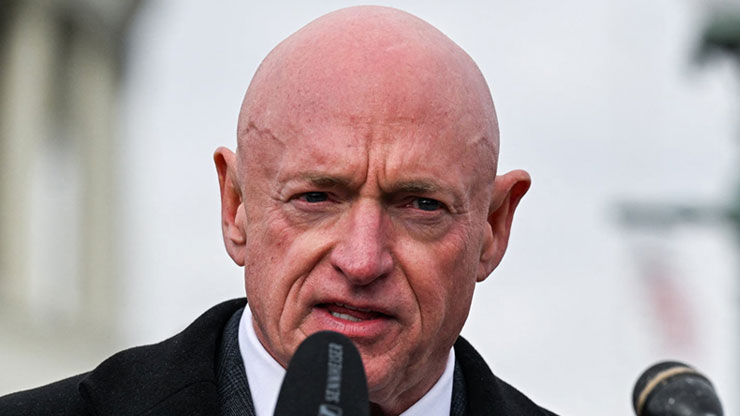
The political and military firestorm surrounding Arizona Democratic Senator Mark Kelly intensified Sunday after Secretary of Defense Pete Hegseth announced that Pentagon legal counsel will review Kelly’s public comments following a classified congressional briefing on U.S. weapons stockpiles.
During a national television appearance, Kelly revealed what he had just learned in a classified meeting, describing depleted American missile inventories, specifically referencing Tomahawk missiles, Patriot interceptors, THAAD systems, and other strategic weapons platforms.
Secretary Hegseth responded publicly, accusing Kelly of “blabbing” details from a classified briefing and questioning whether the senator had violated his oath.
The controversy is the latest chapter in an escalating conflict between Kelly and the U.S. military that has already placed the Arizona senator under intense scrutiny.
Months earlier, Kelly participated in a public video directed at U.S. military personnel encouraging service members to refuse “illegal orders.” The message crossed a dangerous line by encouraging troops to second-guess the lawful chain of command during a period of heightened geopolitical instability.
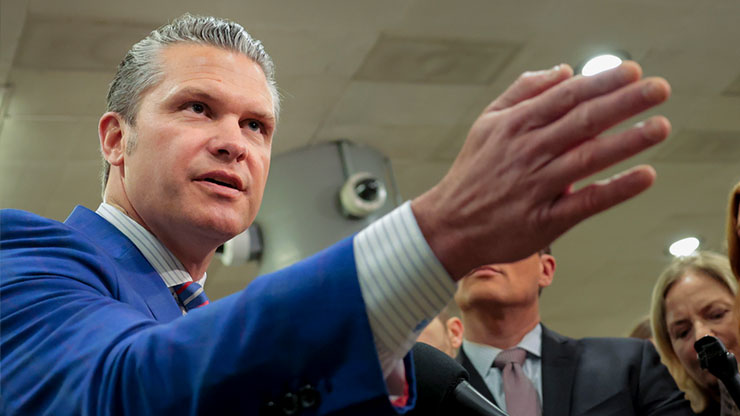
The American military is built on discipline, civilian control, and obedience to lawful command structures. While illegal orders should never be followed, critics argue that elected politicians publicly encouraging troops to scrutinize presidential directives creates ambiguity inside the ranks at precisely the wrong moment—the precise outcome Kelly advocated. They warn that once political actors begin inserting themselves between commanders and enlisted personnel, the chain of command itself becomes vulnerable to politicization.
Kelly’s critics also point to the irony of a retired Navy officer and astronaut — someone entrusted for decades with some of America’s most sensitive military and aerospace programs — now facing allegations that he publicly disclosed information just discussed in a classified setting.
Whether the Pentagon review ultimately produces legal consequences remains unclear. Legal analysts note that members of Congress possess broad speech protections, while retired military officers remain subject to certain military conduct standards under federal law.
Still, the optics are extraordinary.
An Arizona senator who once flew combat missions for the United States is now under Pentagon review after publicly discussing sensitive military readiness issues during a time of global instability and rising tensions with China and Iran.
For many Americans, the question is no longer simply whether Kelly’s comments were technically classified. The deeper question is why a sitting U.S. senator appears increasingly comfortable undermining confidence in America’s military leadership while publicly airing vulnerabilities that adversaries would eagerly exploit.
Leave a Reply