
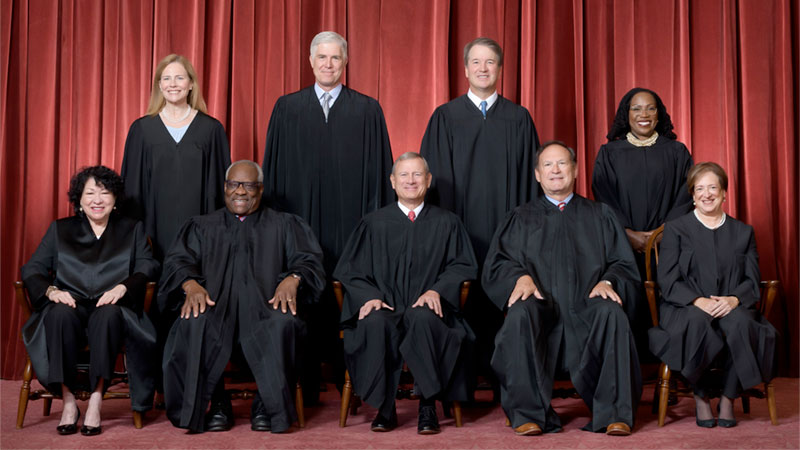
A political earthquake is rippling across America after a series of court rulings handed Republicans one of the biggest structural victories in modern congressional politics.
Over the weekend, the U.S. Supreme Court allowed Alabama to move forward with new congressional maps that favor Republicans, while the Virginia Supreme Court simultaneously struck down a Democrat-backed redistricting scheme that could have delivered four additional House seats to Democrats.
Taken together, the rulings may fundamentally alter the balance of power heading into the 2026 midterms.
For months, Democrats and media analysts assumed Republicans would suffer the traditional “midterm collapse” that typically strikes the president’s party. But suddenly, that assumption is in serious doubt.
The real story is not merely about district lines.
It is about the collapse of a decades-long legal regime that allowed courts, bureaucrats, and activist organizations to heavily influence how congressional districts were drawn across America.
The turning point came in the Supreme Court’s recent Louisiana v. Callais decision, which sharply narrowed the use of race-based redistricting mandates under the Voting Rights Act. The Court signaled that states possess broad authority to draw districts without being forced into highly engineered “majority-minority” configurations that critics argue often prioritized race over geography, communities, or traditional representation.
Republicans hailed the decision as a return to constitutional neutrality and a rejection of race-based political engineering.
Democrats reacted with panic.
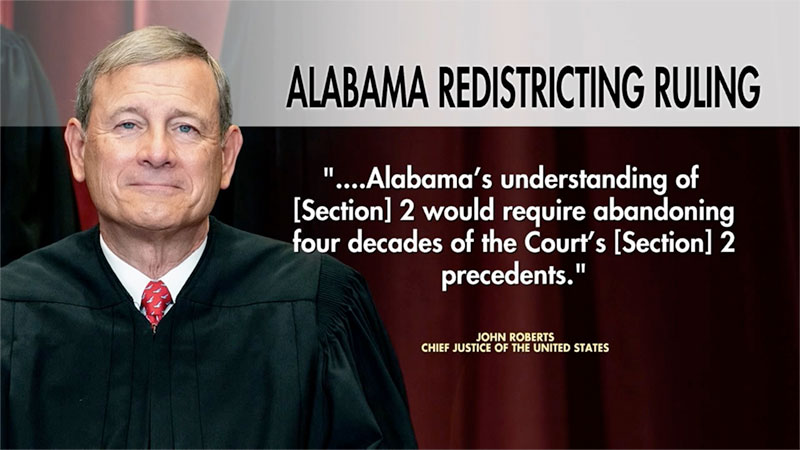
Almost immediately, Republican-led states began exploring aggressive redistricting opportunities in Alabama, Tennessee, Florida, and elsewhere.
Meanwhile, Democrats suffered a devastating setback in Virginia after the state supreme court invalidated a controversial Democratic-backed referendum and congressional map that critics described as a naked partisan gerrymander disguised as “fairness reform.” Analysts estimated the proposed map could have handed Democrats as many as four additional congressional seats.
Now even mainstream analysts are sounding alarms.
CNN data analyst Harry Enten warned this week that the new redistricting landscape could become a “nightmare” scenario for Democrats.
The implications are enormous.
Republicans currently hold only a razor-thin House majority. Yet with favorable new maps emerging in multiple states, Democrats may now need to win the national congressional vote by several percentage points simply to reclaim control of the House.
And beneath the legal arguments lies a deeper political reality that much of the corporate press refuses to admit:
Many Americans are growing tired of institutions using race, identity politics, and judicial intervention to manipulate electoral outcomes.
For years, voters were told that questioning redistricting practices amounted to “attacking democracy.” But increasingly, Americans are recognizing that both parties gerrymander whenever given the opportunity. The difference now is that the Supreme Court appears less willing to permit race-based constitutional theories to dominate the process.
That shift could reshape American politics for years.
The media will frame these rulings as partisan Republican victories — and politically, they certainly are.
But the larger story may be that the Supreme Court is slowly dismantling an era in which unelected judges and activist groups exercised enormous influence over the structure of American elections themselves.
And if this redistricting wave continues through the summer, the political establishment may soon discover that the 2026 midterms are no longer unfolding on the battlefield Democrats expected.
Leave a Reply