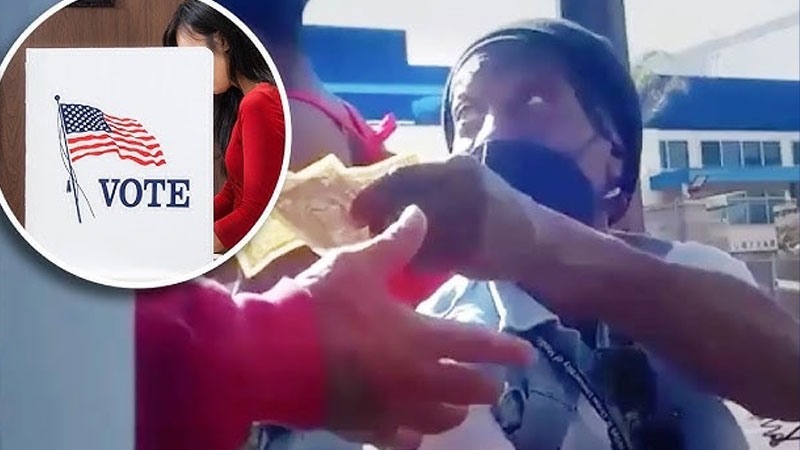
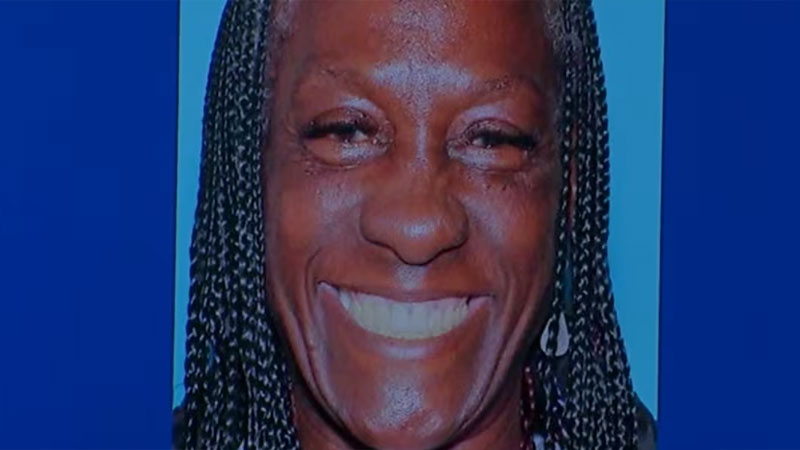
Brenda Lee Brown Armstrong is not accused of hacking voting machines. She is not accused of stuffing ballot boxes in the dead of night. What federal prosecutors allege is simpler, cruder, and in some ways more alarming: she paid derelict people on Los Angeles’ Skid Row to register to vote and sign ballot petitions. This is a felony.
According to the Department of Justice, Armstrong, 64, of Marina del Rey, also known as “Anika,” worked for years as a paid petition circulator. Prosecutors say she was paid by coordinators for collecting signatures from registered voters on ballot petitions, and that she regularly offered people on Skid Row small payments — usually $2 or $3 — to sign petitions. Starting no later than 2025, the DOJ says, she also began paying some people to complete voter registration forms.
That is not a paperwork mistake. That is a federal election crime. Hundreds, or thousands of federal crimes.
Armstrong has sought a plea deal, and has agreed to plead guilty to one felony count of paying another person to register to vote, a charge carrying up to five years in federal prison.
The most disturbing detail is not merely the cash for signatures and votes. It is the ‘address’ problem. Prosecutors say some homeless individuals did not have an address to place on the forms, and that Armstrong, on hundreds of occasions, provided her own former Los Angeles address. Because California automatically sends vote-by-mail ballots to registered voters, the DOJ warned that ballots in some homeless individuals’ names could potentially be sent to a residence where those individuals did not live or receive mail.
That is the vulnerability. Not every improper registration becomes an illegal vote. Not every suspicious form becomes a counted ballot. Homeless citizens have voting rights, and legitimate outreach to eligible voters is lawful. But paying people to register, supplying questionable addresses, and creating conditions where ballots may be mailed somewhere the voter does not live is exactly the kind of conduct that corrodes public trust in elections . . . for good reason.
The Los Angeles Times reported that federal officials began investigating Armstrong after video circulated by James O’Keefe showing people on Skid Row being paid for signatures. The team captured dozens of violations on camera. First Assistant U.S. Attorney Bill Essayli said, “Once we saw these videos, we went to work.”
This is where the story becomes larger than one woman. California has already seen another recent case in which a Costa Mesa woman pleaded guilty after registering her dog to vote and casting ballots in the dog’s name in prior elections. One ballot was reportedly counted.
Pennsylvania saw another major registration-fraud investigation after officials flagged roughly 2,500 suspicious voter registration applications before the 2024 election. Prosecutors later charged seven people, saying the alleged fraud appeared financially motivated rather than designed to change the election outcome.
Oregon officials also discovered more than 1,700 people had been mistakenly registered without proof of citizenship through DMV errors, with 30 confirmed to have voted, though officials said the cases appeared tied to clerical and system mistakes rather than intentional fraud by the individuals involved.
Georgia also became a flashpoint in the national election-integrity debate after investigators and watchdog groups raised concerns over absentee ballot handling, voter-roll maintenance, and signature-verification procedures following the 2020 election, casting doubt on tens of thousands of ballots in a state that narrowly elected Joe Biden over Donald Trump — just 11,779 votes.
Taken together, these cases do not prove a single nationwide conspiracy. But they do prove something Washington’s election establishment is far too eager to dismiss: the system has weak points, and bad actors can exploit them.
The public is repeatedly told that election fraud is too rare to matter. But that answer misses the point. A republic cannot run on blind trust. It must run on transparent, verifiable, enforceable procedures that make fraud difficult, detection likely, and punishment certain.
If a ballot can be mailed to an address where the voter does not live, that is a problem. If petition circulators are financially rewarded in ways that encourage fake or coerced registrations, that is a problem. If election officials only discover fraud after journalists, whistleblowers, or local clerks raise alarms, that is a problem.
And if officials respond to every concern by accusing citizens of undermining democracy, then they are the ones undermining democracy.
Election integrity is not voter suppression. It is the foundation of consent of the governed.
The Armstrong case should not be buried as a local oddity. It should force every state to examine whether its registration rules, ballot-mailing practices, petition systems, address verification procedures, and voter-roll maintenance are strong enough to withstand abuse.
Because once Americans believe votes can be manufactured, purchased, redirected, or carelessly mailed into the political void, confidence in elections collapses. And when confidence collapses, the legitimacy of government collapses with it.
Leave a Reply