
Newly released records expose a Pentagon contractor’s plans to store alleged exotic materials, a senator’s push for extraordinary secrecy, and military encounters that remain unexplained.
November 23, 2026 | Federalist Press
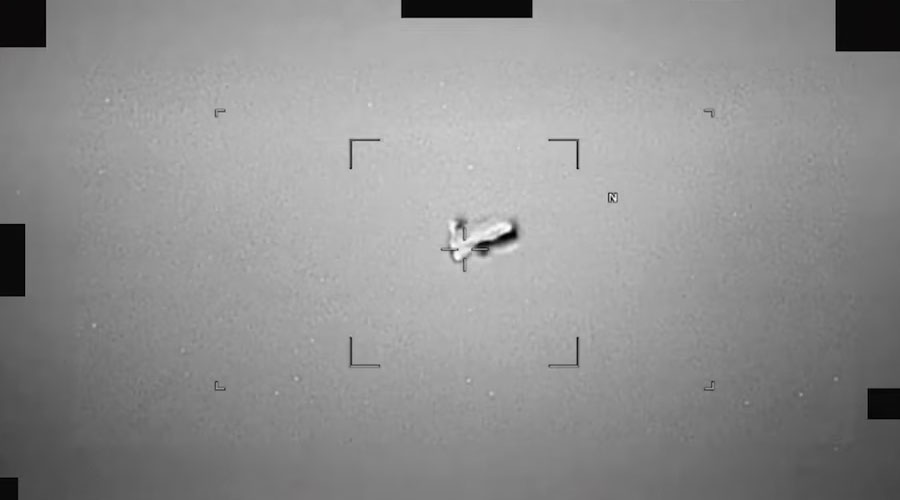
The Trump administration released its eighth collection of previously classified and historical UFO records Friday, November 20, opening another window into decades of government investigations involving unidentified aircraft, unusual radar encounters, alleged recovered materials, and research that sometimes ventured far beyond conventional aerospace science.
The latest installment of the Presidential Unsealing and Reporting System for UAP Encounters, known as PURSUE, contains 43 files, including 40 documents and three military videos. The cumulative archive now contains 521 records, representing one of the most extensive organized public releases of government UFO materials to date.
But the most revealing material may concern what the government was doing behind closed doors, rather than what its cameras recorded in the skies. Newly disclosed Defense Intelligence Agency documents reveal substantial federal spending on unconventional aerospace research, an elaborate plan to secure potentially exotic materials, and disagreements among officials over whether the research justified extraordinary secrecy. UAP Trail+2
A Secret Program and a Proposed Underground Vault
Among the most extraordinary documents is a 538-page report prepared in July 2009 by Bigelow Aerospace Advanced Space Studies (BAASS), a private contractor working under the Pentagon’s Advanced Aerospace Weapon System Applications Program, or AAWSAP.
The company, associated with billionaire aerospace entrepreneur Robert Bigelow, described an ambitious investigation that included historical UFO encounters, advanced propulsion theories, unusual biological effects, and reports of paranormal activity.
One particularly striking section outlined plans for a secure underground facility in North Las Vegas intended to store recovered hardware and potentially exotic biological specimens. The proposed structure would have been buried beneath approximately 15 to 20 feet of earth, with reinforced walls and elaborate security measures.
The report demonstrates that the contractor was actively seeking such materials. It does not establish that extraterrestrial technology or biological specimens had actually been recovered, nor does it establish that the vault was constructed. UAP Trail+1
Senator Harry Reid Wanted Extraordinary Secrecy
The release also illuminates the involvement of the late Senate Majority Leader Harry Reid, who helped secure approximately $22 million for the Pentagon research effort.
In June 2009, Reid requested that portions of the program receive restricted Special Access Program status, a level of security designed to tightly control access to sensitive government activities. He cited unconventional aerospace findings that he believed required extraordinary protection.
The newly assembled records reveal that the Defense Intelligence Agency declined to endorse that request. In November 2009, officials concluded that the contractor’s submitted research did not justify such restrictions.
Other documents expose a notable disagreement within the Pentagon. An October 2009 review praised the quality of the contractor’s scientific reports, while a subsequent assessment by senior intelligence officials characterized their value to the agency as limited.
That disagreement is important. It demonstrates that officials were seriously examining unconventional scientific possibilities, but also that the government itself remained divided over the significance of the results. NHI Anomalous+1
Radar Tracks Suggest an Object Traveling 1,650 MPH
One of the more intriguing contemporary cases involves eight radar detections recorded over the western United States in 2023.
The observations occurred over approximately 84 seconds at estimated altitudes between 55,000 and 70,000 feet. If the detections represented a single object, calculations suggest it traveled roughly 38.5 miles at an average ground speed of approximately 1,650 miles per hour, or Mach 2.5.
The apparent track also included a change in direction of approximately 39 degrees.
However, the Pentagon’s All-domain Anomaly Resolution Office (AARO) cautioned that the radar’s 12-second scanning interval did not establish that all eight returns originated from one aircraft or object.
Consequently, the case remains unresolved. The calculations describe a potentially remarkable event, but the available evidence cannot establish that a single craft performed those maneuvers. UAP Trail+1
Three Military Videos and an Aerospace Legend
Friday’s release also included three videos collected by U.S. Central Command in the Middle East during 2020, 2023, and 2026.
The footage shows small, unidentified areas of contrast recorded by military electro-optical and infrared systems. Some appear to change direction or move relative to the observing platform, although the available footage does not independently establish their distances, sizes, or velocities.
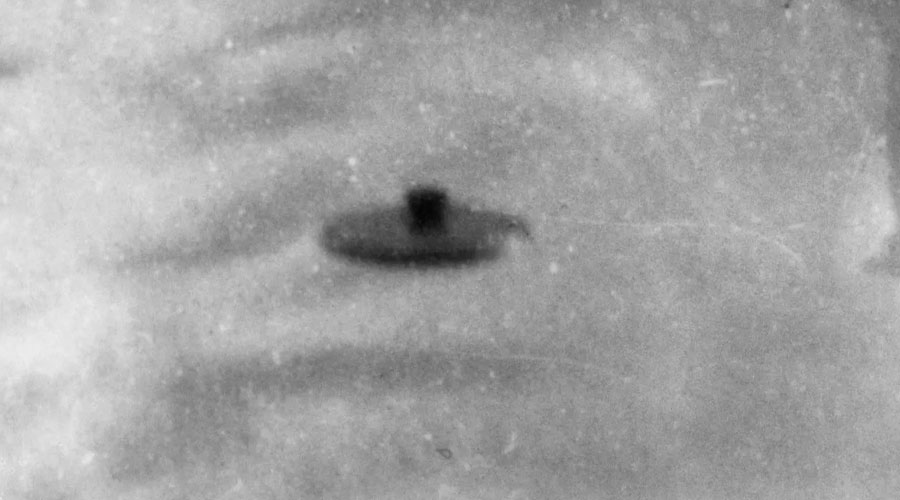
Another noteworthy document concerns Clarence “Kelly” Johnson, the legendary Lockheed engineer associated with the U-2 and SR-71 reconnaissance aircraft.
In December 1953, Johnson reported observing a dark, elliptical object near his California ranch. Lockheed flight personnel reported a similar observation in the vicinity of Point Mugu. Johnson, whose professional experience included some of America’s most advanced aircraft, regarded the encounter as further support for his belief that unconventional flying objects existed.
His account is historically significant because of his engineering credentials, although the sighting itself remains insufficient to establish the object’s identity or origin. UAP Trail+1
The CIA Considered UFOs a Psychological Warfare Problem
Six documents from 1952 provide another revealing perspective. At the height of Cold War tensions, CIA officials were concerned that widespread flying saucer reports could interfere with military warning systems, generate public alarm, or be exploited by the Soviet Union.
The documents discuss the intelligence implications of unexplained sightings and the possibility that UFO-related public anxiety could become a psychological warfare vulnerability.
These records establish that American intelligence officials considered the phenomenon worthy of national security attention more than seven decades ago. They do not establish that the CIA created the UFO phenomenon or possessed definitive knowledge of extraterrestrial visitors. Umbra+1
Skinwalker Ranch and the Boundaries of Government Research
Perhaps the most unexpected material concerns investigations at a Utah property widely known as Skinwalker Ranch.
The Bigelow contractor’s report describes a 2009 visit by three military investigators who reported unusual temperature changes, apparent aerial lights, and an unexplained shadowy figure. The larger investigation also examined historical claims involving livestock injuries, strange aerial objects, and other purported paranormal occurrences.
Such accounts have attracted considerable public interest, but they also raise legitimate questions about investigative standards. The reports document what witnesses and investigators described; they do not independently verify supernatural explanations.
Nevertheless, the fact that these subjects appeared in a report submitted under a Pentagon intelligence contract illustrates how broadly the government-funded research effort had expanded. UAP Trail+1
Transparency Is Only the Beginning
President Trump’s disclosure initiative has made available records that illuminate a complicated and sometimes contradictory history of federal UFO investigations. Some documents are newly public, while others place previously known accounts into a more complete official context.
The eighth release does not provide conclusive proof of extraterrestrial visitation. It does, however, document serious government attention to unexplained encounters, ambitious contractor investigations, substantial federal expenditures, and internal disputes about the credibility and usefulness of the resulting research.
It also leaves important questions unanswered. Were any exotic materials actually acquired? What became of the contractor’s proposed storage facility? Why did different Pentagon officials reach substantially different conclusions about the research? And how much additional evidence remains classified?
The administration has promised further releases. Those disclosures should be judged not simply by their volume, but by whether they provide the underlying data, corroborating evidence, and institutional accountability necessary to resolve these questions.
After decades of secrecy, the public deserves more than tantalizing reports and unexplained images. It deserves the evidence needed to determine what happened, what the government knew, and whether the money spent investigating these mysteries produced anything of lasting scientific or national security value.
Leave a Reply