New federal charges allege that senior FBI personnel misled Congress about their involvement in the Hunter Biden investigations. The case revives questions about the FBI’s foreign-influence operation, the 51 former intelligence officials who challenged the laptop story, the Biden campaign’s role in promoting their statement, and the suppression of reporting before the presidential election.
Federalist Press | October 23, 2026
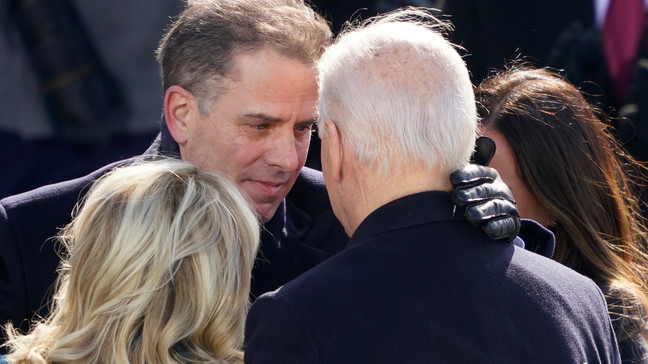
WASHINGTON — Six years after the New York Post published its explosive reporting about Hunter Biden’s abandoned laptop, two former senior FBI officials have been arrested and charged with making false statements to Congress concerning their knowledge of the bureau’s investigations into the then-presidential candidate’s son.
The arrests of Nikki Cole Floris and Bradley Benavides on Friday, October 23, reopen one of the most contentious episodes of the 2020 presidential campaign: the collision of an authentic laptop, an ongoing federal investigation, false warnings about Russian election interference, a fraudulent public statement signed by 51 former intelligence officials, and decisions by major social-media platforms to restrict circulation of damaging reporting about the Biden family. Never before has there been such a dangerous convergence of government power to overthrow a federal election.
The newly filed criminal complaint does not charge either defendant with suppressing the laptop story or conspiring to elect Joe Biden. Instead, prosecutors allege that both knowingly misrepresented their awareness of and participation in FBI investigations when questioned by congressional investigators in 2023.
The government’s 27-page supporting affidavit describes internal FBI activities and communications that provide new material for examining how the bureau handled information concerning Hunter Biden during the final months of the 2020 campaign.
The case therefore presents two questions. The immediate legal question is whether Floris and Benavides lied to Congress. The larger historical question is whether the Biden government’s efforts to substitute its contrived story of foreign disinformation will be dealt with in a just manner, or swept under the rug.
The October 23 Arrests
According to the Justice Department, Floris and Benavides surrendered to authorities on Friday after federal prosecutors charged them with violating 18 U.S.C. § 1001, the statute prohibiting materially false statements in matters within federal jurisdiction.
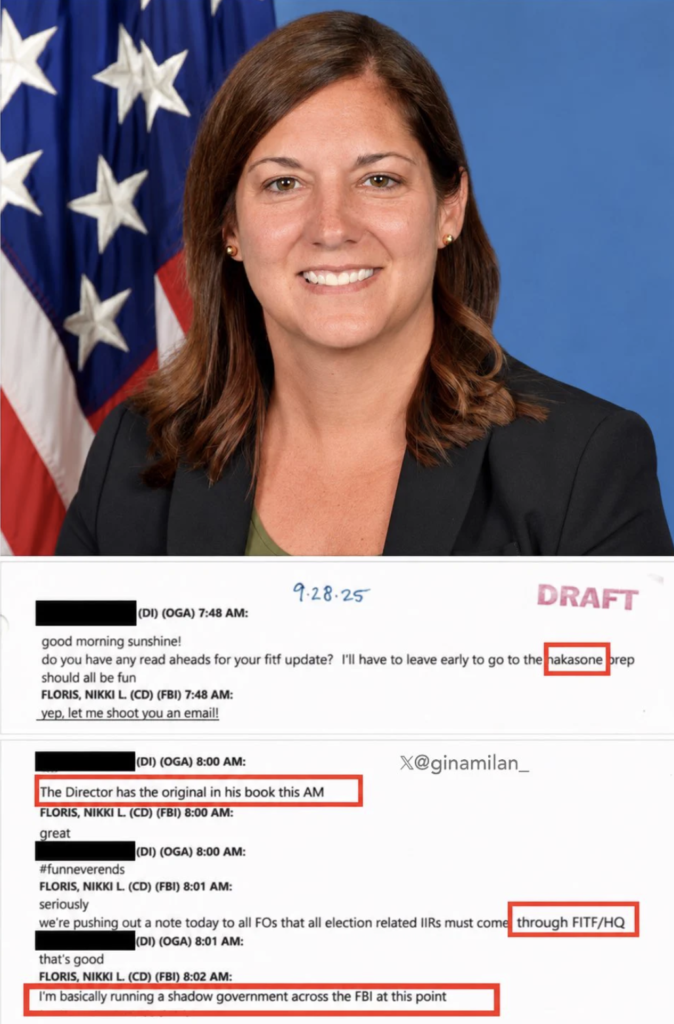
Floris served as deputy assistant director and functional head of the FBI’s Foreign Influence Task Force, or FITF, from approximately mid-2019 through mid-2022. Benavides served as a section chief within that task force from mid-2019 through the 2020 presidential election.
The task force was responsible for examining foreign efforts to influence American political institutions and elections. Its work included Russian influence operations, but its jurisdiction eventually expanded to other foreign actors.
Both officials were questioned during the House Judiciary Committee’s investigation of the FBI’s handling of matters involving Hunter Biden.
The government alleges that Floris provided materially false information during her July 19, 2023, congressional interview and that Benavides did likewise on September 28, 2023.
The supporting affidavit asserts that contemporaneous FBI messages, emails, meetings and witness accounts contradict their descriptions of their involvement.
U.S. Attorney Jeanine Pirro characterized the allegations as a serious breach of congressional accountability, emphasizing that FBI officials have an obligation to provide truthful information to lawmakers.
FBI Director Kash Patel also announced the arrests, saying that the two former officials had allegedly misled Congress about matters related to the 2020 election.
The FBI Already Had the Laptop
One of the most significant details in the affidavit concerns what federal investigators knew before the laptop became a national political controversy.
The government states that the FBI’s Baltimore Field Office obtained the contents of Hunter Biden’s laptop from a Delaware computer repair shop on December 9, 2019.
The bureau was already investigating Hunter Biden for tax and money-laundering offenses. Internally, the investigation used the code name “Sportsman.”
The affidavit further states that an FBI official confirmed during an October 2020 meeting that the bureau had obtained the laptop, that it belonged to Hunter Biden, and that it related to the ongoing investigations.
This matters because the public debate in October 2020 was not simply about whether a suspicious document had appeared on the internet. Federal investigators had already possessed and examined the computer’s contents for months.
The laptop’s authenticity was later reinforced in federal court. In January 2024, prosecutors stated that information recovered from the computer corresponded with material obtained from Hunter Biden’s Apple iCloud account. During his federal firearms trial in June 2024, an FBI witness authenticated the laptop, and the device was introduced as evidence.
Those developments established that the underlying computer was genuine, notwithstanding.
The FBI’s Secretive “Round River” Operation
The most intriguing new material concerns an FBI project known as Round River.
According to the affidavit, analysts associated with the Foreign Influence Task Force began working in 2019 on an effort to examine derogatory information involving Hunter Biden and other subjects for indications of Russian disinformation.
The government describes Round River as an intelligence effort that scrutinized informant reporting and other information potentially associated with foreign influence.
The affidavit identifies Floris and Benavides as officials who reviewed and approved an initial Round River report in September 2020. It also describes their participation in meetings concerning proposed defensive briefings, which are intended to warn people who may be targets of foreign intelligence activity.
A particularly notable September 24, 2020, communication concerned how the FBI might use an informant network to transmit information. The affidavit quotes an official discussing ways to send selected information back through that network.
The statement is significant enough to warrant examination of its full operational context. Intelligence agencies routinely assess the reliability of informants and attempt to detect disinformation. But the precise methods, objectives and consequences of Round River deserve scrutiny because the project operated during a presidential election involving the father of one of its subjects.
October 14, 2020: The Day the Laptop Story Broke
The New York Post published its initial laptop reporting on October 14, 2020, less than three weeks before the presidential election.
The newspaper described emails and other material concerning Hunter Biden’s overseas business dealings, including his relationship with the Ukrainian energy company Burisma.
The publication immediately triggered a national controversy. Supporters of Donald Trump argued that the material raised serious questions about the Biden family’s business relationships and the probability that Hunter had benefited from his father’s public office.
Democrat operatives immediately launched a massive public campaign to cast doubt on the provenance of the materials and issued feigned warnings that foreign intelligence services were attempting to influence the election.
The new criminal affidavit documents how the FBI’s Foreign Influence Task Force responded internally.
According to prosecutors, Floris and Benavides received communications from FBI personnel concerning the laptop story, including questions about whether the bureau possessed the computer and how it should respond to congressional inquiries.
Benavides also received information about a technology-industry call during which participants discussed questions concerning the laptop and Burisma.
The affidavit describes an FBI task-force official communicating with Twitter on October 14 about the laptop reporting. It further recounts congressional testimony concerning an FBI employee who reportedly indicated to a Twitter representative that the laptop was genuine.
Those details are consequential because as a result, Twitter in fact restricted distribution of the New York Post story.
The newly disclosed communications provide additional evidence of contact between federal investigators and social-media companies at the moment the story was being restricted.
The Social-Media Suppression Controversy
The handling of the laptop story by major technology platforms became one of the defining media controversies of the 2020 election.
Twitter prevented users from sharing links to the original New York Post reporting and temporarily restricted the newspaper’s account. Facebook reduced the distribution of the story.
The decisions were criticized by Republicans and civil-liberties advocates who argued that politically significant journalism was being restricted at precisely the moment voters needed access to it.
Later disclosures added another dimension. Former Twitter executive Yoel Roth described regular meetings with federal law-enforcement personnel concerning potential foreign hacking and information operations. According to his account, officials insisted that material associated with political campaigns might emerge through hack-and-leak operations, and that things would go very badly for the social media giant if it failed to kill the story.
Mark Zuckerberg separately acknowledged that Facebook had received FBI pressure to censor the Hunter Biden Laptop contents story.
The new criminal complaint adds details about FBI officials’ knowledge of the laptop and their involvement in untruthful related communications.
The 51 Intelligence Officials and Their October 2020 Statement
Five days after the New York Post published its story, 51 former intelligence and national-security officials signed a public statement questioning whether the release of the Hunter Biden material was connected to a Russian information operation, although they all knew it was not.
The October 19 statement became one of the most influential documents of the presidential campaign’s final weeks.
Its signatories included former Director of National Intelligence James Clapper, former CIA Director John Brennan, former CIA Deputy Director Michael Morell, and former CIA Director and Defense Secretary Leon Panetta.
Their former positions gave the statement considerable authority. To ordinary voters, a document endorsed by dozens of former intelligence officials could appear to reflect the informed judgment of people familiar with classified intelligence and Russian interference operations.
The statement suggested that the laptop disclosures displayed characteristics associated with Russian influence activity.
In particular, Joe Biden cited the former officials during his final debate with Donald Trump, portraying their assessment as support for dismissing the laptop allegations as a Russian operation.
The distinction between a warning about possible foreign influence and a definitive finding that the laptop was fabricated became central to the controversy.
Later authentication of the computer established that the underlying laptop was genuine.
The Biden Campaign’s Role in the Intelligence Statement
The origins of the 51-person statement were examined extensively by Republican-led congressional committees.
Their investigations established that former CIA Deputy Director Michael Morell organized the contrived statement after communicating with Antony Blinken, who was serving as a senior adviser to Joe Biden’s presidential campaign.
According to Morell’s congressional testimony, Blinken’s contact helped prompt him to organize the statement. Morell also acknowledged that he wanted Joe Biden to win the election and that the statement could provide the campaign with a useful response to the laptop reporting.
Those admissions formed the basis for the House Judiciary and Intelligence Committees’ conclusion that the Biden campaign played a role in generating a statement intended to discredit authentic damaging reporting.
The committees went further in June 2024, releasing an interim report describing contacts between the statement’s organizers and CIA personnel.
The report found that some individuals presented publicly as former intelligence officials still held active CIA contracts. Among those identified were Morell and former CIA Inspector General David Buckley.
That fact raised questions about the relationship between the statement’s political purpose and the professional obligations of individuals who retained government connections.
The committees also reported that senior CIA officials were informed about the statement before publication and that the agency’s prepublication review process had been involved.
Prepublication review is intended to prevent improper disclosure of classified information.
The involvement of current contractors and agency review personnel created legitimate questions about whether intelligence-community relationships were being used to lend credibility to a campaign-related message.
Clapper, Brennan and the Obama-Era Intelligence Establishment
The involvement of James Clapper and John Brennan gave the 2020 statement particular prominence because both had occupied senior intelligence positions during Barack Obama’s presidency.
Clapper served as director of national intelligence, while Brennan served as CIA director. Their names were associated with the intelligence community’s exaggerated response to very limited Russian interference in the 2016 election and the broader national-security controversies that followed.
Their participation in the Hunter Biden statement therefore connected the 2020 dispute with an established group of former senior intelligence officials who remained influential in public debate after leaving government service.
But their involvement should be understood precisely. The evidence establishes that Clapper and Brennan signed the October 2020 statement.
The most direct documented connection between the Biden campaign and the 51-person statement remains the interaction involving Blinken and Morell.
Hunter Biden’s Criminal Cases and His Father’s Pardon
The laptop controversy cannot be separated from what happened after the 2020 election.
Hunter Biden eventually faced federal criminal proceedings involving firearms and taxes. In June 2024, a Delaware jury convicted him of three felony firearms offenses connected to his purchase of a handgun while using illegal drugs. He also pleaded guilty in California to federal tax charges involving substantial unpaid taxes.
Those proceedings established that Hunter Biden had committed criminal offenses.
In December 2024, President Joe Biden issued his son a sweeping federal pardon, reversing repeated public assurances that he would not use his presidential authority to spare Hunter from the consequences of his criminal acts.
The pardon covered federal offenses committed over a broad period extending from January 2014 through December 2024.
The decision generated substantial criticism because it followed years of public assurances that the president would not intervene.
The Larger Question: Intelligence Power and American Elections
The Hunter Biden laptop controversy illustrates a difficult problem at the intersection of national security, journalism and electoral politics.
Federal intelligence and law-enforcement agencies have a legitimate responsibility to identify foreign interference. Russian operations against American elections are real subjects of national-security concern, and officials must be able to warn relevant institutions if credible threats emerge.
But those responsibilities create opportunities for serious mistakes and potential abuses.
When government officials communicate with social-media platforms about politically sensitive material, their assessments can influence what millions of voters see. When former intelligence officials use their credentials to characterize damaging political reporting, their statements can carry authority far beyond that of ordinary campaign advocates.
And when federal officials testify before Congress about their activities, the public depends upon those statements being truthful.
The October 23 arrests place that last obligation at the center of a federal criminal case.
The government now alleges that two officials responsible for protecting the 2020 election from foreign influence concealed aspects of their own involvement in investigations concerning the son of a presidential candidate.
Those allegations demand careful judicial examination. They also justify continued scrutiny of the institutional decisions surrounding the laptop story.
A Controversy That Has Outlasted Two Presidencies
The Hunter Biden laptop story began as a dispute over a computer and its contents. It became a dispute over media suppression, intelligence assessments, campaign messaging and the integrity of federal investigations.
The laptop itself was immediately authenticated and eventually used in federal court. Hunter Biden was convicted of firearms offenses, pleaded guilty to tax charges and received a presidential pardon. Congressional investigators documented contacts between the Biden campaign and the organizer of the 51-person intelligence statement, along with continuing CIA relationships involving some of its signatories.
Now two former FBI officials face criminal charges over what they told Congress about their roles in the underlying investigations.
The public has a right to know whether federal officials accurately represented what they knew, whether intelligence assessments were communicated responsibly, and whether political considerations influenced decisions that affected the flow of information during a presidential campaign.
The immediate question before the courts is whether two former FBI officials lied to Congress. The larger question for Congress and the public is whether the institutions entrusted with protecting American elections maintained the independence, transparency and accountability those responsibilities require.
It appears that the Biden administration was guilty of conducting subterfuge and lawfare to steal the 2020 election.
Leave a Reply