A NYT investigation reveals how Democratic operatives sought to populate Alaska’s Senate ballot with fake candidates who could draw votes from the Republican incumbent. Now federal subpoenas, a state investigation and congressional inquiries are raising questions about the operation’s organizers and its legality.
Federalist Press | October 31, 2026
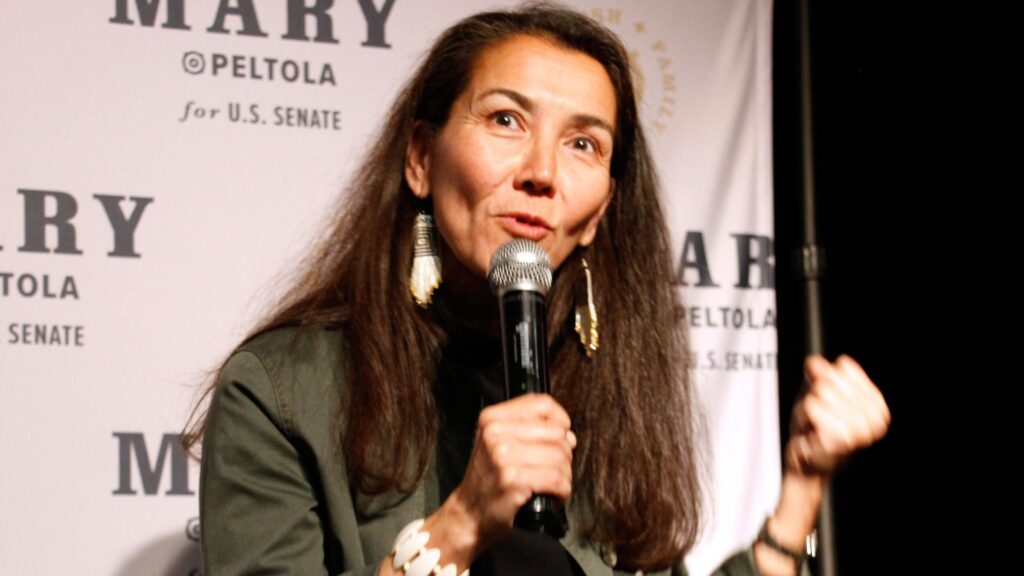
WASHINGTON — For months, Alaska Republicans alleged that the appearance of a second candidate named Dan Sullivan in the state’s U.S. Senate race was no coincidence. They suspected that Democratic operatives had recruited a political newcomer with the same name as Republican incumbent Senator Dan S. Sullivan, hoping to confuse voters and divert enough votes to help Democratic challenger Mary Peltola.
Peltola’s campaign repeatedly denied involvement. The Democratic Senatorial Campaign Committee, which coordinates Democratic Senate campaigns nationally, likewise denied recruiting competing candidates.
Then, on October 28, The New York Times published an extensive investigation revealing that operatives associated with Peltola’s campaign and national Democratic organizations had indeed worked on a secret candidate-recruitment operation. The newspaper’s findings were based on interviews with 12 people, dozens of text messages and documents connected to a possible lawsuit against the campaign.
The revelations have now triggered investigations at both the federal and state levels, while congressional investigators are demanding answers from people identified as participants.
Find Every Dan Sullivan in Alaska
According to the Times, the operation began in the summer of 2025, when a member of Peltola’s campaign staff received an unusual assignment: Search Alaska’s voter records and identify people named Dan Sullivan.
The purpose, according to the investigation, was to find someone sharing the Republican senator’s name who might be persuaded to enter the race. On Alaska’s four-candidate general-election ballot, a second Dan Sullivan could potentially draw support away from the incumbent, particularly among voters who failed to distinguish between the two candidates.
The effort eventually produced Dan J. Sullivan, a retired teacher from Petersburg, a small community in southeastern Alaska. He entered the Senate contest despite having no established statewide political organization.
The Times reported that the operation went considerably further than recruiting one namesake candidate. Campaign-associated personnel also sought other candidates who might divide Republican support, and the effort included discussions about creating a separate political party to attract conservative voters.
Internally, participants referred to the undertaking as the ballot composition project.
The newspaper identified Jerid Kurtz, a Democratic political operative with experience in Ohio and Georgia, as a central figure in the recruitment effort. Kurtz traveled throughout Alaska, sometimes using a pseudonym while approaching potential candidates.
The Times also documented the recruitment of Gerald Heikes, another candidate appearing on the general-election ballot as a Republican.
How Far Up the Democratic Organization Did It Go?
One of the most consequential aspects of the investigation is its account of participation by national Democratic campaign personnel.
The Times reported that Peltola campaign lawyers and senior aides at the Democratic Senatorial Campaign Committee participated in discussions about the candidate-recruitment effort. The DSCC is the national organization responsible for coordinating Democratic efforts to win Senate seats.
Former Peltola campaign manager Elisa Rios, who was dismissed in August, described the operation to the newspaper and said Peltola was aware of it, although she was not directly involved.
Rios subsequently attempted to retract her statements. The Times nevertheless published its findings, explaining that her earlier accounts were corroborated by other reporting and documentary evidence.
Peltola’s campaign continues to deny recruiting competing candidates, and the DSCC has denied involvement. Peltola dismissed the controversy as a distraction while campaigning Wednesday.
The reporting does not establish that Senate Democratic leader Chuck Schumer personally authorized the operation. His connection is institutional rather than a documented role in directing the recruitment effort.
Nevertheless, the evidence of participation by national campaign personnel raises questions about how such operations are supervised, financed and disclosed to voters.
Federal Subpoenas and a State Investigation
The controversy intensified Thursday when the New York Times reported that the Justice Department had issued dozens of subpoenas to individuals believed to have knowledge of the recruitment operation.
Alaska Governor Mike Dunleavy separately directed the state’s Department of Public Safety to investigate whether the reported conduct violated state election laws. State officials confirmed that an investigation had begun.
House Oversight Committee Chairman James Comer also sought interviews with Rios and Kurtz, two individuals prominently identified in the Times investigation.
Meanwhile, the Justice Department has filed a federal lawsuit seeking to prevent certification of the Senate election under specified circumstances: if the incumbent loses by fewer votes than those received by the other Dan Sullivan.
The legal challenge is controversial. Alaska election officials have taken steps to distinguish the candidates on the ballot, and the Alaska Supreme Court previously ruled that both Sullivans could remain in the race.
Legal experts have also questioned whether the federal government has grounds to intervene in certification based on the recruitment of a competing candidate.
These proceedings raise separate issues. Investigators must determine whether any election, campaign-finance or disclosure laws were violated, while the courts must consider whether the reported conduct provides a lawful basis for interfering with election certification.
Voters Had Already Begun Casting Ballots
The timing of the revelations adds urgency to the controversy.
By the time the Times published its investigation, approximately 58,000 Alaskans had already voted, according to Fox News reporting published October 29. That meant many voters had cast their ballots before learning the details of the alleged recruitment operation.
Alaska’s ranked-choice voting system allows voters to rank candidates in order of preference. But the system does not eliminate the possibility that similar candidate names could confuse some voters, particularly if they do not rank additional choices.
Republican Senator Lisa Murkowski, who has supported Democrat Peltola in a previous election, criticized the revelations and called for a truthful accounting from the Democratic campaign.
The Questions Investigators Must Answer
The New York Times investigation has transformed the Alaska controversy from a dispute over suspicious circumstances into a documented account of organized political activity.
The most important unanswered questions concern who authorized the recruitment effort, what resources supported it, whether any campaign-finance rules were violated, and whether the candidates themselves knowingly participated in an effort intended to confuse voters.
The investigation must also establish the extent of Peltola’s personal knowledge and determine whether the public denials by her campaign and the DSCC were consistent with their internal records.
Those are questions that subpoenas, interviews and documentary evidence may help resolve.
The larger issue extends beyond Alaska. Political parties have legitimate reasons to recruit candidates and compete strategically, but voters also have a legitimate interest in knowing when a candidacy is encouraged or supported by people whose political objectives differ sharply from those of the candidate’s apparent constituency.
The Alaska case now provides an unusually detailed example of how a political organization can attempt to shape an election not merely by persuading voters, but by influencing which names appear on the ballot.
Whether that strategy crossed a legal boundary remains for investigators and courts to determine. What is no longer merely speculation is that a coordinated candidate-recruitment operation existed, and that its connections to Democratic campaign personnel were substantially more extensive than the public had previously been told.
With Election Day approaching, the demand for a complete accounting is unlikely to disappear.
Leave a Reply