A lifelong liberal says his party is being “colonized” by democratic socialists. The question is no longer whether the Democratic Party has changed—but how much, and how far will it go.

For years, Republicans have warned that the Democratic Party has steadily moved left, far left, embracing policies that greatly expand government, increase redistribution, and elevate the role of the state in every aspect of American life. Despite overwhelming evidence, Democrats have generally dismissed those criticisms as partisan rhetoric.
Now, however, one of the country’s best-known liberal commentators is raising many of the same concerns.
Bill Maher is hardly a conservative. Not even a moderate Democrat. He is firmly rooted in the far left. For decades, he has identified with liberal causes, criticized Republican presidents, and supported Democratic candidates. Yet in recent interviews and on his HBO program, Maher has expressed growing concern that the Democratic Party is being, in his words, “colonized” by democratic socialists and increasingly radical activists. He has even remarked that his vote is now “in play” because of the party’s direction.
That observation is significant precisely because it comes from someone who has long been a thought leader of the American left.
Two Parties—or One Coalition?
The Democratic Party and the Democratic Socialists of America remain separate organizations, technically.
The Democratic Party is a broad coalition ranging from moderates to progressives. The DSA is an independent organization that advocates substantially expanding the role of government in healthcare, housing, education, labor policy, and parts of the economy, while also supporting greater worker ownership and cooperative enterprises. In other words, it advocates for state ownership of the means of production and distribution, the touchstone of Marxist and Leninist communism.
Yet in recent years, the distinction between Democrats and Democratic Socialists has become less clear in the public mind.
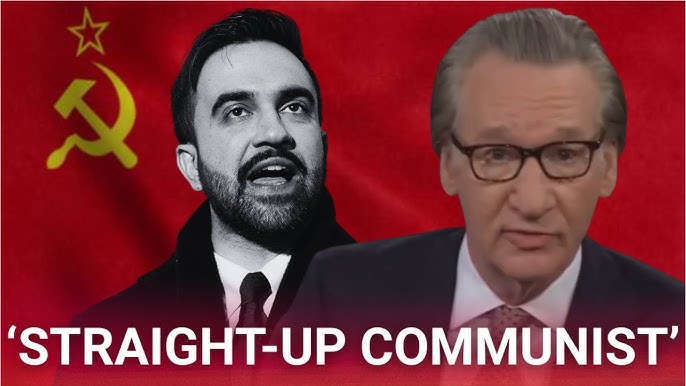
Several elected officials identify as democratic socialists, or have received DSA support. Policy proposals once associated primarily with the party’s progressive wing—such as Medicare for All, tuition-free public college, wealth taxes, and broad student-debt forgiveness—have increasingly become part of mainstream Democratic debate.
Maher’s concern is not that every Democrat has become a democratic socialist. It is that ideas once considered outside the party’s mainstream are exerting greater influence over its direction.
The Shift in Priorities
Many mainstream Democrats continue to support a regulated market economy, private enterprise, and incremental reform. Democratic socialists generally advocate more sweeping structural changes to the economy, including expanded public ownership or worker control in most sectors.
There is nevertheless meaningful overlap on several policy questions. Both generally support broader access to healthcare, although they differ on how far government should go. Both support stronger labor protections, though democratic socialists typically seek more extensive workplace restructuring. Both support addressing climate change, though they often differ over the balance between government planning and market incentives. Both favor making higher education more affordable, though the DSA generally advocates tuition-free public higher education as a permanent policy.
The debate is therefore less about whether there is any overlap and more about how far the Democratic Party should move toward the DSA’s vision.
Maher’s Warning
Maher has argued that many Democratic politicians are not themselves radicals, but that they have become reluctant to challenge the party’s most ideological activists. He has criticized slogans and positions such as calls to abolish police, prisons, or borders, and he has warned that embracing such ideas risks alienating many Americans.
His criticism is noteworthy because it comes from someone who still describes himself as a liberal.
Rather than urging the party to move right, Maher argues that it has drifted away from the pragmatic liberalism associated with previous Democratic leaders and toward a more ideological politics.
Whether one agrees with that assessment or not, it reflects an active debate within the Democratic coalition itself.
The Larger Question
Every major political party evolves. The Republican Party today differs in important respects from the Republican Party of Ronald Reagan or George W. Bush.
Likewise, the Democratic Party has changed significantly over the past several decades. The question confronting voters is not simply whether the party has moved left. It is how they view that evolution.
Supporters argue that expanded government programs, stronger regulation, and greater redistribution are necessary responses to modern economic challenges. Critics contend that those policies increase government dependence, reduce economic flexibility, and gradually shift decision-making from individuals and markets to political institutions.
That debate is likely to define American politics for years to come, unless action is taken immediately to eradicate this leftward march toward communism from our nation.
Why Maher’s Voice Matters
Political labels are often dismissed when they come from ideological opponents. They are harder to ignore when they come from longtime allies.
Bill Maher’s recent comments do not settle the debate over the Democratic Party’s future. They do, however, demonstrate that concerns about the party’s ideological direction are no longer coming only from conservatives.
When one of America’s most recognizable liberal voices publicly warns that his own party is being “influenced”colonized” by democratic socialists and says his vote is “in play,” it suggests that the conversation has moved well beyond partisan talking points.
Whether Democrats view that as a warning or an opportunity will shape not only their party’s future—but perhaps the nation’s as well.
Leave a Reply