
Adult stem cells are transforming medicine, offering new possibilities for treating devastating diseases without destroying human embryos. Fifteen years after Arizona physician Roger Nocera championed their potential, Washington must make regenerative medicine a national priority.
Federalist Press | November 14, 2026

More than a decade ago, an Arizona physician named Roger M. Nocera, M.D., was promoting a vision of medicine that sounded almost too extraordinary to believe. Instead of relying primarily on drugs to suppress symptoms or surgery to remove damaged tissue, what if physicians could harness the human body’s own biological repair mechanisms to restore health?
The answer, Nocera believed, lay in adult stem cells, remarkable cells found in the human body that can participate in tissue maintenance, influence inflammation and, under appropriate conditions, develop into specialized cell types.
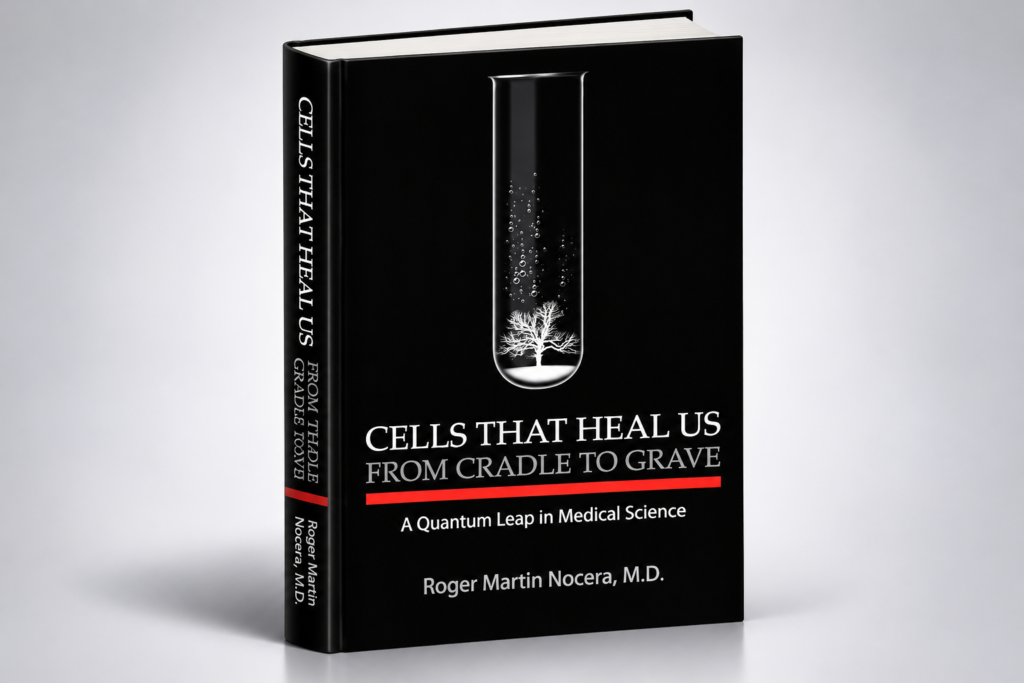
In 2011, Nocera published Cells That Heal Us From Cradle to Grave: A Quantum Leap in Medical Science, arguing that regenerative medicine could eventually transform the treatment of some of humanity’s most debilitating diseases.
His enthusiasm grew out of research involving adult-derived cells and treatments being developed in Costa Rica and Panama, where scientists and physicians were experimenting with techniques that American regulators had not authorized for routine clinical use.
Fifteen years later, the scientific possibilities are clearer, the treatments more sophisticated, and the evidence of genuine therapeutic success considerably stronger.
Yet many of the most promising applications remain confined to clinical trials.
The question America should be asking is no longer whether adult stem cells deserve serious medical attention. They unquestionably do.
The question is whether the United States is doing enough to bring safe, effective regenerative treatments to patients who desperately need them.
Roger Nocera and the Promise of Regenerative Medicine
Nocera, a radiologist who practiced in Arizona and Florida, became involved with researchers investigating the therapeutic possibilities of mesenchymal stem cells, commonly called MSCs.
He served as chief medical officer of Medistem, Inc., founded Amnion Cytokine Therapy, and worked with physicians and scientists associated with experimental treatment programs in Central America.
Among his important professional relationships was Dr. Neil Riordan, whose Stem Cell Institute in Panama became internationally known for investigating mesenchymal cell therapies.
In an epilogue Nocera contributed to Riordan’s book Stem Cell Therapy: A Rising Tide, he recalled their early discussions about mesenchymal cells and their potential influence on inflammation and healing.
The scientific premise was compelling. Certain cells found in adult tissues possess properties that may help regulate immune activity and support the body’s response to injury.
Nocera believed these capabilities could eventually produce treatments for conditions that conventional medicine had struggled to address.
His predictions sometimes extended beyond what clinical research had established. But his central conviction, that living cells could become powerful therapeutic tools, has been vindicated in important areas of medicine.
The Extraordinary Possibilities of Fat and Umbilical Cord Cells
One of the attractions of adult stem cell research is that useful cells can be obtained from several accessible sources.
Human fat, or adipose tissue, contains populations of cells with regenerative and immunomodulatory potential. Researchers can obtain this tissue through liposuction, isolate selected cells, and investigate their use in experimental treatments.
Umbilical cords provide another important source. Cord blood contains blood-forming stem cells, while the surrounding cord tissue, including a substance called Wharton’s jelly, contains mesenchymal stromal cells.
The distinction matters because these cells perform different biological functions and cannot be assumed to treat the same diseases.
Early treatment programs associated with Riordan and Nocera investigated methods of obtaining cells from these sources and multiplying them in laboratory cultures.
Through controlled expansion, scientists can increase the number of cells available for research or treatment. Some experimental protocols then administer the expanded cells intravenously, introducing them into the patient’s bloodstream.
Cells derived from a patient’s own tissues are known as autologous cells. Cells obtained from another person are allogeneic.
Mesenchymal cells possess properties that can influence immune responses, which has encouraged research into donor-derived therapies. But they are not universally immune to rejection, and the safety of donor cells depends on the particular product and clinical circumstances.
These approaches remain attractive because they offer the possibility of developing living-cell treatments from sources that do not require destroying embryos.
How the Body Calls for Help
Perhaps the most fascinating discovery underlying regenerative medicine concerns the body’s ability to communicate with cells involved in healing.
When tissue is injured, it releases chemical signals that can recruit immune cells and certain stem or progenitor cells.
Researchers have identified several of the signaling systems involved, including a relationship between a molecule called CXCL12, also known as SDF-1, and a cellular receptor called CXCR4.
These signals can influence how responsive cells migrate toward areas of injury or inflammation.
Scientists call the process cell homing.
For researchers such as Nocera, the implications were profound. If injured tissues naturally produce signals that attract cells involved in repair, perhaps physicians could strengthen those processes by administering additional therapeutic cells.
Instead of treating every damaged organ through a separate surgical procedure, researchers could investigate whether cells introduced into the bloodstream might respond to the body’s own chemical signals.
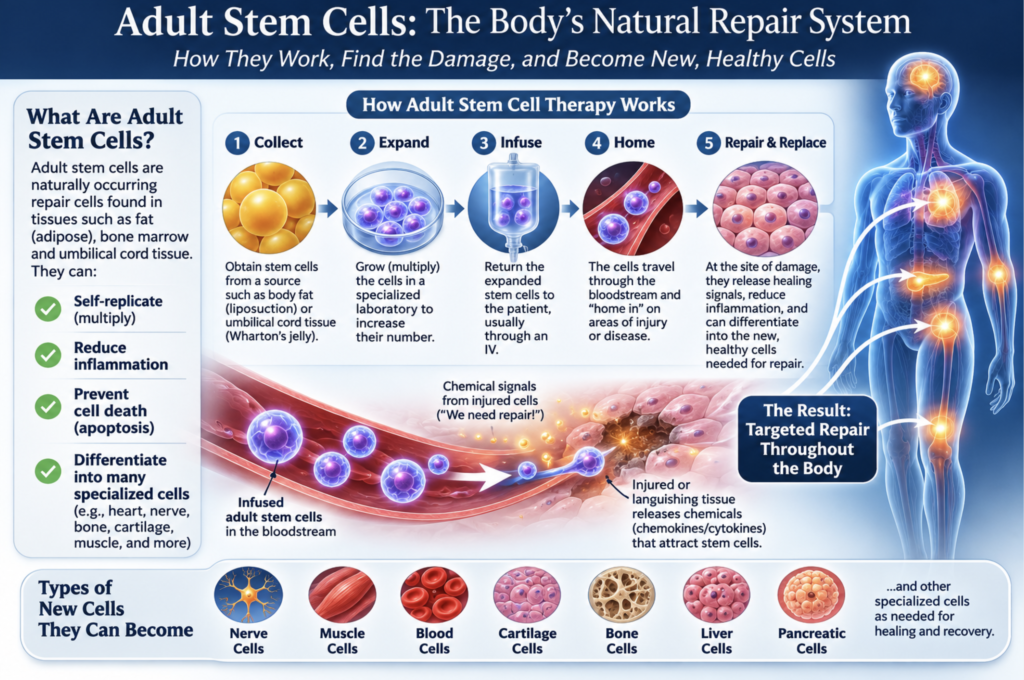
Modern research has confirmed important aspects of injury-directed cell migration, although it has also revealed limitations.
Many intravenously administered mesenchymal cells initially accumulate in the lungs. Their ability to reach particular organs varies, and researchers increasingly recognize that their therapeutic effects may depend substantially on the chemical signals they release rather than direct replacement of damaged tissue.
Cell homing is therefore an important biological mechanism, but it does not mean that injected stem cells automatically locate and repair every diseased organ.
Nevertheless, the concept remains one of the most promising areas of regenerative research: learning how to work with the body’s existing communication and repair systems.
Adult Stem Cells Are Already Saving Lives
The therapeutic potential of adult stem cells is no longer merely theoretical.
For decades, physicians have used blood-forming stem cells from bone marrow, peripheral blood and umbilical cord blood to treat leukemia, lymphoma, certain immune disorders and other serious diseases.
These treatments can rebuild a patient’s blood-forming system and, in appropriate circumstances, produce lasting remission or cure.
More recently, researchers have combined adult stem cells with genetic engineering.
In 2023, the Food and Drug Administration approved Casgevy, a treatment that uses a patient’s own blood-forming stem cells, modified through CRISPR gene editing, to treat sickle cell disease.
Then, on December 18, 2024, the FDA approved Ryoncil, the first mesenchymal stromal cell therapy authorized in the United States.
Ryoncil uses cells obtained from the bone marrow of healthy adult donors. It treats children suffering from steroid-refractory acute graft-versus-host disease, a potentially fatal complication of certain stem cell transplants.
The approval marked an important milestone because it demonstrated that a donor-derived mesenchymal cell product could satisfy federal requirements for an authorized medical treatment.
These achievements are substantial.
They also demonstrate that regenerative medicine can advance without requiring the destruction of human embryos.
The Political Battle That Distracted America
Stem cell research became one of the most contentious scientific controversies of the early twenty-first century.
The dispute centered largely on embryonic stem cells, which are ordinarily derived from very early human embryos, frequently embryos created through in vitro fertilization.
Obtaining the original embryonic stem cells generally destroys the embryo.
For Americans who believe human life deserves protection from its earliest stages, that presents a profound moral problem.
Others argue that research using donated embryos can be ethically justified by its potential to alleviate suffering.
The distinction between embryonic stem cells and fetal tissue obtained following abortion is important. They are not the same biological material, and the research involves different ethical and regulatory questions.
President George W. Bush sought to encourage stem cell research while limiting federal support for research that would encourage the destruction of additional embryos.
In 2001, he authorized federal funding for research using previously established embryonic stem cell lines. His administration also supported research using adult tissues, umbilical cord blood and other sources that avoided the same ethical conflict.
In 2007, the Bush administration published a policy document titled Advancing Stem Cell Science Without Destroying Human Life.
Its underlying principle was straightforward: Scientific progress and respect for human life need not be opposing objectives.
Democrats generally favored broader federal support for embryonic stem cell research, while many Republicans emphasized alternatives that did not involve destroying embryos.
That disagreement became highly politicized.
But the historical record does not support the claim that Democrats categorically outlawed adult stem cell research. Adult stem cell transplantation continued throughout this period, and researchers from across the political spectrum contributed to the field.
The more consequential regulatory question concerned the circumstances under which experimental cellular products could be manufactured, expanded and administered to patients.
That issue remains relevant today.
Why Americans Still Travel Overseas for Experimental Treatments
When Nocera was working with regenerative medicine researchers in Costa Rica and Panama, American patients sometimes traveled to overseas clinics seeking treatments unavailable through ordinary medical practice in the United States.
Some programs investigated cells obtained from a patient’s own fat, while others used donated umbilical cord material.
Cells could be isolated, expanded in laboratory cultures and administered intravenously.
The process represented a substantial departure from conventional pharmaceutical treatment.
But in the United States, laboratory-expanded cellular products generally fall under FDA regulations governing biological drugs. Manufacturers ordinarily must obtain authorization to conduct clinical trials and demonstrate safety and effectiveness before marketing their products.
The FDA also distinguishes between minimally manipulated tissue used for its original biological purpose and substantially manipulated cellular products intended for new therapeutic applications.
Those distinctions can make a major difference in what physicians are permitted to offer.
The regulatory requirements have legitimate purposes. Cell cultures can become contaminated, cells may behave differently after expansion, and some unapproved regenerative products have caused serious injuries, including infections and blindness.
The FDA issued another warning in 2026 about serious harm associated with unapproved human-cell and tissue products.
But the existence of real risks should not become an excuse for unnecessary delay.
For patients facing progressive diseases with limited treatment options, years of regulatory uncertainty can carry serious consequences.
America needs a system that distinguishes credible regenerative medicine from dangerous commercial experimentation while allowing promising therapies to move efficiently through well-designed clinical trials.
The answer is better regulation, not the absence of regulation.
The Diseases That Could Benefit Next
Scientists are investigating adult-derived stem cells and related regenerative technologies for numerous conditions, including multiple sclerosis, autoimmune disorders, heart disease, diabetes, neurological injuries and degenerative joint conditions.
Some approaches attempt to replace damaged cells. Others seek to regulate inflammation, modify immune activity or encourage tissue repair.
These are different mechanisms, and they require different evidence.
The successful use of blood-forming stem cells in leukemia does not establish that mesenchymal cells can reverse Alzheimer’s disease, repair a damaged spinal cord or restore insulin production in every diabetic patient.
For many of these conditions, experimental cell therapies have not yet demonstrated sufficient clinical benefit to justify routine treatment.
Nevertheless, the range of active research illustrates the potential importance of regenerative medicine.
Scientists are also investigating induced pluripotent stem cells, created by reprogramming mature cells into a state resembling embryonic stem cells.
These cells may eventually provide another powerful source of specialized therapeutic cells without requiring the destruction of embryos.
America should encourage research across these ethically acceptable approaches, concentrating resources on treatments that demonstrate meaningful benefits for patients.
A National Initiative for Regenerative Medicine
The United States should make adult-derived regenerative medicine a major national scientific priority.
Congress and the administration should work with the National Institutes of Health, FDA, academic medical centers and biotechnology companies to accelerate the development of treatments using adult stem cells, umbilical cord cells and induced pluripotent stem cells.
That effort should include expanded funding for rigorous clinical trials, improved manufacturing standards, and more efficient regulatory pathways for therapies addressing serious diseases with limited treatment options.
The government should also encourage standardized methods for evaluating cell quality, dose, administration and long-term outcomes.
A treatment developed in one laboratory should be capable of independent evaluation and replication elsewhere.
Patients need reliable evidence, not promises that cannot be tested.
Where clinical trials demonstrate meaningful benefits, the FDA should act promptly to make those treatments available. Where evidence remains inadequate, researchers should receive clear guidance on what additional studies are necessary.
International collaboration should be encouraged, including cooperation with reputable research institutions in Panama, Costa Rica, Japan, South Korea and other countries pursuing regenerative medicine.
The goal should be to make the United States the world’s leader in developing safe, effective and ethically responsible cell therapies.
And that leadership should be measured by the number of patients whose lives are improved, not merely by the number of research grants awarded or scientific papers published.
Roger Nocera’s Vision Deserves Another Look
Roger Nocera died in December 2024, just days before the FDA approved America’s first mesenchymal stromal cell therapy.
He did not live to see the full realization of the medical future he envisioned.
That future has not yet arrived. Adult stem cells have not been shown to cure every disease, and regenerative medicine remains an evolving field with substantial scientific challenges.
But the progress is undeniable.
Blood-forming stem cells have saved countless lives. Gene-edited adult stem cells are treating inherited diseases. Donor-derived mesenchymal cells have achieved regulatory approval for a serious pediatric condition. And researchers continue discovering how the body’s own cellular signaling systems might be harnessed to treat illness.
The promise is no longer confined to speculative medical theories or experimental clinics overseas.
It is becoming part of modern medicine.
The United States should not respond to that progress with complacency.
It should respond with scientific ambition, substantial investment, regulatory efficiency and an unwavering commitment to patient safety.
America has the universities, physicians, biotechnology companies, research hospitals and financial resources necessary to lead this revolution.
What it needs is the determination to make regenerative medicine a national priority.
The human body possesses extraordinary mechanisms for maintaining and repairing itself. The next great advance in medicine may come from learning how to strengthen those mechanisms when disease and injury overwhelm them.
Roger Nocera recognized that possibility years before most Americans had heard of mesenchymal stem cells.
His vision deserves renewed attention.
And the patients waiting for tomorrow’s treatments deserve nothing less than America’s best effort to make them a reality.
Sources and Further Reading
- Roger Nocera, epilogue to Stem Cell Therapy: A Rising Tide
- Stem Cell Institute, Panama
- FDA: First Approved Mesenchymal Stromal Cell Therapy
- FDA: Regulatory Framework for Regenerative Medicine
- FDA: Important Patient Information About Regenerative Medicine
- George W. Bush Administration: Advancing Stem Cell Science Without Destroying Human Life
- Congressional Research Service: Stem Cell Research and Federal Policy
- ClinicalTrials.gov: Current Regenerative Medicine Studies
Leave a Reply