
Charlie Kirk’s assassination is now a source of laughter in American entertainment. As Democrats prepare to take control of Congress, the country faces a disturbing question: How far can political hatred go before it threatens the foundations of a free society?
Federalist Press | November 9, 2026
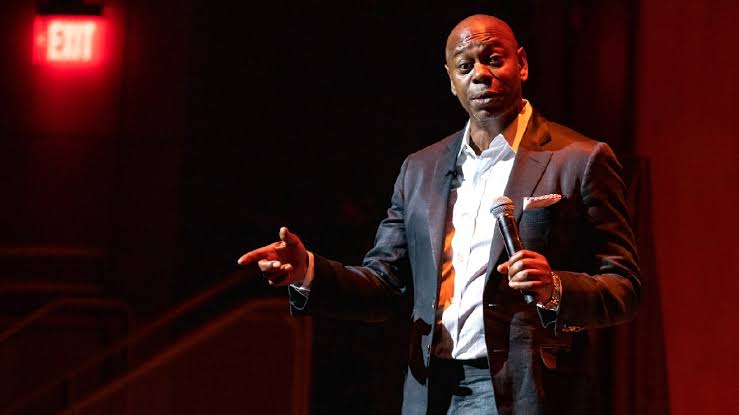
A famous comedian stood before thousands of people at Madison Square Garden over the weekend and announced that the assassination of a young conservative leader had improved his mood. The audience laughed.
Dave Chappelle, performing during his Karmageddon tour, made the remark about Charlie Kirk, the 31-year-old founder of Turning Point USA who was assassinated while speaking at Utah Valley University on September 10, 2025.
“Ever since that guy Charlie Kirk got murdered,” Chappelle said in a recording circulated online, “I feel better.”
The crowd responded with laughter, along with audible expressions of surprise. Chappelle continued by explaining that he had not chosen to feel that way, but nevertheless found himself unexpectedly cheerful.
The comments immediately provoked outrage. But the controversy raises a question that reaches far beyond one comedian’s judgment.
When did the murder of someone with traditional political beliefs become an acceptable source of public amusement?
The Assassination That Should Have United America
Charlie Kirk was doing what he had spent much of his adult life doing: speaking to college students, challenging their ideas, defending his traditional beliefs and inviting public debate.
Whatever Leftist Americans thought of his moderate politics, his right to express them was fundamental to the constitutional system.
A gunman ended his life before an audience of students. His wife, Erika, lost her husband. Their two young children lost their father.
The killing should have reinforced a principle upon which every American political disagreement must rest: No political argument gives anyone the right to silence an opponent, especially through violence.
Instead, a disturbing segment of American political culture has continued treating Kirk’s death as an occasion for ridicule and laughter.
Chappelle’s performance was hardly the only example.
Just days earlier, Jennifer Welch and Angie Sullivan, hosts of the Leftist I’ve Had It podcast, laughed while discussing a social-media joke about digging up Kirk and killing him again.
The hosts subsequently “apologized,” acknowledging that their reaction may have been a little insensitive. Several advertisers withdrew their support, including Cash App, which publicly rejected their celebration of political violence.
The apologies were appropriate, somewhat. But they also raised an uncomfortable question: What cultural environment makes such remarks seem amusing in the first place?
Erika Kirk’s Response: A Moral Line America Must Not Cross
Erika Kirk responded to the controversy with a statement that deserves attention well beyond conservative political circles.
“A culture that laughs at assassination is one of profound moral decay,” she wrote.
Her point was not that comedians should be prohibited from discussing tragedy or that public figures should be immune from criticism. It was that Americans must recognize the humanity of people whose political views they despise.
Erika and her children will live with the consequences of Charlie’s murder for the rest of their lives. To them, the assassination is not a clever political observation or an opportunity for applause.
It is an empty chair at the dinner table, a father absent from birthdays and Christmas mornings, and a husband who will never come home.
Chappelle has spent much of his career defending the importance of free expression, including the freedom to make offensive jokes. He has every right to speak, just as Americans have every right to condemn what he says.
But freedom of speech does not relieve speakers of moral responsibility.
And when a prominent entertainer suggests that a political opponent’s murder has made him happier, the public has reason to ask what such sentiments reveal about the culture surrounding him.
From Political Opposition to Political Dehumanization
America has already witnessed the consequences of political hatred turning violent.
Donald Trump survived two assassination attempts during the 2024 presidential campaign. At Butler, Pennsylvania, a gunman wounded Trump and killed rally attendee Corey Comperatore, a former fire chief who died protecting his family. Two other spectators were seriously injured, one of which just died from his injuries.
Two months later, authorities thwarted another assassination attempt at Trump’s Florida golf club.
Then came the murder of Charlie Kirk in 2025.
These incidents occurred against a background of escalating threats against American political figures. A February 2026 analysis by the Institute for Strategic Dialogue found that violent online rhetoric directed at leading public officials more than tripled between 2021 and 2025.
There is a particularly dangerous mentality evident when political opponents cease to be regarded as fellow citizens and become enemies whose suffering or death is celebrated.
That transformation is the beginning of dehumanization. Once people convince themselves that their opponents are irredeemably evil, almost any treatment of those opponents can be rationalized. Harassment becomes accountability. Intimidation becomes resistance. The destruction of reputations becomes justice.
And eventually, in the minds of extremists, physical violence becomes an acceptable political instrument.
The Historical Warning: When Political Enemies Become Enemies of the State
History offers abundant warnings about societies in which political movements abandon persuasion in favor of intimidation and coercion.
In Fascist Italy, Benito Mussolini’s Blackshirts used organized violence against political opponents before the dictatorship consolidated its power. In Nazi Germany, political intimidation and the destruction of civil liberties helped eliminate meaningful opposition.
Communist dictatorships followed different ideological doctrines but frequently employed comparable methods of repression. Under Stalin, political disagreement could lead to imprisonment, exile or execution. During Mao’s Cultural Revolution, ideological accusations helped unleash widespread persecution and public humiliation.
These totalitarian governments murdered more than 100 million citizens, in the name of “progressive” policies.
Similar patterns appeared in military dictatorships in Latin America and authoritarian governments in parts of Africa, where political opponents were portrayed as enemies whose rights no longer deserved protection.
These regimes differed enormously in ideology, scale and historical circumstances. A comedian’s offensive joke is not equivalent to state-sponsored terror, and contemporary American political parties are not interchangeable with twentieth-century dictatorships.
The relevant historical lesson concerns the underlying process: A society becomes vulnerable to authoritarianism when it begins accepting the idea that political enemies deserve fewer rights, less dignity or less protection under the law.
That danger can appear in revolutionary movements, nationalist movements, socialist governments or military regimes.
Its defining characteristic is contempt for the principle that political opponents remain entitled to the same fundamental liberties as everyone else.
Democratic Victory and the Temptation of Retaliation
The timing of Chappelle’s remarks is particularly striking. Democrats have just won control of both houses of Congress in the 2026 midterm elections, dramatically changing the balance of power in Washington.
Their victories give them the ability to conduct congressional investigations, issue subpoenas, challenge administration policies and obstruct portions of President Trump’s legislative agenda.
If congressional investigations are used to punish political enemies, intimidate private citizens or retaliate against corporations merely for supporting an opposing candidate, they become abuses of power.
Peaceful protest and lawful political accountability are essential liberties. Threats, coercion and selective punishment by government authorities are something altogether different.
The incoming Democratic majority will have an opportunity to demonstrate which approach it intends to follow.
A constitutional republic cannot survive if each party treats government power as an instrument of revenge whenever it wins an election.
The voters have authorized a change in congressional leadership. They have not authorized persecution.
The Difference Between Comedy and Cruelty
Defenders of Chappelle will argue that comedians have always pushed boundaries, explored uncomfortable subjects and deliberately shocked audiences.
That is true. Comedy has a long tradition of confronting tragedy through irreverence, exaggeration and even cruelty.
Chappelle himself previously acknowledged that Kirk’s assassination had shaken him because he, too, earns his living speaking before audiences.
The issue is not whether a comedian can make a joke about death. The issue is whether the death of a political adversary is increasingly being treated as something to welcome.
When public figures repeatedly use political murder as entertainment, they risk making cruelty seem ordinary. And when cruelty becomes ordinary, the restraints that make peaceful political disagreement possible begin to weaken.
A Republic Cannot Survive Without Restraint
The American constitutional system was built upon the recognition that citizens would disagree passionately about government, religion, economics and the direction of the country.
Its genius lies in providing a means to resolve those disagreements without violence.
Americans can criticize their leaders, organize political movements, publish opposing arguments, protest government decisions and remove officials through elections.
They do not need to eliminate one another.
Charlie Kirk believed deeply in public debate. He traveled to college campuses to engage people who disagreed with him, often in confrontational settings. His assassination was therefore an attack not only on an individual but on the principle that political arguments should be answered with arguments.
The same principle protects Donald Trump, Democratic leaders, unpopular activists, controversial entertainers and ordinary citizens.
It protects Dave Chappelle’s right to say something offensive. It also protects the right of millions of Americans to find his remarks morally repugnant and unsubscribe from Netflix.
The United States has endured political assassinations, civil unrest, ideological extremism and bitter partisan divisions before. It has survived because enough Americans continued to recognize that political disagreement does not erase our common humanity.
That recognition must not disappear.
Charlie Kirk’s children will grow up without their father. Corey Comperatore’s family will live with the consequences of the violence in Butler. Other families, across the political spectrum, have suffered similarly devastating losses.
Their grief should never become a partisan entertainment product.
A civilization begins to lose its moral bearings when people applaud the death of someone simply because they disagreed with him.
And a free republic places itself in danger when hatred of political opponents becomes more important than the principles that protect everyone.
The laughter at Madison Square Garden may fade quickly. The question of what it reveals about American political culture should not.
Leave a Reply