
 For six years the world has scratched its head about President Obama’s foreign policy doctrine. Is it “leading from behind,” as he himself has said on occasion, stepping back in hopes that an international coalition will take charge? Is it using American military or economic power to topple dictators? Is it killing enemies with drone strikes and spying on allies with advanced technology? Is it using words instead of weapons?
With much fanfare, the president set out to set things straight on Wednesday by articulating a comprehensive Obama Doctrine in a major foreign policy address at West Point’s commencement ceremonies.
But it wasn’t a full-course meal at all; it was more like a Krispy Kreme donut. It seemed wonderful at first, beckoning in its sweetness, so yummy you wanted to gobble it up. But after it was finished, it was all air and empty calories, leaving you just as hungry as before you took that first bite.
Krispy Kreme claims the “batter is the best part.” Same with an Obama speech. It’s all about what’s on the outside, not what’s inside.
Heavenly for a moment, but once that moment passes, you’re just as hungry as before. Only afterward do you realize you’ve ingested hundreds of calories for a momentary sugar high.
On the surface the president’s speech sounded eminently sensible: We “will use military force, unilaterally if necessary, when our core interests demand it – when our people are threatened; when our livelihoods are at stake; when the security of our allies is in danger.” But we are not going to invade every country that harbors terrorists, nor necessarily rush in to every crisis. We’re going to enlist partners, and work through international institutions.
Of course! What idiot wants to go to war? And isn’t everything better when done with friends?
The speech was filled with the silent echo of the Obama administration’s theme song, “Blame Bush.”
Everything the president said sounded good. Sadly, it bore no resemblance to what the president has been doing for the last six years.
He expanded the Afghanistan war effort, though our core interests were not involved and he didn’t believe our efforts would succeed.
He went to war against Libya, toppling the government and leaving chaos in its wake, on the mere possibility that Qaddafi might kill innocent Libyans.
Yet Obama refused to move against Syria’s Bashar al-Assad, who gassed his own people and murdered more than 100,000 innocents, including women and children. Obama has tried, but failed, to enlist partners to stop the slaughter in Syria, and his efforts at getting the U.N. to impose severe sanctions on Russia and Iran have failed.
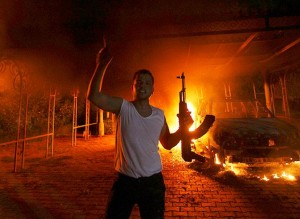
As for “using force…when our people are threatened”? What about his administration’s failure to provide adequate security to our people in Benghazi despite known terrorist threats, and then standing by helplessly while they were attacked and four were slaughtered?
Krispy Kreme claims the “batter is the best part.” Same with an Obama speech. It’s all about what’s on the outside, not what’s inside.
He claimed to have ended the Iraq and Afghan wars that he inherited. He has ended them, not by winning them, but by walking away. In truth, those wars were probably not “winnable” in any real sense of the word, but we’ll never know. They began as Bush’s neocon fantasies and ended as Obama’s incompetent tragedies.
 And while Obama was busy offering up Krispy Kremes, others were eating his lunch. He claims Putin was foiled in Ukraine because he mustered an international community to criticize him, but he neglects to mention that Crimea is now part of Russia and eastern Ukraine is under its operational control. The other peoples along Russia’s border, in countries like Poland or Romania or the Baltics, certainly don’t think Putin is finished.
Obama honestly believes his interim deal with Iran has stopped Tehran’s nuclear weapons program in its tracks. But as Obama delivered his West Point speech, Iran’s supreme leader, Ayatollah Khamenei, told his nuclear scientists that while the negotiations with the West will continue, “the activities of the Islamic Republic of Iran in the field of nuclear research and development won’t be halted at all.”
And in a stunning international development, the Russian and Chinese presidents toasted each other for ending nearly four decades of enmity to join together in an anti-American alliance. In the 1970s, the only threat America faced was the Sino-Soviet alliance. President Nixon drove a wedge between the two in 1972 with his opening to China. The only remaining existential threat to America was the Soviet Union, and President Reagan engineered its collapse in the 1980s. For the last generation the United States has enjoyed unprecedented peace and prosperity, in no small measure because of it.
Now the situation has been reversed, with China and Russia once again in alliance. The Obama administration hardly noticed.
The tragedy of the Obama foreign policy is it didn’t have to be this way. Krispy Kremes weren’t the only thing on the menu. It was never a choice between going to war and doing nothing, between eating Krispy Kremes and going hungry.
If America chooses, we can develop our own energy resources and not be pressured into wars in the Middle East. Cheap energy will restore our economy and wither the economies of our adversaries. It will give us the means to help our allies without sending in the Marines. It will give us more than the Obama options of going to war or doing nothing.
The age of Obama and his feckless foreign policy is drawing to a close. What comes next will determine whether America once again restores its economy, and once again basks in the warm light of keeping the peace through strength.
Kathleen Troia “K.T.” McFarland is a Fox News National Security Analyst and host of FoxNews.com’s “DefCon 3.” She served in national security posts in the Nixon, Ford and Reagan administrations. She was an aide to Dr. Henry Kissinger at the White House, and in 1984 Ms. McFarland wrote Secretary of Defense Weinberger’s groundbreaking “Principles of War ” speech. She received the Defense Department’s highest civilian award for her work in the Reagan administration.
 President Obama, in his first public comments on the controversial trade of five Taliban prisoners for Sgt. Bowe Bergdahl since the deal was announced, acknowledged Tuesday there’s “absolutely” a risk that the former Guantanamo inmates will try to return to the battlefield — but nevertheless defended the deal as in America’s interest.
 Obama said they saw an opportunity to bring Bergdahl back and seized it, and that the U.S. government will bring a soldier back regardless of circumstances.
 The release of Sgt. Bowe Bergdahl, said to be America’s last POW, comes amidst criticism and concern. Barack Obama, as president, is supposed to notify Congress 30 days in advance of any prisoner’s release from Gitmo. His decision to exchange five of the most notorious Taliban terrorist leaders held at Guantanamo Bay for Bergdahl, without following the protocol put into place for prisoner release, is criticism that such a move is
 A petition on the White House website asking President Obama to demand the release of a Marine sergeant in a Mexico prison has garnered more than 100,000 online signatures — a threshold that typically elicits an administration response.
 He also said he was stripped naked and chained to a bed, with his feet on one end and his hands on another.
 On Thursday, the day before a double resignation at the White House, ABC’s Jon Karl grilled Jay Carney over Barack Obama’s confidence in Eric Shinseki. Less than 24 hours later, the press secretary and Veterans Administration head had both quit. During the back-and-forth, Karl pressed, “But does the President right now have confidence in Sec. Shinseki, yes or no? It’s a very simple yes or no question. You told us last week he did have confidence, does he have confidence now?” [See video below.]
 More than once, Karl has tangled with Carney. But World News and Good Morning America on
  Next week, the Obama administration is planning to unveil a climate action plan that it intends to implement without legislative approval. It’s a creative approach to governing,
 The White House is scrambling to contain the damage from inadvertently outing the top CIA official in Afghanistan, a rare blunder that potentially puts that individual at risk.
 A new and important study of religion in America has, among other things, a good deal to say about members of The Church of Jesus Christ of Latter-day Saints. Recently published under the title American Grace: How Religion Divides and Unites Us, the sociological study was conducted by scholars Robert D. Putnam and David E. Campbell and yields valuable insight to the nature and social effects of American religion. Drawing from in-depth new surveys, the study’s authors affirm that in many respects, religion in America exerts a healthy influence upon American society — one that typically promotes generosity, trust, neighborliness, and civic engagement. And while Mormons are a relatively small component of American society, the study data reveals that they play a conspicuous part in American religious life.
 Mormons are relatively friendly to other religious groups.
 House Minority Leader Nancy Pelosi on Wednesday reluctantly picked her team for a GOP-led Benghazi investigative committee, saying that Democrats’ participation was the only way to assure Americans of a “fair process.”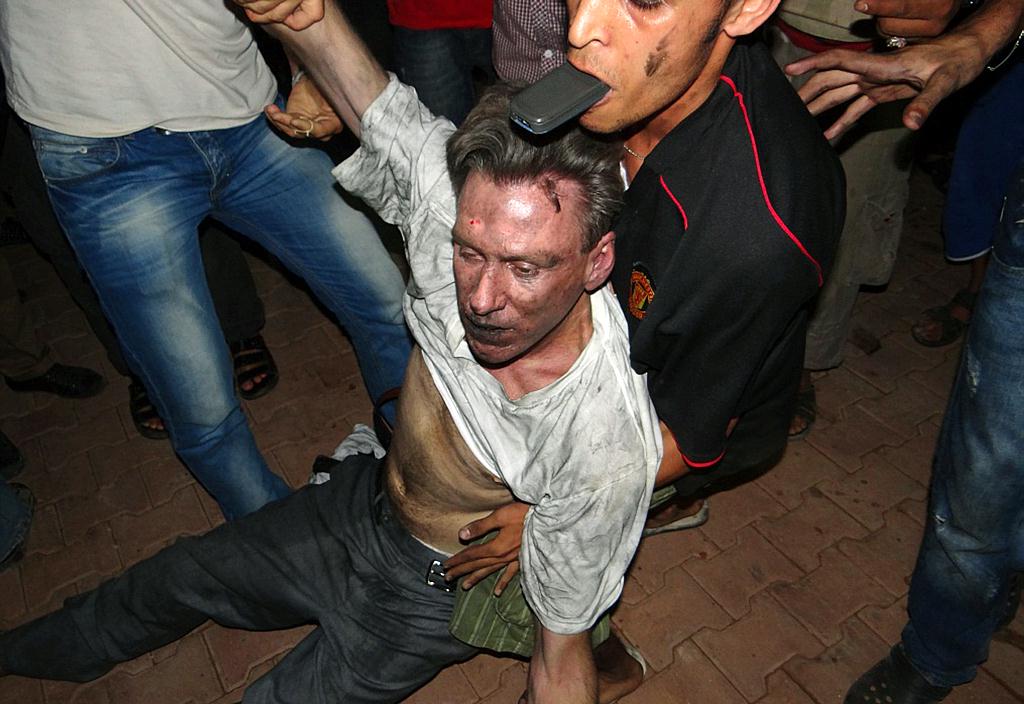
 The White House is refusing to confirm whether President Barack Obama followed up on his pledge to take a 5 percent pay cut due to sequestration last year.
 The mother of a U.S. Marine being held in a Mexican jail after he crossed the border with guns in his pickup truck said her son’s current ordeal is more traumatic than the two tours of duty he served in Afghanistan.
 International outrage is mounting over the death sentence a Sudanese judge ordered for the pregnant wife of an American citizen — all because she refuses to renounce her Christian faith.
 The Obama administration, battling to tamp down yet another scandal, announced the resignation Friday afternoon of a top Veterans Affairs official amid mounting questions over patient deaths possibly tied to delayed care.
 When it comes to Washington controversies, most American voters think Benghazi, the IRS and the government’s electronic surveillance program are serious matters. A Fox News poll also finds that less than four in 10 voters trust the federal government.
 In a ruling with stunning implications on political speech in Wisconsin and beyond, the 7th Circuit U.S. Court of Appeals declared portions of state campaign finance laws restricting issue ads unconstitutional.
 And how well do these dire climate projections do in reality? In fact, the climate models the administration relied on for its proposals projected the earth would warm 0.3 degree Celsius over the past 17 years—which did not happen, Loris reports. During that time, carbon dioxide emissions did increase—yet the projected warming did not happen.
 Jay Leno sees a small silver lining in the recent collapse of U.S.-backed Mideast peace talks: It should make his job just a little easier when he performs in front of Israeli Prime Minister Benjamin Netanyahu later this month.
 First we have Hillary (OK, only a New Yorker in a carpetbagging sort of way, but still . . .) wanting to “rein in” our notions that we have real Second Amendment rights. But that’s the Second Amendment. That’s not as important as the First, right? So for that one, we need Chuck Schumer, Hillary’s senior as a senator before and after her tenure, to launch the attack.
 WASHINGTON — The House of Representatives voted to hold former IRS official Lois Lerner in contempt of Congress Wednesday for refusing to testify about her role in the targeting of Tea Party groups.
Reader Responses