• Home
  • Mission
  • Federalist Papers
  • Foundation
  • U.S. Constitution
  • Bill of Rights

Federalist Press | Defending Liberty — Informing America

Breaking News and Political Commentary

  • All Stories
  • Economy
  • Elections
  • Entitlement
  • Ethics
  • Foreign
  • Gender
  • Religion
  • Sci-Tech

Obama Welcomes Islamic Scholar With Terrorist Ties Into White House

June 26, 2013 By Editor Leave a Comment

Bin_BayyahA Muslim scholar whose group supports Hamas, who has urged the U.N. to criminalize blasphemy and who is the deputy of an Egyptian cleric banned from the U.S. over his radical statements was able to secure a visit at the White House earlier this month.

A report from The Investigative Project on Terrorism uncovered a statement on the website of Sheikh Abdullah Bin Bayyah claiming he met June 13 with Obama administration officials in Washington.

Bin Bayyah is vice president of the International Union of Muslim Scholars, a group founded by Egyptian cleric Yusuf Qaradawi — a Muslim Brotherhood leader who has called for the death of Jews and Americans and himself is banned from visiting the U.S.

While Bin Bayyah secured a visit, he and his group also have a history of questionable positions, IPT reports.

A 2009 fatwa from the group barred “all forms of normalization” with Israel. Bin Bayyah also got behind a campaign to pressure the U.N. to pass a resolution criminalizing blasphemy. IPT also found Bin Bayyah was vice president at the organization when they issued a 2004 fatwa saying that resisting U.S. troops in Iraq is a “duty” for Muslims — effectively allowing the killing of Americans.

On his website, as first reported by IPT, Bin Bayyah said the Obama administration requested the meeting.

He quoted National Security Council official Gayle Smith as saying: “We asked for this meeting to learn from you and we need to be looking for new mechanisms to communicate with you and the Association of Muslim Scholars.”

The post reportedly claimed he had met with Smith; Rashad Hussain, U.S. envoy to the Organization of Islamic Cooperation; and the national security adviser, among others.

According to the IPT report, the reference to meeting with the national security adviser was later deleted.

IPT reported that Bin Bayyah was lobbying the White House to do more to help the Syrian opposition.

Published June 26, 2013 / FoxNews.com

Filed Under: All Stories, Elections, Ethics, Foreign, Religion

Did FBI Probe Result in Fiery Crash?

June 25, 2013 By Editor Leave a Comment

Michael_HastingsMere hours before the fiery car crash that took his life, journalist Michael Hastings sent an email to friends and colleagues urging them to get legal counsel if they were approached by federal authorities.

“Hey [redacted] the Feds are interviewing my ‘close friends and associates,'” read the message dated June 17 at 12:56 p.m. from Hastings to editors at the website BuzzFeed, where he worked.

“Perhaps if the authorities arrive ‘BuzzFeed GQ’, er HQ, may be wise to immediately request legal counsel before any conversations or interviews about our news-gathering practices or related journalism issues.”

Hastings added that he was onto a big story and that he would, “need to go off the radat [radar] for a bit,” according to KTLA in Los Angeles.

Fifteen hours later, in the early morning of June 18, Hastings was driving a Mercedes C250 at a high speed when he lost control in Los Angeles’ Hancock Park neighborhood, causing the car to fishtail and crash into a palm tree. The impact caused the car to burst into flames, trapping the 33-year-old inside.

Conspiracy theories surrounding Hastings’ death began to circulate almost immediately.

On Twitter and several sites across the web, speculation was rampant that the death of Hastings — whose 2010 article for Rolling Stone led to the resignation of U.S. Army Gen. Stanley McChrystal, then head of the U.S. operation in Afghanistan — was no accident.

Also Friday, WikiLeaks released two messages on Twitter that added fuel to the fire.

“Michael Hastings’ death has a very serious non-public complication. We will have more details later,” said the first. Two hours later, WikiLeaks tweeted more specific information.

“Michael Hastings contacted WikiLeaks lawyer Jennifer Robinson just a few hours before he died, saying that the FBI was investigating him,” the second message read.

It was speculated by others that Hastings was working on a story about Drone Surveillance in the U.S.

LAPD officials said on Friday that no foul play was suspected in the fatal accident, although that did little to quell theories about his death.

Investigators are trying to determine whether there was a mechanical problem with the car, according to the Los Angeles Times. The car burst into flames after hitting a tree in the one-car accident at 4:20 a.m. Law enforcement sources said the car was believed to have been traveling at a high rate of speed.

Published June 24, 2013 / FoxNews.com

Filed Under: All Stories, Elections, Ethics, Foreign, Sci-Tech

Supreme Court Strikes Down Key Part of Voting Rights Act

June 25, 2013 By Editor Leave a Comment

Supreme-CourtIn a major ruling, the Supreme Court on Tuesday voided a provision of the Voting Rights Act that determines which state and local governments have to seek federal permission to change their voting laws.

The 1960s-era provision largely singled out states and districts in the South — those with a history of discrimination — for special screening by the federal government over changes to their laws. But the court ruled 5-4 that the formula determining which states are affected is unconstitutional, and said Congress could try to draft a new provision.

The justices said that the law Congress most recently renewed in 2006 relies on 40-year-old data that does not reflect racial progress and changes in U.S. society.

“In 2006, the Act was reauthorized for an additional 25 years, but the coverage formula was not changed. Coverage still turned on whether a jurisdiction had a voting test in the 1960s or1970s, and had low voter registration or turnout at that time,” Chief Justice John Roberts wrote.

He clarified that the provision requiring advance approval of voting law changes — known as Section 5 — was not being struck down. Rather, the court found that the provision pertaining to the formula, known as Section 4, was unconstitutional. The decision, though, challenges the overall practice of federal screening unless and until Congress addresses the formula.

The decision means that a host of state and local laws that have not received Justice Department approval or have not yet been submitted will be able to take effect. Prominent among those are voter identification laws in Alabama and Mississippi.

Going forward, the outcome alters the calculus of passing election-related legislation in the affected states and local jurisdictions. The threat of an objection from Washington has hung over election-related proposals for nearly a half century. At least until Congress acts, that deterrent now is gone.

Roberts argued that these states and the conditions in them have “changed dramatically” over the years.

“The tests and devices that blocked ballot access have been forbidden nationwide for over 40 years. Yet the Act has not eased (Section 5’s) restrictions or narrowed the scope of (Section 4’s) coverage formula along the way. Instead those extraordinary and unprecedented features have been reauthorized as if nothing has changed, and they have grown even stronger,” he wrote.

The decision comes five months after President Obama, the nation’s first black chief executive, started his second term in the White House, re-elected by a diverse coalition of voters.

The high court is in the midst of a broad re-examination of the ongoing necessity of laws and programs aimed at giving racial minorities access to major areas of American life from which they once were systematically excluded. The justices issued a modest ruling Monday that preserved affirmative action in higher education and will take on cases dealing with anti-discrimination sections of a federal housing law and another affirmative action case from Michigan next term.

The court warned of problems with the voting rights law in a similar case heard in 2009. The justices averted a major constitutional ruling at that time, but Congress did nothing to address the issues the court raised. The law’s opponents, sensing its vulnerability, filed several new lawsuits.

The latest decision came in a challenge to the advance approval, or preclearance, requirement, which was brought by Shelby County, Ala., a Birmingham suburb.

The lawsuit acknowledged that the measure’s strong medicine was appropriate and necessary to counteract decades of state-sponsored discrimination in voting, despite the Fifteenth Amendment’s guarantee of the vote for black Americans.

But it asked whether there was any end in sight for a provision that intrudes on states’ rights to conduct elections, an issue the court’s conservative justices also explored at the argument in February. It was considered an emergency response when first enacted in 1965.

The county noted that the 25-year extension approved in 2006 would keep some places under Washington’s oversight until 2031 and seemed not to account for changes that include the elimination of racial disparity in voter registration and turnout or the existence of allegations of race-based discrimination in voting in areas of the country that are not subject to the provision.

The Obama administration and civil rights groups said there is a continuing need for it and pointed to the Justice Department’s efforts to block voter ID laws in South Carolina and Texas last year, as well as a redistricting plan in Texas that a federal court found discriminated against the state’s large and growing Hispanic population.

Advance approval was put into the law to give federal officials a potent tool to defeat persistent efforts to keep blacks from voting.

The provision was a huge success because it shifted the legal burden and required governments that were covered to demonstrate that their proposed changes would not discriminate. Congress periodically has renewed it over the years. The most recent extension was overwhelmingly approved by a Republican-led Congress and signed by President George W. Bush.

The requirement currently applies to the states of Alabama, Alaska, Arizona, Georgia, Louisiana, Mississippi, South Carolina, Texas and Virginia. It also covers certain counties in California, Florida, New York, North Carolina and South Dakota, and some local jurisdictions in Michigan. Coverage has been triggered by past discrimination not only against blacks, but also against American Indians, Asian-Americans, Alaska Natives and Hispanics.

Towns in New Hampshire that had been covered by the law were freed from the advance approval requirement in March. Supporters of the provision pointed to the ability to bail out of the prior approval provision to argue that the law was flexible enough to accommodate change and that the court should leave the Voting Rights Act intact.

On Monday, the Justice Department announced an agreement that would allow Hanover County, Va., to bail out.

Published June 25, 2013 / FoxNews.com / The Associated Press contributed to this report.

Filed Under: All Stories, Economy, Elections, Entitlement, Ethics, Foreign, Gender, Religion

Technology Makes Possible the Surveillance State

June 23, 2013 By Editor Leave a Comment

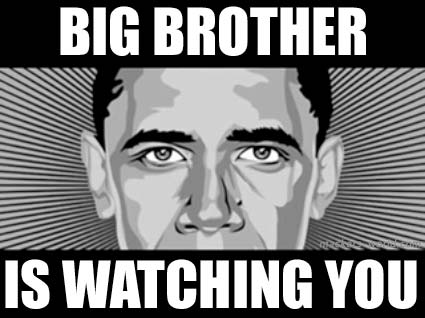
obama-big-brotherTechnology is making your every move — perhaps even those movements you make in the bathroom — ready for broadcast. The question is, are you ready for it?

Following the revelations about some of what the U.S. National Security Agency has been up to — secretly collecting millions of phone records and innumerable personal online searches and e-mails — government officials have been scrambling to reassure the public that the amount of information it is collecting is negligible, even trivial, and doesn’t impinge on personal freedom. However, the technology itself argues against the idea that what’s being collected about you is harmless.

Consider that phone numbers with time and location information can be easily combined with Web searches (for “anti-depressants,” say) and text message information to form a picture of where you are and what you’re doing. No one needs to listen to the content of a call if they know everything else about you, like the fact that you’ve messaged a therapist several times this week, belong to a gun club, and gave money to a Tea Party candidate.

Furthermore, the government’s Prism program looks positively mundane when you consider the other possible sources of information available through secret government surveillance. It is technically possible to monitor nearly every U.S. citizen — through automated scanning software programs — seven days a week, 24 hours a day.

Video cameras monitor you walking down the sidewalk. Toll tags and on-board connected car systems monitor you behind the wheel, even relaying rabbit starts, severe braking, and excessive speed. Security systems at work oversee cubicles, and employers monitor computer habits with hidden software that tracks keystrokes. At home, smart TVs with streaming services collect information about what you’re watching. Some sets and gaming consoles even include cameras that can tell who is in the room sitting on the couch.

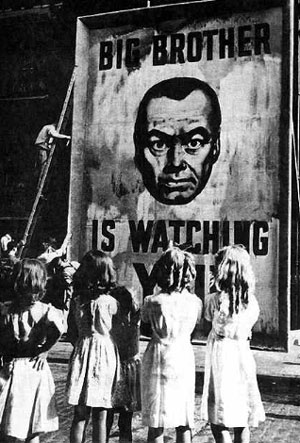
big_brother_watchingWorse, our addiction to smartphones means we’re beaming our location, purchases, banking information, and personal relationships over networks that can be easily tapped — by government officials or by malware from hackers. Indeed, a computer program known as Flame that security experts say was created for espionage purposes has the demonstrated ability to secretly turn on a device’s microphone and record a conversation.

And then there’s Google Glass.

The much anticipated eyewear isn’t even available to the public yet, but when it is people won’t have to hold up a phone to take a picture, they’ll be able to record video in the blink of an eye. At a recent shareholder meeting, Google CEO Larry Page told attendees not to be terrified that people might use Glass in a public bathroom, just as we shouldn’t worry about people using smartphones in the bathroom.

I think there are some choice words folks would have for people who use Google Glass in the bathroom. (Try explaining to the friendly police officer that you were just reading FoxNews.com on the eyepiece, honest.)

The problem, of course, is the surreptitious nature of the technology and the secret monitoring it enables. It means that information — information you might think is innocuous — can be used against you without your knowledge. (Never mind embarrassing videos showing your lack of hygiene in the bathroom.) You may never know why you were rejected for a job or your kid didn’t get into a particular school.

Hypothetically speaking, you might be pulled over on the highway in the middle of the night by an officer who claims you were dallying in the passing lane. Unbeknownst to you, the real reason was that your plate was flagged by a license plate reader (LPR) camera, which was relying on an algorithm that detected that an individual who made phone calls to Eastern Europe and conducted Web searches for gun clubs is associated with that plate number.

The police officer lets you go on your way, but the next week, late at night, the same thing happens. And then the week after that, and, well, you get the picture.

So even if you never do anything wrong, never jaywalk or get a parking ticket, the information collected could be used against you, and you would be none the wiser. Catching terrorists is a laudable aim of such technological surveillance, and you might trust the Obama administration that such surveillance will never be misused. But what about the next administration?

Should people associated with the Tea Party get extra scrutiny from the IRS? Should people who are against gun control be monitored by state police? Should anti-war activists have their search history scrutinized by the NSA?

There are technological ways to limit the intrusion of such technology and prevent it from diminishing our privacy and freedoms, but it requires extra work. Programmers can limit the scope and fine tune communications monitoring software, and government officials could submit to more oversight by courts that are not secret.

But in a society where most of us are scrutinized on camera already — with the bathroom soon to come — it may be too late to put the digital genie back in the bottle.

By John R. Quain / FoxNews.com

Filed Under: All Stories, Economy, Elections, Entitlement, Ethics, Foreign, Gender, Religion, Sci-Tech

Egyptian Pres. Morsi Appoints Member of Al Qaeda that Massacred European Tourists in Luxor

June 22, 2013 By Editor Leave a Comment

AdelLast year Egyptian President Morsi freed one of the monsters behind the Luxor Massacre. Now he has appointed another member of The Islamic Group, Adel Mohammed al-Khayat as the Governor of Luxor.

Egypt’s tourism minister resigned a day after President Mohamed Morsi appointed the new governor to Luxor province.

Hesham Zazou said on Wednesday he “couldn’t continue in the role of tourism minister” after the appointment of Adel al-Khayat.

Following are witness accounts of the day that Adel Mohammed al-Khayat and his Islamic terrorist comrades murdered 58 tourists.

“As they ran past a Japanese tourist, she said, one of the men fired into the woman’s face from a range of about 15 inches.” The gunmen “took all the young women, the girls, and disappeared with them. I don’t know where they went with the women, but they hurt them. We could hear screams of pain,” Dousse said.

Among the horrors, the marauders cut off the ears and noses of several of their victims. A note praising Islam was found inside one disemboweled body.

The foreign dead included 31 Swiss, 10 Japanese, five Germans, four Britons, one child (a Bulgarian), a Colombian and a French citizen. The Japanese victims were four newlywed couples and an elderly couple on their second honeymoon.

Witnesses told how the terrorists methodically executed the European tourists. Some were forced to kneel before being shot, while others were stabbed to death.

Little Shaunnah, her mum and gran, all from Ripponden, West Yorks, died alongside fellow Brits George Wigham, 69, and wife Ivy, 71, of Swanley, Kent, and Londoner Sylvia Wilder, 26.

Shaunnah_Turner

Shaunnah Turner, 5 Years Old, Murdered by Muslim terrorists at Luxor

Shaunnah Turner’ father, ’ Richard, spoke of his murdered daughter  after the horror: “In a crowd she would shine. She was really beautiful. She had an impish charm that could win anybody over.”

A member of the movement whose gunmen killed 58 foreigners at a temple in Luxor in 1997 was sworn in by Egyptian President Mohamed Mursi on Monday as governor of the vital tourist region.

Adel Mohammed al-Khayat, who now represents the Building and Development Party, the political wing of the al-Gamaa al-Islamiya movement.

‘No to the terrorist governor!’ read a placard at a demonstration by dozens of tourism workers who protested outside the governor’s office in Luxor.

Khayat, then in his mid-40s, was a leader of al-Gamaa al-Islamiya in another province when, on Nov. 17, 1997, six young men from the group shot their way into the Temple of Hatshepsut in Luxor’s Valley of the Queens.

The attack was part of a broader campaign by the group, at that time linked to al Qaeda, to cripple tourism revenues for the government of then-president Hosni Mubarak. Of the 62 people killed in the next hour, 58 were foreign tourists, more than half of them Swiss and the rest Japanese, British, German and Colombian.

The gunmen, reported to have trained at al Qaeda camps in Afghanistan, committed suicide.

PUBLIUS

Filed Under: All Stories, Elections, Ethics, Foreign, Gender, Religion

EPA Drops Study Linking Pollution to Fracking

June 21, 2013 By Editor Leave a Comment

epa-logoCHEYENNE, Wyo. –  The U.S. Environmental Protection Agency announced Thursday it is dropping its longstanding plan to have independent scientists review its finding that hydraulic fracturing may be linked to groundwater pollution in central Wyoming.

The EPA is standing by its findings, but state officials will lead further investigation into the pollution in the Pavillion area. The area has been a focus of the debate over whether fracking can pollute groundwater ever since the EPA’s initial report came out in late 2011.

“We stand behind our work and the data, but EPA recognizes the state’s commitment to further investigation,” said agency spokesman Tom Reynolds in Washington, D.C. The EPA will let state officials carry on the investigation with the federal agency’s support, he said.

Wyoming officials have been skeptical about the theory that fracking played a role in the pollution at Pavillion, but Reynolds expressed confidence the state could lead the work from here. He described the shift as the best way to ensure Pavillion-area residents have a clean source of drinking water.

Even so, industry officials who have been doubtful about the EPA findings all along praised the change as confirmation of their view that the science wasn’t sound.

“EPA has to do a better job, because another fatally flawed water study could have a big impact on how the nation develops its massive energy resources,” Erik Milito, director of upstream and industry operations for the American Petroleum Institute, said in a release.

Richard Garrett, energy and legislative advocate with the Wyoming Outdoor Council in Lander, said he believes Thursday’s announcement shows the EPA is finding it more difficult than originally expected to come to grips with the full environmental effect of fracking. He noted that the EPA is pushing back other work aimed at gauging the how energy production may pollute groundwater.

“It’s not surprising to me that they’re kind of taking a secondary role in rural Pavillion,” Garrett said. “It looks to me like it might be a resource issue. That goes to the federal budget I suppose, and EPA administration.”

Hydraulic fracturing, or fracking, boosts the productivity of oil and gas wells by pumping pressurized water mixed with sand and chemicals into well holes to crack open fissures in the ground.

Environmentalists have voiced concern about fracking causing groundwater pollution for years, but the practice has significantly boosted oil and gas production in regions such as the Bakken Shale in North Dakota and the Marcellus Shale underlying Eastern states.

The EPA’s 2011 report marked the first time the agency publicly linked fracking and groundwater contamination, causing a stir on both sides of the issue.

The federal agency began seeking nominations last year for experts to serve as peer reviewers for its draft report, and it has extended public comment periods on the report three times since it came out. Each extension delayed the peer-review plans.

EPA officials insisted Thursday that the agency is not giving up on its Pavillion research and reserves the right to pick up the investigation in the future and open it to peer review. The EPA also has been examining the relationship between fracking and groundwater in different areas of the country and is proceeding with that study.

The Northern Arapaho Tribe on the Wind River Indian Reservation surrounding the Pavillion area has been seeking to maintain a role in the Pavillion research since taking part in new sampling last year. A tribal official said, however, that the EPA hasn’t worked closely with the tribe lately.

“They have a legal duty to consult with the tribe and that didn’t happen as part of their dialogue with the governor,” Ronald Oldman, co-chairman of the tribe’s business council, said in a statement.

The new research led by Wyoming officials would be funded at least in part by a $1.5 million grant from Encana Corp.’s U.S. oil and gas subsidiary, which owns the Pavillion gas field. The state will issue a final report in late 2014, Gov. Matt Mead’s office said in a news release.

Mead said Wyoming will focus on making sure the few dozen affected residents of the rural, farming and ranching country a few miles outside Pavillion, population 230, have a clean source of drinking water. The state has been providing water cisterns to 20 people in the area.

“It is in everyone’s best interest — particularly the citizens who live outside of Pavillion — that Wyoming and the EPA reach an unbiased, scientifically supportable conclusion,” Mead said in a news release. “I commend EPA and Encana for working with me to chart a positive course for the investigation.”

The study will assess the need for any further action to protect drinking water sources, according to the release.

The Encana funding will pay to examine 14 domestic water wells in the Pavillion field for water quality and palatability concerns.

Local residents have complained for more than seven years that their water began to reek of chemicals since fracking occurred in their neighborhood. However, EPA efforts to find potential pathways from deeper areas where gas is extracted to shallower areas tapped by domestic water wells have been inconclusive, the news release said.

“We’re pleased that EPA has agreed to discontinue the investigation,” Encana spokesman Doug Hock said. “We applaud the fact that further efforts in Pavilion will focus on a few specific complaints about perceived changes in domestic water well quality.”

Published June 21, 2013 / Associated Press

Filed Under: All Stories, Economy, Elections, Ethics, Foreign, Sci-Tech

White House, IRS Hid Media Requests in Red Tape

June 20, 2013 By Editor Leave a Comment

obama_irsEven as the freshly minted Obama administration was pledging a “new era of open government” in 2009, officials were quietly adding new rules that had the potential to slow down public requests for documents.

Those rules, detailed in memos reviewed by FoxNews.com, could even trip up present-day efforts to dig into the IRS’ practice of targeting conservative groups. The rules detailed in the memos largely emanated from the Treasury Department and, specifically, the IRS.

“It would seem to repudiate this notion that this is going to be the most transparent government in history,” said Dan Epstein, executive director of Cause of Action, the group that first obtained the memos.

“It would seem to repudiate this notion that this is going to be the most transparent government in history.” – Dan Epstein, director of Cause of Action

The memos follow reports about the administration’s use of private email accounts, and coincide with ongoing debate about government transparency — particularly with recent disclosures about widespread surveillance programs.

Epstein said the document request procedures are “troubling” since the media are “really concerned about the limits of government power.”

According to the documents, the Treasury Department in 2009 set up an additional review for requests involving “sensitive information,” which covered a broad range of items. The White House sometimes got involved, slowing down the process. The IRS also acknowledged having another review process for requests from “major media,” but not for requests from private individuals.

Members of the media often try to obtain documents not readily available by citing a law known as the Freedom of Information Act. The Treasury Department, though, in late 2009 erected speed bumps for some so-called FOIA requests.

The rules were detailed in a November 2010 memo and report sent from the Treasury inspector general to Sen. Charles Grassley, R-Iowa.

The documents showed the Treasury Department set up an additional “formal level of review” for requests for “sensitive information.” This category would cover everything from emails to memos to calendars to travel logs for top department officials, legal advisers, senior advisers and others.

Once a request was deemed “sensitive,” it would then go before a “review committee,” made up of officials from several Treasury offices.

Further, the document said a special report would be prepared for IRS requests from “major media.” This covers requests from traditional news media as well as bloggers, and according to the report covered information that “was likely to attract news media or congressional interest, involved large dollar amounts, or involved unique or novel issues.”

This report would then be sent to a higher-up in the division who decided whether the material should be disclosed.

The report repeatedly said that, in most cases, political appointees were not involved in these decisions, and that the agencies have no procedures to allow that.

But Epstein said these rules could cause problems as Congress and the media dig deeper into the origin of the IRS practice of singling out conservative groups for additional scrutiny.

He pointed to another memo, dated April 15, 2009, from then-White House Counsel Greg Craig that urged “executive agencies” to consult with his office “on all document requests that may involve documents with White House equities.” Craig said this pertains to everything from FOIA requests to congressional requests to subpoenas.

This practice apparently dates back to 1993. The Treasury IG memo cited this, and described the White House involvement as “minimal and limited.” However, the report also said the White House involvement “was responsible in several cases for adding a significant processing delay,” which in Treasury’s case slowed them down.

“It actually is heavily ironic in the realm of transparency,” Epstein said.

He pointed to edicts and memos early on in the first term of the administration stressing transparency. Obama issued a January 2009 directive calling for an “unprecedented level of openness.”

Attorney General Eric Holder in March 2009 directed all Executive Branch departments to use a “presumption of openness” when dealing with FOIA requests.

To that end, the administration has instituted several other transparency initiatives. It has followed through on requiring Cabinet secretaries to hold Internet town hall discussions, set up a comprehensive website to track stimulus spending, and set up a national declassification center.

By Judson Berger / Published June 20, 2013 / FoxNews.com

Filed Under: All Stories, Economy, Elections, Entitlement, Ethics, Foreign, Gender, Religion

Find From Era of King David May Confirm Old Testament Text

June 20, 2013 By Editor Leave a Comment

Tropper-pillarA carved pillar discovered near Bethlehem may be linked to the Biblical King of Kings, David himself, or perhaps validate the scope of wise Solomon’s majestic kingdom.

If they ever get around to digging it up, that is.

Israeli tour guide Binyamin Tropper, who thought he was the first to discover the major historical artifact, was astonished to find out that authorities had known about the pillar for decades — and had been keeping it a secret all that time.

‘The Israeli Antiquities Authority told him, that’s great, now shut up.’ – Binyamin Tropper

“When I realized the significance of the pillar, I told my boss who spoke with the Israeli Antiquities Authority (IAA),” Tropper, who works at the educational field school at Kibbutz Kfar Etzion, told FoxNews.com. “The IAA then told him, ‘that’s great, now shut up.'”

Tropper may have stumbled across further proof of the real-life world behind the Biblical stories related in the Old Testament. The 2,800-year-old stone pillar could help locate those legends on a map, archaeologists say, and connect the modern country of Israel with the historical roots of Judaism.

But due to the complexities of Arab-Israeli relations, the find is being ignored, experts say, hushed up to avoid a major political battle over centuries of debate concerning who has the more legitimate claim to the Holy Land.

“As the site is located in the West Bank, not within the official borders of Israel, it is more problematic to excavate there than inside Israel,” Yosef Garfinkel, a professor of archeology at Hebrew University who inspected the site, explained to FoxNews.com.

In a carefully worded statement to FoxNews.com, the IAA acknowledged the discovery of the pillar but would not discuss the matter further, expressing concern over the unavoidable relationship between archeology and the Middle East conflict.

“The complex reality in Israel sometimes brings the scholarly discipline of archaeology in contact with political issues regarding the subject of historical roots and rights,” the IAA told FoxNews.com in an email. “When a significant archaeological discovery requires additional research, the IAA sees that this is carried out. Such is the case in this issue: the IAA is operating in effort to carry out a full excavation of the site, which will enable thorough study of the findings and their disclosure in both popular and scholarly publications.”

Tropper defied the IAA’s request to stay mum on his discovery, however; he believes it’s worth the political headache a proper excavation would provoke.

Tropper explained that in the last 20-30 years, an internal debate in Israel has ensued over the size and importance of King David’s kingdom as described in the Bible. This pillar’s design, he says, is consistent with the time period of the First Temple and would help provide concrete evidence of the Judean king’s existence in Israel.

“This pillar weighs (approximately) five tons, so you can’t move it,” Tropper said. “Because it is so big, we know it must belong to this location.”

King Solomon is credited with building the First Temple as detailed in the Old Testament. A place of worship for biblical Jews, it was said to be destroyed by the Babylonian king, Nebuchadnezzar II in 587 BCE.

Garfinkel told the Times of Israel that the pillar marks the entrance to a water tunnel of the First Temple period. The similar Siloam Tunnel in Jerusalem is near the modern-day Arab neighborhood of Silwan and is thought to be a project of the biblical king Hezekiah, used as a way to channel water into the city before the Assyrian siege in the 8th century, according to the Book of Kings.

While Tropper is reluctant to reveal the exact location of the pillar in order to prevent attracting antiquity thieves, he admits the find is all the more controversial as it currently rests on privately owned land belonging to a Palestinian.

“I think the (Arabs in the nearby town) know of the find, but they do not know how important it is,” Tropper told FoxNews.com. He said opening up the site for excavation would benefit the nearby Arab-owned orchard tremendously.

“There is a spring there that if we excavate will open up and the Arabs would have the water back and it will bring them money,” explained Tropper.

Tropper hopes that with time, the IAA will realize the importance of the pillar and order an excavation.

“We understand that it is problematic and a little complicated,” Tropper said. “This is an important place and it is our story so we need to dig.”

By Sasha Bogursky, Jeremy A. Kaplan / Published June 20, 2013 / FoxNews

Filed Under: All Stories, Elections, Ethics, Foreign, Religion

Obama Family Trip to Africa Will Cost $100 Million

June 19, 2013 By Editor Leave a Comment

obama_vacationPresident Obama’s trip this month to Africa, with the first family tagging along, is projected to cost taxpayers as much as $100 million, sparking criticism as the federal government scrimps along during sequester-related budget cuts.

Among the related costs will be fighter jets; hundreds of Secret Service agents; a Navy ship with a full trauma center; and military cargo planes to bring 56 vehicles including 14 limousines and three trucks loaded with sheets of bullet­proof glass to cover the windows of the hotels where the first family will stay. The details were reported by The Washington Post, based on a confidential planning document.

The trip to sub-Sahara Africa runs from June 26 to July 3.

The president and first lady have cancelled plans to go on a safari that would have included the additional expense of a sharp-shooting team, responsible for putting down a cheetah, lion or any other wild animal that became a threat.

Figuring out the exact cost of the overall trip is difficult because the information is classified for the purpose of national security.

However, a Government Accountability Office report shows President Clinton’s 1998 trip to six African nations cost at least $42.7 million – not including Secret Service expenses.

Obama’s trip could cost the federal government $60 million to $100 million based on the costs of similar African trips in recent years, a person familiar with the Obama journey but not authorized to speak for attribution told The Post.

The trip comes as agencies across the federal government try to find cost-saving measures to deal with the massive, across-the-board budget cuts known as sequester, which kicked in this year after Washington lawmakers failed to agree on a more measured approach. The Secret Service, for example, pushed to cancel public White House tours to save thousands in weekly overtime expenses.

“For the cost of this trip to Africa, you could have 1,350 weeks of White House tours,” Rep. George Holding, a North Carolina Republican, said last week. “It is no secret that we need to rein in government spending, and the Obama administration has regularly and repeatedly shown a lack of judgment for when and where to make cuts. … The American people have had enough of the frivolous and careless spending.”

The White House had defended the trip cost saying the Secret Service plan determines the security cost and that first family’s trip will result in long-term goodwill.

“The infrastructure that accompanies the president’s travels is beyond our control,” said Ben Rhodes, Obama’s deputy national security adviser for strategic communications. “When you travel to regions like Africa that don’t get a lot of presidential attention, you tend to have very long-standing and long-running impact from the visit.”

Published June 18, 2013 / FoxNews.com

Filed Under: All Stories, Economy, Elections, Entitlement, Ethics, Foreign

Democrat Senator ‘abandons big government plantation’ to join GOP

June 18, 2013 By Editor Leave a Comment

Elbert_GulloryLouisiana State Senator Elbert Gullory — formerly a lifelong Democrat — made a surprising and enthusiastic announcement. The African-American Senator is walking away from the Democrats to join the GOP. After making the announcement, Sen. Gullory released this video explaining his unique decision.

“I’m Elbert Lee Guillory, the senator for the 24th district right here in beautiful Louisiana.  Recently I made what many are referring to as a bold decision to switch my party affiliation to the Republican Party.  I wanted to take a moment to explain why I chose to become a Republican and also to explain why I don’t think it was a bold decision at all.  It is the right decision.  Not only for me, but for all my brothers and sisters in the black community.  You see, in recent history, the Democrat Party created the illusion that their agenda and their policies are what’s best for black people.

Somehow it’s been forgotten the Republican Party, founded in 1854 as an abolitionist movement with one simple creed that slavery is a violation of the rights of man.  Fred ache Douglass called Republicans the party of freedom add progress. And the first Republican President was Lincoln, the uh a Thor of the emancipation proclamation.  It was Republicans who offered the 13th, 14th and 15th amendments giving former slaves citizenship, voting rights and drew process of law.  The Democrats, on the other hand, with the party of Jim Crow, it was Democrats who defended the rights of slaves on us. It was the Republican president Dwight Eisenhower who champions the Civil Rights Act of 1957, but it was the Democrats in the Senate who filibustered the bill.

At the heart of liberalism is the idea that only a great and powerful big government can be the benefactor of social justice for all Americans.  But the left is only concerned with one thing:  Control, and they guess guise in control as charity. Programs such as welfare, these programs aren’t designed to lift black Americans out of poverty.  They were always intended as a mechanism for politicians to control the black community.  The idea that blacks or anyone, for that matter, need the government to get ahead in life is despicable.

And even or important, this idea is a failure.  Our communities are just as poor as they have always been.  Our schools continue to fail children, our prisons are filled with young black men, who should be at home, being fathers.  Our self-initiative and our several relicense have been sacrificed in exchange for allegiance to our overseers.  Who control us by making us dependent on them.  Sometime I wonder if the word freedom is tossed around so frequently in our society that it has become a cliche.  The idea of freedom is complex and it’s all-encompassing.  It’s the idea that the economy must remain free of government persuasion.  It’s the idea that the press must operate without government intrusion.  It’s the idea that e-mails and phone records of Americans should remain free from government search and seizure.  It’s the idea that parents must be the decision-makers in regards to their children’s education, not shop government bureaucrat.  But most importantly, it is the idea that the individual must be free to pursue his or her own happiness, free from government dependence and free from government control, because to be truly free is to be reliant on no one, other than the author of our destiny.

These are the ideas at the core of Republican party and it is why I am a Republican.  So my brothers and sisters of the American community, please join with me today in abandoning the government plantation and the party of disappointment.”

PUBLIUS

Filed Under: All Stories, Economy, Elections, Entitlement, Ethics, Foreign, Gender, Religion

GOP Strikes Back at Voter ID Ruling

June 18, 2013 By Editor Leave a Comment

Repuvoter_idblican lawmakers are moving quickly to try and allow states to require proof of citizenship for a voter registration form after the Supreme Court rejected an Arizona law that did just that.

In a blow to Arizona’s efforts to toughen its voter ID standards, the high court on Monday ruled 7-2 that states could not unilaterally require would-be voters to prove citizenship in order to use a federal registration form. The court ruled that because the federal “Motor Voter” registration law — which created the form — doesn’t require that documentation, Arizona could not on its own demand it.

In response, Sens. Ted Cruz, R-Texas, and David Vitter, R-La., announced an amendment to the Senate immigration overhaul that would explicitly allow states to impose those requirements.

In a statement, Cruz said the Supreme Court ruling leaves a “hole in federal law” that must be addressed.

“This encourages voter fraud and we must ensure that our elections are fair and accurately reflect the will of our citizens,” he said.

The amendment would adjust the federal law so that states would be able to require proof of citizenship in order to complete any federal voter registration form.

On the House, side, Rep. Matt Salmon, R-Ariz., also plans to introduce a separate bill on Tuesday to change the law in a similar fashion. His bill would grant states the authority to ask for additional documents to prove citizenship.

Meanwhile, Sen. Rand Paul, R-Ky., is pushing an amendment of his own that would ensure immigrants given visas or legal status under the immigration overhaul cannot vote in federal elections until they become citizens. His amendment would also allow states to check citizenship before allowing them to register to vote.

The high court justices cited the existing federal law in their ruling against Arizona’s voter ID measure.

Federal law “precludes Arizona from requiring a federal form applicant to submit information beyond that required by the form itself,” Justice Antonia Scalia wrote for the court’s majority.

The 9th U.S. Circuit Court of Appeals earlier said that the National Voter Registration Act of 1993, which doesn’t require such documentation, trumps Arizona’s Proposition 200 passed in 2004.

Arizona appealed that decision to the Supreme Court, and the high court agreed.

“Today’s decision sends a strong message that states cannot block their citizens from registering to vote by superimposing burdensome paperwork requirements on top of federal law,” said Nina Perales, vice president of litigation for the Mexican American Legal Defense and Educational Fund and lead counsel for the voters who challenged Proposition 200.

“The Supreme Court has affirmed that all U.S. citizens have the right to register to vote using the national postcard, regardless of the state in which they live,” she said.

Justices Clarence Thomas and Samuel Alito dissented from the court’s ruling.

The Constitution “authorizes states to determine the qualifications of voters in federal elections, which necessarily includes the related power to determine whether those qualifications are satisfied,” Thomas said in his dissent.

The federal “motor voter” law, enacted in 1993 to expand voter registration, requires states to offer voter registration when a resident applies for a driver’s license or certain benefits. Another provision of that law — the one at issue before the court — requires states to allow would-be voters to fill out mail-in registration cards and swear they are citizens under penalty of perjury, but it doesn’t require them to show proof. Under Proposition 200, Arizona officials require an Arizona driver’s license issued after 1996, a U.S. birth certificate, a passport or other similar document, or the state will reject the federal registration application form.

While the court was clear in stating that states cannot add additional identification requirements to the federal forms on their own, it was also clear that the same actions can be taken by state governments if they get the approval of the federal government and the federal courts.

Arizona can ask the federal government to include the extra documents as a state-specific requirement, Scalia said, and take any decision made by the government on that request back to court.  Other states have already done so, Scalia said.

Published June 18, 2013 / FoxNews.com / The Associated Press contributed to this report.

Filed Under: All Stories, Economy, Elections, Entitlement, Ethics, Foreign, Gender, Religion

Supreme Court: Arizona Law Requiring Citizenship Proof for Voters is Illegal

June 17, 2013 By Editor Leave a Comment

supreme_courtWASHINGTON –  The Supreme Court ruled Monday that states cannot require would-be voters to prove they are U.S. citizens before using a federal registration system designed to make signing up easier.

The justices voted 7-2 to throw out Arizona’s voter-approved requirement that prospective voters document their U.S. citizenship in order to use a registration form produced under the federal “Motor Voter” voter registration law.

Federal law “precludes Arizona from requiring a federal form applicant to submit information beyond that required by the form itself,” Justice Antonia Scalia wrote for the court’s majority.

The court was considering the legality of Arizona’s requirement that prospective voters document their U.S. citizenship in order to use a registration form produced under the federal “motor voter” registration law. The 9th U.S. Circuit Court of Appeals said that the National Voter Registration Act of 1993, which doesn’t require such documentation, trumps Arizona’s Proposition 200 passed in 2004.

Arizona appealed that decision to the Supreme Court.

The case focuses on Arizona, which has tangled frequently with the federal government over immigration issues involving the Mexican border. But it has broader implications because four other states — Alabama, Georgia, Kansas and Tennessee — have similar requirements, and 12 other states are contemplating such legislation.

Justices Clarence Thomas and Samuel Alito dissented from the court’s ruling.

The Constitution “authorizes states to determine the qualifications of voters in federal elections, which necessarily includes the related power to determine whether those qualifications are satisfied,” Thomas said in his dissent.

Opponents of Arizona’s law see it as an attack on vulnerable voter groups such as minorities, immigrants and the elderly. They say they’ve counted more than 31,000 potentially legal voters in Arizona who easily could have registered before Proposition 200 but were blocked initially by the law in the 20 months after it passed in 2004. They say about 20 percent of those thwarted were Latino.

But Arizona officials say they should be able to pass laws to stop illegal immigrants and other noncitizens from getting on their voting rolls. The Arizona voting law was part of a package that also denied some government benefits to illegal immigrants and required Arizonans to show identification before voting.

The federal “motor voter” law, enacted in 1993 to expand voter registration, requires states to offer voter registration when a resident applies for a driver’s license or certain benefits. Another provision of that law — the one at issue before the court — requires states to allow would-be voters to fill out mail-in registration cards and swear they are citizens under penalty of perjury, but it doesn’t require them to show proof. Under Proposition 200, Arizona officials require an Arizona driver’s license issued after 1996, a U.S. birth certificate, a passport or other similar document, or the state will reject the federal registration application form.

Arizona can ask the federal government to include the extra documents as a state-specific requirement, Scalia said, and take any decision made by the government on that request back to court.

Published June 17, 2013 / Associated Press

Filed Under: All Stories, Economy, Elections, Entitlement, Ethics, Foreign, Gender, Religion

‘Jihad’ Graffiti by Interstate 95 Sparks Outrage

June 16, 2013 By Editor Leave a Comment

JihadDrivers traveling along I-95 in Delray Beach, Fla., couldn’t miss it.

The word JIHAD spray-painted in bold black lettering, nearly 20-feet high, across a wall along the northbound lanes of the interstate.

The Arabic word means, among other definitions, “Holy War.”

And that’s almost what happened between two motorists whose verbal altercation over the graffiti was captured on video Saturday. Here’s how WPEC-TV described the scene:

CBS 12’s Karl Man was interviewing Damon Rosen about the jihad spray painted message, something that disgusted him, that’s when an unidentified man left his car and just like that it was on.

Things quickly escalated, the unknown man who did not oppose the jihad message shifted his shouting to a crowd of bystanders.

“You’re all brainwashed!”

The group of onlookers hurling profanity back at the man.

“You’re going to lose your job bit–!”

Rosen then jumping in with his own choice language…

“Take that shi– back to the Muslim land,” screamed Rosen. […]

The man who did not see the big deal about the jihad message made one last statement to those nearby before he sped off.

“Just for the record there are no fu–ing terrorists,” he screamed.Rosen came back to where we were before to finish the interview; he laid out why the spray paint sign irked him so much and why he stopped to get a closer look.

Here’s the compelling clip of the altercation from WPEC-TV:

Florida Highway Patrol troopers came out Saturday evening to investigate the graffiti, finding one can of spray paint nearby that may be linked to the crime, WPTV reported.

The graffiti is now gone from the wall.

Jun. 16, 2013 / Dave Urbanski

Filed Under: All Stories, Elections, Ethics, Foreign, Religion

Is Obama Targeting LDS Canneries?

June 14, 2013 By Editor 147 Comments

Enoch_Adam_ad

LDS_Temple_TargetThe Church of Jesus Christ of Latter-day Saints (LDS or Mormon) has a network of food canning and distribution centers around the nation, where volunteer church members donate time to can food grown on the church’s farms and orchards or purchased from other sources. The purpose of this network of canneries is to provide food to those who have been caught in disasters or just caught short by an ever-declining national economy. Millions of pounds of food are prepared for distribution annually in the LDS canneries.

LDS_Cannery_1Recently, we have heard rumblings that the federal government has been paying very close attention to the church’s cannery network and that the U.S. Department of Agriculture and the Food and Drug Administration have been imposing increasingly burdensome regulations and requirements on the LDS canneries. Despite the cutting-edge technologies and state-of-the-art equipment at these ‘clean-room’ quality facilities, federal agencies have been hitting the LDS church with improvised fines for “violations” they find during surprise inspections. Reports of an FBI “raid” at one facility where agents demanded a list of the names of the cannery’s patrons was especially troublesome.

LDS_Cannery_2Indeed, a muffled discussion within the LDS canning network has confirmed all of these abuses, but the LDS Church has refused to report the abuses openly, wishing to avoid a ‘Tea Party’ type of confrontation with the federal government–although the Church has almost certainly been targeted by the Administration in the same manner as other independent-thinking groups.

Accounts confirm that in fact, the LDS Church is shutting down all of its canning facilities east of the Mississippi River, and some in the west as well. These units will cease canning operations by the end of this month, and will only make prepackaged items available to patrons thereafter.

Reagan_Ogden_CanneryWhy is the federal government going after the LDS Church? There are a number of reasons that come to mind. Obama’s nemesis in the general election was a prominent member of the LDS Church. Members of the church tend to vote in a conservative block. The LDS Church teaches the worship of God and His Son Jesus Christ, independence, morality, education, and family and traditional values–all things that are abhorrent to the current administration, which has proven its willingness to abuse its authority to go after those with whom it disagrees (Romney supporters, patriotic groups, conservatives, Christians, etc.).

J.L. Thompson is an LDS/Christian writer, and holds a Juris Doctor degree. He is Editor-in-Chief of Scottsdale Multimedia, Inc., a leading ghostwriting firm.  Volume One of his new novel series “The Coming Flood” has just been released, titled Enoch in the City of Adam. Visit J.L. Thompson on Facebook

Readers may be interested in these stories as well:

The Tree of Liberty is Dying—Is Civil War Coming?

Mormons and Progressivism: United Order vs. Socialism

The “Mormon Effect”

Mormons and Progressivism: United Order vs. Socialism

The Spirit of Antichrist Permeates Our Nation

This Easter Morning, Remember

What ‘NOAH’ Movie Gets Wrong, and Right

Christians: Marked For Extinction?

Harry Reid: Worst Human On Earth

British Court Dismisses Case Against LDS Church President


Advertisers

 Let Scottsdale Multimedia write your book. The nation’s premier ghostwriters.>>

Filed Under: All Stories, Economy, Elections, Entitlement, Ethics, Foreign, Religion, Sci-Tech, Uncategorized

FBI Director Rattled Over IRS, Surveillance and Benghazi Scandals

June 13, 2013 By Editor Leave a Comment

Robert_MuellerThe country’s top investigator seemed to be in the dark Thursday when pressed to provide details of the IRS investigation into the tax agency’s targeting of Tea Party and conservative groups.Rep. Jim Jordan, R-Ohio, seemed to rattle FBI Director Robert Mueller for not knowing the specifics surrounding the IRS probe.“You’ve had a month now to investigate,” Jordan said. “This has been the biggest story in the country and you can’t even tell me who the lead investigator is. You can’t tell me the actions the inspector general took which are not typically how investigations are done. You can’t tell me if that’s appropriate or not. This is not speculation. This is what happened.”

Mueller repeatedly declined to answer Jordan’s questions, saying he couldn’t because the investigation was ongoing or that he’d have to get back to the lawmakers with answers.

When Jordan asked again,” Can you tell me who the lead investigator is?” Mueller responded, “Off the top of my head, no.”

The day didn’t go much better for the outgoing FBI chief. He was grilled for hours by lawmakers on a number of different topics, including the federal government’s surveillance programs, the Benghazi scandal and the Boston Marathon bombings.

Mueller defended the government’s collection of millions of U.S. phone records, emails and other information as vital to the nation’s national security.

Early in the hearing, Mueller tried to make the case for the National Security Agency surveillance programs and said that law enforcement “must stay a step ahead of criminals and terrorists” while still heeding the civil liberties of Americans.

Mueller, who is stepping down from his post in September, said that if the metadata collection program had been in place before the Sept. 11, 2001, terror attacks, they would have identified one of the 9/11 hijackers in San Diego and most likely derailed the plot.

But Judiciary Committee Chairman John Conyers Jr. said he was “not persuaded that the argument makes it OK to collect information on every call,” adding, that by Mueller’s interpretation, it would be “anything and everything goes” situation.

Mueller also testified that the government’s controversial surveillance programs that recently surfaced complied “in full with U.S. law and with basic rights guaranteed under the Constitution.”
The Justice Department revealed last month that it had secretly gathered emails of Fox News correspondent James Rosen and phone records of The Associated Press in an effort to crack down on leakers of classified information.

The department later acknowledged that Attorney General Eric Holder was on board with a search warrant for Rosen’s personal emails, obtained after federal officials accused him in an affidavit of being a likely criminal “co-conspirator” under a wartime law known as the Espionage Act.

Authorities also obtained phone records for Fox News lines, including those for a number that matched the number of Rosen’s parents.

In the past week, a 29-year-old contractor leaked National Security Agency documents on the agency’s collection of millions of U.S. phone records and the NSA’s collection of emails and other information that people transmit online to and from foreign citizens.

That has touched off a national debate over whether the Obama administration, in its efforts to thwart terrorism, has overstepped by using intrusive surveillance methods.

Rep. Bob Goodlatte, R-Va., the committee’s chairman, said when it comes to national security leaks, it’s important to balance the need to protect secrecy with the need to let the news media do its job.

Goodlatte also said the committee planned to find out more about the status of what the congressman called the FBI’s “stalled investigation” into the attack in Benghazi, Libya that killed four Americans, including the U.S. ambassador.

As for the Boston Marathon bombings, committee members want to know whether there was a breakdown in information-sharing between federal agencies, preventing the FBI from thwarting the explosions that killed three people and injured more than 260.

Published June 13, 2013 / FoxNews.com / The Associated Press contributed to this report.

Filed Under: All Stories, Economy, Elections, Entitlement, Ethics, Foreign, Gender, Religion, Sci-Tech

Glenn Beck to Break WhistleBlower Revelation That Will ‘Take Down’ GOP, Dems, ‘Whole Power Structure’

June 13, 2013 By Editor Leave a Comment

GlennBeckGlenn Beck announced last evening that within the next 24 hours he will be revealing a new whistle-blower whose testimony is so shocking that “It will take down the GOP, it will take down the Democrats, it will take down many members of Congress…pretty much the whole power structure.”

This country is going to be rocked in the next 24 hours with some things that have been going on in Washington.  You are going to witness things in American history that have never been witnessed before. – Glenn Beck

Beck said, “This guy is so afraid for his life that he has said he will only tell his story on live television in front of Congress…
The one document from the source that our team has seen would take down pretty much the whole power structure, pretty much everything. It will take down the GOP, it will take down the Democrats, it will take down many members of Congress…
The American people, you haven’t even begun to be outraged.”


PUBLIUS

Filed Under: All Stories, Economy, Elections, Entitlement, Ethics, Foreign, Gender, Religion

Hollywood Turning on Obama Over NSA Data Mining

June 12, 2013 By Editor Leave a Comment

john-cusackLOS ANGELES –  Revelations that the National Security Agency (NSA) has been secretly logging the phone and Internet activity of millions of Americans has caused a rift between President Obama and several of his Hollywood supporters.

Actor and liberal activist John Cusack tweaked the administration, tweeting “Prism the name for electronic prison – all have to wear lojacks,” in reference to the PRISM data mining program revealed in leaks by former NSA employee Edward Snowden last week.

Cusack also re-tweeted “Obama is becoming the next Nixon.”

Prominent writer/director Judd Apatow of “Knocked Up” fame also took to Twitter to blast the administration: “What is this, North Korea? We are so inundated with so much info and so many problems – we have given up caring.”

Apatow also drew attention to reports on the scandal, calling it “an outrageous breach of the privacy and rights of American citizens.”

Liberal filmmaker Michael Moore also hopped on the bandwagon, tweeting “the administration has now lost all credibility” while spotlighting a 2007 Obama quote: “that means no more illegal wiretapping of American citizens. No more (spying) on citizens… No more tracking citizens…”

Some media critics called the celebrities’ about face a welcome change.

“I am encouraged to see the Hollywood left is starting to dish out some bipartisan criticism. Now, the NSA scandal under the Obama administration has many feeling betrayed by a Democrat who promised more transparency and less intrusion,” political blogger and author Thomas Moyer told FOX411 Pop Tarts column. “Further, it hits a lot closer to home when you find out that your personal phone records are being monitored, something that scares a lot of people.”

But some left-leaners in Hollywood had no problem with the administration’s reported actions. Liberal comedian and HBO host Bill Maher praised both the tapping, and Obama’s handling of the growing scandal, during his program Friday night.

“I’m okay with it now that Obama is in office. I’m kind of trusting of him,” he said. “We live in a world of nuclear weapons. And there are religious fanatics who would love to get one and set if off here… The fact that a city can be demolished in one second kinda tips the scale for me. I’m not saying to look into your emails is the right thing, I’m just saying, I’m not gonna pretend it’s ‘cause I’m brave, it’s ‘cause I’m scared.”

And Chrissy Teigen, best known for posing in swimsuits for Sports Illustrated and being engaged to singer John Legend, also dismissed the issue on Monday.

“On NSA:  I’m most shocked you’re shocked,” she wrote. “Although I understand why you’re upset, I personally could not care less.”

The Guardian broke the story late Wednesday that the federal government was collecting phone call records from Verizon customers.

The Guardian and the Washington Post followed with a series of reports about the calls being taken from other telecommunications companies and that the NSA and FBI have a Internet scouring program, code-named PRISM, that records Internet activities, all part of a post-9/11 effort to thwart terrorism.

By Hollie McKay / Pop Tarts / Published June 11, 2013 / FoxNews.com

Filed Under: All Stories, Elections, Ethics, Foreign, Gender, Religion

State Dept. Covered Up Sex, Prostitution Investigation

June 11, 2013 By Editor Leave a Comment

Hillary Rodham ClintonWASHINGTON –  The U.S. State Department’s ability to investigate wrongdoing by its staff is under question after a report that the agency tried to cover up several crimes committed has surfaced.

Some of the allegations are against then-Secretary of State Hillary Clinton’s security detail who allegedly hired prostitutes, a U.S. ambassador accused of trolling public parks for paid sex and a security official in Beirut committing sexual assaults on foreign nationals.

An internal memo from the State Department’s inspector general listed eight examples of wrongdoing by agency staff or contractors.

The memo also seems to indicate that the government agency tried to use its authority to stop the investigation and instead, opting to have the official, whose name has not been released, meet with Undersecretary of State for Management Patrick Kennedy in Washington. The official was then allowed to return to his job overseas.

State Department spokeswoman Jen Psaki told reporters during Monday’s daily briefing that the department’s Bureau of Diplomatic Security has requested a “review by outside, experienced law enforcement officers” who are working with the IG’s office to make “expert assessments about our current procedures.”

Rep. Ed Royce, chairman of the House Foreign Affairs Committee, called the allegations of misconduct appalling and said he would ask congressional staff members to start an investigation into all of the accusations.

However, Senate Majority Leader Harry Reid stonewalled reporters Tuesday when asked about the alleged misconduct and possible cover up.

“I don’t know what you’re talking about,” the Nevada Democrat said. “What are you talking about? … I don’t know what you’re talking about.”

According to the memo first obtained by CBS News, four members of Clinton’s security detail received one-day suspensions.

Allegations of misconduct are not new and have plagued the Obama administration for awhile.

In April 2012, members of the president’s Secret Service detail were caught in a prostitution scandal involving 12 women they picked up during an official trip to Colombia. The Secret Service was slow to disclose any information and issued only limited public statements in the weeks following the incident in Cartagena.

In the end, a dozen agents, officers, supervisors and 12 other U.S. military personnel were implicated in a night of heavy drinking and misconduct.

The Secret Service forced eight employees from their jobs. The military canceled the security clearances of all 12 enlisted personnel.

Published June 11, 2013 / FoxNews.com / Fox News’ James Rosen contributed to this report.

Filed Under: All Stories, Elections, Ethics, Foreign, Gender, Religion

Intelligence Director Clapper Lied to Congress

June 11, 2013 By Editor Leave a Comment

Clapper_CongressDirector of National Intelligence James Clapper is under fire for statements he made before Congress that suggested he had no knowledge about federal government programs that collected data on millions of Americans’ phone calls and Internet activities.

In March, Clapper said at a Senate Intelligence Committee hearing that he was not aware that the National Security Agency was involved in such large-scale efforts.

The questioning of Clapper’s statements follow blockbuster news last week that the federal government has since 9/11 been logging millions, perhaps billions, of calls and Internet activities and as the NSA’s top official goes before the same Senate committee for a closed-door briefing on the issue.

“Does the NSA collect any type of data at all on millions or hundreds of millions of Americans?” Oregon Republican Sen. Ron Wyden asked Clapper at the March 12 hearing.

“No, sir,” Clapper responded.

“It does not?” Wyden pressed.

Clapper recanted and said: “Not wittingly. There are cases where they could, inadvertently perhaps, collect — but not wittingly.”

Wyden, one of the staunchest critics of government surveillance programs, said Tuesday that Clapper did not give him a straight answer and called for hearings to discuss the two recently-revealed NSA programs that collect billions of telephone numbers and Internet usage daily.

Wyden was also among a group of senators who introduced legislation Tuesday to force the government to declassify opinions of a secret court that authorizes the surveillance.

“The American people have the right to expect straight answers from the intelligence leadership to the questions asked by their representatives,” Wyden said in a statement.

Wyden said he first asked NSA Director Keith Alexander for clarity about data colleting. And when he did not get a satisfactory answer, Wyden said, he alerted Clapper’s office a day early that he would ask the same question at the public hearing.

Published June 11, 2013 / FoxNews.com / The Associated Press contributed to this story.

Filed Under: All Stories, Elections, Ethics, Foreign, Religion

Whistleblower Risks Decades in Jail to Tell People About Obama Spying

June 10, 2013 By Editor Leave a Comment

nsa-wiretapThe reported source of the bombshell leaks about the U.S. government gathering information on billions of phone calls and Internet activities risks decades in jail for the disclosures if the U.S. can extradite him from Hong Kong, where he says he has taken refuge after saying his sole motive was to “inform the public.”

Edward Snowden, 29, who claims to have worked as a contractor at the National Security Agency and the CIA, allowed The Guardian and The Washington Post to reveal his identity Sunday. Snowden, in a video that appeared on the Guardian’s website, said two NSA surveillance programs are wide open to abuse.

“Any analyst at any time can target anyone. Any selector. Anywhere,” Snowden said. “I, sitting at my desk, had the authority to wiretap anyone, from you or your accountant to a federal judge to even the president if I had a personal e-mail.”

Snowden said he was a former technical assistant for the CIA and a current employee of defense contractor Booz Allen Hamilton, which released a statement Sunday confirming he had been a contractor with them in Hawaii for less than three months. Company officials have promised to work with investigators.

Snowden told the Guardian he believes the government could try to charge him with treason under the Espionage Act, but Mark Zaid, a national security attorney who represents whistle-blowers, told The Associated Press that that would require the government to prove he had intent to betray the United States. Snowden has said his “sole motive” was to inform the public and spur debate.

“My sole motive is to inform the public as to that which is done in their name and that which is done against them,” Snowden told the Guardian.

In a note accompanying the first set of documents he provided to the newspaper, Snowden wrote: “I understand that I will be made to suffer for my actions,” but “I will be satisfied if the federation of secret law, unequal pardon and irresistible executive powers that rule the world that I love are revealed even for an instant.”

Snowden told the Post he was not going to hide.

“Allowing the U.S. government to intimidate its people with threats of retaliation for revealing wrongdoing is contrary to the public interest,” he said in the interview published Sunday. Snowden said he would “ask for asylum from any countries that believe in free speech and oppose the victimization of global privacy.”

leaker-edward-snowdenSnowden is now staying in Hong Kong and seeking asylum outside the United States, possibly in Iceland, The Guardian reports.

If the reports are accurate, Snowden could face many years in prison for releasing classified information if he is successfully extradited from Hong Kong or elsewhere.

The Office of the Director of National Intelligence declined to comment on Snowden’s disclosure, saying the issue has been referred to the Justice Department.

However, the agency said: “Any person who has a security clearance knows that he or she has an obligation to protect classified information and abide by the law.”

“The Department of Justice is in the initial stages of an investigation into the unauthorized disclosure of classified information by an individual with authorized access,” Justice Department spokeswoman Nanda Chitre said in a statement late Sunday.

New York Republican Rep. Peter King, chairman of the Homeland Security Subcommittee on Counterintelligence and Terrorism and a member of the Select Committee on Intelligence, said: “If Edward Snowden did in fact leak the NSA data as he claims, the United States government must prosecute him to the fullest extent of the law and begin extradition proceedings at the earliest date. The United States must make it clear that no country should be granting this individual asylum. This is a matter of extraordinary consequence to American intelligence.”

In a nearly 13-minute video that accompanied The Guardian story Sunday, Snowden says he has no intentions of hiding because he has done nothing wrong.

“When you’re in positions of privileged access … . You recognize some of these things are actual abuses,” Snowden said about his decision to be a whistle-blower. “Over time, you feel compelled to talk about it.”

The Guardian broke the story late Wednesday that the federal government was collecting phone call records from Verizon customers.

The Guardian and the Post followed with a series of reports about the calls being taken from other telecommunications companies and that the NSA and FBI have a Internet scouring program, code-named PRISM, that records Internet activities, all part of a post-9/11 effort to thwart terrorism.

White House spokesman Josh Earnest said the Oval Office would not comment on Snowden before Monday.

Washington officials have acknowledged all branches of the federal government — Congress, the White House and federal courts — knew about the collection of data under the Patriot Act.

Still, the leaks have reopened the debate about privacy concerns versus heightened measure to protect against terrorist attacks. They also led the NSA to ask the Justice Department to conduct a criminal investigation.

Fox News confirmed the Obama administration took the first steps Saturday in a criminal investigation when officials filed a “crimes report.”

National Intelligence Director James Clapper has decried the leaks as reckless. And in the past days he has taken the rare step of declassifying some details about them to respond to media reports about counterterrorism techniques employed by the government.

“Disclosing information about the specific methods the government uses to collect communications can obviously give our enemies a ‘playbook’ of how to avoid detection,” Clapper said Saturday.

PRISM allows the federal government to tap directly into the servers of major U.S. Internet companies such as Google, Apple, Microsoft, Facebook and AOL, scooping out emails, video chats, instant messages and more to track foreign nationals who are suspected of terrorism or espionage.

The chief executives of Facebook and Google have said their companies were not aware of the data grab.

Officials say the government is not listening to any of the billions of phone calls, only logging the numbers.

President Obama, Clapper and others also have said the programs are subject to strict supervision of a secret court.

Obama said Friday that the programs have made a difference in tracking terrorists and are not tantamount to “Big Brother.”

The president acknowledged the U.S. government is collecting reams of phone records, including phone numbers and the duration of calls, but said this does not include listening to calls or gathering the names of callers.

“You can’t have 100 percent security and also then have 100 percent privacy and zero inconvenience,” he said. “We’re going to have to make some choices as a society.”

However, the president said he welcomes a debate on that issue.

The Guardian reported that Snowden was working in an NSA office in Hawaii when he copied the last of the documents he planned to disclose and told supervisors that he needed to be away for a few weeks to receive treatment for epilepsy.

Snowden is quoted as saying he chose Hong Kong because it has a “spirited commitment to free speech and the right of political dissent” and because he believed it was among the spots on the globes that could and would resist the dictates of the U.S. government.

Hong Kong has an extradition treaty with the United States that took force in 1998, according to the U.S. State Department website.

“The government could subject him to a 10- or 20-year penalty for each count,” with each document leaked considered a separate charge, Mark Zaid, a national security lawyer who represents whistle-blowers told the Associated Press.

Snowden is quoted as saying he hopes the publicity of the leaks will provide him some protection.

“I feel satisfied that this was all worth it. I have no regrets,” Snowden told the Guardian.

Snowden was said to have worked on IT security for the CIA and by 2007 was stationed with diplomatic cover in Geneva, responsible for maintaining computer network security. That gave him clearance to a range of classified documents, according to the Guardian report.

“Much of what I saw in Geneva really disillusioned me about how my government functions and what its impact is in the world,” he says. “I realized that I was part of something that was doing far more harm than good.”

Published June 10, 2013 / FoxNews.com / The Associated Press contributed to this report.

Filed Under: All Stories, Elections, Ethics, Foreign, Religion, Sci-Tech

« Previous Page
Next Page »

Federalist Press Dispatch

Get breaking political news, investigations, and uncensored analysis delivered directly to your inbox.

Please wait...

Thank you for subscribing to the Federalist Press Dispatch.

Get free info to help your life

Get free info to help your life

Simple bite-sized guides for life, money, civics, and more . . . because some stuff school just didn’t cover.

Brit Axton Mysteries Series

Brit Axton Mysteries Series

Brit Axton Mysteries is a series of young adult adventure novels that lead young Brit Axton and her friends on whirlwind adventures to uncover hidden secrets and long lost treasures.

Byrna Non-lethal Self Protection

Byrna Non-lethal Self Protection

Byrna offers non-lethal self protection at an affordable price. Watch the short video, or click to learn more!

Understanding Cryptocurrency: Essentials for Building Wealth in Digital Currency

Understanding Cryptocurrency: Essentials for Building Wealth in Digital Currency

Understanding Cryptocurrency serves as a definitive guide for novice investors looking to understand the world of cryptocurrency and harness its potential for financial growth and prosperity.

Real Estate Wealth Strategies During High Inflation

Real Estate Wealth Strategies During High Inflation

Real Estate Wealth Strategies During High Inflation is a comprehensive guide on navigating the real estate market, offering strategies and insights for successful investing, during high inflation and interest rates.

Follow us

  • parler
  • welcome-widgets-menus
  • facebook
  • envato

Privacy Policy

Terms of Service

Economy

The “Authoritarian” Narrative vs. Reality: Why Trump’s Positions Are Historically Mainstream

Election Autopsy: What Yesterday’s Results Revealed

Why Is the United States Still Allowing Iran to Threaten the Strait of Hormuz?

Elections

Stephen Colbert’s Final Curtain: When Late Night Became Political Therapy Instead of Comedy

Where Are the Handcuffs?

Skid Row Vote-Buying Case Exposes How Dems Cheat America’s Election System

Foreign

BREAKING: President Trump Orders Devastating Airstrikes on Iran’s Nuclear Weapons Facilities in Historic Preemptive Strike

Jamie Lee Curtis Wept Over Kanye’s Antisemitism—But Where Is Her Outrage Now?

Trump confirms ‘comprehensive’ trade deal with UK

Crime

When Political Rhetoric Becomes a Security Threat—Yet Another Assassination Attempt

Where Are the Handcuffs?

Skid Row Vote-Buying Case Exposes How Dems Cheat America’s Election System

Science Tech

Fed Appeals Court Judge Stayed Silent for Decades. Now Witnesses Beginning to Talk.

Trump’s ISIS Strike in Nigeria Sends a Message: America Can Still Hunt Terrorists Anywhere

Trump’s UFO Disclosure Has Changed the Conversation — But Not Yet Answered the Biggest Question

Reader Responses

  • Linda Livaudais on Trump’s UFO Disclosure Has Changed the Conversation — But Not Yet Answered the Biggest Question
  • T059736 on Trump and Musk Announce Plans to Shut Down USAID
  • C.Josef.D on ‘Pay to Play’ at Clinton Foundation Under Investigation
  • John D Cole on Biden Says ‘You ain’t black’ If You Don’t Vote for Him
  • Ed on U.S. Attorney Huber Moving to Indict Clintons and Others

Copyright © 2026 by Federalist Press · All rights reserved · Website design by RoadRunner CRM · Content Wiriting by GhostWriter · Log in