
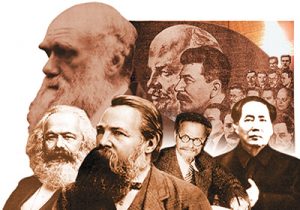
 American education is failing thousands of students every year. But this crisis is not just about poor scores in math and reading. It is a deeper failure, leaving entire generations of Americans without the most basic knowledge of the country’s past and its civic institutions.
The Victims of Communism Memorial Foundation’s first “Annual Report on U.S. Attitudes Towards Socialism” showed that just 42 percent of millennials view capitalism favorably compared to 64 percent of Americans over 65.
Perhaps more disturbingly, a third of millennials believe that more people were killed under former President George W. Bush than under notorious Soviet dictator Joseph Stalin, and just 37 percent of millennials had a “very unfavorable” view of communism.
These findings are merely the latest in a pattern of documented cluelessness on the part of the American population about history and civics—even among those with college degrees. This failure to teach citizens puts America’s future at risk and puts us out of step with the vision of the Founding Fathers.
In his advocacy for American education, Thomas Jefferson, author of the Declaration of Independence (for those who got the Stalin question wrong), wrote about the necessity of grounding young Americans in a solid base of knowledge about history, lest our republican form of government risk the rise of scheming demagogues and tyranny.
To Jefferson, the people were the ultimate guardians of their liberty—a tall order for those who remain completely in the dark about what liberty means or how it has been curtailed in the past. He wrote of the need to teach students history early in their lives, that “by apprizing them of the past will enable them to judge of the future; it will avail them of the experience of other times and nations; it will qualify them as judges of the ambitions and designs of men; it will enable them to know ambition under every disguise it may assume, and, knowing it, to defeat its views.”
It would be unfair to pin modern historical ignorance on the “stupidity” of millennials, who are generally entrepreneurial, and certainly tech savvy. There is certainly some blame to be shared by education institutions—K-12 and higher education alike.
Instead of merely lamenting the results of this tragic failure, concerned Americans can and should use the tools at their disposal to make things better for the next generations.
The educational choice movement, launched by economist Milton Friedman just over 60 years ago, has done a great job of opening up education options for American families using vouchers, tax credit scholarships, charter schools, and education savings accounts.
These programs have already produced some incredible results, but those who believe America needs to make a serious pivot toward a better civics education should look to growing freedom in the education sector as a way to reinvigorate civics.
“An education system that allows parents … to resolve the tensions between different visions of the purpose of education is key for America’s diverse republic.” —@InezFeltscher
For example, The Federalist author Joy Pullmann recently wrote about how a number of K-12 charter schools, which are publicly financed but privately run, have returned to focusing on a “classical education” for students. A Hillsdale College project called the Barney Charter School Initiative has founded 16 schools that focus on distributing “knowledge for and habits of self-government.”
As Pullmann noted, the purpose of these schools is to create an “academically coherent curriculum … that helps form a common culture and an attendant sense of national unity” that has not existed for generations.
Charter schools are not the only opportunity to improve civics education for young people. Innovative education savings account programs, which give parents control over the money used for their child’s education may open up enormous opportunities for parents of all backgrounds to seek out the right situation for their child.
If states move toward a more universal education savings account system, all parents will have the ability to seek out customized, quality education options, including civics and history courses. Imagine being able to pay for a history lesson being taught at a local university or on location at a historical site such as Gettysburg or Mount Vernon. Or, imagine, as education savings accounts allow, being able to hire a private tutor to teach a civics lesson, or to pay for on online history course.
Additionally, schools would have to compete for students and would have more pressure to give children a civics education their parents find satisfactory.
As American Legislative Exchange Council’s Inez Feltscher, my wife, noted in a paper about 21st century education savings account reform:
In an [education savings account] world, Hillsdale College, BJU Press [a source for Christian education materials], and college and career-ready standards would compete alongside dozens of other educational visions, from Howard Zinn’s ‘People’s History’ to hands-on learning to STEM-focused blended learning. An education system that allows parents, not politicians and bureaucrats, to resolve the tensions between different visions of the purpose of education is key for America’s diverse republic.
The depressing studies demonstrating rampant historical and civic illiteracy should provoke a sense of urgency rather than hopelessness. Future voters have a right to know what has gone before and we have the tools to make that happen, and parents should have the right to place their children in an educational environment that aligns with their values, civic and otherwise. The turnaround starts with educational choice.
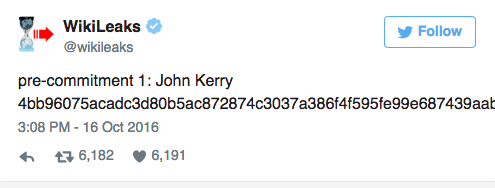
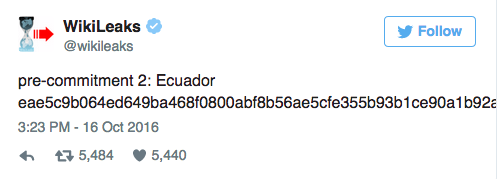
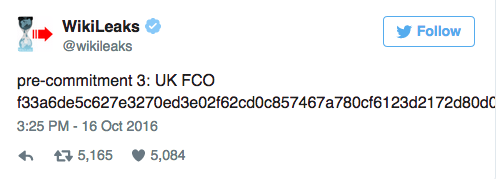
 I had planned on taking a day off from the blog, but developments with the Wikileaks email dump obliged me to stay on the job. Late last night a friend informed me that Julian Assange’s internet access had been disrupted. Let me give you a bit of background on Assange and Wikileaks. Julian Assange is an Australian citizen, computer programmer by occupation, who created the organization known as Wikileaks. Since its inception over ten years ago, Wikileaks has been dedicated to hacking into private government and business computer systems, and releasing to the public confidential information. The organization claims no political bias, and only releases information that it decides is in the public interest. You may recall that former U.S. Army soldier Bradley Manning was Court-martialed for sharing Top Secret military intelligence with Assange and Wikileaks. While Wikileaks was making a name for itself in the Bradley Manning affair, Assange found himself in “unrelated” difficulty with the Swedish police. Two women accuse Assange of sexual assault, relating to the time period that Assange was living in Sweden. Assange, who was in England when the accusations became public, has been hiding out at the Ecuadorian Embassy in London in order to avoid extradition to Sweden to face trial. While he has been holed up in the Embassy of Ecuador, Assange has continued to control Wikileaks. In fact, Assange claimed that Wikileaks had hacked into Hillary Clinton’s server when she was Secretary of State, and that Wikileaks intended to release these emails in October, just prior to the U.S. presidential election.
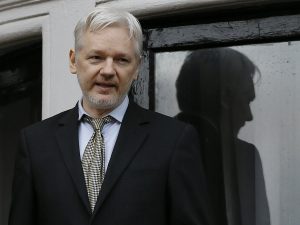 When October rolled around, and Wikileaks started releasing Clinton emails, the U.S. media was busy giving airtime and legitimacy to a string of slanderous, false stories about Donald Trump. A number of us noted with anger the “coincidental” timing of the stories about Trump, but we also realized that the media could not distract the American public forever. The Wikileaks emails would eventually be disseminated, and barring any unforeseen developments, the release would take place before the November election. Imagine my surprise when I discovered Sunday night, that Assange’s email access had been disconnected, just prior to the release of another batch of emails. Wikileaks, which claims to have other methods of sharing the emails, announced that Assange’s access was terminated by the government of Ecuador. I have also read that the CIA was involved, but I doubt the verac
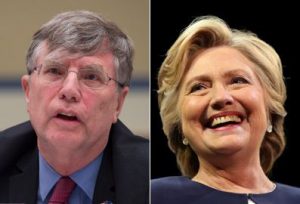 A senior State Department official proposed a “quid pro quo” to convince the FBI to strip the classification on an email from Hillary Clinton’s server – and repeatedly tried to “influence” the bureau’s decision when his offer was denied, even taking his plea up the chain of command, according to newly released FBI documents.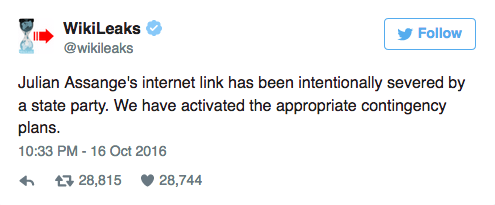
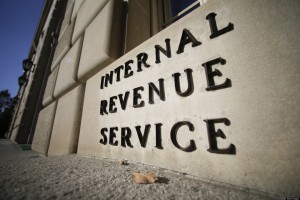 The Constitution has long been subject to attacks from individuals hostile to its guarantees of freedom, economic opportunity, and limited government, but in recent days no other provision has been as widely and intensely attacked as the First Amendment.
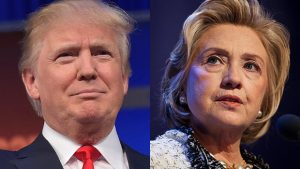 In the second debate of the 2016 presidential race, Trump came back strong, obviously deciding that the “gentleman” approach he had adopted for the first debate had not worked well in his favor.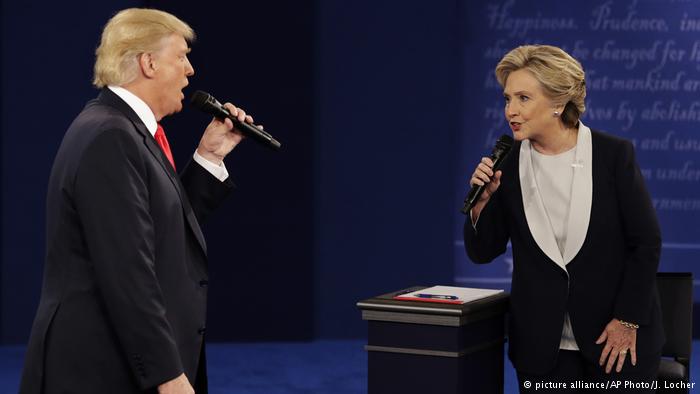
 On Thursday, the National Academies of Sciences, Engineering, and Medicine will release its report on “The Economic and Fiscal Consequences of Immigration.” According to the report, first generation immigrants as a group increase the nation’s fiscal deficit. In other words, the government benefits they receive exceed the taxes paid.
 Thus, as each adult immigrant without a high school diploma enters the country, the government would need to immediately put aside and invest $231,000 to cover the future net fiscal cost (total benefits minus total taxes) of that immigrant.
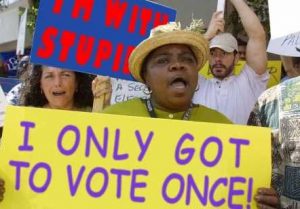
 The Obama administration opposes states verifying citizenship status of registered voters. Inquiries into voter fraud are typically met with derision from both government and the media—and in at least one instance with prosecution. Prosecutors don’t prioritize voter fraud, while convictions only garner light sentences.
 Some recent cases cited by the panelists demonstrate the reality of voter fraud.

 Federal lawmakers seeking to pinpoint the number of illegal immigrants who successfully sneak across the southern border ordered up a report from the Department of Homeland Security, but the agency refuses to release it and instead cites a misleading statistic that overstates the number who are nabbed, sources told Fox News.
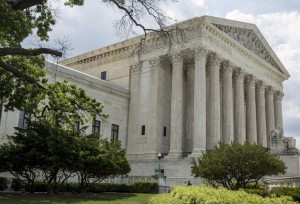 Sen. Chuck Schumer has reminded us just how important the upcoming presidential election will be in shaping the federal judiciary, calling getting a progressive Supreme Court his “number one goal.”
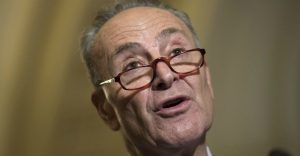 As Roll Call reported, Schumer “predicted that the Shelby County decision on voting rights would be overturned by a Supreme Court with the kind of progressive justices he would prioritize confirming as majority leader.”
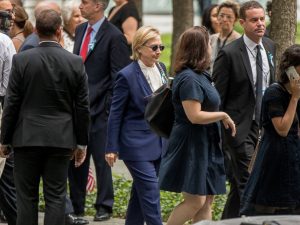 Moments ago, Democratic presidential candidate Hillary Clinton suddenly left 9/11 ceremonies at Ground Zero in New York City, stumbling to the curb to await her motorcade to arrive. Police sources say Mrs. Clinton seemed to be suffering from some kind of “medical episode.” Witnesses say she stumbled off the curb and appeared to fa
 With the presidential election two months away, a Kansas law requiring voters to show proof of citizenship remains in legal limbo.
 The ACLU lawsuit specifically targets the issue of Kansas’ requiring proof of citizenship from those registering to vote at the DMV.
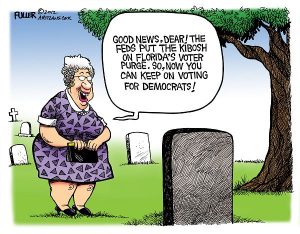 But the ACLU counters that, under the Kansas proof of citizenship law, people who register to vote at the DMV are not always told that they have to provide additional paperwork to get on the voter rolls. These people only learn later on—after they thought they had reg
 Kobach said he expects a decision from the 10th Circuit Court of Appeals before the Nov. 8 presidential election. Even if a decision comes close to the election, he says, his state has contingency plans no matter the ruling.
 Phyllis Schlafly, the iconic pro-family activist who rose to fame in the 1970s when she campaigned against the Equal Rights Amendment, has died at age 92, according to the Eagle Forum, the conservative organization she founded.
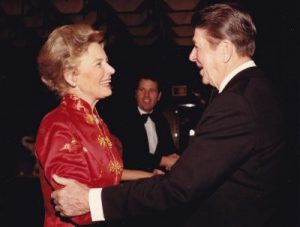 “Her focus from her earliest days until her final ones was protecting the family, which she understood as the building block of life,” read the statement. “She recognized America as the greatest political embodiment of those values. From military superiority and defense to immigration and trade; from unborn life to the nuclear family and parenthood, Phyllis Schlafly was a courageous and articulate voice for common sense and traditional values.”
 Moviegoers have attended American theaters over the past five years and watched three movies produced by conservative writer and producer, Dinesh D’Souza: 2016: Obama’s America (2012); America: Imagine The World Without Her (2014); and now, Hillary’s America: The Secret History Of The Democratic Party (2016).
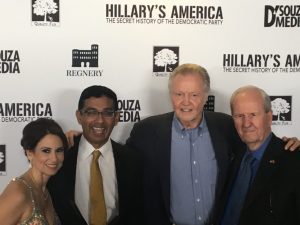 Because Presidential hopeful Donald Trump is seeking to educate Blacks and minorities about Democrat party exploitation, and has begun spreading his message that their policies have been destructive to Blacks and other minorities, it occurs to me that broadcasting D’Souza’s latest cinematic work might have immediate and far reaching benefits in spreading that message.
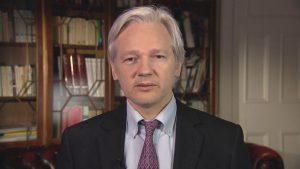 In back-to-back interviews with Fox News, Wikileaks founder Julian Assange criticized the U.S. media for “incredible politicization” in its coverage of the presidential election, and vowed there are more shoes to drop before the Nov. 8 vote.
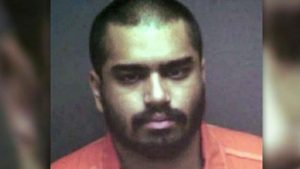 Federal authorities are investigating a weekend stabbing in Virginia to see whether the attacker may have been trying to behead a victim and whether the attack was inspired by the Islamic State terror group.
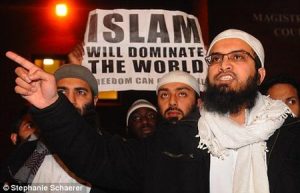 Did you know that 64 people were hacked to death by Islamist Terrorists this week in the Congo?
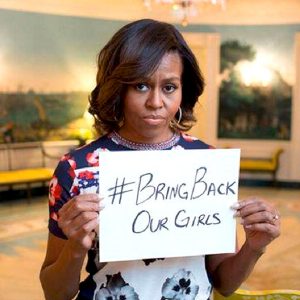 And hey–whatever happened to those hundreds of kidnapped school girls in Nigeria–taken to be sold off as young wives and sex slaves of Islamic Terrorists (cashing in on their promised virgins a little early)? Remember Michelle Obama’s #BringBackOurGirls campaign? If so, you’re the only one, because Michell and Barack haven’t mentioned a word about them in quite a while.
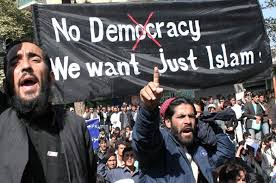 Here is the problem with these kinds of poll results. If these number hold true throughout the global Muslim population, 13 percent of the 1.6 billion Muslims in the world leaves us with approximately 208 million Muslims who support violent jihad.
Let’s concede at the outset that many students find their college years enlightening and enriching. But something is rotten in the state of academia, and it is increasingly hard not to notice.
Harvard’s former president, Derek Bok, mildly broke ranks with the academic cheerleaders when he noted that, for all their many benefits, colleges and universities “accomplish far less for their students than they should.” Too many graduates, he admitted, leave school with the coveted and expensive credential “without being able to write well enough to satisfy employers … [or] reason clearly or perform competently in analyzing complex, nontechnical problems.”
Bok noted that few undergraduates can understand or speak a foreign language; most never take courses in quantitative reasoning or acquire “the knowledge needed to be a reasonably informed citizen in a democracy.” Despite the massive spending on the infrastructure of higher education, he conceded, it was not at all clear that students actually learned any more than they did 50 years ago.