
The Trump administration has released the second tranche of declassified UFO/UAP records under the new Presidential Unsealing and Reporting System for UAP Encounters, or PURSUE — and the latest batch appears to be far more than a curiosity dump. See Release Documents
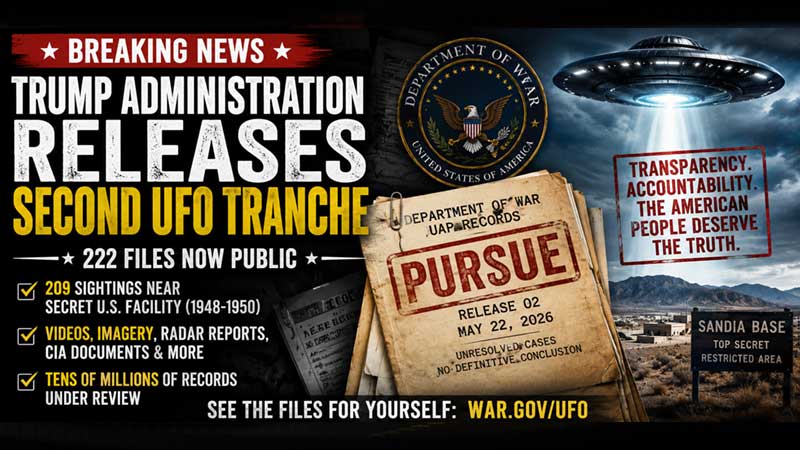
The Department of War posted the new release on May 22, 2026, following the first PURSUE tranche released on May 8. The agency describes the records as unresolved cases involving UAP, meaning the government has not made a definitive determination about the nature of the objects or phenomena involved. The Department says additional tranches will continue to be released on a rolling basis.
The second release includes 222 files involving alleged UFO sightings, including references to “green orbs,” “discs,” and “fireballs.” One of the most striking documents is a 116-page file concerning sightings and investigations near a top-secret facility in Sandia, New Mexico, from 1948 to 1950. The Department reportedly says that file contains 209 sightings near the military base.
That alone should command public attention.
For decades, Americans were told that serious UFO questions belonged on the fringe. Now the federal government is not merely admitting that records exist, it is publicly hosting them, organizing them, and inviting the public to review them.
The Department of War’s PURSUE page states that President Trump directed the Secretary of War and other agencies to begin identifying and releasing government files related to “alien and extraterrestrial life,” UAP, UFOs, and related information. The Department says the process involves coordination among dozens of agencies and the review of tens of millions of records, many of them decades old and still on paper.
Defense Secretary Pete Hegseth framed the release as a transparency measure, saying the files had “long fueled justified speculation” and that “it’s time the American people see it for themselves.”
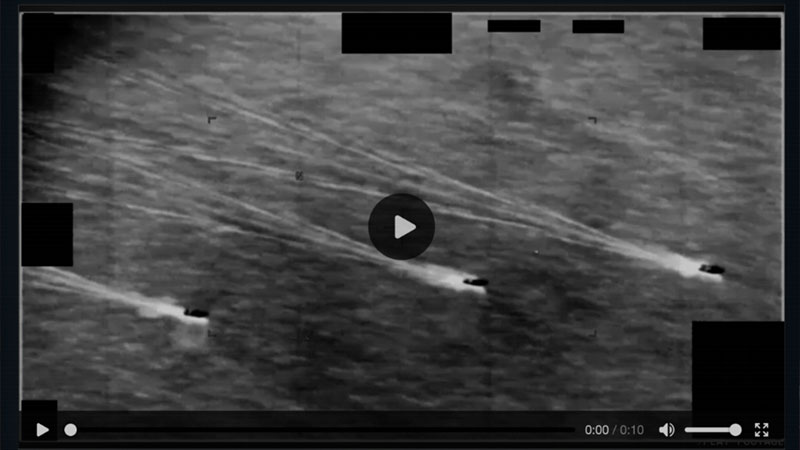
The second tranche also includes imagery and video material, including screenshots likely derived from infrared sensors, a CIA report about a sighting in the USSR, a first-hand UAP narrative, NASA-related material, an enhanced unidentified-object report from a PANTEX radar tower, and images showing objects in formation and over water.
Importantly, none of this means the government has confirmed extraterrestrial visitors. Experts reviewing the first batch found new videos of known sightings but no conclusive proof of alien technology or extraterrestrial life.
But that is not the same as saying there is nothing here. The more important development is institutional. These files are not appearing through leaks, anonymous message boards, or blurry third-hand claims. They are being released through an official government portal under a presidential transparency directive.
That changes the public conversation.
For years, skeptics could dismiss UFO witnesses by saying, “If this were real, the government would say something.” Now the government is saying something — not that every sighting is alien, but that many cases remain unresolved and deserve serious review.
The Department of War is even inviting private-sector analysis, noting that unresolved cases may remain unexplained because of insufficient data and that outside expertise is welcome.
That is a major shift. Although, it would be helpful if the DOW released the original videos and sensor recordings with the metadata intact so citizen and scientific analysis can be performed with a modicum of accuracy.
This means the old policy of silence, ridicule, and bureaucratic burial is weakening. It also means the public now has a direct reason to go to the official PURSUE archive and examine the material for itself.
That may be the most important part of the story.
The American people paid for these investigations. The American people funded the military, intelligence, and scientific agencies that collected these reports. And the American people have every right to see what their government has hidden, withheld, classified, or ignored for decades.
The second PURSUE release does not answer every question. It raises more. But at least we are able to ask better informed questions.
Why were there hundreds of reports near sensitive military sites? Why do so many sightings cluster around defense, nuclear, aerospace, and intelligence facilities? Why did the government spend decades collecting and classifying reports it often publicly mocked? And why are Americans only now being allowed to review records that should have been available long ago?
Whatever one believes about the ultimate origin of UAP, the transparency itself is historic. The files are now public. The questions are now legitimate.
And the era of telling Americans not to look up may finally be ending.
James Thompson is an author and ghostwriter, and a political analyst. He is an analyst of UAP reports, and author of the book Worlds Without Number.
Leave a Reply