
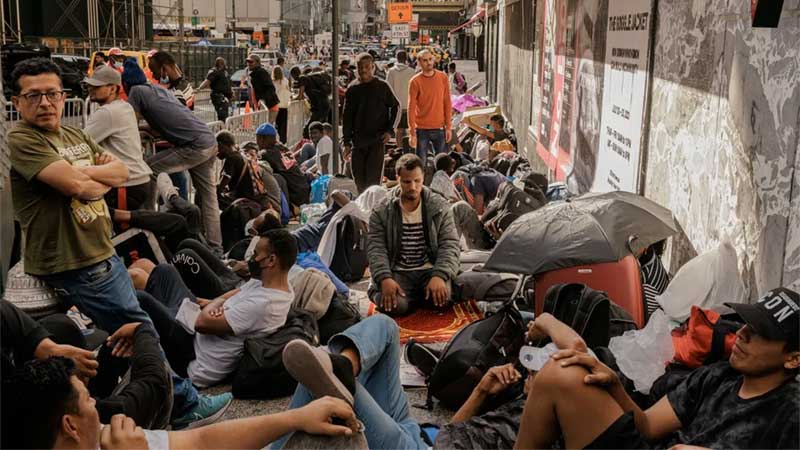
When President Lyndon Johnson launched the Great Society and the War on Poverty in the 1960s, Americans were promised something extraordinary: a nation that would dramatically reduce poverty through an unprecedented expansion of federal programs.
Sixty years later, taxpayers have spent tens of trillions of dollars on anti-poverty programs, welfare initiatives, housing assistance, food subsidies, Medicaid, educational interventions, homelessness programs, and countless grant-funded efforts.
Yet poverty remains. Homelessness remains. Dependency remains. Generational dysfunction remains. In fact, things have only grown exponentially worse over the decades since the Democrat Party set about to eradicate poverty in America.
Especially in many of America’s largest cities—cities governed almost exclusively by progressive political leadership for decades—the problems are so much worse, with hundreds of murders and tens of thousands of abortions, affecting minorities in ways that have devastated them.
This is not an argument against helping the poor. Americans have always been generous people. The question is whether the systems built in the name of helping the poor have become more effective at sustaining themselves and lining the campaign pockets of the Democrat politicians than solving the problems they were created to address.
Los Angeles, for example, provides a striking example Year after year, voters approve new spending measures. Billions are allocated. New agencies are formed. New task forces are announced. New consultants are hired. New nonprofits receive grants. There are approximately 100,000 government employees in Los Angeles County suckling at the public teet, dolling out billions every year to their close friends and associates at NGOs to eradicate poverty.
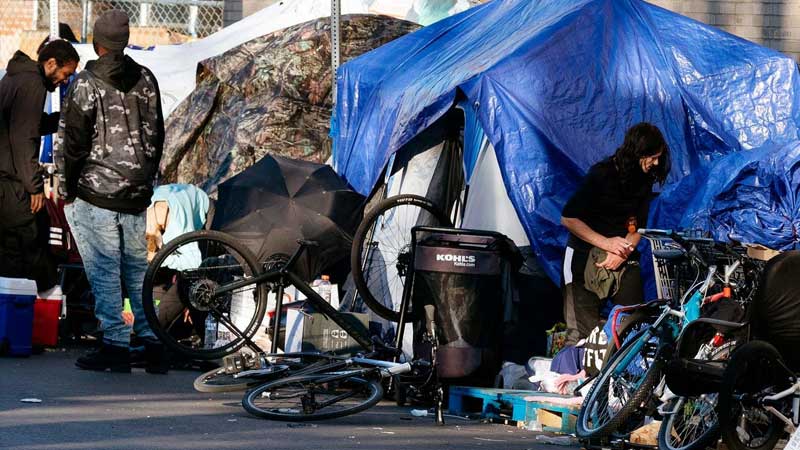
Yet tents continue to line sidewalks. Encampments grow. Drug addiction spreads. Human waste stains the sidewalks. Public frustration mounts.
Even Los Angeles Mayor Karen Bass has publicly expressed frustration with the bureaucratic obstacles she encountered after taking office. When asked why she has failed to miserably to end homelessness in Los Angeles, a key campaign promise she made in her first run for L.A. mayor, she responded that she was surprised how entrenched bureaucrats fought her at every turn, doing their best to ensure poverty continues in Los Angeles. The system is internally resistant to meaningful reform and change.
That observation raises a difficult question: What happens when an entire ecosystem of agencies, contractors, consultants, nonprofits, grant recipients, advocates, and bureaucracies becomes financially dependent on the continued existence of a problem? Is there any hope of ever overcoming the problems being tackled by the agencies?
Some of the people working within these systems undoubtedly have good intentions. Many genuinely want to help. But incentives matter.
If homelessness disappeared tomorrow, thousands of jobs, contracts, grants, consulting arrangements, administrative positions, and advocacy organizations would no longer have the same purpose.If poverty were dramatically reduced, vast portions of the poverty-management apparatus would shrink. They would lose their funding, and close their doors.
The numbers themselves are staggering. Various audits and analyses have estimated that Los Angeles and California governments spend the equivalent of roughly $60,000 to well over $100,000 per homeless individual per year when all homelessness-related programs, emergency services, housing initiatives, healthcare, law enforcement, sanitation, and administrative costs are considered. New York City’s spending has often been reported at even higher levels for individuals placed in shelters and supportive housing programs. At those expenditure levels, taxpayers are entitled to ask a simple question: if society can spend the equivalent of a middle-class income—or in some cases enough to cover a mortgage payment on a modest home—every year for a single homeless individual, why do the encampments continue to grow? After decades of expanding budgets and billions of dollars in appropriations, many Americans see a system that appears remarkably successful at spending money, creating programs, and sustaining bureaucracies, yet remarkably unsuccessful at significantly helping people escape homelessness, addiction, dependency, and poverty.
That does not necessarily mean that low level bureaucrats are secretly conspiring to keep people poor. In the best possible light, it does mean that institutions can gradually develop incentives that differ from the interests of the people they were created to serve.
Americans see the results every day. The country has become increasingly divided between those who believe government programs simply need more funding and those who believe the programs themselves have become the problem.
Many taxpayers are asking a straightforward question: If trillions of dollars and six decades of intervention have not produced the promised results, or any results; why should citizens believe that the next trillion dollars will succeed where the previous trillions failed?
That question deserves an honest answer. Because the true measure of compassion is not how much money is spent. It is whether lives are actually improved.
And after sixty years of promises, many Americans are beginning to wonder whether the poverty industry has become better at administering poverty than ending it.
Leave a Reply