Although the Democratic Socialists of America and the Democratic Party remain separate organizations, many of their policy priorities increasingly intersect.
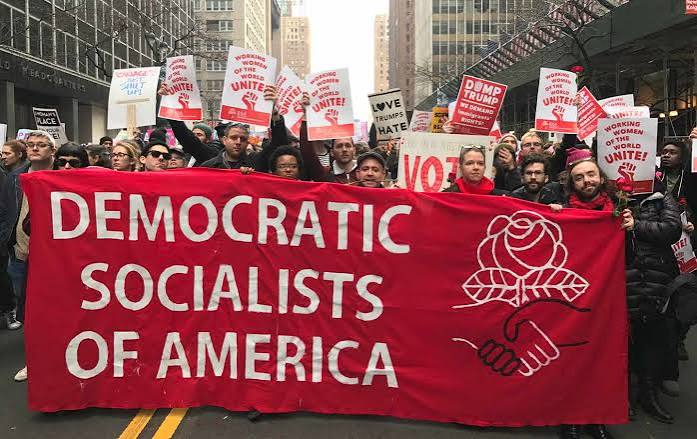
The rise of openly self-described democratic socialists and even communists within American Democratic Party politics has revived a question that would have seemed unlikely a generation ago: How different is the Democratic Party from the Democratic Socialists of America?
For decades, American politics treated socialism as a fringe ideology. Both Republicans and Democrats generally embraced a market-based economy, private property, and entrepreneurial capitalism, while debating how extensively government should regulate markets and provide social programs.
Today, however, the political landscape has changed. The Democratic Party has moved steadily left, to the point that they have now intersected with the Democratic Socialist Party, due to their common views and goals of transferring wealth and power to just one party, and doing away with Constitutional safeguards.
The Democratic Socialists of America (DSA) has grown substantially since the mid-2010s, and several prominent elected officials identify as democratic socialists or have received support from the organization. At the same time, many policy ideas once associated primarily with socialism have become part of mainstream debate within the Democratic Party.
Different Organizations, Similar Philosophies
The Democratic Party is one of America’s two major political parties and includes a broad coalition of moderates, liberals, progressives, and some elected officials who identify as democratic socialists. Its platform lightly supports a mixed-market economy, private enterprise, while emphasizing its extreme brand of civil rights protections for non-citizens, environmental regulation, and a social safety net that includes Medicare for all.
The Democratic Socialists of America is a separate political organization that advocates for a swifter transformation of the economy. It supports expanding worker ownership and cooperative enterprises, increasing public ownership in most sectors, strengthening labor unions, and significantly expanding the role of government in healthcare, housing, education, and other public services, and most areas of American life.
Healthcare
One area of significant overlap is healthcare. Many Democrats support strengthening and expanding the Affordable Care Act, while others within the party advocate Medicare for All. The DSA explicitly endorses a universal single-payer healthcare system.
Although Democrats disagree internally about the best approach, both organizations generally support broader access to healthcare than currently exists. The difference often lies only in the degree of government involvement rather than the objective of expanding coverage to complete government domination.
Higher Education
Education provides another example. Many Democrats support reducing college costs, expanding Pell Grants, and forgiving most student debt. The DSA generally advocates tuition-free public colleges and universities as a permanent policy.
Labor and the Economy
Both organizations strongly support labor unions. The Democratic Party generally advocates strengthening collective bargaining rights and improving workplace protections.
The DSA goes further by promoting worker cooperatives, greater employee ownership, and broader democratization of economic decision-making, and the seizure of the means of production and distribution; essentially, pure communism.
Climate Policy
Climate policy has also become an area of considerable overlap. Both organizations support substantial government action to reduce greenhouse gas emissions and encourage clean-energy investment.
The DSA generally favors larger public investment, expanded government planning, and more extensive public ownership in portions of the energy sector. Many Democrats support aggressive environmental regulation while continuing to rely primarily on heavily regulating private markets and private investment.
Of course, none of these proposed policies is designed to actually affect the climate. They merely use climate philosophy to facilitate the transfer of high levels of wealth and power to the Left.
Taxation
Both organizations generally support higher taxes on many high-income households than current law provides. The DSA advocates broader wealth taxes and more extensive redistribution through public spending.
Many Democrats also support increasing taxes on higher-income Americans, though the party encompasses a wider range of views regarding how far redistribution should extend. Of course, as in all examples of socialism and communism in the past, “the rich” turn out to be nearly everyone, and eventually, all citizens become impoverished through socialistic policies, except for the elite leaders.
Public Ownership
Perhaps the clearest distinction involves ownership itself.
The Democratic Party still accepts the concept ofprivate ownership of businesses operating within a highly regulated market economy.
The DSA argues that more sectors of the economy must be seized by government, and be publicly owned, cooperatively owned, or democratically controlled by “workers” meaning them.
The Broader Question
The broader debate extends beyond labels. It concerns the proper relationship between government, markets, and individual liberty. Democrats earn a D minus in these areas, where the DSA earns a prison sentence.
Supporters of expanded government programs argue they reduce inequality, improve economic security, and provide opportunities that markets alone may not deliver. Critics argue that larger government increases public debt, reduces economic flexibility, discourages investment, and places more decisions under political rather than market control, and will inevitably reduce America to Venezuela or Cuba status.
These competing visions have shaped American politics for generations and continue to influence debates over healthcare, education, taxation, housing, labor policy, and environmental regulation.
Looking Ahead
The conversation about democratic socialism and the Democratic Party is unlikely to end soon. As younger progressive leaders gain prominence and the Democratic Party continues to devolve, voters will continue to evaluate where the party sits along the spectrum between market-oriented liberalism and democratic socialism.
Leave a Reply