
Newly declassified FBI records reveal an intimate relationship, a years-long counterintelligence investigation, suspected foreign campaign contributions, and disturbing questions about Chinese efforts to cultivate rising American politicians.

For nearly six years, Americans have heard two dramatically different versions of the Eric Swalwell–Christine Fang story.
One version portrayed it largely as partisan gossip: a rising California Democrat encountered a Chinese woman active in Bay Area politics.
Newly declassified FBI records reveal that abbreviated version as a lie.
According to records released yesterday, Swalwell acknowledged to FBI investigators that he had engaged in what he described as “physical relations” with Christine Fang—better known as Fang Fang—on a “handful of occasions.” The disclosure provides an important fact that was absent from the original public reporting when the controversy erupted in 2020. Fang Fang would show up at Swalwell’s rooms “wearing no panties,” and the security team was under instruction to allow her in.
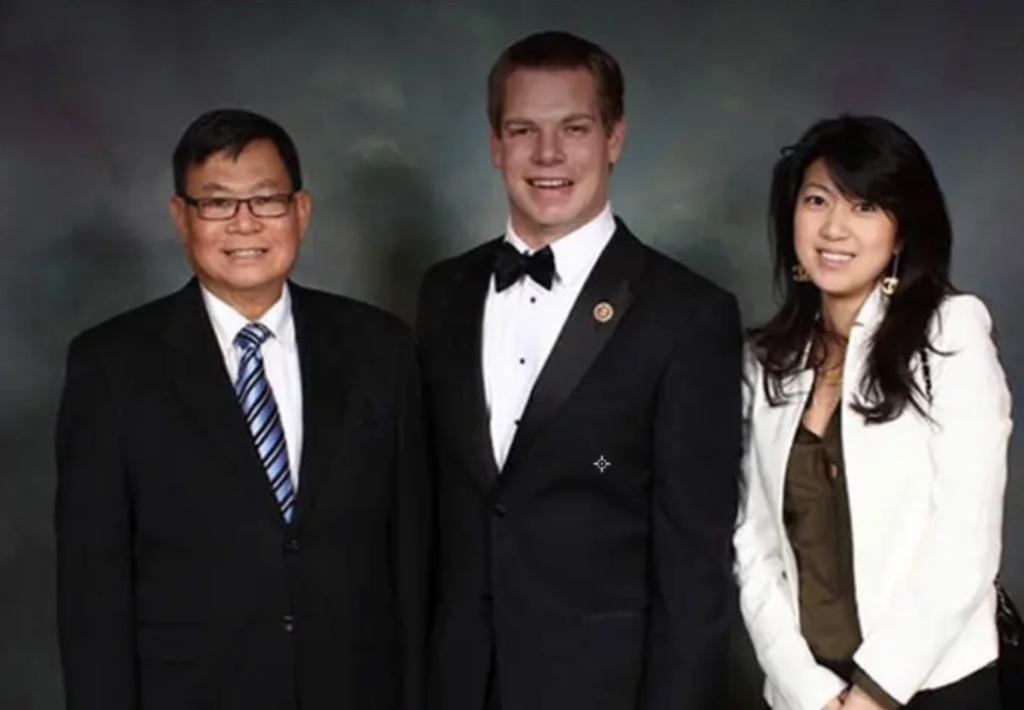
More importantly, the documents illuminate the concerning breadth of the FBI’s concerns about Fang herself and about Chinese Intelligence efforts to cultivate relationships with American politicians.
The FBI investigation ran from 2014 through 2017 under the code name “Freshman Fifteen.” Investigators examined suspected foreign-source campaign contributions, congressional internships and Fang’s relationships with American political figures.
Swalwell was never criminally charged by Biden’s DOJ and a House Ethics Committee investigation ended without disciplinary action against him.
This Was About Much More Than Sex
Federal investigators believed Fang was associated with China’s intelligence apparatus and were sufficiently interested in her activities that the FBI at one point attempted to develop her as an intelligence source.
The FBI discovered the Swalwell relationship during that effort. Investigators eventually concluded that Fang could not be trusted as a source.
The documents also provide additional information concerning Fang’s political activities. Investigators examined campaign contributions and internships in Swalwell’s congressional office, finding that she was planting female Chinese Intelligence operatives on Swalwell’s staff in exchange for political contributions.
Of course, foreign nationals are prohibited from contributing to American federal campaigns for an obvious reason: Americans, not foreign governments or foreign nationals, are supposed to choose and influence America’s political leadership.
And the broader question remains unavoidable:
How did a woman under FBI counterintelligence scrutiny for suspected connections to America’s principal geopolitical adversary obtain such extraordinary access to a rising member of Congress?
China’s Influence Operations Are Not Hypothetical
The larger story is Communist China’s patient approach to cultivating political influence inside the United States. Intelligence operations rarely begin with a stranger walking into a congressman’s office and requesting classified documents.
They begin with relationships. Access. Introductions. Fundraisers. Friendships. Political assistance. Personal vulnerabilities.
And sometimes, sex.
An intelligence service does not necessarily need its target to become a conscious spy. Simply establishing access to an ambitious politician can produce information about personalities, relationships, political networks, schedules, vulnerabilities and future opportunities.
That is why the original Fang story was significant even before these new documents appeared.
The original 2020 Axios investigation reported that U.S. intelligence officials believed Fang participated in a Chinese political-influence operation targeting promising American politicians. She assisted Swalwell’s fundraising efforts and helped place interns in his congressional office.
Today’s declassified records provide considerably more context about just how close the relationship became.
Then Swalwell Joined the Intelligence Committee
The chronology makes the episode especially uncomfortable. Swalwell entered Congress in 2013 and subsequently served on the House Permanent Select Committee on Intelligence beginning in 2015.
Members of that committee oversee extraordinarily sensitive national-security matters involving the CIA, NSA, covert activities, foreign intelligence operations and threats posed by adversarial governments—including China.
Counterintelligence is supposed to identify vulnerabilities before classified information is compromised.
Imagine reversing the political parties and changing only one country.
Suppose a Republican member of the House Intelligence Committee admitted having repeated sexual encounters with a woman whom the FBI suspected of connections to Russian intelligence. Would Washington dismiss questions about that relationship as partisan politics?
Would journalists consider the matter unworthy of aggressive investigation? Would congressional leaders insist there was nothing interesting to see because GOP prosecutors ultimately filed no espionage charges?
Americans can answer those questions for themselves.
The “Freshman Fifteen” Investigation
The newly disclosed existence and scope of the FBI investigation deserve particular attention.
According to the newly reported documents, “Freshman Fifteen” operated from approximately 2014 through 2017 and examined Fang’s activities surrounding American politicians, including suspected campaign-finance activity.
Investigators reportedly believed Fang herself may have violated federal laws governing foreign political contributions. Reporting on the records says investigators believed she understood the prohibition against foreign nationals contributing to American campaigns and examined whether American intermediaries had been used instead.
Fang departed the United States in 2015. The FBI dropped its investigation. But Americans should understand that “not charged” is not synonymous with “nothing happened.”
The newly released records demonstrate that the FBI considered the situation sufficiently serious to conduct a multiyear counterintelligence investigation.
Why Didn’t Americans Know?
That brings us to perhaps the most important question raised by the entire release. Why did Americans have to wait until 2026 to learn so much of this?
When the Fang controversy became public in 2020, Americans did not have the investigative record now available. It was essentially covered up by the Deep State FBI. They received fragments of the story through anonymous intelligence sources, partisan arguments, and carefully worded political responses.
The FBI knew substantially more. Investigators had interviewed Swalwell. They knew the nature of his personal relationship with Fang. They had investigated Fang’s political activities. They had examined suspected campaign-finance issues. They had attempted to assess her intelligence connections.
Yet the public remained largely in the dark about the underlying investigative material. Only conservative news outlets like Fox News provided the public coverage of the outrageous behavior of Rep. Swalwell, and later, his “Best Friend,” Sen. Ruben Gallego of Arizona.
National-security investigations legitimately require secrecy while they are underway. Sources and methods must be protected. Active counterintelligence operations cannot simply be published on the Internet. But an investigation that concluded years ago raises a different question.
At what point does protecting legitimate national-security information become protecting Washington from embarrassment? That question deserves an answer.
What About Ruben Gallego?
The release has also renewed attention on Sen. Ruben Gallego (D) because of his extraordinarily close political and personal relationship with Swalwell. Gallego and Swalwell were exceptionally close, by their own admission.
Gallego served as national chairman of Swalwell’s short-lived 2020 presidential campaign. The two traveled together often, on foreign junkets paid for by foreign countries. They were congressional roommates, and maintained a close friendship. Swalwell has reportedly described Gallego as his “best friend in the world.”
That makes questions about what Gallego knew politically interesting. Recent revelations about Galleo’s extra-marital affairs are likewise deeply disturbing, particularly when discussing allegations involving national security.
When prominent politicians campaign together, travel together, live together, have affairs at the same time, and publicly defend one another, reporters are perfectly entitled to ask what each knew about controversies surrounding the other.
Patriotism Should Not Be Partisan
There is a principle here that should transcend political affiliation. China conducts sophisticated intelligence, cyber, economic and political-influence operations against the United States. American intelligence officials under Republican and Democratic administrations alike have repeatedly warned about their scale.
Protecting America from foreign influence therefore cannot depend upon which letter follows a politician’s name.
If a Republican develops an intimate relationship with someone suspected of connections to Russian intelligence, investigate it. If a Democrat develops an intimate relationship with someone suspected of connections to Chinese intelligence, investigate it.
If foreign campaign contributions appear to be entering American elections through intermediaries, investigate them.
If foreign operatives are cultivating young American politicians whom they believe may someday become governors, senators, presidential candidates or members of sensitive congressional committees, expose those operations.
National loyalty should come before party loyalty.
The Fang Fang Story Is No Longer a Punchline
For years, “Fang Fang” became a punchline in partisan political arguments.
The newly released records demonstrate why it never should have been. Foreign intelligence services cultivating American politicians is serious business.
Sexual relationships can create counterintelligence vulnerabilities. Foreign campaign money is prohibited for a reason. Access to congressional offices matters. Access to congressional personnel matters. And access to politicians who later oversee America’s intelligence agencies matters enormously.
The FBI investigated Christine Fang for suspected connections to Chinese intelligence personnel and political-influence activities. Investigators examined suspected foreign-source campaign contributions and congressional internships. And Swalwell acknowledged an intimate relationship with Fang on a “handful of occasions” during the period when his political career was rapidly ascending toward one of the most sensitive committees in Congress.
Americans deserved to know those facts. They deserved to know them years ago. And that leaves Washington with questions that cannot be dismissed simply by pointing out that no prosecution resulted:
What exactly happened? Who knew about it? What did the FBI conclude about China’s operation? And why did the American people have to wait more than a decade to see so much of the underlying record?
The American press and Democratic leadership did everything they could to hide the story, and lied about the facts for over 10 years while they boosted Swalwell’s political career. That is why the American people are only learning about it today.
Leave a Reply