
As the Lindsay Clancy jury deliberates, hundreds of supporters dressed in pink have turned a horrific triple killing into a national debate over motherhood, mental illness—and criminal responsibility
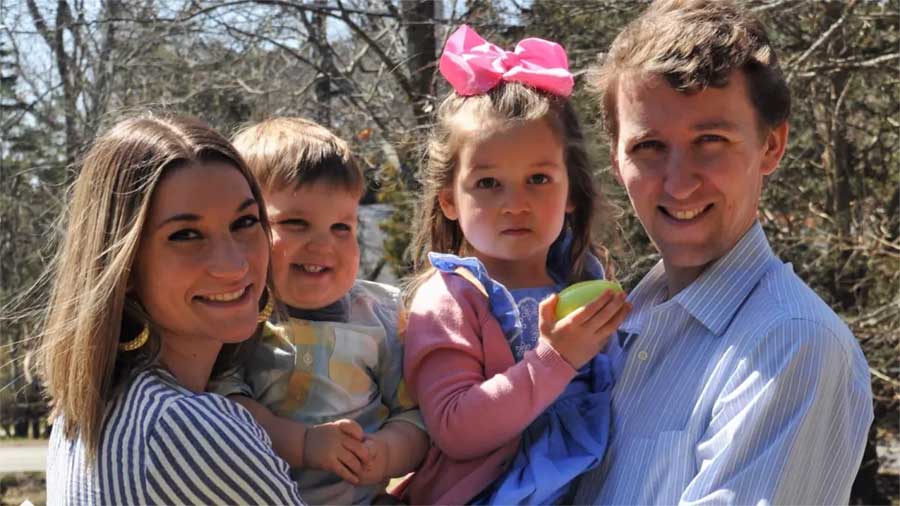
Three children are dead. Their mother killed them. Those two facts are not disputed by either side in a Massachusetts courtroom.
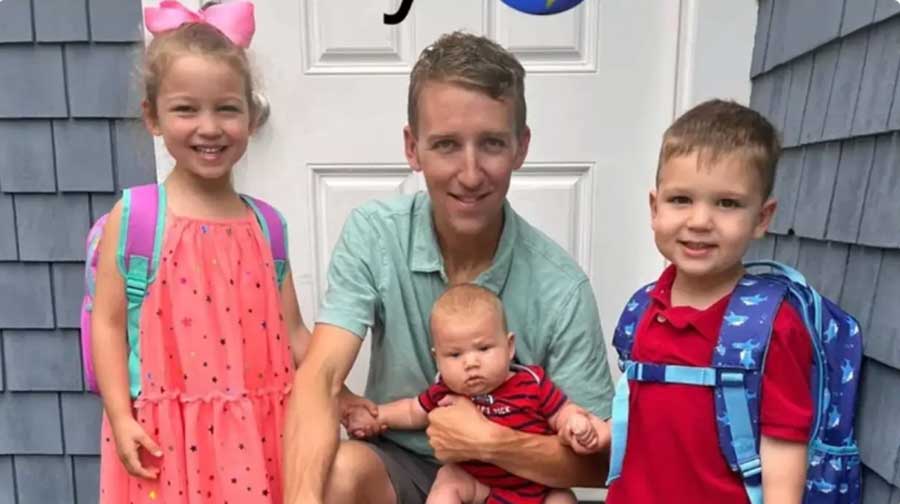
Cora Clancy was five years old. Her brother Dawson was three. Their baby brother, Callan, was eight months old. On January 24, 2023, their mother, Lindsay Clancy, strangled all three children with exercise bands in the basement of the family’s Duxbury home after she sent her husband to pick up medication and takeout food. After murdering her three children, Clancy then attempted to kill herself, ultimately leaving herself paralyzed.
What the jury must decide is something considerably more complicated: Was Lindsay Clancy legally responsible for what she did?
After five weeks of testimony, the case went to a Plymouth Superior Court jury Thursday. The panel deliberated for several hours Thursday and approximately seven more Friday without reaching a verdict. Jurors requested to examine prescription medications and the knife involved in Clancy’s suicide attempt before being dismissed for the weekend. Deliberations resume Monday morning.
The jury has five potential outcomes before it: first-degree murder, second-degree murder, manslaughter, outright acquittal, or a finding that Clancy was not criminally responsible because of mental illness. A first-degree murder conviction could result in life imprisonment without parole; a finding of no criminal responsibility could result in confinement in a psychiatric institution rather than prison.
The defense: This was psychosis, not murder in the legal sense
Nobody seriously disputes that Clancy was suffering psychologically before the killings.
She had sought psychiatric treatment, experienced suicidal thoughts, contacted crisis resources and underwent hospitalization. Her defense maintains that she developed postpartum psychosis following the birth of Callan and was subjected to an ineffective and excessive succession of psychiatric medications. Defense experts testified that she was psychotic when she killed her children and therefore incapable of appreciating the wrongfulness of what she was doing.

Defense attorney Kevin Reddington consequently isn’t asking the jury to believe someone else killed Cora, Dawson and Callan. He acknowledges that Clancy did it. His contention is that mental disease had so profoundly destroyed her rational capacity that Massachusetts law cannot hold her criminally responsible.
That could be a legitimate legal defense, and it deserves to be considered on the evidence rather than dismissed because the crime is horrifying.
But prosecutors have presented a profoundly different interpretation.
Prosecutors say there was planning
The prosecution contends Clancy was depressed and psychologically troubled but not psychotic to the degree required to eliminate criminal responsibility.
Prosecutors emphasize the sequence preceding the killings. Clancy sent her husband Patrick awayt from the house to obtain medication for one of the children and collect dinner. While he was away, she had the opportunity she needed to kill the children. She strangled them individually with exercise bands before attempting suicide.
Prosecution experts also challenged Clancy’s subsequent account that she heard a voice directing her to kill the children. Forensic psychologist Kirk Heilbrun testified that he doubted she was suffering an acute psychotic episode and concluded that she understood the wrongfulness of her conduct. Other prosecution experts pointed to inconsistencies in her descriptions of what happened.
That conflict—not whether Clancy killed her children—is the case the jury is deciding.
Then came the women in pink
Outside the courthouse, however, something unusual happened.
Hundreds of Clancy supporters assembled wearing bright pink. Associated Press reporters estimated approximately 300 women and a few men participated in one demonstration. Shirts carried messages including “Believe,” “She Needed Help” and “Peace For Lindsay.” Some supporters traveled considerable distances to attend.
These supporters have said nothing about Cora, Dawson and Callan in this extraordinary public spectacle.
Whatever ultimately happened inside Lindsay Clancy’s mind, three human beings incapable of defending themselves were brutally murdered. The oldest had barely begun school. The youngest had lived only eight months.
A society can demand better psychiatric treatment for mothers while remembering their murdered children. Those propositions do not conflict.
When the accused becomes the symbol
The unsettling feature of the demonstrations is not concern about postpartum psychosis. That concern is legitimate and potentially lifesaving. The uncomfortable question is why the person who killed three children became the visual centerpiece of the movement.
There are countless women who have suffered postpartum depression and psychosis without killing anyone. Their experiences deserve attention. So do women who recognized frightening symptoms and sought emergency intervention, families who protected mothers and babies during psychiatric crises, and physicians attempting to recognize an uncommon but extremely dangerous condition.
Making Clancy herself the symbol creates an unavoidable moral ambiguity.
One recent commentary from the political left demonstrates how far that reframing can go. Left Voice, a self-described revolutionary socialist publication, published an essay with the remarkable headline “In the Trial of Lindsay Clancy, Capitalism Is the Guilty Party.” Its authors argued that the capitalist healthcare system—not Clancy—was the true guilty party.
That is no longer simply an argument that mental illness can eliminate legal responsibility. It relocates moral responsibility from the individual who performed a murderous act onto “the system.” It echoes Luigi Mangione shooting United Healthcare CEO Brian Thompson in the back, and the large cast of young liberal supporters of that “heroic” act of murder.
And that deserves examination.
Compassion cannot require forgetting the victims
Mental illness is real. Postpartum psychosis is real. A human being suffering a genuine psychotic break may be incapable of understanding reality in a way that fundamentally changes criminal responsibility. American law has recognized versions of that principle for generations.
The jury, not demonstrators, commentators or politicians, must determine whether the evidence proves that happened here. But compassion for a mentally ill defendant need not require the moral displacement of her victims.
There is something deeply uncomfortable about seeing hundreds of people assembling around the person who admittedly murdered three defenseless children while the children’s names risk becoming secondary characters in their own deaths.
Cora. Dawson. Callan. They were not abstractions in a debate about America’s healthcare system. They were children. Beloved by their decimated father and extended family members.
Is there a broader cultural question?
The spectacle also raises a difficult cultural question that extends beyond this particular defendant.
Modern political debate increasingly frames traditional obligations through the vocabulary of autonomy. Marriage can be discussed primarily in terms of personal fulfillment. Pregnancy becomes a question of bodily autonomy. Parenthood is frequently discussed in terms of its economic and psychological burdens. Abortion politics, particularly regarding later stages of pregnancy, places the competing moral claims of mother and unborn child at the center of an intense national disagreement.
The Clancy case is legally and morally different from abortion, and it would be inaccurate to claim that the women outside the courthouse necessarily connect the two.
Nevertheless, a conservative cultural critique can legitimately ask whether something happens to a society when the language of adult autonomy consistently becomes louder than the language of obligation toward dependent children.
That is a philosophical question, not evidence concerning Clancy’s guilt.
But this case makes the question difficult to avoid.
Now twelve jurors must decide
The jury of nine women and three men has already spent more than ten hours examining an enormous record developed during five weeks of testimony. Their early requests for prescription medications suggest, although we should not speculate too far, that they are carefully considering the medical evidence central to Clancy’s defense.
They return Monday. Their responsibility is narrower than America’s. They must determine Lindsay Clancy’s criminal responsibility under Massachusetts law.
The rest of us confront a different question. Can we acknowledge severe mental illness without romanticizing the person who commits an atrocity? Can we identify failures in psychiatric medicine without automatically transferring responsibility from individuals to institutions? Can we have compassion for a desperately ill mother while reserving our deepest compassion for three children whose lives were taken from them?
We should be capable of all three. Whatever verdict eventually comes from Plymouth Superior Court, one fact should never become obscured by pink shirts, political ideology, psychiatric terminology or television cameras.
Cora Clancy was five. Dawson was three. Callan was eight months old. They deserve to remain at the center of this story.
Leave a Reply