
Government documents reveal official field investigations, photographs of enormous footprints, plaster casts and disturbing encounters in the American wilderness.
November 24, 2026 | Federalist Press
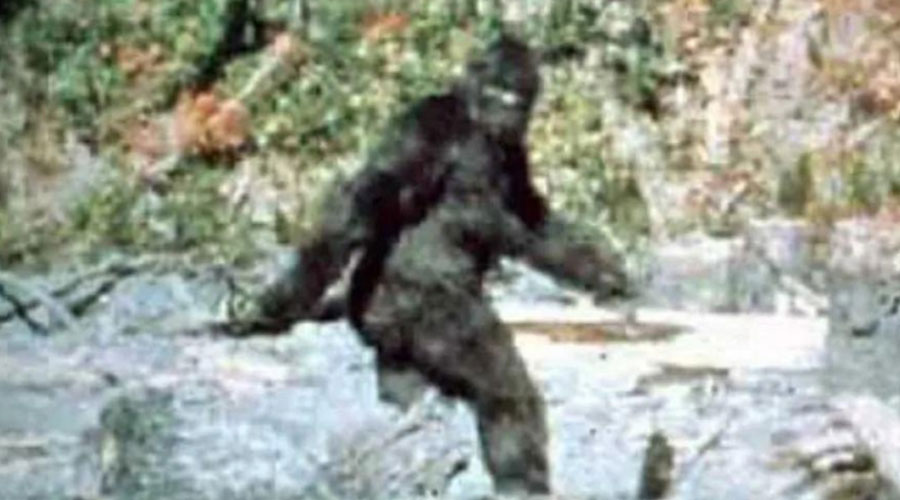
First came the UFO files. Now comes Bigfoot.
As the Trump administration continues releasing government records concerning unidentified aerial phenomena, another federal agency has quietly opened its archives on one of America’s most enduring mysteries: the existence of an enormous, unidentified, humanlike creature reportedly inhabiting the remote forests of North America.
The U.S. Department of Agriculture, through its Forest Service, has published three historical files under the designation “Bigfoot/Sasquatch Records.” Originally posted on October 15, the documents attracted widespread national attention over the weekend following reporting by The Washington Post, Fox News and other major media outlets.
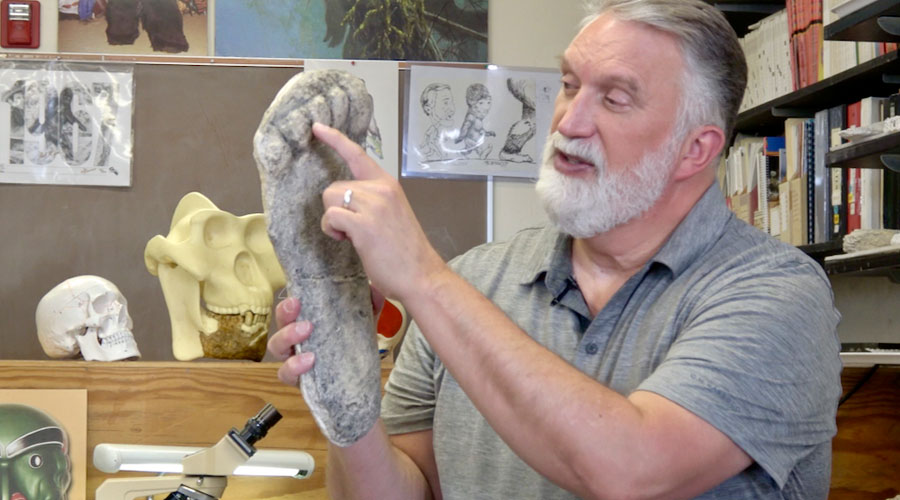
Perhaps the most surprising revelation is that federal officials did more than collect stories about strange encounters in the wilderness. In at least one documented instance, the government dispatched a professional wildlife biologist to conduct a formal field investigation, photographing enormous footprints, recording their dimensions and preserving physical impressions in plaster.
When the Government Went Looking for Bigfoot
In June 1982, federal wildlife biologist Rodney L. Johnson was assigned to investigate unusual tracks discovered in the Mill Creek Watershed of the Umatilla National Forest, which straddles northeastern Oregon and southeastern Washington.
Johnson examined three locations where enormous footprints had been discovered in muddy terrain. The impressions measured approximately 15 inches in length and seven inches across. Investigators also observed disturbed vegetation extending beyond the visible tracks, suggesting something had continued through the undergrowth.
One impression contained an apparent deformity of the second toe. Even more intriguing were the fine surface details that Johnson acknowledged would have required considerable skill to manufacture.
“If the tracks were faked, someone went to a great deal of trouble and detail,” Johnson wrote in his report.
The biologist ultimately identified eight reasons to doubt that the impressions had been produced by a large, bipedal animal. Among them were the relatively shallow depth of the tracks, the consistency of the stride across uneven terrain and irregularities in the shape of the toes.
A subsequent communication from a U.S. Border Patrol official concluded that the tracks were probably manufactured as part of an elaborate hoax. Nevertheless, the investigative records do not identify the suspected hoaxer or establish precisely how the impressions were produced.
Something Took the Elk
Another document contains a six-page historical account written in 1980 by Leo Kinney, a Montana resident familiar with the wilderness surrounding Petty Creek and Alberton.
Kinney described an unsettling experience during a hunting expedition in the late 1940s, when he and three companions encountered evidence suggesting that something had removed an elk carcass. They discovered unusually large tracks and followed markings through the forest, including evidence that the elk’s antlers had been dragged across a fallen tree approximately three feet in diameter.
Whatever had moved the animal appeared, in their judgment, to have traveled upright.
The hunters eventually abandoned their pursuit. Kinney later recalled experiencing an overwhelming sense of uneasiness, a reaction his companions subsequently admitted they had shared.
His account also describes a similar incident involving another hunter the following year, when unusual tracks were accompanied by a powerful odor and peculiar grunting sounds.
None of the men in Kinney’s account established the creature’s identity through a direct visual encounter. Nevertheless, the government retained the testimony in its historical records.
Hundreds of Enormous Footprints in the Snow
The third document is a 2003 newspaper report from Sanders County, Montana, describing the discovery of an extensive trail of unusual footprints near a sawmill.
An eight-year-old boy named Austin Peterson initially discovered the tracks. Residents who subsequently examined them considered whether they had been left by a bear, but were puzzled by their distinctly humanlike toes and arches.
One resident followed the trail approximately 100 yards into the forest before thinning snow made further tracking impossible. The impressions reportedly measured more than 16 inches long and eight inches wide, with an estimated five-foot stride.
Although the newspaper account does not establish what produced the tracks, the reported number of impressions and their distribution through the wilderness made the incident particularly intriguing to local residents.
The FBI Has Bigfoot Files, Too
The Forest Service is not the first federal agency to release documents concerning Sasquatch. During President Trump’s first administration, in June 2019, the FBI made public a 22-page collection of records concerning its own involvement with Bigfoot research.
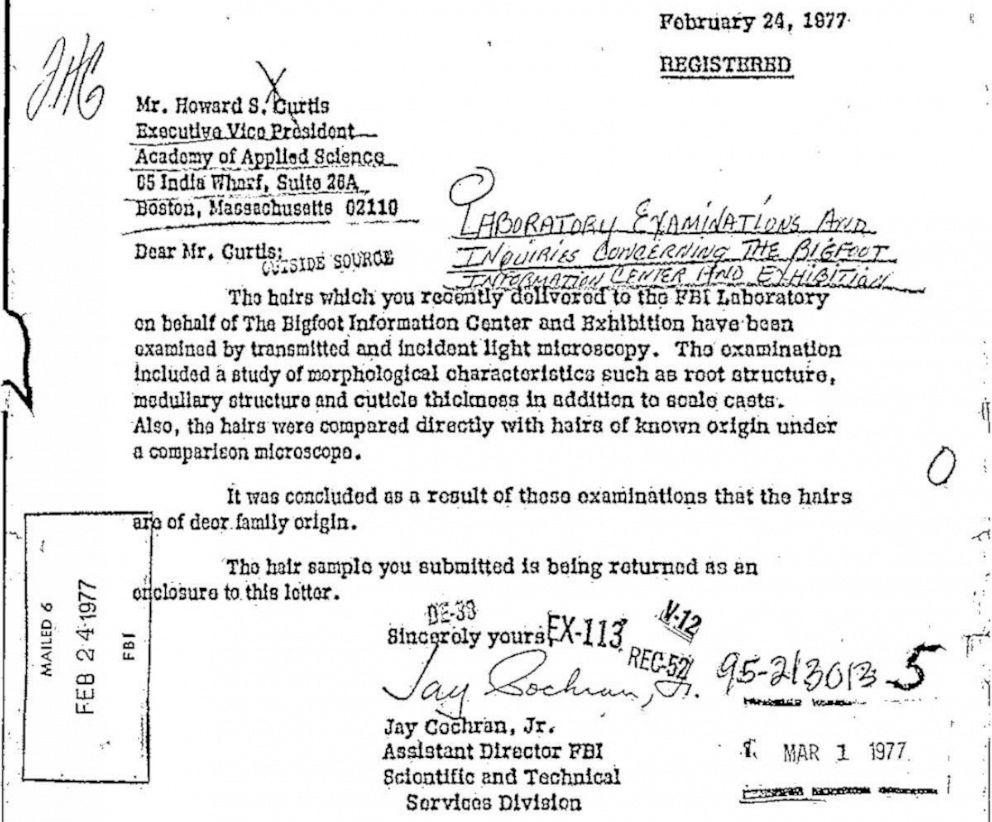
In 1976, prominent Bigfoot researcher Peter Byrne contacted the FBI and subsequently arranged for the bureau to examine a collection of unidentified hairs.
The FBI agreed to conduct the examination in the interest of scientific inquiry. Its laboratory ultimately determined that the hairs belonged to an animal of the deer family.
Those documents remain available through the FBI’s official Bigfoot archive.
Is the Government Preparing to Release More?
Perhaps the most intriguing aspect of the latest disclosures is their timing. While the Pentagon continues publishing records of unexplained aerial encounters, the Forest Service is making historical material concerning another controversial phenomenon available for public examination.
The agency has even hosted a public forum titled “Bigfoot in Your Backyard” in California’s Stanislaus National Forest, where Forest Service employees discussed reported encounters without claiming to have established the creature’s existence.
Jeremiah Byron, host of the Bigfoot Society podcast, told reporters that he hopes the recent disclosures signal a willingness among federal agencies to release additional records concerning unexplained creatures.
There has been no announcement of a comprehensive presidential Bigfoot disclosure program comparable to the administration’s UFO initiative. Nor have the newly released records produced scientifically conclusive evidence of an undiscovered North American primate.
What they have established, however, is that government employees have received, preserved and sometimes formally investigated reports concerning Sasquatch for decades.
How many additional reports, photographs, specimens, witness interviews and investigative records remain scattered throughout federal archives? Are there more recent investigations involving modern genetic analysis, thermal imaging or sophisticated wildlife monitoring equipment?
With the federal government’s continuing publication of records concerning unexplained phenomena, those are questions worth pursuing.
For the moment, the mystery of Bigfoot remains unsolved. But the American public now has a little more insight into what its government has done to investigate it.
Leave a Reply