
• Home
  • Mission
  • Federalist Papers
  • Foundation
  • U.S. Constitution
  • Bill of Rights

Federalist Press | Defending Liberty — Informing America

Breaking News and Political Commentary

  • All Stories
  • Economy
  • Elections
  • Entitlement
  • Ethics
  • Foreign
  • Gender
  • Religion
  • Sci-Tech

Morsi Ousted

July 3, 2013 By Editor Leave a Comment

morsi_ousted_egyptEgypt’s top military commander says the army is now in full control of the country and President Mohammed Morsi has been replaced by the chief justice of the constitutional court as the interim head of state.

He made the announcements in a Wednesday night speech — the latest twist in an all-out power struggle inside Egypt that Morsi’s national security adviser is describing as a military coup.

Gen. Abdel-Fattah el-Sissi said the country’s constitution has been temporarily suspended and Morsi has failed to meet the demands of Egypt’s people.

Fireworks and cheers erupted from the millions gathered in Tahrir Square after the announcement was made.

Earlier in the day, an army deadline for Morsi to resolve Egypt’s political crisis expired.

Top military officials and opposition leaders met Wednesday and agreed on a political roadmap for the country’s future, calling for early presidential and parliamentary elections, el-Sissi said. A new presidential cabinet will be formed as well as a national reconciliation committee, which will include youth movements that have been behind anti-Morsi demonstrations.

Morsi’s response was not immediately known, but an aide says he has been moved to an undisclosed location.

El-Sissi said the military will deal “decisively” with any violence sparked by the announcements.

Before el-Sissi’s address, Egyptian troops, including commandos in full combat gear, were deployed across much of Cairo, including at key facilities, on bridges over the Nile River and at major intersections.

The military vowed Wednesday to defend its people “against any terrorist, radical or fool.”

But one of Morsi’s advisers called their actions a “coup.”

“For the sake of Egypt and for historical accuracy, let’s call what is happening by its real name: Military coup,” the Morsi adviser, Essam al-Haddad, said on his Facebook page.

An aide told Reuters that Morsi had spent the day working at a presidential office in a compound of the Republican Guard in Cairo, but it was unclear if he would be able to return later to his palace.

Witnesses told Reuters that the army was erected barbed wire and barriers around the compound, and moved in vehicles and troops to prevent supporters from getting to his palace.

A travel ban was put on Morsi and the head of his Muslim Brotherhood, Mohammed Badie, as well as Badie’s deputy Khairat el-Shater, officials told the Associated Press.

The Freedom and Justice Party (FJP) — the political wing of the Muslim Brotherhood — has denied that Morsi was placed under house arrest.

Minutes before the military’s deadline for Morsi to resolve the nation’s political crisis passed Wednesday afternoon, the embattled leader called for “national reconciliation,” but vowed he would never step down.

Millions were in the main squares of major cities nationwide Wednesday, demanding Morsi’s removal, in the fourth day of the biggest anti-government rallies the country has seen, surpassing even those in the uprising that ousted against his autocratic predecessor Hosni Mubarak. Critics say Morsi has set the nation on a path toward Islamic rule.

“The presidency renews its own roadmap and invites all national forces for dialogue,” Morsi said in a statement on his Facebook page, adding that his vision is to hold a coalition government that will run upcoming parliamentary elections. Morsi also said he was looking to “form an independent committee for constitutional amendments to be presented to the coming parliament.”

He described electoral legitimacy as the only safeguard against violence and instability.

Khaled Daoud, spokesman of the main opposition National Salvation Front, which pro-reform leader Mohamed ElBaradei leads, said that ElBaradei, Sheik Ahmed el-Tayeb, grand imam of Al-Azhar mosque, and Pope Tawadros II, patriarch of Egypt’s Coptic Christian minority, were part of the Wednesday meetings with military leaders.

Political sources told Reuters that two members of a rebel youth group that is leading the anti-Morsi protests and members of the hardline Muslim fundamentalist al-Nour Party also attended.

A Defense Ministry official said Gen. Abdel-Fattah el-Sissi held another emergency meeting with his top commanders Wednesday, hours before the deadline expired. The official, who gave no further details, spoke Wednesday on condition of anonymity because he was not authorized to brief the media, the Associated Press reports.

The army also asked the FJP to meet with el-Sissi, but the invite was rejected.

“We have a president and that is it,” Waleed al-Haddad, a senior leader of the party, told Reuters.

The state-run Al-Ahram newspaper — which also seemed to be following a military line — reported that the military had placed several leaders of Morsi’s Muslim Brotherhood under surveillance.

Before the deadline expired at 5 p.m. local time (11 a.m. ET), employees at Egypt’s state TV station said military officers were present in the newsroom monitoring its output, but not interfering with their work.

The military also beefed up the presence of troops inside the building, the employees told the Associated Press, though they were not visible outside. Even before the crisis, a small army contingent usually guards the state TV headquarters.

In his emotional 46-minute speech late Tuesday, Morsi vowed not to step down and pledged to defend his legitimacy with his life in the face of three days of massive street demonstrations calling for his ouster. The Islamist leader accused loyalists of his ousted autocratic predecessor Hosni Mubarak of exploiting the wave of protests to topple his regime and thwart democracy.

“There is no substitute for legitimacy,” said Morsi, at times angrily raising his voice, thrusting his fist in the air and pounding the podium. He warned that electoral and constitutional legitimacy “is the only guarantee against violence.”

The statements showed that Morsi and his Muslim Brotherhood were prepared to run the risk of challenging the army. It also entrenches the lines of confrontation between his Islamist supporters and Egyptians angry over what they see as his efforts to impose control through the Brotherhood and his failures to deal with the country’s multiple problems.

At the main pro-Morsi rally in Cairo, thousands of his Islamist supporters chanted, “Wake up el-Sissi, Morsi is my president.”

“We will not bring back the military rule,” they chanted outside the Rabia al-Adawiya Mosque. “Will not happen, will not happen,” they shouted.

After the army’s deadline passed, a military helicopter circled over the crowds in Tahrir Square, which was transformed into a sea of furiously waving Egyptian flags. “Leave, leave,” they chanted to Morsi, electrified as they waited to hear of an army move.After nightfall, fireworks went off and green lasers flashed over the crowd.

On Tuesday, clashes in Cairo and elsewhere in the country that left at least 23 people dead, most in a single incident near the main Cairo University campus. The latest deaths take to 39 the number of people killed since Sunday in violence between opponents and supporters of Morsi, who took office in June last year as Egypt’s first freely elected leader.

The bloodshed, coupled with Morsi’s defiant speeches, contributed the sense that both sides were ready to fight to the end. The president’s supporters also moved out in increased marches in Cairo Tuesday and other cities, and stepped up warnings that it will take bloodshed to dislodge him.

On Monday, the military gave Morsi the ultimatum to meet the protesters’ demands within 48 hours. If not, the generals’ plan would suspend the Islamist-backed constitution, dissolve the Islamist-dominated legislature and set up an interim administration headed by the country’s chief justice, the state news agency reported.

The leaking of the military’s so-called political “road map” appeared aimed at adding pressure on Morsi by showing the public and the international community that the military has a plan that does not involve a coup.

Fearing that Washington’s most important Arab ally would descend into chaos, U.S. officials said they are urging Morsi to take immediate steps to address opposition grievances, telling the protesters to remain peaceful and reminding the army that a coup could have consequences for the massive American military aid package it receives. The officials spoke on condition of anonymity because they were not authorized to speak publicly.

At the U.S. State Department media briefing Wednesday, spokeswoman Jen Psaki restated the administration’s priority on the democratic process.

“It’s never been about one individual,” she told reporters. “It’s been about hearing and allowing the voices of the Egyptian people to be heard.”

Pentagon Spokesman George Little says there has been no change in terms of the U.S. military prepositioning assets in and around Egypt in the event they are called upon to assist the U.S. embassy in Cairo.

Published July 03, 2013 / FoxNews.com / The Associated Press contributed to this report.

Filed Under: All Stories, Elections, Foreign, Religion

Obama Delays ObamaCare Until After Elections

July 3, 2013 By Editor Leave a Comment

obama_irsPresident Obama’s decision to push back key provisions of his signature healthcare law amid growing concerns it isn’t ready for prime time could take a key issue away from Republicans in next year’s midterm elections.

The announcement Tuesday night that the mandate for many small businesses to provide health insurance to employees will be delayed by one year was hailed by business leaders and seemed to acknowledge Republican claims the plan would hurt – or at least confuse – business. But it also likely undercuts Republican plans to make ObamaCare the centerpiece of their midterm elections strategy.

Democrats are defending 21 Senate seats to the Republicans’ 14. The GOP had already started to excoriate Senate Democrats who had voted for the health law in 2009. And the House has voted more than 35 times since taking control of the chamber in 2011 to repeal or at least defund all or parts of ObamaCare, most recently in May.

“The president’s health care law is already raising costs and costing jobs,” House Speaker John Boehner said. “This announcement means even the Obama administration knows the ‘train wreck’ will only get worse. … And it underscores the need to repeal the law and replace it with effective, patient-centered reforms.”

The announcement was made late Tuesday by the Treasury Department, at the beginning of the holiday week while Congress was on recess. It came amid reports that the administration is running into roadblocks as it prepares to implement ObamaCare.

The change in the employer mandate also is arguably the most significant concession the administration has made to date to critics of the plan.

“We have heard concerns about the complexity of the requirements and the need for more time to implement them effectively,” Treasury Assistant Secretary Mark Mazur said in a blog post. “We have listened to your feedback and we are taking action.”

Randy Johnson, senior vice president of Labor, Immigration, and Employee Benefits at the Chamber of Commerce, told Fox News the administration’s decision shows it has “finally recognized the obvious.”

“Employers need more time and clarification of the rules of the road before implementing the employer mandate,” he said. “We will continue to work to alleviate this and other problems with ObamaCare.”

Neil Trautwein, a vice president of the National Retail Federation, said: “We commend the administration’s wise move.”

He also said the change “will provide employers and businesses more time to update their health care coverage without threat of arbitrary punishment.”

But the delay could also undermine the law’s main goal of covering the nearly 50 million Americans without health insurance. Already, Republican resistance in the states will deny access to a planned Medicaid expansion — at least for next year — to millions of low-income people.

Under the health law, companies with 50 or more workers must provide affordable coverage to their full-time employees or risk a series of escalating tax penalties if just one worker ends up getting government-subsidized insurance. Originally, that requirement was supposed to take effect Jan. 1. It will now be delayed to 2015.

Most medium-sized and large businesses already offer health insurance and the requirement was expected to have the biggest consequences for major chain hotels, restaurants and retail stores that employ many low-wage workers. Some had threatened to cut workers’ hours, and others said they were putting off hiring.

Business groups complained since the law passed that the provision was too complicated. For instance, the law created a new definition of full-time workers, those putting in 30 hours or more. It also included two separate requirements, one to provide coverage and another that coverage be deemed “affordable” under the law. Violations of either one exposed employers to fines. But such complaints until now seemed to be going unheeded.

There is no coverage mandate — or penalty — for smaller businesses. Also, for businesses of any size, there is no penalty if their workers are poor enough to be eligible for Medicaid.

The delay in the employer requirement does not affect the law’s requirement that individuals carry health insurance starting next year or face fines. That so-called individual mandate was challenged all the way to the Supreme Court, which ruled last year that the individual requirement was constitutional, since the penalty would be collected by the Internal Revenue Service and amounted to a tax.

Sen. John Barrasso, R-Wyo., a critic of the law, seized on the delay as a “clear admission” that the law is “unaffordable, unworkable and unpopular,” but conceded delaying implementation could help Democrats.

“It’s also a cynical political ploy to delay the coming train wreck associated with ObamaCare until after the 2014 elections,” he said.

Published July 03, 2013 / FoxNews.com

Filed Under: All Stories, Economy, Elections, Entitlement, Ethics, Gender, Religion

GOP Using Obama’s ‘War on Coal’ to Tarnish Dems Ahead of Elections

July 2, 2013 By Editor Leave a Comment

coal_warFoes of President Obama’s alleged “war on coal” climate plan are hoping to use the combustible issue to tarnish Democrats in the next round of elections.

The political backlash started almost immediately after the president announced last week he’s ordering the EPA to draft new rules to limit emissions at coal-fired power plants.

In Virginia, it didn’t take long for Republican gubernatorial candidate Ken Cuccinelli to label the plan the “Obama-Biden-McAuliffe war on coal,” in his race for governor against former Democratic Party chairman Terry McAuliffe.

The Cuccinelli campaign launched a coal-themed online ad blitz last week, as both candidates charge into the November 2013 election.

Other politicos already are looking down the calendar to 2014 and beyond.

On the national level, the risk for Democrats is inherent in the fact that the road to the White House in 2016 goes through several swing states that are also top 10 coal-producing states — namely, Pennsylvania and Ohio. Republicans, and groups representing the coal industry, could make life difficult for any candidate who gets too close to regulations deemed harmful to the coal industry.

Obama tried to get on offense over the weekend, saying in his radio address that voters should demand Congress get behind a climate plan.

“Remind everyone who represents you … that sheltering future generations against the ravages of climate change is a prerequisite for your vote,” Obama said.

The White House put out a detailed infographic on rising temperatures and the cost of natural disasters, which his plan supposedly would curb.

And Energy Secretary Ernest Moniz reportedly said Sunday that the government is not waging a “war on coal.”

According to Reuters, Moniz said Obama “expects fossil fuels, and coal specifically, to remain a significant contributor for some time.” He said the administration wants to encourage higher efficiency plants.

But those in the industry say the administration is moving too fast, and should give time to develop clean-coal technology that’s already in existence.

Luke Popovich, spokesman for the National Mining Association, told FoxNews.com his group was not launching any paid advertising on the issue at this point, but is in “constant contact” with governors and lawmakers in the states most affected by coal generation and use.

Popovich did not describe the plan as a “war on coal,” saying his group is “trying to find solutions here.”

“We hope that is not the case. It certainly would not make any sense given a lingering recession for most Americans,” he said.

He said the NMA wants to carve out a “separate and distinct standard” for clean-coal technologies, and will weigh-in during the EPA’s regulatory comment period.

According to Politico, the EPA has already sent a draft regulation on emissions for future power plants to the White House. The other draft rule, the more sweeping measure for existing plants, is still in process.

Democrats in coal country were visibly hesitant to get behind Obama’s plan. Some were outright hostile.

West Virginia Democratic Sen. Joe Manchin, in an interview last week with Fox News, called the president’s plan a “war on America.”

“It’s just ridiculous. … I should not have to be sitting here as a U.S. senator, fighting my own president and fighting my own government,” he told Fox News. “I will continue to reach out, but I need a partner here. I don’t need an adversary.”

Manchin’s colleague, Democratic Sen. Jay Rockefeller, was more reserved, saying the president needs to provide more information about how miners would be affected.

But any Democrat who remained silent on the issue was faced with the threat of Republican taunting.

The National Republican Senatorial Committee last week accused Kentucky Secretary of State Alison Lundergan Grimes — who on Monday announced she would challenge Republican Senate Leader Mitch McConnell for his Senate seat — of embracing Obama’s “radical agenda.”

“Over the past two days, Grimes’ silence makes clear that Kentuckians simply can’t count on her to stand up against her own party to protect them,” the NRSC said in a statement.

Democrats have two major political risks to weigh in considering whether to get behind the new climate agenda. First is the thousands of jobs at stake in the coal industry. According to the American Coalition for Clean Coal Electricity (ACCCE), EPA regulations have played a role in the closure of nearly 290 coal plants so far this year. Second is electricity rates.

In Ohio, Republican Sen. Rob Portman framed the issue in those terms, calling the Obama plan an “effort to raise electricity prices in Ohio.”

“President Obama’s EPA overreach has already cost jobs in Ohio. At least eight coal-fired power plants in Ohio are set to close due in large part to regulatory mandates put in place by the EPA,” he said in a statement, noting more than 80 percent of electricity in the state comes from coal generation and claiming the new rules could raise those costs.

“Coal’s part of the reason that we enjoy the level of economic prosperity we do in the nation today,” Kevin Crutchfield, CEO of coal company Alpha Natural Resources, told Fox News.

Published July 01, 2013 / FoxNews.com

Filed Under: All Stories, Economy, Elections, Entitlement, Ethics, Foreign

Edward Snowden Seeking Asylum in Russia

July 1, 2013 By Editor Leave a Comment

edward.snowdenFollowing a week of hide-and-seek in the international “transit zone” of the Moscow airport, NSA leaker Edward Snowden is reported to be seeking political asylum in Russia.

The Russian government had been distancing itself from Snowden over the past week, as has the government of Ecuador, locations where Snowden had reportedly been trying to relocate.

WikiLeaks’ Julian Assange has claimed to be assisting Snowden find a more permanent “home” to ride out the spying charges filed against him by the US Department of Justice.

Whether Snowden is a hero whistle-blower or a traitor is much in the eye of the beholder at this point, with only a small portion of the leaked information having come to light. Indeed, candidate Barack Obama praised government whistle-blowers:

Often the best source of information about waste, fraud, and abuse in government is an existing government employee committed to public integrity and willing to speak out . . . [I] will strengthen whistle-blower laws to protect federal workers who expose waste, fraud, and abuse of authority in government. Barack Obama

Of course, it is Barack Obama whose government has been fingered by the former NSA spy as being the most abusive wielder of power through intrusive spying on citizens and foreign governments in the history of the US.

PUBLIUS

Filed Under: All Stories, Economy, Elections, Ethics, Foreign, Religion, Sci-Tech

Hundreds of Thousands Protest Egypt’s Morsi

June 30, 2013 By Editor Leave a Comment

Egypt_Morsi_ProtestCAIRO –  Hundreds of thousands thronged the streets of Cairo and cities around the country Sunday and marched on the presidential palace, filling a broad avenue for blocks, in an attempt to force out the Islamist president with the most massive protests Egypt has seen in 2 1/2 years of turmoil.

In a sign of the explosive volatility of the country’s divisions, a hard core of young opponents broke away from the rallies and attacked the main headquarters of President Mohammed Morsi’s Muslim Brotherhood, pelting it with stones and firebombs until a raging fire erupted in the walled villa. During clashes, Brotherhood supporters opened fire on the attackers, and activists said three protesters were killed.

Fears were widespread that the two sides could be heading to a violent collision in coming days. Morsi made clear through a spokesman that he would not step down and his Islamist supporters vowed not to allow protesters to remove one of their own, brought to office in a legitimate vote. Thousands of Islamists massed not far from the presidential palace in support of Morsi, some of them prepared for a fight with makeshift armor and sticks.

At least five anti-Morsi protesters were killed Sunday in clashes and shootings in southern Egypt.

The protesters aimed to show by sheer numbers that the country has irrevocably turned against Morsi, a year to the day after he was inaugurated as Egypt’s first freely elected president. But throughout the day and even up to midnight at the main rallying sites, fears of rampant violence did not materialize.

Instead the mood was largely festive as protesters at giant anti-Morsi rallies in Cairo’s central Tahrir Square and outside the Ittihadiya palace spilled into side streets and across boulevards, waving flags, blowing whistles and chanting.

Fireworks went off overhead. Men and women, some with small children on their shoulders, beat drums, danced and sang, “By hook or by crook, we will bring Morsi down.” Residents in nearby homes showered water on marchers below — some carrying tents in preparation to camp outside the palace — to cool them in the summer heat, and blew whistles and waved flags in support.

“Mubarak took only 18 days although he had behind him the security, intelligence and a large sector of Egyptians,” said Amr Tawfeeq, an oil company employee marching toward Ittihadiya with a Christian friend. Morsi “won’t take long. We want him out and we are ready to pay the price.”

The massive outpouring against Morsi raises the question of what is next. Protesters have vowed to stay on the streets until he steps down, and organizers called for widespread labor strikes starting Monday. The president, in turn, appears to be hoping protests wane.

For weeks, Morsi’s supporters have depicted the planned protest as a plot by Mubarak loyalists. But their claims were undermined by the extent of Sunday’s rallies. In Cairo and a string of cities in the Nile Delta and on the Mediterranean coast, the protests topped even the biggest protests of the 2011’s 18-day uprising, including the day Mubarak quit, Feb. 11, when giant crowds marched on Ittihadiya.

It is unclear now whether the opposition, which for months has demanded Morsi form a national unity government, would now accept any concessions short of his removal. The anticipated deadlock raises the question of whether the army, already deployed on the outskirts of cities, will intervene. Protesters believe the military would throw its weight behind them, tipping the balance against Morsi. The country’s police, meanwhile, were hardly to be seen Sunday.

“If the Brothers think that we will give up and leave, they are mistaken,” said lawyer Hossam Muhareb as he sat with a friend on a sidewalk near the presidential palace. “They will give up and leave after seeing our numbers.”

Violence could send the situation spinning into explosive directions.

The fire at the Brotherhood headquarters, located on a plateau overlooking Cairo, sent smoke pouring in the air, even as youths clashed with Brotherhood supporters at the site. Three on the anti-Morsi side were shot to death, and 60 were wounded, an activist who monitored casualties at the hospital, Nazli Hussein, said.

Southern Egypt saw deadly attacks on anti-Morsi protests, and five people were killed. Two protesters were shot to death during clashes outside offices of the Brotherhood’s Freedom and Justice Party, one in Beni Suef, the other in Fayoum.

In the city of Assiut, a stronghold of Islamists, gunmen on a motorcycle opened fire on a protest in which tens of thousands were participating,, killing one person, wounding four others and sending the crowd running.

The enraged protesters then marched on the nearby Freedom and Justice offices, where gunmen inside opened fire, killing two more, security officials said, speaking on condition of anonymity because they weren’t authorized to talk to the press.  Clashes erupted, with protesters and security forces fighting side by side against Morsi’s supporters.

At least 400 people were injured nationwide, the Health Ministry said.

Morsi, who has three years left in his term, said street protests cannot be used to overturn the results of a free election.

“There is no room for any talk against this constitutional legitimacy,” he told Britain’s The Guardian newspaper in an interview published Sunday, rejecting early elections.

If an elected president is forced out, “there will (be) people or opponents opposing the new president too, and a week or a month later, they will ask him to step down,” he said.

Morsi was not at Ittihadiya as Sunday’s rally took place — he had moved to another nearby palace.

As the crowds massed, Morsi’s spokesman Ihab Fahmi repeated the president’s longstanding offer of dialogue with the opposition to resolve the nation’s political crisis, calling it “the only framework through which we can reach understandings.”

The opposition has repeatedly turned down his offers for dialogue, arguing that they were for show.

The demonstrations are the culmination of polarization and instability that have been building since Morsi’s June 30, 2012, inauguration. The past year has seen multiple political crises, bouts of bloody clashes and a steadily worsening economy, with power outages, fuel shortages, rising prices and persistent lawlessness and crime.

In one camp are the president and his Islamist allies, including the Muslim Brotherhood and more hard-line groups. Morsi supporters accuse Mubarak loyalists of being behind the protests, aiming to overturn last year’s election results, just as they argue that remnants of the old regime have sabotaged Morsi’s attempts to deal with the nation’s woes and bring reforms.

Hard-liners among them have also given the confrontation a sharply religious tone, denouncing Morsi’s opponents as “enemies of God” and infidels.

On the other side is an array of secular and liberal Egyptians, moderate Muslims, Christians — and what the opposition says is a broad sector of the general public that has turned against the Islamists. They say the Islamists have negated their election mandate by trying to monopolize power, infusing government with their supporters, forcing through a constitution they largely wrote and giving religious extremists a free hand, all while failing to manage the country.

“The country is only going backward. He’s embarrassing us and making people hate Islam,” said Donia Rashad, a 24-year-old unemployed woman who wears the conservative Islamic headscarf. “We need someone who can feel the people and is agreeable to the majority.”

As they marched toward the presidential palace, some chanted, “You lied to us in the name of religion.” The crowds, including women, children and elderly people, hoisted long banners in the colors of the Egyptian flag and raised red cards — a sign of expulsion in soccer.

In Tahrir, chants of “erhal!”, or “leave!” thundered around the square. The crowd, which appeared to number some 300,000, waved Egyptian flags and posters of Morsi with a red X over his face. They whistled and waved when military helicopters swooped close overhead, reflecting their belief that the army favors them over Morsi.

Defense Minister Gen. Abdel-Fattah el-Sissi warned a week ago that the military would intervene to prevent the nation from entering a “dark tunnel.” Army troops backed by armored vehicles were deployed Sunday in some of Cairo’s suburbs, with soldiers at traffic lights and major intersections. In the evening, they deployed near the international airport, state TV said.

Similarly sized crowds turned out in the Mediterranean city of Alexandria and the Nile Delta cities of Mansoura, Tanta and Damanhour, with sizeable rallies in cities nationwide.

“Today is the Brotherhood’s last day in power,” Suliman Mohammed, a manager of a seafood company, said in Tahrir.

The protests emerge from a petition campaign by a youth activist group known as Tamarod, Arabic for “Rebel.” For several months, the group has been collecting signatures on a call for Morsi to step down.

On Saturday, the group announced it had more than 22 million signatures — proof, it claims, that a broad sector of the public no longer wants Morsi in office.

It was not possible to verify the claim. If true, it would be nearly twice the some 13 million people who voted for Morsi in last year’s presidential run-off election, which he won with around 52 percent of the vote. Tamarod organizers said they discarded about 100,000 signed forms because they were duplicates.

Morsi’s supporters have questioned the authenticity of the signatures, but have produced no evidence of fraud.

Near Ittihadiya palace, thousands of Islamists gathered in a show of support for Morsi outside the Rabia al-Adawiya mosque. Some Morsi backers wore homemade body armor and construction helmets and carried shields and clubs — precautions, they said, against possible violence.

At the pro-Morsi rally at the Rabia al-Adawiya mosque, the crowd chanted, “God is great,” and some held up copies of Islam’s holy book, the Quran.

“The people hold the legitimacy and we support Dr. Mohamed Morsi,” said Ahmed Ramadan, one of the rally participants. “We would like to tell him not to be affected by the opponents’ protests and not to give up his rights. We are here to support and protect him.”

Published June 30, 2013 / Associated Press

Filed Under: All Stories, Elections, Foreign, Gender, Religion

Euro Allies Fume Over NSA Claim

June 30, 2013 By Editor Leave a Comment

Allegations of NSA bugging stir tension with European allies

obama_nsaEmerging allegations that America’s National Security Agency bugged and hacked European Union offices stoked tension Sunday between U.S. and European officials, with German prosecutors announcing they are probing the claims.

The allegations were carried in a report by the German magazine Der Spiegel. They are the latest claims to surface regarding NSA surveillance activity, as on-the-lam leaker Edward Snowden feeds a series of sensitive documents to the media. Der Spiegel did not specifically say how it obtained the information.

European Parliament President Martin Schulz, in response, demanded a clarification from the NSA about the alleged program.

“I am deeply worried and shocked about the allegations of U.S. authorities spying on EU offices,” Schulz said in a statement, according to The Wall Street Journal. “If the allegations prove to be true, it would be an extremely serious matter which will have a severe impact on EU-U.S. relations.”

German federal prosecutors also said they are looking into the reports. The Federal Prosecutors’ Office said in a statement Sunday that it was probing the claims so as to “achieve a reliable factual basis” before considering whether a formal investigation was warranted.

It also said private citizens were likely to file criminal complaints on the matter.

A representative with the NSA referred questions on the matter to the Office of the Director of National Intelligence, which has not yet commented on the report.

But Michael Hayden, the former director of both the NSA and CIA, said Sunday that European officials should look in the mirror before criticizing the U.S.

“Any European who wants to go out and rend their garments with regard to international espionage should look first and find out what their own governments are doing,” he said on CBS’ “Face the Nation.”

Hayden noted he’s been out of the agency for years and said he didn’t know the accuracy of the Der Spiegel report, nor could he confirm or deny it if he did.

But he said “the United States does conduct espionage,” and that the Fourth Amendment right to privacy “is not an international treaty.”

Der Spiegel reported that the NSA appears to have installed bugs in an EU building in Washington, D.C., as well as infiltrated their computer network. According to the report, this let U.S. officials monitor discussions and emails.

U.S. officials have warned that the string of NSA leaks are damaging to national security.

Snowden is believed to still be at the Moscow airport. Russian officials so far have refused to expel him to the U.S., claiming he is in a transit zone and not technically in their hands.

Meanwhile, Vice President Biden on Friday called Ecuador’s president to urge the country to reject a request by Snowden for asylum in that country.

Published June 30, 2013 / FoxNews.com / The Associated Press contributed to this report.

Filed Under: All Stories, Elections, Ethics, Foreign, Religion, Sci-Tech

Charges Dismissed Against Student Who Refused to Remove NRA Shirt

June 28, 2013 By Editor Leave a Comment

NRAThe West Virginia eighth-grader arrested after refusing a teacher’s demand he remove a National Rifle Association T-shirt he wore to school won’t face criminal charges after all.

Jared Marcum, 14, was charged with obstruction following the April 18 incident after police who were called to Logan Middle School school said he refused to stop talking. The case generated national headlines, as Marcum’s family and attorney, Ben White, claimed the demand that he remove the NRA shirt violated his right to freedom of speech. On Thursday, Logan County Circuit Judge Eric O’Briant signed an order dismissing the charge.

“It should have come sooner but it’s done and we don’t have to have that concern anymore about him having a criminal record.”- Allen Lardieri, Jared Marcum’s father

Marcum’s mother, Tanya Lardieri, told WOWK that she was overcome with emotion after signing a dismissal order relating to the charge. The boy’s father, Allen Lardieri, said the couple is just glad Eric’s legal troubles are behind him.

“It should have come sooner but it’s done and we don’t have to have that concern anymore about him having a criminal record,” Allen Lardieri told WOWK. “I’m just glad that it’s over. His mother is glad it’s over.”

After he was charged, Marcum faced up to a year in jail and a $500 fine. Although the charge related to the boy’s behavior after the incident began, White said the school’s unreasonable demand that he take off the shirt caused the situation to get out of control.

“We at this point believe that Jared acted as mature as a 14-year-old child can act with the pressure that was put on him,” White told The Associated Press.

The school’s dress code gives wide enforcement discretion to educators.

“If in the judgment of the administration, a student is dressed inappropriately, the student will be required to change clothes or cover up inappropriate clothing before returning to classes,” the code reads.

After Marcum was arrested, students throughout Logan County wore similar NRA shirts in a show of solidarity. And on Monday, the boy was summoned back to court as prosecutors sought to have a gag order imposed on him and his family. They claimed Jared and his father talking to the press about the case was not in the boy’s interest, a rationale his own attorney rejected.

“We were here because the prosecution filed a motion for a gag order,” White said on Monday. “My opinion is because, seemingly, they want to take it out of the court of public opinion.”

But on Thursday, after reviewing statements from the arresting officer and the school’s principal, White said he and a prosecutor agreed that creating a criminal record for Marcum wasn’t a good idea.

“I didn’t think it would go this far because, honestly, I don’t see a problem with [the shirt],” Jared Marcum told WOWK in April. “There shouldn’t be a problem with this.”

Published June 28, 2013 / FoxNews.com / The Associated Press contributed to this report.

Filed Under: All Stories, Elections, Ethics, Religion

IRS Official Waived Fifth

June 28, 2013 By Editor Leave a Comment

House panel finds IRS official waived Fifth Amendment right, can be forced to testify in targeting probe

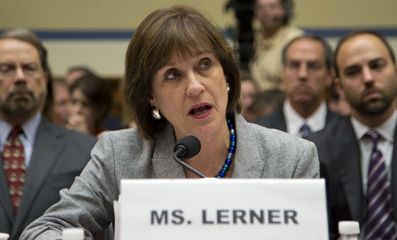
Lerner_IRS_FifthA House Republican-led committee approved a resolution Friday declaring that high-ranking IRS official Lois Lerner waived her Fifth Amendment right against self-incrimination by delivering a statement before the committee in May.

Lerner used to oversee the IRS division that targeted groups for additional scrutiny when they applied for tax-exempt status. At a May 22 hearing, she invoked her right not to answer lawmakers’ questions after declaring in an opening statement that she had done nothing wrong.

Members of the House Oversight and Government Reform Committee voted along party lines Friday morning, with 22 Republicans saying she waived the Fifth and 17 Democrats arguing she did not. Lerner remains under subpoena, and the committee believes it could bring the long-time IRS official back and compel her to testify.

Rep. Darrell Issa, R-Calif., chairman of the committee, said at the opening of Friday’s meeting that “I believe Lois Lerner waived her Fifth Amendment privileges.”

“She did so when she delivered an opening statement,” Issa said.

Rep. Trey Gowdy, R-S.C., reiterated Issa’s argument, delivering a fiery speech about Lerner’s attempt to protect herself under the Fifth.

Gowdy said Lerner made nine separate assertions, with the advice of counsel, and then authenticated a document.

“That’s not how the Fifth Amendment works,” Gowdy said. “You’re not allowed to just say your side of the story … She could have sat there and said nothing.”

Democrats, meanwhile, like Rep. Gerry Connolly, D-Va., challenged Gowdy’s argument, calling attempts to block Lerner’s invoking of the Fifth Amendment “an egregious abuse of power that tramples the Constitution and serves no valid legislative purpose.”

Connolly said that “the majority has brought us to a point where we risk allowing this committee to be transformed into a Star Chamber proceeding that establishes future Legislative Branch precedent where any chairman — whether a Democrat or a Republican — is free to compel an American invoking their constitutional right against self-incrimination to physically appear before the Committee for no other reason than to be pilloried, delayed, embarrassed, and burdened into unknowingly, unintentionally, and ironically, forfeiting the very sacred constitutional right that is intended to protect every American against forced self-incrimination by the government.”

“You may make a small-term political gain,” Connolly warned Republicans, but “at a long-term political cost.”

The committee is scheduled to vote Friday on whether Lerner waived her Fifth Amendment right not to answer questions by making an opening statement.

Legal scholars have differed in their views on the committee’s case against Lerner, who the IRS has placed on administrative leave.

Lerner’s lawyer, William Taylor, said he disagreed with the committee’s claim.

“There was nothing voluntary about her statement,” he said in a statement. “She had informed (the) committee that she would invoke and requested to be excused and (the) committee ordered her to appear and invoke her rights in public.

“It went so far as to serve a subpoena on her to assure that she would be compelled to attend, unlike other witnesses who appeared voluntarily.  In any event, protesting your innocence and invoking the right not to answer questions, which is what she did, is not a waiver.”

Published June 28, 2013 / FoxNews.com / Fox News’ Chad Pergram, Cristina Corbin and the Associated Press contributed to this report.

Filed Under: All Stories, Economy, Elections, Ethics, Religion

Another Senior IRS Official Pleads the Fifth Before Congress

June 27, 2013 By Editor Leave a Comment

irs_pleads_5thFor the second time in as many months, a senior IRS manager on Wednesday invoked his Fifth Amendment right against self incrimination, fueling perceptions of an agency in  crisis.

Greg Roseman, a Deputy IRS Director, spearheaded the awarding of the IRS’s  largest contract in history to a company owned by a close friend of his, an action that is prohibited under government contracting regulations.

The company is Strong Castle, Inc., owned by Braulio Castillo. Castillo won several contracts totaling almost $500 million for IRS IT services in part on the basis of his friendship  with Roseman and by qualifying for two minority programs that allow disadvantaged applicants a better chance of winning lucrative government contracts.

Castillo qualified for one minority set-aside program by setting up his business in a disadvantaged area of northeast Washington D.C. The Small Business Administration program requires applicants to hire from within the economically disadvantaged community, but a House Oversight Committee report found that Castillo manipulated that requirement by hiring students from Catholic University. The school’s campus lies within the designated boundary, but its students are, on balance, far from disadvantaged.

He won entrance into another minority set-aside program run by the Veterans Administration that gives disabled vets certain advantages in federal contracting. His disability? An ankle twisted during football at the US Military Academy Prep School 27 years ago.

That prompted  a sarcastic reaction at Wednesday’s House Oversight Committee hearing from a double amputee, Congresswoman Tammy Duckworth, an Iraq war vet. “I’m so glad that you would be willing to play football in prep school again to protect this great country. Shame on you, Mr. Castillo, shame on you,” she said.

As evidence of their close friendship, the committee published text messages between  Roseman and Castillo. The two men apparently found kinship in using homophobic slurs. One exchange reads, “Paging Dr. Faggot.”  The response reads, “Queerbait. How come u haven’t called back? Ain’t got all day. Lol.”

Roseman is still employed by the IRS. That fact prompted a testy exchange between Rep. Trey Gowdy, R-S.C., and Beth Tucker, the IRS’s Deputy Commissioner for Operations Support.

“Can you issue a statement by five o’clock today as to how someone who used this language in their official capacity as a government employee is still employed and drawing a paycheck?” Gowdy asked. “We are having discussions with our general counsel,” Tucker responded.

On Friday, there will be more IRS focus on the Hill. The committee will vote whether it believes Lois Lerner waived her Fifth Amendment rights against self-incrimination when she invoked that right, then abruptly proclaimed her innocence. It was a maneuver that some on the panel say amounted to waiving the right.

By Doug McKelway / Published June 26, 2013 / FoxNews.com

Watch Video

Filed Under: All Stories, Economy, Elections, Entitlement, Ethics, Religion

Obama Welcomes Islamic Scholar With Terrorist Ties Into White House

June 26, 2013 By Editor Leave a Comment

Bin_BayyahA Muslim scholar whose group supports Hamas, who has urged the U.N. to criminalize blasphemy and who is the deputy of an Egyptian cleric banned from the U.S. over his radical statements was able to secure a visit at the White House earlier this month.

A report from The Investigative Project on Terrorism uncovered a statement on the website of Sheikh Abdullah Bin Bayyah claiming he met June 13 with Obama administration officials in Washington.

Bin Bayyah is vice president of the International Union of Muslim Scholars, a group founded by Egyptian cleric Yusuf Qaradawi — a Muslim Brotherhood leader who has called for the death of Jews and Americans and himself is banned from visiting the U.S.

While Bin Bayyah secured a visit, he and his group also have a history of questionable positions, IPT reports.

A 2009 fatwa from the group barred “all forms of normalization” with Israel. Bin Bayyah also got behind a campaign to pressure the U.N. to pass a resolution criminalizing blasphemy. IPT also found Bin Bayyah was vice president at the organization when they issued a 2004 fatwa saying that resisting U.S. troops in Iraq is a “duty” for Muslims — effectively allowing the killing of Americans.

On his website, as first reported by IPT, Bin Bayyah said the Obama administration requested the meeting.

He quoted National Security Council official Gayle Smith as saying: “We asked for this meeting to learn from you and we need to be looking for new mechanisms to communicate with you and the Association of Muslim Scholars.”

The post reportedly claimed he had met with Smith; Rashad Hussain, U.S. envoy to the Organization of Islamic Cooperation; and the national security adviser, among others.

According to the IPT report, the reference to meeting with the national security adviser was later deleted.

IPT reported that Bin Bayyah was lobbying the White House to do more to help the Syrian opposition.

Published June 26, 2013 / FoxNews.com

Filed Under: All Stories, Elections, Ethics, Foreign, Religion

Supreme Court Sides with Gay Marriage

June 26, 2013 By Editor Leave a Comment

gay_domaIn a big day for gay-rights advocates, the Supreme Court on Wednesday struck down a federal provision denying benefits to legally married gay couples and issued a separate ruling that paves the way for same-sex marriages to resume in California.

Cheers erupted on the steps of the high court, as the rulings were handed down. The latter decision did not speak to the constitutionality of gay marriage bans in California, or in the country as a whole. The court avoided a broad ruling, and rather, determined that the defenders of California’s Proposition 8 ban on gay marriage did not have the standing to appeal lower court rulings against the ban.

As a result, California is likely to allow same-sex marriages to resume in a matter of weeks.

The more sweeping decision came in relation to the federal Defense of Marriage Act, which the court said was unconstitutional and effectively gutted by ruling against a provision that denied benefits to legally married gay couples.

The 5-4 ruling — a major victory for gay-rights advocates — means those same-sex couples would be eligible for federal benefits.

Justice Anthony Kennedy wrote the majority opinion.

“DOMA divests married same-sex couples of the duties and responsibilities that are an essential part of married life and that they in most cases would be honored to accept were DOMA not in force,” he wrote.

Kennedy wrote that the law “places same-sex couples in an unstable position of being in a second-tier marriage.”

The ruling prompted tension among the divided court. Multiple dissenting opinions were filed. Justice Antonin Scalia, reading from his dissent, said the components of the majority’s ruling are “wrong.”

“The error in both springs from the same diseased root: an exalted notion of the role of this Court in American democratic society,” he said.

Social conservatives were similarly disappointed.

“They are rejecting the truth. It’s a sad day,” said Frank Page, president of the Southern Baptist Convention Executive Committee. “Christians have to live in the world in which we live. We will adapt and adjust to the realities of the law change. At the same time we will continue to preach, declare, and live the truth that our God does not get involved in swing votes and cultural change when there is a biblical principle at stake.”

But David Boies, attorney for the plaintiffs in the Prop 8 case, hailed both rulings as a step toward “true equality.” He said that while the California case was not ruled on the merits, the DOMA ruling demonstrates that when the issue of gay marriage returns to the high court, “marriage equality will be the law throughout this land.”

The provision in question defined marriage as between a man and woman and in doing so prevented married gay couples from receiving a range of tax, health and retirement benefits that are generally available to married people.

Same-sex marriage has been adopted by 12 states and the District of Columbia. Another 18,000 couples were married in California during a brief period when same-sex unions were legal there.

“Under DOMA, same-sex married couples have their lives burdened, by reason of government decree, in visible and public ways,” Kennedy said.

“DOMA’s principal effect is to identify a subset of state-sanctioned marriages and make them unequal,” he said.

He was joined by the court’s four liberal justices.

Chief Justice John Roberts and Justices Samuel Alito, Antonin Scalia and Clarence Thomas dissented.

Scalia said the court should not have decided the case.

Published June 26, 2013 / FoxNews.com / The Associated Press contributed to this report.

Filed Under: All Stories, Economy, Elections, Entitlement, Ethics, Gender, Religion

Did FBI Probe Result in Fiery Crash?

June 25, 2013 By Editor Leave a Comment

Michael_HastingsMere hours before the fiery car crash that took his life, journalist Michael Hastings sent an email to friends and colleagues urging them to get legal counsel if they were approached by federal authorities.

“Hey [redacted] the Feds are interviewing my ‘close friends and associates,'” read the message dated June 17 at 12:56 p.m. from Hastings to editors at the website BuzzFeed, where he worked.

“Perhaps if the authorities arrive ‘BuzzFeed GQ’, er HQ, may be wise to immediately request legal counsel before any conversations or interviews about our news-gathering practices or related journalism issues.”

Hastings added that he was onto a big story and that he would, “need to go off the radat [radar] for a bit,” according to KTLA in Los Angeles.

Fifteen hours later, in the early morning of June 18, Hastings was driving a Mercedes C250 at a high speed when he lost control in Los Angeles’ Hancock Park neighborhood, causing the car to fishtail and crash into a palm tree. The impact caused the car to burst into flames, trapping the 33-year-old inside.

Conspiracy theories surrounding Hastings’ death began to circulate almost immediately.

On Twitter and several sites across the web, speculation was rampant that the death of Hastings — whose 2010 article for Rolling Stone led to the resignation of U.S. Army Gen. Stanley McChrystal, then head of the U.S. operation in Afghanistan — was no accident.

Also Friday, WikiLeaks released two messages on Twitter that added fuel to the fire.

“Michael Hastings’ death has a very serious non-public complication. We will have more details later,” said the first. Two hours later, WikiLeaks tweeted more specific information.

“Michael Hastings contacted WikiLeaks lawyer Jennifer Robinson just a few hours before he died, saying that the FBI was investigating him,” the second message read.

It was speculated by others that Hastings was working on a story about Drone Surveillance in the U.S.

LAPD officials said on Friday that no foul play was suspected in the fatal accident, although that did little to quell theories about his death.

Investigators are trying to determine whether there was a mechanical problem with the car, according to the Los Angeles Times. The car burst into flames after hitting a tree in the one-car accident at 4:20 a.m. Law enforcement sources said the car was believed to have been traveling at a high rate of speed.

Published June 24, 2013 / FoxNews.com

Filed Under: All Stories, Elections, Ethics, Foreign, Sci-Tech

Supreme Court Strikes Down Key Part of Voting Rights Act

June 25, 2013 By Editor Leave a Comment

Supreme-CourtIn a major ruling, the Supreme Court on Tuesday voided a provision of the Voting Rights Act that determines which state and local governments have to seek federal permission to change their voting laws.

The 1960s-era provision largely singled out states and districts in the South — those with a history of discrimination — for special screening by the federal government over changes to their laws. But the court ruled 5-4 that the formula determining which states are affected is unconstitutional, and said Congress could try to draft a new provision.

The justices said that the law Congress most recently renewed in 2006 relies on 40-year-old data that does not reflect racial progress and changes in U.S. society.

“In 2006, the Act was reauthorized for an additional 25 years, but the coverage formula was not changed. Coverage still turned on whether a jurisdiction had a voting test in the 1960s or1970s, and had low voter registration or turnout at that time,” Chief Justice John Roberts wrote.

He clarified that the provision requiring advance approval of voting law changes — known as Section 5 — was not being struck down. Rather, the court found that the provision pertaining to the formula, known as Section 4, was unconstitutional. The decision, though, challenges the overall practice of federal screening unless and until Congress addresses the formula.

The decision means that a host of state and local laws that have not received Justice Department approval or have not yet been submitted will be able to take effect. Prominent among those are voter identification laws in Alabama and Mississippi.

Going forward, the outcome alters the calculus of passing election-related legislation in the affected states and local jurisdictions. The threat of an objection from Washington has hung over election-related proposals for nearly a half century. At least until Congress acts, that deterrent now is gone.

Roberts argued that these states and the conditions in them have “changed dramatically” over the years.

“The tests and devices that blocked ballot access have been forbidden nationwide for over 40 years. Yet the Act has not eased (Section 5’s) restrictions or narrowed the scope of (Section 4’s) coverage formula along the way. Instead those extraordinary and unprecedented features have been reauthorized as if nothing has changed, and they have grown even stronger,” he wrote.

The decision comes five months after President Obama, the nation’s first black chief executive, started his second term in the White House, re-elected by a diverse coalition of voters.

The high court is in the midst of a broad re-examination of the ongoing necessity of laws and programs aimed at giving racial minorities access to major areas of American life from which they once were systematically excluded. The justices issued a modest ruling Monday that preserved affirmative action in higher education and will take on cases dealing with anti-discrimination sections of a federal housing law and another affirmative action case from Michigan next term.

The court warned of problems with the voting rights law in a similar case heard in 2009. The justices averted a major constitutional ruling at that time, but Congress did nothing to address the issues the court raised. The law’s opponents, sensing its vulnerability, filed several new lawsuits.

The latest decision came in a challenge to the advance approval, or preclearance, requirement, which was brought by Shelby County, Ala., a Birmingham suburb.

The lawsuit acknowledged that the measure’s strong medicine was appropriate and necessary to counteract decades of state-sponsored discrimination in voting, despite the Fifteenth Amendment’s guarantee of the vote for black Americans.

But it asked whether there was any end in sight for a provision that intrudes on states’ rights to conduct elections, an issue the court’s conservative justices also explored at the argument in February. It was considered an emergency response when first enacted in 1965.

The county noted that the 25-year extension approved in 2006 would keep some places under Washington’s oversight until 2031 and seemed not to account for changes that include the elimination of racial disparity in voter registration and turnout or the existence of allegations of race-based discrimination in voting in areas of the country that are not subject to the provision.

The Obama administration and civil rights groups said there is a continuing need for it and pointed to the Justice Department’s efforts to block voter ID laws in South Carolina and Texas last year, as well as a redistricting plan in Texas that a federal court found discriminated against the state’s large and growing Hispanic population.

Advance approval was put into the law to give federal officials a potent tool to defeat persistent efforts to keep blacks from voting.

The provision was a huge success because it shifted the legal burden and required governments that were covered to demonstrate that their proposed changes would not discriminate. Congress periodically has renewed it over the years. The most recent extension was overwhelmingly approved by a Republican-led Congress and signed by President George W. Bush.

The requirement currently applies to the states of Alabama, Alaska, Arizona, Georgia, Louisiana, Mississippi, South Carolina, Texas and Virginia. It also covers certain counties in California, Florida, New York, North Carolina and South Dakota, and some local jurisdictions in Michigan. Coverage has been triggered by past discrimination not only against blacks, but also against American Indians, Asian-Americans, Alaska Natives and Hispanics.

Towns in New Hampshire that had been covered by the law were freed from the advance approval requirement in March. Supporters of the provision pointed to the ability to bail out of the prior approval provision to argue that the law was flexible enough to accommodate change and that the court should leave the Voting Rights Act intact.

On Monday, the Justice Department announced an agreement that would allow Hanover County, Va., to bail out.

Published June 25, 2013 / FoxNews.com / The Associated Press contributed to this report.

Filed Under: All Stories, Economy, Elections, Entitlement, Ethics, Foreign, Gender, Religion

Google Claims First Amendment Right To Release NSA Data Demands

June 24, 2013 By Editor Leave a Comment

NSA-GoogleFor the past two weeks, Google has been petitioning the government to allow it to publish the exact number of data requests it receives from the NSA. There’s not been a lot of progress made on that front, but now Google is pulling out the big guns in attempt to force transparency.

In a recent filing, obtained by The Washington Post, before the Foreign Intelligence Surveillance Court, Google argues the gag order that prevents it from publishing the number of data requests it receives is unconstitutional. In particular, Google says that such gag orders violate its First Amendment rights:

“Google seeks a declaratory judgment that Google has a right under the First Amendment to publish, and that no applicable law or regulation prohibits Google from publishing, two aggregate unclassified numbers: (1) the total number of FISA requests it receives, if any; and (2) the total number of users or accounts encompassed within such requests.”

Now, why is this so difficult? What’s wrong with publishing nothing but numbers? Well, it may seem kind of silly to you, but the government argues that even publishing the exact number of data requests it sends would put the nation in danger. Google isn’t asking to publish any specific requests nor it it asking to reveal inner workings of its relationship with the NSA. Google is only asking to publish some numbers, and that has thus far proven to be incredibly difficult.

In the last week, we’ve seen the government slightly budge on the issue. Facebook, Apple and Yahoo all published statements that listed a ballpark figure of data requests it receives from local, state and federal governments. Google was presumably allowed to publish the same figure, but it refrained because “lumping national security requests together with criminal requests … would be a backward step for our users.”

Google took that stance because it already publishes the amount of national security letters it receives from the government. Well, it can publish ballpark figures that say it received between 0 and 999 requests for user data in 2012. It’s not exactly helpful and lumping those figures in with criminal requests would make the numbers even more opaque.

The core argument here is that publishing these wide ranging numbers doesn’t do the public or Google any good. Sure, Google could say it receives anywhere between 9,000 to 12,000 data requests per year, but we wouldn’t know if those requests were from local law enforcement or the NSA. In turn, that unknown factor would only serve to increase consumer distrust for Google and drive them away to competitors.

What makes this all the more silly is that Google isn’t even asking to publish the exact number of data requests. As per the filing, here’s what Google would like to publish:

“Google’s publication would disclose numbers as part of the regular Transparency Report publication cycle for National Security Letters, which covers data over calendar year time periods. There would be two new categories to cover requests made under FISA: (a) total requests received and (b) total users/accounts at issue. Each of these entries will be reported at a range, rather than an actual number. That range would be the same as used by Google in its reporting of NSLs currently, in increments of one thousand, starting with zero. As with the NSL reporting, Google would have a Frequently Asked Questions section that would describe the statutory FISA authorities themselves.”

That doesn’t sound bad at all. The government already lets Google publish a ballpark figure for national security letters, so why not this? What’s the problem with making the federal government more transparent? Doing so would benefit not only the Obama administration’s declining reputation, but it would also immensely help Silicon Valley as well.

As was argued last week, tech companies have just as much to lose from the government keeping quiet as we do. Publishing opaque data request numbers may initially look good for the likes of Facebook and Apple, but Google is taking the higher ground here. It’s fighting to publish these numbers to advance the public debate over the NSA “in a thoughtful and democratic manner.” Lord knows the issue of NSA spying powers needs that right now.

By Zach Walton – Writer for WebProNews

Do you think Google should be allowed to publish data request numbers? Would it adversely impact national security?

google_cia_nsa

Filed Under: All Stories, Economy, Elections, Ethics, Sci-Tech

Technology Makes Possible the Surveillance State

June 23, 2013 By Editor Leave a Comment

obama-big-brotherTechnology is making your every move — perhaps even those movements you make in the bathroom — ready for broadcast. The question is, are you ready for it?

Following the revelations about some of what the U.S. National Security Agency has been up to — secretly collecting millions of phone records and innumerable personal online searches and e-mails — government officials have been scrambling to reassure the public that the amount of information it is collecting is negligible, even trivial, and doesn’t impinge on personal freedom. However, the technology itself argues against the idea that what’s being collected about you is harmless.

Consider that phone numbers with time and location information can be easily combined with Web searches (for “anti-depressants,” say) and text message information to form a picture of where you are and what you’re doing. No one needs to listen to the content of a call if they know everything else about you, like the fact that you’ve messaged a therapist several times this week, belong to a gun club, and gave money to a Tea Party candidate.

Furthermore, the government’s Prism program looks positively mundane when you consider the other possible sources of information available through secret government surveillance. It is technically possible to monitor nearly every U.S. citizen — through automated scanning software programs — seven days a week, 24 hours a day.

Video cameras monitor you walking down the sidewalk. Toll tags and on-board connected car systems monitor you behind the wheel, even relaying rabbit starts, severe braking, and excessive speed. Security systems at work oversee cubicles, and employers monitor computer habits with hidden software that tracks keystrokes. At home, smart TVs with streaming services collect information about what you’re watching. Some sets and gaming consoles even include cameras that can tell who is in the room sitting on the couch.

big_brother_watchingWorse, our addiction to smartphones means we’re beaming our location, purchases, banking information, and personal relationships over networks that can be easily tapped — by government officials or by malware from hackers. Indeed, a computer program known as Flame that security experts say was created for espionage purposes has the demonstrated ability to secretly turn on a device’s microphone and record a conversation.

And then there’s Google Glass.

The much anticipated eyewear isn’t even available to the public yet, but when it is people won’t have to hold up a phone to take a picture, they’ll be able to record video in the blink of an eye. At a recent shareholder meeting, Google CEO Larry Page told attendees not to be terrified that people might use Glass in a public bathroom, just as we shouldn’t worry about people using smartphones in the bathroom.

I think there are some choice words folks would have for people who use Google Glass in the bathroom. (Try explaining to the friendly police officer that you were just reading FoxNews.com on the eyepiece, honest.)

The problem, of course, is the surreptitious nature of the technology and the secret monitoring it enables. It means that information — information you might think is innocuous — can be used against you without your knowledge. (Never mind embarrassing videos showing your lack of hygiene in the bathroom.) You may never know why you were rejected for a job or your kid didn’t get into a particular school.

Hypothetically speaking, you might be pulled over on the highway in the middle of the night by an officer who claims you were dallying in the passing lane. Unbeknownst to you, the real reason was that your plate was flagged by a license plate reader (LPR) camera, which was relying on an algorithm that detected that an individual who made phone calls to Eastern Europe and conducted Web searches for gun clubs is associated with that plate number.

The police officer lets you go on your way, but the next week, late at night, the same thing happens. And then the week after that, and, well, you get the picture.

So even if you never do anything wrong, never jaywalk or get a parking ticket, the information collected could be used against you, and you would be none the wiser. Catching terrorists is a laudable aim of such technological surveillance, and you might trust the Obama administration that such surveillance will never be misused. But what about the next administration?

Should people associated with the Tea Party get extra scrutiny from the IRS? Should people who are against gun control be monitored by state police? Should anti-war activists have their search history scrutinized by the NSA?

There are technological ways to limit the intrusion of such technology and prevent it from diminishing our privacy and freedoms, but it requires extra work. Programmers can limit the scope and fine tune communications monitoring software, and government officials could submit to more oversight by courts that are not secret.

But in a society where most of us are scrutinized on camera already — with the bathroom soon to come — it may be too late to put the digital genie back in the bottle.

By John R. Quain / FoxNews.com

Filed Under: All Stories, Economy, Elections, Entitlement, Ethics, Foreign, Gender, Religion, Sci-Tech

Egyptian Pres. Morsi Appoints Member of Al Qaeda that Massacred European Tourists in Luxor

June 22, 2013 By Editor Leave a Comment

AdelLast year Egyptian President Morsi freed one of the monsters behind the Luxor Massacre. Now he has appointed another member of The Islamic Group, Adel Mohammed al-Khayat as the Governor of Luxor.

Egypt’s tourism minister resigned a day after President Mohamed Morsi appointed the new governor to Luxor province.

Hesham Zazou said on Wednesday he “couldn’t continue in the role of tourism minister” after the appointment of Adel al-Khayat.

Following are witness accounts of the day that Adel Mohammed al-Khayat and his Islamic terrorist comrades murdered 58 tourists.

“As they ran past a Japanese tourist, she said, one of the men fired into the woman’s face from a range of about 15 inches.” The gunmen “took all the young women, the girls, and disappeared with them. I don’t know where they went with the women, but they hurt them. We could hear screams of pain,” Dousse said.

Among the horrors, the marauders cut off the ears and noses of several of their victims. A note praising Islam was found inside one disemboweled body.

The foreign dead included 31 Swiss, 10 Japanese, five Germans, four Britons, one child (a Bulgarian), a Colombian and a French citizen. The Japanese victims were four newlywed couples and an elderly couple on their second honeymoon.

Witnesses told how the terrorists methodically executed the European tourists. Some were forced to kneel before being shot, while others were stabbed to death.

Little Shaunnah, her mum and gran, all from Ripponden, West Yorks, died alongside fellow Brits George Wigham, 69, and wife Ivy, 71, of Swanley, Kent, and Londoner Sylvia Wilder, 26.

Shaunnah_Turner

Shaunnah Turner, 5 Years Old, Murdered by Muslim terrorists at Luxor

Shaunnah Turner’ father, ’ Richard, spoke of his murdered daughter  after the horror: “In a crowd she would shine. She was really beautiful. She had an impish charm that could win anybody over.”

A member of the movement whose gunmen killed 58 foreigners at a temple in Luxor in 1997 was sworn in by Egyptian President Mohamed Mursi on Monday as governor of the vital tourist region.

Adel Mohammed al-Khayat, who now represents the Building and Development Party, the political wing of the al-Gamaa al-Islamiya movement.

‘No to the terrorist governor!’ read a placard at a demonstration by dozens of tourism workers who protested outside the governor’s office in Luxor.

Khayat, then in his mid-40s, was a leader of al-Gamaa al-Islamiya in another province when, on Nov. 17, 1997, six young men from the group shot their way into the Temple of Hatshepsut in Luxor’s Valley of the Queens.

The attack was part of a broader campaign by the group, at that time linked to al Qaeda, to cripple tourism revenues for the government of then-president Hosni Mubarak. Of the 62 people killed in the next hour, 58 were foreign tourists, more than half of them Swiss and the rest Japanese, British, German and Colombian.

The gunmen, reported to have trained at al Qaeda camps in Afghanistan, committed suicide.

PUBLIUS

Filed Under: All Stories, Elections, Ethics, Foreign, Gender, Religion

EPA Drops Study Linking Pollution to Fracking

June 21, 2013 By Editor Leave a Comment

epa-logoCHEYENNE, Wyo. –  The U.S. Environmental Protection Agency announced Thursday it is dropping its longstanding plan to have independent scientists review its finding that hydraulic fracturing may be linked to groundwater pollution in central Wyoming.

The EPA is standing by its findings, but state officials will lead further investigation into the pollution in the Pavillion area. The area has been a focus of the debate over whether fracking can pollute groundwater ever since the EPA’s initial report came out in late 2011.

“We stand behind our work and the data, but EPA recognizes the state’s commitment to further investigation,” said agency spokesman Tom Reynolds in Washington, D.C. The EPA will let state officials carry on the investigation with the federal agency’s support, he said.

Wyoming officials have been skeptical about the theory that fracking played a role in the pollution at Pavillion, but Reynolds expressed confidence the state could lead the work from here. He described the shift as the best way to ensure Pavillion-area residents have a clean source of drinking water.

Even so, industry officials who have been doubtful about the EPA findings all along praised the change as confirmation of their view that the science wasn’t sound.

“EPA has to do a better job, because another fatally flawed water study could have a big impact on how the nation develops its massive energy resources,” Erik Milito, director of upstream and industry operations for the American Petroleum Institute, said in a release.

Richard Garrett, energy and legislative advocate with the Wyoming Outdoor Council in Lander, said he believes Thursday’s announcement shows the EPA is finding it more difficult than originally expected to come to grips with the full environmental effect of fracking. He noted that the EPA is pushing back other work aimed at gauging the how energy production may pollute groundwater.

“It’s not surprising to me that they’re kind of taking a secondary role in rural Pavillion,” Garrett said. “It looks to me like it might be a resource issue. That goes to the federal budget I suppose, and EPA administration.”

Hydraulic fracturing, or fracking, boosts the productivity of oil and gas wells by pumping pressurized water mixed with sand and chemicals into well holes to crack open fissures in the ground.

Environmentalists have voiced concern about fracking causing groundwater pollution for years, but the practice has significantly boosted oil and gas production in regions such as the Bakken Shale in North Dakota and the Marcellus Shale underlying Eastern states.

The EPA’s 2011 report marked the first time the agency publicly linked fracking and groundwater contamination, causing a stir on both sides of the issue.

The federal agency began seeking nominations last year for experts to serve as peer reviewers for its draft report, and it has extended public comment periods on the report three times since it came out. Each extension delayed the peer-review plans.

EPA officials insisted Thursday that the agency is not giving up on its Pavillion research and reserves the right to pick up the investigation in the future and open it to peer review. The EPA also has been examining the relationship between fracking and groundwater in different areas of the country and is proceeding with that study.

The Northern Arapaho Tribe on the Wind River Indian Reservation surrounding the Pavillion area has been seeking to maintain a role in the Pavillion research since taking part in new sampling last year. A tribal official said, however, that the EPA hasn’t worked closely with the tribe lately.

“They have a legal duty to consult with the tribe and that didn’t happen as part of their dialogue with the governor,” Ronald Oldman, co-chairman of the tribe’s business council, said in a statement.

The new research led by Wyoming officials would be funded at least in part by a $1.5 million grant from Encana Corp.’s U.S. oil and gas subsidiary, which owns the Pavillion gas field. The state will issue a final report in late 2014, Gov. Matt Mead’s office said in a news release.

Mead said Wyoming will focus on making sure the few dozen affected residents of the rural, farming and ranching country a few miles outside Pavillion, population 230, have a clean source of drinking water. The state has been providing water cisterns to 20 people in the area.

“It is in everyone’s best interest — particularly the citizens who live outside of Pavillion — that Wyoming and the EPA reach an unbiased, scientifically supportable conclusion,” Mead said in a news release. “I commend EPA and Encana for working with me to chart a positive course for the investigation.”

The study will assess the need for any further action to protect drinking water sources, according to the release.

The Encana funding will pay to examine 14 domestic water wells in the Pavillion field for water quality and palatability concerns.

Local residents have complained for more than seven years that their water began to reek of chemicals since fracking occurred in their neighborhood. However, EPA efforts to find potential pathways from deeper areas where gas is extracted to shallower areas tapped by domestic water wells have been inconclusive, the news release said.

“We’re pleased that EPA has agreed to discontinue the investigation,” Encana spokesman Doug Hock said. “We applaud the fact that further efforts in Pavilion will focus on a few specific complaints about perceived changes in domestic water well quality.”

Published June 21, 2013 / Associated Press

Filed Under: All Stories, Economy, Elections, Ethics, Foreign, Sci-Tech

Connecticut Gun Maker Moving to South Carolina

June 20, 2013 By Editor Leave a Comment

ptr-industries-rifleA Connecticut gun manufacturer is moving to South Carolina after Connecticut lawmakers passed stricter gun-control laws in the aftermath of the fatal Sandy Hook School shootings.

PTR Industries will make the formal announcement next week at a ribbon-cutting to be attended by South Carolina Republican Gov. Nikki Haley, according to The Sun News of Myrtle Beach.

The company is going to Horry County, which includes Myrtle Beach, and has already approved a resolution setting out the terms of the company’s move.

County Council Chairman Mark Lazarus says he’s excited about the development.

Josh Fiorini, PTR’s chief executive officer, says the plant will employ 140 people, many of whom will relocate from Connecticut. The move will take place over three years.

The company said it had been contacted by 41 states and selected South Carolina from six finalists.

Published June 19, 2013 / Associated Press

Filed Under: All Stories, Economy, Elections, Ethics

White House, IRS Hid Media Requests in Red Tape

June 20, 2013 By Editor Leave a Comment

obama_irsEven as the freshly minted Obama administration was pledging a “new era of open government” in 2009, officials were quietly adding new rules that had the potential to slow down public requests for documents.

Those rules, detailed in memos reviewed by FoxNews.com, could even trip up present-day efforts to dig into the IRS’ practice of targeting conservative groups. The rules detailed in the memos largely emanated from the Treasury Department and, specifically, the IRS.

“It would seem to repudiate this notion that this is going to be the most transparent government in history,” said Dan Epstein, executive director of Cause of Action, the group that first obtained the memos.

“It would seem to repudiate this notion that this is going to be the most transparent government in history.” – Dan Epstein, director of Cause of Action

The memos follow reports about the administration’s use of private email accounts, and coincide with ongoing debate about government transparency — particularly with recent disclosures about widespread surveillance programs.

Epstein said the document request procedures are “troubling” since the media are “really concerned about the limits of government power.”

According to the documents, the Treasury Department in 2009 set up an additional review for requests involving “sensitive information,” which covered a broad range of items. The White House sometimes got involved, slowing down the process. The IRS also acknowledged having another review process for requests from “major media,” but not for requests from private individuals.

Members of the media often try to obtain documents not readily available by citing a law known as the Freedom of Information Act. The Treasury Department, though, in late 2009 erected speed bumps for some so-called FOIA requests.

The rules were detailed in a November 2010 memo and report sent from the Treasury inspector general to Sen. Charles Grassley, R-Iowa.

The documents showed the Treasury Department set up an additional “formal level of review” for requests for “sensitive information.” This category would cover everything from emails to memos to calendars to travel logs for top department officials, legal advisers, senior advisers and others.

Once a request was deemed “sensitive,” it would then go before a “review committee,” made up of officials from several Treasury offices.

Further, the document said a special report would be prepared for IRS requests from “major media.” This covers requests from traditional news media as well as bloggers, and according to the report covered information that “was likely to attract news media or congressional interest, involved large dollar amounts, or involved unique or novel issues.”

This report would then be sent to a higher-up in the division who decided whether the material should be disclosed.

The report repeatedly said that, in most cases, political appointees were not involved in these decisions, and that the agencies have no procedures to allow that.

But Epstein said these rules could cause problems as Congress and the media dig deeper into the origin of the IRS practice of singling out conservative groups for additional scrutiny.

He pointed to another memo, dated April 15, 2009, from then-White House Counsel Greg Craig that urged “executive agencies” to consult with his office “on all document requests that may involve documents with White House equities.” Craig said this pertains to everything from FOIA requests to congressional requests to subpoenas.

This practice apparently dates back to 1993. The Treasury IG memo cited this, and described the White House involvement as “minimal and limited.” However, the report also said the White House involvement “was responsible in several cases for adding a significant processing delay,” which in Treasury’s case slowed them down.

“It actually is heavily ironic in the realm of transparency,” Epstein said.

He pointed to edicts and memos early on in the first term of the administration stressing transparency. Obama issued a January 2009 directive calling for an “unprecedented level of openness.”

Attorney General Eric Holder in March 2009 directed all Executive Branch departments to use a “presumption of openness” when dealing with FOIA requests.

To that end, the administration has instituted several other transparency initiatives. It has followed through on requiring Cabinet secretaries to hold Internet town hall discussions, set up a comprehensive website to track stimulus spending, and set up a national declassification center.

By Judson Berger / Published June 20, 2013 / FoxNews.com

Filed Under: All Stories, Economy, Elections, Entitlement, Ethics, Foreign, Gender, Religion

Find From Era of King David May Confirm Old Testament Text

June 20, 2013 By Editor Leave a Comment

Tropper-pillarA carved pillar discovered near Bethlehem may be linked to the Biblical King of Kings, David himself, or perhaps validate the scope of wise Solomon’s majestic kingdom.

If they ever get around to digging it up, that is.

Israeli tour guide Binyamin Tropper, who thought he was the first to discover the major historical artifact, was astonished to find out that authorities had known about the pillar for decades — and had been keeping it a secret all that time.

‘The Israeli Antiquities Authority told him, that’s great, now shut up.’ – Binyamin Tropper

“When I realized the significance of the pillar, I told my boss who spoke with the Israeli Antiquities Authority (IAA),” Tropper, who works at the educational field school at Kibbutz Kfar Etzion, told FoxNews.com. “The IAA then told him, ‘that’s great, now shut up.'”

Tropper may have stumbled across further proof of the real-life world behind the Biblical stories related in the Old Testament. The 2,800-year-old stone pillar could help locate those legends on a map, archaeologists say, and connect the modern country of Israel with the historical roots of Judaism.

But due to the complexities of Arab-Israeli relations, the find is being ignored, experts say, hushed up to avoid a major political battle over centuries of debate concerning who has the more legitimate claim to the Holy Land.

“As the site is located in the West Bank, not within the official borders of Israel, it is more problematic to excavate there than inside Israel,” Yosef Garfinkel, a professor of archeology at Hebrew University who inspected the site, explained to FoxNews.com.

In a carefully worded statement to FoxNews.com, the IAA acknowledged the discovery of the pillar but would not discuss the matter further, expressing concern over the unavoidable relationship between archeology and the Middle East conflict.

“The complex reality in Israel sometimes brings the scholarly discipline of archaeology in contact with political issues regarding the subject of historical roots and rights,” the IAA told FoxNews.com in an email. “When a significant archaeological discovery requires additional research, the IAA sees that this is carried out. Such is the case in this issue: the IAA is operating in effort to carry out a full excavation of the site, which will enable thorough study of the findings and their disclosure in both popular and scholarly publications.”

Tropper defied the IAA’s request to stay mum on his discovery, however; he believes it’s worth the political headache a proper excavation would provoke.

Tropper explained that in the last 20-30 years, an internal debate in Israel has ensued over the size and importance of King David’s kingdom as described in the Bible. This pillar’s design, he says, is consistent with the time period of the First Temple and would help provide concrete evidence of the Judean king’s existence in Israel.

“This pillar weighs (approximately) five tons, so you can’t move it,” Tropper said. “Because it is so big, we know it must belong to this location.”

King Solomon is credited with building the First Temple as detailed in the Old Testament. A place of worship for biblical Jews, it was said to be destroyed by the Babylonian king, Nebuchadnezzar II in 587 BCE.

Garfinkel told the Times of Israel that the pillar marks the entrance to a water tunnel of the First Temple period. The similar Siloam Tunnel in Jerusalem is near the modern-day Arab neighborhood of Silwan and is thought to be a project of the biblical king Hezekiah, used as a way to channel water into the city before the Assyrian siege in the 8th century, according to the Book of Kings.

While Tropper is reluctant to reveal the exact location of the pillar in order to prevent attracting antiquity thieves, he admits the find is all the more controversial as it currently rests on privately owned land belonging to a Palestinian.

“I think the (Arabs in the nearby town) know of the find, but they do not know how important it is,” Tropper told FoxNews.com. He said opening up the site for excavation would benefit the nearby Arab-owned orchard tremendously.

“There is a spring there that if we excavate will open up and the Arabs would have the water back and it will bring them money,” explained Tropper.

Tropper hopes that with time, the IAA will realize the importance of the pillar and order an excavation.

“We understand that it is problematic and a little complicated,” Tropper said. “This is an important place and it is our story so we need to dig.”

By Sasha Bogursky, Jeremy A. Kaplan / Published June 20, 2013 / FoxNews

Filed Under: All Stories, Elections, Ethics, Foreign, Religion

« Previous Page
Next Page »

Federalist Press Dispatch

Get breaking political news, investigations, and uncensored analysis delivered directly to your inbox.

Please wait...

Thank you for subscribing to the Federalist Press Dispatch.

Get free info to help your life

Get free info to help your life

Simple bite-sized guides for life, money, civics, and more . . . because some stuff school just didn’t cover.

Brit Axton Mysteries Series

Brit Axton Mysteries Series

Brit Axton Mysteries is a series of young adult adventure novels that lead young Brit Axton and her friends on whirlwind adventures to uncover hidden secrets and long lost treasures.

Byrna Non-lethal Self Protection

Byrna Non-lethal Self Protection

Byrna offers non-lethal self protection at an affordable price. Watch the short video, or click to learn more!

Understanding Cryptocurrency: Essentials for Building Wealth in Digital Currency

Understanding Cryptocurrency: Essentials for Building Wealth in Digital Currency

Understanding Cryptocurrency serves as a definitive guide for novice investors looking to understand the world of cryptocurrency and harness its potential for financial growth and prosperity.

Real Estate Wealth Strategies During High Inflation

Real Estate Wealth Strategies During High Inflation

Real Estate Wealth Strategies During High Inflation is a comprehensive guide on navigating the real estate market, offering strategies and insights for successful investing, during high inflation and interest rates.

Follow us

  • parler
  • welcome-widgets-menus
  • facebook
  • envato

Privacy Policy

Terms of Service

Economy

The “Authoritarian” Narrative vs. Reality: Why Trump’s Positions Are Historically Mainstream

Election Autopsy: What Yesterday’s Results Revealed

Why Is the United States Still Allowing Iran to Threaten the Strait of Hormuz?

Elections

Stephen Colbert’s Final Curtain: When Late Night Became Political Therapy Instead of Comedy

Where Are the Handcuffs?

Skid Row Vote-Buying Case Exposes How Dems Cheat America’s Election System

Foreign

BREAKING: President Trump Orders Devastating Airstrikes on Iran’s Nuclear Weapons Facilities in Historic Preemptive Strike

Jamie Lee Curtis Wept Over Kanye’s Antisemitism—But Where Is Her Outrage Now?

Trump confirms ‘comprehensive’ trade deal with UK

Crime

When Political Rhetoric Becomes a Security Threat—Yet Another Assassination Attempt

Where Are the Handcuffs?

Skid Row Vote-Buying Case Exposes How Dems Cheat America’s Election System

Science Tech

Fed Appeals Court Judge Stayed Silent for Decades. Now Witnesses Beginning to Talk.

Trump’s ISIS Strike in Nigeria Sends a Message: America Can Still Hunt Terrorists Anywhere

Trump’s UFO Disclosure Has Changed the Conversation — But Not Yet Answered the Biggest Question

Reader Responses

  • Linda Livaudais on Trump’s UFO Disclosure Has Changed the Conversation — But Not Yet Answered the Biggest Question
  • T059736 on Trump and Musk Announce Plans to Shut Down USAID
  • C.Josef.D on ‘Pay to Play’ at Clinton Foundation Under Investigation
  • John D Cole on Biden Says ‘You ain’t black’ If You Don’t Vote for Him
  • Ed on U.S. Attorney Huber Moving to Indict Clintons and Others

Copyright © 2026 by Federalist Press · All rights reserved · Website design by RoadRunner CRM · Content Wiriting by GhostWriter · Log in