

In 1971, radical left activist Saul Alinsky published a book that would become one of the most influential political manuals of the modern American left: Rules for Radicals.
At the time, many Americans dismissed it as fringe political theory, a handbook for campus agitators, community organizers, and anti-establishment activists. Few understood how deeply its tactics would eventually penetrate American culture, education, media, bureaucracy, and politics.
Today, more than half a century later, Alinsky’s fingerprints appear almost everywhere.
The strategy was never primarily about persuading Americans through reasoned debate. It was about power — how to seize it, wield it, and use institutions and the Democratic Party themselves to reshape society from within.
Alinsky openly taught confrontation, polarization, ridicule, and pressure politics. Sound familiar? One of his most famous rules was simple: “Pick the target, freeze it, personalize it, and polarize it.”
Modern Americans now see that tactic daily. Political opponents are no longer merely people with traditional ideas. They are increasingly portrayed as existential threats, fascists, racists, extremists, traitors, or enemies of democracy itself. Public discourse has become less about persuasion and more about destruction.
That did not happen accidentally. The radical movements of the 1960s gradually evolved into institutional power centers. Activists moved from protest movements into universities, media organizations, foundations, education, nonprofits, unions, government agencies, entertainment, corporate HR departments, and eventually the permanent bureaucracy itself.
The old revolutionaries grew up, and then took over the institutions.
Hillary Clinton herself famously studied Alinsky while at Wellesley College and wrote her senior thesis on his organizing philosophy. Barack Obama worked as a community organizer in Chicago in an environment heavily influenced by Alinsky-style political activism. Countless progressive organizations have openly adopted variations of his methods for decades.
The point was never simply to win elections. The point was to reshape the culture. And in many ways, it worked.
The American middle ground steadily eroded. Patriotism became suspect in elite circles. Traditional religion was increasingly marginalized, and now vilified. National identity fragmented into grievance politics and competing victim categories. Meritocracy gave way to ideological litmus tests. Bureaucracies expanded while accountability weakened. Public debt exploded. Government dependency grew. Universities became ideological sorting centers. Corporate America increasingly fused itself with activist politics.
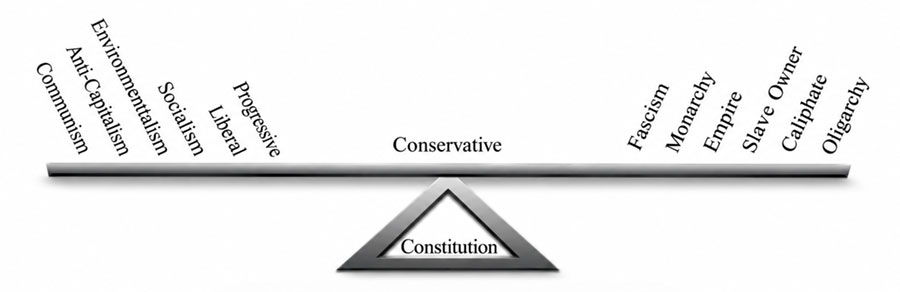
Meanwhile, ordinary working Americans often felt as though the country they grew up in was disappearing beneath them.
The left insists these changes represent progress. In fact, they represent decay.
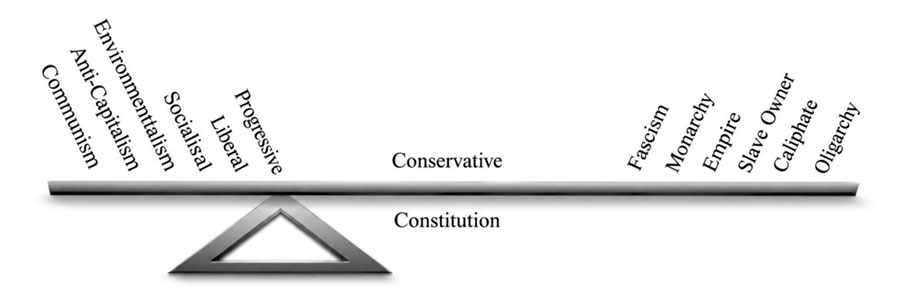
What cannot seriously be denied is that America has become dramatically more polarized, more distrustful, more bureaucratic, and more culturally fragmented over the past several decades.
Alinsky understood something important about political psychology: people can often be manipulated more effectively through emotion than reason. Anger mobilizes. Fear mobilizes. Division mobilizes. Envy mobilizes. Constant outrage keeps political movements alive.
That is why modern politics increasingly feels like permanent warfare. Every issue becomes apocalyptic. Every election becomes “the most important in history.” Every disagreement becomes a moral emergency. And compromise becomes betrayal.
This atmosphere benefits institutional power brokers. A frightened, confused and divided public becomes easier to control, easier to manipulate, and easier to direct toward ever-expanding government authority.
Ironically, many Americans who consider themselves moderates now find themselves pushed toward populism or conservatism not because they became more radical, but because the cultural center itself moved sharply leftward.
Policies once considered extreme gradually became mainstream inside elite institutions and the Democratic Party:
- open-border advocacy,
- aggressive identity politics,
- speech policing,
- gender ideology mandates,
- sprawling administrative regulation,
- massive federal spending,
- and the increasing use of government power to pressure dissenting viewpoints.
The constitutional republic envisioned by the Founders is slowly being replaced by a managerial state governed less by elected representatives and more by entrenched bureaucratic, corporate, legal, academic, and media networks.
That concern is no longer limited to conservatives.
Even many independents and classical liberals, like Jonathan Turley, now express alarm at censorship pressures, politicized institutions, ideological conformity, and the disappearance of basic civic trust.
America’s Founders understood something modern activists often forget: republics survive only when citizens share enough common identity, moral restraint, and mutual legitimacy to govern themselves peacefully.
A politics built entirely around division eventually consumes itself.
Saul Alinsky did not create America’s polarization alone. But his methods helped normalize a style of political warfare that increasingly dominates modern public life.
The tragedy is that many ordinary Americans — left, right, and center — no longer feel they inhabit the same country psychologically, culturally, or morally. And that may be the most dangerous legacy of all.
The American Dream was built by a nation confident enough to believe in shared opportunity, shared sacrifice, and shared citizenship. If America is to recover that spirit, it will require rejecting the permanent politics of rage and rediscovering something larger than factional victory. Because once every institution becomes a battlefield, eventually the nation itself becomes the casualty.
Leave a Reply