• Home
  • Mission
  • Federalist Papers
  • Foundation
  • U.S. Constitution
  • Bill of Rights

Federalist Press | Defending Liberty — Informing America

Breaking News and Political Commentary

  • All Stories
  • Economy
  • Elections
  • Entitlement
  • Ethics
  • Foreign
  • Gender
  • Religion
  • Sci-Tech

Obama Welcomes Islamic Scholar With Terrorist Ties Into White House

June 26, 2013 By Editor Leave a Comment

Bin_BayyahA Muslim scholar whose group supports Hamas, who has urged the U.N. to criminalize blasphemy and who is the deputy of an Egyptian cleric banned from the U.S. over his radical statements was able to secure a visit at the White House earlier this month.

A report from The Investigative Project on Terrorism uncovered a statement on the website of Sheikh Abdullah Bin Bayyah claiming he met June 13 with Obama administration officials in Washington.

Bin Bayyah is vice president of the International Union of Muslim Scholars, a group founded by Egyptian cleric Yusuf Qaradawi — a Muslim Brotherhood leader who has called for the death of Jews and Americans and himself is banned from visiting the U.S.

While Bin Bayyah secured a visit, he and his group also have a history of questionable positions, IPT reports.

A 2009 fatwa from the group barred “all forms of normalization” with Israel. Bin Bayyah also got behind a campaign to pressure the U.N. to pass a resolution criminalizing blasphemy. IPT also found Bin Bayyah was vice president at the organization when they issued a 2004 fatwa saying that resisting U.S. troops in Iraq is a “duty” for Muslims — effectively allowing the killing of Americans.

On his website, as first reported by IPT, Bin Bayyah said the Obama administration requested the meeting.

He quoted National Security Council official Gayle Smith as saying: “We asked for this meeting to learn from you and we need to be looking for new mechanisms to communicate with you and the Association of Muslim Scholars.”

The post reportedly claimed he had met with Smith; Rashad Hussain, U.S. envoy to the Organization of Islamic Cooperation; and the national security adviser, among others.

According to the IPT report, the reference to meeting with the national security adviser was later deleted.

IPT reported that Bin Bayyah was lobbying the White House to do more to help the Syrian opposition.

Published June 26, 2013 / FoxNews.com

Filed Under: All Stories, Elections, Ethics, Foreign, Religion

Supreme Court Sides with Gay Marriage

June 26, 2013 By Editor Leave a Comment

gay_domaIn a big day for gay-rights advocates, the Supreme Court on Wednesday struck down a federal provision denying benefits to legally married gay couples and issued a separate ruling that paves the way for same-sex marriages to resume in California.

Cheers erupted on the steps of the high court, as the rulings were handed down. The latter decision did not speak to the constitutionality of gay marriage bans in California, or in the country as a whole. The court avoided a broad ruling, and rather, determined that the defenders of California’s Proposition 8 ban on gay marriage did not have the standing to appeal lower court rulings against the ban.

As a result, California is likely to allow same-sex marriages to resume in a matter of weeks.

The more sweeping decision came in relation to the federal Defense of Marriage Act, which the court said was unconstitutional and effectively gutted by ruling against a provision that denied benefits to legally married gay couples.

The 5-4 ruling — a major victory for gay-rights advocates — means those same-sex couples would be eligible for federal benefits.

Justice Anthony Kennedy wrote the majority opinion.

“DOMA divests married same-sex couples of the duties and responsibilities that are an essential part of married life and that they in most cases would be honored to accept were DOMA not in force,” he wrote.

Kennedy wrote that the law “places same-sex couples in an unstable position of being in a second-tier marriage.”

The ruling prompted tension among the divided court. Multiple dissenting opinions were filed. Justice Antonin Scalia, reading from his dissent, said the components of the majority’s ruling are “wrong.”

“The error in both springs from the same diseased root: an exalted notion of the role of this Court in American democratic society,” he said.

Social conservatives were similarly disappointed.

“They are rejecting the truth. It’s a sad day,” said Frank Page, president of the Southern Baptist Convention Executive Committee. “Christians have to live in the world in which we live. We will adapt and adjust to the realities of the law change. At the same time we will continue to preach, declare, and live the truth that our God does not get involved in swing votes and cultural change when there is a biblical principle at stake.”

But David Boies, attorney for the plaintiffs in the Prop 8 case, hailed both rulings as a step toward “true equality.” He said that while the California case was not ruled on the merits, the DOMA ruling demonstrates that when the issue of gay marriage returns to the high court, “marriage equality will be the law throughout this land.”

The provision in question defined marriage as between a man and woman and in doing so prevented married gay couples from receiving a range of tax, health and retirement benefits that are generally available to married people.

Same-sex marriage has been adopted by 12 states and the District of Columbia. Another 18,000 couples were married in California during a brief period when same-sex unions were legal there.

“Under DOMA, same-sex married couples have their lives burdened, by reason of government decree, in visible and public ways,” Kennedy said.

“DOMA’s principal effect is to identify a subset of state-sanctioned marriages and make them unequal,” he said.

He was joined by the court’s four liberal justices.

Chief Justice John Roberts and Justices Samuel Alito, Antonin Scalia and Clarence Thomas dissented.

Scalia said the court should not have decided the case.

Published June 26, 2013 / FoxNews.com / The Associated Press contributed to this report.

Filed Under: All Stories, Economy, Elections, Entitlement, Ethics, Gender, Religion

Did FBI Probe Result in Fiery Crash?

June 25, 2013 By Editor Leave a Comment

Michael_HastingsMere hours before the fiery car crash that took his life, journalist Michael Hastings sent an email to friends and colleagues urging them to get legal counsel if they were approached by federal authorities.

“Hey [redacted] the Feds are interviewing my ‘close friends and associates,'” read the message dated June 17 at 12:56 p.m. from Hastings to editors at the website BuzzFeed, where he worked.

“Perhaps if the authorities arrive ‘BuzzFeed GQ’, er HQ, may be wise to immediately request legal counsel before any conversations or interviews about our news-gathering practices or related journalism issues.”

Hastings added that he was onto a big story and that he would, “need to go off the radat [radar] for a bit,” according to KTLA in Los Angeles.

Fifteen hours later, in the early morning of June 18, Hastings was driving a Mercedes C250 at a high speed when he lost control in Los Angeles’ Hancock Park neighborhood, causing the car to fishtail and crash into a palm tree. The impact caused the car to burst into flames, trapping the 33-year-old inside.

Conspiracy theories surrounding Hastings’ death began to circulate almost immediately.

On Twitter and several sites across the web, speculation was rampant that the death of Hastings — whose 2010 article for Rolling Stone led to the resignation of U.S. Army Gen. Stanley McChrystal, then head of the U.S. operation in Afghanistan — was no accident.

Also Friday, WikiLeaks released two messages on Twitter that added fuel to the fire.

“Michael Hastings’ death has a very serious non-public complication. We will have more details later,” said the first. Two hours later, WikiLeaks tweeted more specific information.

“Michael Hastings contacted WikiLeaks lawyer Jennifer Robinson just a few hours before he died, saying that the FBI was investigating him,” the second message read.

It was speculated by others that Hastings was working on a story about Drone Surveillance in the U.S.

LAPD officials said on Friday that no foul play was suspected in the fatal accident, although that did little to quell theories about his death.

Investigators are trying to determine whether there was a mechanical problem with the car, according to the Los Angeles Times. The car burst into flames after hitting a tree in the one-car accident at 4:20 a.m. Law enforcement sources said the car was believed to have been traveling at a high rate of speed.

Published June 24, 2013 / FoxNews.com

Filed Under: All Stories, Elections, Ethics, Foreign, Sci-Tech

Supreme Court Strikes Down Key Part of Voting Rights Act

June 25, 2013 By Editor Leave a Comment

Supreme-CourtIn a major ruling, the Supreme Court on Tuesday voided a provision of the Voting Rights Act that determines which state and local governments have to seek federal permission to change their voting laws.

The 1960s-era provision largely singled out states and districts in the South — those with a history of discrimination — for special screening by the federal government over changes to their laws. But the court ruled 5-4 that the formula determining which states are affected is unconstitutional, and said Congress could try to draft a new provision.

The justices said that the law Congress most recently renewed in 2006 relies on 40-year-old data that does not reflect racial progress and changes in U.S. society.

“In 2006, the Act was reauthorized for an additional 25 years, but the coverage formula was not changed. Coverage still turned on whether a jurisdiction had a voting test in the 1960s or1970s, and had low voter registration or turnout at that time,” Chief Justice John Roberts wrote.

He clarified that the provision requiring advance approval of voting law changes — known as Section 5 — was not being struck down. Rather, the court found that the provision pertaining to the formula, known as Section 4, was unconstitutional. The decision, though, challenges the overall practice of federal screening unless and until Congress addresses the formula.

The decision means that a host of state and local laws that have not received Justice Department approval or have not yet been submitted will be able to take effect. Prominent among those are voter identification laws in Alabama and Mississippi.

Going forward, the outcome alters the calculus of passing election-related legislation in the affected states and local jurisdictions. The threat of an objection from Washington has hung over election-related proposals for nearly a half century. At least until Congress acts, that deterrent now is gone.

Roberts argued that these states and the conditions in them have “changed dramatically” over the years.

“The tests and devices that blocked ballot access have been forbidden nationwide for over 40 years. Yet the Act has not eased (Section 5’s) restrictions or narrowed the scope of (Section 4’s) coverage formula along the way. Instead those extraordinary and unprecedented features have been reauthorized as if nothing has changed, and they have grown even stronger,” he wrote.

The decision comes five months after President Obama, the nation’s first black chief executive, started his second term in the White House, re-elected by a diverse coalition of voters.

The high court is in the midst of a broad re-examination of the ongoing necessity of laws and programs aimed at giving racial minorities access to major areas of American life from which they once were systematically excluded. The justices issued a modest ruling Monday that preserved affirmative action in higher education and will take on cases dealing with anti-discrimination sections of a federal housing law and another affirmative action case from Michigan next term.

The court warned of problems with the voting rights law in a similar case heard in 2009. The justices averted a major constitutional ruling at that time, but Congress did nothing to address the issues the court raised. The law’s opponents, sensing its vulnerability, filed several new lawsuits.

The latest decision came in a challenge to the advance approval, or preclearance, requirement, which was brought by Shelby County, Ala., a Birmingham suburb.

The lawsuit acknowledged that the measure’s strong medicine was appropriate and necessary to counteract decades of state-sponsored discrimination in voting, despite the Fifteenth Amendment’s guarantee of the vote for black Americans.

But it asked whether there was any end in sight for a provision that intrudes on states’ rights to conduct elections, an issue the court’s conservative justices also explored at the argument in February. It was considered an emergency response when first enacted in 1965.

The county noted that the 25-year extension approved in 2006 would keep some places under Washington’s oversight until 2031 and seemed not to account for changes that include the elimination of racial disparity in voter registration and turnout or the existence of allegations of race-based discrimination in voting in areas of the country that are not subject to the provision.

The Obama administration and civil rights groups said there is a continuing need for it and pointed to the Justice Department’s efforts to block voter ID laws in South Carolina and Texas last year, as well as a redistricting plan in Texas that a federal court found discriminated against the state’s large and growing Hispanic population.

Advance approval was put into the law to give federal officials a potent tool to defeat persistent efforts to keep blacks from voting.

The provision was a huge success because it shifted the legal burden and required governments that were covered to demonstrate that their proposed changes would not discriminate. Congress periodically has renewed it over the years. The most recent extension was overwhelmingly approved by a Republican-led Congress and signed by President George W. Bush.

The requirement currently applies to the states of Alabama, Alaska, Arizona, Georgia, Louisiana, Mississippi, South Carolina, Texas and Virginia. It also covers certain counties in California, Florida, New York, North Carolina and South Dakota, and some local jurisdictions in Michigan. Coverage has been triggered by past discrimination not only against blacks, but also against American Indians, Asian-Americans, Alaska Natives and Hispanics.

Towns in New Hampshire that had been covered by the law were freed from the advance approval requirement in March. Supporters of the provision pointed to the ability to bail out of the prior approval provision to argue that the law was flexible enough to accommodate change and that the court should leave the Voting Rights Act intact.

On Monday, the Justice Department announced an agreement that would allow Hanover County, Va., to bail out.

Published June 25, 2013 / FoxNews.com / The Associated Press contributed to this report.

Filed Under: All Stories, Economy, Elections, Entitlement, Ethics, Foreign, Gender, Religion

Google Claims First Amendment Right To Release NSA Data Demands

June 24, 2013 By Editor Leave a Comment

NSA-GoogleFor the past two weeks, Google has been petitioning the government to allow it to publish the exact number of data requests it receives from the NSA. There’s not been a lot of progress made on that front, but now Google is pulling out the big guns in attempt to force transparency.

In a recent filing, obtained by The Washington Post, before the Foreign Intelligence Surveillance Court, Google argues the gag order that prevents it from publishing the number of data requests it receives is unconstitutional. In particular, Google says that such gag orders violate its First Amendment rights:

“Google seeks a declaratory judgment that Google has a right under the First Amendment to publish, and that no applicable law or regulation prohibits Google from publishing, two aggregate unclassified numbers: (1) the total number of FISA requests it receives, if any; and (2) the total number of users or accounts encompassed within such requests.”

Now, why is this so difficult? What’s wrong with publishing nothing but numbers? Well, it may seem kind of silly to you, but the government argues that even publishing the exact number of data requests it sends would put the nation in danger. Google isn’t asking to publish any specific requests nor it it asking to reveal inner workings of its relationship with the NSA. Google is only asking to publish some numbers, and that has thus far proven to be incredibly difficult.

In the last week, we’ve seen the government slightly budge on the issue. Facebook, Apple and Yahoo all published statements that listed a ballpark figure of data requests it receives from local, state and federal governments. Google was presumably allowed to publish the same figure, but it refrained because “lumping national security requests together with criminal requests … would be a backward step for our users.”

Google took that stance because it already publishes the amount of national security letters it receives from the government. Well, it can publish ballpark figures that say it received between 0 and 999 requests for user data in 2012. It’s not exactly helpful and lumping those figures in with criminal requests would make the numbers even more opaque.

The core argument here is that publishing these wide ranging numbers doesn’t do the public or Google any good. Sure, Google could say it receives anywhere between 9,000 to 12,000 data requests per year, but we wouldn’t know if those requests were from local law enforcement or the NSA. In turn, that unknown factor would only serve to increase consumer distrust for Google and drive them away to competitors.

What makes this all the more silly is that Google isn’t even asking to publish the exact number of data requests. As per the filing, here’s what Google would like to publish:

“Google’s publication would disclose numbers as part of the regular Transparency Report publication cycle for National Security Letters, which covers data over calendar year time periods. There would be two new categories to cover requests made under FISA: (a) total requests received and (b) total users/accounts at issue. Each of these entries will be reported at a range, rather than an actual number. That range would be the same as used by Google in its reporting of NSLs currently, in increments of one thousand, starting with zero. As with the NSL reporting, Google would have a Frequently Asked Questions section that would describe the statutory FISA authorities themselves.”

That doesn’t sound bad at all. The government already lets Google publish a ballpark figure for national security letters, so why not this? What’s the problem with making the federal government more transparent? Doing so would benefit not only the Obama administration’s declining reputation, but it would also immensely help Silicon Valley as well.

As was argued last week, tech companies have just as much to lose from the government keeping quiet as we do. Publishing opaque data request numbers may initially look good for the likes of Facebook and Apple, but Google is taking the higher ground here. It’s fighting to publish these numbers to advance the public debate over the NSA “in a thoughtful and democratic manner.” Lord knows the issue of NSA spying powers needs that right now.

By Zach Walton – Writer for WebProNews

Do you think Google should be allowed to publish data request numbers? Would it adversely impact national security?

google_cia_nsa

Filed Under: All Stories, Economy, Elections, Ethics, Sci-Tech

Technology Makes Possible the Surveillance State

June 23, 2013 By Editor Leave a Comment

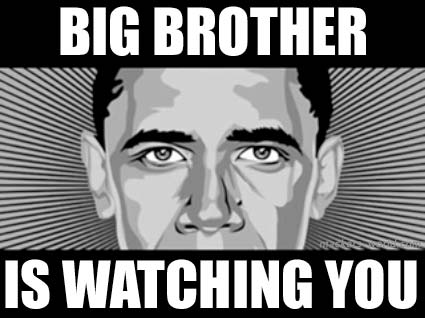
obama-big-brotherTechnology is making your every move — perhaps even those movements you make in the bathroom — ready for broadcast. The question is, are you ready for it?

Following the revelations about some of what the U.S. National Security Agency has been up to — secretly collecting millions of phone records and innumerable personal online searches and e-mails — government officials have been scrambling to reassure the public that the amount of information it is collecting is negligible, even trivial, and doesn’t impinge on personal freedom. However, the technology itself argues against the idea that what’s being collected about you is harmless.

Consider that phone numbers with time and location information can be easily combined with Web searches (for “anti-depressants,” say) and text message information to form a picture of where you are and what you’re doing. No one needs to listen to the content of a call if they know everything else about you, like the fact that you’ve messaged a therapist several times this week, belong to a gun club, and gave money to a Tea Party candidate.

Furthermore, the government’s Prism program looks positively mundane when you consider the other possible sources of information available through secret government surveillance. It is technically possible to monitor nearly every U.S. citizen — through automated scanning software programs — seven days a week, 24 hours a day.

Video cameras monitor you walking down the sidewalk. Toll tags and on-board connected car systems monitor you behind the wheel, even relaying rabbit starts, severe braking, and excessive speed. Security systems at work oversee cubicles, and employers monitor computer habits with hidden software that tracks keystrokes. At home, smart TVs with streaming services collect information about what you’re watching. Some sets and gaming consoles even include cameras that can tell who is in the room sitting on the couch.

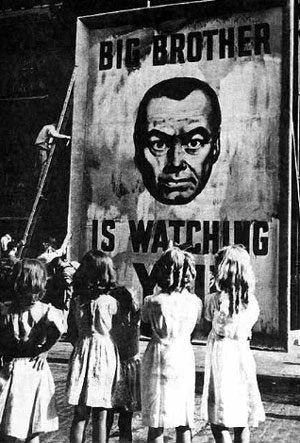
big_brother_watchingWorse, our addiction to smartphones means we’re beaming our location, purchases, banking information, and personal relationships over networks that can be easily tapped — by government officials or by malware from hackers. Indeed, a computer program known as Flame that security experts say was created for espionage purposes has the demonstrated ability to secretly turn on a device’s microphone and record a conversation.

And then there’s Google Glass.

The much anticipated eyewear isn’t even available to the public yet, but when it is people won’t have to hold up a phone to take a picture, they’ll be able to record video in the blink of an eye. At a recent shareholder meeting, Google CEO Larry Page told attendees not to be terrified that people might use Glass in a public bathroom, just as we shouldn’t worry about people using smartphones in the bathroom.

I think there are some choice words folks would have for people who use Google Glass in the bathroom. (Try explaining to the friendly police officer that you were just reading FoxNews.com on the eyepiece, honest.)

The problem, of course, is the surreptitious nature of the technology and the secret monitoring it enables. It means that information — information you might think is innocuous — can be used against you without your knowledge. (Never mind embarrassing videos showing your lack of hygiene in the bathroom.) You may never know why you were rejected for a job or your kid didn’t get into a particular school.

Hypothetically speaking, you might be pulled over on the highway in the middle of the night by an officer who claims you were dallying in the passing lane. Unbeknownst to you, the real reason was that your plate was flagged by a license plate reader (LPR) camera, which was relying on an algorithm that detected that an individual who made phone calls to Eastern Europe and conducted Web searches for gun clubs is associated with that plate number.

The police officer lets you go on your way, but the next week, late at night, the same thing happens. And then the week after that, and, well, you get the picture.

So even if you never do anything wrong, never jaywalk or get a parking ticket, the information collected could be used against you, and you would be none the wiser. Catching terrorists is a laudable aim of such technological surveillance, and you might trust the Obama administration that such surveillance will never be misused. But what about the next administration?

Should people associated with the Tea Party get extra scrutiny from the IRS? Should people who are against gun control be monitored by state police? Should anti-war activists have their search history scrutinized by the NSA?

There are technological ways to limit the intrusion of such technology and prevent it from diminishing our privacy and freedoms, but it requires extra work. Programmers can limit the scope and fine tune communications monitoring software, and government officials could submit to more oversight by courts that are not secret.

But in a society where most of us are scrutinized on camera already — with the bathroom soon to come — it may be too late to put the digital genie back in the bottle.

By John R. Quain / FoxNews.com

Filed Under: All Stories, Economy, Elections, Entitlement, Ethics, Foreign, Gender, Religion, Sci-Tech

Egyptian Pres. Morsi Appoints Member of Al Qaeda that Massacred European Tourists in Luxor

June 22, 2013 By Editor Leave a Comment

AdelLast year Egyptian President Morsi freed one of the monsters behind the Luxor Massacre. Now he has appointed another member of The Islamic Group, Adel Mohammed al-Khayat as the Governor of Luxor.

Egypt’s tourism minister resigned a day after President Mohamed Morsi appointed the new governor to Luxor province.

Hesham Zazou said on Wednesday he “couldn’t continue in the role of tourism minister” after the appointment of Adel al-Khayat.

Following are witness accounts of the day that Adel Mohammed al-Khayat and his Islamic terrorist comrades murdered 58 tourists.

“As they ran past a Japanese tourist, she said, one of the men fired into the woman’s face from a range of about 15 inches.” The gunmen “took all the young women, the girls, and disappeared with them. I don’t know where they went with the women, but they hurt them. We could hear screams of pain,” Dousse said.

Among the horrors, the marauders cut off the ears and noses of several of their victims. A note praising Islam was found inside one disemboweled body.

The foreign dead included 31 Swiss, 10 Japanese, five Germans, four Britons, one child (a Bulgarian), a Colombian and a French citizen. The Japanese victims were four newlywed couples and an elderly couple on their second honeymoon.

Witnesses told how the terrorists methodically executed the European tourists. Some were forced to kneel before being shot, while others were stabbed to death.

Little Shaunnah, her mum and gran, all from Ripponden, West Yorks, died alongside fellow Brits George Wigham, 69, and wife Ivy, 71, of Swanley, Kent, and Londoner Sylvia Wilder, 26.

Shaunnah_Turner

Shaunnah Turner, 5 Years Old, Murdered by Muslim terrorists at Luxor

Shaunnah Turner’ father, ’ Richard, spoke of his murdered daughter  after the horror: “In a crowd she would shine. She was really beautiful. She had an impish charm that could win anybody over.”

A member of the movement whose gunmen killed 58 foreigners at a temple in Luxor in 1997 was sworn in by Egyptian President Mohamed Mursi on Monday as governor of the vital tourist region.

Adel Mohammed al-Khayat, who now represents the Building and Development Party, the political wing of the al-Gamaa al-Islamiya movement.

‘No to the terrorist governor!’ read a placard at a demonstration by dozens of tourism workers who protested outside the governor’s office in Luxor.

Khayat, then in his mid-40s, was a leader of al-Gamaa al-Islamiya in another province when, on Nov. 17, 1997, six young men from the group shot their way into the Temple of Hatshepsut in Luxor’s Valley of the Queens.

The attack was part of a broader campaign by the group, at that time linked to al Qaeda, to cripple tourism revenues for the government of then-president Hosni Mubarak. Of the 62 people killed in the next hour, 58 were foreign tourists, more than half of them Swiss and the rest Japanese, British, German and Colombian.

The gunmen, reported to have trained at al Qaeda camps in Afghanistan, committed suicide.

PUBLIUS

Filed Under: All Stories, Elections, Ethics, Foreign, Gender, Religion

Zimmerman Judge Prohibits Prosecution Audio Experts

June 22, 2013 By Editor Leave a Comment

ZimmermanThe judge in the murder trial of George Zimmerman said Saturday that prosecution audio experts who point to Trayvon Martin as screaming on a 911 calls moments before he was killed won’t be allowed to testify at trial.

Judge Debra Nelson’s written ruling was released Saturday. She had heard argument during a multiday hearing on whether to allow testimony from two prosecution experts. One expert ruled out Zimmerman as the screamer and another said it was Martin.  A defense expert argued there was not enough audio to determine who the screams are coming from. Zimmerman’s attorneys also argued that the state experts’ analysis is flawed.

The screams are crucial pieces of evidence because they could determine who the aggressor was in the confrontation. Martin’s family contends it was the teen screaming, while Zimmerman’s father has said it was his son.

Opening statements are set for Monday in the second-degree murder trial for the former neighborhood watch volunteer who says he fired on the unarmed black teenager in self-defense last year. Zimmerman is pleading not guilty.

Audio experts from both sides testified at different times since the admissibility hearing started last month. Voice experts were hired by lawyers and news organizations to analyze the calls, which were made during the confrontation between the two. The experts arrived at mixed conclusions.

In deciding whether to admit the voice-recognition technology used by prosecution audio expert Tom Owen, Nelson had to determine whether it is too novel or whether it has been accepted by the scientific community at-large.

“There is no evidence to establish that their scientific techniques have been tested and found reliable,” the judge said in her ruling.

Owen was hired by the Orlando Sentinel last year to compare a voice sample of Zimmerman with screams for help captured on 911 calls made by neighbors. He said Zimmerman’s voice doesn’t match the screams. He only compared Zimmerman’s voice to the 911 calls because he didn’t have a voice sample for Martin at the time.

“The screams don’t match at all,” Owen testified during the hearing. “That’s what tells me the screams aren’t George Zimmerman.”

Owen also testified that remarks Zimmerman made in a conversation with a police dispatcher aren’t a racial slur. He testified Zimmerman said, “These f—— punks.”

Expert Alan Reich testified in a report for prosecutors that the screams on the 911 tapes were from Martin and the defense does not want him to testify at trial.

Reich’s analysis also picked up words that other experts couldn’t find. They include the words, “This shall be” from Zimmerman and “I’m begging you” from Martin.

In contrast, a British audio expert testified for the defense that it would be extremely difficult to analyze voices by comparing screaming to a normal voice.

“I’ve never come across a case in my 13 years where anybody’s tried to compare screaming to a normal voice,” said audio expert Peter French.

A second audio expert for the defense, George Doddington, also criticized prosecution experts who said Friday that screams and pleas on a 911 recording likely belonged to Martin.

“It’s all ridiculous,” Doddington said.

Nelson issued a ruling Friday allowing prosecutors to argue in opening statements that Zimmerman profiled Martin based on factors such as age or clothing before he shot the unarmed black teenager, but they cannot say he was profiled based on race.

Defense attorneys had asked the judge to prohibit prosecutors from using a series of words in opening statements that they deemed inflammatory. Those words included “profiled,” “vigilante,” “wannabe cop,” and that Zimmerman had confronted Martin. Zimmerman identifies as Hispanic.

The judge said all of those statements may be used, provided that race is not discussed if the issue of profiling is brought up.

Prosecutor John Guy had argued that there were a number of ways someone could be profiled other than race.

“That is not a racially charged term unless it’s made so, and we don’t intend to make it a racially charged term,” Guy said. “There are a number of avenues someone can be profiled in any one way or combination. We don’t intend to say he was solely profiled because of race.”

Defense attorney Mark O’Mara said he was concerned using the word “profiled” would “infect” the jury with a racial component that shouldn’t be there.

“I want to be very, very cautious,” O’Mara said.

Six female jurors were chosen Thursday for the second-degree murder trial of Zimmerman, a former neighborhood watch volunteer who says he fired on Martin in self-defense last year in a gated community in Sanford. Zimmerman is pleading not guilty.

Prosecutors have said Zimmerman, 29, profiled 17-year-old Martin as he walked back through the central Florida community from a convenience store on a rainy night in February 2012 wearing a dark hooded shirt.

Race and ethnicity have played a prominent role in the case and even clouded jury selection. While the court did not release the racial makeup of the jury, the panel appeared to reporters covering the selection process to be made up of five white women and a sixth who may be Hispanic.

On Feb. 26, 2012, Zimmerman spotted Martin, whom he did not recognize, walking in the gated townhome community in Sanford where Zimmerman lived and the fiancee of Martin’s father also resided. There had been a rash of recent break-ins at the Retreat, and Zimmerman was wary of strangers walking through the complex.

The two eventually got into a struggle and Zimmerman shot Martin in the chest with his 9mm handgun. He was charged 44 days after the shooting, only after a special prosecutor was appointed to review the case and after protests.

Martin’s shooting death and the initial decision not to charge Zimmerman led to public outrage and demonstrations around the nation, with civil rights leaders and others accusing Sanford police of failing to thoroughly investigate the shooting.

The six jurors were culled from a pool of 40 candidates who made it into a second round of jury questioning. Two men and two women also were picked as alternate jurors.

Published June 22, 2013 / FoxNews.com / The Associated Press contributed to this report.

Filed Under: All Stories, Ethics

EPA Drops Study Linking Pollution to Fracking

June 21, 2013 By Editor Leave a Comment

epa-logoCHEYENNE, Wyo. –  The U.S. Environmental Protection Agency announced Thursday it is dropping its longstanding plan to have independent scientists review its finding that hydraulic fracturing may be linked to groundwater pollution in central Wyoming.

The EPA is standing by its findings, but state officials will lead further investigation into the pollution in the Pavillion area. The area has been a focus of the debate over whether fracking can pollute groundwater ever since the EPA’s initial report came out in late 2011.

“We stand behind our work and the data, but EPA recognizes the state’s commitment to further investigation,” said agency spokesman Tom Reynolds in Washington, D.C. The EPA will let state officials carry on the investigation with the federal agency’s support, he said.

Wyoming officials have been skeptical about the theory that fracking played a role in the pollution at Pavillion, but Reynolds expressed confidence the state could lead the work from here. He described the shift as the best way to ensure Pavillion-area residents have a clean source of drinking water.

Even so, industry officials who have been doubtful about the EPA findings all along praised the change as confirmation of their view that the science wasn’t sound.

“EPA has to do a better job, because another fatally flawed water study could have a big impact on how the nation develops its massive energy resources,” Erik Milito, director of upstream and industry operations for the American Petroleum Institute, said in a release.

Richard Garrett, energy and legislative advocate with the Wyoming Outdoor Council in Lander, said he believes Thursday’s announcement shows the EPA is finding it more difficult than originally expected to come to grips with the full environmental effect of fracking. He noted that the EPA is pushing back other work aimed at gauging the how energy production may pollute groundwater.

“It’s not surprising to me that they’re kind of taking a secondary role in rural Pavillion,” Garrett said. “It looks to me like it might be a resource issue. That goes to the federal budget I suppose, and EPA administration.”

Hydraulic fracturing, or fracking, boosts the productivity of oil and gas wells by pumping pressurized water mixed with sand and chemicals into well holes to crack open fissures in the ground.

Environmentalists have voiced concern about fracking causing groundwater pollution for years, but the practice has significantly boosted oil and gas production in regions such as the Bakken Shale in North Dakota and the Marcellus Shale underlying Eastern states.

The EPA’s 2011 report marked the first time the agency publicly linked fracking and groundwater contamination, causing a stir on both sides of the issue.

The federal agency began seeking nominations last year for experts to serve as peer reviewers for its draft report, and it has extended public comment periods on the report three times since it came out. Each extension delayed the peer-review plans.

EPA officials insisted Thursday that the agency is not giving up on its Pavillion research and reserves the right to pick up the investigation in the future and open it to peer review. The EPA also has been examining the relationship between fracking and groundwater in different areas of the country and is proceeding with that study.

The Northern Arapaho Tribe on the Wind River Indian Reservation surrounding the Pavillion area has been seeking to maintain a role in the Pavillion research since taking part in new sampling last year. A tribal official said, however, that the EPA hasn’t worked closely with the tribe lately.

“They have a legal duty to consult with the tribe and that didn’t happen as part of their dialogue with the governor,” Ronald Oldman, co-chairman of the tribe’s business council, said in a statement.

The new research led by Wyoming officials would be funded at least in part by a $1.5 million grant from Encana Corp.’s U.S. oil and gas subsidiary, which owns the Pavillion gas field. The state will issue a final report in late 2014, Gov. Matt Mead’s office said in a news release.

Mead said Wyoming will focus on making sure the few dozen affected residents of the rural, farming and ranching country a few miles outside Pavillion, population 230, have a clean source of drinking water. The state has been providing water cisterns to 20 people in the area.

“It is in everyone’s best interest — particularly the citizens who live outside of Pavillion — that Wyoming and the EPA reach an unbiased, scientifically supportable conclusion,” Mead said in a news release. “I commend EPA and Encana for working with me to chart a positive course for the investigation.”

The study will assess the need for any further action to protect drinking water sources, according to the release.

The Encana funding will pay to examine 14 domestic water wells in the Pavillion field for water quality and palatability concerns.

Local residents have complained for more than seven years that their water began to reek of chemicals since fracking occurred in their neighborhood. However, EPA efforts to find potential pathways from deeper areas where gas is extracted to shallower areas tapped by domestic water wells have been inconclusive, the news release said.

“We’re pleased that EPA has agreed to discontinue the investigation,” Encana spokesman Doug Hock said. “We applaud the fact that further efforts in Pavilion will focus on a few specific complaints about perceived changes in domestic water well quality.”

Published June 21, 2013 / Associated Press

Filed Under: All Stories, Economy, Elections, Ethics, Foreign, Sci-Tech

Connecticut Gun Maker Moving to South Carolina

June 20, 2013 By Editor Leave a Comment

ptr-industries-rifleA Connecticut gun manufacturer is moving to South Carolina after Connecticut lawmakers passed stricter gun-control laws in the aftermath of the fatal Sandy Hook School shootings.

PTR Industries will make the formal announcement next week at a ribbon-cutting to be attended by South Carolina Republican Gov. Nikki Haley, according to The Sun News of Myrtle Beach.

The company is going to Horry County, which includes Myrtle Beach, and has already approved a resolution setting out the terms of the company’s move.

County Council Chairman Mark Lazarus says he’s excited about the development.

Josh Fiorini, PTR’s chief executive officer, says the plant will employ 140 people, many of whom will relocate from Connecticut. The move will take place over three years.

The company said it had been contacted by 41 states and selected South Carolina from six finalists.

Published June 19, 2013 / Associated Press

Filed Under: All Stories, Economy, Elections, Ethics

White House, IRS Hid Media Requests in Red Tape

June 20, 2013 By Editor Leave a Comment

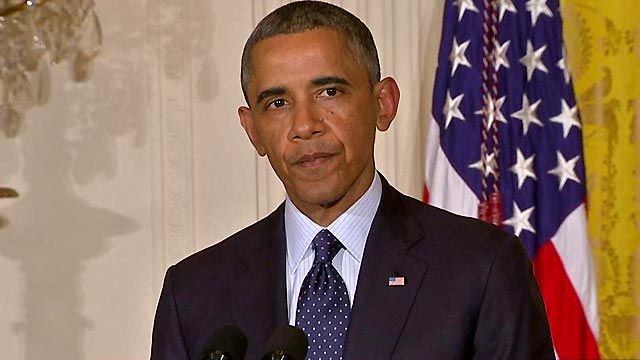
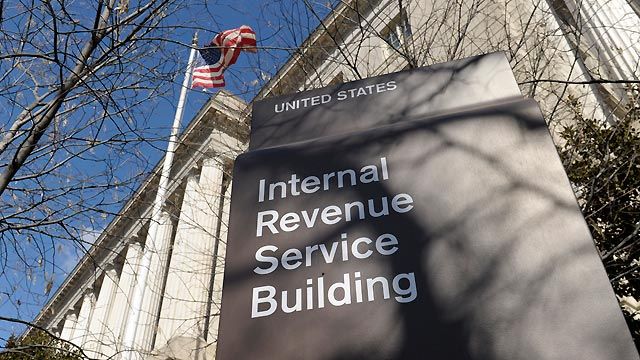
obama_irsEven as the freshly minted Obama administration was pledging a “new era of open government” in 2009, officials were quietly adding new rules that had the potential to slow down public requests for documents.

Those rules, detailed in memos reviewed by FoxNews.com, could even trip up present-day efforts to dig into the IRS’ practice of targeting conservative groups. The rules detailed in the memos largely emanated from the Treasury Department and, specifically, the IRS.

“It would seem to repudiate this notion that this is going to be the most transparent government in history,” said Dan Epstein, executive director of Cause of Action, the group that first obtained the memos.

“It would seem to repudiate this notion that this is going to be the most transparent government in history.” – Dan Epstein, director of Cause of Action

The memos follow reports about the administration’s use of private email accounts, and coincide with ongoing debate about government transparency — particularly with recent disclosures about widespread surveillance programs.

Epstein said the document request procedures are “troubling” since the media are “really concerned about the limits of government power.”

According to the documents, the Treasury Department in 2009 set up an additional review for requests involving “sensitive information,” which covered a broad range of items. The White House sometimes got involved, slowing down the process. The IRS also acknowledged having another review process for requests from “major media,” but not for requests from private individuals.

Members of the media often try to obtain documents not readily available by citing a law known as the Freedom of Information Act. The Treasury Department, though, in late 2009 erected speed bumps for some so-called FOIA requests.

The rules were detailed in a November 2010 memo and report sent from the Treasury inspector general to Sen. Charles Grassley, R-Iowa.

The documents showed the Treasury Department set up an additional “formal level of review” for requests for “sensitive information.” This category would cover everything from emails to memos to calendars to travel logs for top department officials, legal advisers, senior advisers and others.

Once a request was deemed “sensitive,” it would then go before a “review committee,” made up of officials from several Treasury offices.

Further, the document said a special report would be prepared for IRS requests from “major media.” This covers requests from traditional news media as well as bloggers, and according to the report covered information that “was likely to attract news media or congressional interest, involved large dollar amounts, or involved unique or novel issues.”

This report would then be sent to a higher-up in the division who decided whether the material should be disclosed.

The report repeatedly said that, in most cases, political appointees were not involved in these decisions, and that the agencies have no procedures to allow that.

But Epstein said these rules could cause problems as Congress and the media dig deeper into the origin of the IRS practice of singling out conservative groups for additional scrutiny.

He pointed to another memo, dated April 15, 2009, from then-White House Counsel Greg Craig that urged “executive agencies” to consult with his office “on all document requests that may involve documents with White House equities.” Craig said this pertains to everything from FOIA requests to congressional requests to subpoenas.

This practice apparently dates back to 1993. The Treasury IG memo cited this, and described the White House involvement as “minimal and limited.” However, the report also said the White House involvement “was responsible in several cases for adding a significant processing delay,” which in Treasury’s case slowed them down.

“It actually is heavily ironic in the realm of transparency,” Epstein said.

He pointed to edicts and memos early on in the first term of the administration stressing transparency. Obama issued a January 2009 directive calling for an “unprecedented level of openness.”

Attorney General Eric Holder in March 2009 directed all Executive Branch departments to use a “presumption of openness” when dealing with FOIA requests.

To that end, the administration has instituted several other transparency initiatives. It has followed through on requiring Cabinet secretaries to hold Internet town hall discussions, set up a comprehensive website to track stimulus spending, and set up a national declassification center.

By Judson Berger / Published June 20, 2013 / FoxNews.com

Filed Under: All Stories, Economy, Elections, Entitlement, Ethics, Foreign, Gender, Religion

Find From Era of King David May Confirm Old Testament Text

June 20, 2013 By Editor Leave a Comment

Tropper-pillarA carved pillar discovered near Bethlehem may be linked to the Biblical King of Kings, David himself, or perhaps validate the scope of wise Solomon’s majestic kingdom.

If they ever get around to digging it up, that is.

Israeli tour guide Binyamin Tropper, who thought he was the first to discover the major historical artifact, was astonished to find out that authorities had known about the pillar for decades — and had been keeping it a secret all that time.

‘The Israeli Antiquities Authority told him, that’s great, now shut up.’ – Binyamin Tropper

“When I realized the significance of the pillar, I told my boss who spoke with the Israeli Antiquities Authority (IAA),” Tropper, who works at the educational field school at Kibbutz Kfar Etzion, told FoxNews.com. “The IAA then told him, ‘that’s great, now shut up.'”

Tropper may have stumbled across further proof of the real-life world behind the Biblical stories related in the Old Testament. The 2,800-year-old stone pillar could help locate those legends on a map, archaeologists say, and connect the modern country of Israel with the historical roots of Judaism.

But due to the complexities of Arab-Israeli relations, the find is being ignored, experts say, hushed up to avoid a major political battle over centuries of debate concerning who has the more legitimate claim to the Holy Land.

“As the site is located in the West Bank, not within the official borders of Israel, it is more problematic to excavate there than inside Israel,” Yosef Garfinkel, a professor of archeology at Hebrew University who inspected the site, explained to FoxNews.com.

In a carefully worded statement to FoxNews.com, the IAA acknowledged the discovery of the pillar but would not discuss the matter further, expressing concern over the unavoidable relationship between archeology and the Middle East conflict.

“The complex reality in Israel sometimes brings the scholarly discipline of archaeology in contact with political issues regarding the subject of historical roots and rights,” the IAA told FoxNews.com in an email. “When a significant archaeological discovery requires additional research, the IAA sees that this is carried out. Such is the case in this issue: the IAA is operating in effort to carry out a full excavation of the site, which will enable thorough study of the findings and their disclosure in both popular and scholarly publications.”

Tropper defied the IAA’s request to stay mum on his discovery, however; he believes it’s worth the political headache a proper excavation would provoke.

Tropper explained that in the last 20-30 years, an internal debate in Israel has ensued over the size and importance of King David’s kingdom as described in the Bible. This pillar’s design, he says, is consistent with the time period of the First Temple and would help provide concrete evidence of the Judean king’s existence in Israel.

“This pillar weighs (approximately) five tons, so you can’t move it,” Tropper said. “Because it is so big, we know it must belong to this location.”

King Solomon is credited with building the First Temple as detailed in the Old Testament. A place of worship for biblical Jews, it was said to be destroyed by the Babylonian king, Nebuchadnezzar II in 587 BCE.

Garfinkel told the Times of Israel that the pillar marks the entrance to a water tunnel of the First Temple period. The similar Siloam Tunnel in Jerusalem is near the modern-day Arab neighborhood of Silwan and is thought to be a project of the biblical king Hezekiah, used as a way to channel water into the city before the Assyrian siege in the 8th century, according to the Book of Kings.

While Tropper is reluctant to reveal the exact location of the pillar in order to prevent attracting antiquity thieves, he admits the find is all the more controversial as it currently rests on privately owned land belonging to a Palestinian.

“I think the (Arabs in the nearby town) know of the find, but they do not know how important it is,” Tropper told FoxNews.com. He said opening up the site for excavation would benefit the nearby Arab-owned orchard tremendously.

“There is a spring there that if we excavate will open up and the Arabs would have the water back and it will bring them money,” explained Tropper.

Tropper hopes that with time, the IAA will realize the importance of the pillar and order an excavation.

“We understand that it is problematic and a little complicated,” Tropper said. “This is an important place and it is our story so we need to dig.”

By Sasha Bogursky, Jeremy A. Kaplan / Published June 20, 2013 / FoxNews

Filed Under: All Stories, Elections, Ethics, Foreign, Religion

Columbia U. Cons: Ivy League Social Work Program Run by Felons

June 19, 2013 By Editor Leave a Comment

BoudinIn the hallowed halls of Columbia University, a nest of ex-cons — who have served time for murder, attempted murder, robbery and assault — hold court on their unique brand of social justice for admiring students enrolled in the school’s social work program, a FoxNews.com investigation has found.

The ex-cons work for or with the Criminal Justice Initiative (CJI), co-founded in 2009 by former Weather Underground operative and Columbia adjunct professor Kathy Boudin, who pleaded guilty to felony murder for her role in an infamous 1981 armed robbery that left two police officers and a security guard dead. And while that case was well-publicized, the group is hardly upfront about the “practical experience” of Boudin and others associated with the CJI.

A description on the program’s website says it is “situated inside” Columbia, and a part of the school’s “Social Intervention Group,” a research center within the Columbia University School of Social Work. It lists among its goals helping to forge a solution for “a central social crisis of our time, mass incarceration.” The program holds events and conducts research as part of “an interdisciplinary project built around a model of community collaboration” that “seeks to increase the number of skilled practitioners, policy-makers and researchers who can advance the fields of re-entry and incarceration across all disciplines.”

“It’s terrible that she has murderers working with her at a school.” – John Hanchar, brother-in-law of slain Nyack Police Officer Edward O’ Grady

But students and parents who shell out more than $43,000 in annual tuition and fees might be hard-pressed to uncover the fact that former inmates are running the CJI. Outside of a vague reference to Boudin and Cheryl Wilkins being “part of a community of people who have returned from prison,” there is no information about their criminal pasts. Boudin’s school directory bio, for example, makes no mention of her time in prison. Several other CJI faculty, program members and associates have similarly disturbing backgrounds.

Wilkins, co-director of the CJI, is listed in the Columbia School of Social Work adjunct faculty directory as a “research scientist” and “Associate Director for the Criminal Justice Initiative. She was convicted for her role in a 1996 gunpoint hijacking of a Federal Express truck in Harlem, in which she served as the getaway driver. Wilkins served a 12-year sentence for robbery and assault at Bayview Correctional Facility in Manhattan.

But Wilkins’ school biography page makes no mention of her time in jail. Wilkins is also listed as staff associate at Columbia Law School’s Center for Institutional and Social Change, though that bio also neglects any mention of her prison time. According to the bio, Wilkins works with teens who have incarcerated parents and is an adjunct lecturer at Columbia, where she often discusses topics concerning the “need of families and communities affected by mass incarceration.”

Denise Blackwell, a “research assistant” under the Social Intervention Group, the parent/umbrella group of the Criminal Justice Initiative, was paroled in 2003 after serving 10 years in prison on an attempted second-degree murder conviction for her role in a Brooklyn holdup in which three drug dealers were killed. According to reports of her 1991 arrest, Blackwell knew the three men and “orchestrated” the robbery.

“By prearrangement, she let the boys in to stick up the place,” a New York Police Department lieutenant was quoted as saying at the time. Blackwell’s son, Mack Moton, who was 15 at the time, was tried as an adult and convicted of second-degree murder. He was sentenced to 32 years to life, and is being held in Sing Sing Correctional Facility, in Ossining, N.Y.

Mika’il DeVeaux was one of the keynote speakers for the CJI’s “Removing the Bars” Conference in 2012. But his bio in the conference program failed to mention the 24-year stint he served in Westchester County for second-degree murder and his subsequent parole in 2003, or that he’s co-director of a non-profit with Boudin called Citizens Against Recidivism. Instead, the bio simply says DeVeaux “has more than three decades of experience working with men incarcerated in New York State maximum security prisons and many who have been released following periods of confinement.”

Repeated requests for comment from Boudin placed through Columbia were not returned, but the school responded with a statement.

“There are approximately 1.6 million people in the nation’s prisons and jails and 7 million American children with a parent who is either incarcerated, on parole, or on probation,” read the statement. “The Criminal Justice Initiative focuses on how the social work profession can best address the educational and human needs of individuals, children, families and communities affected by incarceration.”

Requests for comment were also sent to officials at CJI, including Wilkins and Blackwell.

Critics can’t understand why convicted criminals with violent pasts should hold such prestigious positions at the vaunted school.

“I am perplexed by Columbia administrators’ plot to commission notorious villains as mentors to the rising generation of Americans,” Josiah Ryan, editor-in-chief for education advocacy blog Campus Reform, told FoxNews.com. “Columbia administrators should send a letter to parents informing them that many of the professors who will teach their children are unable to pass a basic criminal background check.”

Boudin was a member of radical leftist group the Weather Underground, which was responsible for numerous bombings in the 1960s and 1970s, including ones at the Pentagon, Capitol Building and New York’s police headquarters. The group was co-founded by William Ayers and his wife Bernadine Dohrn, who themselves went on to long careers in academia in Chicago. The couple was appointed the legal guardians of Boudin’s son while she was in prison and has been linked to the early days of President Obama’s political career.

Ayers and his wife were even in attendance for CJI’s “Removing the Bars” conference in 2012.

“Hungout with Angela Davis, Bill and Bernadine Ayers, Kathy Boudin & others! Wow #removingbars #removingthebars We had a great kickoff event,” tweeted Ronin Davis, then head of the Criminal Justice Caucus, a CJI student-leadership group.

The group holds frequent on-campus events, where a common theme is a curious vision of prison reform that seems not to include punishment. Some of the panel discussions at these events include: “How do we DE-carcerate?” and “Society’s Perceptions of the Formerly Incarcerated.”

Last year, CJI held a workshop titled, “No One Wants to Work With Me: Working with Difficult Populations,” where one of the key points discussed was the “misconceptions and judgments of people labeled registered sex offenders.”

The program’s ties to the Weather Underground are deep. In addition to Boudin’s involvement and the visit from Ayers and Dohrn, other former high-level members of the Weather Underground were invited to speak at CJI events. They included Russell Neufeld, who went on to become an anti-death penalty attorney, and Laura Whitehorn, who spoke at an October 2011 called the “Troy Davis Teach-in.”

In 1981, a 38-year-old Boudin, along with several other members of the Weather Underground and the Black Liberation Army, attempted to rob a Brink’s armored truck in Nanuet, N.Y. The two police officers and the security guard were killed in a shootout during the attempted heist, and, although Boudin did not fire any weapons, her role as getaway driver earned her a sentence of 20 years to life. She was paroled in August 2003.

Boudin’s work in prison education dates back to her stint at the Bedford Hills Correctional Facility in New York. She took part in a 2001 research study on the subject that also included as participants former Black Panther and one-time FBI most-wanted fugitive Angela Davis and Donna Hylton, who served 25 years in prison for her part in the 1985 torture and murder of a Long Island real-estate broker whose decomposing body was found stuffed in a foot locker. That study, and her previous experience with the Weather Underground, appears to have laid the groundwork for her reinvention as an academic specializing in working for — and with — violent criminals.

John Hanchar, brother-in-law of Nyack Police Officer Edward O’ Grady, who was killed in the Brink’s robbery, told FoxNews.com it is distressing to see Boudin and other violent criminals treated like academic superstars.

“That’s the worst thing I could have heard,” Hanchar said. “My sister had three children and she raised them into good people and what [Boudin] did was take their father from them.

“It’s terrible that she has murderers working with her at a school,” he continued. “I could see if they had someone speak who committed robbery and served their time, but murderers? It’s not right.”

By Perry Chiaramonte  /  June 19, 2013 / FoxNews.com

Filed Under: All Stories, Elections, Entitlement, Ethics, Gender, Religion

Obama Family Trip to Africa Will Cost $100 Million

June 19, 2013 By Editor Leave a Comment

obama_vacationPresident Obama’s trip this month to Africa, with the first family tagging along, is projected to cost taxpayers as much as $100 million, sparking criticism as the federal government scrimps along during sequester-related budget cuts.

Among the related costs will be fighter jets; hundreds of Secret Service agents; a Navy ship with a full trauma center; and military cargo planes to bring 56 vehicles including 14 limousines and three trucks loaded with sheets of bullet­proof glass to cover the windows of the hotels where the first family will stay. The details were reported by The Washington Post, based on a confidential planning document.

The trip to sub-Sahara Africa runs from June 26 to July 3.

The president and first lady have cancelled plans to go on a safari that would have included the additional expense of a sharp-shooting team, responsible for putting down a cheetah, lion or any other wild animal that became a threat.

Figuring out the exact cost of the overall trip is difficult because the information is classified for the purpose of national security.

However, a Government Accountability Office report shows President Clinton’s 1998 trip to six African nations cost at least $42.7 million – not including Secret Service expenses.

Obama’s trip could cost the federal government $60 million to $100 million based on the costs of similar African trips in recent years, a person familiar with the Obama journey but not authorized to speak for attribution told The Post.

The trip comes as agencies across the federal government try to find cost-saving measures to deal with the massive, across-the-board budget cuts known as sequester, which kicked in this year after Washington lawmakers failed to agree on a more measured approach. The Secret Service, for example, pushed to cancel public White House tours to save thousands in weekly overtime expenses.

“For the cost of this trip to Africa, you could have 1,350 weeks of White House tours,” Rep. George Holding, a North Carolina Republican, said last week. “It is no secret that we need to rein in government spending, and the Obama administration has regularly and repeatedly shown a lack of judgment for when and where to make cuts. … The American people have had enough of the frivolous and careless spending.”

The White House had defended the trip cost saying the Secret Service plan determines the security cost and that first family’s trip will result in long-term goodwill.

“The infrastructure that accompanies the president’s travels is beyond our control,” said Ben Rhodes, Obama’s deputy national security adviser for strategic communications. “When you travel to regions like Africa that don’t get a lot of presidential attention, you tend to have very long-standing and long-running impact from the visit.”

Published June 18, 2013 / FoxNews.com

Filed Under: All Stories, Economy, Elections, Entitlement, Ethics, Foreign

Democrat Senator ‘abandons big government plantation’ to join GOP

June 18, 2013 By Editor Leave a Comment

Elbert_GulloryLouisiana State Senator Elbert Gullory — formerly a lifelong Democrat — made a surprising and enthusiastic announcement. The African-American Senator is walking away from the Democrats to join the GOP. After making the announcement, Sen. Gullory released this video explaining his unique decision.

“I’m Elbert Lee Guillory, the senator for the 24th district right here in beautiful Louisiana.  Recently I made what many are referring to as a bold decision to switch my party affiliation to the Republican Party.  I wanted to take a moment to explain why I chose to become a Republican and also to explain why I don’t think it was a bold decision at all.  It is the right decision.  Not only for me, but for all my brothers and sisters in the black community.  You see, in recent history, the Democrat Party created the illusion that their agenda and their policies are what’s best for black people.

Somehow it’s been forgotten the Republican Party, founded in 1854 as an abolitionist movement with one simple creed that slavery is a violation of the rights of man.  Fred ache Douglass called Republicans the party of freedom add progress. And the first Republican President was Lincoln, the uh a Thor of the emancipation proclamation.  It was Republicans who offered the 13th, 14th and 15th amendments giving former slaves citizenship, voting rights and drew process of law.  The Democrats, on the other hand, with the party of Jim Crow, it was Democrats who defended the rights of slaves on us. It was the Republican president Dwight Eisenhower who champions the Civil Rights Act of 1957, but it was the Democrats in the Senate who filibustered the bill.

At the heart of liberalism is the idea that only a great and powerful big government can be the benefactor of social justice for all Americans.  But the left is only concerned with one thing:  Control, and they guess guise in control as charity. Programs such as welfare, these programs aren’t designed to lift black Americans out of poverty.  They were always intended as a mechanism for politicians to control the black community.  The idea that blacks or anyone, for that matter, need the government to get ahead in life is despicable.

And even or important, this idea is a failure.  Our communities are just as poor as they have always been.  Our schools continue to fail children, our prisons are filled with young black men, who should be at home, being fathers.  Our self-initiative and our several relicense have been sacrificed in exchange for allegiance to our overseers.  Who control us by making us dependent on them.  Sometime I wonder if the word freedom is tossed around so frequently in our society that it has become a cliche.  The idea of freedom is complex and it’s all-encompassing.  It’s the idea that the economy must remain free of government persuasion.  It’s the idea that the press must operate without government intrusion.  It’s the idea that e-mails and phone records of Americans should remain free from government search and seizure.  It’s the idea that parents must be the decision-makers in regards to their children’s education, not shop government bureaucrat.  But most importantly, it is the idea that the individual must be free to pursue his or her own happiness, free from government dependence and free from government control, because to be truly free is to be reliant on no one, other than the author of our destiny.

These are the ideas at the core of Republican party and it is why I am a Republican.  So my brothers and sisters of the American community, please join with me today in abandoning the government plantation and the party of disappointment.”

PUBLIUS

Filed Under: All Stories, Economy, Elections, Entitlement, Ethics, Foreign, Gender, Religion

GOP Strikes Back at Voter ID Ruling

June 18, 2013 By Editor Leave a Comment

Repuvoter_idblican lawmakers are moving quickly to try and allow states to require proof of citizenship for a voter registration form after the Supreme Court rejected an Arizona law that did just that.

In a blow to Arizona’s efforts to toughen its voter ID standards, the high court on Monday ruled 7-2 that states could not unilaterally require would-be voters to prove citizenship in order to use a federal registration form. The court ruled that because the federal “Motor Voter” registration law — which created the form — doesn’t require that documentation, Arizona could not on its own demand it.

In response, Sens. Ted Cruz, R-Texas, and David Vitter, R-La., announced an amendment to the Senate immigration overhaul that would explicitly allow states to impose those requirements.

In a statement, Cruz said the Supreme Court ruling leaves a “hole in federal law” that must be addressed.

“This encourages voter fraud and we must ensure that our elections are fair and accurately reflect the will of our citizens,” he said.

The amendment would adjust the federal law so that states would be able to require proof of citizenship in order to complete any federal voter registration form.

On the House, side, Rep. Matt Salmon, R-Ariz., also plans to introduce a separate bill on Tuesday to change the law in a similar fashion. His bill would grant states the authority to ask for additional documents to prove citizenship.

Meanwhile, Sen. Rand Paul, R-Ky., is pushing an amendment of his own that would ensure immigrants given visas or legal status under the immigration overhaul cannot vote in federal elections until they become citizens. His amendment would also allow states to check citizenship before allowing them to register to vote.

The high court justices cited the existing federal law in their ruling against Arizona’s voter ID measure.

Federal law “precludes Arizona from requiring a federal form applicant to submit information beyond that required by the form itself,” Justice Antonia Scalia wrote for the court’s majority.

The 9th U.S. Circuit Court of Appeals earlier said that the National Voter Registration Act of 1993, which doesn’t require such documentation, trumps Arizona’s Proposition 200 passed in 2004.

Arizona appealed that decision to the Supreme Court, and the high court agreed.

“Today’s decision sends a strong message that states cannot block their citizens from registering to vote by superimposing burdensome paperwork requirements on top of federal law,” said Nina Perales, vice president of litigation for the Mexican American Legal Defense and Educational Fund and lead counsel for the voters who challenged Proposition 200.

“The Supreme Court has affirmed that all U.S. citizens have the right to register to vote using the national postcard, regardless of the state in which they live,” she said.

Justices Clarence Thomas and Samuel Alito dissented from the court’s ruling.

The Constitution “authorizes states to determine the qualifications of voters in federal elections, which necessarily includes the related power to determine whether those qualifications are satisfied,” Thomas said in his dissent.

The federal “motor voter” law, enacted in 1993 to expand voter registration, requires states to offer voter registration when a resident applies for a driver’s license or certain benefits. Another provision of that law — the one at issue before the court — requires states to allow would-be voters to fill out mail-in registration cards and swear they are citizens under penalty of perjury, but it doesn’t require them to show proof. Under Proposition 200, Arizona officials require an Arizona driver’s license issued after 1996, a U.S. birth certificate, a passport or other similar document, or the state will reject the federal registration application form.

While the court was clear in stating that states cannot add additional identification requirements to the federal forms on their own, it was also clear that the same actions can be taken by state governments if they get the approval of the federal government and the federal courts.

Arizona can ask the federal government to include the extra documents as a state-specific requirement, Scalia said, and take any decision made by the government on that request back to court.  Other states have already done so, Scalia said.

Published June 18, 2013 / FoxNews.com / The Associated Press contributed to this report.

Filed Under: All Stories, Economy, Elections, Entitlement, Ethics, Foreign, Gender, Religion

Supreme Court: Arizona Law Requiring Citizenship Proof for Voters is Illegal

June 17, 2013 By Editor Leave a Comment

supreme_courtWASHINGTON –  The Supreme Court ruled Monday that states cannot require would-be voters to prove they are U.S. citizens before using a federal registration system designed to make signing up easier.

The justices voted 7-2 to throw out Arizona’s voter-approved requirement that prospective voters document their U.S. citizenship in order to use a registration form produced under the federal “Motor Voter” voter registration law.

Federal law “precludes Arizona from requiring a federal form applicant to submit information beyond that required by the form itself,” Justice Antonia Scalia wrote for the court’s majority.

The court was considering the legality of Arizona’s requirement that prospective voters document their U.S. citizenship in order to use a registration form produced under the federal “motor voter” registration law. The 9th U.S. Circuit Court of Appeals said that the National Voter Registration Act of 1993, which doesn’t require such documentation, trumps Arizona’s Proposition 200 passed in 2004.

Arizona appealed that decision to the Supreme Court.

The case focuses on Arizona, which has tangled frequently with the federal government over immigration issues involving the Mexican border. But it has broader implications because four other states — Alabama, Georgia, Kansas and Tennessee — have similar requirements, and 12 other states are contemplating such legislation.

Justices Clarence Thomas and Samuel Alito dissented from the court’s ruling.

The Constitution “authorizes states to determine the qualifications of voters in federal elections, which necessarily includes the related power to determine whether those qualifications are satisfied,” Thomas said in his dissent.

Opponents of Arizona’s law see it as an attack on vulnerable voter groups such as minorities, immigrants and the elderly. They say they’ve counted more than 31,000 potentially legal voters in Arizona who easily could have registered before Proposition 200 but were blocked initially by the law in the 20 months after it passed in 2004. They say about 20 percent of those thwarted were Latino.

But Arizona officials say they should be able to pass laws to stop illegal immigrants and other noncitizens from getting on their voting rolls. The Arizona voting law was part of a package that also denied some government benefits to illegal immigrants and required Arizonans to show identification before voting.

The federal “motor voter” law, enacted in 1993 to expand voter registration, requires states to offer voter registration when a resident applies for a driver’s license or certain benefits. Another provision of that law — the one at issue before the court — requires states to allow would-be voters to fill out mail-in registration cards and swear they are citizens under penalty of perjury, but it doesn’t require them to show proof. Under Proposition 200, Arizona officials require an Arizona driver’s license issued after 1996, a U.S. birth certificate, a passport or other similar document, or the state will reject the federal registration application form.

Arizona can ask the federal government to include the extra documents as a state-specific requirement, Scalia said, and take any decision made by the government on that request back to court.

Published June 17, 2013 / Associated Press

Filed Under: All Stories, Economy, Elections, Entitlement, Ethics, Foreign, Gender, Religion

IRS Supervisor in DC Scrutinized Tea Party Cases

June 16, 2013 By Editor Leave a Comment

irs_troubleWASHINGTON –  An Internal Revenue Service supervisor in Washington says she was personally involved in scrutinizing some of the earliest applications from tea party groups seeking tax-exempt status, including some requests that languished for more than a year without action.

Holly Paz, who until recently was a top deputy in the division that handles applications for tax-exempt status, told congressional investigators she reviewed 20 to 30 applications. Her assertion contradicts initial claims by the agency that a small group of agents working in an office in Cincinnati were solely responsible for mishandling the applications.

Paz, however, provided no evidence that senior IRS officials ordered agents to target conservative groups or that anyone in the Obama administration outside the IRS was involved.

Instead, Paz described an agency in which IRS supervisors in Washington worked closely with agents in the field but didn’t fully understand what those agents were doing. Paz said agents in Cincinnati openly talked about handling “tea party” cases, but she thought the term was merely shorthand for all applications from groups that were politically active — conservative and liberal.

Paz said dozens of tea party applications sat untouched for more than a year while field agents waited for guidance from Washington on how to handle them. At the time, she said, Washington officials thought the agents in Cincinnati were processing the cases.

Paz was among the first IRS employees to be interviewed as part of a joint investigation by the House Oversight and Government Reform Committee and the House Ways and Means Committee.

Congressional investigators have interviewed at least six IRS employees as part of their inquiry. The Associated Press has reviewed transcripts from three interviews — with Paz and with two agents, Gary Muthert and Elizabeth Hofacre, from the Cincinnati office.

The IRS declined comment for this story.

A yearlong audit by the agency’s inspector general found that IRS agents had improperly targeted conservative political groups for additional and sometimes onerous scrutiny when those groups applied for tax-exempt status.

The audit found no evidence that Washington officials ordered or authorized the targeting. But the IRS watchdog blamed ineffective management by senior IRS officials for allowing it to continue for nearly two years during the 2010 and 2012 elections.

Since the revelations became public last month, much of the agency’s leadership has been replaced and the Justice Department has started a criminal investigation. Both Paz and her supervisor, Lois Lerner, who headed the division that handles applications for tax-exempt status, have been replaced.

Agency officials told congressional aides that Lerner was placed on administrative leave. They did not disclose the status Paz, other than to say she was replaced June 7.

Lerner is the IRS official who first disclosed the targeting at a legal conference May 10. That day, she told The AP: “It’s the line people that did it without talking to managers. They’re IRS workers, they’re revenue agents.”

On May 22 — the day after Paz was interviewed by investigators — Lerner refused to answer questions from lawmakers at a congressional hearing, citing her Fifth Amendment right not to incriminate herself.

Paz told congressional investigators that an IRS agent in Cincinnati flagged the first tea party case in February 2010. The agent forwarded the application to a manager because it appeared to be politically sensitive, Paz said. The manager informed Paz, who said she had the application assigned to a legal expert in Washington.

At the time, Paz headed a technical unit in Washington that provided guidance to agents who screened applications for tax-exempt status. The agents worked primarily in Cincinnati. One of their tasks was to determine the applicant groups’ level of political activity.

IRS regulations say tax-exempt social welfare organizations may engage in some political activity but their primary mission cannot be influencing the outcome of elections. It is up to the IRS to make that determination.

“It’s very fact-and-circumstance intensive. So it’s a difficult issue,” Paz told investigators.

“Oftentimes what we will do, and what we did here, is we’ll transfer it to (the technical unit), get someone who’s well-versed on that area of the law working the case so they can see what the issues are,” Paz said. “The goal with that is ultimately to develop some guidance or a tool that can be given to folks in (the Cincinnati office) to help them in working the cases themselves.”

By the fall of 2010, the legal expert in Washington, Carter Hull, was working on about 40 applications, Paz said. A little more than half had “tea party” in the name, she said.

IRS agents in Cincinnati were singling out groups for extra scrutiny if their applications included the words “tea party,” “patriots” or “9-12 project,” according to the inspector general’s report. Paz said she didn’t learn that agents were targeting groups based on those terms until June 2011, about the time Lerner first ordered agents to change the criteria.

Paz said an IRS supervisor in Cincinnati had commonly referred to the applications as “tea party” cases. But, Paz said, she thought that was simply shorthand for any application that included political activity.

“Since the first case that came up to Washington happened to have that name, it appeared to me that’s why they were calling it that as a shorthand,” Paz told congressional investigators.

Paz said she didn’t think the agents in Cincinnati were politically motivated.

“My impression, based on, you know, this instance and other instances in the office is that because they are so apolitical, they are not as sensitive as we would like them to be as to how things might appear,” Paz said.

“Many of these employees have been with the IRS for decades and were used to a world where how they talked about things internally was not something that would be public or that anyone would be interested in,” Paz added. “So I don’t think they thought much about how it would appear to others. They knew what they meant and that was sort of good enough for them.”

For several months in 2010, Hull worked closely with Hofacre, the agent in Cincinnati, to review the tea party cases, Paz said. In Hofacre’s interview, she complained that Hull micromanaged her work.

Hofacre left for a different IRS job in October 2010 and was replaced by an agent whose name was blacked out in the transcript. Paz said the new agent sat on the tea party applications for more than a year because he was waiting on guidance from Washington on how to proceed. Officials in Washington, however, thought the agents in Cincinnati were still processing the cases, she said.

As a result, many applications languished for more than a year, which, the inspector general said, hurt the groups’ ability to raise money.

“I knew they were waiting for guidance,” Paz said. “I did not know that they were not working the cases because what had been done previously was, they were working the cases in consultation with Washington. And I was under the impression that that was continuing.”

Hull was to be interviewed by congressional investigators on Friday. Efforts to reach Hull and Paz for comment were unsuccessful.

In all, agents singled out 298 applications for additional scrutiny because the groups appeared to be involved in political activity, the inspector general’s report said. But IRS agents in Cincinnati weren’t given adequate training on how to handle the cases until May 2012, the report said.

Before the training, only six applications had been approved. Afterward, an additional 102 applications were approved by December 2012, the report said.

Of those 102 applications, 29 involved tea party, patriots, or 9-12 organizations, the report said. Many applications are still awaiting action. None has been rejected, according to the IRS.

Published June 16, 2013 / Associated Press

Filed Under: All Stories, Economy, Elections, Ethics, Religion

‘Jihad’ Graffiti by Interstate 95 Sparks Outrage

June 16, 2013 By Editor Leave a Comment

JihadDrivers traveling along I-95 in Delray Beach, Fla., couldn’t miss it.

The word JIHAD spray-painted in bold black lettering, nearly 20-feet high, across a wall along the northbound lanes of the interstate.

The Arabic word means, among other definitions, “Holy War.”

And that’s almost what happened between two motorists whose verbal altercation over the graffiti was captured on video Saturday. Here’s how WPEC-TV described the scene:

CBS 12’s Karl Man was interviewing Damon Rosen about the jihad spray painted message, something that disgusted him, that’s when an unidentified man left his car and just like that it was on.

Things quickly escalated, the unknown man who did not oppose the jihad message shifted his shouting to a crowd of bystanders.

“You’re all brainwashed!”

The group of onlookers hurling profanity back at the man.

“You’re going to lose your job bit–!”

Rosen then jumping in with his own choice language…

“Take that shi– back to the Muslim land,” screamed Rosen. […]

The man who did not see the big deal about the jihad message made one last statement to those nearby before he sped off.

“Just for the record there are no fu–ing terrorists,” he screamed.Rosen came back to where we were before to finish the interview; he laid out why the spray paint sign irked him so much and why he stopped to get a closer look.

Here’s the compelling clip of the altercation from WPEC-TV:

Florida Highway Patrol troopers came out Saturday evening to investigate the graffiti, finding one can of spray paint nearby that may be linked to the crime, WPTV reported.

The graffiti is now gone from the wall.

Jun. 16, 2013 / Dave Urbanski

Filed Under: All Stories, Elections, Ethics, Foreign, Religion

Is Obama Targeting LDS Canneries?

June 14, 2013 By Editor 147 Comments

Enoch_Adam_ad

LDS_Temple_TargetThe Church of Jesus Christ of Latter-day Saints (LDS or Mormon) has a network of food canning and distribution centers around the nation, where volunteer church members donate time to can food grown on the church’s farms and orchards or purchased from other sources. The purpose of this network of canneries is to provide food to those who have been caught in disasters or just caught short by an ever-declining national economy. Millions of pounds of food are prepared for distribution annually in the LDS canneries.

LDS_Cannery_1Recently, we have heard rumblings that the federal government has been paying very close attention to the church’s cannery network and that the U.S. Department of Agriculture and the Food and Drug Administration have been imposing increasingly burdensome regulations and requirements on the LDS canneries. Despite the cutting-edge technologies and state-of-the-art equipment at these ‘clean-room’ quality facilities, federal agencies have been hitting the LDS church with improvised fines for “violations” they find during surprise inspections. Reports of an FBI “raid” at one facility where agents demanded a list of the names of the cannery’s patrons was especially troublesome.

LDS_Cannery_2Indeed, a muffled discussion within the LDS canning network has confirmed all of these abuses, but the LDS Church has refused to report the abuses openly, wishing to avoid a ‘Tea Party’ type of confrontation with the federal government–although the Church has almost certainly been targeted by the Administration in the same manner as other independent-thinking groups.

Accounts confirm that in fact, the LDS Church is shutting down all of its canning facilities east of the Mississippi River, and some in the west as well. These units will cease canning operations by the end of this month, and will only make prepackaged items available to patrons thereafter.

Reagan_Ogden_CanneryWhy is the federal government going after the LDS Church? There are a number of reasons that come to mind. Obama’s nemesis in the general election was a prominent member of the LDS Church. Members of the church tend to vote in a conservative block. The LDS Church teaches the worship of God and His Son Jesus Christ, independence, morality, education, and family and traditional values–all things that are abhorrent to the current administration, which has proven its willingness to abuse its authority to go after those with whom it disagrees (Romney supporters, patriotic groups, conservatives, Christians, etc.).

J.L. Thompson is an LDS/Christian writer, and holds a Juris Doctor degree. He is Editor-in-Chief of Scottsdale Multimedia, Inc., a leading ghostwriting firm.  Volume One of his new novel series “The Coming Flood” has just been released, titled Enoch in the City of Adam. Visit J.L. Thompson on Facebook

Readers may be interested in these stories as well:

The Tree of Liberty is Dying—Is Civil War Coming?

Mormons and Progressivism: United Order vs. Socialism

The “Mormon Effect”

Mormons and Progressivism: United Order vs. Socialism

The Spirit of Antichrist Permeates Our Nation

This Easter Morning, Remember

What ‘NOAH’ Movie Gets Wrong, and Right

Christians: Marked For Extinction?

Harry Reid: Worst Human On Earth

British Court Dismisses Case Against LDS Church President


Advertisers

 Let Scottsdale Multimedia write your book. The nation’s premier ghostwriters.>>

Filed Under: All Stories, Economy, Elections, Entitlement, Ethics, Foreign, Religion, Sci-Tech, Uncategorized

« Previous Page
Next Page »

Federalist Press Dispatch

Get breaking political news, investigations, and uncensored analysis delivered directly to your inbox.

Please wait...

Thank you for subscribing to the Federalist Press Dispatch.

Byrna Non-lethal Self Protection

Byrna Non-lethal Self Protection

Byrna offers non-lethal self protection at an affordable price. Watch the short video, or click to learn more!

Click to talk with us about writing your book >>

Do you want to write a book? James Thompson is a ghostwriter who writes the books of people just like you.

Brit Axton Mysteries Series

Brit Axton Mysteries Series

Brit Axton Mysteries is a series of young adult adventure novels that lead young Brit Axton and her friends on whirlwind adventures to uncover hidden secrets and long lost treasures.

Get free info to help your life

Get free info to help your life

Simple bite-sized guides for life, money, civics, and more . . . because some stuff school just didn’t cover.

Understanding Cryptocurrency: Essentials for Building Wealth in Digital Currency

Understanding Cryptocurrency: Essentials for Building Wealth in Digital Currency

Understanding Cryptocurrency serves as a definitive guide for novice investors looking to understand the world of cryptocurrency and harness its potential for financial growth and prosperity.

Real Estate Wealth Strategies During High Inflation

Real Estate Wealth Strategies During High Inflation

Real Estate Wealth Strategies During High Inflation is a comprehensive guide on navigating the real estate market, offering strategies and insights for successful investing, during high inflation and interest rates.

Privacy Policy

Terms of Service

Follow us

  • parler
  • welcome-widgets-menus
  • facebook
  • envato

Economy

Secretary of State Marco Rubio Remarks from the Athens Acropolis

Federal Agents Raid Ilhan Omar’s Washington Home in Criminal Immigration Investigation

The $224 Happiest Place on Earth: Has Disney Forgotten the American Family?

Elections

Secretary of State Marco Rubio Remarks from the Athens Acropolis

Federal Agents Raid Ilhan Omar’s Washington Home in Criminal Immigration Investigation

Does Pres. Trump Plan to Announce That Extraterrestrials Are Visiting Earth Before the Midterm Elections?

Foreign

The Left’s Favorite Question Is “Who Benefits?” Their Forgotten Question Is “At Whose Expense?”

The Battle for Lindsey Graham’s Senate Seat Begins

The Bloody Record of Socialism: Why America Must Reject the Siren Song of the Radical Left

Crime

Federal Investigation of Ilhan Omar Expands: Agents Seize Phone, Subpoena Relatives as Citizenship and Financial Questions Mount

Federal Agents Raid Ilhan Omar’s Washington Home in Criminal Immigration Investigation

The Economic Numbers Americans Should See: Income Rises, Poverty & Crime Fall and Job Growth Rebounds

Science Tech

From “Buy Greenland” to Permanent U.S. Bases: What Trump Got America in the Arctic Deal

Deeper Dive Into White House UFO Tranche 6. The Files That Deserve Another Look.

The Pentagon Just Dropped UFO Tranche 6 — And a 74-Year-Old Recording May Be the File to Hear First

Reader Responses

  • Linda Livaudais on Trump’s UFO Disclosure Has Changed the Conversation — But Not Yet Answered the Biggest Question
  • T059736 on Trump and Musk Announce Plans to Shut Down USAID
  • C.Josef.D on ‘Pay to Play’ at Clinton Foundation Under Investigation
  • John D Cole on Biden Says ‘You ain’t black’ If You Don’t Vote for Him
  • Ed on U.S. Attorney Huber Moving to Indict Clintons and Others

Copyright © 2026 by Federalist Press · All rights reserved · Website design by RoadRunner CRM · Content Wiriting by GhostWriter · Log in