
The Fatal Promise of Socialism
A cautionary tale of how a prosperous nation descended into poverty then dictatorship, and why America’s growing government, exploding debt, and disregard for constitutional limits should alarm every citizen.
Federalist Press | November 22, 2026
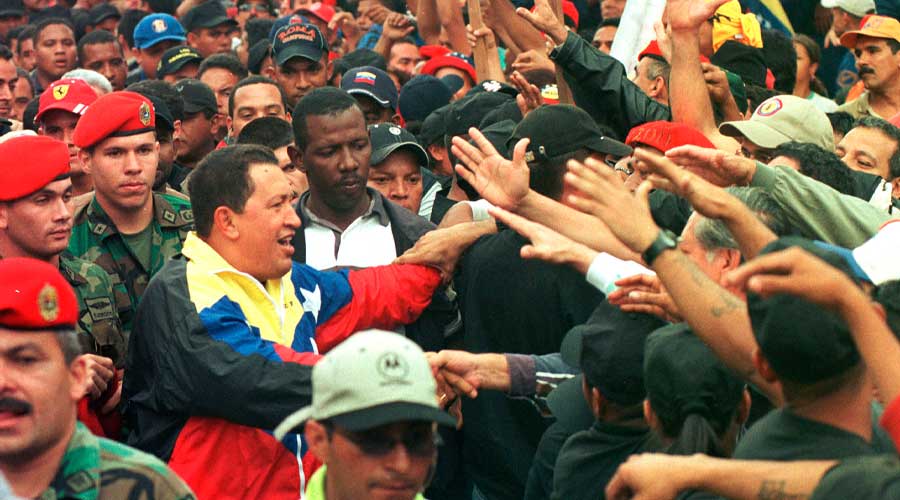
Venezuela was once among Latin America’s wealthiest nations, blessed with enormous petroleum reserves, a substantial middle class, and economic opportunities that attracted immigrants from neighboring countries.
Today, millions of Venezuelans have fled their homeland, its economy has been devastated, and its people have endured years of shortages, hyperinflation, and political repression.
What happened?
The answer is a cautionary tale for every American who believes that prosperity, freedom, and constitutional government are permanent features of modern civilization.
Venezuela’s collapse did not happen overnight. It unfolded over a generation as socialist leaders promised economic equality, expanded government control over private enterprise, and systematically weakened the institutions that protected individual liberty.
The consequences should frighten anyone who values the American constitutional republic.
How Venezuela Destroyed Its Prosperity
The historical record reveals a disturbing progression.
1992: Venezuela was already suffering economic and political instability despite its considerable oil wealth. Lieutenant Colonel Hugo Chávez led an unsuccessful military coup, foreshadowing the political upheaval that would follow.
1998–1999: Chávez won the presidency on promises of redistribution and sweeping political reform. A new constitution, approved in 1999, reorganized the country’s government and expanded presidential authority.
2003: Following a crippling oil-industry strike, the government imposed currency and price controls. Thousands of experienced employees were dismissed from the state petroleum company, damaging an industry upon which the nation depended.
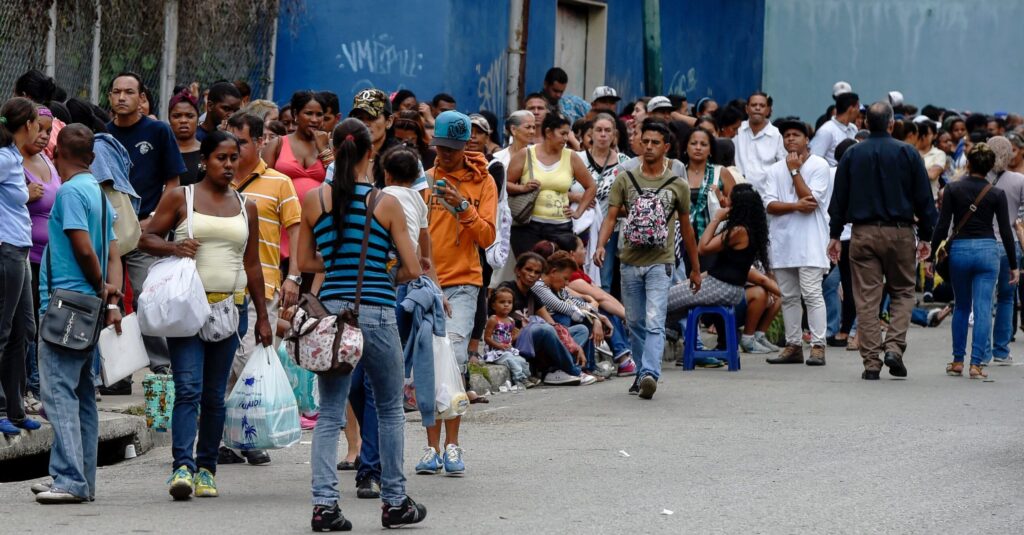
2006–2008: Chávez accelerated his socialist revolution. His government nationalized major telecommunications and electricity operations in 2007, followed by important steel and cement businesses in 2008. Rising oil revenues helped finance expanding social programs, but government intervention increasingly undermined private investment and economic independence.
2007–2009: The government refused to renew the broadcast license of a major opposition television station in 2007. In 2009, voters approved a constitutional amendment eliminating presidential term limits, further weakening an essential restraint on political power.
2012: Venezuela prohibited commercial sales of firearms and ammunition to private citizens and tightened restrictions on carrying weapons. These measures were not a complete prohibition on existing private ownership, but they substantially increased government control over civilian access to firearms.
2013: Chávez died, leaving Nicolás Maduro to inherit the presidency and an increasingly fragile economy.
2014–2016: World oil prices collapsed, exposing years of economic mismanagement and excessive dependence on petroleum revenues. Production deteriorated, inflation accelerated, and shortages of food and medicine became increasingly severe. Opposition leader Leopoldo López was imprisoned in 2014.
2017–2018: Venezuela entered hyperinflation in late 2017. The government established a controversial constituent assembly that displaced much of the authority of the opposition-controlled legislature. In 2018, the International Monetary Fund projected inflation exceeding one million percent, while Maduro claimed victory in an election widely condemned as unfair.
2019–2024: Political repression continued as millions of Venezuelans sought refuge abroad. Maduro’s disputed 2024 reelection claim was rejected by international observers, including the Carter Center, which concluded that the election failed to meet democratic standards.
2026: On January 3, American forces captured Maduro and brought him to the United States to face criminal charges. His vice president, Delcy Rodríguez, assumed the interim presidency. Although Maduro’s personal rule ended, Venezuela’s struggle to restore democratic institutions continues.
This is the documented history of a country whose government progressively assumed control over economic activity while dismantling political safeguards.
The Fatal Promise of Socialism
The Venezuelan catastrophe offers a lesson that Americans should understand before embracing politicians who promise that government can guarantee prosperity through redistribution and ever-expanding public programs.
Wealth must be created before it can be distributed.
Businesses require investment, incentives, predictable laws, and the freedom to respond to consumer demand. When politicians replace market decisions with government commands, they undermine the productive activity that finances the benefits they promise.
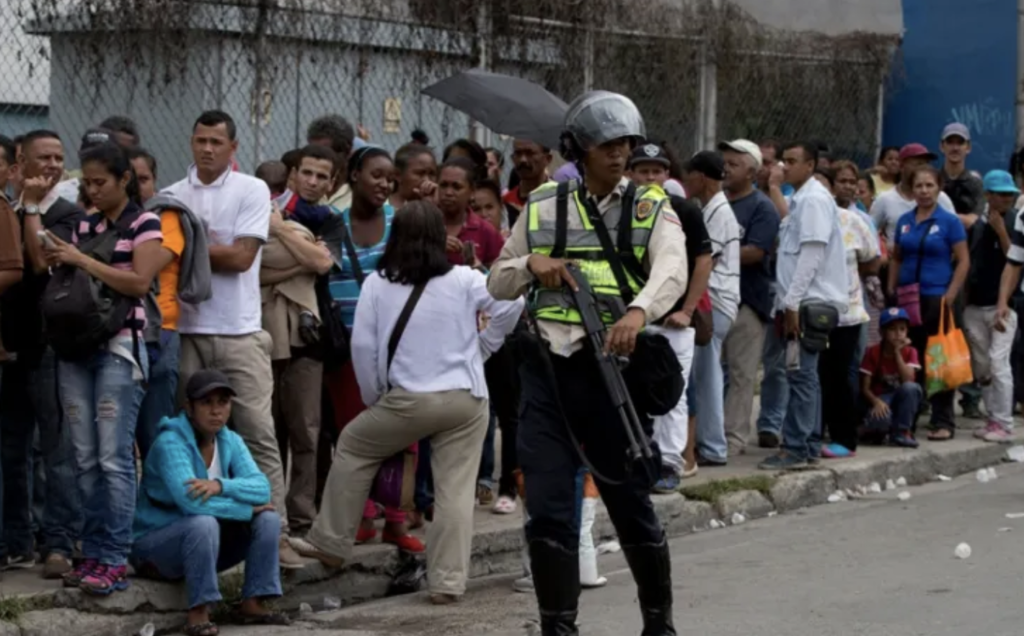
Venezuela’s price controls naturally led to shortages and black markets. Nationalizations discouraged investment. Political interference weakened its petroleum industry. Excessive spending and monetary expansion helped destroy the currency.
These failures were compounded by corruption, falling oil prices, and authoritarian rule.
Venezuela’s experience demonstrates the extraordinary danger of combining expansive state economic control with weakened property rights, fiscal irresponsibility, and concentrated political authority.
And it raises an uncomfortable question: How many of these warning signs are emerging in the United States?
America’s Founders Understood the Danger
America’s constitutional republic was established upon a fundamentally different philosophy.
The Constitution created a federal government of enumerated powers, divided authority among competing branches, and reserved substantial powers to the states and the people.
The founders understood that government power, however benevolent its stated purpose, must be restrained.
James Madison wrote in Federalist No. 51 that “Ambition must be made to counteract ambition.”
America’s extraordinary prosperity developed under a system that protected private property, encouraged enterprise, rewarded innovation, and generally allowed individuals greater freedom to direct their own economic affairs.
The country has not always honored those principles. Federal authority has expanded enormously, and politicians increasingly treat Washington as the appropriate solution to virtually every economic and social problem.
The result is a federal government whose financial obligations are growing far faster than responsible fiscal policy can sustain.
The Trillion-Dollar Warning
Consider America’s current financial condition.
According to the Congressional Budget Office, the federal government recorded a deficit of approximately $2 trillion in fiscal year 2026, equivalent to 6.2 percent of the nation’s economic output.
Federal debt held by the public has reached approximately 100 percent of gross domestic product.
Even more alarming is the cost of servicing that debt.
The Government Accountability Office reports that annual interest expense on publicly held federal debt has increased from approximately $392 billion in 2021 to $1.1 trillion in 2026.
That is more than a trillion dollars spent in a single year on interest rather than productive government services.
The money is gone before Washington repairs a highway, equips a soldier, or provides a single new public benefit.
And the burden continues growing.
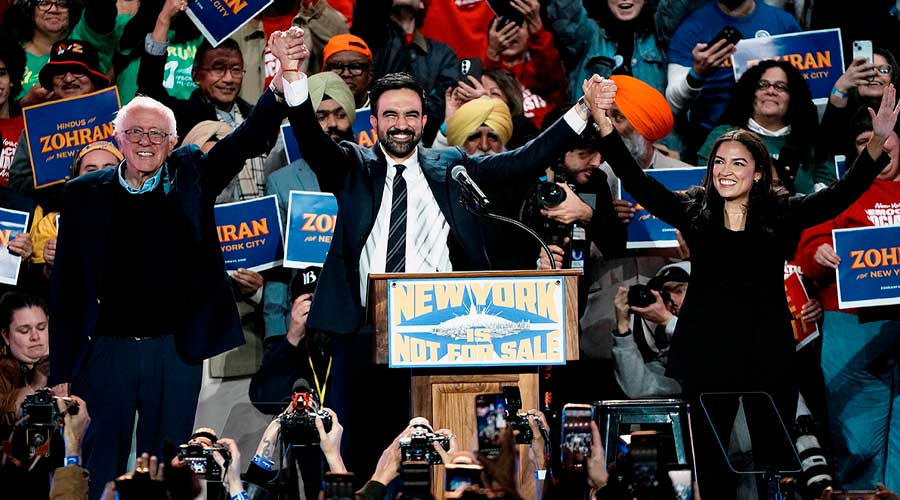
This fiscal recklessness cannot be blamed exclusively on Democrats. Republicans have repeatedly condemned government spending while contributing to deficits themselves.
But the underlying philosophy of ever-expanding government, increasingly generous promises, and insufficient regard for how those promises will be financed threatens the nation’s economic future.
Venezuela demonstrates where extreme fiscal and economic irresponsibility can lead when accompanied by the destruction of political and economic freedom.
America is not yet Venezuela. Its economy is more diversified, its institutions stronger, and its currency far more influential internationally.
Nevertheless, even the world’s most prosperous nation cannot indefinitely escape the consequences of spending beyond its means.
Freedom is Lost One Election at a Time
Perhaps Venezuela’s most important lesson concerns the gradual destruction of liberty.
Chávez initially came to power through an election. He promised to defend ordinary citizens against wealthy elites and corrupt institutions.
Yet over time, the government accumulated greater authority over businesses, courts, media organizations, and electoral institutions.
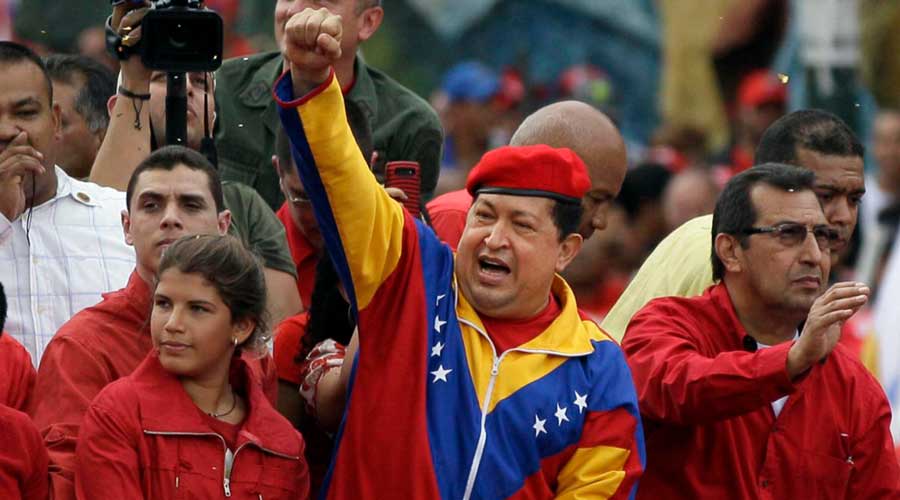
By the time Maduro consolidated his dictatorship, the Venezuelan people had lost much of their practical ability to remove their rulers through free and fair elections.
The danger of concentrated government power is that it can eventually become self-perpetuating.
Americans should therefore be deeply suspicious of political movements that regard constitutional limitations as obstacles to progress, treat private property as something government may redistribute at will, or seek to silence political opposition in the name of the public good.
A free society requires institutions powerful enough to restrain government, not merely government powerful enough to restrain society.
Who Would Rescue America?
There is one final warning that Americans should consider.
When Venezuela collapsed, millions of its citizens escaped to neighboring countries and the United States. International organizations provided humanitarian assistance, while foreign governments attempted to influence the country’s political future.
But if the United States experiences a comparable collapse, who will rescue us?
America is the world’s largest economy and a cornerstone of the international financial system. A catastrophic American economic breakdown would destabilize nations across the globe.
There is no greater economic power waiting to assume America’s responsibilities or guarantee its recovery.
Our protection lies in the Constitution, the productive capacity of our people, and our willingness to preserve the principles that made this nation prosperous.
That means limited government, responsible taxation, disciplined spending, protected property rights, competitive markets, and constitutional restraints that apply regardless of which political party holds power.
Venezuela’s people paid an enormous price for their country’s descent into authoritarian socialism.
Americans still have the opportunity to learn from that tragedy without experiencing it themselves.
The United States does not have to become the next Venezuela. But neither our Constitution nor our prosperity will preserve itself if Americans abandon the principles upon which both depend.
Leave a Reply