• Home
  • Mission
  • Federalist Papers
  • Foundation
  • U.S. Constitution
  • Bill of Rights

Federalist Press | Defending Liberty — Informing America

Breaking News and Political Commentary

  • All Stories
  • Economy
  • Elections
  • Entitlement
  • Ethics
  • Foreign
  • Gender
  • Religion
  • Sci-Tech

The Left’s Deadly Rhetoric

April 27, 2026 By Editor Leave a Comment

When Words Become Weapons: Violence Follows

The attempted attack on President Trump and members of his administration at the White House Correspondents’ Dinner should be a national wake-up call.

Cole Tomas Allen, a 31-year-old teacher from Torrance, California, armed himself, positioned himself near one of the most heavily protected events in America, and moved rapidly within range of the President of the United States with deadly intent. Why did he do it? It is becoming rather clear.

Allen’s handwritten Manifesto tells us why he did it. “And I am no longer willing to permit a pedophile, rapist, and traitor to coat my hands with his crimes.”

Where did he learn that our president is a pedophile, rapist, and traitor?

Disinformation campaigns from Democrat leaders.

Hakeem Jeffries calls on democrats to wage “Maximum Warfare, Everywhere, all the Time,” the day before Cole Allen attempted the assassination on President Trump.

For years, the political temperature in this country has been turned up to a dangerous level by leaders on the Left. President Donald J. Trump and those associated with him have not simply been criticized—they have been described, repeatedly, as existential threats to the nation, to democracy, even to the future itself. They are daily called fascists, Nazis, racists, and a real threat to American democracy. The Left has recently begun to attack President Trump on charges of being a “pedophile, rapist, and traitor,” as reflected in the shooter’s manifesto.

That kind of language is not ordinary political disagreement. It is escalation. Violent escalation.

And escalation has consequences. Three attempts on the president’s life, the assassination of Charlie Kirk, the attempted assassination of Brett Kavanaugh, and many others, including a democrat who tried to kill many of the republican congressmen as they took the baseball field.

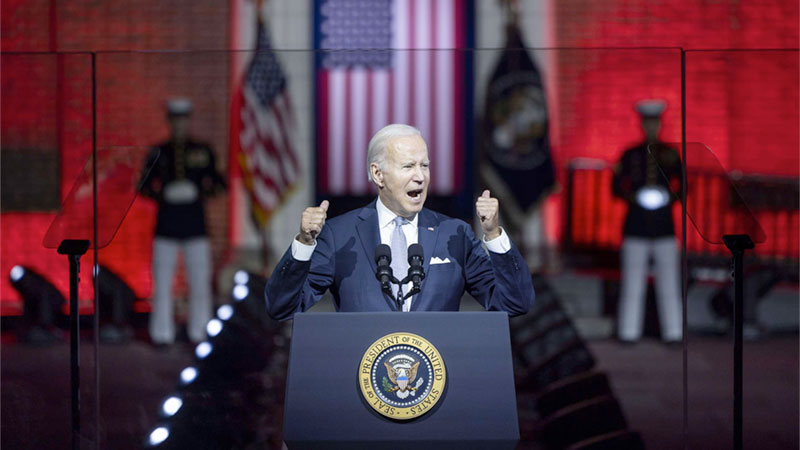
Joe Biden:

“Donald Trump and the MAGA republicans represent an extremism that threatens the very foundations of our republic. . . . As I stand here tonight, equality and democracy are under assault. . . . MAGA forses are determined to take this country backwards, backwards to an America where there is no right to choose, no right to privacy, no right to contraception, no right to marry who you love. They promote authoritarian leaders, and they fan the flames of political violence that are a threat for our personal rights, to the pursuit of justice, to the rule of law, to the very soul of this country.”

Sen. Chris Murphy:

“We’re at war right now, to save this country. So you have to be willing to do whatever is necessary to save the country.”

Hakeem Jeffries:

“Republican policies are doing violence to the American people.”

Nancy Pelosi:

“He’s such a vile creature. He’s the worst thing on the face of the earth.”

When public figures are portrayed as uniquely dangerous or contemptible, even inhuman, when the message—implicit or explicit—is that the stakes are so high that normal rules no longer apply, it creates a moral gray zone that unstable individuals can step into. In their minds, they are no longer acting recklessly. They are acting with purpose. Unfortunately, high percentages of those on the Left are becoming emotionally and mentally unstable, as a direct result of purposefully ginned-up rhetoric against those not of their party and Marxist ideals and goals.

This should alarm everyone. Because the pattern is becoming harder to ignore. It is in our face, daily.

What’s the problem? This is how civil wars start. Violence begets violence. Those who fail at the ballot box cannot seize power from the winners by arresting and imprisoning them. They cannot gin up their base to take extreme actions, even assassinations as in the case of Trump and Charlie Kirk, without invoking an ‘equal and opposite reaction’ from those are are being hunted like Soviet dissidents.

Trump and his supporters have exercised tremendous self-restraint over the past ten years, as the Left has vilified them, arrested them, imprisoned them, and killed them. The Left cannot expect such restraint to always win the day. Their violence will eventually produce the inevitable reaction, and that will be a very sad day in history.

In the days leading up to the attack, even the entertainment world dipped into rhetoric that, at best, trivializes the idea of violence. Late-night host Jimmy Kimmel drew backlash after referring to Melania Trump as an “expectant widow” in a monologue just two days before the attack.

This is what normalization looks like. This is how widespread violence is born, and transforms into a national crisis.

Kimmel’s violent rhetoric against the president and his supports is typical of the Left. Not a single statement. Not a single joke. But a steady drumbeat of vitriolic language that strips away restraint, that frames political opponents as something more than opponents—something to be feared, rejected, and, in the worst cases, confronted violently.

And when that drumbeat is constant, it only takes one person to hear it the wrong way.

A serious country should be willing to ask a serious question: What kind of climate makes that step easier to justify in someone’s mind?

This is not about silencing criticism. It is about recognizing that words carry weight—especially when repeated, amplified, and stripped of nuance and humanity.

A political culture that thrives on outrage and absolutism does not stay contained in television studios, social media feeds, or campaign speeches. It seeps outward, like a seething plague.

And sometimes, it shows up at the doors of a ballroom where the President of the United States is speaking, or at his golf course, or at a rally, or a college amphitheater.

If the investigation confirms that the suspect was motivated, even in part, by the belief that he was confronting something larger than himself, something described in the Left’s constant drumbeat of hyperbole, then we are not just dealing with an isolated act. We are dealing with a warning. We are dealing with a civil war that is percolating in the bowels of the American Left.
The question now is whether anyone is willing to hear it. Is there anything that we can do to put the brakes on this runaway train?

Filed Under: Bias, Crime, Elections, Entitlement, Ethics

Another Attempt on the President’s Life—the Manifesto, and Vitriolic Rhetoric We Keep Ignoring

April 26, 2026 By Editor Leave a Comment

When Words Become Weapons: The Climate That Precedes Actual Violence

The attempted attack on President Trump and members of his administration at the White House Correspondents’ Dinner should be a national wake-up call.

Cole Tomas Allen, a 31-year-old man and teacher from Torrance, California, armed himself, positioned himself near one of the most heavily protected events in America, and moved rapidly within range of the President of the United States with deadly intent. Why did he do it? It is becoming rather clear.

Cole Allen’s Manifesto in part:

“And I am no longer willing to permit a pedophile, rapist, and traitor to coat my hands with his crimes.

“I would still go through most everyone here to get to the targets if it were absolutely necessary (on the basis that most people chose to attend a speech by a pedophile, rapist, and traitor, and are thus complicit) but I really hope it doesn’t come to that. . . .

“Turning the other cheek is for when you yourself are oppressed. I’m not the person raped in a detention camp. I’m not the fisherman executed without trial. I’m not a schoolkid blown up or a child starved or a teenage girl abused by the many criminals in this administration. . . .

“I need whoever thinks this way to take a couple minutes and realize that the world isn’t about them. Do you think that when I see someone raped or murdered or abused, I should walk on by because it would be “inconvenient” for people who aren’t the victim? . . .

“Oh and if anyone is curious is how doing something like feels: it’s awful. I want to throw up; I want to cry for all the things I wanted to do and never will, for all the people whose trust this betrays; I experience rage thinking about everything this administration has done. . . .”

This didn’t happen in a vacuum.

For years, the political temperature in this country has been turned up to a dangerous level by leaders on the Left. President Donald J. Trump and those associated with him have not simply been criticized—they have been described, repeatedly, as existential threats to the nation, to democracy, even to the future itself. They are daily called fascists, Nazis, racists, and a real threat to American democracy. The Left has recently begun to attack President Trump on charges of being a “pedophile, rapist, and traitor,” as reflected in the shooter’s manifesto.

That kind of language is not ordinary political disagreement. It is escalation. Violent escalation.

And escalation has consequences.

When public figures are portrayed as uniquely dangerous or contemptible, even inhuman, when the message—implicit or explicit—is that the stakes are so high that normal rules no longer apply, it creates a moral gray zone that unstable individuals can step into. In their minds, they are no longer acting recklessly. They are acting with purpose. Unfortunately, high percentages of those on the Left are becoming emotionally and mentally unstable, as a direct result of purposefully ginned-up rhetoric against those not of their party and Marxist ideals and goals.

This should alarm everyone. Because the pattern is becoming harder to ignore. It is in our face, daily.

What’s the problem? This is how civil wars start. Violence begets violence. Those who fail at the ballot box cannot seize power from the winners by arresting and imprisoning them. They cannot gin up their base to take extreme actions, even assassinations as in the case of Trump and Charlie Kirk, without invoking an ‘equal and opposite reaction’ from those are are being hunted like Soviet dissidents.

Trump and his supporters have exercised tremendous self-restraint over the past ten years, as the Left has vilified them, arrested them, imprisoned them, and killed them. The Left cannot expect such restraint to always win the day. Their violence will eventually produce the inevitable reaction, and that will be a very sad day in history.

In the days leading up to the attack, even the entertainment world dipped into rhetoric that, at best, trivializes the idea of violence. Late-night host Jimmy Kimmel drew backlash after referring to Melania Trump as an “expectant widow” in a monologue just two days before the attack.

This is what normalization looks like. This is how widespread violence is born, and transforms into a national crisis.

Kimmel’s violent rhetoric against the president and his supports is typical of the Left. Not a single statement. Not a single joke. But a steady drumbeat of vitriolic language that strips away restraint, that frames political opponents as something more than opponents—something to be feared, rejected, and, in the worst cases, confronted violently.

And when that drumbeat is constant, it only takes one person to hear it the wrong way.

A serious country should be willing to ask a serious question: What kind of climate makes that step easier to justify in someone’s mind?

This is not about silencing criticism. It is about recognizing that words carry weight—especially when repeated, amplified, and stripped of nuance and humanity.

A political culture that thrives on outrage and absolutism does not stay contained in television studios, social media feeds, or campaign speeches. It seeps outward, like a seething plague.

And sometimes, it shows up at the doors of a ballroom where the President of the United States is speaking, or at his golf course, or at a rally, or a college amphitheater.

If the investigation confirms that the suspect was motivated, even in part, by the belief that he was confronting something larger than himself, something described in the Left’s constant drumbeat of hyperbole, then we are not just dealing with an isolated act. We are dealing with a warning. We are dealing with a civil war that is percolating in the bowels of the American Left.
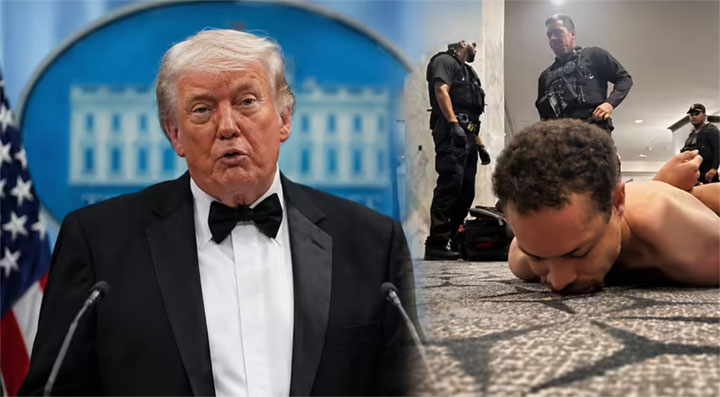
The question now is whether anyone is willing to hear it. Is there anything that we can do to put the brakes on this runaway train?

Filed Under: Bias, Crime, Elections, Entitlement, Ethics

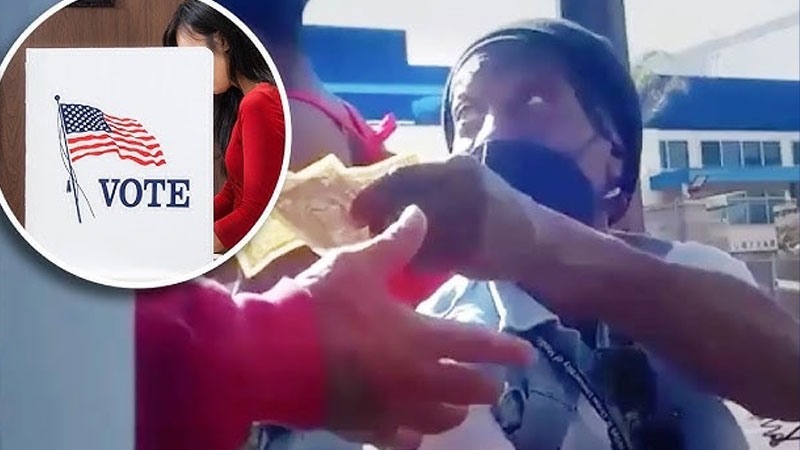
Did AOC Really Say Republicans Want to “Rig Elections” by Allowing Only U.S. Citizens to Vote?

April 26, 2026 By Editor Leave a Comment

A viral quote circulating widely on social media claims that Representative Alexandria Ocasio-Cortez declared that Republicans are “trying to rig elections by only allowing U.S. citizens to vote.” The statement has sparked outrage, confusion, and debate across political circles.

But did she actually say it?

As of now, there is no verifiable record of Ocasio-Cortez making that exact statement in any official speech, interview, or public post. The quote appears to be a reworded version of broader arguments she and other Democrats have made regarding voting laws and election policy.

Ocasio-Cortez has been a vocal critic of Republican-backed election reforms, particularly those targeting fraud, and requiring involving voter identification requirements and restrictions on mail-in voting. In multiple instances, she has argued that such measures can suppress voter participation and disproportionately affect minorities and women, whom she declares have little ability to obtain government issued ID . . . for unclear reasons.
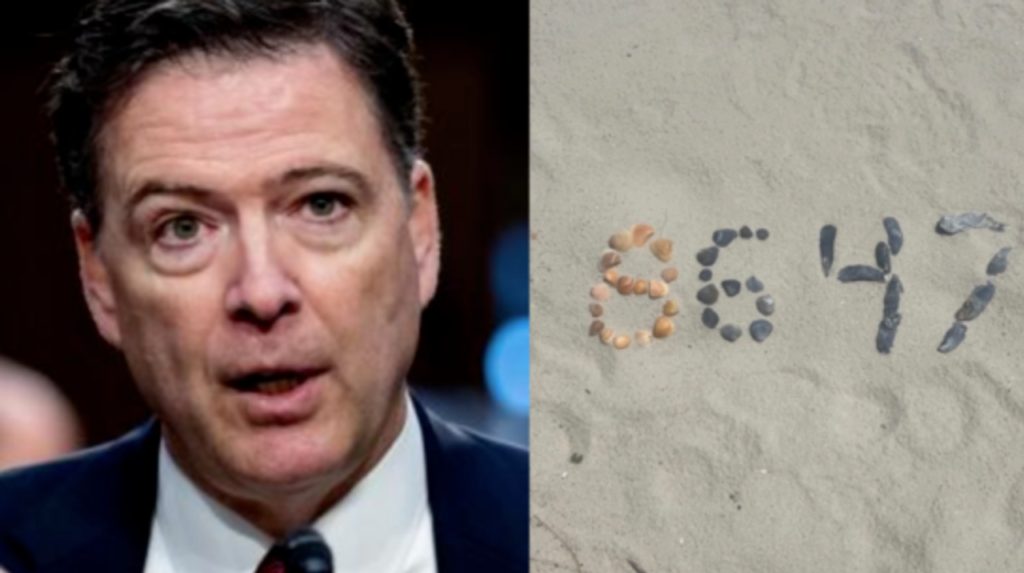
However, that falls a little short of explicitly stating that requiring U.S. citizenship to vote is, in itself, an attempt to “rig” elections.

Under federal law, only U.S. citizens are permitted to vote in federal elections. The political disagreement centers not on whether citizenship should be required (Democrats avoid the issue), but on how voting laws are structured and enforced at the state level.

So why is this quote spreading? In today’s media environment, complex political positions are often reduced to simplified soundbites. Statements about “voter suppression” or “election integrity” can easily be reframed in ways that inflame public reaction, especially when shared rapidly across social media platforms.

That appears to be what happened here. The viral quote takes a broader political argument and condenses it into a provocative line that, while accurately reflecting the position of Ocasio-Cortez and and Left, does not accurately reflect any confirmed statement made by her specifically.

That doesn’t mean the underlying debate is any less significant. Questions surrounding election integrity, voter access, and the balance between security and participation remain at the center of American political discourse. Republicans have consistently argued that stronger safeguards are necessary to ensure fair elections, while Democrats have warned that those policies will definitely restrict legitimate voters.

Of course, those who claim that minorities and women are incapable of obtaining valid IDs have failed entirely to produce any evidence of that claim. In fact, polls that ask minorities if they have valid government issued IDs consistently reveal that no one finds obstacles in obtain them.

Non-citizens cannot vote, and that is the law. Roadblocks to illegals voting are more than justified.

We who seek to remain informed and involved, whatever our political leanings may be, might well wonder–if there are American adults who have so little ability that they find obtaining a government issued ID an insurmountable task, perhaps they are better off sitting out the big decisions that affect out nation so profoundly. Perhaps they are easily manipulated and gullible. Perhaps that is exactly why the Left wants them to vote.

Filed Under: Bias, Elections, Entitlement, Ethics, Foreign

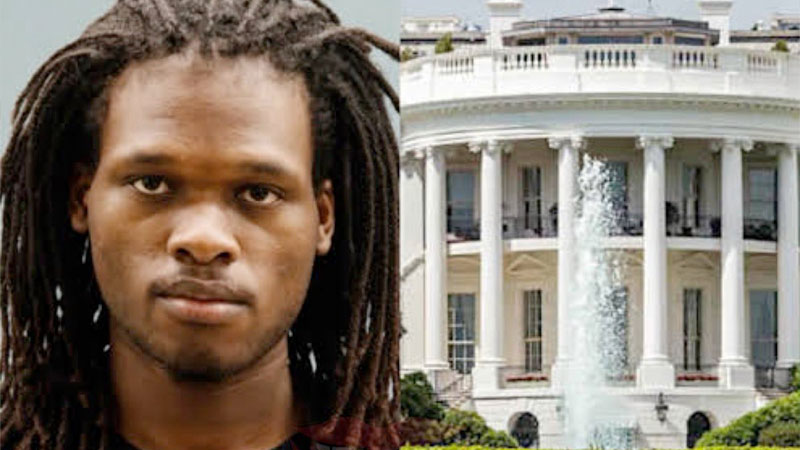
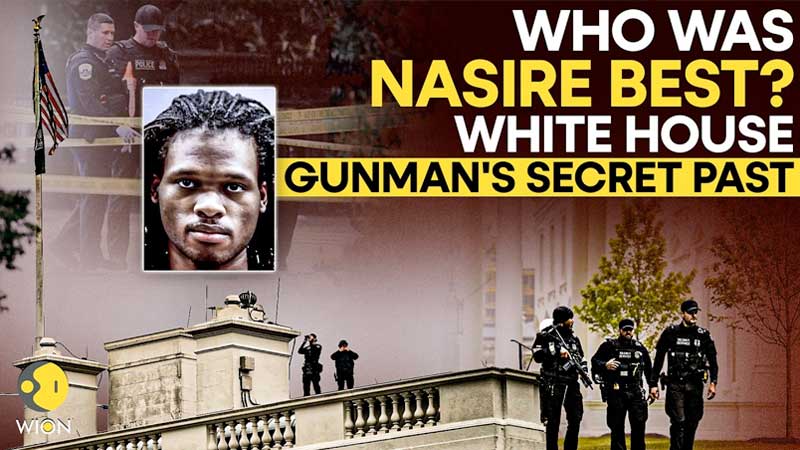
White House Dinner Shooting Suspect Identified as California Teacher and Game Developer Cole Tomas Allen

April 26, 2026 By Editor Leave a Comment

Authorities have identified the suspect in Saturday night’s shooting at the White House Correspondents’ Dinner as Cole Tomas Allen, a 31-year-old man from Torrance, California, whose background appears to combine elite technical education, teaching work, and independent video game development.

Allen, who was taken into custody after opening fire and shooting a Secret Service agent near a security checkpoint at the Washington Hilton, is now at the center of a fast-moving federal investigation into what officials are treating as a serious attack on one of the most heavily protected political events in the country.

The annual White House Correspondents’ Dinner had drawn President Donald J. Trump, First Lady Melania Trump, Vice President JD Vance, cabinet officials, lawmakers, media figures, and other high-profile guests when the shooting disrupted the evening and forced a rapid Secret Service evacuation.

According to early reports, Allen was armed with a shotgun, a handgun, and knives when he attempted to breach the event’s security perimeter. A law enforcement officer was struck during the incident but was reportedly protected by body armor and survived.

What makes the case especially alarming is that Allen was reportedly staying at the Washington Hilton itself, the same hotel hosting the dinner. Given the hotel’s high-profile role in the event and the likelihood that rooms were sold out well in advance, investigators are expected to examine when Allen booked his stay, how long he had been planning the trip, and whether his presence at the hotel was part of a deliberate plan to position himself close to the event.

Allen’s background does not fit the profile of a common street criminal. Reports describe him as a highly educated California man with a bachelor’s degree in mechanical engineering from Caltech and a master’s degree in computer science from California State University, Dominguez Hills. He reportedly worked part-time as a teacher or tutor with C2 Education and had been recognized by the company’s Torrance office as a “Teacher of the Month.”

He was also reportedly involved in shooter game development, a detail that is already drawing attention because of the violent nature of the alleged attack and the technical planning that may have been involved. At this stage, however, authorities have not publicly connected his game-development background to the shooting itself.

Investigators are now searching for answers to the most important question: why?

Early indications suggest Allen may have been targeting President Trump and members of the Trump administration, but authorities have not yet released a definitive motive. Federal investigators are reportedly reviewing electronic devices, social media activity, personal writings, travel history, and communications with associates.

One reported political motivation clue is a 2024 donation through ActBlue connected to Kamala Harris’s presidential campaign. That alone does not establish motive, but it will almost certainly intensify scrutiny of Allen’s political views, online activity, and possible ideological radicalization.

The attack comes at a time of rising concern about political violence in America, particularly against conservative leaders and public figures. Whether Allen acted out of personal grievance, ideological hostility, mental instability, or some combination of factors remains unknown. But the apparent planning involved—traveling across the country with weapons by train (less security than air), staying at the event hotel, suggests this was not a spontaneous outburst.

Authorities currently believe Allen acted alone, but that question remains under investigation. His home in Southern California has reportedly been searched, and officials are expected to continue combing through digital evidence in the coming days.

For now, Cole Tomas Allen is no longer an unknown face in the crowd. He is the accused gunman in one of the most serious security breaches in recent memory—an attack that could have turned a Washington media dinner into a national tragedy.

The country now waits for investigators to answer the central question: what drove a highly educated California teacher and game developer to allegedly carry weapons into the orbit of the president of the United States? To many, the answer is already clear.

Filed Under: Bias, Crime, Entitlement, Ethics

Chaos at the Correspondents’ Dinner: Shots Fired, President Evacuated, Suspect in Custody

April 25, 2026 By Editor Leave a Comment

What was supposed to be one of Washington’s most high-profile social and political events turned into a moment of chaos and fear Saturday night, as gunfire erupted during the White House Correspondents’ Dinner in Washington, D.C.

The annual gathering, held at the Washington Hilton and attended by top government officials, media figures, and President Donald J. Trump, was abruptly disrupted when multiple shots rang out near the ballroom entrance shortly before 8:40 p.m.

Within seconds, panic spread across the room.

Attendees described a sudden shift from formal dinner conversation to confusion and alarm, as security personnel shouted for guests to take cover. Hundreds of people ducked beneath tables while Secret Service agents rushed toward the source of the gunfire. Glass shattered, trays crashed to the floor, and what had been a polished evening quickly became a scene of urgency and uncertainty.

President Trump, who had been on stage at the time, remained visible for several moments before being surrounded and swiftly escorted out by Secret Service agents. The First Lady and other high-ranking officials were also evacuated immediately.

In remarks delivered shortly after being evacuated, President Donald Trump confirmed that the situation had been quickly brought under control, stating that the suspect was “taken down by very brave members of the Secret Service” who acted within moments of the first shots. He emphasized that all protected individuals, including himself, the First Lady, and senior officials, were safe, and praised law enforcement for their rapid and decisive response. The president noted that one agent had been struck but was protected by a ballistic vest and is expected to recover, calling the outcome a testament to the professionalism and preparedness of the security teams on site. He added that while the incident was serious, it could have been far worse, and assured the public that a full investigation is now underway.

Early indications are that the shooter has been identified as 31 yr old COLE ALLEN from Torrance, CA.

The shooting appears to have taken place in a security screening area just outside the main ballroom, raising immediate and serious questions about how an armed individual was able to get so close to a heavily guarded event. Witnesses reported hearing between five and ten shots, and at least one law enforcement officer was struck, though protected by body armor and expected to recover.

Authorities moved quickly to contain the threat. The suspect, described as a male, was taken into custody within minutes of the incident. Some reports indicate the individual may have attempted to assemble or carry a larger firearm inside the building before approaching the event area.

At this time, little verified information has been released about the identity of the shooter or the motive behind the attack. Federal authorities, including the FBI and Secret Service, are actively investigating.

The fact that the incident occurred within the security perimeter of an event attended by the president will undoubtedly trigger intense scrutiny of security protocols. The White House Correspondents’ Dinner has long been considered one of the most secure gatherings in the country, given the concentration of political leadership and national media in a single location.
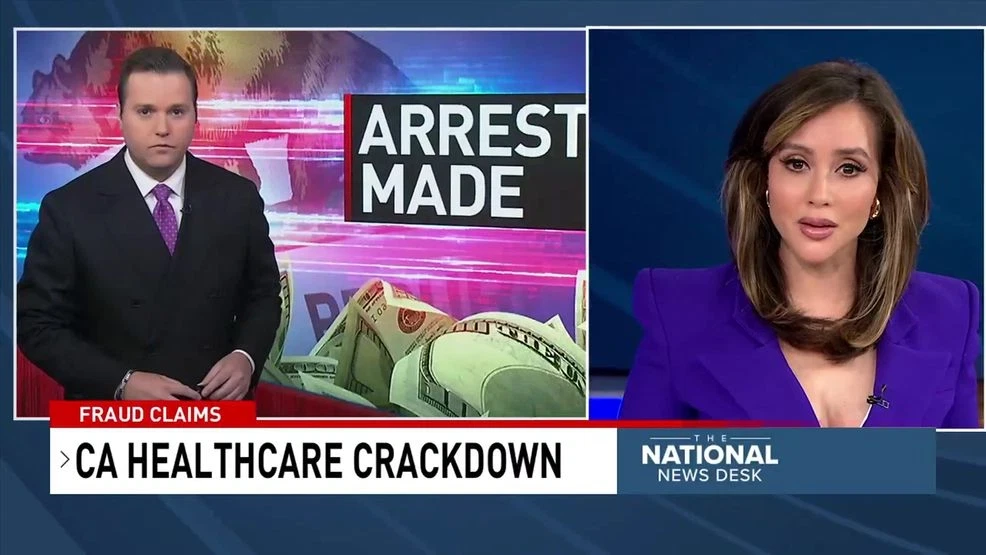
Yet Saturday night’s events suggest that even the most tightly controlled environments are not immune to breakdowns.

Outside the venue, there had been demonstrations earlier in the evening, including political protests. Whether those events are connected in any way to the shooting remains unknown.

In the aftermath, the dinner was halted, with organizers expected to reschedule the event. President Trump has indicated he will address the nation shortly, and his remarks are expected to provide further clarity on the situation.

For now, the country is left with a series of urgent questions:

How did the suspect gain access to a secured zone?
Was this a targeted attack or a broader act of violence?
And what does this incident reveal about the current state of security at high-profile political events?

As more details emerge, one thing is already clear—what unfolded tonight was not just a disruption of a dinner, but a stark reminder of the vulnerabilities that persist even at the highest levels of American public life.

Filed Under: Crime, Ethics

The Vanishing General and the Eleven

April 24, 2026 By Editor Leave a Comment

Inside the Growing Mystery of America’s Missing and Dead Scientists

By James Thompson | Feature article contributor

The disappearance of retired Air Force Maj. Gen. William Neil McCasland has evolved from a troubling local case into something far larger—an unresolved mystery now drawing the attention of the FBI, the White House, Congress, and multiple federal agencies.

At the center of that mystery is a simple but unsettling question:

Did one man vanish, or is he part of a pattern?

On the morning of February 27, 2026, McCasland was at his Albuquerque home. At approximately 10:00 a.m., he spoke with a repairman. At 11:10 a.m., his wife left for a medical appointment. When she returned at 12:04 p.m., he was gone. There were no signs of a struggle. No confirmed witnesses. No clear direction of travel.

Law enforcement responded immediately, and the FBI quickly became involved. Investigators conducted an extensive canvass, reviewing doorbell and security footage from hundreds of homes throughout the neighborhood. What they found—or rather, did not find—has become one of the most confounding elements of the case.

There is no confirmed video showing McCasland leaving his home or the surrounding area. In a modern residential neighborhood saturated with surveillance, that absence is striking.

Inside the home, investigators found his phone, his prescription glasses, and his wearable devices such as his smart watch. Missing were his wallet, hiking boots, and a .38-caliber revolver. That combination has resisted easy explanation.

Leaving a phone behind for a short neighborhood run is not unusual. But leaving behind prescription glasses raises real questions. At the same time, taking a firearm suggests intention, preparation. Was he afraid of someone? Did he have a suicidal intent? Did a kidnapper take the gun?

Taken together, the pattern does not align cleanly with any single scenario. It is not what one would expect from a routine run. It does not neatly fit a medical emergency. And it is inconsistent with most planned disappearances.

It is a behavioral contradiction—and it is at the heart of the mystery.

McCasland is not an ordinary missing person. He served as commander of the Air Force Research Laboratory, commanding a multi-billion-dollar exotic research budget, later holding senior roles in Pentagon special programs and space acquisition. Yes, he ran the research lab at Wright-Patterson AFB (where the Roswell debris was taken). These positions placed him inside the ecosystem of the U.S. government’s most sensitive technologies—advanced aerospace systems, exotic weapons research, and highly classified programs.

His name has also circulated in UFO discussions through past communications involving Tom DeLonge, who claimed McCasland recounted his work with captured UFOs and non-human remains.

What has transformed this case into a national story is not just who McCasland is, but who else has recently disappeared or died.

Across the past several years, at least eleven individuals tied to high-level scientific or defense-related work have died or gone missing under unusual circumstances. The list includes researchers, engineers, and professionals connected to institutions such as NASA’s Jet Propulsion Laboratory, Los Alamos–adjacent environments, MIT, and Caltech, along with several cases centered in New Mexico.

Amy Eskridge, a propulsion researcher focused on advanced aerospace concepts, died in 2022. Her death was ruled a suicide, though her work and reported concerns about harassment have fueled ongoing speculation.

Michael David Hicks, a NASA-affiliated scientist working on asteroid-related technology, died in 2023 under circumstances that have not been fully detailed publicly.

Frank Maiwald, a longtime engineer involved in advanced Earth observation systems, died in 2024.

Monica Reza, one of the most striking cases, was a NASA and Aerojet Rocketdyne engineer specializing in advanced materials used in rocket propulsion. She helped develop high-performance alloys designed to increase thrust while reducing weight. She disappeared in 2025 while hiking. According to reports, she was within sight of a companion—just feet away—when she suddenly vanished. Her work overlapped with projects funded through the same defense research ecosystem that McCasland later oversaw.

Melissa Casias, connected to Los Alamos National Laboratory, disappeared in New Mexico in 2025 and has not been found.

Anthony Chavez and Steven Garcia, also in New Mexico, are part of a cluster of disappearances that have drawn attention due to their geographic proximity.

Jason Thomas, a pharmaceutical scientist, was later found dead after initially being reported missing.

Nuno Loureiro, a leading plasma physicist, was killed in what authorities have described as a targeted act of violence.

Carl Grillmair, a Caltech astrophysicist, was shot outside his home in 2026.

And then there is McCasland.

At first glance, the list appears alarming: aerospace engineers, propulsion experts, nuclear-adjacent personnel, and defense-connected scientists. Many had exposure to advanced or sensitive technologies. Some held security clearances. A few have been loosely linked to discussions of unidentified aerial phenomena.

This has led some analysts and officials to raise the possibility of foreign intelligence targeting, technological espionage, or suppression of sensitive knowledge.

The federal government is now taking those questions seriously. The FBI is reviewing the cases collectively, and the White House has directed agencies to identify any potential commonalities. Congress has also begun seeking answers.

But there is a competing view, one grounded in caution. Investigators note that several of the deaths have known explanations. Some incidents involve personal conflicts or isolated acts of violence. The individuals worked in different fields and institutions, and there is currently no confirmed evidence that all of the cases are connected.

Some experts argue that what appears to be a pattern may instead be coincidence amplified by attention.

Even so, McCasland’s case stands apart. Because of the tight one-hour timeline. Because of the absence of surveillance confirmation. Because of the items left behind versus those taken. And because of where it happened. He did not vanish in wilderness. He did not disappear while traveling. He vanished from his own neighborhood—with no confirmed trace.

At its core, the issue now confronting investigators is not just what happened to one man. It is whether the United States is witnessing a series of unrelated tragedies or the early signs of a deeper vulnerability. In today’s world, the most valuable assets are not always documents or systems. They are people—individuals who understand advanced propulsion, materials science, classified research programs, and emerging defense technologies.

If even a small number of those individuals were being targeted, the implications would be profound.

For now, the facts remain unchanged. A retired general with deep access to some of the nation’s most sensitive programs walked out of view and has not been seen again. At the same time, a growing list of scientists and researchers connected in varying ways to that same broad ecosystem has raised questions that no one has yet been able to definitively answer.

It may prove to be coincidence. But until that is established with evidence, the question will remain: Is this a collection of isolated events, or the outline of something far more serious?


James Thompson is an author and ghostwriter, and a political analyst. He is an analyst of UAP reports, and has authored the book Worlds Without Number.

Filed Under: Crime, Ethics, Foreign, Sci-Tech

This Easter

April 3, 2026 By Editor Leave a Comment

What is it, truly, that we remember on Easter?

The New Testament preserves the final days of Jesus of Nazareth—His suffering, His crucifixion, and His death upon the cross. As the Sabbath approached, His body was taken down and placed quickly into a borrowed tomb, carved from stone. A heavy rock sealed the entrance, and silence settled over the place where hope itself seemed to have been buried.

What is it, truly, that we remember on Easter?

For His followers, it was a moment of confusion and grief. The One they had trusted, the One they believed to be the very Messiah, now lay lifeless behind stone and darkness.

But the story did not end there.

At the first light of the third day, women came to the tomb, intending to complete the burial preparations that had been rushed. Instead, they found the stone rolled away.

The tomb was empty.

Angelic messengers stood as witnesses of something that had never before occurred in human history. They spoke plainly: Jesus, who had been crucified, was no longer there—He had risen.

At first, the news seemed too extraordinary to accept. Yet one by one, those who had known Him began to see for themselves. Among them was Mary Magdalene, who lingered at the tomb in sorrow, not yet understanding what had taken place.

Through her tears, she encountered a man she did not at first recognize. Only when He spoke her name, “Mary,” did realization come.

It was Him.

Alive.

Not restored merely to mortal life, but risen—changed, glorified, no longer subject to death.

What does this mean for us today?

Across nearly two millennia, this moment has stood as the central claim of Christianity: that death is not the end, that something greater lies beyond, and that Jesus Christ was not simply a teacher or prophet, but the literal Son of God.

Easter is not only a remembrance of that event, but an invitation to consider its meaning.

If the resurrection is real, then it changes everything.

It is real.

It speaks to hope in the face of loss, to purpose beyond mortality, and to the assurance that life continues in ways we do not yet fully understand.

Each person must decide for themselves what to make of it.

But the message recorded by those who witnessed these events remains simple and direct—that these things were written so that we might believe, and that through that belief, we might find life.

This Easter, whatever else we may celebrate, let us pause and remember Him. And believe.


James Thompson is a Christian author, political commentator, and professional ghostwriter. His latest book, The Miracle of Faith, is available on Amazon or at Publisher.

Filed Under: Ethics, Religion

The Faces of Domestic Terrorism: A Wave of Self-Radicalized Islamist Attacks in America

March 13, 2026 By Editor Leave a Comment

By James Thompson

In the wake of U.S. military strikes against Iran, a series of violent incidents across the United States has raised renewed concerns among many security analysts about the resurgence of self-radicalized Islamist terrorism.

Within a matter of days, multiple attacks and attempted attacks unfolded in different parts of the country: a synagogue assault in Michigan, a deadly shooting at a military training program in Virginia, an Islamist motivated attack in Texas, and an attempted bombing in New York City involving homemade explosives.

At first glance the incidents appear unrelated. They occurred in different states, involved different suspects, and targeted different victims. Yet investigators say a closer look reveals a disturbing common thread: several of the suspects appear to have embraced jihadist ideology and were inspired by propaganda associated with the Islamic State and similar extremist movements.

The pattern reflects a phenomenon that counterterrorism experts have warned about for years—the rise of self-activated Islamist extremists who act independently, but draw ideological inspiration from global jihadist movements.

The most alarming recent plot unfolded in New York City.

On March 7, two young men—18-year-old Emir Balat and 19-year-old Ibrahim Kayumi—were arrested after allegedly throwing improvised explosive devices into a crowd near Gracie Mansion, the official residence of the city’s mayor. Authorities say the devices were real bombs packed with volatile explosive material and metal fragments capable of causing serious injury or death to large crowds of. bystanders.

The attack occurred during a protest outside the mayor’s residence. According to federal investigators, the two suspects had constructed multiple improvised explosive devices and transported them across state lines before throwing them toward the crowd.

Emir Balat and Ibrahim Kayumi were seen throwing improvised explosive devices into a crowd near Gracie Mansion.

Fortunately, the bombs failed to detonate fully, and no one was killed.

The criminal complaint alleges that the two men had consumed ISIS propaganda online and openly expressed admiration for the terrorist organization. Investigators say one of the suspects stated he hoped to carry out an attack “bigger” than the Boston Marathon bombing.

Authorities believe the pair were not formally directed by ISIS leadership, but had been self-radicalized through online extremist content, a pathway that has become increasingly common in recent years.

While the New York plot was foiled, violence elsewhere in the country proved deadly.

In Virginia, a gunman opened fire inside a Reserve Officers’ Training Corps classroom at Old Dominion University, killing a retired military instructor and injuring two others. Investigators quickly discovered that the suspect had previously been convicted for supporting ISIS and had spent time in federal prison.

The choice of target, an American military training program, appeared deliberate. According to investigators, the attack was framed by the suspect as retaliation against the United States and its military actions overseas.

Mohamed Jalloh carried out a shooting at Old Dominion University on Thursday that killed 1 person and injured 2 others. The shooter is dead, officials said.

For counterterrorism officials, the symbolism is unmistakable: a jihadist sympathizer targeting representatives of the U.S. armed forces.

Another attack occurred in West Bloomfield Township, Michigan, where a man drove a truck into a synagogue complex that included a preschool and community center. More than one hundred children were inside the building at the time.

Armed security personnel prevented the attacker from entering the facility, stopping what authorities believe could have been a catastrophic mass-casualty attack.

Ayman Mohamad Ghazali, a 41-year-old Lebanon-born naturalized U.S. citizen, has been identified by the Department of Homeland Security as the suspect behind the attack on Temple Israel synagogue in West Bloomfield, Michigan

Investigators later revealed that the suspect had expressed anger about Israeli and American actions in Iran and the region. Authorities believe the synagogue was deliberately chosen as an antisemitic target of the terrorists rage.

Meanwhile, authorities in Texas are still investigating a mass shooting that witnesses say involved extremist Islamic ideology.

Texas gunman Ndiaga Diagne, a Senegalese immigrant-turned US citizen was wearing a sweatshirt that said ‘Property of Allah,’ and a shirt with an Iranian flag design.

Taken together, the incidents illustrate the continuing evolution of jihadist terrorism inside Western countries.

Unlike the large, centrally planned attacks associated with al-Qaeda in the early 2000s, today’s extremist violence is often decentralized. Groups like ISIS have spent years cultivating sympathizers and extremist reactionaries around the world to act independently, using whatever weapons are available, and targeting civilians, government facilities, or military personnel.

This strategy requires no direct command structure. Instead, individuals radicalized online interpret global events—wars, military strikes, or political conflicts—as personal calls to action.

Security analysts say moments of geopolitical tension can act as powerful catalysts for this process.

The recent escalation involving Iran has dominated global media and online discourse. Extremist propaganda channels have already begun portraying the conflict as evidence of a broader war between Islam and the West, a narrative designed to provoke retaliation by Islamist sympathizers abroad. For individuals already consuming radical content, that messaging can serve as a trigger.

At the same time, investigators caution against assuming that the recent attacks were coordinated or directed by a single organization. There is currently no evidence that the suspects communicated with one another or operated as part of a structured network. Instead, the emerging picture appears to be one of parallel radicalization.

This decentralized threat presents a major challenge for law enforcement. Traditional intelligence methods are designed to detect organized conspiracies, not individuals who radicalize quietly online and act alone.

For that reason, officials say the greatest danger may come not from large terrorist networks but from isolated individuals who decide, sometimes suddenly, to turn mistaken ideology into violence.

As investigators continue to examine the recent incidents, security agencies across the nation have quietly increased protection around synagogues, government buildings, military facilities, and public events.

This has become quite difficult in the wake of Democratic Party efforts to leave the American people vulnerable to such attacks by defunding the Department of Homeland Security at such a critical time.

Whether the recent attacks represent the beginning of a broader wave, or merely a troubling cluster of isolated incidents, remains uncertain. What is becoming increasingly clear is that global conflicts can have immediate domestic consequences.

In an era of instant communication and online radicalization, the ideological battlefields of the Middle East no longer remain confined overseas. Now, their echoes are heard in American cities.

The government must shift its strategies to combat this development in its effort to protect American citizens from the violence that accompanies Islamist propaganda.


James Thompson is an author and ghostwriter, and a political analyst.


Sponsored by BasicInfo123 — simple bite-sized guides for life, money, civics, and more—because some stuff school just didn’t cover.

Filed Under: Bias, Crime, Elections, Entitlement, Ethics, Foreign, Gender, Religion

Missing General, Missing Answers: The Strange Disappearance of Retired Maj. Gen. Neil McCasland

March 11, 2026 By Editor Leave a Comment

By James Thompson | Feature article contributor

The disappearance of retired U.S. Air Force Maj. Gen. William Neil McCasland has become one of the strangest missing-person cases in the country: a former commander of the Air Force Research Laboratory, a Pentagon special-programs official, and a figure long discussed in UFO-disclosure circles vanished from Albuquerque in late February, leaving investigators, journalists, and online observers asking the same question: where did he go?

McCasland, 68, was last seen around 11 a.m. on February 27 near Quail Run Court NE in Albuquerque, according to the Bernalillo County Sheriff’s Office. Authorities issued a Silver Alert, saying they were concerned for his safety because of medical issues. The FBI later joined the search, and by March 11 investigators had asked more than 600 nearby homeowners to turn over security-camera footage. As of the latest public updates, there had been no confirmed sightings and no announced resolution.

That alone would make the case serious. What makes it extraordinary is who McCasland is.

According to his official Air Force biography, McCasland commanded the Air Force Research Laboratory at Wright-Patterson Air Force Base, overseeing a $2.2 billion science-and-technology program and another $2.2 billion in customer-funded research and development. He also served as Director of Space Acquisition in the Office of the Under Secretary of the Air Force and then as Director of Special Programs in the Office of the Under Secretary of Defense for Acquisition, Technology and Logistics. Those roles placed him near some of the government’s most sensitive defense and space programs.

That background is why NewsNation correspondent Ross Coulthart has called the disappearance a “grave national security crisis.” In public comments summarized by Newsweek, Coulthart argued that McCasland is a man with “some of the most sensitive secrets of the United States in his head,” and said the case raises the question of whether foul play should be considered. He also pointed to the FBI’s involvement as a sign the matter is being treated with unusual seriousness.

The UFO angle comes from two overlapping threads.

The first is institutional. Wright-Patterson has long occupied a central place in UFO lore because of claims, disputed and never officially confirmed, that Roswell-related debris was sent there decades ago. McCasland’s official record confirms that he later ran the Air Force Research Laboratory there, but that does not by itself establish that he had access to extraterrestrial materials or hidden UFO programs.

The second thread is documentary. In a 2016 email published by WikiLeaks, musician and UFO activist Tom DeLonge told John Podesta that McCasland “was in charge of that exact laboratory” at Wright-Patterson and said McCasland was “very, very aware” of the material DeLonge was investigating and had helped assemble his advisory team. Those emails are real documents in the WikiLeaks archive, but DeLonge’s claims inside them were his own; they were not official government confirmation, and McCasland has not publicly validated them.

The timing has intensified the intrigue.

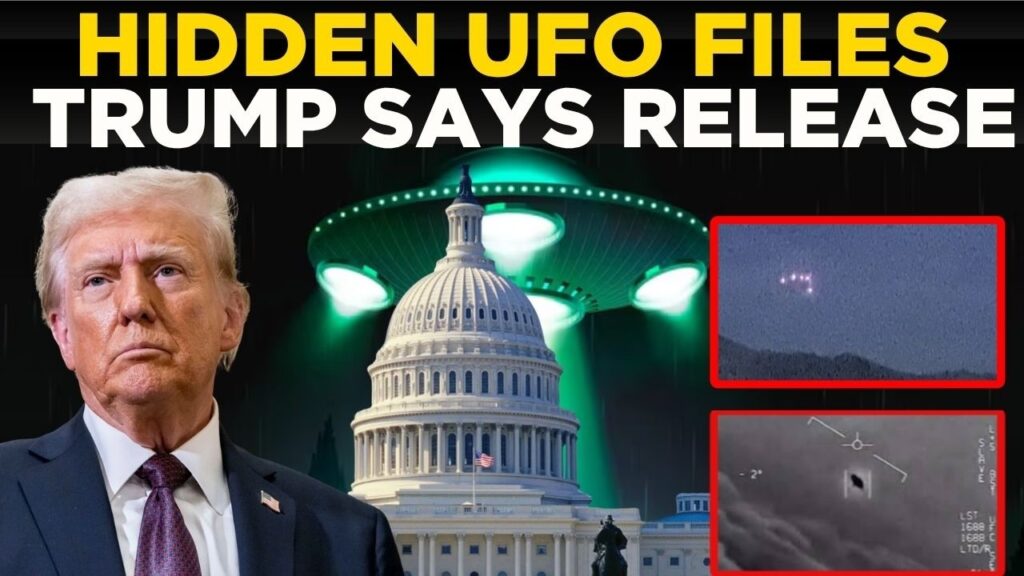
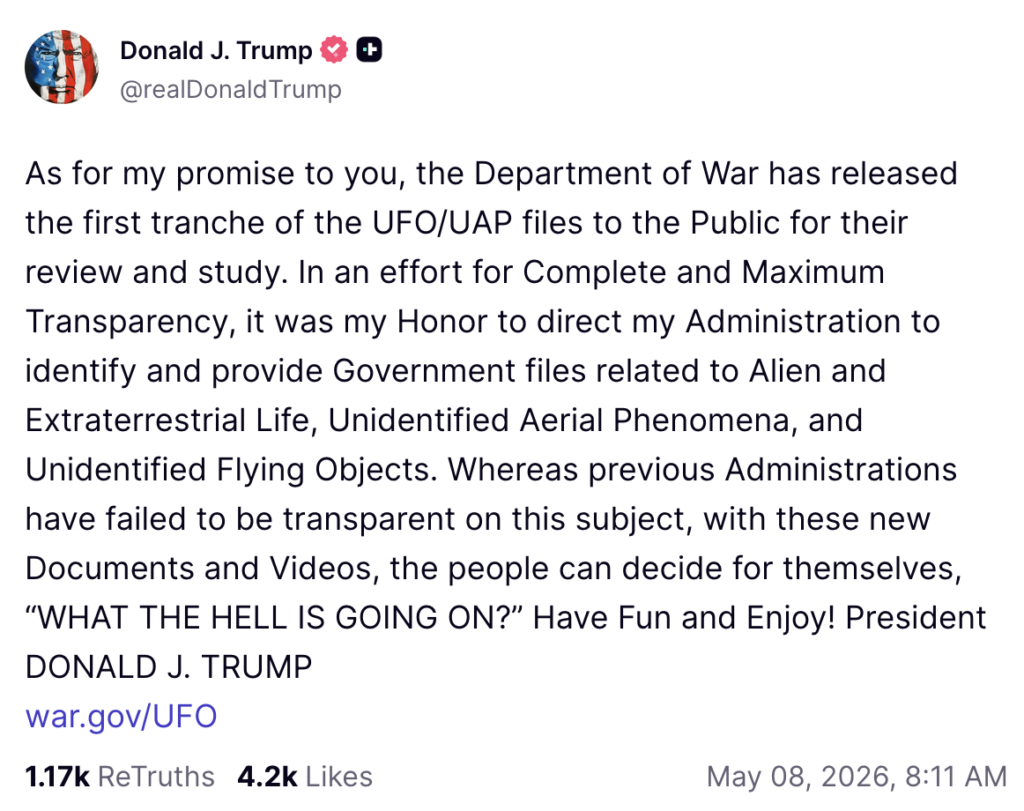
On February 19, President Donald Trump said he would direct federal agencies to begin identifying and releasing government files related to aliens, unidentified aerial phenomena, and UFOs. Reuters reported that Trump said there was strong public interest in the topic, while DefenseScoop noted that transparency advocates greeted the announcement with both hope and skepticism, stressing that a real disclosure effort would require sustained cross-agency follow-through rather than a single headline-grabbing statement. McCasland disappeared roughly a week later, and Coulthart has publicly highlighted that sequence.

That chronology is undeniably striking. But chronology is not causation.

At this point, there is no public evidence that McCasland’s disappearance is connected to Trump’s disclosure directive, to UFO secrecy, or to any foreign-intelligence operation. Public reporting from local authorities has emphasized the missing-person search itself, and KOAT reported that investigators had not uncovered evidence of foul play a week into the case. The fact that Coulthart and others believe the circumstances are suspicious is newsworthy; it is not the same thing as proof.

Still, the possibilities are unsettling.

One possibility is the simplest: a medical emergency or disorientation. The Silver Alert exists precisely because authorities believed McCasland may have been vulnerable, and in many missing-person cases the most mundane explanation is the correct one. That remains a leading possibility based on what police have publicly said.

A second possibility is accidental death in terrain that has not yet yielded answers. Albuquerque’s foothills and open areas can complicate searches, and officials have suggested investigators are pursuing tips from people who may have been in the Sandias or nearby areas around the time he disappeared. That theory is grim, but it does not require a conspiracy to explain why a person can vanish so quickly.

A third possibility is voluntary disappearance, though there is little public evidence for it. Reports have emphasized that McCasland left without his phone, and the broad law-enforcement response suggests his disappearance was considered out of character and alarming from the start.

The most dramatic possibility is foul play tied to what McCasland knew. That is the scenario that has electrified UFO circles and national-security watchers alike. Coulthart has openly argued that someone with McCasland’s background would be of obvious interest to hostile foreign powers. But again, that remains speculation unless investigators produce evidence supporting it.

What makes the case so potent is not just the mystery of one missing man. It is the symbolic collision of three storylines Americans already distrust: black-budget military secrecy, decades of arguments over UFO disclosure, and a political moment in which the president has just promised to open sealed files. When a retired general with deep access to classified aerospace and special-programs work disappears days after that promise, people are going to suspect more than coincidence, whether or not the facts ever justify it.

For now, the hard facts are narrower than the rumors. Neil McCasland is missing. He held unusually sensitive positions in the Air Force and Pentagon. Ross Coulthart has argued the disappearance could have national-security implications. Trump did, in fact, order agencies to begin identifying UFO-related files for release shortly before McCasland vanished. And authorities still have not publicly explained what happened.

Everything beyond that is inference.

And that is exactly why this case has become so compelling.


James Thompson is an author and ghostwriter, and a political analyst. He is an analyst of UAP reports, and have authored the book Worlds Without Number.


Sponsored by BasicInfo123 — simple bite-sized guides for life, money, civics, and more—because some stuff school just didn’t cover.

Filed Under: Crime, Ethics, Foreign, Sci-Tech

YOU’RE FIRED! It’s Time to Pull the Plug and Drain the Swamp

October 3, 2025 By Editor Leave a Comment

By James Thompson.

Washington, D.C. has long been home to a bloated and entrenched bureaucracy, dominated by career Democrats who have turned federal agencies into their own political strongholds. For decades, the Democratic Party has enjoyed near-total loyalty from the vast majority of federal employees, with their paychecks consistently recycled back into Democrat campaign coffers. Polling has shown that very few Republicans are employed in the federal government, cementing the perception that Washington’s bureaucracy is not neutral, but rather an arm of the Democrat machine.

This is the “swamp” that President Donald Trump warned the American people about when he first ran for the White House. And he was right. The swamp has spent decades growing unchecked, protecting its own interests, and working against the very principles of accountability and limited government that our republic was founded upon.

Now, with President Trump back in office and the Democrats once again showing their true colors by shutting down the government—refusing to pass the continuing resolution despite it being forwarded more than a dozen times—the opportunity is clearer than ever. The Democrats’ reckless obstruction proves that their priorities are not with the American people, but with defending their entrenched power in Washington.

For President Trump, this shutdown is not a crisis—it is an opportunity. A chance to finally deliver on his signature promise to drain the swamp.

Unlike past presidents, Trump has the political courage and public mandate to take bold action. He now has both the justification and the authority to slash the size of government, shut down unnecessary agencies, and cut loose the hundreds of thousands of federal employees who are not only failing to pull their weight but who actively work against the values of freedom, limited government, and constitutional integrity.

Massive cuts to the federal bureaucracy would not only restore balance and accountability, but they would also break the stranglehold that one political party has on Washington’s administrative state. Why should hardworking American taxpayers continue funding federal employees who openly funnel money, power, and influence to the Democratic Party—employees who serve the Party’s agenda rather than the people’s?

For decades, the swamp has been a hidden fourth branch of government—unelected, unaccountable, and overwhelmingly partisan. It is a system that has been weaponized against conservatives, against reform, and against the will of the voters. President Trump has this once-in-a-generation opportunity to put an end to this corruption.

Now is the time for President Trump to pull the plug to drain the swamp. By making swift and massive cuts to the federal workforce, he can finally dismantle the Democrat machine that has strangled Washington for decades. Doing so will not only fulfill his campaign promise, but will also restore the government to what it was always meant to be: a servant of the people, not a master.

If President Trump acts decisively now, while the government is shut down and he alone wields the power to ax the federal agencies and workforce, history will remember him as the man who broke the back of the bureaucratic elite and restored power to the American people.

DRAIN THE SWAMP!


James Thompson is an author and ghostwriter, and a political analyst.


Sponsored by BasicInfo123 — simple bite-sized guides for life, money, civics, and more—because some stuff school just didn’t cover.

Filed Under: Economy, Elections, Entitlement, Ethics, Gender

UK Recognition of ‘Palestine’ Raises Questions About History, Security, and the Future of Gaza

September 21, 2025 By Editor Leave a Comment

By James Thompson

The recent announcement by the United Kingdom that it recognizes the “State of Palestine” has once again raised global debate about the historical, political, and security realities in the Middle East. While the term “Palestine” is often invoked, the actual political geography tells another story. What exists is the Gaza Strip, a narrow coastal enclave that has become synonymous with terrorism, instability, and human suffering—not a functioning sovereign state.

Ancient and Modern Roots of Israel

The Jewish people trace their roots in the land of Israel back thousands of years. From the biblical kingdoms of Israel and Judah to the destruction of the Second Temple by Rome in 70 AD, Jewish presence in the land has been a constant. Despite centuries of exile and dispersion, Jewish communities maintained ties to Jerusalem and other holy sites.

The modern reestablishment of Israel followed centuries of persecution culminating in the Holocaust, in which six million Jews were systematically murdered by Nazi Germany. In 1947, the United Nations voted to partition the British Mandate of Palestine into Jewish and Arab states. The Jewish leadership accepted; the Arab world did not. On May 14, 1948, David Ben-Gurion proclaimed the independence of the State of Israel. The next day, five Arab armies invaded, vowing to wipe Israel off the map. Against all odds, Israel prevailed.

The Six-Day War and Its Results

In 1967, the Six-Day War altered the regional landscape. Surrounded by hostile neighbors—Egypt, Syria, and Jordan—Israel launched preemptive strikes to defend itself from imminent attack. In six days, Israel captured the Sinai Peninsula, the Golan Heights, East Jerusalem, and the West Bank. The Gaza Strip, previously administered by Egypt, also came under Israeli control. This war not only secured Israel’s survival but also restored Jewish access to the Western Wall in Jerusalem for the first time in nearly 2,000 years.

Decades of Terrorism

While Israel built a thriving democracy and economy, waves of terrorism followed. From the hijackings of the 1970s to suicide bombings during the Second Intifada, Israelis endured relentless assaults on buses, restaurants, and schools. The rise of Hamas, an Iranian-backed Islamist terror group, turned Gaza into a launch pad for rockets and attacks against Israeli civilians. Daily barrages have forced millions of Israelis to live under constant threat, rushing into bomb shelters at the sound of sirens.

The October 7th Massacre

The deadliest attack in modern Israeli history came on October 7, 2023. Hamas militants poured out of Gaza in a coordinated assault on southern Israel. They massacred families in their homes, raped women, beheaded infants, and kidnapped over 200 people—including children and the elderly. More than 1,200 Israelis were murdered in one day, shocking the world and proving that Hamas’s aim is not peace, but annihilation.

On October 7, 2023 Islamic terrorists from Gaza and other bordering sites attacked helpless Israelis going about their daily routines, murdering thousands, including chopping babies up and raping and murdering women and children

The Problem of Gaza

No Arab country has offered to take responsibility for Gaza’s people. Egypt, which shares a border, keeps it sealed. Jordan, Lebanon, and Saudi Arabia, despite their rhetoric, refuse to absorb refugees from the enclave. The reality is that Gaza has become a weaponized territory designed to bleed Israel.

Gaza’s location also presents strategic complications. Wedged along the Mediterranean, it effectively narrows Israel’s access to the sea and creates a long-term security threat. Israel’s withdrawal from Gaza in 2005, intended as a step toward peace, led not to stability but to Hamas’s takeover and an escalation of daily rocket fire.

Some argue that the only long-term solution is for Gaza to become part of Israel again, repopulated by Israelis who can build cities, seaports, and commercial beaches that would benefit the entire nation. Others propose compromise solutions—such as dividing Gaza, with the northern half integrated into Israel proper and populated by Israelis, and the southern half left for Arab administration. Such a move would give Israel greater security and greater open access to critical Mediterranean trade routes while still providing Arab residents a less deadly alternative zone.

The UK’s recognition of “Palestine” may make headlines, but it sidesteps the brutal reality: Gaza is not a state but a terror enclave. Israel, the only true democracy in the Middle East, continues to fight for its survival against enemies that reject its very existence. Until the world acknowledges this reality—and until Gaza ceases to be a hub of violence—the dream of peace will remain distant.


James Thompson is an author and ghostwriter, and a political analyst.


Sponsored by BasicInfo123 — simple bite-sized guides for life, money, civics, and more—because some stuff school just didn’t cover.


Filed Under: Bias, Ethics, Foreign, Religion

The Assassination of Charlie Kirk: How Leftist Propaganda Fueled a Tragic Attack on a Centrist Voice

September 13, 2025 By Editor Leave a Comment

By James Thompson

The shocking assassination of civil rights leader Charlie Kirk by a young man radicalized by online Antifa rhetoric has reignited national debate about the power of incendiary political propaganda. For years, Kirk was smeared by elements of the far-left as a “fascist” or “white supremacist”—labels that bore no resemblance to his real philosophy, which was firmly rooted in traditional, centrist American values.

These misrepresentations were not harmless exaggerations. They were dangerous falsehoods designed to vilify mainstream conservatism, strip it of legitimacy and humanity, and justify violence against its proponents. See our article of April 22, 2025: Perhaps Biden was Right: Domestic Terrorism is the Greatest Threat. The tragedy of Kirk’s murder illustrates the deadly consequences of such rhetoric, which transforms political opponents into enemies to be destroyed rather than fellow citizens to be debated.

A Champion of Civil Debate and Free Speech

Charlie Kirk, founder of Turning Point USA, spent much of his short career on college campuses across America. With his “Change My Mind” and “Prove Me Wrong” tours, he invited young people to challenge him openly on issues ranging from economics to morality. His aim was never to silence others but to encourage robust dialogue—a hallmark of democratic society and a direct inheritance of the constitutional republic America was founded upon.

Far from being a “fascist,” Kirk’s public work was the opposite: he celebrated free speech, personal liberty, and the power of persuasion. The eagerness with which he welcomed opposition demonstrated not a hunger for domination, but a deep belief that truth and common sense could withstand scrutiny.

Core Philosophies Rooted in American Tradition

Though vilified by his opponents, Kirk consistently championed positions that align not with extremism, but with the longstanding mainstream beliefs of the American people. Among them:

  1. Free Speech for All – Advocacy against censorship and “cancel culture.”
  2. Religious Liberty – Defense of the right to live according to Judeo-Christian moral convictions.
  3. Constitutional Government – Emphasis on checks and balances, limited government, and federalism.
  4. Individual Responsibility – Belief that citizens thrive when accountable for their choices.
  5. Equal Opportunity – Opposition to racial quotas and identity politics in favor of merit-based advancement.
  6. Rule of Law – Support for strong but fair law enforcement and judicial integrity.
  7. Second Amendment Rights – Defense of lawful gun ownership as a safeguard of liberty.
  8. Economic Freedom – Promotion of free markets, entrepreneurship, and opportunity.
  9. Fiscal Responsibility – Opposition to reckless federal spending and unsustainable debt.
  10. Strong Families – Recognition of the family unit as foundational to a healthy society.
  11. Educational Choice – Support for school choice and parental rights in education.
  12. National Sovereignty – Belief in secure borders and fair, orderly immigration.
  13. Care for the Vulnerable – Advocacy for policies protecting the unborn, the elderly, and the disabled.
  14. Patriotism – Promotion of national pride and civic responsibility.
  15. International Prudence – Advocacy of strong defense while opposing reckless foreign entanglements.

Each of these positions sits comfortably within the center of American political tradition, reflecting beliefs held by a broad swath of average citizens across all generations. None are extremist; all flow from the founding principles of liberty, justice, and ordered self-government. See our recent articles: The Rise of 80-20 Issues: How One-Sided Politics is Reshaping America’s Future; Dems Oppose Americans on Every Issue.

The Lies That Fueled Violence

Despite these centrist convictions, Kirk was relentlessly branded a “fascist” by leftist activists. In truth, fascism is defined by authoritarianism, suppression of dissent, and subordination of individual liberty to the state—values directly opposed to Kirk’s. The smear was not an accident. It was a tactic, designed to portray ordinary conservative Americans as dangerous enemies.

By equating constitutional centrism with extremism, the radical Left justified its own growing radicalism. The tragic result was a young man radicalized into believing that silencing Charlie Kirk with violence was somehow righteous.

The 80/20 America: Most Agree With Kirk’s Positions

Kirk’s centrist philosophy was not fringe—it reflected what poll after poll shows are the views of the overwhelming majority of Americans. On issue after issue, about 80 percent of the country agrees with the positions he championed, while only 20 percent embrace the radical alternatives. Examples include:

  • Free Speech: Roughly 80% of Americans believe political correctness has gone too far and that open debate is essential to democracy.
  • School Choice: A large majority supports giving parents the right to choose their children’s schools, including charter and private options.
  • Border Security: About three-quarters of Americans believe the southern border must be secured and immigration laws enforced.
  • Religious Freedom: Most Americans agree people should not be forced to abandon their faith convictions in the public square.
  • Police and Law Enforcement: Around 80% reject “defund the police” rhetoric, supporting law enforcement while calling for fairness and accountability.
  • National Pride: Polling shows most Americans are proud of their country and want history taught honestly, without erasing its achievements.
  • Fiscal Responsibility: Americans overwhelmingly believe Washington spends too much and risks saddling future generations with unsustainable debt.

These are not “extremist” views—they are the mainstream. The radicals who sought to demonize Kirk were attacking not just him, but the broad consensus of the American people.

Charlie Kirk pictured with his wife and children

A Warning for America

The assassination of Charlie Kirk is not just the loss of one man; it is a warning for the nation. When political disagreement is replaced with slander and demonization, society begins a descent into tribalism and violence—even Civil War. The campaign to portray Kirk—and by extension, many millions of traditional conservatives—as “fascists” has now borne its poisonous fruit. Every Leftist with “fascist” and “Hitler” on their lips has hands dripping with the blood of Charlie Kirk.

If America is to remain free, which has been in question recently, citizens must reject the lies that pit neighbor against neighbor. We must restore the principle that disagreement does not make one an enemy, and that violence is never an acceptable substitute for persuasion. Violence begets violence, and a downward spiral quickly ensues into civil war—something this republic barely survived not so long ago.

Charlie Kirk’s life’s work was to prove that truth can stand on its own, that free people debating in good faith can arrive at better understanding. To honor his legacy, Americans must recommit to civil discourse, resist the radical fringe, and defend the traditional centrist values that have held the Republic together since its founding.


James Thompson is an author and ghostwriter, and a political analyst.


Sponsored by BasicInfo123 — simple bite-sized guides for life, money, civics, and more—because some stuff school just didn’t cover.

Filed Under: Bias, Crime, Ethics, Gender, Religion

Charlie Kirk Killed at event at Utah Valley University

September 10, 2025 By Editor Leave a Comment

Lethal shots fired at a Charlie Kirk event at Utah Valley University, Orem, Utah. Kirk was shot in throat.

President Donald Trump confirmed Kirk’s death in a post on Truth Social.

“The Great, and even Legendary, Charlie Kirk, is dead. No one understood or had the Heart of the Youth in the United States of America better than Charlie. He was loved and admired by ALL, especially me, and now, he is no longer with us,” Trump wrote. “Melania and my Sympathies go out to his beautiful wife Erika, and family. Charlie, we love you!”

Conservative speaker and host assassinated by a gunman at an event at Utah Valley University, in Orem, Utah.

Police are investigating now, and the shooting suspect is NOT in custody.

The campus is on lockdown.

President Trump wrote on social media: “We must all pray for Charlie Kirk, who has been shot. A great guy from top to bottom. GOD BLESS HIM!”

In a statement on X, Vice President J.D. Vance wrote: “Say a prayer for Charlie Kirk, a genuinely good guy and a young father.”

Kirk is in critical condition at a hospital after being shot Wednesday at a Utah event, a law enforcement official told The Associated Press.

Video posted from the event appeared to show Kirk being shot as he spoke to the crowd from under a white pop-up tent. After the shot, the crowd dispersed, with onlookers shouting “Run, run, run!”

See video>

Charlie Kirk has just been shot! WTH!

I have had my beef with @charliekirk11 and have my concerns with TPUSA but I would never wish this on him.

We are at war people.

Pray for him! pic.twitter.com/jpMSR6SXpU

— Morgan Ariel (@itsmorganariel) September 10, 2025


A suspect is in custody, according to a UVU alert sent to students. The campus has been evacuated.

“A single shot was fired on campus toward a visiting speaker. Police are investigating now, suspect in custody,” an alert from UVU said.

https://www.tiktok.com/@cooperutah/video/7548536180225084727

An older man was arrested and taken into police custody. His name was not immediately released. It appears that he is not the shooter.

FBI and ATF agents are on the scene, according to Attorney General Pam Bondi.

President Donald Trump posted on social media: “We must all pray for Charlie Kirk, who has been shot. A great guy from top to bottom. GOD BLESS HIM!” 

FBI Director Kash Patel said the agency “stands in full support of the ongoing response and investigation.”

Utah Sen. Mike Lee said he is “tracking the situation at Utah Valley University closely.”

“Please join me in praying for Charlie Kirk and the students gathered there,” he said on social media.

Kirk had been scheduled to appear at Utah Valley University on Wednesday as part of his American Comeback Tour, with another stop at Utah State University later this month. His appearances have drawn protests and petitions from student groups critical of his views.

In a since-deleted post on Kirk’s social media just hours before the attack, the conservative firebrand wrote: “WE. ARE. SO. BACK. Utah Valley University is FIRED UP and READY for the first stop back on the American Comeback Tour.”

The Fall 2025 leg of the tour began at the Orem, Utah university and is “a nationwide campus tour aimed at equipping students with the tools to push back against leftwing indoctrination in academia and reclaim their right to free speech.” 

Filed Under: Bias, Crime, Elections, Ethics, Gender, Religion

Let’s Be Honest: Young Black Men are Trapped in the Blue City Crossfire

September 9, 2025 By Editor Leave a Comment

By James Thompson

America’s homicide crisis is escalating (despite Democrat attempts to skew crime numbers), and young Black men remain trapped in a grossly outsized cycle of violence and victimization that far exceeds their share of the general population.

Black American men ages 15–34 account for just 5% of the U.S. population, yet they suffer homicide rates more than six times the national average.

In 2023, federal data show Black Americans were killed at a rate of 21.3 per 100,000, compared to just 3.2 per 100,000 for White Americans. Firearm homicides alone hit nearly 27.5 per 100,000 Black residents—a staggering figure that dwarfs those of every other racial group.

Why?

The tragedy is not just in the numbers, but in the lived reality. In Chicago, Baltimore, Philadelphia, and scores of other Democrat-run “Blue Cities,” shootings are measured in dozens per weekend. The overwhelming majority of both offenders and victims are young Black men. And despite public perception, the violence is overwhelmingly intraracial (Balck-on-Black): about 63% of violent crimes against Black victims are committed by other Black offenders, according to the National Crime Victimization Survey. Contrary to what many legacy media outlets claim, very few are committed by police.

A Cycle Rooted in Poverty and Family Instability

Researchers point to a web of interconnected drivers: segregated, under-resourced neighborhoods, failing public schools, and high rates of single-parent households. In 2023, nearly half of Black children lived with a single parent, compared to about one in five White children. Critics argue that decades of welfare policy discouraged family stability, and that “marriage penalties” in tax and welfare benefit systems risk making poor families worse off if they legally wed.

The result is a generation of boys too often raised without consistent male role models, in neighborhoods where crime networks wield more influence than families, schools or churches. As one Chicago pastor put it recently: “We’re asking young men to build a life on quicksand.”

Violence Beyond the Black Community

The violence does not remain contained. The shocking murder of Iryna Zarutska, a 23-year-old Ukrainian refugee fatally stabbed on Charlotte’s light rail a few days ago drew national headlines and underscored broader anxieties about crime crossing racial lines. Hispanic and Asian communities in urban centers are also reporting rising victimization rates, though the overall pattern remains heavily concentrated within racial groups themselves.

What Works—and What Doesn’t

While political debates rage over policing, incarceration, and gun laws, researchers have quietly identified interventions that consistently save lives.

  • Focused deterrence strategies, such as the Group Violence Intervention model, have cut homicides sharply in cities that apply them with fidelity. These programs zero in on the small networks responsible for the majority of shootings, pairing swift enforcement with real offers of services and escape routes.
  • Youth interventions like Chicago’s Becoming a Man program have shown remarkable results, reducing violent-crime arrests by more than a third through cognitive-behavioral therapy and mentoring.
  • High-dosage tutoring and strong schools in disadvantaged areas attack the root of intergenerational poverty by raising achievement and keeping at-risk youth connected to opportunity.
  • Mobility programs that help families move into safer, higher-opportunity neighborhoods when children are young have lasting effects, producing higher adult earnings and more stable families.

These approaches stand in contrast to broad “tough on crime” sweeps that often criminalize entire communities while missing the small, tightly connected groups who actually drive the violence.

A National Responsibility

The cost of inaction is measured in human lives and lost futures. Every weekend, headlines announce the toll: “12 shot, 3 killed overnight” in many cities. Each figure represents not just a victim, but a family torn apart, a neighborhood further traumatized, and a society that has failed to deliver equal safety and opportunity.

If America is serious about addressing its most urgent public safety crisis, it must confront the uncomfortable truth: a small share of the population, disproportionately young Black men, bear the brunt of the nation’s violence epidemic–as perpetrators and victims.

Breaking that cycle will require more than policing alone. It demands rebuilding families, repairing schools, reforming welfare policies, and investing in proven strategies that offer young men a path to middle-class stability rather than early graves.

Until then, the “normal” American life—safe streets, good schools, stable families—will remain out of reach for too many of those who need it most.

President Donald Trump is launching a sweeping policing of troubled cities with federal assets in the hope of reducing crime and saving lives. His foray into Washington, D.C. with a federal presence has yielded fantastic results, sparing the lives of many young Black American men. However, Democrats are boisterously against such efforts, screaming in the streets that they are happy with the status quo in their war-torn cities, and that Trump is a fascist dictator to seek peace and safety in our cities. We expect to see the effort expanded to many Blue Cities in the next few months, and when Trump succeeds, we will see what can be done for the young Black men and their families who live to make a change.


James Thompson is an author and ghostwriter, and a political analyst.

Sponsored by BasicInfo123 — simple bite-sized guides for life, money, civics, and more—because some stuff school just didn’t cover.

Filed Under: Bias, Crime, Economy, Elections, Entitlement, Ethics

A Global War on Faith: Anti-Religious Attacks Escalate in America and Beyond

September 8, 2025 By Editor Leave a Comment

By Federalist Press Investigative Team

Houses of worship, once untouchable sanctuaries of community and conscience, are becoming battlefields in a global war against religion. From arson and vandalism to deadly shootings, the evidence is clear: hostility toward faith is on the rise. Yet the institutions most responsible for protecting society—the press, educators, and governments—often look away, downplay, or worse, subtly encourage the targeting of believers.

This exposé examines the escalation of anti-religious violence, how radical ideologies are weaponizing young people against faith, and why silence from the cultural establishment makes them complicit.

The Numbers Don’t Lie

The FBI’s most recent Hate Crime Statistics Report shows that religious bias accounts for roughly 20% of all reported hate crimes, second only to racial bias. Anti-Jewish incidents lead the category, but anti-Christian and anti-Muslim cases have climbed sharply. Reports of church vandalism and synagogue desecrations increased by double digits in the past decade, yet coverage in major outlets like The New York Times and CNN remains sparse.

Meanwhile, Catholic Vote reported over 320 attacks on Catholic churches since 2020, including dozens of arsons. Evangelical churches, particularly those opposed to progressive social agendas, face firebombings and smashed windows. In Canada, over 70 churches were torched in a single summer, most cases unresolved.


The School Shootings the Media Buried

Nowhere is the pattern more chilling than in school shootings explicitly targeting Christian institutions.

  • The Covenant School, Nashville (2023): A transgender-identified shooter murdered three children and three staff members at a Christian elementary school. Authorities confirmed the shooter left a manifesto targeting Christians, yet its full release has been blocked by courts—amid suspicions that its contents would reveal explicit anti-Christian animus tied to radical gender ideology. The shooter’s Transifesto is still being suppressed from the public.
  • Minneapolis was shaken when gunfire erupted outside Annunciation Catholic Church on Wednesday, Aug. 27 – the fourth major shooting in less than 24 hours. The school attack, which terrified students and parents, capped a violent spree that left at least three people dead and more than a dozen others wounded across the city. The transgender-identified shooter left behind his Tranifesto, spewing his hate of children and Christians.
  • Colorado Springs (2019, thwarted): A trans-identified individual was arrested with a hit list and plans to target local churches, citing hatred of Christians in online postings.
  • Other incidents: Smaller cases in Kentucky and California also revealed trans-identified suspects threatening or attacking churches and faith schools.

Mainstream coverage? Muted. Instead of highlighting the anti-religious motivation, networks portrayed the perpetrators as victims of “societal rejection,” effectively excusing their violence. Imagine the coverage if the reverse were true—if a religious extremist had targeted an LGBT school. The double standard is glaring.

Teachers’ Union Programs: Undermining Faith in the Classroom

Much of the cultural hostility toward religion is seeded not in the streets, but in the classroom. Teachers’ unions, long dominated by progressive leadership, have increasingly used their influence to push policies and programs that portray traditional religious beliefs as outdated, intolerant, or even harmful.

  • NEA & Gender Ideology Training: The National Education Association (NEA), the nation’s largest teachers’ union, hosts workshops that encourage teachers to “affirm student identities” without parental knowledge. In practice, this often means withholding information from Christian or religious parents whose values conflict with gender-transition policies. By treating parental involvement as dangerous, these programs drive a wedge between children and their families’ faith traditions.
  • Anti-“Religious Privilege” Curricula: The American Federation of Teachers (AFT) has endorsed classroom materials that frame Christianity—especially in its traditional or conservative forms—as a source of systemic oppression. Training documents encourage educators to identify “religious privilege” as a barrier to equity, painting devout families as inherently problematic.
  • Partnerships With Activist Nonprofits: Both NEA and AFT have partnered with outside organizations such as GLSEN (Gay, Lesbian & Straight Education Network) and the Human Rights Campaign to develop curricula. While framed as “anti-bullying” or “inclusive,” many of these programs depict faith-based objections to gender or sexual ideology as examples of hate, effectively stigmatizing religious students and families.
  • Cultural Reframing Exercises: Some union-backed training materials go so far as to suggest exercises where children are encouraged to question their families’ religious values and “deconstruct” traditional moral frameworks. Faith is treated as something to be unlearned, rather than a legitimate foundation for personal identity.

Critics argue these programs do more than just “educate.” They function as soft conversion tactics—encouraging children to view their parents’ religion as oppressive, while offering radical ideology as the enlightened alternative. The result is a generation of young people alienated from faith and more susceptible to radicalization online, where anger and identity confusion can be weaponized into activism—or in extreme cases, violence.

Europe and Beyond: Faith Erased, Freedom Eroded

In Europe, secular governments do little to protect churches that are vandalized weekly. France has seen over 1,000 annual attacks on Christian sites in recent years. Germany’s Jewish communities face surging antisemitic crimes. The U.K. documents increasing assaults on both Muslims and Christians, yet arrests and prosecutions are rare.

Globally, the situation is bloodier. Boko Haram massacres Christians in Nigeria. Hindu-Muslim violence leaves houses of worship smoldering in India. In China, churches are bulldozed and mosques fitted with surveillance cameras. The message is the same everywhere: religion is dangerous, and faith must bow to ideology.

The Media Cover-Up

When attacks occur, media coverage follows a predictable script:

  • If the victims are Christian, the crime is treated as an isolated event, stripped of ideological context.
  • If the perpetrator is tied to progressive causes (as in Nashville), coverage softens or shifts blame to “society.”
  • If the crime fits an anti-right narrative, it dominates headlines for weeks.

By burying the truth, the press signals that attacks on certain faiths are tolerable—or even deserved.

Why It Matters

This is more than vandalism. More than crime. These are attacks on freedom itself. The right to worship freely is the cornerstone of any free society. When churches burn and Christian children are gunned down—while governments hide manifestos and teachers’ unions undermine families—we are watching the unraveling of liberty.

History is unambiguous: totalitarian regimes always begin by erasing religion. Stalin dynamited churches. Mao banned temples. Hitler vilified Jews. Today’s radicals, whether in classrooms, legislatures, or social media mobs, are following the same playbook.

A Call to Defend Faith

The faithful must no longer remain silent. Religious communities must demand that governments enforce laws equally, that perpetrators be prosecuted without ideological cover, and that media outlets stop burying the truth. Parents must reclaim schools from unions that treat their faith as an enemy.

The war on faith is not hypothetical—it is here, it is growing, and it will not stop until believers themselves refuse to bow.

Filed Under: Bias, Crime, Ethics, Foreign, Religion

NY Appeals Court Throws Out Trump Civil Fraud Penalty

August 21, 2025 By Editor Leave a Comment

New York — A five‑judge panel of New York’s Appellate Division (First Department) has thrown out the massive monetary penalty imposed on President Donald Trump in the state’s civil fraud case, finding the disgorgement order “excessive” under the Eighth Amendment. The ruling, issued Thursday, strikingly reshapes the case that had ballooned to more than $515 million with interest, and leaves a clear path for further appeals to New York’s highest court.

What the court decided

  • Disgorgement/monetary penalty: Vacated in its entirety as an excessive fine. The court concluded that directing Trump and co‑defendants to pay nearly half a billion dollars violated the U.S. Constitution’s Excessive Fines Clause.
  • Injunctive relief: The panel indicated that certain behavior‑modifying injunctions aimed at corporate practices were appropriate, even as it rejected the money judgment. (Those bans and monitorships had been paused during the appeal.)
  • Next steps: The decision keeps the door open for additional review—by the New York Court of Appeals—while dissolving the immediate threat of collection on the disgorgement. Trump’s previously posted $175 million bond forestalled collection while the appeal was pending.

How we got here

New York Attorney General Letitia James sued in 2022 under Executive Law § 63(12), a powerful state statute often used to police “repeated fraudulent or illegal acts.” After a bench trial, Justice Arthur Engoron found Trump had inflated asset values and, in early 2024, imposed a penalty initially pegged around $355 million, which with interest swelled above $515 million; he also ordered leadership bans and other injunctive remedies.

New York State Attorney General Letitia James campaigned on promise to take down President Trump by any means necessary.

Trump appealed, arguing that (1) no lender lost money, (2) the Attorney General stretched § 63(12) beyond its proper scope, (3) the disgorgement was unauthorized or disproportionate, and (4) the penalty violated the Eighth Amendment. Several Republican‑led states filed amicus briefs supporting the excessive‑fines argument.

Today’s ruling—after an unusually long deliberation period for the First Department—adopts the excessive‑fines critique and erases the money judgment. (Reporting earlier this week highlighted how rare such internal divisions and delays are for this court.)

Why the Excessive Fines Clause matters here

The Excessive Fines Clause applies to state actions, including civil sanctions, via Timbs v. Indiana (2019). In Timbs, the U.S. Supreme Court unanimously held that states cannot impose grossly disproportionate financial penalties. That constitutional guardrail now anchors the appeals court’s conclusion that New York’s disgorgement order went too far.

Critics’ case: why many call the lawsuit a “sham”

From the outset, critics argued that New York brought a politicized, victim‑less fraud case: lenders were sophisticated, performed their own valuations, were repaid, and did not complain of losses; yet the state sought a sweeping corporate death‑penalty‑style remedy. Business‑law commentators warned the case, if upheld, would chill private enterprise by punishing negotiations that harmed no counterparties. Today’s ruling vindicates the core of that critique by rejecting the most punitive financial sanction as unconstitutional.

Republican attorneys general likewise contended that using § 63(12) to extract a massive disgorgement where no consumer injury was shown transformed the statute into a blunt political instrument. Their filings emphasized that punishment must be proportional and tied to demonstrable harms—principles the appellate court’s decision echoes.

What still stands—and what could come next

  • Fraud findings & injunctions: The court signaled that targeted injunctive relief to constrain business practices can remain—a point the Attorney General will lean on as she considers next steps. (Any renewed attempt at monetary sanctions would face strict proportionality limits.)
  • Further appeals: Either side can seek leave to appeal to the New York Court of Appeals. Given the stakes—for Trump, for the AG’s office, and for the future use of § 63(12)—a petition is highly likely.
  • Broader impact: The ruling will shape how New York (and other states) deploy civil‑fraud statutes in high‑profile business cases. It underscores that even civil “disgorgement” risks crossing into punitive territory barred by the Eighth Amendment—especially where the record shows no concrete losses to counterparties.

Bottom line

The appeals court didn’t just trim Trump’s penalty—it wiped out the money judgment as unconstitutional, dramatically undercutting the theory that justified the case’s most severe sanction. For supporters of the President, this outcome supports the view that the New York proceeding was overreaching and political. For state regulators, it’s a sobering reminder that civil enforcement powers meet constitutional limits, and that large “disgorgements” must be tied to real harms and calibrated to pass Eighth Amendment scrutiny.

Filed Under: Bias, Elections, Ethics

DNI Gabbard Refers Obama ‘Russiagate Conspiracy’ to DOJ for Criminal Prosecution

July 23, 2025 By Editor Leave a Comment

WASHINGTON, D.C. — In a dramatic escalation of an already heated national debate, Director of National Intelligence Tulsi Gabbard has formally referred a criminal case to the Department of Justice, alleging that former President Barack Obama and top officials in his administration conspired to falsely implicate Donald Trump in Russian collusion. Gabbard has shared newly uncovered intelligence that reveals a calculated effort to manufacture the narrative that Russia played a decisive role in Trump’s 2016 election—a narrative that crippled Trump’s ability to govern, and poisoned U.S.-Russia relations for years.

According to evidence unearthed by National Intelligence, the Obama administration had clear evidence before the election that Russia had not manipulated vote counts or voting systems. Despite this, they selectively ignored or suppressed this intelligence in favor of amplifying a false narrative that Trump was elected with the help of the Kremlin. Gabbard has released more than 100 pages of declassified records, including internal memos and emails, which prove high-ranking officials like former CIA Director John Brennan, FBI Director James Comey, and Director of National Intelligence James Clapper deliberately advanced the Russia narrative despite knowing it was untrue.

Director of National Intelligence Tulsi Gabbard provides graphic of how Obama and security chiefs staged coup against Trump on Russia issue.

At the center of the controversy is the infamous Steele dossier, which Gabbard contends was misused as a tool by the Obama administration to justify illegal federal surveillance of Trump’s team, and media leaks, even though its contents were never verified. She argues that the entire Russia collusion scandal was based on disinformation, used strategically to delegitimize Trump’s presidency and prevent him from working effectively with foreign leaders like Vladimir Putin.

Speaking at a press conference earlier this week, Gabbard did not mince words. “This was a years-long coup attempt,” she said. “They knew Russia didn’t change votes or hack election systems, but they pushed the lie anyway. This wasn’t intelligence—it was election interference, orchestrated from the highest levels of government.”

The discovered evidence, she says, paints a picture of a “treasonous conspiracy” involving the manipulation of classified information and the politicization of America’s intelligence agencies. Gabbard’s referral to the DOJ includes a formal request for criminal investigation into conspiracy, abuse of power, and obstruction of justice. She emphasized that because conspiracy to commit fraud against the United States carries no statute of limitations, those involved could still face prosecution.

Conservative leaders and media outlets have praised Gabbard’s actions. Fox News described the revelations as “bombshell,” and lawmakers like Senator Chuck Grassley say this criminal referral marks a long-overdue reckoning for those who politicized intelligence to harm a duly elected president.

Former officials like John Brennan have dismissed Gabbard’s claims as a “wholesale misrepresentation” of intelligence procedures and policy debates. Obama’s office also pushed back firmly, calling the accusations “a baseless distraction” intended to rewrite history and deflect from Trump’s actual conduct.

Gabbard remains undeterred. She has hinted that more documents and whistleblower testimony will soon be made public, and she is working closely with congressional allies to ensure the matter is investigated fully. Trump, who has praised Gabbard for her “courage and patriotism,” has suggested that these disclosures vindicate his long-standing claim that the Russia narrative was a politically motivated hoax.

Whether the DOJ will act on the referral remains to be seen. But one thing is clear: if Gabbard’s allegations hold up under legal scrutiny, they could represent one of the most explosive abuses of power in modern American history.


James Thompson is an author and ghostwriter, and a political analyst.

Filed Under: Bias, Crime, Ethics

Who Took the FireAid $100 Million? Dem Front Groups

July 23, 2025 By Editor Leave a Comment

Circling the News has looked into the disposition of the FireAid funds, and has discovered that most of the money has ended up in the hands of democratic party front organizations, absorbed to support many leftist causes, instead of helping victims of the L.A. fires.

FireAid, a two‑venue benefit concert held on January 30, 2025, at Inglewood’s Intuit Dome and Kia Forum, raised over $100 million for the victims of the Eaton and Palisades fires in Los Angeles. The event featured megastars like Billie Eilish, Lady Gaga, and U2—who even pledged $1 million—while Steve and Connie Ballmer matched donations dollar for dollar.

The Annenberg Foundation was designated to oversee distribution of the proceeds via a newly formed 501(c)(3) dubbed FireAid.

The missing money

  • By July 2025—six months post-concert—investigative reporter Sue Pascoe (editor of Circling the News), found no evidence that funds had gone directly to fire survivors.
  • When pressed, the Annenberg Foundation and Clippers’ spokesperson Chris Wallace stated that all funds were allocated to nonprofits serving impacted communities, but none were provided as direct cash grants to individuals.
  • The community council in Pacific Palisades pushed back: of the nearly 120 nonprofits awarded money, only three served Palisades directly—Kehillat Israel, Chabad of Palisades, and Palisades High School—with no transparency on grant sizes or outcomes.

Where has the money gone?

  • Phase 1 (February 2025): $50 million distributed across 120+ nonprofits—a wide range of leftist organizations and causes (food, housing, arts, mental health, animal welfare, etc.)—but with no indication of any impact in hard-hit neighborhoods like Palisades.
  • Phase 2 (early summer 2025): $25 million allocated to longer-term programs—mental health, environmental remediation, sustainable rebuilding—again routed entirely via leftist nonprofits.
  • Phase 3: Still open for nonprofit applications; no direct individual aid has been announced.

Voices from the frontlines

  • Pascoe quotes a distraught reader: “I’ve never seen any fire aid money… There’s 12,000 people… homes gone. Those people probably wanna know where the money is.”
  • The Pacific Palisades Community Council demanded a full accounting—grant-by-grant, dollar amounts, and whether any funds reached victims directly—pressuring Annenberg and FireAid for transparency.

What’s at stake?

  1. Transparency: Donors—including Ballmers and artists—gave believing relief would hit families’ pockets. Yet there’s no public record of distributions, amounts, or recipients.
  2. Accountability: The failure to track how leftist nonprofit partners used the money raises the risk of funds being diverted to general left-wing causes or bureaucratic overhead (CEO salaries, donations to DNC), instead of victims.
  3. Public trust: Allegations accuse that funds were simply “laundered through democratic party front organizations.” What is clear is the heavy reliance on nonprofits without visible community oversight.

The bottom line

Over $100 million was raised in good faith to aid Los Angeles fire victims. Yet by mid‑2025:

  • No direct cash support has been confirmed to individual victims of the fires.
  • A small number of left-leaning nonprofits in severely affected areas have been revealed to have received grants—with no breakdown of dollar amounts or reported impact.
  • The remainder of funds is funneled into broader democrat community and infrastructure projects, at the discretion of FireAid advisors.

What happens next?

  • The Pacific Palisades Community Council is demanding a full financial breakdown—including all grants, matched funds, and direct aid—as of May 2025.
  • More investigative pressure from reporters like Pascoe, community groups, and possibly legal scrutiny may force public disclosure.
  • If answers continue to stall, donors may call for independent audits or even legal action to ensure intended recipients aren’t forgotten.

James Thompson is an author and ghostwriter, and a political analyst.

Filed Under: Bias, Crime, Elections, Entitlement, Ethics

The Epstein Enigma: A Web of Abuse, Influence, and Secrets Still Hidden

July 9, 2025 By Editor Leave a Comment

Jeffrey Epstein’s case is one of the most disturbing and puzzling scandals of our time. A financier with murky origins and enormous reach, Epstein used his wealth and elite connections to build a secretive network that trafficked and exploited underage girls across the globe. From his private Caribbean island to his luxury homes in New York and Palm Beach, Epstein operated in plain sight — surrounded by celebrities, academics, politicians, and royalty. Yet, years after his death, many of the most important questions remain unanswered.

A Global Network of Abuse

Beginning in the 1990s and continuing for over two decades, Epstein reportedly abused dozens — possibly hundreds — of underage girls. Many were recruited under the pretense of offering massage work, only to find themselves trapped in a cycle of manipulation and sexual exploitation. Victims testified that they were often coerced into recruiting other girls, creating a pyramid-style trafficking ring.

Bill Clinton greeting Epstein, with Ghislaine Maxwell

Much of the recruiting was allegedly handled by Ghislaine Maxwell, Epstein’s longtime associate and confidante. She was convicted in 2021 on multiple federal charges, including sex trafficking of minors. Testimony during her trial made it clear: Epstein and Maxwell worked in tandem to identify, groom, and abuse young girls — many of whom were economically vulnerable and targeted at schools, shopping malls, or through word-of-mouth.

The Famous and the Powerful

Epstein’s social circle included some of the most powerful figures in the world. Flight logs, photos, and witness statements have connected a range of individuals to his private jet or properties. While not all of these figures have been accused of wrongdoing, their close proximity to Epstein has raised serious concerns about the extent of his influence and the silence surrounding his crimes.

High-profile names linked to Epstein include:

  • Bill Clinton – Took numerous trips on Epstein’s jet; denies visiting Epstein’s island or knowing about the abuse.
  • Prince Andrew – Accused in a civil suit by Virginia Giuffre of engaging in sex acts with her while she was a minor. Settled the case out of court, and died by suicide April 25, 2025.
  • Les Wexner – Epstein managed the billionaire’s finances and was given power of attorney over major assets. Wexner has said Epstein “misappropriated vast sums of money.”
  • Bill Gates, Chris Tucker, Kevin Spacey, Naomi Campbell, Ehud Barak, Jean-Luc Brunel, and others were photographed or listed in Epstein’s logs or visitor records.

Bill Gates Met With Jeffrey Epstein Many Times, Despite His Past – The New York Times

Donald Trump knew Epstein in the early 2000s, but according to court filings and multiple reports, banned him from Mar-a-Lago after learning of allegations involving Epstein and a young female employee. Trump was not implicated in the investigation.

The 2008 “Sweetheart Deal”

Despite mounting allegations, Epstein secured a controversial non-prosecution agreement in 2008. The deal — arranged under then-U.S. Attorney Alexander Acosta — allowed Epstein to plead guilty to lesser state charges and serve just 13 months in a Florida county jail, where he was allowed extensive work-release privileges. The agreement also granted immunity to “potential co-conspirators,” effectively shielding others in his circle.

Painting of Clinton in blue dress hung in Jeffrey Epstein’s home

Acosta later became U.S. Secretary of Labor under the Trump administration, but resigned in 2019 amid backlash over the Epstein deal.

Renewed Charges — and a Mysterious Death

In July 2019, Epstein was arrested again and charged with sex trafficking and conspiracy. Prosecutors uncovered a vast trove of evidence at his Manhattan townhouse — including hundreds of nude photos, documents, and surveillance footage.

Just weeks later, on August 10, 2019, Epstein was found dead in his jail cell. The official cause was suicide, but the circumstances were unusually suspicious:

  • Security cameras outside his cell malfunctioned.
  • Jail guards allegedly fell asleep and falsified records.
  • Epstein had been taken off suicide watch just days earlier.
  • An independent pathologist hired by Epstein’s family disputed the suicide ruling, citing signs of strangulation.

Jeffrey Epstein mug shot just before death

The idea that Epstein may have been silenced — rather than allowed to expose the elite figures potentially involved — has become a widely held suspicion, although AG Pam Bondi assures the American people that she is convinced Epstein committed suicide.

The Missing List and the Public’s Frustration

One of the most frustrating elements of the case is the continued secrecy surrounding Epstein’s alleged clients, or blackmail victims. Despite court documents referencing thousands of names and contacts, there has been no official release of a comprehensive “client list” or investigation into most of the individuals connected to Epstein’s operations. Despite many secret video cameras being found in the private areas of Epstein’s luxury facilities where he invited numerous wealthy and famous associates, and Epstein’s vast wealth which has yet to be accounted for (the implication is that he blackmailed his guests after inducing them into unlawful activities with underage women), no records of the videos or blackmail have been made public — when it is obvious law enforcement must have located them.

In 2024, the Department of Justice announced it would not pursue further charges related to Epstein’s alleged co-conspirators. This was seen by many as a final nail in the coffin of public accountability — a decision that effectively ends hopes of uncovering the full truth.

Meanwhile, documents from Maxwell’s trial remain largely sealed, and the victims continue to fight for transparency.

A Scandal Too Big to Contain?

Jeffrey Epstein’s story was never just about one man. It was about how wealth and power can protect predators, silence victims, and manipulate the legal system. While Epstein is dead and Maxwell is in prison, the larger web — of enablers, clients, and co-conspirators — remains obscured.

Prince Andrew poses with abuse accuser Virginia Roberts Giuffre, and Ghislaine Maxwell.

AG Pam Bondi and FBI Director Kash Patel entered office just months ago with a fierce vow to get to the bottom of the Jeffrey Epstein case, and to release the hitherto hidden client lists. But now, the DOJ releases a ‘nothing to see here’ with a whimper, and President Trump barked at a reporter for even asking about the case.

Whether the truth is being hidden to protect reputations, preserve institutions, or because it implicates people too powerful to prosecute, the public has been left with the unmistakable sense that justice was never truly served.

The Epstein case is far from “closed” as far as the public is concerned. And until the full story is told, it remains one of the most disturbing examples of how deep corruption and silence can run when power shields the guilty.

James Thompson is an author and ghostwriter, and a political analyst.

Filed Under: Crime, Ethics

Trump’s Big Beautiful Bill Passes Congress in Landmark Victory

July 3, 2025 By Editor Leave a Comment

In a stunning and historic move, Congress has just passed President Donald J. Trump’s long-awaited Big Beautiful Bill, delivering a major legislative win for his administration and a decisive step toward fulfilling key promises of his second term. The bill, touted by President Trump as “the most beautiful piece of legislation our nation has ever seen,” passed both chambers after weeks of intense debate and negotiation.

What’s in the Bill?

The Big Beautiful Bill is sweeping in scope. Among its most significant provisions:

  • Border Security and Immigration Reform: The bill allocates record funding for the completion of the southern border wall, bolsters border patrol forces, and implements stricter measures to prevent illegal immigration while streamlining legal immigration for merit-based applicants.
  • Tax Relief: It introduces further tax cuts aimed at middle-class families and small businesses, building on the success of the 2017 Tax Cuts and Jobs Act.
  • Energy Independence: The bill rolls back excessive regulations on domestic energy production, supporting American oil, gas, and coal industries while expanding incentives for clean nuclear and next-generation technologies.
  • Restoration of Law and Order: It provides significant funding for law enforcement and first responders, with provisions aimed at reducing violent crime in major cities.

A Hard-Fought Victory

Passage of the bill was far from certain. Democrats mounted fierce opposition, criticizing the bill as being too focused on Trump’s campaign priorities. Yet in the end, a coalition of Republicans and moderate Democrats, responding to public pressure for action on border security, inflation relief, and national security, propelled the bill across the finish line.

Speaker of the House, who had initially wavered, ultimately praised the final product: “This is a bill that puts Americans first. It strengthens our economy, secures our borders, and supports our communities.”

Senate Majority Leader echoed the sentiment: “We’ve delivered on what the American people asked for: safety, prosperity, and common-sense governance.”

Trump’s Reaction

President Trump, speaking from the White House Rose Garden moments after the vote, hailed the legislation as “a win for all Americans” and “proof that when we put America First, nothing can stop us.”

He added: “This Big Beautiful Bill is going to make our country stronger, safer, richer, and greater than ever before. I want to thank Congress for working together, despite differences, to do what’s right for our people.”

The Road Ahead

The Big Beautiful Bill now heads to President Trump’s desk, where he is expected to sign it into law within days. Implementation will begin immediately, with federal agencies already preparing to roll out new programs and allocate funding according to the bill’s provisions.

Critics, including progressive lawmakers and left-wing media outlets, have vowed legal challenges to portions of the bill, particularly those related to immigration enforcement and energy policy. However, the Trump administration appears confident that the law will withstand scrutiny.

For now, the passage of the Big Beautiful Bill marks a pivotal moment in the Trump presidency—one that supporters are calling a defining achievement and a major step in delivering on the promises that brought him to the White House once again.

James Thompson is an author and ghostwriter, and a political analyst.

Filed Under: Economy, Elections, Entitlement, Ethics, Foreign, Gender

« Previous Page
Next Page »

Federalist Press Dispatch

Get breaking political news, investigations, and uncensored analysis delivered directly to your inbox.

Please wait...

Thank you for subscribing to the Federalist Press Dispatch.

Get free info to help your life

Get free info to help your life

Simple bite-sized guides for life, money, civics, and more . . . because some stuff school just didn’t cover.

Brit Axton Mysteries Series

Brit Axton Mysteries Series

Brit Axton Mysteries is a series of young adult adventure novels that lead young Brit Axton and her friends on whirlwind adventures to uncover hidden secrets and long lost treasures.

Byrna Non-lethal Self Protection

Byrna Non-lethal Self Protection

Byrna offers non-lethal self protection at an affordable price. Watch the short video, or click to learn more!

Understanding Cryptocurrency: Essentials for Building Wealth in Digital Currency

Understanding Cryptocurrency: Essentials for Building Wealth in Digital Currency

Understanding Cryptocurrency serves as a definitive guide for novice investors looking to understand the world of cryptocurrency and harness its potential for financial growth and prosperity.

Real Estate Wealth Strategies During High Inflation

Real Estate Wealth Strategies During High Inflation

Real Estate Wealth Strategies During High Inflation is a comprehensive guide on navigating the real estate market, offering strategies and insights for successful investing, during high inflation and interest rates.

Follow us

  • parler
  • welcome-widgets-menus
  • facebook
  • envato

Privacy Policy

Terms of Service

Economy

Why Is the United States Still Allowing Iran to Threaten the Strait of Hormuz?

May Day in America: A Radical Tradition Returns—and Raises Hard Questions

“All Animals Are Equal”: How Orwell’s ‘Animal Farm’ Exposed the Lie at the Heart of Collectivism

Elections

Senate Republicans Go Semi-Nuclear — Again

The Gerrymandering Map Neither Party Wants You to See

Kamala Harris Wants to “Save Democracy” by Rewriting It

Foreign

Unmasked: Biden and Dems Lied about Border

Pope Francis, First Latin American Pontiff, Dies at 88

Pro-Palestine-Anti-Israel Terrorist behind Attack on Penn. Gov. Shapiro

Crime

Skid Row Vote-Buying Case Exposes How Dems Cheat America’s Election System

Kamala Harris Wants to “Save Democracy” by Rewriting It

There Is No Constitutional Requirement to Shut Down the Government

Science Tech

Trump Releases First Major UFO/UAP Files — “The People Can Decide for Themselves What the Hell Is Going On”

Why Is the United States Still Allowing Iran to Threaten the Strait of Hormuz?

The Vanishing General and the Eleven

Reader Responses

  • Linda Livaudais on Trump’s UFO Disclosure Has Changed the Conversation — But Not Yet Answered the Biggest Question
  • T059736 on Trump and Musk Announce Plans to Shut Down USAID
  • C.Josef.D on ‘Pay to Play’ at Clinton Foundation Under Investigation
  • John D Cole on Biden Says ‘You ain’t black’ If You Don’t Vote for Him
  • Ed on U.S. Attorney Huber Moving to Indict Clintons and Others

Copyright © 2026 by Federalist Press · All rights reserved · Website design by RoadRunner CRM · Content Wiriting by GhostWriter · Log in