
 On Thursday, the National Academies of Sciences, Engineering, and Medicine will release its report on “The Economic and Fiscal Consequences of Immigration.” According to the report, first generation immigrants as a group increase the nation’s fiscal deficit. In other words, the government benefits they receive exceed the taxes paid.
The National Academies’ report provides 75-year fiscal projections for new immigrants and their descendants. The fiscal impact varies greatly according to the education level of the immigrant. Low-skill immigrants are shown to impose substantial fiscal costs that extend far into the future. The future government benefits they will receive greatly exceed the taxes they will pay.
On average, a nonelderly adult immigrant without a high school diploma entering the U.S. will create a net fiscal cost (benefits received will exceed taxes paid) in both the current generation and second generation. The average net present value of the fiscal cost of such an immigrant is estimated at $231,000, a cost that must be paid by U.S. taxpayers.
The concept of “net present value” is complex: it places a much lower value on future expenditures than on current expenditures.
One way to grasp net present value is that it represents the total amount of money that government would have to raise today and put in a bank account earning interest at 3 percent above the inflation rate in order to cover future costs.
 Thus, as each adult immigrant without a high school diploma enters the country, the government would need to immediately put aside and invest $231,000 to cover the future net fiscal cost (total benefits minus total taxes) of that immigrant.
Converting a net present value figure into future outlays requires information on the exact distribution of costs over time. That data is not provided by the National Academies.
However, a rough estimate of the future net outlays to be paid by taxpayers (in constant 2012 dollars) for immigrants without a high school diploma appears to be around $640,000 per immigrant over 75 years. The average fiscal loss is around $7,551 per year (in constant 2012 dollars).
Slightly more than 4 million adult immigrants without a high school diploma have entered the U.S. since 2000 and continue to reside here. According to the estimates in the National Academies report, the net present value of the future fiscal costs of those immigrants is $920 billion.
This means government would have to immediately raise taxes by $920 billion and put that sum into a bank account earning 3 percent plus inflation per year to cover the future fiscal losses that will be generated by those immigrants.
To cover the future cost, each taxpaying U.S. household, on average, would have to pay an immediate lump sum of over $10,000. Costs would go up in the future as more than 200,000 additional adult immigrants without a high school diploma arrive in the country each year.
Again, converting a net present value figure into future outlays requires information on the exact timing of future costs that are not provided by the National Academies. However, a rough estimate of the future net outlays (benefits minus taxes) for the 4 million adult immigrants without a high school degree who have entered the U.S. since 2000 is perhaps $2.6 trillion.
One might argue that these estimates are exaggerated because many immigrants may return to their country of origin. But the report estimates already have a re-emigration rate of 31 percent built in.
A surge of low-skill immigrant workers may push down wages and thereby reduce consumer costs. But the National Academies report indicates such consumer gains would be modest, and if the wages of less-educated immigrants are driven down, the wages of less-educated U.S. workers will fall as well. Any consumer gains would come at the cost of wage losses for the most vulnerable American workers.
One might also argue that is it misleading to assign the costs of government “public goods” such as defense and interest of the national debt to recent immigrants. But the National Academies estimates exclude such public goods costs.
Advocates of ongoing, massive low-skill immigration have suggested that low-skill immigrants generate large-scale economic externalities that benefit U.S. workers. The National Academies report finds minimal evidence of such effects.
The continuing inflow of low-skill immigrants into the U.S. creates large fiscal burdens for U.S. taxpayers in both the present and the future.
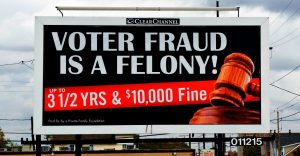
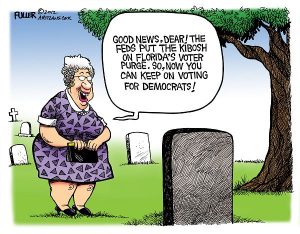
 The Obama administration opposes states verifying citizenship status of registered voters. Inquiries into voter fraud are typically met with derision from both government and the media—and in at least one instance with prosecution. Prosecutors don’t prioritize voter fraud, while convictions only garner light sentences.
 Some recent cases cited by the panelists demonstrate the reality of voter fraud.

 Federal lawmakers seeking to pinpoint the number of illegal immigrants who successfully sneak across the southern border ordered up a report from the Department of Homeland Security, but the agency refuses to release it and instead cites a misleading statistic that overstates the number who are nabbed, sources told Fox News.
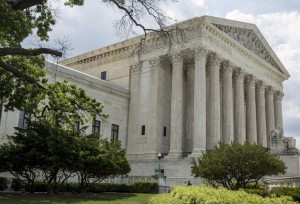 Sen. Chuck Schumer has reminded us just how important the upcoming presidential election will be in shaping the federal judiciary, calling getting a progressive Supreme Court his “number one goal.”
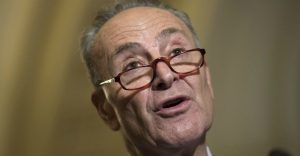 As Roll Call reported, Schumer “predicted that the Shelby County decision on voting rights would be overturned by a Supreme Court with the kind of progressive justices he would prioritize confirming as majority leader.”
 Moments ago, Democratic presidential candidate Hillary Clinton suddenly left 9/11 ceremonies at Ground Zero in New York City, stumbling to the curb to await her motorcade to arrive. Police sources say Mrs. Clinton seemed to be suffering from some kind of “medical episode.” Witnesses say she stumbled off the curb and appeared to fa
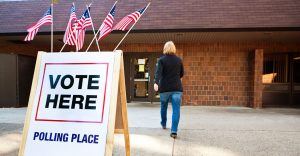 With the presidential election two months away, a Kansas law requiring voters to show proof of citizenship remains in legal limbo.
 The ACLU lawsuit specifically targets the issue of Kansas’ requiring proof of citizenship from those registering to vote at the DMV.
 But the ACLU counters that, under the Kansas proof of citizenship law, people who register to vote at the DMV are not always told that they have to provide additional paperwork to get on the voter rolls. These people only learn later on—after they thought they had reg
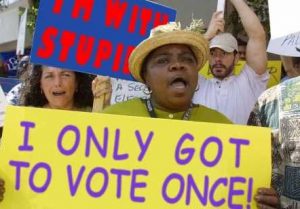 Kobach said he expects a decision from the 10th Circuit Court of Appeals before the Nov. 8 presidential election. Even if a decision comes close to the election, he says, his state has contingency plans no matter the ruling.
 Phyllis Schlafly, the iconic pro-family activist who rose to fame in the 1970s when she campaigned against the Equal Rights Amendment, has died at age 92, according to the Eagle Forum, the conservative organization she founded.
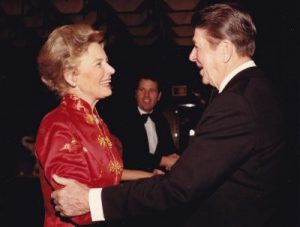 “Her focus from her earliest days until her final ones was protecting the family, which she understood as the building block of life,” read the statement. “She recognized America as the greatest political embodiment of those values. From military superiority and defense to immigration and trade; from unborn life to the nuclear family and parenthood, Phyllis Schlafly was a courageous and articulate voice for common sense and traditional values.”
 Moviegoers have attended American theaters over the past five years and watched three movies produced by conservative writer and producer, Dinesh D’Souza: 2016: Obama’s America (2012); America: Imagine The World Without Her (2014); and now, Hillary’s America: The Secret History Of The Democratic Party (2016).
 Because Presidential hopeful Donald Trump is seeking to educate Blacks and minorities about Democrat party exploitation, and has begun spreading his message that their policies have been destructive to Blacks and other minorities, it occurs to me that broadcasting D’Souza’s latest cinematic work might have immediate and far reaching benefits in spreading that message.
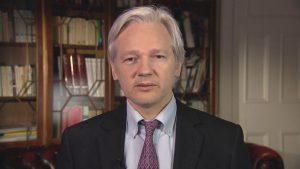 In back-to-back interviews with Fox News, Wikileaks founder Julian Assange criticized the U.S. media for “incredible politicization” in its coverage of the presidential election, and vowed there are more shoes to drop before the Nov. 8 vote.
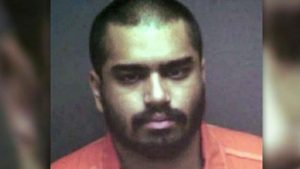 Federal authorities are investigating a weekend stabbing in Virginia to see whether the attacker may have been trying to behead a victim and whether the attack was inspired by the Islamic State terror group.
 Did you know that 64 people were hacked to death by Islamist Terrorists this week in the Congo?
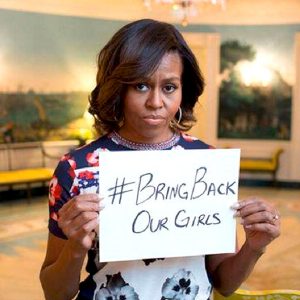 And hey–whatever happened to those hundreds of kidnapped school girls in Nigeria–taken to be sold off as young wives and sex slaves of Islamic Terrorists (cashing in on their promised virgins a little early)? Remember Michelle Obama’s #BringBackOurGirls campaign? If so, you’re the only one, because Michell and Barack haven’t mentioned a word about them in quite a while.
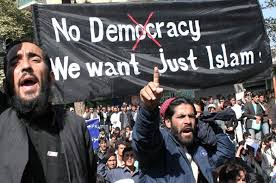 Here is the problem with these kinds of poll results. If these number hold true throughout the global Muslim population, 13 percent of the 1.6 billion Muslims in the world leaves us with approximately 208 million Muslims who support violent jihad.
 Guns are a tricky topic. Very rarely do you find voters ambivalent about gun violence, gun safety, etc. Someone is either strongly pro-gun rights or pro-gun control, which makes a civil conversation difficult to start or maintain. But the solution isn’t to avoid the topic.
 Shortly after Hillary Clinton left the Obama administration, the State Department quietly took steps to purchase real estate in Nigeria from a firm whose parent company is owned by a major donor to the Clinton Foundation, records obtained by Fox News show.
 WikiLeaks founder Julian Assange implied in an interview that a murdered Democratic National Committee staffer was the source of a trove of damaging emails the rogue website posted just days before the party’s convention.
 Speaking exclusively to Breitbart News, political polling pioneer Pat Caddell said the Reuters news service was guilty of an unprecedented act of professional malpractice after it announced Friday it has dropped the “Neither” option from their presidential campaign tracking polls and then went back and reconfigured previously released polls to present different results with a reinterpretation of the “Neither” responses in those polls.
Let’s concede at the outset that many students find their college years enlightening and enriching. But something is rotten in the state of academia, and it is increasingly hard not to notice.
Harvard’s former president, Derek Bok, mildly broke ranks with the academic cheerleaders when he noted that, for all their many benefits, colleges and universities “accomplish far less for their students than they should.” Too many graduates, he admitted, leave school with the coveted and expensive credential “without being able to write well enough to satisfy employers … [or] reason clearly or perform competently in analyzing complex, nontechnical problems.”
Bok noted that few undergraduates can understand or speak a foreign language; most never take courses in quantitative reasoning or acquire “the knowledge needed to be a reasonably informed citizen in a democracy.” Despite the massive spending on the infrastructure of higher education, he conceded, it was not at all clear that students actually learned any more than they did 50 years ago.