• Home
  • Mission
  • Federalist Papers
  • Foundation
  • U.S. Constitution
  • Bill of Rights

Federalist Press | Defending Liberty — Informing America

Breaking News and Political Commentary

  • All Stories
  • Economy
  • Elections
  • Entitlement
  • Ethics
  • Foreign
  • Gender
  • Religion
  • Sci-Tech

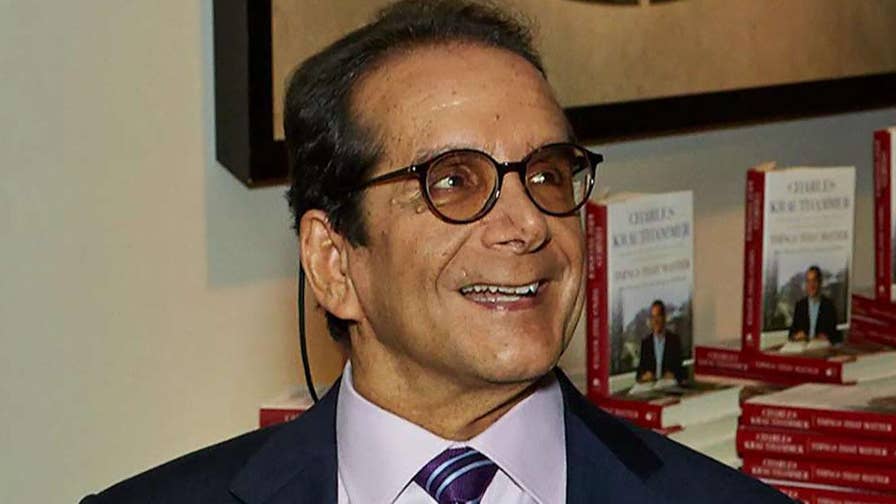
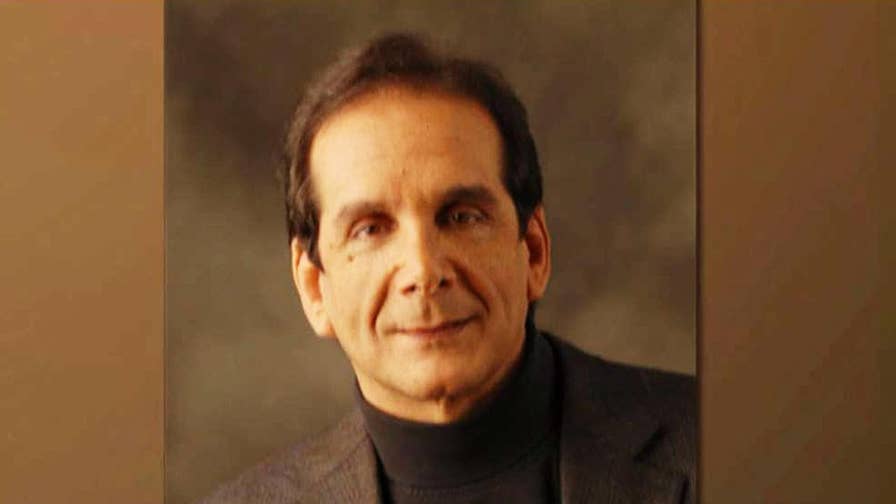
Charles Krauthammer Reveals He Has Only Weeks to Live

June 8, 2018 By Editor 1 Comment

Charles Krauthammer, the beloved and brilliant Fox News Channel personality who gave up a pioneering career in psychiatry to become a Pulitzer Prize-winning political analyst, on Friday revealed the heartbreaking news that he is in the final stages of a losing battle with cancer.

The 68-year-old’s incisive takes on politics of the day have been missing from Fox News Channel’s “Special Report” for nearly a year as he battled an abdominal tumor and subsequent complications, but colleagues and viewers alike had held out hope that he would return to the evening show he helped establish as must-viewing. But in an eloquent, yet unblinking letter to co-workers, friends and Fox News Channel viewers, Krauthammer disclosed that he has just weeks to live.

“I have been uncharacteristically silent these past ten months,” the letter began. “I had thought that silence would soon be coming to an end, but I’m afraid I must tell you now that fate has decided on a different course for me.”

[pullquote]This is the final verdict. My fight is over.[/pullquote]

Krauthammer, who graduated from Harvard Medical School in 1975 despite a first-year diving accident that left him a quadriplegic, explained that he had a malignant tumor removed from his abdomen last August. Although a series of setbacks left him in the hospital in the ensuing months, he believed until recently that he was on the road to recovery.

“However, recent tests have revealed that the cancer has returned,” Krauthammer wrote. “There was no sign of it as recently as a month ago, which means it is aggressive and spreading rapidly. My doctors tell me their best estimate is that I have only a few weeks left to live. This is the final verdict. My fight is over.”

Fox News viewers will undoubtedly miss Krauthammer’s formidable intellect and ability to analyze politics and politicians with a cerebral wit and keen charm. As the dean of “The Fox News All Stars,” the panel of pundits who break down headlines and events nightly on Fox News Channel’s top-rated “Special Report,” Krauthammer could be counted on to make viewers think, question and even chuckle.

Krauthammer was on his way to greatness in the medical field when he veered first into policy, and then into journalism. After medical school, he became chief psychiatry resident at Massachusetts General Hospital, where he studied depression and published ground-breaking findings in top medical journals. But in 1978, he took a job in the Carter administration directing planning in psychiatric research and later served as a speech writer for Vice President Walter Mondale.

It was in the nation’s capital that Krauthammer trained his mind and talents on political analysis and began penning columns for The New Republic, Time magazine and finally the Washington Post. In 1985, he won journalism’s top prize for his weekly political commentary. In his sobering farewell, Krauthammer said he is “grateful to have played a small role in the conversations that have helped guide this extraordinary nation’s destiny.”

“I leave this life with no regrets,” Krauthammer wrote. “It was a wonderful life – full and complete with the great loves and great endeavors that make it worth living. I am sad to leave, but I leave with the knowledge that I lived the life that I intended.”

By Greg Wilson

Filed Under: All Stories, Economy, Elections, Entitlement, Ethics, Foreign, Gender, Religion, Sci-Tech

Massive Mars Discovery: Organic Molecules Found by NASA Rover

June 7, 2018 By Editor Leave a Comment

NASA’s Curiosity Mars rover has found organic molecules on Mars, the space agency revealed in a major announcement Thursday

During a press conference at NASA’s Goddard Space Flight Center in Goddard, Md., and NASA’s Jet Propulsion Laboratory in Pasadena, Calif., scientists noted that the molecules provide fresh insight into the Red Planet.

“We found organic molecules in rocks from an ancient lake bed,” explained Jen Eigenbrode, research scientist at Goddard. A variety of molecules were identified, she added.

While NASA was at pains to explain that it has not discovered life on Mars, the organic molecules could provide vital clues.

“Organic compounds are fundamental to our search for life,” said Paul Mahaffy, director of the Solar System Exploration Division at
Goddard.

Described as the most technologically advanced rover ever built, Curiosity launched on Nov. 6 2011. The rover landed on Mars’ Gale Crate on Aug. 6 2012 with the goal of determining whether Mars was ever able to support microbial life.

Eigenbrode explained that the organic molecules found on Mars are not specific evidence of life. “They could have come from things that are non-biological,” she said.

The rover has already delivered some important scientific results. In 2013, for example, analysis of a rock sample collected by the vehicle showed that ancient Mars could have supported living microbes. In 2014 the rover measured a tenfold spike in methane, an organic chemical, in the atmosphere around it. The robotic laboratory also detected other organic molecules in a rock-powder sample collected by its drill.

Space.com reports that Curiosity recently began drilling on the Martian surface for the first time in 18 months. The rover is climbing Mount Sharp, a 3-mile-high mountain in the center Gale Crater, according to Space.com.

Mars looms ever larger in America’s space future. On May 5, NASA launched its InSight Mars lander on a 7-month journey to the red planet. The mission, which is managed by NASA’s Jet Propulsion Laboratory, will provide scientists with a wealth of data.

NASA’s long-term goal is to send a manned mission to Mars in the 2030s. However, former astronaut Buzz Aldrin thinks that a slightly later target date of 2040 is more realistic. In an interview in 2016, the Gemini 12 and Apollo 11 astronaut told Fox News that by 2040, astronauts could have visited Mars’ moon Phobos, which could serve as a sort of stepping stone to the Red Planet.

Other NASA missions to Mars are also planned, although the heat shield for the agency’s 2020 Mars Rover recently cracked during tests. Officials say that the incident won’t affect the mission’s 2020 launch date, according to Space.com. The six-wheeled robot is expected to arrive on Mars in 2021.

Earlier this year, NASA announced a project to build robotic bees capable of flying on Mars.

NASA’s Mars Reconnaissance Orbiter also celebrated 12 years at the Red Planet this year.

Private space company SpaceX is also working to reach Mars. Speaking at the South by Southwest festival earlier this year, SpaceX CEO Elon Musk said that he expects to see test flights of the firm’s Mars spacecraft next year.


Fox News’ Chris Ciaccia contributed to the article. Follow James Rogers on Twitter @jamesjrogers

Filed Under: All Stories, Economy, Elections, Entitlement, Ethics, Foreign, Religion, Sci-Tech

Supreme Court Sides with Colorado Baker who Refused to Make Gay Wedding Cake – 7/2 Decision

June 4, 2018 By Editor Leave a Comment

The Supreme Court ruled Monday in favor of a Colorado baker who refused to make a wedding cake for a same-sex couple, in one of the most closely watched cases of the term.

In a 7-2 decision, the justices set aside a Colorado court ruling against the baker — while stopping short of deciding the broader issue of whether a business can refuse to serve gay and lesbian people. The opinion was penned by Justice Anthony Kennedy, who is often the swing justice in tight cases.

The narrow ruling here focused on what the court described as anti-religious bias on the Colorado Civil Rights Commission when it ruled against baker Jack Phillips.

“The Commission’s hostility was inconsistent with the First Amendment’s guarantee that our laws be applied in a manner that is neutral toward religion,” Kennedy wrote in his majority opinion.

READ THE DECISION

The court said the broader issue, though, “must await further elaboration.”

Baker Jack Phillips

Baker Jack Phillips had refused to bake a wedding cake for a gay couple.  (Alliance Defending Freedom)

“The reason and motive for the baker’s refusal were based on his sincere religious beliefs and convictions. The Court’s precedents make clear that the baker, in his capacity as the owner of a business serving the public, might have his right to the free exercise of religion limited by generally applicable laws,” Kennedy wrote. “Still, the delicate question of when the free exercise of his religion must yield to an otherwise valid exercise of state power needed to be determined in an adjudication in which religious hostility on the part of the State itself would not be a factor in the balance the State sought to reach.”

At issue was a July 2012 encounter. At the time, Charlie Craig and David Mullins of Denver visited Masterpiece Cakeshop to buy a custom-made wedding cake. Phillips refused his services when told it was for a same-sex couple. The state civil rights commission sanctioned Phillips after a formal complaint from the gay couple.

Mullins has described their case as symbolizing “the rights of gay people to receive equal service in business … about basic access to public life.”

But the Trump administration backed Phillips, who was represented in court by the Alliance Defending Freedom, a conservative Christian nonprofit. He had lost at every step in the legal appeals process, bringing the case down to the Supreme Court’s decision Monday.

Phillips has said he lost business and had to let employees go because of the controversy.

And he has maintained that it’s his choice: “It’s not about turning away these customers, it’s about doing a cake for an event — a religious sacred event — that conflicts with my conscience,” he said last year.

The court in December specifically examined whether applying Colorado’s public accommodations law to compel the local baker to create commercial “expression” violated his constitutionally protected Christian beliefs about marriage.

By wading again into the culture wars, the justices had to confront recent decisions on both gay rights and religious liberty: a 2015 landmark opinion legalizing same-sex marriage nationwide and a separate 2014 decision affirming the right of some companies to act on their owner’s faith by refusing to provide contraception to its workers.

The Trump administration agreed with Phillips’ legal claims to a large extent. Attorney General Jeff Sessions in October issued broad guidance to executive branch agencies, reiterating the government should respect religious freedom, which in the Justice Department’s eyes extends to people, businesses and organizations.

But civil rights groups were concerned the conservative majority on the court may be ready to peel back protections for groups with a history of enduring discrimination – and predicted that giving businesses the right to refuse service to certain customers would undermine non-discrimination laws and hurt minorities.

When the justices heard arguments in December, Kennedy was plainly bothered by certain comments by a commission member. The commissioner seemed “neither tolerant nor respectful of Mr. Phillips’ religious beliefs,” Kennedy said in December.

Liberal justices Stephen Breyer and Elena Kagan joined the conservative justices in the outcome. Kagan wrote separately to emphasize the limited ruling.

But Justices Ruth Bader Ginsburg and Sonia Sotomayor dissented.

“I see no reason why the comments of one or two Commissioners should be taken to overcome Phillips’ refusal to sell a wedding cake to Craig and Mullins,” Ginsburg wrote.

FoxNews.com/The Associated Press contributed to this report. 

Filed Under: All Stories, Economy, Elections, Entitlement, Ethics, Gender, Religion, Sci-Tech

“Collusion Against Trump” Timeline

May 22, 2018 By Editor Leave a Comment


By Sharyl Attkisson


It’s easy to find timelines that detail Trump-Russia collusion developments. Here are links to two of them I recommend:

Politifact Russia-Trump timeline

Washington Post Russia-Trump timeline

On the other side, evidence has emerged in the past year that makes it clear there were organized efforts to collude against candidate Donald Trump–and then President Trump. For example:

  • Anti-Russian Ukrainians allegedly helped coordinate and execute a campaign against Trump in partnership with the Democratic National Committee and news reporters.
  • A Yemen-born ex-British spy reportedly delivered political opposition research against Trump to reporters, Sen. John McCain, and the FBI; the latter of which used the material–in part–to obtain wiretaps against one or more Trump-related associates.
  • There were orchestrated leaks of anti-Trump information and allegations to the press, including by ex-FBI Director James Comey.
  • The U.S. intel community allegedly engaged in questionable surveillance practices and politially-motivated “unmaskings” of U.S. citizens, including Trump officials.
  • Alleged conflicts of interests have surfaced regarding FBI officials who cleared Hillary Clinton for mishandling classified information and who investigated Trump’s alleged Russia ties.

But it’s not so easy to find a timeline pertinent to the investigations into these events.

Here’s a work in progress.

(Please note that nobody cited has been charged with wrongdoing or crimes, unless the charge is specifically referenced. Temporal relationships are not necessarily evidence of a correlation.)

“Collusion against Trump” Timeline

2011

U.S. intel community vastly expands its surveillance authority, giving itself permission to spy on Americans who do nothing more than “mention a foreign target in a single, discrete communication.” Intel officials also begin storing and entering into a searchable database sensitive intelligence on U.S. citizens whose communications are accidentally or “incidentally” captured during surveillance of foreign targets. Prior to this point, such intelligence was supposed to be destroyed to protect the constitutional privacy rights the U.S. citizens. However, it’s required that names U.S. citizens be hidden or “masked” –even inside U.S. intel agencies –to prevent abuse.

2012

July 1, 2012: Secretary of State Hillary Clinton improperly uses unsecured, personal email domain to email President Obama from Russia.

2013

June 2013: FBI interviews U.S. businessman Carter Page, who’s lived and worked in Russia, regarding his ongoing contacts with Russians. Page reportedly tells FBI agents their time would be better spent investigating Boston Marathon bombing (which the FBI’s Andrew McCabe helped lead). Page later claims his remark prompts FBI retaliatory campaign against him. The FBI, under McCabe, will later wiretap Page after Page becomes a Donald Trump campaign adviser.

FBI secretly records suspected Russian industrial spy Evgeny Buryakov. It’s later reported that Page helped FBI build the case.

Sept. 4, 2013: James Comey becomes FBI Director, succeeding Robert Mueller.

2014

Russia invades Ukraine. Ukraine steps up hiring of U.S. lobbyists to make its case against Russia and obtain U.S. aid. Russia also continues its practice of using U.S. lobbyists.

Ukraine forms National Anti-Corruption Bureau as a condition to receive U.S. aid. The National Anti-Corruption Bureau later signs evidence-sharing agreement with FBI related to Trump-Russia probe.

Ukrainian-American Alexandra Chalupa, a paid consultant for the Democratic National Committee (DNC), begins researching lobbyist Paul Manafort’s Russia ties.

FBI investigates, and then wiretaps, Paul Manafort for allegedly not properly disclosing Russia-related work. FBI fails to make a case, according to CNN, and discontinues wiretap.

August 2014: State Dept. turns over 15,000 pages of documents to Congressional Benghazi committee, revealing former secretary of state Hillary Clinton used private server for government email. Her mishandling of classified info on this private system becomes subject of FBI probe.

2015

FBI opens investigation into Virginia governor Terry McAuliffe, including for donations from a Chinese businessman and Clinton Foundation donor.

FBI official Andrew McCabe meets with Gov. McAuliffe, a close Clinton ally. Afterwards, “McAuliffe-aligned political groups donated about $700,000 to Mr. McCabe’s wife…for her campaign to become a Democrat state Senator in Virginia.” The fact of the McAuliffe-related donations to wife of FBI’s McCabe—while FBI was investigating McAuliffe and Clinton—later becomes the subject of conflict of interest inquiry by Inspector General.

Feb. 9, 2015: U.S. Senate forms Ukrainian caucus to further Ukrainian interests. Sen. John McCain (R-Ariz.) is a member.

March 4, 2015: New York Times breaks news about Clinton’s improper handling of classified email as secretary of state.

In internal emails, Clinton campaign chairman (and former Obama adviser) John Podesta suggests Obama withhold Clinton’s emails from Congressional Benghazi committee under executive privilege.

March 2015: Attorney General Loretta Lynch privately directs FBI Director James Comey to call FBI Clinton probe a “matter” rather than an “investigation.” Comey follows the instruction, though he later testifies that it made him “queasy.”

March 7, 2015: President Obama says he first learned of Clinton’s improper email practices “through news reports.” Clinton campaign staffers privately contradict that claim emailing: “…it looks like [President Obama] just said he found out [Hillary Clinton] was using her personal email when he saw it on the news.” Clinton aide Cheryl Mills responds, “We need to clean this up—[President Obama] has emails from” Clinton’s personal account.

May 19, 2015: Justice Dept. Assistant Attorney General for Legislative Affairs Peter Kadzik emails Clinton campaign chairman John Podesta from a private Gmail account to give him a “heads ups” involving Congressional questions about Clinton email.

Summer 2015: Democratic National Committee computers are hacked.

Sept. 2015: Glenn Simpson, co-founder of political opposition research firm Fusion GPS, is hired by conservative website Washington Free Beacon to compile negative research on presidential candidate Donald Trump and other Republicans.

Oct. 2015: President Obama uses a “confidentiality tradition” to keep his Benghazi emails with Hillary Clinton secret.

Oct. 12, 2015: FBI Director Comey replaces head of FBI Counterintelligence Division at New York Field Office with Louis Bladel.

Oct. 22, 2015: Rep. Adam Schiff (D-Calif.) publicly states that Clinton is “not under criminal investigation.”

Clinton testifies to House Benghazi committee.

Oct. 23, 2015: Clinton campaign chair John Podesta meets for dinner with small group of friends including a top Justice Dept. official Peter Kadzik.

Late 2015: Democratic operative Chalupa expands her political opposition research about Paul Manafort to include Trump’s ties to Russia. She “occasionally shares her findings with officials from the Democratic National Committee and the Clinton campaign.”

Dec. 4, 2015: Donald Trump is beating his nearest Republican presidential competitor by 20 points in latest CNN poll.

Dec. 9, 2015: FBI Director Comey replaces head of FBI Counterintelligence Division at Washington Field Office with Charles Kable.

Dec. 23, 2015: FBI Director Comey names Bill Priestap as assistant director of Counterintelligence Division.

2016

Obama officials vastly expand their searches through NSA database for Americans and the content of their communications. In 2013, there were 9,600 searches involving 195 Americans. But in 2016, there are 30,355 searches of 5,288 Americans.

Justice Dept. associate deputy attorney general Bruce Ohr meets with Fusion GPS’ Christopher Steele, the Yemen-born ex-British spy leading anti-Trump political opposition research project.

January 2016: Democratic operative Ukrainian-American Chalupa tells a senior Democratic National Committee official that she feels there’s a Russia connection with Trump.

Jan. 29, 2016: FBI Director Comey promotes Andrew McCabe to FBI Deputy Director.

McCabe takes lead on Clinton probe even though his wife received nearly $700,000 in campaign donations through Clinton ally Terry McAuliffe, who’s also under FBI investigation.

March 2016: Clinton campaign chair John Podesta’s email gets hacked.

FBI interviews Carter Page again.

Carter Page is named as one of the Trump campaign’s foreign policy advisers.

March 2, 2016: FBI Director Comey replaces head of Intelligence Division of Washington Field Office with Gerald Roberts, Jr.

March 11, 2016: Russian Evgeny Buryakovwhich pleads guilty to spying in FBI case that Carter Page reportedly assisted with.

March 25, 2016: Ukrainian-American operative for Democratic National Committee (DNC) Chalupa meets with top Ukrainian officials at Ukrainian Embassy in Washington D.C. to “expose ties between Trump, top campaign aide Paul Manafort and Russia,” according to Politico. Chalupa previously worked for the Clinton administration.

Ukrainian embassy proceeds to work “directly with reporters researching Trump, Manafort and Russia to point them in the right directions,” according to an embassy official (though other officials later deny engaging in election-related activities.)

March 29, 2016: Trump campaign hires Paul Manafort as manager of July Republican convention.

March 30, 2016: Ukrainian-American Democratic operative Alexandra Chalupa briefs Democratic National Committee (DNC) staff on Russia ties to Paul Manafort and Trump.

With “DNC’s encouragement,” Chalupa asks Ukrainian embassy to arrange meeting with Ukrainian President Petro Poroshenko to discuss Manafort’s lobbying for Ukraine’s former president Viktor Yanukovych. The embassy declines to arrange meeting but becomes “helpful” in trading info and leads.

Ukrainian embassy officials and Democratic operative Chalupa “coordinat[e] an investigation with the Hillary team” into Paul Manafort, according to a source in Politico. This effort reportedly includes working with U.S. media.

April 2016: There’s a second breach of Democratic National Committee computers.

Washington Free Beacon breaks off deal with Glenn Simpson’s Fusion GPS for political opposition research against Trump.

Clinton campaign and Democratic National Committee lawyer Mark Elias and his law firm, Perkins Coie, hire Fusion GPS for anti-Trump political research project.

Ukrainian member of parliament Olga Bielkova reportedly seeks meetings with five dozen members of U.S. Congress and reporters including former New York Time reporter Judy Miller, David Sanger of New York Times, David Ignatius of Washington Post, and Washington Post editorial page editor Fred Hiatt.

April 5, 2016: Convicted spy Buryakov is turned over to Russia.

Week of April 6, 2016: Ukrainian-American Democratic operative Chalupa and office of Rep. Mary Kaptur (D-Ohio), co-chair of Congressional Ukrainian Caucus, discuss possible congressional investigation or hearing on Paul Manafort-Russia “by September.”

Chalupa begins working with investigative reporter Michael Isikoff, according to her later account.

April 10, 2016: In national TV interview, President Obama states that Clinton did not intend to harm national security when she mishandled classified emails. FBI Director James Comey later concludes that Clinton should not face charges because she did not intend to harm national security.

Around this time, the FBI begins drafting Comey’s remarks closing Clinton email investigation, though Clinton had not yet been interviewed.

April 12, 2016: Ukrainian parliament member Olga Bielkova and a colleague meet with Sen. John McCain associate David Kramer with the McCain Institute. Bielkova also meets with Liz Zentos of Obama’s National Security Council, and State Department official Michael Kimmage.

April 26, 2016: Investigative reporter Michael Isikoff publishes story on Yahoo News about Paul Manafort’s business dealings with a Russian oligarch.

April 28, 2016: Ukrainian-American Democratic operative Chalupa is invited to discuss her research about Paul Manafort with 68 investigative journalists from Ukraine at Library of Congress for Open World Leadership Center, a U.S. congressional agency. Chalupa invites investigative reporter Michael Isikoff to “connect(s) him to the Ukrainians.”

After the event, reporter Isikoff accompanies Chalupa to Ukrainian embassy reception.

May 3, 2016: Ukrainian-American Democratic operative Chalupa emails Democratic National Committee (DNC) that she’ll share sensitive info about Paul Manafort “offline” including “a big Trump component…that will hit in next few weeks.”

May 4, 2016: Trump locks up Republican nomination.

May 19, 2016: Paul Manafort is named Trump campaign chair.

May 23, 2016: FBI probe into Virginia governor and Clinton ally Terry McAuliffe becomes public. (McAuliffe is ultimately not charged with a crime.)

Justice Department Inspector General confirms it’s looking into FBI’s Andrew McCabe for alleged conflicts of interest in handling of Clinton and Gov. McAuliffe probes in light of McAuliffe directing campaign donations to McCabe’s wife.

FBI officials Lisa Page and Peter Strzok, who are reportedly having an illicit affair, text each other that Trump’s ascension in the campaign will bring “pressure…to finish” Clinton probe.

Nellie Ohr, wife of Justice Dept. associate deputy attorney general Bruce Ohr and former CIA worker, goes on the payroll of Fusion GPS and assists with anti-Trump political opposition research. Her husband, Bruce, reportedly fails to disclose her specific employer and work in his Justice Dept. conflict of interest disclosures.

Nellie Ohr applies for a ham radio license.

June 2016: Fusion GPS’ Glenn Simpson hires Yemen-born ex-British spy Christopher Steele for anti-Trump political opposition research project. Steele uses info from Russian sources “close to Putin” to compile unverified “dossier” later provided to reporters and FBI, which the FBI uses to obtain secret wiretap.

The Guardian and Heat Street report that the FBI applied for a FISA warrant in June 2016 to “monitor four members of the Trump team suspected of irregular contacts with Russian officials” but that the “initial request was denied.” 

June 7, 2016: Hillary Clinton locks up the Democrat nomination.

June 9, 2016: Meeting in Trump Tower includes Donald Trump Jr., Trump campaign chair Paul Manafort and Trump son-in-law Jared Kushner with Russian lawyer who said he has political opposition research on Clinton. (No research was ultimately provided.) According to CNN, the FBI has not yet restarted a wiretap against Manafort but will soon do so.

June 10, 2016: Democratic National Committee (DNC) tells employees that its computer system has been hacked. DNC blames Russia but refuses to let FBI examine its systems.

June 15, 2016: “Guccifer 2.0” publishes first hacked document from Clinton campaign chair John Podesta.

June 17, 2016: Washington Post publishes front page story linking Trump to Russia: “Inside Trump’s Financial Ties to Russia and His Unusual Flattery of Vladimir Putin.”

June 20, 2016: Christopher Steele proposes taking some of Fusion GPS’ research about Trump to FBI.

June 22, 2016: WikiLeaks begins publishing embarrassing, hacked emails from Clinton campaign and Democratic National Committee.

June 27, 2016: Attorney General Loretta Lynch meets privately with former President Bill Clinton on an airport tarmac in Phoenix, Arizona.

Late June 2016: DCLeaks website begins publishing Democratic National Committee emails.

The National Anti-Corruption Bureau of Ukraine signs evidence-sharing agreement with FBI and will later publicly release a “ledger” implicating Paul Manafort in allegedly improper payments.

June 30, 2016: FBI circulates internal draft of public remarks for FBI Director Comey to announce closing of Clinton investigation. It refers to Mrs. Clinton’s “extensive” use of her personal email, including “from the territory of sophisticated adversaries,” and a July 1, 2012 email to President Obama from Russia. The draft concludes it’s possible that hostile actors gained access to Clinton’s email account.

Comey’s remarks are revised to replace reference to “the President” with the phrase: “another senior government official.” (That reference, too, is removed from the final draft.)

Attorney General Lynch tells FBI she plans to publicly announce that she’ll accept whatever recommendation FBI Director Comey makes regarding charges against Clinton.

July 2016: Ukraine minister of internal affairs Arsen Avakov attacks Trump and Trump campaign adviser Paul Manafort on Twitter and Facebook, calling Trump “an even bigger danger to the US than terrorism.”

Former Ukrainian Prime Minister Arseny Yatseniuk writes on Facebook that Trump has “challenged the very values of the free world.”

Carter Page travels to Russia to give a university commencement address. (Fusion GPS political opposition research would later quote Russian sources as saying Page met with Russian officials, which Page denies under oath and is not proven.)

One-time CIA operative Stefan Halper reportedly begins meetings with Trump advisers Carter Page and George Papadopoulos, secretly gathering information for the FBI. These contacts begin prior to the date FBI Director Comey later claimed the Russian investigation began. 

July 1, 2016: Under fire for meeting with former President Clinton amid the probe into his wife, Attorney General Lynch publicly states she’ll accept whatever FBI Director Comey recommends—without interfering.

FBI official Lisa Page texts her boyfriend, FBI official Peter Strzok, sarcastically commenting that Lynch’s proclamation is “a real profile in courage, since she knows no charges will be brought.”

July 2, 2016: FBI official Peter Strzok and other agents interview Clinton. They don’t record the interview. Two potential subjects of the investigation, Cheryl Mills and Heather Samuelson, are allowed to attend as Clinton’s lawyers.

July 5, 2016: FBI Director Comey recommends no charges against Clinton, though he concludes she’s been extremely careless in mishandling of classified information. Comey claims he hasn’t coordinated or reviewed his statement in any way with Attorney General Lynch’s Justice Department or other government branches. “They do not know what I am about to say,” says Comey.

Fusion GPS’ Steele, an ex-British spy, approaches FBI with allegations against Trump, according to Congressional investigators.

Days after closing Clinton case, FBI official Peter Strzok signs document opening FBI probe into Trump-Russia collusion.

July 10, 2016: Democratic National Committee (DNC) aide Seth Rich, reportedly a Bernie Sanders supporter, is shot twice in the back and killed. Police suspect a bungled robbery attempt, though nothing was apparently stolen. Conspiracy theorists speculate that Rich—not the Russians— had stolen DNC emails after he learned the DNC was unfairly favoring Clinton. The murder remains unsolved.

July 2016: Trump adviser Carter Page makes a business trip to Russia.

FISC (Foreign Intelligence Surveillance Court) rejects FBI request to wiretap Page.

Obama national security adviser Susan Rice begins to show increased interest in National Security Agency (NSA) intelligence material including “unmasked” Americans’ identities, according to news reports referring to White House logs.

July 18-21, 2016: Republican National Convention

Late July 2016: FBI agent Peter Strzok opens counterintelligence investigation based on Trump campaign adviser George Papadopoulos.

Democratic operative and Ukrainian-American Chalupa leaves the Democratic National Committee (DNC) to work full-time on her research into Manafort, Trump and Russia; and provides off-the-record guidance to “a lot of journalists.”

July 22, 2016: WikiLeaks begins publishing hacked Democratic National Committee emails. WikiLeaks’ Julian Assange denies the email source is Russian.

July 25-28, 2016: Democratic National Convention

July 31, 2016: FBI begins counterintelligence investigation regarding Russia.

Summer 2016: Nellis Ohr, wife of Justice Dept. associate deputy attorney general Bruce Ohr is still on the payroll of Fusion GPS.

Fusion GPS’ Christopher Steele, a British citizen, briefs FBI leadership on his anti-Trump political opposition research. Weeks later, the info makes it to FBI agent Peter “Strzok and his team,” according to New York Times.

Aug. 4, 2016: Ukrainian ambassador to U.S. writes op-ed against Trump.

Aug. 14, 2016: New York Times breaks story about cash payments made a decade ago to Paul Manafort by pro-Russia interests in Ukraine. The ledger was released and publicized by the National Anti-Corruption Bureau of Ukraine.

Aug. 15, 2016: CNN reports the FBI is conducting an inquiry into Trump campaign chair Paul Manafort’s payments from pro-Russia interests in Ukraine in 2007 and 2009.

After a meeting discussing the election in FBI Deputy Director Andrew McCabe’s office, the FBI’s Lisa Page and Peter Strzok text of needing an “insurance policy” in case Trump is elected.

Aug. 19, 2016: Paul Manafort resigns as Trump campaign chairman.

Ukrainian parliament member Sergii Leshchenko holds news conference to draw attention to Paul Manafort and Trump’s “pro-Russia” ties.

Late August 2016:

Reportedly working for the FBI, one-time CIA operative Professor Halper meets with Trump campaign co-chair Sam Clovis offering his services as a foreign-policy adviser, according to The Washington Post. Halper would later offer to hire Carter Page.

Approx. Aug. 2016: FBI initiates a new wiretap against ex-Trump campaign chair Paul Manafort, according to CNN, which extends at least through early 2017.

Sept. 2016: Fusion GPS’ Steele becomes FBI source and uses associate deputy attorney general Bruce Ohr as point of contact. Steele tells Ohr that he’s “desperate that Donald Trump not get elected.”

President Obama warns Russia not to interfere in the U.S. election

Sept. 2, 2016: FBI officials Lisa Page and Peter Strzok text that “[President Obama] wants to know everything we’re doing.”

Sept. 13, 2016: The nonprofit First Draft, funded by Google, whose parent company is run by major Hillary Clinton supporter and donor Eric Schmidt, announces initiative to tackle “fake news.” It appears to be the first use of the phrase in its modern context.

Sept. 15, 2016: Clinton computer manager Paul Combetta appears before House Oversight Committee but refuses to answer questions, invoking his Fifth Amendment rights.

Sept. 19, 2016: At UN General Assembly meeting, Ukrainian President Poroshenko meets with Hillary Clinton.

Mid-to-late Sept. 2016: Fusion GPS’ Christopher Steele’s FBI contact tells him the agency wants to see his opposition research “right away” and offers to pay him $50,000, according to the New York Times, for solid corroboration of his salacious, unverified claims. Steele flies to Rome, Italy to meet with FBI and provide a “full briefing.”

Sept. 22, 2016: Clinton computer aide Brian Pagliano is held in contempt of Congress for refusing to comply with subpoena.

Sept. 23, 2016: It’s revealed that Justice Department has granted five Clinton officials immunity from prosecution: former chief of staff Cheryl Mills, State Department staffers John Bentel and Heather Samuelson, and Clinton computer workers Paul Combetta and Brian Pagliano.

Yahoo News publishes article by Michael Isikoff about Carter Page’s July 2016 trip to Moscow. (The article is apparently based on leaked info from Fusion GPS Steele anti-Trump “dossier” political opposition research.)

Sept. 26, 2016: Obama administration asks secretive Foreign Intelligence Surveillance Court (FISC) court to allow National Counter Terrorism Center to access sensitive, “unmasked” intel on Americans acquired by FBI and NSA. (The Court later approves the request.)

Sept. 27, 2016: Justice Department Assistant Attorney General of National Security Division John Carlin announces he’s stepping down. He was former chief of staff and senior counsel to former FBI director Robert Mueller.

End of Sept. 2016: Fusion GPS’ Glenn Simpson and Christopher Steele meet with reporters, including New York Times, Washington Post, Yahoo News, the New Yorker and CNN or ABC. One meeting is at office of Democratic National Committee general counsel.

Early October 2016: Fusion GPS’ Christopher Steele, the Yemen-born author of anti-Trump “dossier,” meets in New York with David Corn, Washington-bureau chief of Mother Jones.

According to The Guardian, the FBI submits a more narrowly focused FISA wiretap request to replace one turned down in June to monitor four Trump associates. 

Oct. 3, 2016: FBI seizes computers belonging to Anthony Weiner, who is accused of sexually texting an underage girl. Weiner is married to top Hillary Clinton aide Huma Abedin. FBI learns there are Clinton emails on Weiner’s laptop but waits several weeks before notifying Congress and reopening investigation.

Oct. 4, 2016: FBI Director Comey replaces head of Counterintelligence Division, New York Field Office with Charles McGonigal.

Oct. 7, 2016: Director of National Intelligence James Clapper and Department of Homeland Security issue statement saying Russian government is responsible for hacking Democrat emails to disrupt 2016 election.

Oct. 13, 2016: President Obama gives a speech in support of the crackdown on “fake news” by stating that somebody needs to step in an “curate” information in the “wild, wild West media environment.”

Mid-Oct. 2016: Fusion GPS’ Steele again briefs reporters about Trump political opposition research. The reporters are from the New York Times, the Washington Post, and Yahoo News.

Oct. 16, 2016: Mary McCord is named Assistant Attorney General for Justice Department National Security Division.

Oct. 18, 2016: President Obama advises Trump to “stop whining” after Trump tweeted the election could be rigged. “There is no serious person out there who would suggest somehow that you could even — you could even rig America’s elections,” said Obama. He also calls Trump’s “flattery” of Russian president Putin “unprecedented.”

Oct. 19, 2016: Ex-British spy Christopher Steele writes his last memo for anti-Trump “dossier” political opposition research provided to FBI. The FBI reportedly authorizes payment to Steele. Fusion GPS has reportedly paid him $160,000.

Approx. Oct. 21, 2016: For the second time in several months, Justice Department and FBI apply to wiretap former Trump campaign adviser Carter Page. This time, the request is approved based on new FBI “evidence,” including parts of Fusion GPS’ “Steele dossier” and Michael Isikoff Yahoo article. The FBI doesn’t tell the court that Trump’s political opponent— the Clinton campaign and the Democratic National Committee— funded the “evidence.”

Oct. 24, 2016: Benjamin Wittes, confidant of FBI Director James Comey and editor-in-chief of the blog Lawfare, writes of the need for an “insurance policy” in case Trump wins. It’s the same phrase FBI officials Lisa Page and Peter Strzok had used when discussing the possibility of a Trump win.

Obama intel officials orally inform Foreign Intelligence Surveillance Court of an earlier Inspector General review uncovering their “significant noncompliance” in following proper “702” procedures safeguarding the National Security Agency (NSA) intelligence database with sensitive info on US citizens.

Late Oct. 2016: Fusion GPS’ Steele again briefs reporter from Mother Jones by Skype about Trump political opposition research.

Oct. 26, 2016: Foreign Intelligence Surveillance Court holds hearing with Obama intel officials over their “702” surveillance violations. The judge criticizes NSA for “institutional lack of candor” and states “this is a very serious Fourth Amendment issue.”

Oct. 28, 2016: FBI Director Comey notifies Congress that he’s reopening Clinton probe due to Clinton emails found on Anthony Wiener laptop several weeks earlier.

Oct. 30, 2016: Mother Jones writer David Corn is first to report on the anti-Trump “dossier,” quoting unidentified former spy, presumed to be Christopher Steele. FBI general counsel James Baker had reportedly been in touch with Corn but Corn later denies Baker was the leaker.

FBI terminates its relationship with Steele because Steele had leaked his FBI involvement in Mother Jones article.

Steele reportedly maintains backchannel contact with Justice Dept. through Deputy Associate Attorney General Bruce Ohr.

Oct. 31, 2016: New York Times reports FBI is investigating Trump and found no illicit connections to Russia.

Nov. 6, 2016: FBI Director Comey tells Congress that Clinton emails on Anthony Weiner computer do not change earlier conclusion: she should not be charged.

Nov. 8, 2016: Trump is elected president.

Obama National Security Adviser Susan Rice’s interest in NSA materials accelerates, according to later news reports.

Associate Deputy Attorney General Bruce Ohr meets with Fusion GPS co-founder Glenn Simpson shortly after election.

The FBI interviews Ohr about his ongoing contacts with Fusion GPS.

Nov. 2016: National Security Agency Mike Rogers meets with president-elect Trump and is criticized for “not telling the Obama administration.”

Nov. 17, 2016: Trump moves his Friday presidential team meetings out of Trump Tower.

Nov. 18-20, 2016: Sen. John McCain and his longtime adviser, David Kramer–an ex-U.S. State Dept. official–attend a security conference in Halifax, Nova Scotia where former UK ambassador to Russia Sir Andrew Wood tells them about the Fusion GPS anti-Trump dossier. (Kramer is affiliated with the anti-Russia “Ukraine Today” media organization). They discuss confirming the info has reached top levels of  FBI for action.

Nov. 28, 2016: Sen. McCain associate David Kramer flies to London to meet Christopher Steele for a briefing on the anti-Trump research. Afterward, Fusion GPS’ Glenn Simpson gives Sen. McCain a copy of the “dossier.” Steele also passes anti-Trump info to top UK government official in charge of national security. Sen. McCain soon arranges a meeting with FBI Director Comey.

Late Nov. 2016: Justice Dept. official Bruce Ohr officially tells FBI about his contacts with Fusion GPS’ Christopher Steele and about Ohr’s wife’s contract work for Fusion GPS.

Dec. 2016: Text messages between FBI officials Strzok and Page are later said to be “lost” due to a technical glitch beginning at this point.

Dec. 8 or 9, 2016: Sen. John McCain meets with FBI Director Comey at FBI headquarters and hands over Fusion GPS anti-Trump research, elevating the FBI’s investigation into the matter. The FBI compiles a classified two-page summary and attaches it to intel briefing note on Russian cyber-interference in election for President Obama.

Hillary Clinton makes a pubic appearance denouncing “fake news.”

Hillary Clinton and Democratic operative David Brock of Media Matters announces he’s leaving board of Citizens for Responsibility and Ethics in Washington (CREW), one of his many propaganda and liberal advocacy groups, to focus on “fake news” effort.

Brock later claims credit— privately to of donors— for convincing Facebook to crack down on conservative fake news.

Dec. 15, 2016: Obama intel officials “incidentally” spy on Trump officials meeting with the United Arab Emirates crown prince in Trump Tower. This is taken to mean the government was wiretapping the prince and “happened to capture” Trump officials communicating with him at Trump Tower. Identities of Americans accidentally captured in such surveillance are strictly protected or “masked” inside intel agencies for constitutional privacy reasons.

Obama National Security Adviser Susan Rice secretly “unmasks” names of the Trump officials, officially revealing their identities. They reportedly include: Steve Bannon, Jared Kushner and Lt. Gen. Michael Flynn.

Director of National Intelligence Clapper expands rules to allow the National Security Agency (NSA) to widely disseminate classified surveillance material within the government.

Dec. 29, 2016: President Obama imposes sanctions against Russia for its alleged election interference.

President-elect Trump national security adviser Lt. Gen. Michael Flynn speaks with Russian Ambassador to U.S. Sergey Kislyak. The call is wiretapped by U.S. intelligence and later leaked to the press.

State Department releases 2,800 work-related emails from Huma Abedin, a top aide to Hillary Clinton, found by FBI on laptop computer of Abedin’s husband, former Rep. Anthony Weiner.

2017

Jan. 2017: According to CNN: a wiretap reportedly continues against former Trump campaign chair Paul Manafort, including times he speaks to Trump, meaning U.S. intel officials could have “accidentally” captured Trump’s communications.

Justice Dept. Inspector General confirms it’s investigating several aspects of FBI and Justice Department actions during Clinton probe.

Director of National Intelligence James Clapper testifies to Congress that Russia interfered in U.S. elections by spreading fake news on social media.

Justice Dept. official Peter Kadzik, who “tipped off” Clinton campaign regarding Congressional questions about her email, leaves government work for private practice.

Early Jan. 2017: FBI renews wiretap against Carter Page.

Jan. 3, 2017: Obama Attorney General Lynch signs rules Director of National Intelligence Clapper expanded Dec. 15 allowing the National Security Agency (NSA) to widely disseminate surveillance within the government.

Jan. 5, 2017: Intelligence Community leadership provides classified briefing on alleged Russia hacking during 2016 campaign, according to notes later written by national security adviser Susan Rice.

After briefing, according notes made later by Rice, President Obama convenes Oval Office meeting with her, FBI Director Comey, Vice President Biden and Deputy Attorney General Sally Yates. The “Steele dossier” is reportedly discussed.

Jan. 6, 2017: FBI Director Comey and other Intel leaders meet with President-Elect Trump and his national security team at Trump Tower in New York to brief them on alleged Russian efforts to interfere in the election.

Later, Obama national security adviser Susan Rice would write herself an email stating that President Obama suggested they hold back on providing Trump officials with certain info for national security reasons.

After Trump team briefing, FBI Director Comey meets alone with Trump to “brief him” on Fusion GPS Steele allegations “to alert the incoming President to the existence of this material, even though it was salacious and unverified…” Comey later says Director of National Intelligence Clapper asked him (Comey) to do the briefing personally.

Jan. 10, 2017: The 35-page Fusion GPS anti-Trump “dossier” is leaked to the media and published. It reveals that sources of the unverified info are Russians close to President Putin.

Jan. 12, 2017: Obama administration finalizes new rules allowing NSA to spread certain intel to other U.S. intel agencies without normal privacy protections.

Justice Dept. inspector general announces review of alleged misconduct by FBI Director Comey and other matters related to FBI’s Clinton probe as well as FBI leaks.

Jan. 13, 2017: Senate Intelligence Committee opens investigation into Russia and U.S. political campaign officials.

Jan. 20, 2017: Trump becomes president.

Fifteen minutes after Trump becomes president, former National Security Adviser Susan Rice emails memo to herself purporting to summarize the Jan. 5 Oval Office meeting with President Obama and other top officials. She states that Obama instructed the group to investigate “by the book” and asked them to be mindful whether there were certain things that “could not be fully shared with the incoming administration.”

Jan. 22, 2017: Intel info leaks to Wall Street Journal which reports “US counterintelligence agents have investigated communications” between Trump aide Gen. Michael Flynn and Russia ambassador to the U.S. Kislyak to determine if any laws were violated.

Jan. 24, 2017: Acting Attorney General Sally Yates sends two FBI agents, including Peter Strzok, to the White House to question Gen. Flynn.

Jan. 21, 2017: Acting Attorney General Sally Yates and a high-ranking colleague go to White House to tell counsel Don McGahn that “the underlying conduct that Gen. Flynn had engaged in was problematic in and of itself.”

Jan. 27, 2017: Acting Attorney General Sally Yates again visits the White House.

Jan. 31, 2017: President Trump fires Acting Attorney General Sally Yates after she refuses to enforce his temporary travel ban on Muslims coming into U.S. from certain countries.

Dana Boente becomes Acting Attorney General. (It’s later revealed that Boente signed at least one wiretap application against former Trump adviser Carter Page.)

Feb. 2, 2017: It’s reported that five men employed by House of Representatives Democrats, including leader Debbie Wasserman Schultz (D-Florida), are under criminal investigation for allegedly “accessing House IT systems without lawmakers’ knowledge.” Suspects include three Awan brothers “who managed office information technology for members of the House Permanent Select Committee on Intelligence and other lawmakers.”

Feb. 3, 2017: A Russian tech mogul named in the Steele “dossier” files defamation lawsuits against BuzzFeed in the U.S. and Christopher Steele in the U.K. over the dossier’s claims he interfered in U.S. elections.

Feb. 8, 2017: Jeff Sessions becomes Attorney General and Dana Boente moves to Deputy Attorney General.

Feb. 9, 2017: News of FBI wiretaps capturingTrump national security adviser Lt. Gen. Michael Flynn speaking with Russia’s ambassador is leaked to the press. New York Times and Washington Post report Flynn discussed U.S. sanctions, despite his earlier denials. The Post also reports the FBI “found nothing illicit” in the talks.

Feb. 13, 2017: Washington Post reports Justice Dept. has opened a “Logan Act” violation investigation against Trump national security adviser Lt. Gen. Michael Flynn.

Feb. 14, 2017: New York Times reports that FBI had told Obama officials there was no “quid pro quo” (promise of a deal in exchange for some action) discussed between Gen. Flynn and Russian ambassador Kislyak.

Gen. Flynn resigns, allegedly acknowledging he misled vice president Mike Pence about the content of his discussions with Russia.

Feb. 17, 2017: Washington Post reports that “Flynn told FBI he did not discuss sanctions” with Russia ambassador and that “Lying to the FBI is a felony offense.”

March 1, 2017: Washington Post reports Attorney General Jeff Sessions has met with Russian ambassador twice in the recent past (as did many Democrat and Republican officials). His critics say that contradicts his earlier testimony to Congress.

March 2017: FBI Director James Comey gives private briefings to members of Congress and reportedly says he does not believe Gen. Flynn lied to FBI.

House Intelligence Committee requests list of unmasking requests Obama officials made. The intel agencies do not provide the information, prompting a June 1 subpoena.

March 2, 2017: Attorney General Jeff Sessions recuses himself from Russia-linked investigations.

Rod Rosenstein, the Deputy Attorney General, becomes Acting Attorney General for Russia Probe. It’s later revealed that Rosenstein singed at least one wiretap application against former Trump adviser Carter Page.

March 4, 2017: President Trump tweets: “Is it legal for a sitting President to be ‘wire tapping’ a race for president prior to an election? Turned down by court earlier. A NEW LOW!” and “How low has President Obama gone to tapp my phones during the very sacred election process. This is Nixon/Watergate. Bad (or sick) guy!”

March 10, 2017: Former Congressman Dennis Kucinich, a Democrat, steps forward to support Trump’s wiretapping claim, revealing that the Obama administration intel officials recorded his own communications with a Libyan official in Spring 2011.

March 20, 2017: FBI Director Comey tells House Intelligence Committee he has “no information that supports” the President’s tweets about “alleged wiretapping directed at him by the prior administration. “We have looked carefully inside the FBI,” Comey says. “(T)he answer is the same for the Department of Justice and all its components.”

FBI Director Comey tells Congress there is “salacious and unverified” material in the Fusion GPS dossier used by FBI, in part, to obtain Carter Page wiretap. (Under FBI “Woods Procedures,” only facts carefully verified by the FBI are allowed to be presented to court to obtain wiretaps.)

March 22, 2017: Chairman of House Intelligence Committee Devin Nunes (R-Calif.) publicly announces he’s seen evidence of Trump associates being “incidentally” surveilled by Obama intel officials; and their names being “unmasked” and illegally leaked. Nunes briefs President Trump and holds a news conference. He’s criticized for doing so. An ethics investigation is opened into his actions but later clears him of wrongdoing.

In an interview on PBS, former Obama National Security Adviser Susan Rice responds to Nunes allegations by stating: “I know nothing about this…I really don’t know to what Chairman Nunes was referring.” (She later acknowledges unmasking names of Trump associates.)

March 2017: Sen. Charles Grassley (R-Iowa) writes Justice Dept. accusing Fusion GPS of acting as an agent for Russia—without properly registering—due to its pro-Russia effort to kill a law allowing sanctions against foreign human rights violators. Fusion GPS denies the allegations.

March 24, 2017: Fusion GPS declines to answer Sen. Grassley’s questions or document requests.

March 27, 2017: Former Deputy Asst. Secretary of Defense Evelyn Farkas admits she encouraged Obama and Congressional officials to “get as much information as they can” about Russia and Trump officials before inauguration. “…that’s why you have the leaking,” she told MSNBC.

Early April, 2017: A third FBI wiretap on former Trump campaign aide Carter Page is approved.

April 3, 2017: Multiple news reports state that Obama National Security Adviser Susan Rice had requested and reviewed “unmasked” intelligence on Trump associates whose information was “incidentally” collected by intel agencies.

April 4, 2017: Obama former National Security Adviser Rice admits, in an interview, that she asked to reveal names of U.S. citizens previously masked in intel reports. She says her motivations were not political. When asked if she leaked names, Rice states, “I leaked nothing to nobody.”

April 6, 2017: House Intelligence Committee Chairman Devin Nunes recuses himself from Russia part of his committee’s investigation.

April 11, 2017: FBI Director Comey appoints Stephen Laycock as special agent in charge of Counterintelligence Division for Washington Field Office.

Washington Post reports FBI secretly obtained wiretap against Trump campaign associate Carter Page last summer. (Later, it’s revealed the summer wiretap had been turned down, but a subsequent application was approved in October.)

April 20, 2017: Acting Assistant Attorney General Mary McCord resigns as acting head of Justice Dept. National Security Division. She’d led probes of Russia interference in election and Trump-Russia ties.

April 28, 2017: Dana Boente is appointed acting assistant attorney general for national security division to replace Mary McCord. (Boente has signed one of the questioned wiretap applications for Carter Page.)

National Security Agency (NSA) submits remedies for its egregious surveillance violations (revealed last October) to Foreign Intelligence Surveillance Court promising to “no longer collect certain internet communications that merely mention a foreign intelligence target.” The NSA also begins deleting collected data on U.S. citizens it had been storing.

May 3, 2017: FBI Director Comey testifies he’s “mildly nauseous” at the idea he might have affected election with the 11th hour Clinton email notifications to Congress.

Comey also testifies he’s “never” been an anonymous news source on “matters relating to” investigating the Trump campaign.

Obama’s former national security adviser Susan Rice declines Republican Congressional request to testify at a hearing about unmaskings and surveillance.

May 8, 2017: Former acting Attorney General Sally Yates and former Director of National Intelligence James Clapper testify to Congress. They admit having reviewed “classified documents in which Mr. Trump, his associates or members of Congress had been unmasked,” and possibly discussing it with others under the Obama administration.

May 9, 2017: President Trump fires FBI Director James Comey. Andrew McCabe becomes acting FBI Director.

May 12, 2017: Benjamin Wittes, confidant of ex-FBI Director James Comey and editor in chief of Lawfare, contacts New York Times reporter Mike Schmidt to leak conversations he’d had with Comey as FBI Director that are critical of President Trump.

May 16, 2017: New York Times publishes leaked account of FBI memoranda recorded by former FBI Director James Comey. Comey later acknowledges engineering the leak of the FBI material through his friend, Columbia Law School professor Daniel Richman, to spur appointment of special counsel to investigate President Trump.

Trump reportedly interviews, but passes over, former FBI Director Robert Mueller for position of FBI Director.

May 17, 2017: Deputy Attorney General Rod Rosenstein appoints Robert Mueller as Special Counsel, Russia-Trump probe. Mueller and former FBI Director Comey are friends and worked closely together in previous Justice Dept. and FBI positions.

The gap of missing text messages between FBI officials Peter Strzok and Lisa Page ends. The couple is soon assigned to the Mueller team investigating Trump.

May 19, 2017: Anthony Wiener, former Congressman and husband of Hillary Clinton confidant Huma Abedin, turns himself in to FBI in case of underage sexting; his third major kerfuffle over sexting in six years.

June 1, 2017: House Intelligence Committee issues 7 subpoenas, including for information related to unmaskings requested by ex-Obama officials national security adviser Susan Rice, former CIA Director John Brennan, and former U.S. ambassador to the U.N. Samantha Power.

June 8, 2017: Former FBI Director James Comey admits having engineered leak of his own memo to New York Times to spur appointment of a special counsel to investigate President Trump.

June 20, 2017: Acting FBI Director Andrew McCabe names Philip Celestini as Special Agent in Charge of the Intelligence Division, Washington Field Office.

Late June, 2017: FBI renews wiretap against Carter Page for the fourth and final time that we know of. It lasts through late Sept.  2017. (Page is never ultimately charged with a crime.)

Late July, 2017: FBI reportedly searches Paul Manafort’s Alexandria, Virginia home.

Summer 2017: FBI lawyer Lisa Page is reassigned from Mueller investigation. Her boyfriend, FBI official Peter Strzok is removed from Mueller investigation after the Inspector General discovers compromising texts between Strzok and Page. Congress is not notified of the developments.

Aug. 2, 2017: Christopher Wray is named FBI Director.

August 2017: Ex-FBI Director Comey signs a book deal for a reported $2 million.

Sept. 13, 2017: Under questioning from Congress, Obama’s former National Security Adviser Susan Rice reportedly admits having requested to see the protected identities of Trump transition officials “incidentally” captured by government surveillance.

Approx. Oct. 10, 2017: Former Trump campaign adviser George Papadopoulos pleads guilty to lying to FBI about his unsuccessful efforts during the campaign to facilitate meetings between Trump officials and Russian officials.

Oct. 17, 2017: Obama’s former U.N. Ambassador Samantha Power reportedly tells Congressional investigators that many of the hundreds of “unmasking” requests in her name during the election year —were not made by her.

Oct. 24, 2017: Congressional Republicans announce new investigations into a 2010 acquisition that gave Russia control of 20% of U.S. uranium supply while Clinton was secretary of state; and FBI decision not to charge Clinton in classified info probe.

Oct. 30, 2017: Special Counsel Mueller charges ex-Trump campaign manager Paul Manafort and business associate Rick Gates with tax and money laundering crimes related to their foreign work. The charges do not appear related to Trump.

Nov. 2, 2017: Carter Page testifies to House Intelligence committee under oath without an attorney and asks to have the testimony published. He denies ever meeting the Russian official that Fusion GPS claimed he’d met with in July 2016.

Nov. 5, 2017: Special Counsel Robert Mueller files charges against ex-Trump national security adviser Lt. Gen. Michael Flynn for allegedly lying to FBI official Peter Strzok about contacts with Russian ambassador during presidential transition.

Dec. 1, 2017: Former national security adviser Gen. Flynn pleads guilty of lying to the FBI.

James Rybicki steps down as chief of staff to FBI Director.

Dec. 6, 2017: Associate Deputy Attorney General Bruce Ohr is reportedly stripped of one of his positions at Justice Dept. amid controversy over his and his wife’s role in anti-Trump political opposition research.

Dec. 7, 2017: FBI Director Wray incorrectly testifies that there have been no “702” surveillance abuses by the government.

Dec. 19, 2017: FBI Deputy Director Andrew McCabe repeatedly testifies that the wiretap against Trump campaign official Carter Page would not have been approved without the Fusion GPS info. FBI general counsel James Baker, who is himself subject of an Inspector General probe over his alleged leaks to the press, attends as McCabe’s attorney. McCabe acknowledges that if Baker had met with Mother Jones reporter David Corn, it would have been inappropriate.

FBI general counsel James Baker is reassigned amid investigation into his alleged anti-Trump related contacts with media.

2018

Jan. 4, 2018: Sen. Charles Grassley (R-Iowa) and Sen. Lindsey Graham (R-S.C.) refer criminal charges against Christopher Steele to the FBI for investigation. There’s an apparent conflict of interest with the FBI being asked to investigate Steele since the FBI has used Steele’s controversial political opposition research to obtain wiretaps.

Jan. 8, 2018: Justice Dept. official Bruce Ohr loses his second title at the agency.

Jan. 10, 2018: Donald Trump lawyer Michael Cohen files defamation suits against Fusion GPS and BuzzFeed News for publishing the “Steele dossier” which he says falsely claimed he met Russian government officials in Prague, Czech Republic, in August of 2016.

Jan. 11, 2018: House of Representatives approves government’s controversial “702” wireless surveillance authority. The Senate follows suit.

Jan. 19, 2018: Justice Dept. produces to Congress some text messages between FBI officials Lisa Page and Peter Strzok but states that FBI lost texts between December 14, 2016 and May 17, 2017 due to a technical glitch.

President Trump signs six-year extension of “702” wireless surveillance authority.

Jan. 23, 2018: Former FBI Director Comey friend who leaked on behalf of Comey to New York Times to spur appointment of special counsel is now Comey’s attorney.

Jan. 25, 2018: Justice Dept. Inspector General notifies Congress it has recovered missing text messages between FBI officials Lisa Page and Peter Strzok.

Jan. 27, 2018: Edward O’Callaghan is named Acting Assistant Attorney General, National Security Division.

Jan. 29, 2018: Andrew McCabe steps down as Deputy FBI Director ahead of his March retirement.

Jan. 30, 2018: News reports allege that Justice Department Inspector General is looking into why FBI Deputy Director Andrew McCabe appeared to wait three weeks before acting on new Clinton emails found right before the election.

Feb. 2, 2018: House Intelligence Committee (Nunes) Republican memo is released. It summarizes classified documents revealing for the first time that Fusion GPS political opposition research was used, in part, to justify Carter Page wiretap; along with Michael Isikoff Yahoo News article based on the same opposition research.

Memo also states that Fusion GPS set up back channel to FBI through Nellie Ohr, who conducted opposition research on Trump and passed it to her husband, associate deputy attorney general Bruce Ohr.

Feb. 7, 2018: Justice Department official David Laufman, who helped oversee the Clinton and Russia probes, steps down as chief of National Security Division’s Counterintelligence and Export Control Section.

Feb. 9, 2018: Former FBI Director Comey assistant Josh Campbell leaves FBI for job at CNN.

Justice Department Associate Attorney General, Office of Legal Policy, Rachel Brand, resigns.

Feb. 16, 2018: Special counsel Mueller obtains guilty plea from a Dutch attorney for lying to federal investigators about the last time he spoke to Rick Gates regarding a 2012 project related to Ukraine. The plea does not appear to relate to 2016 campaign or Trump. The Dutch attorney is married to the daughter of a Russian oligarch who’s suing Buzzfeed and Christopher Steele for alleged defamation in the “dossier.”

Feb. 22, 2018: Former State Dept. official and Sen. John McCain associate David Kramer invokes his Fifth Amendment right not to testify before House Intelligence Committee. Kramer reportedly picked up the anti-Trump political opposition research in London and delivered it to Sen. McCain who delivered it to the FBI.

Special counsel Mueller files new charges against former Trump campaign manager Paul Manafort and former campaign aide Rick Gates, accusing them of additional tax and bank fraud crimes. The allegations appear to be unrelated to Trump.

Fri. Feb. 23, 2018: Former Trump campaign aide Rick Gates, pleads guilty to conspiracy and lying to investigators (though he issues a statement saying he’s innocent of the indictment charges). The allegations and plea have no apparent link to Trump-Russia campaign collusion.

Sat. Feb. 24, 2018: Democrats on House Intel Committee release their rebuttal memo to the Republican version that summarized alleged FBI misconduct re: using the GPS Fusion opposition research to get wiretap against Carter Page.

March 12, 2018: House Intelligence Committee closes Russia-Trump investigation with no evidence of collusion.

Fri. March 16, 2018: Attorney General Jeff Sessions fires Deputy FBI Director Andrew McCabe, based on recommendation from FBI ethics investigators.

Thurs. March 22, 2018: President Trump announces plans to replace National Security Adviser H.R. McMaster with former U.S. Ambassador to the U.N. John Bolton.

House Judiciary Committee issues subpoenas to Department of Justice after Department failed to produce documents.


Filed Under: All Stories, Economy, Elections, Entitlement, Ethics, Foreign, Gender, Religion, Sci-Tech

Mormons End Long Association with Boy Scouts of America – 425,000 Boys Out

May 9, 2018 By Editor Leave a Comment

The Mormon church announced Tuesday it will sever a more than century-old tie with the Boy Scouts of America and transfer its remaining 425,000 boys in the program into a gospel-focused youth group it is developing.

The church’s announcement follows the Boy Scouts’ unprecedented decision in 2015 to allow gay troop leaders and last year, to allow girls in its ranks – both seemingly at odds with the conservative beliefs of the Mormon church.

Last week the BSA announced it will drop the word “Boys” from its name to reflect the inclusion of girls.

In this July 8, 2014 photo, a group of Boy Scouts march during the Salt Lake City’s annual gay pride parade in Salt Lake City, Utah.  (Associated Press)

The Church of Jesus Christ of Latter-day Saints initially said it was “deeply troubled” by the Boy Scouts’ policy change on gays but stayed with the organization after receiving assurances it could appoint troop leaders in accordance with its own religious and moral values.

After the official separation, slated for Dec. 31, 2019, the Mormon church will create its own gospel-based youth program, FOX 13 reported.

In a statement the church said its new youth program will “help all girls and boys, young women and young men discover their eternal identity, build character and resilience, develop life skills and fulfill their divine roles as daughters and sons of God.”

The Boy Scouts of America in a statement thanked the thousands of Mormons who have served as scout leaders and wished the religion well on its new program. The organization said individual Mormons who wish to stay in Boy Scouts would be integrated into other troops.

The church has long been the biggest sponsor of Boy Scout troops in the United States, constituting around 19 percent of the 2.3 million youth in the organization, the Salt Lake Tribune reported.

Following the Boy Scouts’ move to allow girls into the organization, nearly 4,000 girls have joined roughly 170 Cub Scout packs participating in the first phase of the new policy, and the pace is expected to intensify this summer under a nationwide multimedia recruitment campaign titled “Scout Me In.”

Though the flagship program’s name is changing, the parent organization will remain the Boy Scouts of America, and the Cub Scouts — its program serving children from kindergarten through fifth grade — will keep its title, as well.

FoxNews.com/The Associated Press contributed to this report.

Bradford Betz is an editor for Fox News. Follow him on Twitter @bradford_betz.


Filed Under: All Stories, Ethics, Gender, Religion, Sci-Tech

President Trump Wins Release of 3 Prisoners from N. Korea

May 9, 2018 By Editor Leave a Comment

American prisoners held in North Korea on their way home after Pompeo visit, Trump says
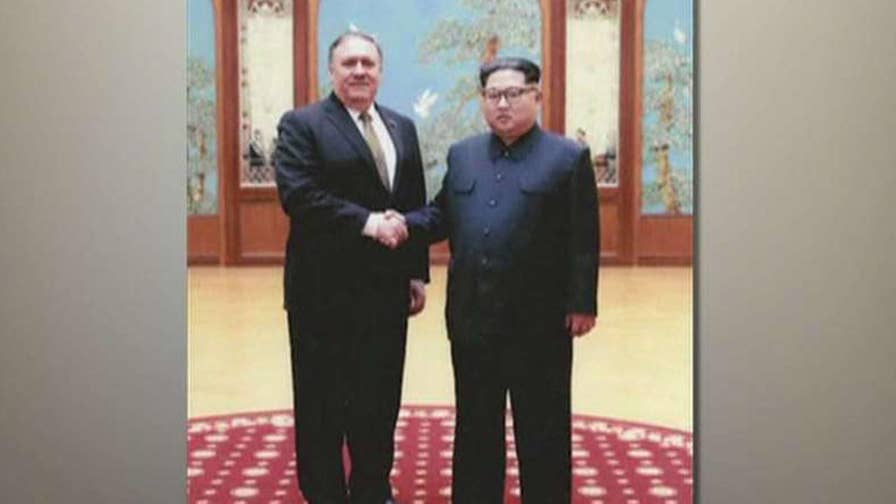
Three American prisoners held in North Korea have been released and are en route to the U.S. after a surprise diplomatic mission by Secretary of State Mike Pompeo, President Trump announced Wednesday.

Pompeo is returning with the Americans, said to be in “good health,” after a brief visit to Pyongyang. Trump said he plans to greet them at Andrews Air Force Base when they arrive outside Washington.

“I am pleased to inform you that Secretary of State Mike Pompeo is in the air and on his way back from North Korea with the 3 wonderful gentlemen that everyone is looking so forward to meeting,” Trump tweeted, referring to the prisoners. “They seem to be in good health.”

Pompeo told reporters during the initial leg of the flight to Japan that he’s “thrilled” to have the Americans back. Trump also said that a date and location have now been set for his meeting with Kim Jong Un.

White House Press Secretary Sarah Sanders said in a statement that Trump “appreciates leader Kim Jong Un’s action to release these American citizens, and views this as a positive gesture of goodwill.”

[pullquote]New York Times slams AWOL Pompeo, then learns he was rescuing Americans[/pullquote]

“The three Americans appear to be in good condition and were all able to walk on the plane without assistance,” she said.

Pompeo arrived in North Korea on Tuesday to prepare for the upcoming summit between the two leaders. Trump, announcing Pompeo’s visit, had hinted at the possibility of the prisoners’ release.

Israeli Special Forces veteran Aaron Cohen reacts on 'Fox & Friends First.'

“We will soon be finding out,” he said Tuesday when asked at the White House whether the prisoners would be freed. “It would be a great thing if they are, we’ll soon be finding out.”

Pompeo was heading to North Korea just as Trump announced the U.S. would pull back from the Iran nuclear agreement. Trump is hoping to now make headway against North Korea’s nuclear weapons program.

Ahead of the planned summit, Trump hinted last week that the release of the prisoners was imminent, saying in a tweet: “stay tuned.” White House Press Secretary Sarah Sanders said that it would be seen as “a sign of good will” if North Korea released the prisoners.

FILE - In this April 29, 2016, file photo, Kim Dong Chul, center, a U.S. citizen detained in North Korea, is escorted to his trial in Pyongyang, North Korea. President Donald Trump added to the speculation that North Korea may make a goodwill gesture before his planned summit with Kim Jong Un when he tweeted of a potential update soon on the status of three detained Americans, including Kim Dong Chul. (AP Photo/Kim Kwang Hyon, File)

Kim Dong Chul was one of three prisoners released from North Korea Wednesday.  (AP)

The Americans were all detained or sentenced within the last couple years.

Kim Dong Chul, a South Korea-born U.S. citizen and former Virginia resident, was sentenced in April 2016 to 10 years in prison with hard labor after being convicted of espionage. He reportedly ran a trade and hotel service company in Rason, a special economic zone on North Korea’s border with Russia.

Tony Kim was detained at Pyongyang’s airport in April 2017 and accused of unspecified “hostile acts” against the regime. He taught accounting at the Pyongyang University of Science and Technology. In a statement, Kim’s family thanked “all of those who have worked toward and contributed to his return home.”

Kim Hak Song, an ethnic Korean born in China, was detained in May 2017 for “hostile acts.” He worked in agricultural development at an experimental farm run by the Pyongyang University of Science and Technology, which was founded in 2010 with donations from Christian groups.

Another American detainee, Otto Warmbier, died in June 2017 — just days after he was brought back to the U.S. with severe brain damage. He had been arrested in January 2016 and accused of stealing a propaganda poster and was sentenced to 15 years in prison with hard labor.

Pompeo’s short trip is the latest move in a constantly evolving diplomatic situation in the region. Kim met with Chinese President Xi Jinping in China on Tuesday, the second meeting in recent months, and also met this month with South Korean President Moon Jae-in in South Korea.

During the summit, the two discussed denuclearization and declared a formal end to the Korean War. The North Korean regime has also claimed it will end its nuclear weapons and intercontinental ballistic missile testing program.

Fox News’ Caleb Parke and The Associated Press contributed to this report.

Adam Shaw is a Politics Reporter and occasional Opinion writer for FoxNews.com. He can be reached here or on Twitter: @AdamShawNY.


Filed Under: All Stories, Economy, Elections, Entitlement, Ethics, Foreign, Gender, Religion, Sci-Tech

Trump Withdraws from Iran Nuclear Agreement, Calls Pact ‘Defective at its Core’

May 8, 2018 By Editor Leave a Comment

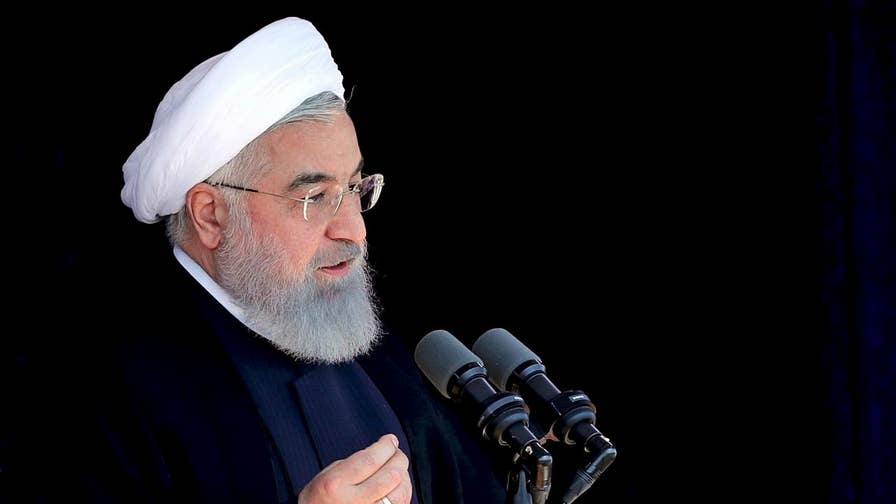
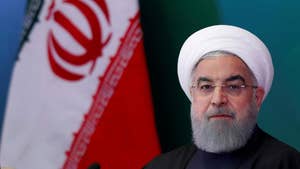
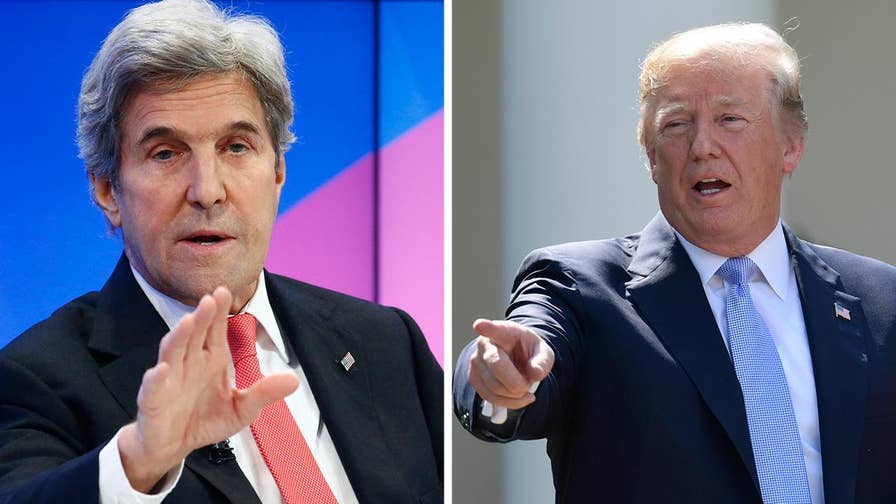
President Trump on Tuesday announced plans to leave the Iran nuclear deal, declaring the pact has failed to halt the country’s nuclear ambitions in perhaps the biggest foreign policy decision of his administration.

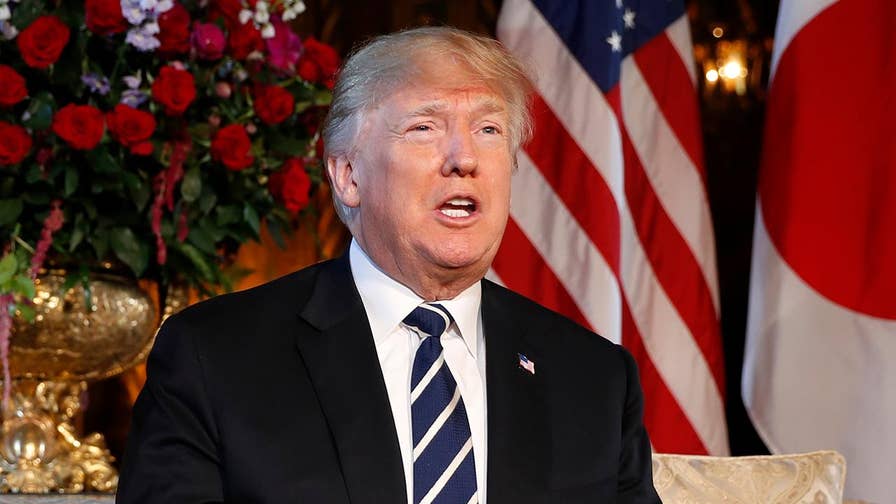
Speaking at the White House, Trump said: “I am announcing today the United States will withdraw from the Iran nuclear deal.”

Trump for months had left open whether he would move to scrap the pact, and his apparent decision to re-impose sanctions has rattled European rattles and leaves unclear how Tehran will respond.

Congressional leaders informed of President Trump's intent to withdraw from Iran deal; House Majority Leader Rep. Kevin McCarthy weighs in on the pros and cons of pulling out of the Iran nuclear deal.

But Trump scorched the deal in his Tuesday remarks, saying it put only weak limits on the regime’s nuclear activity and still would allow Iran to pursue a nuclear weapon once key parts of the agreement lapse.

“This was a horrible, one-sided deal that should have never ever been made,” he said. “… The Iran deal is defective at its core.”

The Treasury Department said a restoration of some sanctions will go into effect after a 90-day countdown, with the rest kicking in after a 180-day wind-down period. Once sanctions are re-imposed, the U.S. effectively would be out of the deal.

“At the heart of the Iran deal was a giant fiction, that a murderous regime desired only a peaceful, nuclear energy program,” Trump said Tuesday. “Today, we have definitive proof that this Iranian promise was a lie.”

“This was a horrible, one-sided deal that should have never ever been made.” – President Trump

The Treasury Department said Trump would move to reimpose all sanctions on Iran that had been lifted under the 2015 deal, not just the ones facing an immediate deadline. If he follows through on a sweeping imposition of sanctions, the move threatens to topple the Iran nuclear agreement as a whole – and with it, his predecessor’s signature foreign policy achievement.

“In theory, the so-called Iran deal was supposed to protect the United States and our allies from the lunacy of an Iranian nuclear bomb, a weapon that will only endanger the survival of the Iranian regime,” Trump said. “In fact, the deal allowed Iran to continue enriching uranium and over time reach the brink of a nuclear breakout.”

During his speech, Trump called Iran “the leading state sponsor of terror.”

“It exports dangerous missiles, fuels conflicts across the Middle East, and supports terrorist proxies and militias, such as Hezbollah, Hamas, the Taliban, and Al Qaeda,” he said.

Democrats blasted Trump’s withdrawal, with House Democratic leader Nancy Pelosi calling it “a sad day for America’s global leadership.”

Former President Obama released a statement arguing the nuclear deal “is working” and “has significantly rolled back Iran’s nuclear program,” saying that’s why Trump’s announcement “is so misguided.”

Trump started the day by warning former Secretary of State John Kerry not to meddle in the negotiations.

Iran's president warns U.S. will pay a heavy price if it pulls out of the nuclear deal; Benjamin Hall reports from Jerusalem. Video

Rouhani urges US to stay in Iran nuclear deal

“John Kerry can’t get over the fact that he had his chance and blew it! Stay away from negotiations John, you are hurting your country!” Trump tweeted early Tuesday.

This was a reference to reports that Kerry was meeting with foreign officials in a bid to salvage the pact. Speaking at a summit Tuesday in Italy, Kerry did not back down, saying the Middle East is “safer with this agreement” and framing this juncture as a choice between peace and war.

Trump’s announcement comes ahead of a May 12 deadline to make a decision on sanctions.

It follows efforts by European allies to convince Trump to keep the deal, even with changes.

But Trump was unconvinced. Since the 2016 presidential campaign, he has railed against the agreement and its Obama administration negotiators.

The 2015 pact lifted most U.S. and international sanctions against the country, in exchange for Iran agreeing to restrictions on its nuclear program making it impossible to produce a bomb, along with rigorous inspections – terms generally set for 10-15 years.

But Israel, Gulf Arab states and many congressional Republicans said the deal was a giveaway to Tehran that ultimately paves the path to a nuclear-armed Iran several years in the future.

“Perhaps the nuclear deal’s most unforgivable flaw is that its original architects chose to stand with and empower Iran’s mullahs over the Iranian people, whose opposition to their corrupt and criminal government continues to grow,” Sen. Marco Rubio, R-Fla., wrote in a Fox News op-ed urging Trump to abandon the pact and ratchet up sanctions.

But Trump’s decision could lead to retaliation from Iran in the near-term.

The former secretary of state is meeting with officials from Iran, Germany, France and the European Union to hold together the Iran nuclear deal; Rich Edson reports from the State Department.

If the deal collapses, Iran could resume prohibited enrichment activities, while businesses and banks doing business with Iran would have to scramble to extricate themselves or run afoul of the U.S.

While Trump himself was tight-lipped about his decision in the run-up to the announcement, Iranian officials also were left guessing.

In Tehran, President Hassan Rouhani sought to calm nerves. “It is possible that we will face some problems for two or three months, but we will pass through this,” Rouhani said.

Rouhani earlier warned of “grave” consequences if Trump pulled back on the agreement.

Obama foreign policy adviser Ben Rhodes, who played a key role in the deal, also tweeted that “Trump is blowing that up with no understanding of what’s actually in the Deal, no plan for what comes next, and no support from our closest European allies, Russia or China.”

A factor leading to Tuesday’s decision may have been Israel’s public lobbying. A week ago, Israeli Prime Minister Benjamin Netanyahu appealed to the U.S. president by making explosive allegations that new evidence proved Tehran had lied about its nuclear program and adherence to the pact.

But even Trump’s secretary of state and the U.N. agency that monitors nuclear compliance have agreed that Iran, so far, has lived up to its side of the deal.

On Tuesday, Netanyahu said, “Israel fully supports President Trump’s bold decision today to reject the disastrous nuclear deal with the terrorist regime in Tehran.”

Fox News’ John Roberts, Judson Berger and The Associated Press contributed to this report.

Alex Pappas is a politics reporter at FoxNews.com. Follow him on Twitter at @AlexPappas.

Filed Under: All Stories, Economy, Elections, Entitlement, Ethics, Foreign, Gender, Religion, Sci-Tech

Jason Whitlock: Kanye Had One of the Best Tweets of All Time

May 8, 2018 By Editor Leave a Comment

Maxine Waters said the rapper spoke ‘out of turn’ by praising Trump, but he affirmed his freedom.

After a nearly yearlong social-media hiatus, polarizing rap star Kanye West re-emerged on Twitter last month. On April 25 he shocked the mainstream media by expressing admiration for President Donald Trump.

“You don’t have to agree with trump but the mob can’t make me not love him,” Mr. West tweeted. “We are both dragon energy. He is my brother. I love everyone. I don’t agree with everything anyone does. That’s what makes us individuals. And we have the right to independent thought.”

[pullquote]Liberalism has been marketed to Black America like cigarettes. Welfare is nicotine, Hollywood celebs act as pitchmen for progressive political groups. It needs a surgeon general’s warning.[/pullquote]

The tweet heard round the internet pleased America’s Twitter-loving president, who promptly thanked the rapper. It had a much different effect on liberal elites. Mr. West’s tweet and his other missives supporting center-right figures like Candace Owens and Scott Adams constituted left-wing betrayal of the highest order. The man who once vilified George W. Bush for the slow response to Hurricane Katrina was joining the birther president?

Then-President-elect Donald Trump and Kanye West at Trump Tower in New York City, Dec. 13, 2016. Photo: Seth Wenig/Associated Press

Rep. Maxine Waters (D., Calif.) bashed Mr. West for speaking “out of turn.” Mr. West shared over Twitter text messages from singer John Legend scolding him for aligning with President Trump. “Don’t let this be a part of your legacy,” implored Mr. Legend. The Atlantic’s Ta-Nehisi Coates even spent 5,000 words admonishing Mr. West for straying too far from his betters’ thinking.

Last week, when Mr. West flippantly and foolishly ascribed blame for American slavery on African-Americans during a TMZ interview, he provided his critics the out they needed to dismiss him. But Mr. West’s larger point should not be rejected because bravado caused him to suggest he would’ve chosen death over slavery. Should we also now discard his criticism of President Bush? Liberals loved that. But they now fear what Mr. West is attempting to credibly convey to black people. It’s a message that could devastate the Democratic Party.

Liberalism is black people’s cigarette. In the immediate aftermath of the civil-rights movement, Democrats marketed liberalism to us as fashionable, sophisticated and liberating. Today it needs a surgeon general’s warning: hazardous to your family and the values you were taught as a child.

Martin Luther King Jr. was a Southern, conservative minister who believed in the American promise. His dream was patriotic and traditional. Family, work, self-determination and religion comprised his core values. He never demonized his enemies. He chose to shame them by being better.

The turbulent and assassination-scarred 1960s created an acute leadership void in black America. The Democratic Party capitalized by promising black people government dependency disguised as assistance. The welfare check, the replacement for black fathers, is liberalism’s nicotine. Hollywood celebrities were once deployed by advertising companies to make smoking seem cool; today, they are deployed by liberal interest groups to make progressive politics seem like the only solution to black people’s problems.

Since King’s death, liberalism has increasingly become our religion and the Democratic Party our church. The rewards for our allegiance are at best disappointing: Our families have disintegrated. Our men have been incarcerated and emasculated. Our communities have been abandoned by high achievers. And our children are confused and resentful of their elders.

In 1965, the Moynihan report sounded alarm because only 76% of black children were born to married women. By 2015, 77% of non-immigrant black children were born to single mothers, according to the National Center for Health Statistics. Major cities such as Baltimore and Detroit—run almost exclusively by black Democrats—remain crime-ridden and economically challenged, especially for black residents.

Perhaps this can be attributed to the evil work of conservative Republican politicians at the federal level. Or maybe we, African-Americans, have chosen the wrong strategy. No other ethnic group is chained to a single political ideology. Hispanics, whites and Asians actually make political parties compete for their support. Maybe Mr. West is trying to warn us of the dangers of Democratic cigarette addiction?

On April 18 he tweeted: “Don’t follow crowds. Follow the innate feelings inside of you. Do what you feel not what you think. Thoughts have been placed in our heads to make everyone assimilate. Follow what you feel.”

On April 22: “there was a time when slavery was the trend and apparently that time is still upon us. But now it’s a mentality.”

On April 23: “new ideas will no longer be condemned by the masses. We are on the frontier of massive change. Starting from breaking out of our mental prisons.”

Here’s the tweet just before his now infamous President Trump tweet: “Free thinkers don’t fear retaliation for your thoughts. The traditional thinkers are only using thoughts and words but they are in a mental prison. You are free. You’ve already won. Feel energized. Move in love not fear. Be afraid of nothing.”

Black people have no reason to fear political free agency.

By Jason Whitlock

Mr. Whitlock is a co-host of “Speak for Yourself” on Fox Sports 1.

Filed Under: All Stories, Economy, Elections, Entitlement, Ethics, Foreign, Gender, Religion, Sci-Tech

‘Iran Lied’ About Nuclear Weapons Program

April 30, 2018 By Editor Leave a Comment

Netanyahu says Iran ‘brazenly lying’ after signing nuclear deal, moved documents to a secret location

Israeli Prime Minister Benjamin Netanyahu revealed new “dramatic” intelligence Monday which he claimed shows Iran is “brazenly lying” about its nuclear weapons program and shows the country is not complying with the vaunted nuclear deal it signed in 2015.

The information was obtained within the past 10 days, Israeli officials told Fox News. Netanyahu said the ‘half a ton” of files were moved to a “highly secret” location in Tehran after the deal was signed, and contained materials spread over 55,000 pages and 55,000 files on 183 CD’s.

“These files conclusively prove that Iran is brazenly lying when it says it never had a nuclear weapons program,” he said.

Israel Achieve

Israeli Prime Minister Benjamin Netanyahu shows where Iran moved its nuclear weapons files to a location in Tehran after signing the nuclear deal. (AP)

Netanyahu displayed what he said was “an exact copy” fo the original materials, which are now in “very safe place” and include incriminating documents, charts, presentations, blueprints, and photos.

Speaking a nationally televised address, Israel’s prime minister said the material is filled with incriminating evidence showing the Iranian program, called “Project Amad,” was to develop a weapon.

Netanyahu briefed President Trump about the intelligence on Saturday and Secretary of State Mike Pompeo on Sunday. European counterparts were made aware Monday prior to the speech, officials said.

Trump has repeatedly expressed a desire to exit the Iran nuke deal, which was signed during the Obama administration. And though he has yet to end it, a crucial deadline for re-certifying the deal is on the horizon.

Israeli Prime minister Benjamin Netanyahu speaks during a news conference at the Ministry of Defence in Tel Aviv, Israel April 30, 2018. REUTERS/ Amir Cohen - RC1480BD75A0

Israeli Prime minister Benjamin Netanyahu speaks during a news conference at the Ministry of Defence in Tel Aviv, Israel April 30, 2018. (REUTERS/ Amir Cohen)

“In a few days’ time, President Trump… will make a decision on what to do with the nuclear deal,” he said. “I’m sure he’ll do the right thing, the right thing for the United States, the right thing for Israel, the right thing for the peace of the world.”

In a question and answer period at the White House Rose Garden with Nigerian president Muhammadu Buhari on Monday, Trump said he’ll make a decision “on or before” May 12.

“That doesn’t mean I won’t negotiate a new agreement,” the president said, adding that “we’ll see what happens.”

Netanyahu’s statement also came on the heels of a missile attack in northern Syria that killed nearly 26-pro-government fighters, mostly Iranians, according to a Syria war monitoring group. Israel had no comment on the strike, but there was widespread speculation that Israel was responsible. Tehran has sent thousands of Iran-backed fighters to help President Bashar Assad’s forces in Syria’s seven-year civil war.

Lt. Col. Daniel Davis provides insight into the situation. Video

Israel sends a warning to Iran following airstrikes in Syria

Israel and Iran are arch-enemies, and Israel has said repeatedly it would not allow Iran to establish a permanent military presence in Syria. Iran has already accused Israel of carrying out another airstrike in Syria this month that killed seven Iranian military advisers and vowed revenge.

SUSPECTED ISRAELI ‘EARTHQUAKE-LEVEL’ SYRIA STRIKE KILLS MOSTLY IRANIANS

Pompeo on Sunday ratcheted up the Trump administration’s rhetoric against Iran and offered warm support to Israel, and Saudi Arabia, in the standoff with Tehran.

In this Sunday, April 29, 2018 file photo, U.S. Secretary of State Mike Pompeo. left. is greeted by Israeli Prime Minister Benjamin Netanyahu ahead of a press conference at the Ministry of Defense in Tel Aviv. Israel's prime minister has scheduled a special prime-time statement to reveal what his office said would be a "meaningful development" in the Iranian nuclear program. The surprise announcement came as Netanyahu canceled a scheduled speech at the parliament and instead called an emergency meeting of his Security Cabinet at Israeli military headquarters in Tel Aviv.(Thomas Coex, AFP via AP, File)

In this Sunday, April 29, 2018 file photo, U.S. Secretary of State Mike Pompeo. left. is greeted by Israeli Prime Minister Benjamin Netanyahu ahead of a press conference at the Ministry of Defense in Tel Aviv. (Thomas Coex, AFP via AP)

“The United States is with Israel in this fight,” Pompeo said.

The 2015 nuke deal gave Iran relief from crippling sanctions in exchange for curbs on its nuclear program.

Netanyahu has been a leading critic of the agreement, saying it fails to prevent Iran from gaining nuclear weapons capability and welcoming Trump’s pledges to withdraw from the deal if it is not changed.

“The nuclear deal gives Iran a clear path to producing an atomic arsenal,” he said Monday.

Israeli Prime minister Benjamin Netanyahu speaks during a news conference at the Ministry of Defence in Tel Aviv, Israel April 30, 2018. REUTERS/ Amir Cohen - RC1E04F26BC0

Israeli Prime minister Benjamin Netanyahu speaks during a news conference at the Ministry of Defence in Tel Aviv, Israel April 30, 2018. (REUTERS/ Amir Cohen)

On Monday, Iran’s Supreme Leader Ayatollah Ali Khamenei said the time when Iran’s enemies can “hit and run” is over.

“They know if they enter military conflict with Iran, they will be hit multiple times,” he said, according to his website. He did not specifically refer to the latest attack in Syria.

Michael Oren, a senior Israeli official, had no comment on the airstrike in Syria, but warned both Syria and Iran against trying to attack.

“If someone shoots at us, we shoot back and we will shoot back either at the Syrian army or the Iranians, at the origin of the aggression,” Oren said.


Fox News’ Yonat Friling in Jerusalem and The Associated Press contributed to this report.

Travis Fedschun is a reporter for FoxNews.com. Follow him on Twitter @travfed

Filed Under: All Stories, Economy, Elections, Entitlement, Ethics, Foreign, Gender, Religion, Sci-Tech

Nearly 150 Illegal Immigrant Gang Members Released by Sanctuary Cities Last Year

April 18, 2018 By Editor Leave a Comment

Dozens of gang members, some of whom belonged to the notorious MS-13, were shielded from deportation and released due to “sanctuary” policies last year, according to newly released stats from the Department of Homeland Security.

The revelation could jolt the escalating “sanctuary” debate, especially in California where many of those gang members were located.

“Two-thirds of the releases occurred in California, which has had a strict sanctuary policy in effect since January 2014,” the Center for Immigration Studies said in a post on the data, pointing to “obvious public safety problems.”

Gang members released due to ‘sanctuary’ policies, by state

From Oct. 1, 2016 to June 19, 2017:

Arizona: 1

California: 89

Illinois:  3

Louisiana: 2

Maryland: 13

Minnesota: 1

New Jersey: 2

New Mexico: 2

New York: 4

Oregon: 2

Rhode Island: 1

Texas: 11

Washington: 11

[Data from Department of Homeland Security]

DHS officials provided a breakdown of gang members that were released in fiscal 2017, in response to questions posed in June by the Senate Judiciary Committee at a hearing on the rise of MS-13.

From October 2016 to June 2017, DHS says, sanctuary jurisdictions refused to honor Immigration and Customs Enforcement (ICE) detainers on 142 suspected gang members — where ICE officials ask authorities to detain criminal illegal immigrants so ICE can take custody and deport them.

In the answers, the officials added that the numbers may be on the conservative side as jurisdictions that do not allow officials into jails make it more challenging to identify gang members.

“Because ICE often determines gang affiliation through interviews, ICE cannot speculate about the number of times it was denied access to an alien in the custody of state or local authorities who may have had such an affiliation,” the answers read.

Fifteen of those released were suspected members of MS-13, a gang started in the 1980s by Central American immigrants and known for its gruesome crimes. The gang’s presence across the country has been an escalating political issue.

Kristin Gaspar, chairwoman of the San Diego Board of Supervisors, on vote to direct county's attorney to file a brief in support of the federal lawsuit against the state's sanctuary policy. Video

San Diego votes to oppose California’s sanctuary law

“Violence is a central tenet of MS-13, as evidenced by its core motto — “mata, viola, controla,” translated as, ‘kill, rape, control,’ the DOJ said in a 2016 release.

WHAT IS MS-13, THE VIOLENT GANG TRUMP VOWED TO TARGET? 

The majority (89) of suspected gang members released were in California — whose state leaders are locked in a high-profile battle with the Trump administration, and even some of its own cities, over the state’s sanctuary policies. The Department of Justice filed a lawsuit against the state last month, claiming that the policies prevent federal authorities from enforcing immigration laws.

On Tuesday, San Diego County became the latest local jurisdiction to back the lawsuit, claiming it limits police cooperation with federal agents. San Diego County is the largest county so far to back the suit, and its move comes after Orange County has also supported the administration.

California Gov. Jerry Brown said Tuesday that President Trump’s stance against illegal immigration is “just an inflammatory football that very low-life politicians like to exploit.”

SAN DIEGO VOTES TO JOIN TRUMP ADMINISTRATION’S LAWSUIT AGAINST CALIFORNIA’S SANCTUARY CITY LAW 

If Trump “wants to round them up like some totalitarian government and ship them out, say that,” Brown said. “But he doesn’t say that because the American people would repudiate him and his party.”

Trump has repeatedly hailed the pushback against Brown and on Wednesday tweeted that there was a “revolution” in the state against sanctuary policies, which he called “ridiculous, crime infested & breeding concept.”

ICE figures show a surge in arrests related to MS-13. In fiscal 2017, there were 796 arrests of MS-13 members, compared with 432 in fiscal 2016 and 322 in fiscal 2015. More broadly, ICE’s Enforcement and Removal Operations (ERO) said that 5,396 gang members were removed in fiscal 2017, compared with 2,057 in fiscal 2016.

DHS is also calling for tougher border security measures to combat MS-13.

In the questions posed to DHS officials, Sen. Mazie Hirono, D-Hawaii, asked officials whether a border wall would stem the violence from MS-13, to which the officials said it would, calling it a “cornerstone” in preventing criminals from entering the country.

“The Department of Homeland Security (DHS) believes further securing our border will impact the medium- and long-term health of MS-13 and the level of violence it perpetrates,” the response said. “As many current MS-13 gang members are illegal border entrants, DHS believes increasing border security will discourage the arrival of both current gang members and potential recruits.”

Additionally, officials said that MS-13 members regularly exploit border vulnerabilities and that U.S. Border Patrol agents arrest MS-13 members trying to enter the country “on a near-daily basis.”

Fox News’ Joseph Weber, William LaJeunesse and Paulina Dedaj contributed to this report.

Adam Shaw is a Politics Reporter and occasional Opinion writer for FoxNews.com. He can be reached here or on Twitter: @AdamShawNY.

Filed Under: All Stories, Economy, Elections, Entitlement, Ethics, Foreign, Gender, Religion, Sci-Tech

CIA Director Mike Pompeo Met with Kim Jong Un Over Easter Weekend

April 18, 2018 By Editor Leave a Comment

CIA Director Mike Pompeo met with North Korean dictator Kim Jong Un over Easter weekend in an effort to lay the groundwork for a summit between Kim and President Trump, Fox News has confirmed.

Pompeo’s trip, which was first reported by The Washington Post, came to light hours after Trump told reporters that the U.S. and North Korea are holding direct talks at “extremely high levels” in preparation for what would be an extraordinary meeting following months of heated rhetoric over Pyongyang’s nuclear weapons program.

Though the White House did not initially comment on the reports, Trump acknowledged the meeting in a Wednesday morning tweet, saying it went well.

“Mike Pompeo met with Kim Jong Un in North Korea last week. Meeting went very smoothly and a good relationship was formed. Details of Summit are being worked out now. Denuclearization will be a great thing for World, but also for North Korea!” he tweeted.

Trump, who welcomed Japanese Prime Minister Shinzo Abe to his Florida resort Tuesday, said five locations for the potential summit are under consideration. The president would not disclose the sites but said the U.S. was not among them.

President Trump addresses the media as he met with Japanese Prime Minister Shinzo Abe at his Mar-a-Lago estate.

“We’ll either have a very good meeting or we won’t have a good meeting,” Trump told reporters. “And maybe we won’t even have a meeting at all, depending on what’s going in. But I think that there’s a great chance to solve a world problem.”

The president did not answer shouted questions about whether he has spoken with Kim.

Kim’s offer for a summit was initially conveyed to Trump by South Korea last month, and the president shocked many when it was announced that he had accepted. U.S. officials have indicated over the past two weeks that North Korea’s government has communicated directly with Washington that it is ready to discuss its nuclear weapons program.

Seoul and Pyongyang have officially remained at war since the 1953 Korean Armistice Agreement; chief White House correspondent John Roberts reports from West Palm Beach, Florida.

Abe, who has voiced fears that short- and medium-range missiles that pose a threat to Japan might not be part of the U.S. negotiations, praised Trump on Tuesday for his bravery in agreeing to meet with the North Korean dictator.

“I’d like to commend Donald’s courage in his decision to have the upcoming summit meeting with the North Korean leader,” Abe said.

Trump also confirmed that North and South Korea are working to negotiate an end to hostilities before next week’s meeting between Kim and South Korean President Moon Jae In. The meeting will be the third inter-Korean summit since the Koreas’ 1945 division.

North Korea has long sought a peace treaty with the U.S. to formally end the 1950-53 Korean War. But it is unusual for the North to seek to broach the issue directly with South Korea rather than with Washington. The armistice that ended the fighting was signed by the United Nations Command — the U.S.-led forces in the conflict — North Korea and China. South Korea was a member of the U.N. Command but was not a direct signatory.

Trump said Tuesday that the two Koreas “have my blessing to discuss the end of the war.”

Fox News’ John Roberts, Serafin Gomez and The Associated Press contributed to this report.

Filed Under: All Stories, Economy, Elections, Entitlement, Ethics, Foreign, Gender, Religion, Sci-Tech

Barbara Bush, Former First Lady, Dead at 92

April 17, 2018 By Editor 1 Comment

With her cloud of snow-white hair, signature three strand pearls and compelling presence, Barbara Bush’s image was what she laughingly called “everybody’s grandmother.” But the feisty, outspoken Bush was also a tireless advocate for literacy , an author, experienced campaigner and both wife and mother of a U.S. president.

Bush, 92, died Tuesday, shortly after her family announced she was in failing health and would decline further medical treatment in favor of “comfort care.” There were no details of her specific health problems.

The announcement was made in a statement from the office of former President George H.W. Bush.

“A former First Lady of the United States of America and relentless proponent of family literacy, Barbara Pierce Bush passed away Tuesday, April 17, 2018 at the age of 92. She is survived by her husband of 73 years, President George H. W. Bush; five children and their spouses; 17 grandchildren; seven great grandchildren; and her brother, Scott Pierce. She was preceded in death by her second child, Pauline Robinson ‘Robin’ Bush, and her siblings Martha Rafferty and James R. Pierce.”

In a statement, her son, former President George W. Bush, called his mother “a fabulous First Lady and a woman unlike any other.”

“My dear mother has passed on at age 92. Laura, Barbara, Jenna, and I are sad, but our souls are settled because we know hers was. Barbara Bush was a fabulous First Lady and a woman unlike any other who brought levity, love, and literacy to millions. To us, she was so much more. Mom kept us on our toes and kept us laughing until the end. I’m a lucky man that Barbara Bush was my mother. Our family will miss her dearly, and we thank you all for your prayers and good wishes.”

Shortly after news of her passing came out, President Donald Trump shared his “thoughts and prayers” with the Bush family.

She was survived by her husband of 73 years, former President George H.W. Bush, five children (a sixth died as a toddler), 17 grandchildren and seven great-grandchildren.

Her granddaughter, Jenna Bush Hager, told NBC Monday that she and her twin, Barbara, named after her grandmother, had spoken with the family matriarch Sunday night and “she’s in great spirits, and she’s a fighter and she’s an enforcer.”

Barbara Bush was born June 8, 1925, in New York City, the third of four children of Marvin Pierce, a magazine publishing executive, and Pauline Robinson Pierce. She grew up in the affluent suburb of Rye, New York, where she was an avid athlete, excelling at swimming and tennis.

As a teen, she attended Ashley Hall, a boarding school in South Carolina. In 1941, when she was 16 and home on Christmas break, she met George Herbert Walker Bush, then a student at Phillips Academy in Andover, Mass., at a holiday dance. The attraction was immediate and 18 months later, they were engaged.

Barbara entered Smith College but dropped out to marry Bush, who had gone to war as a Navy torpedo bomber pilot. She was 19 and he was 20 when they wed January 6, 1945 in Rye. Years later, she said, “I married the first man I ever kissed. When I tell my children that, they just about throw up. ”

As newlyweds, the couple lived in New Haven, Conn., where Bush was a student at Yale and their first child, George W. Bush, was born. They then moved around regularly – to Texas, California, and back to various Texas cities – as the family grew. By the time she moved to Washington for her husband’s vice presidency, Barbara Bush estimated they had moved 29 times.

George W. Bush was followed by a sister, Robin, who lived almost four years before dying of leukemia (an event some speculated was the cause of Barbara Bush’s hair turning prematurely white). The children who followed were Jeb, Neil, Marvin and Dorothy.

While George – who called his wife “Bar” – built a business in the oil industry, Barbara devoted herself to raising their family. When he entered public life – as a congressman, U.S. Ambassador to the UN, Chairman of the Republican National Committee, Chief of the U.S. Liaison Office in the People’s Republic of China, Director of the Central Intelligence Agency and later as Vice President, she was at his side.

As the vice president’s wife, she selected literacy as her special cause. Later, after her husband was elected president, she founded the Barbara Bush Foundation for Family Literacy. She also was an advocate for volunteerism, including programs involving the homeless, elderly and those with AIDS.

Along the way, she wrote two books about the family dogs, “C. Fred’s Story” and the best-selling “Millie’s Book,” with profits benefitting literacy. After her husband left the White House, she wrote a best-selling autobiography “Barbara Bush: A Memoir” in 1994 followed by “Reflections” in 2004.

Bush once explained that people liked her because “I’m fair and I like children and I adore my husband.”

She also was known for her forthright manner, especially when anyone challenged her family. In 1984, speaking of her husband’s vice presidential opponent, Geraldine Ferraro, Bush said she couldn’t say what she thought of the Democrat on television but “it rhymes with rich.”

Following her husband’s loss in the 1992 presidential election, the couple moved to Houston and also spent time at the longtime family home in Kennebunkport, Maine.

Bush was active in campaigning for her sons Jeb, who served as governor of Florida, and George, who was a two-term U.S. president. Only Barbara Bush and Abigail Adams were both the wife and mother of U.S. presidents.

In 2008, Bush underwent surgery for a perforated ulcer and in 2009, she had heart surgery.  In 2014, she was hospitalized with respiratory issues.

FoxNews.com

Filed Under: All Stories, Elections, Gender, Religion

President Announces Attacks on Syria

April 13, 2018 By Editor Leave a Comment

President Trump on Friday announced that he has approved military strikes in Syria against the regime of Syrian President Bashar al-Assad.

The decision follows a suspected chemical gas attack from the Assad regime on a rebel-held town near the Syrian capital last weekend.

Trump’s announcement immediately preceded reports of loud explosions lighting up the sky in Damascus.

The United States launched the response, along with assurance from France and the United Kingdom, Trump stated. British Prime Minister Theresa May and French President Emmanuel Macron announced they have joined the U.S. in launching military strikes in Syria.

At least 40 people died in the attack in Douma, about 10 miles east of Damascus, and over 500 people, mostly women and children, were injured and brought to medical centers. The attack occurred amid a resumed offensive by Syrian government forces after the collapse of a truce. Syrian activists, rescuers and medics said families suffocated in their homes.

Assad’s actions, Trump said, “are not the actions of a man,” but “are the crimes of a monster instead.”

A similar chemical attack in Khan Sheikhoun in April 2017 that killed nearly 100 people prompted the U.S. to launch dozens of cruise missiles at a Syrian airfield to dissuade Assad from using chemical weapons in the future, officials said. But during the weekend, images of dead and sick women and children again circulated following another alleged chemical attack.

In his statement, the president also hit Russia and Iran for their sustained support of the Assad regime.

“To Iran and to Russia I ask, what kind of nation wants to be associated with the mass murder of innocent men, women and children,” Trump asked.

“The nations of the world can be judged by the friends that they keep,” he continued. “Russia must decide if it will continue down this dark path or continue with civilized nations.”

This is a developing story; please check back for updates

Fox News’ Ben Evansky and Alex Pappas contributed to this report.

Filed Under: All Stories, Elections, Ethics, Foreign, Religion, Sci-Tech

Michael Goodwin: Time to Call a ‘Timeout’ on Mueller Russia Probe

April 10, 2018 By Editor Leave a Comment

Washington is full of blather, bombast and bullsh-t, but a line about Robert Mueller was the most important thing spoken or written there last week:

“Peter Carr, a spokesman for the special counsel’s office, declined to comment.”

Since Mueller’s office never says anything outside court publicly, who knew he had a spokesman or needed one?

The line was included in a Washington Post story that said Mueller told the White House that President Trump was not a target of the criminal investigation.

The story could be a big deal — if true. But the report is nonetheless remarkable because it was the first leak in memory that carried good news for Trump.

After breathless drip, drip, drip reports that had the president practically being frog-marched to a firing squad at dawn, the fever broke. Every dog has its day, and the Washington media decided this president’s day comes once every 15 months.

True to form, news outlets immediately pivoted back to their regularly scheduled programming of stories saying Trump is in imminent danger. The New York Times and ABC declared that George Nader, a Lebanese-American businessman, though a stranger to readers, is now Mueller’s hottest witness.

Enough.

The violent swings of the leaky pendulum make this an excellent moment to call timeout on the Mueller probe. What does he have, where is he going and when is he going to get there?

Those are basic questions that need to be answered. The American people deserve facts instead of waters muddied by partisanship, innuendo and special access to biased big-media companies.

Mueller’s team includes some active Democrats, and whether they are behind the anti-Trump leaks is, for the moment, beside the point. The point is that the leaks are creating a reality all their own about the investigation and the president.

It’s time to clear the air of rumor and speculation and put the facts on the record. It’s not as if the public has been impatient.

Mueller was appointed in May of last year to pick up the FBI probe started in the summer of 2016. Although there have been indictments, nothing implicates Trump in wrongdoing.

Yet even the hullabaloo about whether the president will agree to be interviewed is carried aloft by leaks. Has Mueller formally asked and has Trump formally declined? Who knows?

Then there’s the question of whether Mueller believes he can indict a sitting president, or whether he can subpoena Trump to a grand jury. Again, Mueller is, publicly at least, silent.

Under normal rules, the Justice Department is reluctant to either confirm or deny its investigations. One reason is that mere confirmation carries a lifetime whiff of guilt.

But this is hardly a normal situation. Mueller’s appointment was public and we know the president and his campaign team are being probed for possible collusion with Russia, and we know there is a possible issue of obstruction of justice over Trump’s firing of FBI Director James Comey.

Given the stakes, the public has a right to know at this point what it all adds up to. If Mueller won’t speak for himself, his handler, Rod Rosenstein, the deputy attorney general who created Mueller, should speak for him.

A concise report about where the probe stands would be enough. Mueller could make a statement, or Rosenstein could testify to Congress.

Rosenstein, because he alone decided a special counsel was needed, bears responsibility for keeping the probe focused and accountable. The recent revelation that he wrote a secret memo last August expanding Mueller’s jurisdiction illustrates what’s wrong with the secretive process.

Even at this late date, about two-thirds of the memo was redacted.

The blackout reeks of arrogance, as if Mueller and Rosenstein believe that whatever they decide will be passively accepted by the public. They act oblivious to the fact that most of the country is suspicious of the FBI because of the clear politicization of law enforcement during the 2016 election. And the stonewalling of Congress over documents only adds to the distrust.

The endless leaks are the final straw. Democracy is undermined by ostensible bombshell stories that cannot be evaluated for their credibility.

Anonymous sourcing defeats any effort by readers to draw conclusions about a story’s credibility based on the motive of the sources. If, for example, a story criticizing Republicans comes from Democrats, we can ascribe a partisan motive.

That doesn’t mean the story isn’t true, but the reader can factor motive into his judgment.

But without knowing who the sources are, readers are like the proverbial blind men touching different parts of an elephant. Each describes a different animal.

The Mueller probe is the most important investigation in a generation and is casting a cloud over a presidency. Yet many important things we supposedly know about it come from sources whose motives and honesty can’t be verified.

If this were a probe involving a third-level bureaucrat, assassination-by-leak would be distasteful but not as meaningful.

But this is the presidency, and even Trump haters should be appalled at the shoddy process.

In its story about Mueller saying Trump is not a target, the Washington Post also said the special counsel is “preparing a report about the president’s actions while in office and potential obstruction of justice.”

Is that true? Is the report the end of it?

Enough questions. It’s time for answers.

Recognize hate

If you are a terrorist, peace is dangerous.

Leaders from Hamas are outraged that the Saudi crown prince is recognizing Israel’s right to exist.

Mohammed bin Salman told Atlantic magazine, “I believe the Palestinians and the Israelis have the right to have their own land.”

The remarks are noteworthy but hardly radical — unless your aim is to destroy Israel.

“Regrettably, the virus of normalization [with Israel] has begun penetrating some Arab regimes, while the Arabs and Muslims remain categorically opposed to normalization with Israel,” Ahmed Yusef, a Hamas leader, told the Times of Israel. “Normalization is a dangerous germ.”

Imagine that.

Now this borders on high irony

Trump’s policies are cleverly explained in one tweet — and not his own. It comes from J Burton @JBurtonXP, who writes: “What kind of upside-down, nightmare world are we living in where the President is deploying troops to secure our own borders rather than random stretches of Middle Eastern desert halfway across the world from us?”

NYPD’s ‘race’ to assuage slay critics

To counter critics, the NYPD released the race and ethnicity of four cops involved in the killing of a black man in Brooklyn who threatened people with a gun-like metal object. Here’s The Post’s summary of the police racial bean counting: “One was African-American and fired three rounds; a second was white and fired two; a third was white and fired four rounds; and the fourth was Indian-American and fired once.”

Somehow I don’t think this is what Martin Luther King Jr. had in mind.

By Michael Goodwin

Filed Under: All Stories, Economy, Elections, Entitlement, Ethics, Foreign, Gender, Religion, Sci-Tech

Kennedy Legacy and Dems face a Reckoning as ‘Chappaquiddick’ Hits Theaters

April 8, 2018 By Editor Leave a Comment

The Kennedy dynasty faced a reckoning Friday, when a film hit theaters resurrecting the shocking details surrounding a late-night deadly car crash at Chappaquiddick Island that has haunted America’s most powerful political family since 1969.

“Chappaquiddick” opened in movie theaters across the U.S., drawing all eyes to the Kennedy family as the film renews questions about the controversial  incident at the island off Martha’s Vineyard, Massachusetts in 1969.

After the assassinations of both his brothers, former Sen. Ted Kennedy, D-Mass., was slated to carry the family’s political aspirations, even mulling a run for president of the United States.

This image released by Entertainment Studios shows Jason Clarke as Ted Kennedy, left, and Kate Mara as Mary Jo Kopechne in a scene from "Chappaquiddick." (Claire Folger/Entertainment Studios via AP)

Photo from the movie “Chappaquiddick.” 2016 Bridgewater Picture Finance, LLC. All Rights Reserved. (AP)

But the movie tells the story of the incident that stopped that potential campaign in its tracks—depicting the involvement of Kennedy, then 37, in the fatal July 19, 1969 car accident that claimed the life of a young campaign strategist, Mary Jo Kopechne.

At approximately 12:50 a.m., Kennedy and Kopechne, 28, were driving back from a party hosted by a cousin of Kennedy on Martha’s Vineyard following the Edgartown Regatta, in which Kennedy had sailed. Kennedy’s car plunged 10 feet off of a bridge and into a pond, killing Kopechne and giving Kennedy “a slight concussion.”

FILE -- In a July 19, 1969 file photo Sen. Edward Kennedy's car is pulled from water as the car is screened off the bridge in Edgartown, Mass. The body of Mary Kopechne of Washington, D.C., was found in rear seat. Her death was attributed to drowning. (AP Photo/file)

The scene of the Chappaquiddick incident on Chappaquiddick Island, Massachusetts in 1969. (AP)

Kennedy told police that he was “unfamiliar with the road,” came up to a narrow bridge, and said the car “went off the side of the bridge.” According to a description from a 1969 New York Times article, the road approaching the bridge is “narrow” with “no warning sign on the approach.”

--HOLD FOR RELEASE...EARLY RISER FOR MAY 3RD-- FILE--This undated file photograph shows Mary Jo Kopechne, who was killed after U.S. Sen. Edward Kennedy, D-Mass., drove a car off the Dyke Bridge on Chappaquiddick Island in Edgartown, Mass. on Martha's Vineyard, July 18, 1969. A new feature film is in the works about the tragedy on the small Massachusetts island nearly a half century ago that rocked the Kennedy political dynasty. Kopechne drowned in the accident. (AP Photo)

Mary Jo Kopechne, 28, was killed in the Chappaquiddick incident in July 1969. (AP)

Kennedy also told police that he had “no recollection” of how he got out of the car, which sank, landing with the roof resting on the bottom. Kennedy said that he “came to the surface and repeatedly dove down to the car in an attempt to see if the passenger was still in the car,” noting he was “unsuccessful in the attempt.”

Police said there was “apparently no criminal negligence involved in the accident itself.”

Sen. Edward M. Kennedy and wife Joan approach Dukes County court house in Edgartown Monday, Jan. 5, 1970 where he will testify at inquest into death of Mary Jo Kopechne. Miss Kopechne was killed in car driven by the senator when it went off bridge on Chappaquiddick Island and into a pond last July 18. (AP Photo)

Sen. Ted Kennedy, D-Mass., coming out of a court room in 1970. (AP)

The accident, though, was not reported by Kennedy, but rather by a mother of a little boy who saw the overturned car in the pond when he was fishing.

Kennedy later described his failure to report the incident to police for 10 hours as “indefensible.”

Kennedy did, though, speak of the “Kennedy curse,” following the incident in a televised address, questioning whether “some awful curse did actually hang over all the Kennedys.”

Kennedy’s eldest brother, Joseph Kennedy Jr. died in 1944 in World War II; his sister, Kathleen Kennedy Cavendish, died in a plane crash in 1948; his brother, former President John F. Kennedy was assassinated in 1963; his brother Robert Kennedy, who served as JFK’s attorney general, was assassinated in 1968; decades later, in 1997, Robert F. Kennedy’s son Michael was killed in a skiing accident; and in 1999, John F. Kennedy Jr. died while flying his plane to Martha’s Vineyard.

While the incident squashed Kennedy’s hopes of running for president, he did serve as one of the longest-serving U.S. senators, and passed away in 2009 at the age of 77.

U.S. Senator Ted Kennedy (D-MA) gestures as he addresses the convention after a tribute to his life and career was presented at the 2008 Democratic National Convention in Denver, Colorado, August 25, 2008.

Former Sen. Ted Kennedy, D-Mass., was one of the longest serving U.S. senators in history. (Reuters)

Almost 50 years following the incident, the Kennedy political ambition lives on—with his nephew, Rep. Joe Kennedy III, D-Mass., a fresh face in the Democratic Party.

His office, though, did not respond to Fox News’ request for comment on the premiere of “Chappaquiddick.”

Rep. Kennedy, 37, delivered the Democratic response to President Trump’s first State of the Union address in January, following in the footsteps of Sen. Ted Kennedy, who delivered the same response to former President Ronald Reagan in 1982.

Chris Kennedy, the grandson of Robert F. Kennedy, launched a gubernatorial bid in Illinois, but failed to garner the votes to win the Democratic nomination last month.

Caroline Kennedy, the only surviving child of JFK, served as the U.S. ambassador to Japan from 2013 to 2017, appointed by former President Barack Obama. When Obama appointed Hillary Clinton as secretary of state, she mulled a run for Clinton’s Senate seat, but chose not to run.

FILE: Sept. 6, 2012: Caroline Kennedy addresses delegates during the final session of the Democratic National Convention in Charlotte, N.C.

Caroline Kennedy addresses delegates during the final session of the Democratic National Convention in Charlotte, N.C.

Despite not holding public office, Kennedy is still involved in the political world. Just last month, she spoke at the Desert Town Hall in California about navigating East Asian politics during her tenure as ambassador, and also discussing Trump and rising tensions with North Korea.

Douglas Kennedy, a son of Robert F. Kennedy, is a news correspondent at Fox News Channel.

Other Kennedys, while not yet rising to the political scene, have not stayed too far from the public eye.

Last summer, Robert F. Kennedy’s son, Max Kennedy, and his daughter were arrested after allegedly “inciting an angry mob” in Cape Cod, Massachusetts.

In 2016, a grandson of RFK, Connor Kennedy, was arrested in Aspen, Colorado after allegedly getting into a fight in front of a nightclub. Connor also dated famed pop star Taylor Swift for a short period in 2012.

And JFK’s grandson, Jack Schlossberg, began Harvard Law School in August 2017.

FoxNews.com/The Associated Press contributed to this report. Brooke Singman is a Politics Reporter for Fox News. Follow her on Twitter at @brookefoxnews.

Filed Under: All Stories, Economy, Elections, Entitlement, Ethics, Foreign, Gender, Religion, Sci-Tech

On This Easter Morning, Let Us Remember

April 1, 2018 By Editor Leave a Comment

The New Testament of the Bible contains the story of the life of Jesus Christ. Within its pages is recounted how He was crucified on Friday, and his body was hastily removed from the cross and placed into a tomb hewn into the rock, with very little time to appropriately prepare the body for final burial before the Jewish Sabbath started at sunset.

It was early Sunday morning when Mary Magdalene and other women disciples arrived at the tomb to see the sepulcher and prepare His body. Suddenly there was a great earthquake and an angel of the Lord descended from heaven, and came and rolled back the stone from the door, and sat on it. His countenance was like lightning, and his raiment white as snow.

The angel said to the women, “Fear not: for I know that you seek Jesus, which was crucified. He is not here: for he is arisen. Come, see the place where the Lord lay.” He then instructed her to go and tell Jesus’ disciples that He was risen from the dead and that He would go before them to Galilee; and there they would see Him.

The others ran to tell the Apostles what they had seen and heard, but Mary stood at the door of the sepulcher weeping. As she wept, she stooped down, and looked into the sepulcher, and saw two angels in white sitting, one at the head and the other at the feet where the body of Jesus had lain.

They said to her, “Woman, why are you weeping?”

empty-tombShe said, “Because they have taken away my Lord, and I know not where they have laid him.”

And when she had spoken she turned back, and saw Jesus standing, but knew not that it was Him. He spoke to her and said, “Woman, why are you crying? Whom do you seek?”

She, supposing him to be the gardener, said, “Sir, if you have borne him away, tell me where you have laid him, and I will take him away.”

Jesus looked upon her with compassion, and said, “Mary.”

Suddenly recognizing His voice, she turned herself and said to him, “Rabboni,” which is to say, Master.

Mary ran to him and embraced him, but Jesus said to her, “Touch me not; for I am not yet ascended to my Father: but go to my brethren, and say to them, ‘I ascend unto my Father, and your Father; and to my God, and your God.’”

What is the significance of this story nearly 2,000 years later? Each of us must decide its implications and importance for ourselves, and apply its lessons in our own lives as we interpret the message for ourselves. John, the Apostle who recorded this version of the incident gives us his own explanation of why he recorded it: “But these are written, that ye might believe that Jesus is the Christ, the Son of God; and that believing, ye might have life through his name.”

Let us remember Him this Easter.

James Thompson is a Christian author, political commentator and ghostwriter.

https://www.youtube.com/watch?v=_S3TI4bYerU&feature=youtu.be


Filed Under: All Stories, Foreign, Religion, Sci-Tech

Wounded Warriors Exec and Corporate CEO Bob Nardelli Should Head Veterans Administration

March 31, 2018 By Editor 1 Comment

President Trump has announced his intention to replace Secretary of Veterans Affairs David Shulkin, with Rear Adm. Ronny Jackson.

The Department of Veterans Affairs has been scandal plagued for years, delivering poor quality services to this nation’s heroes since its inception, and especially since its elevation to a cabinet Department in 1988. Its nine VA Secretaries have each failed to bring order from chaos and corruption. Many observers are skeptical that physician Ronny Jackson has the managerial and leadership skills to fare any better than his predecessors.

Whether or not Ronny Jackson receives the requisite senate confirmation is yet to be seen. If so, the question still looms: can a military physician successfully tame a toxic bureaucracy that is the very embodiment of what the president vehemently terms ‘the swamp’?

Mr. President, to bring order and heartfelt camaraderie and efficacy to the VA we suggest that you take a very close look at longtime friend and advocate of our men and women in uniform, Bob Nardelli, who currently serves on the Wounded Warriors Project Board of Directors. The WWP Board of Directors is responsible for guiding the organization, and providing strategic and financial oversight, and Bob Nardelli has certainly fulfilled that mandate.

2014 – Wounded Warriors Project Board of Directors member Bob Nardelli, with Steven Nardizzi, Chief Executive Officer, and David Gowel, CEO, RockTech, at the Veterans Day Parade in New York City.

2015–Bob Nardelli is a frequent expert guest on many network financial and business news programs. Pictured with Stephen Howe Jr., and Maria Bartiromo, anchor and global markets editor at Fox News.

What will Bob Nardelli bring to the VA? Allow me to share a portion of what he has accomplished with his time, and moreover, his willingness to work hard to serve organizations and their members and beneficiaries.

The Home Depot. As the Chairman and CEO of The Home Depot he doubled its size and organized it into a well oiled machine–a machine with a heart, nonetheless, strengthening employees’ families and establishing strong ties to America’s military branches and veterans’ organizations. At the time Nardelli took the helm, The Home Depot was a $45 billion decentralized ‘family’ company with little ability to leverage its size. Bob moved quickly to create an information and supply-chain infrastructure that, along with other operational and growth enhancements, generated more than 20% average annual earnings growth over the next six years. Under his leadership, Home Depot‘s revenues grew from $45 billion to $91 billion, while net earnings more than doubled, from $2.5 billion to $5.7 billion. The company also added more than 1,000 new stores and more than 135,000 jobs, soon becoming the world’s second largest retailer.

Chrysler. Bob was named Chairman and CEO of struggling Chrysler, and recognized the early signs of the looming global financial crisis. He was the first Big Three CEO to predict significantly lower new car sales for 2008 and beyond. Bob and his team quickly reduced Chrysler’s footprint in advance of the downturn, while simultaneously repaying a billion dollars of its debt, and accelerating new product development while introducing a range of fuel-efficient an award-winning vehicles. They also laid the groundwork for a partnership with Fiat. Industry analysts and Fiat itself would later say that these bold move saved Chrysler from extinction and allowed it to emerge from its restructuring in under two months, with a new product line intact and a distribution network that would make it a truly global player in the automotive industry.

US President George W. Bush (L) speaks about the economy as Home Depot President and CEO Bob Nardelli (R) looks on inside the Home Depot in Halethorpe, Maryland, December 5, 2003. AFP PHOTO/PAUL J. RICHARDS/AFP/Getty Images)

As a civic-minded executive, Nardelli has chaired the Atlanta Board of Visitors of the Savannah College of Art and Design, and served on President Bush’s Council on Service and Civic Participation. He has also served on advisory boards at the University of Louisville and Western Illinois University. In addition to managing XLR-8, Bob Nardelli is Senior Advisor to the chief executive officer of Cerberus Capital Management LP, and Senior Advisor to Ernst & Young, the international accounting and consulting firm.

Bob Nardelli has everything the VA needs in a leader. We are very hopeful that Mr. Trump will seriously consider him as the man to restore the faith of our nation’s heroes, and to help a grateful nation honor them as we so strongly desire.

By James Thompson. James Thompson is a political analyst and writer, and ghostwriter of the nation’s top business and political leaders.

Filed Under: All Stories, Economy, Elections, Entitlement, Ethics, Foreign, Gender, Religion, Sci-Tech

“March For Our Lives’ Offers No Solutions

March 25, 2018 By Editor Leave a Comment

Following last month’s shooting spree at Marjory Stoneman Douglas High School liberals have taken to the streets to boisterously push their pet political agenda–to decimate the Second Amendment to the U.S. Constitution; the right of U.S. citizens to keep and bear arms. To further their political ambitions they have used (abused) the indoctrinated students of Marjory Stoneman Douglas High School–whom they term “survivors.”

Indeed, many of the children who attended Marjory Stoneman Douglas High School are shouting out leftist anti-constitution talking points through megaphones supplied by a variety of leftist organizations, most of which are financially supported by notorious international leftist financier George Soros, whose unmistakably anti-American activities seek to undermine the U.S. Constitution on multiple fronts.

Exploiting the trauma of the Marjory Stoneman Douglas High School students are many leftist celebrities and politicians, all drawn to the “spontaneous” movement like sharks to blood, seeking to push their anti-constitution agenda onto a gullible public.

The problem with all of the shouting is that not one practical idea is being offered to stop would-be school shooters.

Background checks? Already have them. Outlaw automatic weapons? Did it decades ago. End gun violence? Sure–great idea, but how?

It is obvious that the anti-gun lobbyists are behind the current March For Our Lives movement. What do they want? A disarmed citizenry. When do they want it? NOW!

Before leftists have taken over every democracy or other society, they have first had to disarm its citizens–it’s difficult to dictate to people who have the power to resist your edicts. That is what is going on here. Pure and simple. You can dress it up in all sorts of costumes, and you can even put lipstick on it–but that changes nothing. The entire idea of disarming U.S. citizens has nothing to do with safety or non-violence. It is a leftist political expansion expediency, period.

Perhaps the only usable suggestion arising out of the Marjory Stoneman Douglas High School massacre is to coordinate mental health issue reporting systems. Of course, that’s not the goal of the March For Our Lives movement. What has been exposed in this arena is the government’s total lack of ability to protect the public from monsters who decide to inscribe their names in eternal infamy. The “government” had several opportunities to prevent Nikolas Cruz from getting a weapon, and to institutionalize him for obvious mental disorders–but in typical government fashion, it failed at every step. Yet, this is the same government that the left promises us will protect us when we are no longer armed and able to protect ourselves.

No thank you.

By James Thompson


Filed Under: All Stories, Economy, Elections, Entitlement, Ethics, Foreign, Religion, Sci-Tech

Trump Signs $1.3 Trillion Spending Bill

March 23, 2018 By Editor Leave a Comment

President Trump signed the $1.3 trillion omnibus spending bill Friday despite an earlier threat to veto the legislation due to the lack of border wall funding and a fix for DACA.

Trump signed the mammoth legislation reluctantly, saying in a press availability with other members of the administration that, in order to secure a necessary increase in military spending, he had to give money to Democratic projects that he derided as a “wasted sum of money.”

“It’s not right and it’s very bad for our country,” he said.

But he said that military spending was very important, and that for that reason he had decided to sign the bill.

“Therefore, as a matter of national security, I’ve signed this omnibus budget bill. There are a lot of things I’m unhappy about in this bill…But I say to Congress, I will never sign another bill like this again. I’m not going to do it again,” he said.

Trump had tweeted earlier Friday that he was considering using the veto, saying that recipients of the Obama-era Deferred Action for Childhood Arrivals (DACA) program “have been totally abandoned by the Democrats.” He added that the border wall, which he said was “desperately needed for our National Defense” is not fully funded.

The House adjourned Friday morning until Monday, meaning that if Trump had vetoed the bill then the government would shut down.

Trump moved to end the DACA program in September, giving Congress a six-month window to come up with a legislative fix. That deadline has been delayed by court orders, but the fate of the 800,000 enrolled recipients is still uncertain.

The White House has tried to use the DACA issue to convince Democrats to support approximately $25 billion in funding for Trump’s central campaign promise. But a congressional GOP source told Fox News talks broke drown after Democrats pushed for a path to citizenship to include also those who are currently eligible — expanding those covered to 1.8 million.

Congress' new spending bill includes provisions on everything from gun violence to immigration, here are five facts you should know. Video

The spending bill passed Congress includes only $1.6 billion for border measures — much of which is for repairs to already existing fencing. It explicitly rules out any new prototypes of the kind President Trump viewed this month in California. But House Speaker Paul Ryan, R-Wis., and the White House has pushed back against conservative concerns on Thursday, saying it provided for 100 miles of border construction.

Democrats had claimed victory on the issue, pointing to the fact that Trump’s requests for new deportation agents and detention center beds had gone unanswered, although they had expressed disappointment at the failure to get a DACA fix in the bill.

The deal has also irked more conservative members of Congress, who objected to the size and cost of the bill (which ran in at over 2,000 pages) as well as the failure to remove funding for Planned Parenthood and so-called “sanctuary cities.”  Other Republicans approved of the deal, pointing to a massive increase in military and infrastructure spending as well as funding to help combat the nation’s opioid crisis.

Trump’s veto threat was totally unexpected, particularly as the White House had signaled Trump would support the bill if passed by Congress. Most lawmakers have already left Washington for a two week recess. Some are on overseas trips already.

Some conservatives applauded Trump’s calls for a veto. Sen. Bob Corker, R-Tenn., called the bill “totally irresponsible” and encouraged the veto: “I am just down the street and will bring you a pen,” he tweeted.

Budget hawk Rand Paul, R-Ky., tweeted that Trump should veto “this sad excuse for legislation.”

The conservative House Freedom Caucus, which had opposed the measure, also expressed their support should the president choose to wield his veto pen.

But Fox News learned that Defense Secretary James Mattis was calling Trump about the possibility of losing all defense increases if he vetoes it.

It appeared to be this argument about the military that ultimately convinced Trump to sign the legislation.

“My highest duty is to keep America safe,” he said.

__________

Fox News’ Chad Pergram and Mike Emanuel contributed to this report.

Adam Shaw is a Politics Reporter and occasional Opinion writer for FoxNews.com. He can be reached here or on Twitter: @AdamShawNY.

Filed Under: All Stories, Economy, Elections, Entitlement, Ethics, Foreign, Gender, Religion, Sci-Tech

John Bolton to Replace H.R. McMaster as White House National Security Adviser

March 22, 2018 By Editor Leave a Comment

President Trump announced Thursday that former United Nations Amb. John Bolton will replace Gen. H.R. McMaster as his National Security Adviser effective April 9.

“I am pleased to announce that, effective 4/9/18, @AmbJohnBolton will be my new National Security Advisor. I am very thankful for the service of General H.R. McMaster who has done an outstanding job & will always remain my friend. There will be an official contact handover on 4/9,” Trump tweeted.

The president’s announcement came after months of speculation over whether McMaster would resign or be fired from his post.

Bolton told Fox News’ “The Story” Thursday evening, “I didn’t really expect that announcement this afternoon, but it’s obviously a great honor. It’s always an honor to serve our country and I think particularly in these times internationally, it’s a particular honor.”

But on Thursday evening, a White House official said that the president and McMaster “mutually agreed” that he would resign from his post. The two have been discussing this for some time, the official said, noting that the timeline was expedited as they both felt it was important to have a new team in place, instead of constant speculation.

National security correspondent Jennifer Griffin and chief intelligence correspondent Catherine Herridge on President Trump tapping the Fox News contributor and former U.S. ambassador to the United Nations to replace H.R. McMaster as national security adviser.

A White House official said the decision was not related to any one moment or incident, but rather the result of ongoing conversations between the two.

The official told Fox News that the move has been contemplated for some time, and was just about the “worst-kept secret” in Washington.

The president took his time to find a replacement for McMaster because he wanted the “right person.”

While Trump spoke to Bolton many times about the job, the deal was cemented in an Oval Office meeting between the two Thursday afternoon.

Bolton told Fox News’ Martha MacCallum that the process of his hiring “came to a conclusion this afternoon, but … there’s still a transition. I look forward to working with H.R. and his team and the other senior members of the president’s team on national security and I have no doubt there’s a lot of work to do.”

Bolton has served as a Fox News contributor. The position of White House national security adviser does not require Senate confirmation.

“After thirty-four years of service to our nation, I am requesting retirement from the U.S. Army effective this summer after which I will leave public service. Throughout my career it has been my greatest privilege top serve alongside extraordinary servicemembers and dedicated civilians,” McMaster said in a statement.

He added: “I am thankful to President Donald J. Trump for the opportunity to serve him and our nation as national security adviser. I am grateful for the friendship and support of the members of the National Security Council who worked together to provide the President with the best options to protect and advance our national interests.”

McMaster said he was “especially proud” to have served with National Security Council staff, who he said “established a strong foundation for protecting the American people, promoting American prosperity, achieving peace through strength, and advancing American influence.

“I know that these patriots will continue to serve our President and our nation with distinction,” McMaster said.

White House chief of staff John Kelly said McMaster is “a fine American and Military officer.”

“He has served with distinction and honor throughout his career in the U.S. Army and as the National Security Advisor,” Kelly said Thursday. “He brought and maintained discipline and energy to our vital interagency processes. He helped develop options for the president and ensured that those options were presented fully and fairly. A true solider-scholar, his impact on his country and this government will be felt for years to come.”

Bolton, who served as U.S. Permanent Representative to the United Nations from 2005 to 2006 and as Under Secretary of State for Arms Control and International Security from 2001 to 2005, will take over for McMaster next month.

“Thank you to Lieutenant General HR McMaster for your service and loyalty to our country. Your selfless courage and leadership has inspired all of us. Most of all, thank you for your friendship,” current U.S. Ambassador to the U.N. Nikki Haley tweeted.

A White House official said Bolton is one of the strongest voices and experts on the full range of national security issues and challenges facing the U.S.

McMaster’s retirement comes just one week after the president fired Secretary of State Rex Tillerson on Twitter, and after other high profile administration departures. Earlier this month, Chief Economic Adviser Gary Cohn resigned amid disagreements over a round of steel and aluminum tariffs, which Trump supported.

Bolton has served in the Republican administrations of Ronald Reagan, George H.W. Bush and George W. Bush, and served as a Bush lawyer during the 2000 Florida recount.

A strong supporter of the Iraq war and an advocate for aggressive use of American power in foreign policy, Bolton was unable to win Senate confirmation after his nomination to the U.N. post alienated many Democrats and even some Republicans. He resigned after serving 17 months as a Bush “recess appointment,” which allowed him to hold the job on a temporary basis without Senate confirmation.

Sen. Bernie Sanders, I-Vt., tweeted that Bolton “was too extreme to be confirmed as UN ambassador in 2005 and is absolutely the wrong person to be national security advisor [sic] now.”

McMaster was brought in after Trump’s first national security adviser, Michael Flynn, was dismissed after less than a month in office. White House officials said he was ousted because he did not tell top advisers, including Vice President Mike Pence, about the full extent of his contacts with Russian officials.

Fox News’ Kristin Brown, Chad Pergram, John Roberts, Samuel Chamberlain and The Associated Press contributed to this report. 

Brooke Singman is a Politics Reporter for Fox News. Follow her on Twitter at @brookefoxnews.

Filed Under: All Stories, Economy, Elections, Entitlement, Ethics, Foreign, Gender, Religion, Sci-Tech

« Previous Page
Next Page »

Federalist Press Dispatch

Get breaking political news, investigations, and uncensored analysis delivered directly to your inbox.

Please wait...

Thank you for subscribing to the Federalist Press Dispatch.

Get free info to help your life

Get free info to help your life

Simple bite-sized guides for life, money, civics, and more . . . because some stuff school just didn’t cover.

Brit Axton Mysteries Series

Brit Axton Mysteries Series

Brit Axton Mysteries is a series of young adult adventure novels that lead young Brit Axton and her friends on whirlwind adventures to uncover hidden secrets and long lost treasures.

Byrna Non-lethal Self Protection

Byrna Non-lethal Self Protection

Byrna offers non-lethal self protection at an affordable price. Watch the short video, or click to learn more!

Understanding Cryptocurrency: Essentials for Building Wealth in Digital Currency

Understanding Cryptocurrency: Essentials for Building Wealth in Digital Currency

Understanding Cryptocurrency serves as a definitive guide for novice investors looking to understand the world of cryptocurrency and harness its potential for financial growth and prosperity.

Real Estate Wealth Strategies During High Inflation

Real Estate Wealth Strategies During High Inflation

Real Estate Wealth Strategies During High Inflation is a comprehensive guide on navigating the real estate market, offering strategies and insights for successful investing, during high inflation and interest rates.

Follow us

  • parler
  • welcome-widgets-menus
  • facebook
  • envato

Privacy Policy

Terms of Service

Economy

Why Is the United States Still Allowing Iran to Threaten the Strait of Hormuz?

May Day in America: A Radical Tradition Returns—and Raises Hard Questions

“All Animals Are Equal”: How Orwell’s ‘Animal Farm’ Exposed the Lie at the Heart of Collectivism

Elections

Senate Republicans Go Semi-Nuclear — Again

The Gerrymandering Map Neither Party Wants You to See

Kamala Harris Wants to “Save Democracy” by Rewriting It

Foreign

Unmasked: Biden and Dems Lied about Border

Pope Francis, First Latin American Pontiff, Dies at 88

Pro-Palestine-Anti-Israel Terrorist behind Attack on Penn. Gov. Shapiro

Crime

Skid Row Vote-Buying Case Exposes How Dems Cheat America’s Election System

Kamala Harris Wants to “Save Democracy” by Rewriting It

There Is No Constitutional Requirement to Shut Down the Government

Science Tech

Trump Releases First Major UFO/UAP Files — “The People Can Decide for Themselves What the Hell Is Going On”

Why Is the United States Still Allowing Iran to Threaten the Strait of Hormuz?

The Vanishing General and the Eleven

Reader Responses

  • Linda Livaudais on Trump’s UFO Disclosure Has Changed the Conversation — But Not Yet Answered the Biggest Question
  • T059736 on Trump and Musk Announce Plans to Shut Down USAID
  • C.Josef.D on ‘Pay to Play’ at Clinton Foundation Under Investigation
  • John D Cole on Biden Says ‘You ain’t black’ If You Don’t Vote for Him
  • Ed on U.S. Attorney Huber Moving to Indict Clintons and Others

Copyright © 2026 by Federalist Press · All rights reserved · Website design by RoadRunner CRM · Content Wiriting by GhostWriter · Log in