
• Home
  • Mission
  • Federalist Papers
  • Foundation
  • U.S. Constitution
  • Bill of Rights

Federalist Press | Defending Liberty — Informing America

Breaking News and Political Commentary

  • All Stories
  • Economy
  • Elections
  • Entitlement
  • Ethics
  • Foreign
  • Gender
  • Religion
  • Sci-Tech

Technology Makes Possible the Surveillance State

June 23, 2013 By Editor Leave a Comment

obama-big-brotherTechnology is making your every move — perhaps even those movements you make in the bathroom — ready for broadcast. The question is, are you ready for it?

Following the revelations about some of what the U.S. National Security Agency has been up to — secretly collecting millions of phone records and innumerable personal online searches and e-mails — government officials have been scrambling to reassure the public that the amount of information it is collecting is negligible, even trivial, and doesn’t impinge on personal freedom. However, the technology itself argues against the idea that what’s being collected about you is harmless.

Consider that phone numbers with time and location information can be easily combined with Web searches (for “anti-depressants,” say) and text message information to form a picture of where you are and what you’re doing. No one needs to listen to the content of a call if they know everything else about you, like the fact that you’ve messaged a therapist several times this week, belong to a gun club, and gave money to a Tea Party candidate.

Furthermore, the government’s Prism program looks positively mundane when you consider the other possible sources of information available through secret government surveillance. It is technically possible to monitor nearly every U.S. citizen — through automated scanning software programs — seven days a week, 24 hours a day.

Video cameras monitor you walking down the sidewalk. Toll tags and on-board connected car systems monitor you behind the wheel, even relaying rabbit starts, severe braking, and excessive speed. Security systems at work oversee cubicles, and employers monitor computer habits with hidden software that tracks keystrokes. At home, smart TVs with streaming services collect information about what you’re watching. Some sets and gaming consoles even include cameras that can tell who is in the room sitting on the couch.

big_brother_watchingWorse, our addiction to smartphones means we’re beaming our location, purchases, banking information, and personal relationships over networks that can be easily tapped — by government officials or by malware from hackers. Indeed, a computer program known as Flame that security experts say was created for espionage purposes has the demonstrated ability to secretly turn on a device’s microphone and record a conversation.

And then there’s Google Glass.

The much anticipated eyewear isn’t even available to the public yet, but when it is people won’t have to hold up a phone to take a picture, they’ll be able to record video in the blink of an eye. At a recent shareholder meeting, Google CEO Larry Page told attendees not to be terrified that people might use Glass in a public bathroom, just as we shouldn’t worry about people using smartphones in the bathroom.

I think there are some choice words folks would have for people who use Google Glass in the bathroom. (Try explaining to the friendly police officer that you were just reading FoxNews.com on the eyepiece, honest.)

The problem, of course, is the surreptitious nature of the technology and the secret monitoring it enables. It means that information — information you might think is innocuous — can be used against you without your knowledge. (Never mind embarrassing videos showing your lack of hygiene in the bathroom.) You may never know why you were rejected for a job or your kid didn’t get into a particular school.

Hypothetically speaking, you might be pulled over on the highway in the middle of the night by an officer who claims you were dallying in the passing lane. Unbeknownst to you, the real reason was that your plate was flagged by a license plate reader (LPR) camera, which was relying on an algorithm that detected that an individual who made phone calls to Eastern Europe and conducted Web searches for gun clubs is associated with that plate number.

The police officer lets you go on your way, but the next week, late at night, the same thing happens. And then the week after that, and, well, you get the picture.

So even if you never do anything wrong, never jaywalk or get a parking ticket, the information collected could be used against you, and you would be none the wiser. Catching terrorists is a laudable aim of such technological surveillance, and you might trust the Obama administration that such surveillance will never be misused. But what about the next administration?

Should people associated with the Tea Party get extra scrutiny from the IRS? Should people who are against gun control be monitored by state police? Should anti-war activists have their search history scrutinized by the NSA?

There are technological ways to limit the intrusion of such technology and prevent it from diminishing our privacy and freedoms, but it requires extra work. Programmers can limit the scope and fine tune communications monitoring software, and government officials could submit to more oversight by courts that are not secret.

But in a society where most of us are scrutinized on camera already — with the bathroom soon to come — it may be too late to put the digital genie back in the bottle.

By John R. Quain / FoxNews.com

Filed Under: All Stories, Economy, Elections, Entitlement, Ethics, Foreign, Gender, Religion, Sci-Tech

EPA Drops Study Linking Pollution to Fracking

June 21, 2013 By Editor Leave a Comment

epa-logoCHEYENNE, Wyo. –  The U.S. Environmental Protection Agency announced Thursday it is dropping its longstanding plan to have independent scientists review its finding that hydraulic fracturing may be linked to groundwater pollution in central Wyoming.

The EPA is standing by its findings, but state officials will lead further investigation into the pollution in the Pavillion area. The area has been a focus of the debate over whether fracking can pollute groundwater ever since the EPA’s initial report came out in late 2011.

“We stand behind our work and the data, but EPA recognizes the state’s commitment to further investigation,” said agency spokesman Tom Reynolds in Washington, D.C. The EPA will let state officials carry on the investigation with the federal agency’s support, he said.

Wyoming officials have been skeptical about the theory that fracking played a role in the pollution at Pavillion, but Reynolds expressed confidence the state could lead the work from here. He described the shift as the best way to ensure Pavillion-area residents have a clean source of drinking water.

Even so, industry officials who have been doubtful about the EPA findings all along praised the change as confirmation of their view that the science wasn’t sound.

“EPA has to do a better job, because another fatally flawed water study could have a big impact on how the nation develops its massive energy resources,” Erik Milito, director of upstream and industry operations for the American Petroleum Institute, said in a release.

Richard Garrett, energy and legislative advocate with the Wyoming Outdoor Council in Lander, said he believes Thursday’s announcement shows the EPA is finding it more difficult than originally expected to come to grips with the full environmental effect of fracking. He noted that the EPA is pushing back other work aimed at gauging the how energy production may pollute groundwater.

“It’s not surprising to me that they’re kind of taking a secondary role in rural Pavillion,” Garrett said. “It looks to me like it might be a resource issue. That goes to the federal budget I suppose, and EPA administration.”

Hydraulic fracturing, or fracking, boosts the productivity of oil and gas wells by pumping pressurized water mixed with sand and chemicals into well holes to crack open fissures in the ground.

Environmentalists have voiced concern about fracking causing groundwater pollution for years, but the practice has significantly boosted oil and gas production in regions such as the Bakken Shale in North Dakota and the Marcellus Shale underlying Eastern states.

The EPA’s 2011 report marked the first time the agency publicly linked fracking and groundwater contamination, causing a stir on both sides of the issue.

The federal agency began seeking nominations last year for experts to serve as peer reviewers for its draft report, and it has extended public comment periods on the report three times since it came out. Each extension delayed the peer-review plans.

EPA officials insisted Thursday that the agency is not giving up on its Pavillion research and reserves the right to pick up the investigation in the future and open it to peer review. The EPA also has been examining the relationship between fracking and groundwater in different areas of the country and is proceeding with that study.

The Northern Arapaho Tribe on the Wind River Indian Reservation surrounding the Pavillion area has been seeking to maintain a role in the Pavillion research since taking part in new sampling last year. A tribal official said, however, that the EPA hasn’t worked closely with the tribe lately.

“They have a legal duty to consult with the tribe and that didn’t happen as part of their dialogue with the governor,” Ronald Oldman, co-chairman of the tribe’s business council, said in a statement.

The new research led by Wyoming officials would be funded at least in part by a $1.5 million grant from Encana Corp.’s U.S. oil and gas subsidiary, which owns the Pavillion gas field. The state will issue a final report in late 2014, Gov. Matt Mead’s office said in a news release.

Mead said Wyoming will focus on making sure the few dozen affected residents of the rural, farming and ranching country a few miles outside Pavillion, population 230, have a clean source of drinking water. The state has been providing water cisterns to 20 people in the area.

“It is in everyone’s best interest — particularly the citizens who live outside of Pavillion — that Wyoming and the EPA reach an unbiased, scientifically supportable conclusion,” Mead said in a news release. “I commend EPA and Encana for working with me to chart a positive course for the investigation.”

The study will assess the need for any further action to protect drinking water sources, according to the release.

The Encana funding will pay to examine 14 domestic water wells in the Pavillion field for water quality and palatability concerns.

Local residents have complained for more than seven years that their water began to reek of chemicals since fracking occurred in their neighborhood. However, EPA efforts to find potential pathways from deeper areas where gas is extracted to shallower areas tapped by domestic water wells have been inconclusive, the news release said.

“We’re pleased that EPA has agreed to discontinue the investigation,” Encana spokesman Doug Hock said. “We applaud the fact that further efforts in Pavilion will focus on a few specific complaints about perceived changes in domestic water well quality.”

Published June 21, 2013 / Associated Press

Filed Under: All Stories, Economy, Elections, Ethics, Foreign, Sci-Tech

Is Obama Targeting LDS Canneries?

June 14, 2013 By Editor 147 Comments

Enoch_Adam_ad

LDS_Temple_TargetThe Church of Jesus Christ of Latter-day Saints (LDS or Mormon) has a network of food canning and distribution centers around the nation, where volunteer church members donate time to can food grown on the church’s farms and orchards or purchased from other sources. The purpose of this network of canneries is to provide food to those who have been caught in disasters or just caught short by an ever-declining national economy. Millions of pounds of food are prepared for distribution annually in the LDS canneries.

LDS_Cannery_1Recently, we have heard rumblings that the federal government has been paying very close attention to the church’s cannery network and that the U.S. Department of Agriculture and the Food and Drug Administration have been imposing increasingly burdensome regulations and requirements on the LDS canneries. Despite the cutting-edge technologies and state-of-the-art equipment at these ‘clean-room’ quality facilities, federal agencies have been hitting the LDS church with improvised fines for “violations” they find during surprise inspections. Reports of an FBI “raid” at one facility where agents demanded a list of the names of the cannery’s patrons was especially troublesome.

LDS_Cannery_2Indeed, a muffled discussion within the LDS canning network has confirmed all of these abuses, but the LDS Church has refused to report the abuses openly, wishing to avoid a ‘Tea Party’ type of confrontation with the federal government–although the Church has almost certainly been targeted by the Administration in the same manner as other independent-thinking groups.

Accounts confirm that in fact, the LDS Church is shutting down all of its canning facilities east of the Mississippi River, and some in the west as well. These units will cease canning operations by the end of this month, and will only make prepackaged items available to patrons thereafter.

Reagan_Ogden_CanneryWhy is the federal government going after the LDS Church? There are a number of reasons that come to mind. Obama’s nemesis in the general election was a prominent member of the LDS Church. Members of the church tend to vote in a conservative block. The LDS Church teaches the worship of God and His Son Jesus Christ, independence, morality, education, and family and traditional values–all things that are abhorrent to the current administration, which has proven its willingness to abuse its authority to go after those with whom it disagrees (Romney supporters, patriotic groups, conservatives, Christians, etc.).

J.L. Thompson is an LDS/Christian writer, and holds a Juris Doctor degree. He is Editor-in-Chief of Scottsdale Multimedia, Inc., a leading ghostwriting firm.  Volume One of his new novel series “The Coming Flood” has just been released, titled Enoch in the City of Adam. Visit J.L. Thompson on Facebook

Readers may be interested in these stories as well:

The Tree of Liberty is Dying—Is Civil War Coming?

Mormons and Progressivism: United Order vs. Socialism

The “Mormon Effect”

Mormons and Progressivism: United Order vs. Socialism

The Spirit of Antichrist Permeates Our Nation

This Easter Morning, Remember

What ‘NOAH’ Movie Gets Wrong, and Right

Christians: Marked For Extinction?

Harry Reid: Worst Human On Earth

British Court Dismisses Case Against LDS Church President


Advertisers

 Let Scottsdale Multimedia write your book. The nation’s premier ghostwriters.>>

Filed Under: All Stories, Economy, Elections, Entitlement, Ethics, Foreign, Religion, Sci-Tech, Uncategorized

FBI Director Rattled Over IRS, Surveillance and Benghazi Scandals

June 13, 2013 By Editor Leave a Comment

Robert_MuellerThe country’s top investigator seemed to be in the dark Thursday when pressed to provide details of the IRS investigation into the tax agency’s targeting of Tea Party and conservative groups.Rep. Jim Jordan, R-Ohio, seemed to rattle FBI Director Robert Mueller for not knowing the specifics surrounding the IRS probe.“You’ve had a month now to investigate,” Jordan said. “This has been the biggest story in the country and you can’t even tell me who the lead investigator is. You can’t tell me the actions the inspector general took which are not typically how investigations are done. You can’t tell me if that’s appropriate or not. This is not speculation. This is what happened.”

Mueller repeatedly declined to answer Jordan’s questions, saying he couldn’t because the investigation was ongoing or that he’d have to get back to the lawmakers with answers.

When Jordan asked again,” Can you tell me who the lead investigator is?” Mueller responded, “Off the top of my head, no.”

The day didn’t go much better for the outgoing FBI chief. He was grilled for hours by lawmakers on a number of different topics, including the federal government’s surveillance programs, the Benghazi scandal and the Boston Marathon bombings.

Mueller defended the government’s collection of millions of U.S. phone records, emails and other information as vital to the nation’s national security.

Early in the hearing, Mueller tried to make the case for the National Security Agency surveillance programs and said that law enforcement “must stay a step ahead of criminals and terrorists” while still heeding the civil liberties of Americans.

Mueller, who is stepping down from his post in September, said that if the metadata collection program had been in place before the Sept. 11, 2001, terror attacks, they would have identified one of the 9/11 hijackers in San Diego and most likely derailed the plot.

But Judiciary Committee Chairman John Conyers Jr. said he was “not persuaded that the argument makes it OK to collect information on every call,” adding, that by Mueller’s interpretation, it would be “anything and everything goes” situation.

Mueller also testified that the government’s controversial surveillance programs that recently surfaced complied “in full with U.S. law and with basic rights guaranteed under the Constitution.”
The Justice Department revealed last month that it had secretly gathered emails of Fox News correspondent James Rosen and phone records of The Associated Press in an effort to crack down on leakers of classified information.

The department later acknowledged that Attorney General Eric Holder was on board with a search warrant for Rosen’s personal emails, obtained after federal officials accused him in an affidavit of being a likely criminal “co-conspirator” under a wartime law known as the Espionage Act.

Authorities also obtained phone records for Fox News lines, including those for a number that matched the number of Rosen’s parents.

In the past week, a 29-year-old contractor leaked National Security Agency documents on the agency’s collection of millions of U.S. phone records and the NSA’s collection of emails and other information that people transmit online to and from foreign citizens.

That has touched off a national debate over whether the Obama administration, in its efforts to thwart terrorism, has overstepped by using intrusive surveillance methods.

Rep. Bob Goodlatte, R-Va., the committee’s chairman, said when it comes to national security leaks, it’s important to balance the need to protect secrecy with the need to let the news media do its job.

Goodlatte also said the committee planned to find out more about the status of what the congressman called the FBI’s “stalled investigation” into the attack in Benghazi, Libya that killed four Americans, including the U.S. ambassador.

As for the Boston Marathon bombings, committee members want to know whether there was a breakdown in information-sharing between federal agencies, preventing the FBI from thwarting the explosions that killed three people and injured more than 260.

Published June 13, 2013 / FoxNews.com / The Associated Press contributed to this report.

Filed Under: All Stories, Economy, Elections, Entitlement, Ethics, Foreign, Gender, Religion, Sci-Tech

Whistleblower Risks Decades in Jail to Tell People About Obama Spying

June 10, 2013 By Editor Leave a Comment

nsa-wiretapThe reported source of the bombshell leaks about the U.S. government gathering information on billions of phone calls and Internet activities risks decades in jail for the disclosures if the U.S. can extradite him from Hong Kong, where he says he has taken refuge after saying his sole motive was to “inform the public.”

Edward Snowden, 29, who claims to have worked as a contractor at the National Security Agency and the CIA, allowed The Guardian and The Washington Post to reveal his identity Sunday. Snowden, in a video that appeared on the Guardian’s website, said two NSA surveillance programs are wide open to abuse.

“Any analyst at any time can target anyone. Any selector. Anywhere,” Snowden said. “I, sitting at my desk, had the authority to wiretap anyone, from you or your accountant to a federal judge to even the president if I had a personal e-mail.”

Snowden said he was a former technical assistant for the CIA and a current employee of defense contractor Booz Allen Hamilton, which released a statement Sunday confirming he had been a contractor with them in Hawaii for less than three months. Company officials have promised to work with investigators.

Snowden told the Guardian he believes the government could try to charge him with treason under the Espionage Act, but Mark Zaid, a national security attorney who represents whistle-blowers, told The Associated Press that that would require the government to prove he had intent to betray the United States. Snowden has said his “sole motive” was to inform the public and spur debate.

“My sole motive is to inform the public as to that which is done in their name and that which is done against them,” Snowden told the Guardian.

In a note accompanying the first set of documents he provided to the newspaper, Snowden wrote: “I understand that I will be made to suffer for my actions,” but “I will be satisfied if the federation of secret law, unequal pardon and irresistible executive powers that rule the world that I love are revealed even for an instant.”

Snowden told the Post he was not going to hide.

“Allowing the U.S. government to intimidate its people with threats of retaliation for revealing wrongdoing is contrary to the public interest,” he said in the interview published Sunday. Snowden said he would “ask for asylum from any countries that believe in free speech and oppose the victimization of global privacy.”

leaker-edward-snowdenSnowden is now staying in Hong Kong and seeking asylum outside the United States, possibly in Iceland, The Guardian reports.

If the reports are accurate, Snowden could face many years in prison for releasing classified information if he is successfully extradited from Hong Kong or elsewhere.

The Office of the Director of National Intelligence declined to comment on Snowden’s disclosure, saying the issue has been referred to the Justice Department.

However, the agency said: “Any person who has a security clearance knows that he or she has an obligation to protect classified information and abide by the law.”

“The Department of Justice is in the initial stages of an investigation into the unauthorized disclosure of classified information by an individual with authorized access,” Justice Department spokeswoman Nanda Chitre said in a statement late Sunday.

New York Republican Rep. Peter King, chairman of the Homeland Security Subcommittee on Counterintelligence and Terrorism and a member of the Select Committee on Intelligence, said: “If Edward Snowden did in fact leak the NSA data as he claims, the United States government must prosecute him to the fullest extent of the law and begin extradition proceedings at the earliest date. The United States must make it clear that no country should be granting this individual asylum. This is a matter of extraordinary consequence to American intelligence.”

In a nearly 13-minute video that accompanied The Guardian story Sunday, Snowden says he has no intentions of hiding because he has done nothing wrong.

“When you’re in positions of privileged access … . You recognize some of these things are actual abuses,” Snowden said about his decision to be a whistle-blower. “Over time, you feel compelled to talk about it.”

The Guardian broke the story late Wednesday that the federal government was collecting phone call records from Verizon customers.

The Guardian and the Post followed with a series of reports about the calls being taken from other telecommunications companies and that the NSA and FBI have a Internet scouring program, code-named PRISM, that records Internet activities, all part of a post-9/11 effort to thwart terrorism.

White House spokesman Josh Earnest said the Oval Office would not comment on Snowden before Monday.

Washington officials have acknowledged all branches of the federal government — Congress, the White House and federal courts — knew about the collection of data under the Patriot Act.

Still, the leaks have reopened the debate about privacy concerns versus heightened measure to protect against terrorist attacks. They also led the NSA to ask the Justice Department to conduct a criminal investigation.

Fox News confirmed the Obama administration took the first steps Saturday in a criminal investigation when officials filed a “crimes report.”

National Intelligence Director James Clapper has decried the leaks as reckless. And in the past days he has taken the rare step of declassifying some details about them to respond to media reports about counterterrorism techniques employed by the government.

“Disclosing information about the specific methods the government uses to collect communications can obviously give our enemies a ‘playbook’ of how to avoid detection,” Clapper said Saturday.

PRISM allows the federal government to tap directly into the servers of major U.S. Internet companies such as Google, Apple, Microsoft, Facebook and AOL, scooping out emails, video chats, instant messages and more to track foreign nationals who are suspected of terrorism or espionage.

The chief executives of Facebook and Google have said their companies were not aware of the data grab.

Officials say the government is not listening to any of the billions of phone calls, only logging the numbers.

President Obama, Clapper and others also have said the programs are subject to strict supervision of a secret court.

Obama said Friday that the programs have made a difference in tracking terrorists and are not tantamount to “Big Brother.”

The president acknowledged the U.S. government is collecting reams of phone records, including phone numbers and the duration of calls, but said this does not include listening to calls or gathering the names of callers.

“You can’t have 100 percent security and also then have 100 percent privacy and zero inconvenience,” he said. “We’re going to have to make some choices as a society.”

However, the president said he welcomes a debate on that issue.

The Guardian reported that Snowden was working in an NSA office in Hawaii when he copied the last of the documents he planned to disclose and told supervisors that he needed to be away for a few weeks to receive treatment for epilepsy.

Snowden is quoted as saying he chose Hong Kong because it has a “spirited commitment to free speech and the right of political dissent” and because he believed it was among the spots on the globes that could and would resist the dictates of the U.S. government.

Hong Kong has an extradition treaty with the United States that took force in 1998, according to the U.S. State Department website.

“The government could subject him to a 10- or 20-year penalty for each count,” with each document leaked considered a separate charge, Mark Zaid, a national security lawyer who represents whistle-blowers told the Associated Press.

Snowden is quoted as saying he hopes the publicity of the leaks will provide him some protection.

“I feel satisfied that this was all worth it. I have no regrets,” Snowden told the Guardian.

Snowden was said to have worked on IT security for the CIA and by 2007 was stationed with diplomatic cover in Geneva, responsible for maintaining computer network security. That gave him clearance to a range of classified documents, according to the Guardian report.

“Much of what I saw in Geneva really disillusioned me about how my government functions and what its impact is in the world,” he says. “I realized that I was part of something that was doing far more harm than good.”

Published June 10, 2013 / FoxNews.com / The Associated Press contributed to this report.

Filed Under: All Stories, Elections, Ethics, Foreign, Religion, Sci-Tech

Orwell: Big Brother is Watching

June 9, 2013 By Editor Leave a Comment

obama-big-brotherSAN FRANCISCO –  With every phone call they make and every Web excursion they take, people are leaving a digital trail of revealing data that can be tracked by profit-seeking companies and terrorist-hunting government officials.The revelations that the National Security Agency is perusing millions of U.S. customer phone records at Verizon Communications and snooping on the digital communications stored by nine major Internet services illustrate how aggressively personal data is being collected and analyzed.Verizon is handing over so-called metadata, excerpts from millions of U.S. customer records, to the NSA under an order issued by the secretive Foreign Intelligence Surveillance Court, according to a report in the British newspaper The Guardian. The report was confirmed Thursday by Sen. Dianne Feinstein, D-Calif., who chairs the Senate Intelligence Committee.

‘It’s incredibly invasive.’ – Cindy Cohn, legal director for the Electronic Frontier Foundation

Former NSA employee William Binney told the Associated Press that he estimates the agency collects records on 3 billion phone calls each day.

The NSA and FBI appear to be casting an even wider net under a clandestine program code-named “PRISM” that came to light in a story posted late Thursday by The Washington Post. PRISM gives the U.S. government access to email, documents, audio, video, photographs and other data that people entrust to some of the world’s best known companies, according to The Washington Post. The newspaper said it reviewed a confidential roster of companies and services participating in PRISM. The companies included AOL Inc., Apple Inc., Facebook Inc., Google Inc., Microsoft Corp., Yahoo Inc., Skype, YouTube and Paltalk.

In statements, Apple, Facebook, Google, Microsoft and Yahoo said they only provide the government with user data required under the law. (Google runs YouTube and Microsoft owns Skype.) AOL and Paltalk didn’t immediately respond to inquiries from The Associated Press.

The NSA isn’t getting customer names or the content of phone conversations under the Verizon court order, but that doesn’t mean the information can’t be tied to other data coming in through the PRISM program to look into people’s lives, according to experts.

Like pieces of a puzzle, the bits and bytes left behind from citizens’ electronic interactions can be cobbled together to draw conclusions about their habits, friendships and preferences using data-mining formulas and increasingly powerful computers.

It’s all part of a phenomenon known as a “Big Data,” a catchphrase increasingly used to describe the science of analyzing the vast amount of information collected through mobile devices, Web browsers and check-out stands. Analysts use powerful computers to detect trends and create digital dossiers about people.

The Obama administration and lawmakers privy to the NSA’s surveillance aren’t saying anything about the collection of the Verizon customers’ records beyond that it’s in the interest of national security. The sweeping court order covers the Verizon records of every mobile and landline phone call from April 25 through July 19, according to The Guardian.

It’s likely the Verizon phone records are being matched with an even broader set of data, said Forrester Research analyst Fatemeh Khatibloo.

“My sense is they are looking for network patterns,” she said. “They are looking for who is connected to whom and whether they can put any timelines together. They are also probably trying to identify locations where people are calling from.”

big_brother_watchingUnder the court order, the Verizon records include the duration of every call and the locations of mobile calls, according to The Guardian.

The location information is particularly valuable for cloak-and-dagger operations like the one the NSA is running, said Cindy Cohn, a legal director for the Electronic Frontier Foundation, a digital rights group that has been fighting the government’s collection of personal phone records since 2006. The foundation is currently suing over the government’s collection of U.S. citizens’ communications in a case that dates back to the administration of President George W. Bush.

“It’s incredibly invasive,” Cohn said. “This is a consequence of the fact that we have so many third parties that have accumulated significant information about our everyday lives.”

It’s such a rich vein of information that U.S. companies and other organizations now spend more than $2 billion each year to obtain third-party data about individuals, according to Forrester Research. The data helps businesses target potential customers. Much of this information is sold by so-called data brokers such as Acxiom Corp., a Little Rock, Ark. company that maintains extensive files about the online and offline activities of more than 500 million consumers worldwide.

The digital floodgates have opened during the past decade as the convenience and allure of the Internet -and sleek smartphones- have made it easier and more enjoyable for people to stay connected wherever they go.

“I don’t think there has been a sea change in analytical methods as much as there has been a change in the volume, velocity and variety of information and the computing power to process it all,” said Gartner analyst Douglas Laney.

In a sign of the NSA’s determination to vacuum up as much data as possible, the agency has built a data center in Bluffdale, Utah that is five times larger than the U.S. Capitol -all to sift through Big Data. The $2 billion center has fed perceptions that some factions of the U.S. government are determined to build a database of all phone calls, Internet searches and emails under the guise of national security. The Washington Post’s disclosure that both the NSA and FBI have the ability to burrow into computers of major Internet services will likely heighten fears that U.S. government’s Big Data is creating something akin to the ever-watchful Big Brother in George Orwell’s “1984” novel.

“The fact that the government can tell all the phone carriers and Internet service providers to hand over all this data sort of gives them carte blanche to build profiles of people they are targeting in a very different way than any company can,” Khatibloo said.

In most instances, Internet companies such as Google Inc., Facebook Inc. and Yahoo Inc. are taking what they learn from search requests, clicks on “like” buttons, Web surfing activity and location tracking on mobile devices to figure out what each of their users like and divine where they are. It’s all in aid of showing users ads about products likely to pique their interest at the right time. The companies defend this kind of data mining as a consumer benefit.

Google is trying to take things a step further. It is honing its data analysis and search formulas in an attempt to anticipate what an individual might be wondering about or wanting.

Other Internet companies also use Big Data to improve their services. Video subscription service Netflix takes what it learns from each viewer’s preferences to recommend movies and TV shows. Amazon.com Inc. does something similar when it highlights specific products to different shoppers visiting its site.

The federal government has the potential to know even more about people because it controls the world’s biggest data bank, said David Vladeck, a Georgetown University law professor who recently stepped down as the Federal Trade Commission’s consumer protection director.

Before leaving the FTC last year, Vladeck opened an inquiry into the practices of Acxiom and other data brokers because he feared that information was being misinterpreted in ways that unfairly stereotyped people. For instance, someone might be classified as a potential health risk just because they bought products linked to an increased chance of heart attack. The FTC inquiry into data brokers is still open.

“We had real concerns about the reliability of the data and unfair treatment by algorithm,” Vladeck said.

Vladeck stressed he had no reason to believe that the NSA is misinterpreting the data it collects about private citizens. He finds some comfort in The Guardian report that said the Verizon order had been signed by Foreign Intelligence Surveillance Court Judge Ronald Vinson.

The NSA “differs from a commercial enterprise in the sense that there are checks in the judicial system and in Congress,” Vladeck said. “If you believe in the way our government is supposed to work, then you should have some faith that those checks are meaningful. If you are skeptical about government, then you probably don’t think that kind of oversight means anything.”

Published June 07, 2013 / Associated Press

Watch video of candidate Obama swearing he’ll never do this

Filed Under: All Stories, Economy, Elections, Entitlement, Ethics, Foreign, Gender, Religion, Sci-Tech

Wooly Mammoth Blood Recovered from Frozen Carcass

May 29, 2013 By Editor Leave a Comment

Wooly_Mammoth-bloodThe frozen body of a 10,000 to 15,000 year old mammoth found on a remote island in the Arctic Ocean has yielded a stunning find: blood so well preserved that it flowed freely from the ancient mammal, according to Russian scientists.

Scientists with the Research Institute of Applied Ecology of the North, North-Eastern Federal University, and the Russian Geographical Society announced on Wednesday the amazing news, following the study of the carcass of a female mammoth in good preservation on Lyakhovsky Islands of Novosibirsk archipelago.

‘The blood is very dark, it was found in ice cavities below the belly and when we broke these cavities with a poll pick, the blood came running out.’ – Semyon Grigoriev, the head of the expedition and chairman of the Mammoth Museum.

“The blood is very dark, it was found in ice cavities below the belly and when we broke these cavities with a poll pick, the blood came running out,” said Semyon Grigoriev, the head of the expedition and chairman of the Mammoth Museum.

“Interestingly, the temperature at the time of excavation was -7 to – 10 degrees Celsius [19.4 to 14 degrees Fahrenheit]. It may be assumed that the blood of mammoths had some cryoprotective properties.”

The muscle tissue of the frozen carcass was also stunning — the color of fresh meat, Grigoriev said, totally unlike meat that is centuries old.

“The fragments of muscle tissues, which we’ve found out of the body, have a natural red color of fresh meat. The reason for such preservation is that the lower part of the body was underlying in pure ice, and the upper part was found in the middle of tundra.”

mammoth-bloodWooly mammoths are thought to have died out around 10,000 years ago, although scientists think small groups of them lived longer in Alaska and on Russia’s Wrangel Island off the Siberian coast.

Scientists already have deciphered much of the genetic code of the woolly mammoth from balls of mammoth hair found frozen in the Siberian permafrost. Some believe it’s possible to recreate the prehistoric animal if they find living cells in the permafrost.

Those who succeed in recreating an extinct animal could claim a “Jurassic Park prize,” the concept of which is being developed by the X Prize Foundation that awarded a 2004 prize for the first private spacecraft.

Published May 29, 2013 / FoxNews.com / The Associated Press contributed to this report

Filed Under: All Stories, Foreign, Sci-Tech

Federalist Press Celebrates 1 Year, 150,000+ visitors

May 15, 2013 By Editor 1 Comment

1_year_federalist_pressFederalist Press online news service and political commentary celebrates its first year online today, May 15, 2013.

Federalist Press celebrated its 150,000th online visitor just a few days ago, marking a major milestone for the young online news service.

We thank all of our loyal readers who have contributed, commented and supported us in this service, and made our success possible.

Federalist Press looks forward to another banner year, and pledges itself to bringing you the most important news and analysis available.

Thank you!

PUBLIUS

Filed Under: All Stories, Economy, Elections, Entitlement, Ethics, Foreign, Gender, Religion, Sci-Tech, Uncategorized

Huge Fuel Reserves Found in Dakotas

May 2, 2013 By Editor Leave a Comment

oil_discovered_DakotaWASHINGTON –  Energy companies are lining up for their shot to drill in the Dakotas and Montana after a new government report revealed that a massive geological formation stretching across the states contains twice the oil and three times the amount of natural gas than was originally believed.

While the new estimate is drawing smaller companies to the game, the larger players like Schlumberger, Halliburton and Continental Resources are pushing forward with ambitious multi-year plans to stake their claim in the industry.

Continental recently announced a five-year plan to triple its production by 2017. The company’s growth is based on success in North Dakota and Montana as well as in parts of Oklahoma.

The dash to drill follows news from the government on how much more oil and natural gas there is to tap.

“These world-class formations contain even more energy resource potential than previously understood, which is important information as we continue to reduce our nation’s dependence on foreign sources of oil,” newly confirmed Interior Secretary Sally Jewell said Tuesday in a statement.

The new U.S. Geological Survey estimates there are 7.4 billion barrels of oil, 6.7 trillion cubic feet of natural gas and 0.53 billion barrels of natural gas liquids in the Bakken and Three Forks Formations in the Williston Basin Province of Montana, North Dakota and South Dakota.

Since 2008, close to 450 million barrels of oil have been produced in the area and if the government estimates are correct, that leaves billions of barrels of oil and trillions more cubic feet of natural gas left for the taking.

That’s good news for North Dakota — a state that’s already reaped big benefits from the oil boom and has one of the strongest state economies in the country coupled with an exceptionally low unemployment rate. Tax revenues from natural gas and oil hit $1 billion last year in North Dakota and the state is on track to double that number next year.

Republican Sen. John Hoeven believes numbers from the new USGS survey will draw even more developers to the area.

“This will mean a lot of jobs,” he told FoxNews.com. “Financially we are already very strong, we have no debt, but this will mean a lot more. Stores, restaurants, movie theaters – we’ll have to build and we’ll have to hire workers.”

The competition to court employees is already on at the McDonalds in Dickinson, N.D. where prospective hires are being lured in with $300 signing bonuses, Hoeven said.

Calls to McDonalds Corp. for comment were not immediately returned.

Some environmental experts like John Harju, associate director for research with the Energy and Environmental Research Center at the University of North Dakota, believe the possibilities are even greater than what the government forecasts.

“Like any of these USGS estimates, think of them as a milemarker that’s well behind you in the rearview mirror,” he told the Grand Forks Herald in North Dakota.

Still, not everyone is as gung-ho as Hoeven about drilling for natural gas, and the controversial process known as fracking used to access it.

The government hopes to calm some opposition to natural gas by releasing a set of draft rules to regulate hydraulic fracturing, or fracking. The process involves injecting a high-pressure mix of water, sand and chemicals deep into rock formations to release trapped oil and gas.

Supporters say the drilling method should continue and is credited for the country’s domestic energy boom. They say fracking gives the country a chance to cut its dependence on foreign oil.

Environmental groups have long objected to the practice and say it pollutes the groundwater and kills crops and livestock. They also argue that fracking releases heat-trapping methane gas into the air.

But in mid-April, the Environmental Protection Agency dramatically lowered its estimate of how much methane leaks during natural gas production. The agency said that tighter pollution controls put in place by the industry from 1990 to 2010 cut the country’s average of methane emissions by more than 850 million metric tons overall, or about 41.6 million metric tons annually. That’s a 20 percent decrease from previous EPA estimates – a decrease that took place as natural gas production in the country grew by nearly 40 percent in the past two decades.

It is not clear exactly when the government will release its fracking regulations, but it is expected in the next few weeks.

By Barnini Chakraborty / Published May 02, 2013 / FoxNews.com

Filed Under: All Stories, Economy, Elections, Foreign, Sci-Tech

Virgin Galactic’s SpaceShipTwo Makes History

April 29, 2013 By Editor Leave a Comment

spaceshiptwo-virgin-galacticMOJAVE, Calif. –  A private spaceship designed to carry space tourists made its first rocket-powered test flight Monday, reaching supersonic speeds as it paved the way toward commercial flights in the near future.

Virgin Galactic’s SpaceShipTwo space plane fired its rocket engines for the first time during a flight Monday morning in a test from California’s Mojave Air and Spaceport. The vehicle was carried aloft by the mothership WhiteKnightTwo, and then released in midair at an altitude of about 46,000 feet. At that point, SpaceShipTwo test fired its rocket engine, designed to propel the craft the rest of the way up to space.

‘We will now embark on a handful of similar powered flight tests, and then make our first test flight to space.’ – Virgin Galactic president and CEO George Whitesides

After a short 16-second burn, SpaceShipTwo reached a maximum altitude of 56,000 feet before it flew back to Earth. The trip marked the 26th test flight of the vehicle and the first “powered flight,” which propelled the ship to Mach 1.2, fast enough to beat the speed of sound, which is 761 miles an hour. [See amazing photos of SpaceShipTwo test flights]

“The rocket motor ignition went as planned, with the expected burn duration, good engine performance and solid vehicle handling qualities throughout,” Virgin Galactic president and CEO George Whitesides said in a written statement. “The successful outcome of this test marks a pivotal point for our program. We will now embark on a handful of similar powered flight tests, and then make our first test flight to space.”

SpaceShipTwo is a suborbital vehicle, designed to carry space tourists on trips to the edge of space and back for $200,000 a ride. Though these flights wouldn’t make a full orbit of the planet, they would provide passengers with a brief experience of weightlessness and a view of Earth from the blackness of space.

Sir Richard Branson in SpaceShipTwo holding a model of LauncherOne.Virgin Galactic is backed by British billionaire Richard Branson, who was on the ground at Mojave to view the flight Monday.

“This is a momentous day and the single most important flight test to date for our Virgin Galactic program,” Branson wrote in a blog post on Virgin’s website. “What a feeling to be on the ground with all the team in Mojave to witness the occasion.”

If test flights continue to go well, SpaceShipTwo may carry passengers as soon as this year or 2014, Virgin Galactic officials have said. Already, more than 500 people have signed up for the flights, which will be run out of Spaceport America in New Mexico once testing is complete.

The test flight began at 7 a.m. PT. Flying aboard SpaceShipTwo were pilot Mark Stucky and co-pilot Mike Alsbury, both test pilots for the private aerospace firm Scaled Composites, which built SpaceShipTwo for Virgin Galactic. It comes after two recent glide test flights, on April 3 and April 12, that set the stage for Monday’s landmark powered test.

Scaled also built the space plane’s predecessor, SpaceShipOne, which won the $10 million Ansari X Prize in 2004 by becoming the first commercial vehicle to fly people to space and back twice in a week.

By Clara Moskowitz / Published April 29, 2013 / Space.com

Filed Under: All Stories, Economy, Sci-Tech

Physicists Say Higgs Boson Found

April 15, 2013 By Editor Leave a Comment

higgs_bosonGENEVA –  The search is all but over for a subatomic particle that is a crucial building block of the universe.

Physicists announced Thursday they believe they have discovered the subatomic particle predicted nearly a half-century ago, which will go a long way toward explaining what gives electrons and all matter in the universe size and shape.

The elusive particle, called a Higgs boson, was predicted in 1964 to help fill in our understanding of the creation of the universe, which many theorize occurred in a massive explosion known as the Big Bang. The particle was named for Peter Higgs, one of the physicists who proposed its existence, but it later became popularly known as the “God particle.”

‘To me it is clear that we are dealing with a Higgs boson, though we still have a long way to go.’ –
Joe Incandela, a physicist who heads one of the two main teams at CERN

The discovery would be a strong contender for the Nobel Prize. Last July, scientists at the European Organization for Nuclear Research, or CERN, announced finding a particle they described as Higgs-like, but they stopped short of saying conclusively that it was the same particle or was some version of it.

Scientists have now finished going through the entire set of data.

“The preliminary results with the full 2012 data set are magnificent and to me it is clear that we are dealing with a Higgs boson, though we still have a long way to go to know what kind of Higgs boson it is,” said Joe Incandela, a physicist who heads one of the two main teams at CERN, each involving several thousand scientists.

Whether or not it is a Higgs boson is demonstrated by how it interacts with other particles and its quantum properties, CERN said in the statement. After checking, scientists said the data “strongly indicates that it is a Higgs boson.”

The results were announced in a statement by the Geneva-based CERN and released at a physics conference in the Italian Alps.

CERN’s atom smasher, the $10 billion Large Hadron Collider that lies beneath the Swiss-French border, has been creating high-energy collisions of protons to investigate how the universe came to be the way it is.

The particle’s existence helps confirm the theory that objects gain their size and shape when particles interact in an energy field with a key particle, the Higgs boson. The more they attract, so the theory goes, the bigger their mass will be.

Filed Under: Religion, Sci-Tech

Navy Will Deploy Lasers on Ships

April 8, 2013 By Editor Leave a Comment

120730-N-PO203-141The Pentagon has plans to deploy its first ever ship-mounted laser next year, a disruptive, cutting-edge weapon capable of obliterating small boats and unmanned aerial vehicles with a blast of infrared energy.

Navy officials announced Monday that in early 2014, a solid-state laser prototype will be mounted to the fantail of the USS Ponce and sent to the 5th fleet region in the Middle East for real-world experience.

Video released by the Navy shows the laser lock onto a slow-moving target, in this case an unmanned drone, which bursts aflame in mid-flight. The drone soon catches fire and crashes into the sea below.

“It operates much like a blowtorch … with an unlimited magazine,” one official said.

There are potential targets for the laser in the 5th fleet region, which includes the Persian Gulf, where Iran operates small surveillance drones and is known for swarming and harassing U.S. Navy ships with small, armored speed boats.

Navy researches say so far the laser is 12 for 12 in testing, destroying its targets 100 percent of the time. Officials who briefed the press on the laser gun — which the Navy calls a “directed energy pulse weapon” — say it has non-lethal functions too, and may be used to send warning signals to other vessels.

One of its major advantages, the Navy said, is its relatively low cost to operate. “Its weapon round costs about $1 to shoot,” said Rear Admiral Matthew Klunder, chief of Naval Research. Although the unit cost is higher — at around $32 million to produce.

Still, Navy officials say this is a major accomplishment when compared to the Airborne Laser, the Air Force’s now cancelled project to put nose-mounted lasers on its aircraft. Those lasers cost nearly $1.5 billion a piece.

“This wasn’t demonstrated on a barge. This was on a naval warship. And the performance results were quite astounding,” Klunder said.

There are some concerns with the new technology, however. Navy officials expressed worries with its ability to fire in poor weather conditions and believe the 5th fleet region will be a great test of the weapon’s abilities. It’s also unclear if the laser can effectively take down faster moving objects, such as fighter jets.

Officials also would not reveal the range of this new weapon, describing it as more of a “close in” system. Energy levels were also classified. If successful, it will eventually be painted Navy grey and mounted on top of the ship with the rest of the major weapons systems.

The Navy and other armed forces have been experimenting for years with these directed energy weapons — laser guns to you and me. Such weapons could be the future of warfare.

In April 2011, the Navy conducted a more limited test of a similar weapon, blasting a boat from the water with a laser weapon. Nevin Carr, chief of Naval Research at the time, said this energy weapon would not handle all types of threats, however.

“To begin to address a cruise missile threat, we’d need to get up to hundreds of kilowatts,” Carr said.

The Navy is working on just such a gun of course.

Called the FEL — for free-electron laser, which doesn’t use a gain medium and is therefore more versatile — it was tested in February 2011, consuming blistering amounts of energy and burning through feet of raw steel.

The FEL will easily get into the kilowatt power range, experts say. It can also be easily tuned as well, to adjust to environmental conditions, another reason it is more flexible than the fixed wavelength of solid-state laser. But the Navy doesn’t expect to release megawatt-class FEL weapons until the 2020s; among the obstacles yet to be overcome, the incredible power requirements of such weapons.

Also in the Navy’s futuristic arsenal: a so-called “rail gun,” which uses an electomagnetic current to accelerate a non-explosive bullet at several times the speed of sound. Railguns are even further off in the distance, possibly by 2025, the Navy has said.

But lasers? Forget Buck Rogers and the 25th century. They’re here today.

By Justin Fishel  / Published April 08, 2013 / FoxNews.com

Filed Under: All Stories, Economy, Elections, Foreign, Sci-Tech

Federal Judge Orders Abortion Pill Must Be Over-Counter For All Girls

April 5, 2013 By Editor 1 Comment

Plan_BA federal judge ruled Friday that the morning-after pill known as Plan B must be made available over the counter for women and girls of all ages.

The decision on the controversial subject comes after lengthy legal battles over who should have access to the pill and at what age. The Justice Department did not say whether it would appeal.

The Food and Drug Administration had initially decided to allow the emergency pill to be available for young teens. But Health and Human Services Secretary Kathleen Sebelius overruled the FDA in late 2011, and the agency limited availability without a prescription to women 17 and older.

The decision Friday by U.S. District Judge Edward Korman ordered the FDA to make the pill, commonly referred to as the abortion pill, available for all ages. The decision means that unless the FDA appeals and is granted a stay, by this time next month a teenager 16 or under could walk into a local pharmacy and buy the pill off the shelf.

Korman accused the FDA of “intolerable delays” in reviewing a petition seeking broad access to the drug, likening the process to an “administrative agency filibuster.”

“The plaintiffs should not be forced to endure, nor should the agency’s misconduct be rewarded by, an exercise that permits the FDA to engage in further delays and obstruction,” he wrote.

The FDA declined to comment on the ruling, describing it as an “ongoing legal matter.”

Pill manufacturer Teva said it is “currently reviewing” the decision. “We have no additional comment at this time,” the company said.

The judge ordered the change to be completed in a month. The opinion is sure to rile conservatives and other pro-life groups, who consider the morning-after pill — in some cases — to act as an abortion-inducing drug.

“This ruling places the health of young girls at risk,” said Anna Higgins of the Family Research Council. “There is a real danger that Plan B may be given to young girls, under coercion or without their consent. The involvement of parents and medical professionals act as a safeguard for these young girls. However, today’s ruling removes these commonsense protections.”

The case started in 2005, and Korman initially ruled in 2009 that 17 year-olds should have over-the-counter access. The FDA then moved to allow that access to all ages, until Sebelius stepped in.

Korman wrote in his opinion that “the FDA bowed to political pressure emanating from the White House.”

The Center for Reproductive Rights, which filed suit against the age restriction, and other groups have argued that contraceptives are being held to a different and non-scientific standard than other drugs and that politics has played a role in decision-making.

“I think this is a landmark decision in terms of providing women and girls in the United States access to a safe and effective form of birth control,” said attorney Andrea Costello with the Partnership for Civil Justice Fund.

The morning-after pill contains a higher dose of the female progestin hormone that is in regular birth control pills. Taking it within 72 hours of rape, condom failure or just forgetting regular contraception can cut the chances of pregnancy by up to 89 percent. But it works best within the first 24 hours.

If a woman already is pregnant, the pill has no effect. It prevents ovulation or fertilization of an egg. According to the medical definition, pregnancy doesn’t begin until a fertilized egg implants itself into the wall of the uterus. Still, some critics say Plan B is the equivalent of an abortion pill because it may also be able to prevent a fertilized egg from attaching to the uterus, a contention that scientists — and Korman, in his ruling — said has been discredited.

Published April 05, 2013 / FoxNews.com /The Associated Press contributed to this report.

Filed Under: All Stories, Economy, Elections, Entitlement, Ethics, Gender, Religion, Sci-Tech

N. Korea Threats Raise Concern Kim Backing Regime Into Corner

March 29, 2013 By Editor Leave a Comment

KimUNWith the threats billowing out of North Korean dictator Kim Jong Un’s regime at an unusually rapid clip, concern is mounting that the young leader could be backing himself into a corner — feeling compelled to do something or lose face.

Shortly after midnight local time, North Korean state television reported that Kim signed orders to put the nation’s rockets on combat-ready status. In a photo released on state-run media, a chart titled “U.S. mainland strike plan” could be seen and a map showed missiles arcing into Hawaii, Washington, Los Angeles and Austin, Texas.

The Pentagon is worried Kim may put himself in a position where he feels he has to act on his threats.

The North Koreans, while having made progress in their ballistic missile program, still have not mastered the technology of delivering a nuclear device by a long-range missile. But they are making progress, and that is what has the Pentagon concerned. Plus there is the concern that North Korea could strike at South Korea, a top U.S. ally.

“The North Koreans seem to be headed in a different direction here. So we will unequivocally defend and we are unequivocally committed to that alliance with South Korea, as well as our other allies in that region of the world.  And we will be prepared — we have to be prepared to deal with any eventuality there,” Defense Secretary Chuck Hagel said Thursday.

Kim warned Friday he is preparing to “settle accounts with the U.S.” after the U.S. deployed B-2 stealth bombers to South Korea to participate in a training exercise Thursday.

The third-generation dictator’s comments in a meeting with senior generals are part of a rising tide of threats meant to highlight anger over the drills and recent U.N. sanctions over Pyongyang’s nuclear test.

State media says Kim signed a rocket preparation plan and ordered rockets on standby to strike the U.S. mainland, South Korea, Guam and Hawaii.

Later Friday at the main square in Pyongyang, tens of thousands of North Koreans turned out for a 90-minute mass rally in support of Kim’s call to arms.

Men and women, many of them in olive drab uniforms, stood in arrow-straight lines, fists raised as they chanted, “Death to the U.S. imperialists.” Placards in the plaza bore harsh words for South Korea as well, including, “Let’s rip the puppet traitors to death!”

The U.S. military says the two B-2 stealth bombers sent to South Korea were meant to demonstrate the Pentagon’s commitment to defend its ally against threats from North Korea.

The two B-2 Spirit bombers flew more than 6,500 miles from Whiteman Air Force Base in Missouri to South Korea, dropping inert munitions before returning to the U.S., according to a statement released by U.S. Forces Korea.

“The United States is steadfast in its alliance commitment to the defense of the Republic of Korea, to deterring aggression, and to ensuring peace and stability in the region,” the statement said.

The B-2 Spirit is capable of delivering both conventional and nuclear weapons. The Pentagon said the mission was part of its ongoing Foal Eagle training exercise series, which began March 1 and ends April 30.

Hagel said Thursday afternoon that the move was part of normal exercises and not intended to provoke a reaction from North Korea.

The exercise, though, was announced a day after North Korea said it had shut down a key military hotline usually used to arrange passage for workers and goods through the Demilitarized Zone.

North Korea, which says it considers the U.S.-South Korean military drills preparations for invasion, has pumped out a string of threats in state media. In the most dramatic case, Pyongyang made the highly improbable vow to nuke the United States.

On Friday, state media released a photo of Kim and his senior generals huddled in front of a map showing routes for envisioned strikes against cities on both American coasts.

Experts believe the country is years away from developing nuclear-tipped missiles that could strike the United States. Many say they’ve also seen no evidence that Pyongyang has long-range missiles that can hit the U.S. mainland.

Still, there are fears of a localized conflict, such as a naval skirmish in disputed Yellow Sea waters. Such naval clashes have happened three times since 1999. There’s also the danger that such a clash could escalate. Seoul has vowed to hit back hard the next time it is attacked.

North Korea’s threats are also worrisome because of its arsenal of short- and mid-range missiles that can hit targets in South Korea and Japan. Seoul is only a short drive from the heavily armed border separating the Koreas.

“The North can fire 500,000 rounds of artillery on Seoul in the first hour of a conflict,” analysts Victor Cha and David Kang wrote recently for Foreign Policy magazine. They also note that North Korea has a history of testing new South Korean leaders; President Park Geun-hye took office late last month. “Since 1992, the North has welcomed these five new leaders by disturbing the peace,” they wrote.

Published March 29, 2013 / FoxNews.com / The Associated Press contributed to this report.

Filed Under: All Stories, Elections, Foreign, Sci-Tech

Non-Embryonic Stem Cells Are Curing Disease Now

March 20, 2013 By Editor Leave a Comment

Those who read George Bush’s Decision Points may have been interested to learn that up until the 9/11 attacks the most important issue facing his administration in his opinion was stem cell policy.

The stem cell problem is rooted in the abortion issue. Liberals support embryonic stem cell research because it bolsters their argument that abortion is socially desirable. President Bush echoed the conservative dilemma as he wrestled with the cost/benefits analysis of stem cell research—at what cost would stem cell benefits come?

President Bush wrote that he labored over the issue, holding out hope that adult stem cells (non-embryonic) would become available and the problems inherent in embryonic stem cells would become irrelevant.

According to Roger Nocera, M.D., that day has arrived. In his book Cells That Heal Us From Cradle To Grave: A Quantum Leap in Medical Science (Amazon ebook), Dr. Nocera reveals that useable adult stem cells were discovered in 2003 and have been used to treat serious diseases in clinics around the world since then.

Although Dr. Nocera is a self-described liberal Democrat who supports Roe v. Wade, and admits in the book that the Democrats have been backing the wrong horse on the stem cell issue, because of their misguided devotion to the abortion issue.

The completely naturally occurring adult stem cell discovered in 2003 has been utilized in treatments in offshore clinics—offshore, because stem cell treatment is currently banned by the FDA. This newly discovered adult stem cell is found stored in our own body fat or is left in umbilical cords and thrown out as bio waste.

Many incurable diseases, conditions and injuries are being cured with simple treatments. One of my favorite cases is a middle-aged doctor who needed a heart transplant and would die within a few more months, and was given a simple I.V. with these Healing Cells, and his heart is now as good as new.

This new technology completely vindicates conservatives, and it WILL LOWER HEALTH CARE costs dramatically . . . by cheaply healing serious conditions that currently drag on for years, requiring expensive drugs and medical care.

Publius

Filed Under: All Stories, Economy, Entitlement, Ethics, Sci-Tech

Global Warming, Climate Change, and Big Foot

March 19, 2013 By Editor Leave a Comment

In the 1970s we were told by the media, university professors, Hollywood stars, and NOAA that the earth was slipping into global cooling, the precursor to an imminent ice age. They assured us that it was our own fault – carbon emissions, etc.

When the data just didn’t add up they changed their minds, and stories, and against all logic and acceptable methods of scientific inquiry began to preach the gospel of Global Warming—a religious-like dogma of the left that required strict acceptance of the proposition, regardless of the lack of evidence.

The press, media, and politicos treated us to an incessant barrage of lectures and finger wagging for several years, insisting that global destruction was imminent, and that we had to immediately cut back on Western industrialization and go entirely green if we wanted to survive. Al Gore’s An Inconvenient Truth became the bible of the left, and every social and political consideration came to be filtered through the lens it created. Gore even proffered a petition signed by thousands of “scientists” (most of whom turned out not to be scientists) bolstering his theory. International treaties intended to hand over American sovereignty to international bodies have been waved in our faces and entire economies have been destroyed by the adoption of “green jobs” policies.

Then came Climategate, where it was discovered that climate “scientists” and government employees were actively falsifying data to prove that human activity is causing earth’s weather to change substantially. Why the need to falsify data if it’s true? That has become the trillion dollar question.

We who are impartially considering the data have been disparaged and derided by those who have drunk from the chalice of Climate Change dogma. It is interesting that no one ever asks what our opinion is. In fact, there is a current petition in circulation signed by more than 31,000 real scientists, including more than 9,000 with Ph Ds (we know that because they must certify their degrees on the petition), which certifies:

“We urge the United States government to reject the global warming agreement that was written in Kyoto, Japan in December, 1997, and any other similar proposals. The proposed limits on greenhouse gases would harm the environment, hinder the advance of science and technology, and damage the health and welfare of mankind.

“There is no convincing scientific evidence that human release of carbon dioxide, methane, or other greenhouse gasses is causing or will, in the foreseeable future, cause catastrophic heating of the Earth’s atmosphere and disruption of the Earth’s climate. Moreover, there is substantial scientific evidence that increases in atmospheric carbon dioxide produce many beneficial effects upon the natural plant and animal environments of the Earth.”

Here is an inconvenient truth for the left. During the early Dark Ages global temperatures were reported to be higher than normal. Then there were the memorable “little ice age” conditions that inundated Europe and North America between 1600 and 1900 with lots of snow and ice. During those centuries witnesses reported that the Thames River in London would freeze so solidly that folks roasted oxen on the ice for months during the winters, and that iceboats could sail down the Hudson River almost as far south as New York City. In fact, the famous December 25, 1776 raid on the British in New Jersey was impeded by a Delaware River choked with ice. (Refer to the famous painting)

When is the last time anyone saw the Delaware choked with ice, or the Thames frozen over? It was over 100 years ago that average temperatures rose to the point that those rivers no longer froze in the winter. Is that due to carbon emissions? Anyone who tells you it is, is just falsifying data.

Publius

Filed Under: All Stories, Economy, Elections, Entitlement, Sci-Tech

US Missile Shield Defends Against Ballistic Threats

March 10, 2013 By Editor Leave a Comment

A missile flies toward U.S. air space in the dark of night. The threat is detected from outer space, and a missile soars in response out of the Pacific Ocean — and within minutes the threat is vaporized.

missle_shieldThis is no movie: It’s just an ordinary day for the U.S. Navy, which is actively testing the might of a system designed to keep the homeland safe.

Using space-based satellite sensors orbiting the Earth, the Navy’s Aegis Ballistic Missile Defense System (BMD) recently achieved its first live-fire medium-range ballistic missile intercept.

In mere minutes the target was vaporized, one missile striking another like a bullet hitting a second bullet in flight.

Aegis-equipped ships can simultaneously attack targets on land, ships and submarines, all while automatically unleashing defenses against enemy aircraft and missiles threatening the fleet, forces or homeland. And the system will remain robust despite budget cuts from sequestration: On Tuesday, March 5, Lockheed Martin was awarded a five-year, $100.7 million contract to maintain and upgrade the Aegis combat system.

Testing
In the wee hours of Valentine’s Day at 4:10 a.m. ET, the Pacific Missile Range Facility in Hawaii launched a medium range ballistic missile that headed northwest over the Pacific Ocean — the 30th test of the system since 2002.

Up in outer space, the Space Tracking and Surveillance System detected and tracked the “threat.”  It sent the data back down to Earth to the USS Lake Eerie out at sea.

The ship processed the threat data and launched a Raytheon-made SM-3 Block IA missile, a defensive weapon that can destroy short- to intermediate-range ballistic missiles.

In mere minutes the target was vaporized, one missile striking another like a bullet hitting a second bullet in flight. The impact is like a 10-ton truck traveling at 600 mph colliding with a wall, Raytheon says.

Ballistic Missile Threat
Over the past five years, more than 1,200 ballistic missiles have been added to the world’s arsenal, according to the Missile Defense Agency. The total outside the United States, NATO, Russia and China has now risen over 5,900 missiles.

The MDA estimates that hundreds of missiles and launchers are within range of deployed U.S. forces right now.

Advanced ballistic missile technology is now far more widely available to countries hostile to the U.S., and the threat of hostile non-state groups is growing.

Iran’s short and medium range missile stockpile has grown, for example. In August 2012, Iran revealed a new upgraded short-range ballistic missile called Fateh-110 or Conqueror.

In 2009, the Revolutionary Guards tested the Shahab-3 and Sajjil rockets, believed to have ranges of approximately 1,240 miles, meaning they could strike targets in Israel and U.S. bases in the Gulf.

North Korea’s Taepodong-1 could reach Japan and South Korea — as well as U.S. bases, like Okinawa in the region. The Taepodong-2 has a 25 percent greater range, and if eventually successful could reach the U.S. homeland. Its first launch in 2006 appeared to be a failure and its second appearance in 2009 fared no better.

But a leaked 2011 U.N. report seemed to suggest Iran and North Korea were swapping notes on ballistic missile development.

U.S. Ballistic Missile Defense System
American missile defense technology is designed to meet ballistic missile threats at all ranges from short to long, thanks to a “layered defense.”

The BMD system has three main components: detection, interception, and a communications and battle management network.

For target detection and tracking, there are networked sensors and ground- and sea-based radars in addition to the space-based sensors.

Ground- or sea-based interceptors launch missiles to destroy the target.

The third piece, the network, provides commanders with links between the sensors and the interceptor missiles.

Space-based detection and tracking is particularly important because it allows a larger area to be defended. It also enables threats to be intercepted at a longer range than if only ground-based detection systems were used.

Almost one year ago in April 2011, the first successful use of the space-based sensors was demonstrated.

Aegis Ballistic Missile Defense
Aegis Ballistic Missile Defense is the sea-based component of BMD.

To defend the homeland, Aegis ships patrol, detect and track ballistic missiles. The ships provide data to other Navy BMD ships and ground-based Midcourse Defense interceptors like Fort Greely in Alaska and Vandenberg Air Force Base in California.

As of November 2012, there were 26 Aegis BMD combatants, comprising cruisers and destroyers, assigned to both the Pacific and Atlantic Fleet.

The MDA and the Navy are working together to increase the number of Aegis ships.

By Allison Barrie / War Games / Published March 07, 2013 / FoxNews.com

Ballet dancer turned defense specialist Allison Barrie has traveled around the world covering the military, terrorism, weapons advancements and life on the front line. You can reach her at wargames@foxnews.com or follow her on Twitter @Allison_Barrie.

missle_shield_2

Filed Under: All Stories, Foreign, Sci-Tech

Social Engineering In The Parking Lot

September 21, 2012 By Editor Leave a Comment

We recently visited a local library in the state of Arizona and were surprised to find opposite the obligatory row of 6 handicapped parking spots, reserved nearest the library entrance, a gratuitous row of 8 Alternative Fuel Parking spaces.

I had to stop and count the reserved parking places in each section to confirm what a quick glance told me — that there were more spaces reserved for alternative fuel vehicles than for handicapped people.

My first observation is that there is a very low threshold for who can obtain a handicapped parking sticker. In the many states I have visited, I have watched as thousands of cars have parked in the reserved handicapped spaces. As I have observed the drivers and their passengers exit the vehicles and head to the bustling places of business, it has been the rare occasion indeed when any of those leaving the handicap-stickered vehicles ever showed any signs of actual handicap. Nary a limp in most cases. Rarely have I watched someone who actually needs to park near the entrance get the wheelchair unloaded and wheel away.

So why does the government mandate that a large number of parking spaces be set aside for handicapped people — especially when so few people actually need close parking spaces? It is for the same reason that so many people are designated as being protected and championed by the government — due to their gender, age, color, nationality, sexual orientation, size, disease, disability — to invent needy constituencies for liberals to give free stuff to, including preferential treatment.

So why are there even more alternative fuel parking spots in the library’s parking lot? For the same reason — to give preferential treatment as a reward for conforming to government desired behavior.

Social engineering is the practice of maneuvering or manipulating citizens into certain desired behaviors through a series of government meted rewards and punishments. This ‘carrot and stick’ psychological technique has been adapted by leftist social engineers to bring about their desired social utopia — which is no utopia at all. The problem is that these programs generally cost taxpayers dearly, as the Alternative Fuels Program did in the state of Arizona, nearly bankrupting the state, but fail to deliver on the promised benefits. Nationally, the bio-fuel craziness has driven up not only fuel prices, but food prices as well. See our article The Ethanol Boondoggle, of May 12, 2012.The bio-fuel boondoggle produces a gallon of fuel only after the investment of 2 gallons of gasoline and 1500 gallons of water, and has increased world starvation by 25% and world food prices by an equal amount.

It is the philosophy of conservatives that governments should not be in the business of telling Americans how to live their lives — whether it be what kind of fuel to put in the tank or in the stomach. Every attempt to manipulate the masses only turns out to cost taxpayers money and liberty, without benefiting the people.

PUBLIUS
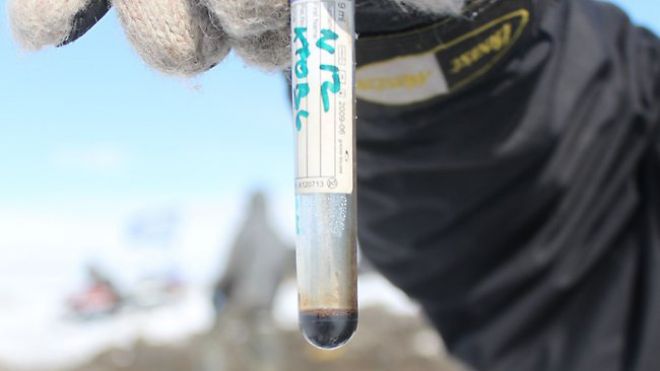
http://www.centurysurvival.com
http://www.getrevolutionready.com

Filed Under: All Stories, Economy, Entitlement, Sci-Tech

Adult Stem Cell Miracle

July 8, 2012 By Editor 2 Comments

Few appear to understand that stem cells that cure an array of illnesses and conditions have already been discovered, and are being utilized in clinics around the world to heal thousands of patients. The stories that are reported on network news and in other mainstream media outlets about “scientists” working on the development of stem cells are essentially propaganda of Pharmaceutical giants and the political left to hide the truth that “adult” stem cells are here and working.

In our article of May 16, 2012 titled The Stem Cell War is Over, we outlined the political resistance by the current Administration to allow this miraculous new treatment in the U.S., based on the left’s support of embryonic stem cells–a technology that is doomed to fail.

In fact, treatment with “adult” stem cells to replace diseased tissues and dead or dying cells is here. Adult stem cells is a term that is a little confusing, because any stem cell that does not come from a fetus is “adult.” Nonetheless, these stem cells are being used to treat thousands of patients suffering from many diseases and conditions, such as arteriosclerosis, multiple sclerosis, heart disease, rheumatoid arthritis, type 2 diabetes mellitus, autism, muscular dystrophy, cerebral palsy and spinal cord injury, to name only a few, are leaving clinics in Panama, Costa Rica and China healthy and often completely cured.

The treatment technology is based on a discovery made in 2003 that isolated adult stem cells. These cells are located in one’s own body fat, where they have been stored in dormancy since the cells were new, or in umbilical cord blood, which until recently has been routinely disposed of as medical waste.

To clarify, stem cells that actually heal are non-embryonic, or “adult” stem cells. The stem cells that we often hear about in mainstream media news reports are embryonic stem cells–cells removed from aborted fetuses and put through an exhaustive and expensive series of modifications to make them suitable for transplanting. These cells are tumorous by nature, and often become cancerous in the recipient’s body, which is why the technology is a massive failure.

The Adult stem cells we are discussing are completely natural, and can be transferred from one patient to another without risk of rejection. The adult stem cells are simply injected into the recipient through an I.V., and they automatically “home” their way to the sick or injured area, and replace the dead or sickly cells. When the bad cells have been replaced, the illness or injury is repaired–permanently, in most cases.

In his new book Cells That Heal Us From Cradle To Grave: A Quantum Leap in Medical Science, Dr. Roger Nocera reveals that this medical science discovery has been developing in medical clinics around the world and proven to be effective in the treatment of many heretofore incurable diseases. Cells That Heal Us From Cradle To Grave explains how this medical science discovery is on a par with Immunology discovered two centuries ago with the smallpox vaccine, and with the discovery of antibiotics a century later. These non-embryonic stem cells have proven to be the answer to many medical problems and will become the solution to our health care cost crisis if the FDA will lift its ban on adult stem cell treatments. Dr. Nocera’s book is a primer on how this amazing new medical technology will transform our current medical health care and pharmaceutical research systems.

Although Americans spend 18% of our GDP on health care, over twice that of most Western countries, we are ranked 72nd in overall health of our citizens by the World Health Organization. As this Healing Cell Quantum Leap in Medical Science becomes widely available Dr. Nocera predicts that the ever rising costs of medical care in this country will diminish significantly and treatments will often actually cure the underlying diseases rather than merely mask the symptoms.

Fox News has recently been running stories about aspects of the new technology, although its full importance and potential ramifications for long term health care costs and prognoses in the U.S. and around the world have not yet been fully examined in those reports.

PUBLIUS

VIDEO: Doctor dying of heart disease is cured with stem cell treatment>

VIDEO: Fox News story and video: Cord Blood Being Used to Save Lives>

VIDEO: Fox News story: Cord Blood Miracle>


Filed Under: All Stories, Ethics, Sci-Tech

The Ethanol Boondoggle

May 17, 2012 By Editor Leave a Comment

With so many drivers looking to stretch their gas dollars many have discovered that avoiding fuel laced with ethanol can be cost effective. Ethanol, an alcohol derived from corn, is causing additional wear and tear on cars according to many owners, and is less efficient than pure gasoline.

Yet, ethanol producers are petitioning the EPA to augment their market share by increasing the percentage of ethanol in gasoline from 10 percent to 15 percent, a 50 percent increase. They cite the greenness of their product and how it decreases reliance on foreign oil imports as their rationale.

In fact, ethanol has been a liberal pipe dream from the beginning. The government enforced incorporation of ethanol into American gasoline supplies has diverted corn crops around the world, driving food prices up by more than 25 percent, and world starvation levels up by a like number.

But it is green, and efficient liberals tell us. Not so fast. Recent studies have blown the cover off yet another green scam. Studies show that every gallon of ethanol requires 1,500 gallons of water and nearly 2 gallons of gasoline to produce. The cost is prohibitive, but as with all green shams, consumer pricing seems somewhat reasonable due only to government (taxpayer) subsidies.

It is time for the government to get out of the way of energy producers. It has been nearly 40 years since the feds have allowed the oil industry to build a new refinery in the U.S., and they have tied up all of the leases on federal lands so that those sources have dried up. Offshore drilling and over-regulation have led to shortages and catastrophic spills. As we’ve heard so much lately, it’s time to Drill Baby, Drill.

Publius

Filed Under: All Stories, Economy, Sci-Tech

« Previous Page
Next Page »

Federalist Press Dispatch

Get breaking political news, investigations, and uncensored analysis delivered directly to your inbox.

Please wait...

Thank you for subscribing to the Federalist Press Dispatch.

Get free info to help your life

Get free info to help your life

Simple bite-sized guides for life, money, civics, and more . . . because some stuff school just didn’t cover.

Brit Axton Mysteries Series

Brit Axton Mysteries Series

Brit Axton Mysteries is a series of young adult adventure novels that lead young Brit Axton and her friends on whirlwind adventures to uncover hidden secrets and long lost treasures.

Byrna Non-lethal Self Protection

Byrna Non-lethal Self Protection

Byrna offers non-lethal self protection at an affordable price. Watch the short video, or click to learn more!

Understanding Cryptocurrency: Essentials for Building Wealth in Digital Currency

Understanding Cryptocurrency: Essentials for Building Wealth in Digital Currency

Understanding Cryptocurrency serves as a definitive guide for novice investors looking to understand the world of cryptocurrency and harness its potential for financial growth and prosperity.

Real Estate Wealth Strategies During High Inflation

Real Estate Wealth Strategies During High Inflation

Real Estate Wealth Strategies During High Inflation is a comprehensive guide on navigating the real estate market, offering strategies and insights for successful investing, during high inflation and interest rates.

Follow us

  • parler
  • welcome-widgets-menus
  • facebook
  • envato

Privacy Policy

Terms of Service

Economy

The “Authoritarian” Narrative vs. Reality: Why Trump’s Positions Are Historically Mainstream

Election Autopsy: What Yesterday’s Results Revealed

Why Is the United States Still Allowing Iran to Threaten the Strait of Hormuz?

Elections

Stephen Colbert’s Final Curtain: When Late Night Became Political Therapy Instead of Comedy

Where Are the Handcuffs?

Skid Row Vote-Buying Case Exposes How Dems Cheat America’s Election System

Foreign

BREAKING: President Trump Orders Devastating Airstrikes on Iran’s Nuclear Weapons Facilities in Historic Preemptive Strike

Jamie Lee Curtis Wept Over Kanye’s Antisemitism—But Where Is Her Outrage Now?

Trump confirms ‘comprehensive’ trade deal with UK

Crime

When Political Rhetoric Becomes a Security Threat—Yet Another Assassination Attempt

Where Are the Handcuffs?

Skid Row Vote-Buying Case Exposes How Dems Cheat America’s Election System

Science Tech

Fed Appeals Court Judge Stayed Silent for Decades. Now Witnesses Beginning to Talk.

Trump’s ISIS Strike in Nigeria Sends a Message: America Can Still Hunt Terrorists Anywhere

Trump’s UFO Disclosure Has Changed the Conversation — But Not Yet Answered the Biggest Question

Reader Responses

  • Linda Livaudais on Trump’s UFO Disclosure Has Changed the Conversation — But Not Yet Answered the Biggest Question
  • T059736 on Trump and Musk Announce Plans to Shut Down USAID
  • C.Josef.D on ‘Pay to Play’ at Clinton Foundation Under Investigation
  • John D Cole on Biden Says ‘You ain’t black’ If You Don’t Vote for Him
  • Ed on U.S. Attorney Huber Moving to Indict Clintons and Others

Copyright © 2026 by Federalist Press · All rights reserved · Website design by RoadRunner CRM · Content Wiriting by GhostWriter · Log in