
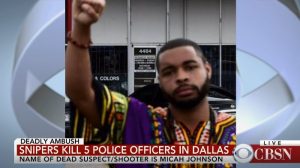
 The sniper who killed five Dallas police officers Thursday night as they guarded protesters at an anti-police brutality march was angry about recent shootings by police and “wanted to kill white people,” according to authorities.
The Associated Press identified the gunman as Micah Xavier Johnson, 25, who was blown up by a police robot while holed up in a parking garage early Friday morning after negotiations with police broke down.
The murderous rampage was the deadliest day in American law enforcement since 9/11 and prompted President Obama to declare it a “vicious, calculated and despicable attack on law enforcement.”
“We’re hurting,” said Dallas Police Chief David Brown in a Friday morning news conference. “Our profession is hurting. Dallas officers are hurting. We are heartbroken. There are no words to describe the atrocity that occurred to our city. All I know is this must stop, this divisiveness betweeen our police and our citizens.”
The protest was one of several around the country, prompted by police shootings of black men in Louisiana and Minnesota.
Brown said the dead suspect told authorities he was angry about police shootings.
“He said he was upset at white people,” Brown said. “He said he wanted to kill white people, especially white police officers.”
Initial reports said there was more than one sniper, but at the news conference, Brown indicated the dead suspect may have been the sole gunman. Although he told police he was “not affiliated” with anyone else, three others were being held.
A woman was taken into custody near the garage and two men reportedly seen packing a camouflage bag into a Mercedes before speeding from the scene were apprehended and detained, the mayor said.
A Dallas police source estimated to Fox News that at least 60 rounds were fired over a “large kill zone.” The source added that the shooting would have required considerable planning.
The suspect was killed when police sent an explosives-equipped robot into the El Centro Community College parking garage to detonate the bomb after negotiations went nowhere, Brown said, refuting earlier reports that the man killed himself. Before he died, he had claimed that explosives had been set around the city, and much of downtown Dallas was locked down while police searched before determining there were no bombs.
“It’s a heartbreaking moment for the city of Dallas,” Mayor Mike Rawlings said. “I ask that everybody focus on one thing right now, and that is Dallas police officers, their families, those that are deceased [and] those that are in the hospital fighting for their lives.”
Obama, speaking from a NATO summit in Poland, said America is “horrified” over the shootings and asked all Americans to pray for the fallen officers and their families. He renewed his calls for more gun control.
“There’s no possible justification for these kinds of attacks or any violence against law enforcement,” Obama said, hours after a pre-attack speech in which he cited two racially charged police shootings earlier in the week and called for an end to bias in law enforcement.
One of the cops killed was identified as Dallas Area Rapid Transit Police Officer Brent Thompson, 43. The others were picked off as they stood guard during the protest.
Three other DART officers were wounded, but they are expected to recover, Lyons said. As many as three city police officers reportedly were in critical condition.
Witness Carlos Harris told the Dallas Morning News the gunfire was “strategic. It was tap-tap-pause. Tap-tap-pause.”
Texas Gov. Greg Abbott released a statement saying he has directed the Texas Department of Public Safety director to offer “whatever assistance the City of Dallas needs at this time.”
“In times like this we must remember — and emphasize — the importance of uniting as Americans,” Abbott said.
The protesters had gathered after a Minnesota officer on Wednesday fatally shot Philando Castile while he was in a car with a woman and a child in a St. Paul suburb. The aftermath of the shooting was purportedly livestreamed in a widely shared Facebook video.
A day earlier, Alton Sterling was shot in Louisiana after being pinned to the pavement by two white officers. That, too, was captured on a cellphone video.
Other protests across the U.S. on Thursday were peaceful. In midtown Manhattan, protesters first gathered in Union Square Park. In Minnesota, where Castile was shot, hundreds of protesters marched in the rain from a vigil to the governor’s official residence. Protesters also marched in Atlanta, Chicago and Philadelphia.
Anti-police protests have roiled the nation in each of the last two summers following controversial police shootings, including the 2014 shooting of Michael Brown in Ferguson, Mo., and last April’s death of Freddie Gray while in custody of Baltimore police.
A Department of Justice investigation cleared the police officer who shot Brown, and, of the six Baltimore police officers charged in Gray’s death, two have been acquitted, one’s case was declared a mistrial and three more face trial.
The attack made Thursday the deadliest day for law officers since Sept. 11, 2001, when 72 officers died, according to the National Law Enforcement Officers Memorial Fund.
Fox News’ Bret Baier, Casey Stegall, and The Associated Press contributed to this report.
 FBI Director James Comey appeared before the House Oversight and Government Reform Committee on Thursday to further detail the FBI’s yearlong investigation into former Secretary of State Hillary Clinton’s use of a private email server and handling of classified information while she was secretary of state.
 IN CONGRESS, July 4, 1776.
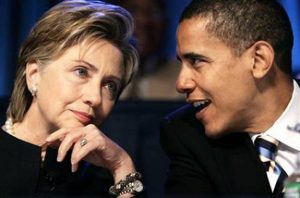 Despite clear guilt, there is absolutely no chance that the Obama Justice Department will indict Hillary Clinton.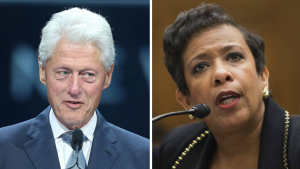
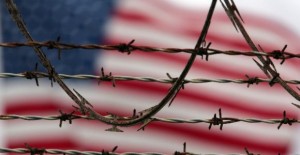 With the level of the federal deficit approaching $19,000,000,000 (trillions), the interest on which costs Americans the first $1,500,000,000 they make every day, and the recent explosion of federal power over the citizens and the states as handed to U.S. socialists by the Supreme Court, the independence from government rule and tyranny sought by our Founders is all but neutralized. We and our children are indebted and imprisoned by design of a leftist attack on our country.
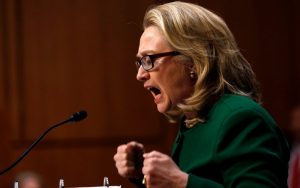 A damning report authored by the Republican-led House committee probing the Benghazi terror attacks faulted the Obama administration for a range of missteps before, during and after the fatal 2012 attacks – saying top administration officials huddled to craft their public response while military assets waited hours to deploy to Libya.
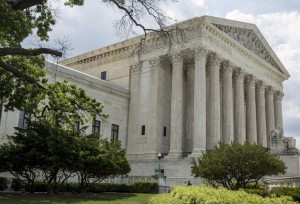 SUPREME COURT’S TIE DECISION BLOCKS PRESIDENT OBAMA’S IMMIGRATION EXECUTIVE ACTIONS, DELIVERING A VICTORY TO STATES CHALLENGING HIS REPRIEVE OF ILLEGAL IMMIGRANT DEPORTATIONS
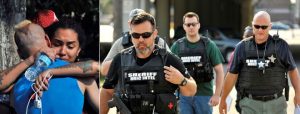 A gunman who federal authorities say had possible ties to terrorism opened fire early Sunday morning in a packed Orlando nightclub, killing 50 people and wounding at least 53 more in a bloody scene that ended hours later when police stormed the building and killed the shooter.
 Singer Christina Grimmie, a performer on “The Voice” in 2014, has died after being shot at a concert venue in Orlando, Florida, Friday evening, her rep said in a statement. She was 22.
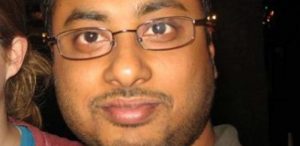 A Ph.D. gunman crossed a victim off his “kill list” yesterday when he fatally shot a UCLA professor over allegations of stolen code and sparked a campus-wide lockdown in the middle of finals week. Mainak Sarkar, 38, had accused Professor William Klug, 39, of the theft in March 2016. On June 1, Sarkar confronted Klug in UCLA’s engineering complex and shot him dead with a 9mm handgun. Sarkar then took his own life.
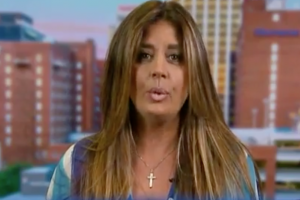 A former model who was featured at the center of a lengthy New York Times report that assailed Donald Trump’s treatment of women said Monday that her account was taken out of context, misquoted and “spun” by the Times in order to portray the Republican presidential candidate in a negative light.
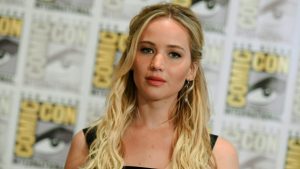 We have so many opportunities in the workforce, yet women are often still told that we’ve got to run ourselves ragged and forego balance in order to break through the glass ceiling. Why?
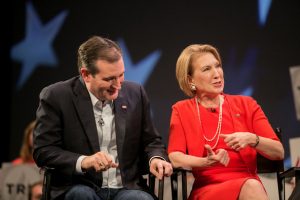 Ted Cruz told reporters Wednesday that he’ll be making a “major announcement” during a 4 p.m. ET rally in Indianapolis, where he’s expected to announce that ex-presidential hopeful and former Hewlett-Packard CEO Carly Fiorina will be his running mate should he win the GOP nomination.
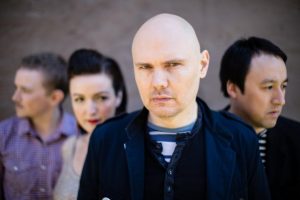 mashing Pumpkins founder Billy Corgan blasted social justice warriors and spoke up for the American dream in a wide-ranging interview on the Alex Jones Infowars radio show on Tuesday.
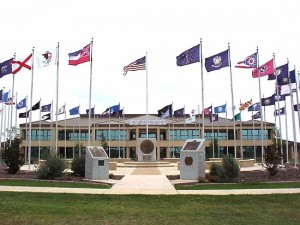 Police and sheriff’s deputies rushed to Lackland Air Force Base in Texas after they received reports of a shooting Friday.
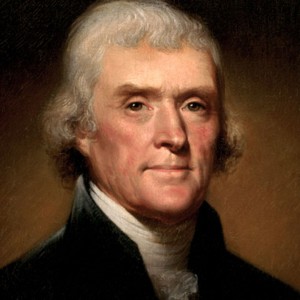 The Myth of Thomas Jefferson and Sally Hemings
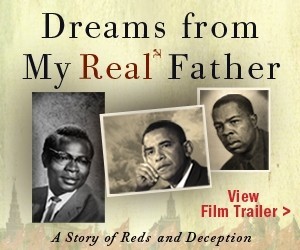 The three Democrats on the Federal Election Commission, in their latest and boldest move to regulate conservative media, voted in unison to punish a movie maker critical of President Obama after he distributed for free his latest work, Dreams of My Real Father: A Story of Reds and Deception.
 Chelsea Clinton, in an implicit swipe at the impact of President Obama’s health care law, recently told voters that many Americans still are facing “crushing costs” from health insurance even under the Affordable Care Act.
We have so many opportunities in the workforce, yet women are often still told that we’ve got to run ourselves ragged and forego balance in order to break through the glass ceiling. Why?
Part of the reason work-life balance is difficult to achieve is because our society places so much weight on the financial success of one’s career.
For women, this has been particularly difficult because of the claim that we are underpaid compared with men and the notion that we have to work twice as hard to get to a level playing field. The ubiquitous statistic that women earn 77 cents for every dollar men earn is a compelling story that points to systemic discrimination against women.