
 Since the Supreme Court’s ruling on the President’s healthcare law a few weeks ago, a lot of people on both sides of the issue have asked about my reaction to it. It probably goes without saying at this point that I think the law was an enormous mistake from a policy standpoint – $800 billion in new taxes ($675 billion in the most recent estimates by the Joint Committee on Taxation plus roughly another $125 billion in taxes from their 2010 estimates of the individual mandate, employer mandate, and other revenues – likely to go up further), plus $500 billion in cuts to Medicare, zero done to control the growing costs in healthcare, etc – but setting aside the specific issue of health reform, my biggest concerns surround the ruling itself and the precedent it sets. These are issues that frankly, I think the media has a responsibility to make sure Americans are informed about.
Here is the short version. The Supreme Court ruled that the individual mandate requiring Americans to buy health insurance could not be allowed under Congress’ constitutional authority to regulate interstate commerce. The Court said very plainly that the federal government does not have the authority to require you to buy something and penalize you for failing to do it.
But in the same breath, citing Congress’ authority to levy taxes, the Court said that although the federal government can’t force you to buy health insurance, they can compel you to buy it by taxing you if you don’t. In a nutshell, the government can’t fine you for not buying something, but they can hit you with a tax penalty if you don’t… I frankly don’t see a meaningful difference between the two.
Think about it this way: the federal government has long been able to encourage certain behavior through the tax code (think about the mortgage interest tax deduction), but it has never been able to compel you to go out and buy a house by threatening to hit you with a tax penalty if you didn’t. That is a huge difference. On page 39 of his majority opinion, Chief Justice John Roberts used the example of energy efficient windows. He suggested that although the federal government couldn’t require you to buy energy efficient windows, it could essentially force you to do so by levying a tax on you if you don’t.
I don’t think anybody out there disputes the benefits of having health insurance or lowering your electricity bill, but in the United States of America, those decisions have always been up to the people – not up to the federal government. And regardless of how you feel about the healthcare law, I think this is something that all Americans should consider very carefully. Should Congress have the power to force American citizens into buying things that they don’t want? Should the federal government be able to force you to buy a certain car, or windows, or insurance, or anything else that the Congress thinks you should have? Is that a power that We The People want to surrender?
I don’t believe it is. But that’s what the Supreme Court has done here. Regardless of whether or not the President’s healthcare law is repealed, the precedent has been set. The government now has the legal authority to force you to buy things. That wasn’t the case before the ruling and it is not something that is easily undone. Following on the heels of our Independence Day, when all Americans gather together to celebrate our freedom and the sacrifices of those who made it possible, this is an issue that I think we should all consider very carefully. Are we less free as a people in the wake of this ruling and is that something we should be comfortable with?
You know where I stand.
Congressman Richard B. Nugent
 As we demonstrated in our article of May 16, 2012,
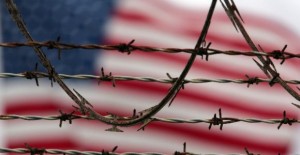 With the level of the federal deficit approaching $16,000,000,000 (trillions), the interest on which costs Americans the first $1,200,000,000 they make every day, and the recent explosion of federal power over the citizens and the states as handed to U.S. socialists by the Supreme Court, the independence from government rule and tyranny sought by our Founders is all but neutralized. We and our children are indebted and imprisoned by design of a leftist attack on our country.
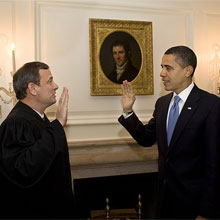 Supreme Court Chief Justice John Roberts exploded from the closet last week, revealing himself for the undercover leftist that he is, forever propelling the US into an Orwellian nightmare of government control and loss of personal liberty.
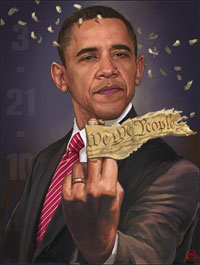 constitutional authority to make some sort of sense of it all. Perhaps the dear boy was telegraphing a method of ensuring Obama’s defeat in November, we have heard.
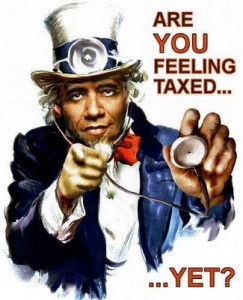 Barack Hussein Obama has promised the American people on numerous occasions that he would not increase taxes on any American or American family earning less than $250,000 a year. When pressed for clarification and commitment, his response has been a consistent No New Taxes, reminiscent of Bush I’s “Read My Lips.”
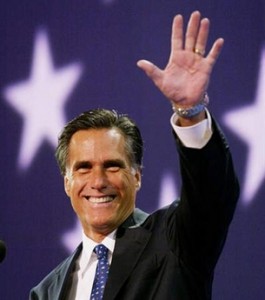 We are surprised each time we hear that presidential candidate Mitt Romney needs to come up with an economic plan if he wants to distinguish himself from President Obama–who has proved he has no economic plan. Certainly, throwing trillions of taxpayer and borrowed dollars at his friends’ companies and organizations has resulted in nothing but record high unemployment rates, burgeoning deficits, and economic downturns.
 We who have watched the transformation of America’s political landscape over the past few decades better understand what has been lost than newcomers to the scene. There have been changes, and many, and most for the worse.
 class? Shouldn’t the middle class be somewhere in the middle? We instinctively imagine that the middle class would consist of those above the bottom, and below the top, forming a bell curve. Although a bell curve is a technical concept with many possible variables, if we are in a class being graded on a bell curve, we would expect that there is a top 20%, a bottom 20%, and 60% distributed throughout the “middle.” There is our true middle class.
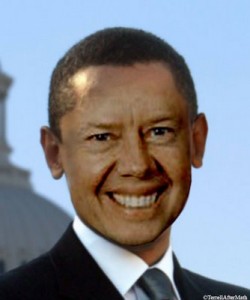 President Jimmy Carter promised Hope and Change to an America dragged through the mud by a media feeding frenzy during the Nixon Watergate era.
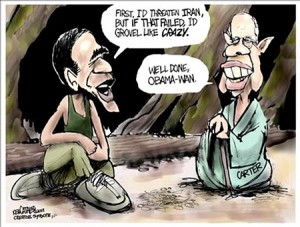 shortages and rationing schemes.
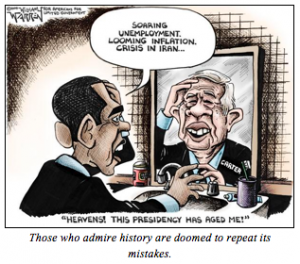 were kept in Iran and paraded before the world media up until President Elect Ronald Reagan sent Iran the message, “Let my people go,” and they were brushed up and sent back immediately.
 Wisconsin is a state like many others in the Midwest, home to working people just trying to live the American dream. In recent decades the state has been heavily influenced by unions, with Democratic political leaders striking sweetheart union deals in the tradition of leftist politics. The scheme is similar to the Harry Hopkins political plan—Tax, Spend, Elect!—only with a middleman inserted between the politician and the treasury; the union boss.
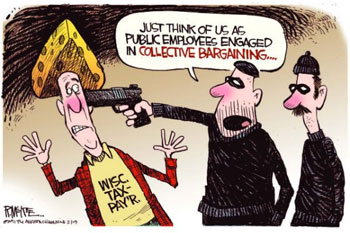 brought in Governor Scott Walker and allowed him to do the job that responsible government must do. He and his bare majority in the state capital passed legislation that stripped the most egregious abuses of power from union boss hands. The uproar was heard around the state as militant union thugs “occupied” the capitol building and the streets, while Democrat senators left the state en masse during session to rob the legislature of a quorum to pass its initiatives.
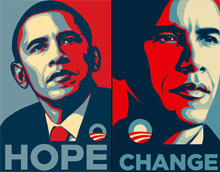 President Obama ran on hope and change when he asked America to make him the president. On the day he took office gasoline prices were $1.79.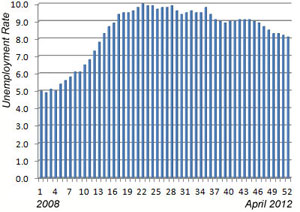
 With so many drivers looking to stretch their gas dollars many have discovered that avoiding fuel laced with ethanol can be cost effective. Ethanol, an alcohol derived from corn, is causing additional wear and tear on cars according to many owners, and is less efficient than pure gasoline.
 As the propaganda press stirs up the occupying proletariat in our nation, and our streets become filled with couch potatoes demanding their fair share of that which has been earned by others, the insanity and impossibility of the scene serves as ample proof that too much weed indeed dulls the human brain’s ability to reason.
 President Obama and his associates on the left follow the Keynesian theory of economics, the idea that when economies wane, government deficit spending will reignite the flame. To that end the Obama administration has spent trillions of dollars in 3 years, around 40 percent of which has been borrowed, and on which the country is now paying interest.
 Those who read George Bush’s Decision Points may have been interested to learn that up until the 9/11 attacks the most important issue facing his administration in his opinion was stem cell policy.
Reader Responses