
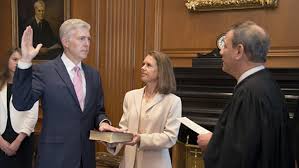
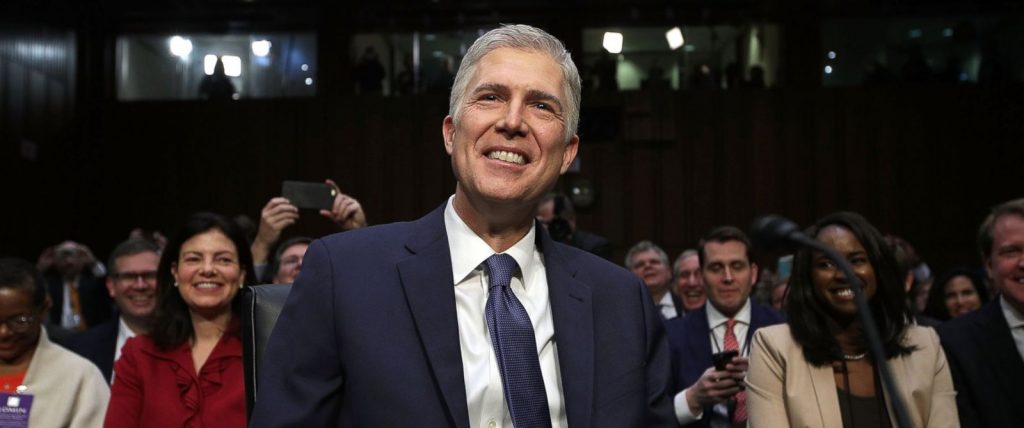
 Justice Neil Gorsuch was sworn in to the Supreme Court Monday, capping a grueling confirmation process and filling the seat once held by the late Antonin Scalia.
Gorsuch took the Constitutional Oath in a private ceremony, administered by Chief Justice John Roberts in the Supreme Court’s Justice’s Conference Room. He was accompanied by his wife Louise, who held the Bible, and his two daughters.
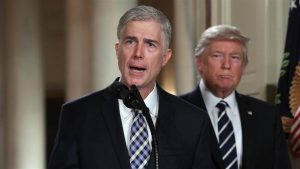
Later, in a public ceremony at the White House, Justice Anthony Kennedy – Gorsuch’s former boss – administered the Judicial Oath.
“We are here to celebrate history,” President Trump said, calling Gorsuch a man of “unmatched qualification” and “deeply devoted” to the Constitution.
“I have no doubt you will rise to the occasion, and the decisions you make will protect our Constitution today and for many generations of Americans to come,” he said.
Gorsuch takes the seat of the late Justice Scalia, who died in February last year, and whom Gorsuch has been compared favorably to by conservatives hopeful for another originalist on the court.
Gorsuch is likely to cast a deciding vote in a number of high-profile cases, which in part explains the terse and partisan hearing the 49-year-old faced. The high stakes led Republicans to trigger the “nuclear option” last week to kill the 60-vote filibuster threshold for Supreme Court nominees.
Here’s a preview of what Justice Gorsuch will be looking at:
Trinity Lutheran Church of Columbia, Inc. v. Pauley
Seen as the hot-button case of the Court’s sitting, this case involves a Lutheran preschool in Missouri that was denied state funds to improve a playground due to a law banning prohibiting government aid to schools with religious affiliations. Trinity Lutheran and supporters are hoping that, given Gorsuch’s rulings on past church-state issues, he will back them in this one.
Weaver v. Massachusetts and Davila v. Davis
The first case surrounds a 16-year-old who murdered a 15-year-old in 2003, and his lawyers claim his Sixth Amendment rights were violated and he was given inadequate representation after a court kept his family locked out while a jury was selected and his lawyers did not object.
The Davila case involves a Texas gang member convicted of killing a 5-year-old and her grandmother in a shooting. But lawyers claim he was given ineffective counsel, and specifically they question the legal remedies given to capital defendants.
Maslenjak v. U.S.
Justices will hear the case of an ethnic Serb from Bosnia, who was stripped of U.S. citizenship for lying about how she came to the country. The U.S. Court of Appeals for the 6th Circuit ruled that a naturalized citizen can be stripped of citizenship in a criminal proceeding based on immaterial false statements. Gorsuch’s record is unclear on immigration issues, and he only ruled on a few in his time on the 10th Circuit.
California Public Employees’ Retirement System v. ANZ Securities, Inc.
This case involves the question of whether certain class-action securities lawsuits can be barred because they were filed too late.
The retirement fund in California has sued various financial institutions over their alleged role in the 2008 collapse of Lehman Brothers.
How the justices rule in this case is expected to have serious consequences for institutional investors and also will determine whether putative class members must file individual complaints before the three-year period imposed by Section 13 of the Securities Act has run out.
Fox News’ Bill Mears and Andrew O’Reilly and The Associated Press contributed to this report.

 The Washington Post fact-checker gave the former national security adviser a rating of “four Pinocchios” — the worst rating on their truth scale.

 Senate Republicans have voted to stop the Democrats’ filibuster of President Trump’s nominee to the Supreme Court, invoking the so-called nuclear option.
 House Intelligence Committee Chairman Devin Nunes on Thursday stepped down temporarily from his role leading the committee’s probe of Russian interference in the 2016 presidential campaign and possible surveillance of Trump associates by the prior administration.
 House Speaker Paul Ryan backed Nunes’ decision.
 The Pentagon now assesses the North Korean missile launch Wednesday likely was a failure, Fox News has learned.

 Susan Rice claimed ignorance on Trump team surveillance, before role in unmasking revealed
 Rice, however, has her past issues with public statements.
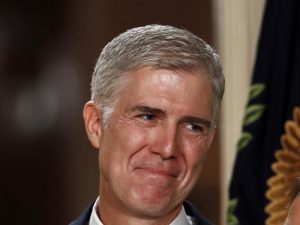 The Senate Judiciary Committee voted Monday along party lines to endorse Judge Neil Gorsuch for the Supreme Court, setting up a showdown between Democratic and Republican senators in a series of final votes expected later this week.
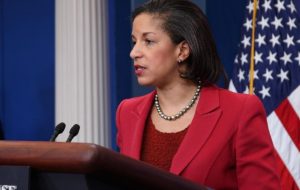 Multiple sources tell Fox News that Susan Rice, former national security adviser under then-President Barack Obama, requested to unmask the names of Trump transition officials caught up in surveillance.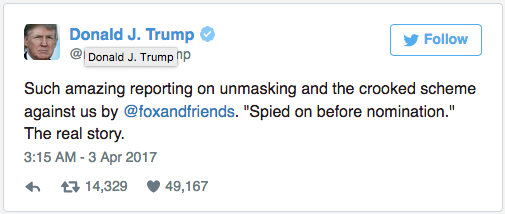
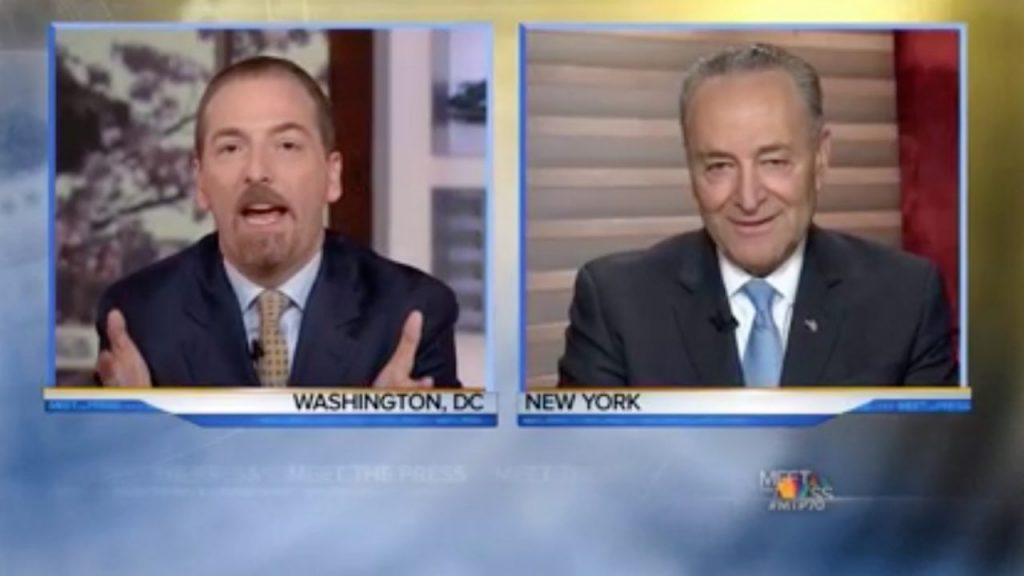
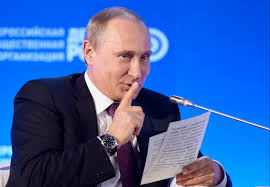 Russia is known for many things—communism, vodka and bizarre dancing, for starters—but one thing Russia is not well-known for is its sense of humor. Perhaps that’s about to change.

 This weekend, the NY Times will publish a front-page story on former Donald Trump advisor Paul Manafort. Can you guess what shocking revelation the Times will be sharing with its readers? No doubt it will highlight Manafort’s long-time business activities in Russia, and close with a comment from another ubiquitous anonymous source, reminding the reader that the justice Department is investigating certain Trump advisors and their “alleged” contact with Russians during the 2016 Campaign. You can be sure that the Times article will not mention that this investigation, which is becoming more disturbing everyday, has yet to find the slightest bit of evidence indicating wrong-doing on the part of Trump or his staff. Between the Washington Post and the Times, its beginning to appear as if these two once-respected newspapers are taking turns, publishing stories about Trump advisors or cabinet members, which provide nothing but the same basic allegation, dressed up with the all-important comment from the secret source. Currently, journalists in DC seem to have an endless supply of inside government sources. At first, these leakers caused a firestorm by providing the Associated Press and others with the identity of three Trump advisors or confidants who had met with Russian government officials during the campaign. What should be most disturbing is the willingness of the AP, the Post and the Times, to print information which is obviously classified and illegally obtained.
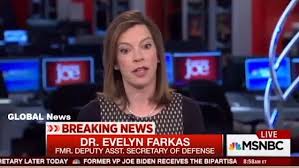 The White House is asking Congress to dig deeper into whether communications of Trump associates were improperly picked up and disseminated during surveillance operations, after an ex-Obama administration official suggested her former colleagues tried to gather such material.
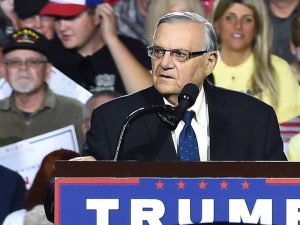 Maricopa County Sheriff Joe Arpaio was formally charged with criminal contempt of court, with liberal Obama prosecutors saying he disobeyed a liberal judge’s order by detaining illegal aliens in his county after being told to look the other way. The sheriff for much of the Phoenix metro area could face up to six months behind bars if convicted.
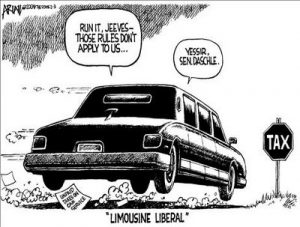 Discussing ethics with liberals can be tough. While they tend not to respond to arguments featuring universal truths such as those commonly found in the realm of religion, I’ve found a sure-fire way to start such a discussion with a liberal: namely, ask the age-old question, “What would happen if everyone did what you do?” For example, is shoplifting really that bad? Think about if everyone was a shoplifter. Is it unethical to keep multiple McMansions, swimming pools, and foreign luxury cars? Is flying on jumbo jets, eating at Michelin-star restaurants, and staying at luxury hotels unethical? Just ask what would happen if everyone could. In the most literal sense, what if the Earth’s seven billion people consumed as much food, fossil fuel, electricity, plastic, or anything else as does a typical wealthy liberal family? I don’t think it’s a stretch to say that if the masses in India or Vietnam could match that lifestyle, they would do so in a heartbeat.
 The use of parochial imagery here is no mistake: the “Church of Climate Change” is most certainly a church, based on a shared faith–a dogma really. Take for example one of its more obvious rituals, the annual “Earth Hour.” As part of the event’s solemn rites, residents in thousands of cities worldwide are encouraged to turn off their lights for 60 minutes, to express their solidarity with protecting the environment. Just as many relig
Recent Comments