
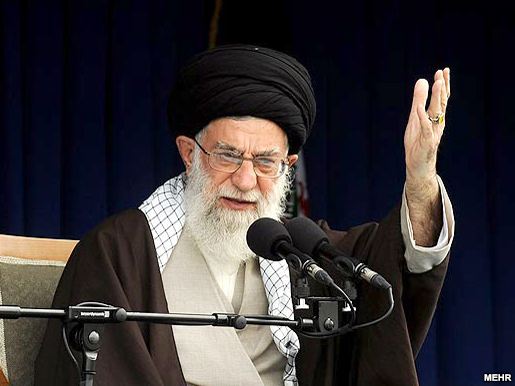
 Iran’s leader said in a speech that the country would annihilate the Israeli cities of Tel Aviv and Haifa if it were attacked by Israel, and criticized the U.S. over nuclear talks.
The Supreme Leader Ayatollah Ali Khamenei, who has final say on all key decisions in Iran, says Israel is too small to be called an enemy, and that the United States is the “center of animosity” toward the Islamic republic.
“Sometimes, leaders of the Zionist regime threaten us. They threaten to take military action. They are not in the size to be put in the list of Iranian nation’s enemies,” Khamenei said in comments broadcast live on state TV.
In a strong warning to Israel, Khamenei said that if Israel attacked Iran, the “Islamic Republic will raze Tel Aviv and Haifa to the ground.”
He made the comments on Thursday to a crowd in northeastern Iran on the first day of the new Persian calendar year. His speech in the city of Mashhad was broadcast live on state radio.
Israel, which is believed to have the only nuclear weapons arsenal in the Mideast, has threatened to take military action against Iran if diplomacy fails to stop Iran’s alleged nuclear weapons program.
Iran says its nuclear program is peaceful.
In the speech, Khamenei said he’s not opposed to direct talks with the U.S. to resolve its nuclear standoff with the West.
But he added that he’s not optimistic that such talks would yield results unless Washington stops imposing sanctions against the Islamic Republic.
“The Americans constantly send messages to us through various ways, saying let’s hold (bilateral) talks on the nuclear issue,” Khamenei said. “I’m not optimistic on these talks. Why? Because our previous experiences show that dialogue, in the logic of American gentlemen … means let’s sit down and talk so that you (Iran) accept our views. This is not dialogue. This is imposition and we won’t give in to it.”
Iran is living under stepped-up Western sanctions that include a total oil embargo and banking restrictions that make it increasingly difficult for Iran’s Asian customers to pay for oil deliveries. Iran’s income from oil and gas exports has dropped by about 50 percent as a result of sanctions.
Khamenei said the U.S. has sent messages to Tehran, sometimes in writing, saying it is willing to hold bilateral talks with Tehran separately from the negotiations Iran is holding with five permanent members of the U.N. Security Council plus Germany.
“I’m not optimistic about these talks, but I’m not opposed to it either,” he said.
However, Khamenei said the best way to resolve the standoff would be for the West to recognize Iran’s right to enrich uranium and agree to a monitoring process to ensure that it won’t be used for weapons.
“Iran only wants that the world recognize its enrichment right which is its natural right,” he said.
Khamenei said there is no reason why Tehran should trust the U.S. when Washington doesn’t trust Tehran.
“We have repeatedly told you that we are not after nuclear weapons. You say you don’t believe us. Why should we believe you? When you are not ready to accept an honest and logical remark, why should we accept your words that have been disproved many times?” he asked.
Khamenei alleged that the U.S. wants the nuclear issue to remain unresolved so it will continue to have basis for the sanctions, which he said have harmed, but not crippled the Iranian economy.
“Yes, sanctions have had an effect. If they (U.S.) want to be happy, let them be,” he said.
“Our economy suffers from the problem of being dependent on oil,” he said. “We have to distance our economy (from oil dependence).”
Published March 21, 2013 / FoxNews.com / The Associated Press contributed to this report.

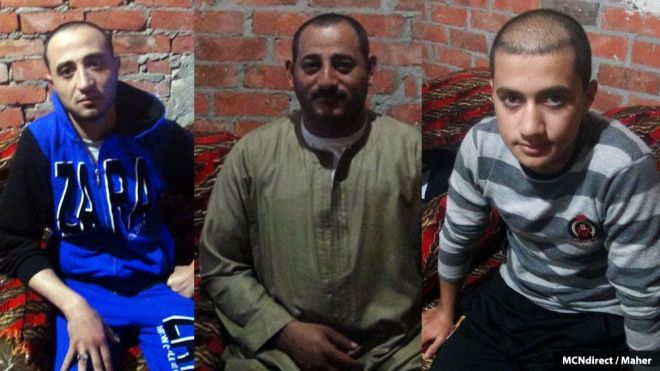
 the para-police organization the Ansar el-Sharia forced them to make pro-Islam declarations and insult the late Coptic Pope Shenouda. The claims came a day after another Copt arrested in the roundup was buried after dying while in Libyan custody. His family says he was tortured, as well.
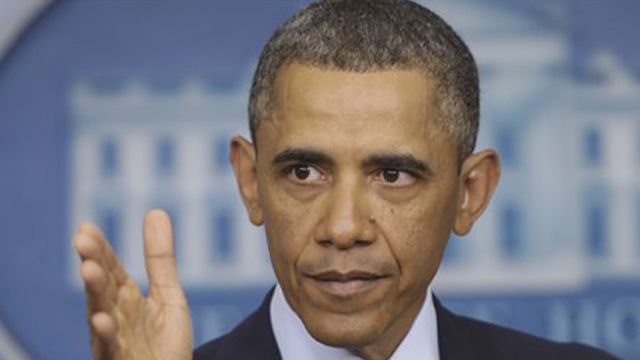

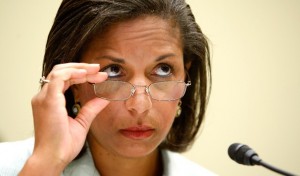 “Today, I made the decision that it was the best thing for our country, for the American people that I not continue to be considered by the president for nomination of secretary of state,” Rice said.
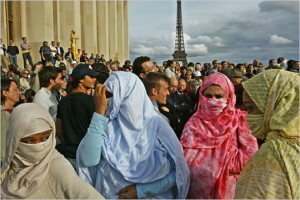 Friday in Paris. A hidden camera shows streets blocked by huge crowds of Muslim worshippers and enforced by a private security force.
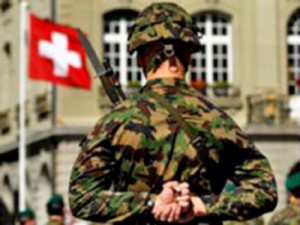 In a revealing move the Swiss Defense Ministry is beefing up its military presence to defend Swiss borders against a massive influx of refugees from Greece, Spain, France, Italy, Portugal and other European Union countries on the brink of collapse.
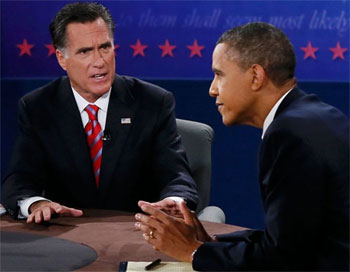 The presidential contenders met Monday evening for the final debate before the elections. Their respective strategies were revealed early – Obama would attempt to paint Romney as a cowboy on foreign policy and Romney would avoid confrontations and maintain his 6% lead in the polls.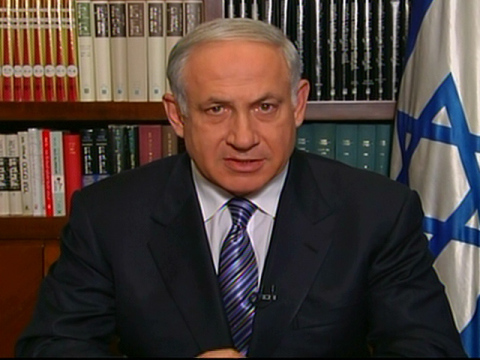
Reader Responses