• Home
  • Mission
  • Federalist Papers
  • Foundation
  • U.S. Constitution
  • Bill of Rights

Federalist Press | Defending Liberty — Informing America

Breaking News and Political Commentary

  • All Stories
  • Economy
  • Elections
  • Entitlement
  • Ethics
  • Foreign
  • Gender
  • Religion
  • Sci-Tech

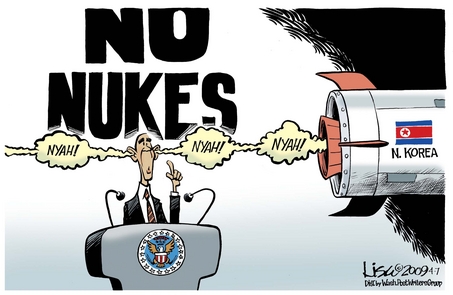
US Sends B-2 Stealth Bombers Over South Korea

March 28, 2013 By Editor Leave a Comment

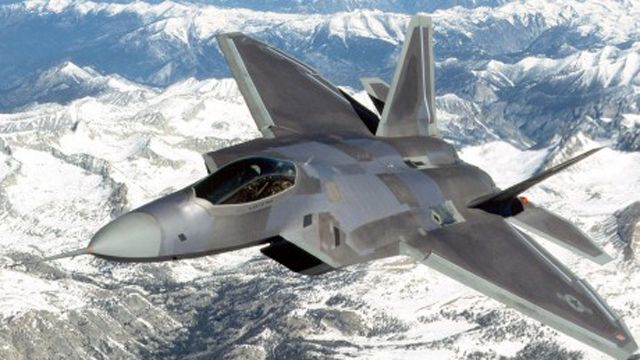
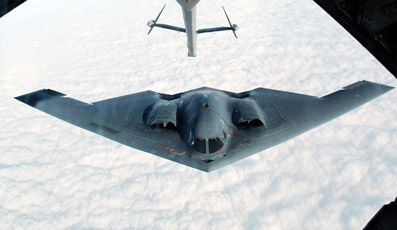
stealth_bomberThe U.S. military announced Thursday that two B-2 stealth bombers were sent to South Korea to participate in a training exercise, demonstrating the Pentagon’s commitment to defend its ally against threats from North Korea.

The two B-2 Spirit bombers flew more than 6,500 miles from Whiteman Air Force Base in Missouri to South Korea, dropping inert munitions before returning to the U.S., according to a statement released by U.S. Forces Korea.

“The United States is steadfast in its alliance commitment to the defense of the Republic of Korea, to deterring aggression, and to ensuring peace and stability in the region,” the statement said.

The B-2 Spirit is capable of delivering both conventional and nuclear weapons. The Pentagon said the mission was part of its ongoing Foal Eagle training exercise series, which began March 1 and ends April 30.

The exercise was announced a day after North Korea said it had shut down a key military hotline usually used to arrange passage for workers and goods through the Demilitarized Zone.

The hotline shutdown follows a torrent of bellicose rhetoric in recent weeks from North Korea, which is angry about annual South Korea-U.S. military drills and U.N. sanctions over its nuclear test last month. North Korea calls the drills rehearsal for an invasion; Seoul and Washington say the training is defensive in nature and that they have no intention of attacking.

North Korea’s threats and provocations are seen as efforts to provoke the new government in Seoul, led by President Park Geun-hye, to change its policies toward Pyongyang. North Korea’s moves at home to order troops into “combat readiness” are seen as ways to build domestic unity as young leader Kim Jong Un strengthens his military credentials.

North Korea previously cut Red Cross phone and fax hotlines with South Korea, and another communication channel with the U.S.-led U.N. command at the border between the Koreas. Three other telephone hotlines used only to exchange information about air traffic were still operating normally Thursday, according to South Korea’s Air Traffic Center.

North Korea said there was no need for communication between the countries in a situation “where a war may break out at any moment.”

In Washington, U.S. State Department spokesman Patrick Ventrell told reporters that North Korea’s “latest threat to cut off communication links coupled with its provocative rhetoric is not constructive to ensuring peace and stability on the peninsula.”

Although North Korea has vowed nuclear strikes on the U.S., analysts outside the country have seen no proof that North Korean scientists have yet mastered the technology needed to build a nuclear warhead small enough to mount on a missile.

Published March 28, 2013 / FoxNews.com / The Associated Press contributed to this report.

Filed Under: All Stories, Foreign

North Korea Cuts Hotline With South Korea

March 27, 2013 By Editor Leave a Comment

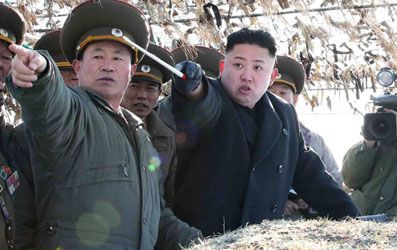
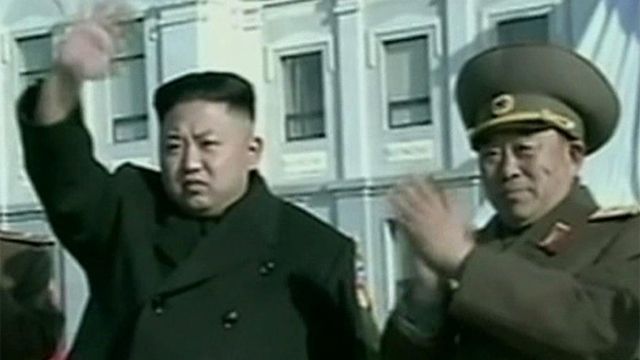
NorthKoreaSEOUL, South Korea –  Raising tensions with South Korea yet again, North Korea cut a military hotline that has been essential in operating the last major symbol of inter-Korean cooperation: an industrial complex in the North that employs hundreds of workers from the South.

There was no immediate word about what cutting one of the few remaining official North-South links would mean for South Korean workers who were at the Kaesong industrial complex. When the link was last cut, in 2009, many South Koreans were stranded in the North.

The hotline shutdown is the latest of many threats and provocative actions from North Korea, which is angry over U.S.-South Korean military drills and recent U.N. sanctions punishing it for its Feb. 12 nuclear test. In a statement announcing the shutdown, the North repeated its claim that war may break out any moment.

Outside North Korea, Pyongyang’s actions are seen in part as an effort to spur dormant diplomatic talks to wrest outside aid, and to strengthen internal loyalty to young leader Kim Jong Un and build up his military credentials.

South Korean officials said that about 750 South Koreans were in Kaesong on Wednesday, and that the two Koreas had normal communications earlier in the day over the hotline when South Korean workers traveled back and forth to the factory park as scheduled.

Workers at Kaesong could also be contacted directly by phone from South Korea on Wednesday.

A South Korean worker for Pyxis, a company that produces jewelry cases at Kaesong, said in a phone interview that he was worried about a possible delay in production if cross-border travel is banned again.

“That would make it hard for us to bring in materials and ship out new products,” said the worker, who wouldn’t provide his name because of company rules.

The worker, who has been in Kaesong since Monday, said he wasn’t scared.

“It’s all right. I’ve worked and lived with tension here for eight years now. I’m used to it,” he said.

Pyongyang’s action was announced in a message that North Korea’s chief delegate to inter-Korean military talks sent to his South Korean counterpart.

Seoul’s Unification Ministry called the move an “unhelpful measure for the safe operation of the Kaesong complex.”

North Korea recently cut a Red Cross hotline with South Korea and another with the U.S.-led U.N. command at the border between the Koreas. The Unification Ministry said only three telephone hotlines remain between the North and South, and those are used only for exchanging information about air traffic.

Kaesong is operated in North Korea with South Korean money and know-how and a mostly North Korean work force. It provides badly needed hard currency in North Korea, where many face food shortages.

Other examples of joint inter-Korean cooperation have come and gone. The recently ended five-year tenure of hard-line South Korean President Lee Myung-bak saw North-South relations plunge. Lee ended an essentially no-strings-attached aid policy to the North.

North Korea last cut the Kaesong line in 2009, as a protest to that year’s South Korean-U.S. military drills. North Korea refused several times to let South Korean workers commute to and from their jobs, leaving hundreds stranded in North Korea. The country restored the hotline and reopened the border crossing more than a week later, after the drills were over.

Shinwon Group, a South Korean apparel maker with a factory at Kaesong, said it would call its workers on Thursday morning to check on them. Shinwon’s South Korean employees stay in Kaesong for two weeks before returning to Seoul. Workers at Kaesong talked by phone with the Seoul office Wednesday morning, but there was nothing unusual about the call, said spokesman Lee Eun-suk.

Lee said that the last time the phone line was cut off between Kaesong and Seoul, it was “inconvenient” but did not affect business.

North Korea’s actions have been accompanied by threatening rhetoric, including a vow to launch a nuclear strike against the United States and a repeat of its nearly two-decade-old threat to reduce Seoul to a “sea of fire.” Outside weapons analysts, however, have seen no proof that the country has mastered the technology needed to build a nuclear warhead small enough to mount on a missile.

In a sign of heightened anxiety, Seoul briefly bolstered its anti-infiltration defense posture after a South Korean border guard hurled a hand grenade and opened fire at a moving object several hours before sunrise Wednesday. South Korean troops later searched the area but found no signs of infiltration, and officials believe the guard may have seen a wild animal, according to Seoul’s Defense Ministry.

Published March 27, 2013 / Associated Press

Filed Under: All Stories, Foreign

The Ghost of Jimmy Carter

March 27, 2013 By Editor Leave a Comment

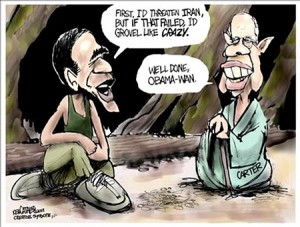
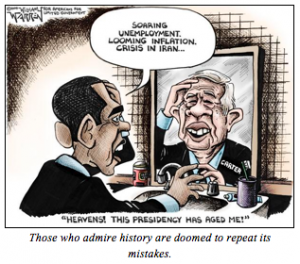
obama-carterPresident Jimmy Carter promised Hope and Change to an America dragged through the mud by a media feeding frenzy during the Nixon Watergate era.

The left got the white house handed to them, along with the congress, and nothing could stop the wholesale implementation of liberal-progressive policies. Anyone who lived during the Carter administration knows that it was a horrific time in American history.

Carter began his presidency by apologizing for American success, and it wasn’t long before Arabs began slapping him around like the whimp he told them he was.

OPEC decided the US was powerless to oppose them, and they immediately began cutting oil supplies and raising prices. Carter’s response was classic Democrat, demonstrating a complete lack of understanding of global free markets–impose price freezes on gasoline in the US. World oil markets naturally sought out the more lucrative markets and we well recall the gas lines stretching for blocks as Americans waited for hours to get their tanks filled, reminiscent of the Depression Era shortages and rationing schemes.
In grand Neville Chamberlain style Carter immediately tried diplomatic talks with the Soviet Union feeling that thrill going up his leg as the Soviets put their signatures on pieces of paper with him. Of course, while agreeing to limit expansion, the USSR invaded Afghanistan behind his back, bitch-slapping the president of the United States in front of the entire world.

Carter also withdrew US support of the Shah of Iran, historically a strong U.S. ally in the Middle East, one of few who recognized Israel as a sovereign state. Without our support the Shah was forced into exile, replaced by a fundamentalist government, hostile to the U.S. Iranian students stormed the US embassy and took 53 Americans hostages, and held them as political prisoners for 444 days. Carter had been paring back the US military and saw his duty as Commander in Chief as unbecoming a Progressive President, and when it was time to send in a military extraction team to get our hostages out, the equipment failed in one of the greatest military blunders in history. The hostages were kept in Iran and paraded before the world media up until President Elect Ronald Reagan sent Iran the message, “Let my people go,” and they were brushed up and sent back immediately.

Carter, the Apologizer in Chief, also gave up US control of the American-built Panama Canal, affording China and other nations greater access to our easier trade routes, further harming US trade superiority. Seeing no deterrence, the Soviets further expanded their influence in the Western Hemisphere by helping leftists overthrow governments in Central and South America.

Democratic economic strategies had our US economy spiraling in a tailspin, with the prime rate at 21 percent, killing business expansion and the housing market. Of course, unemployment skyrocketed under these circumstances.

DOES ANY OF THIS SOUND FAMILIAR?

This writer has always said that American politics has been reduced to this: The Democrats take control of government based on promises of throwing a big party, and the next election the Republicans are called in to clean up the mess.

At what point will America wake up to the reality that the policies of the left don’t work? It’s time to install a conservative government, and to keep a conservative government in place . . . and replace the long-term growth, development and expansion of personal liberty that we enjoyed for the first 100 years. Call me old fashioned.

PUBLIUS

Filed Under: All Stories, Economy, Elections, Entitlement, Ethics, Foreign

Italy’s Highest Court Orders New Trial for Amanda Knox

March 26, 2013 By Editor Leave a Comment

Amanda-KnoxROME –  Italy’s highest criminal court on Tuesday overturned Amanda Knox’s acquittal in the murder of her British roommate and ordered a new trial, prolonging a case that has become a cause celebre in the United States.

Knox called the decision “painful” but said she was confident that she would be exonerated.

Italian law cannot compel Knox to return for the new trial, and her lawyer said she had no plans to do so. The appellate court hearing the new case could declare her in contempt of court but that carries no additional penalties.

Italy’s Court of Cassation ruled that an appeals court in Florence must re-hear the case against the American student and her former Italian boyfriend for the murder of 21-year-old Meredith Kercher. The exact issues that have to be reconsidered won’t be known until the court releases its full ruling within 90 days.

Knox, now a student at the University of Washington, stayed up until 2 a.m. Seattle time to hear her fate and issued a statement through a family spokesman.

“It was painful to receive the news that the Italian Supreme Court decided to send my case back for revision when the prosecution’s theory of my involvement in Meredith’s murder has been repeatedly revealed to be completely unfounded and unfair,” she said.

Knox said the matter must now be examined by “an objective investigation and a capable prosecution.”

“No matter what happens, my family and I will face this continuing legal battle as we always have, confident in the truth and with our heads held high in the face of wrongful accusations and unreasonable adversity,” Knox said.

Knox, now 25, and Raffaele Sollecito, who turned 29 on Tuesday, were arrested shortly after Kercher’s body was found in a pool of blood in November 2007 in her bedroom. Kercher, whose throat had been slashed, had shared an apartment with Knox and others in Perugia, an Italian university town where the two women were exchange students.

Prosecutors alleged Kercher was the victim of a drug-fueled sex game gone awry. Knox and Sollecito denied wrongdoing and said they weren’t even in the apartment that night, although they acknowledged they had smoked marijuana and their memories were clouded.

An Ivory Coast man, Rudy Guede, was convicted of the murder in a separate proceeding and is serving a 16-year sentence. Knox and Sollecito were also initially convicted of the murder and given long prison sentences, but were then acquitted on appeal and released in 2011.

The high court’s ruling Tuesday overturned the appeals court acquittals.

“She thought the nightmare was over,” Knox attorney Carlo Dalla Vedova said after the decision was released.

The court on Tuesday also upheld a slander conviction against Knox. During a 14-hour police interrogation, Knox had accused a local Perugia pub owner of carrying out the killing. The man was held for two weeks based on her allegations, but was then released for lack of evidence.

Dalla Vedova said Knox wouldn’t come to Italy “for the moment” but would follow the case from home. He said he didn’t think the new appeals trial would begin before early 2014.

It is unclear what would happen if Knox was convicted in a new appeals trial.

“If the court orders another trial, if she is convicted at that trial and if the conviction is upheld by the highest court, then Italy could seek her extradition,” Dalla Vedova said Monday.

It would then be up to the United States to decide if it honors the request. U.S. and Italian authorities could also come to a deal that would keep Knox in the United States.

The appeals court that acquitted Knox and Sollecito in 2011 criticized virtually the entire case mounted by prosecutors. The appellate court noted that the murder weapon was never found, said that DNA tests were faulty and that prosecutors provided no murder motive.

It’s not clear what part of the appeals sentence was faulted by the high court in ordering a new trial.

Kercher’s family attorney, Francesco Maresca, said after Tuesday’s ruling: “Yes, this is what we wanted.”

Sollecito’s attorney, Giulia Bongiorno, noted that Tuesday’s ruling was not a determination of guilt but merely a need for further study of the appeals court ruling.

“It’s a decision that cancels a verdict and orders a retrial,” she said. “I’m not concerned about a deeper reading of the documentation, because I know the documentation.”

She acknowledged that perhaps the appeals court ruling had been “too generous” in ruling that the pair simply did not commit the crime, but was confident that Sollecito’s innocence would be affirmed.

In her statement, Knox took the Perugia prosecutors to task, saying they “must be made to answer” for the discrepancies in the case. She said “my heart goes out to” Kercher’s family.

After nearly four years behind bars in Italy, Knox returned to her hometown of Seattle after the 2011 acquittal and Sollecito resumed his computer science studies, following the degree he earned while studying in prison.

Italy’s judicial system allows for two levels of appeals, and prosecutors can appeal acquittals.

Although the court on Monday heard gruesome details, including how Kercher choked on her own blood, it wasn’t ruling on the guilt or innocence of the defendants. Its sole task was to decide if the appellate trial was properly conducted.

Dalla Vedova had argued Monday that the slander verdict against Knox should be thrown out because she was questioned without a lawyer even though police essentially treated the student as a suspect in their 14-hour interrogation session.

Because of time she served in prison before the appeals-level acquittals, Knox didn’t have to serve time for the slander conviction.

Published March 26, 2013 / Associated Press

Filed Under: All Stories, Foreign, Gender

EU Approves Cyprus Bailout Deal, Funded by Bank Assets Seizure

March 25, 2013 By Editor Leave a Comment

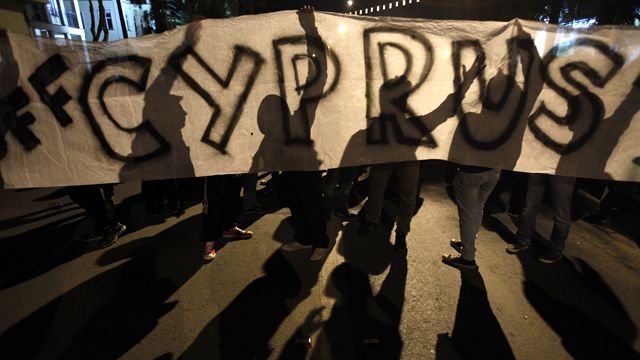
cyprus_2Imagine waking up to find out that as much as 40 percent of the money you thought was safely deposited in the bank was seized, without your permission, to bail out a near-bankrupt government.

That’s just what thousands of large depositors in Cyprus woke up to Monday morning after European Union officials accepted a last-minute deal offered by the island’s lawmakers to secure a $13 billion bailout to avert imminent financial meltdown.

The deal, which also slashed the island’s oversized banking sector, came as euro ministers in Brussels threatened to cut off crucial emergency assistance to Cyprus’ embattled banks after business on Monday if no agreement was reached.

Without that EU funding, Cyprus’ banks would have collapsed, dragging the country’s economy down with them and threatening the small Mediterranean island’s membership of the 17-strong group of European Union countries that use the euro — all of which would have sent the EU’s markets spinning.

“It’s not that we won a battle, but we really have avoided a disastrous exit from the eurozone,” Finance Minister Michalis Sarris said in Brussels.

“This decision is painful for the Cypriot people. This decision was a defeat of solidarity, of social cohesion, which are fundamental freedoms, fundamental principles of the European Union,” Parliament President Yiannakis Omirou told AP.

The deal also angered Russia’s leaders. It is believed that many of the affected large accounts belong to Russian depositers, and Moscow has been a major lender to prop up the Cypriot banking system. It’s been estimated that Russians have more than $31 billion deposited in Cyprus banks.

Dmitry Medvedev reportedly likened the deal to “the stealing of what has already been stolen continues,” the Telegraph reported, a reference to Vladimir Lenin’s explanation of the Bolshevik seizure of capitalists’ assets and property.

Last week Medvedev likened the bank seizure to “a certain period of time by Soviet authorities, who did not stand on ceremony when it came to people’s savings.”

Russian President Vladimir Putin, meanwhile, ordered the government to look into restructuring the terms of a more than $3 billion loan, a move that appeared to please EU ministers.

Cyprus banks, meanwhile, were rationing the amount of money they were dispensing to 100 euros, trying to avert a run on cash from nervous depositers.

Under the deal, Laiki, the country’s second-largest bank, will be restructured, with all bond holders and people with more than 100,000 euros in their accounts facing significant losses. The bank will be dissolved immediately into a bad bank containing its uninsured deposits and toxic assets, with the guaranteed deposits being transferred to the nation’s biggest lender, Bank of Cyprus.

Jeroen Dijsselbloem, who chairs the meetings of the eurozone’s finance ministers, said it was not yet clear how severe the losses would be to Laiki’s large bank deposit holders, but he noted that it is expected to yield 4.2 billion euros overall — or much of the money that Cyprus needed to raise to secure the bailout. Analysts have estimated investors might lose up to 40 percent of their money.

Large deposits with Bank of Cyprus above the insured level will be frozen until it becomes clear whether or to what extent they will also be forced to take losses, the Eurogroup of finance ministers said in a statement.

Without a bailout deal by Monday night, the tiny Mediterranean nation would have faced the prospect of bankruptcy, which could have forced it to become the first country to abandon the euro currency. That would have sent the region’s markets spinning.

The eurozone finance ministers accepted the plan after hours of negotiations in Brussels between Cypriot officials and the so-called troika of creditors.

Markets in Europe reacted positively, opening sharply higher, and the euro was back near $1.30, though the measures are likely to deepen the recession in Cyprus.

“We believe that this will form a lasting, durable and fully financed solution,” said IMF chief Christine Lagarde.

To secure the rescue loan package, the Cypriot government had to find ways to raise 5.8 billion euros ($7.5 billion) on its own. The bulk of that money is now being raised by seizing bank assets from large deposit holders, with the remainder coming from tax increases and privatizations.

The cash-strapped island nation has been shut out of international markets for almost two years. It first applied for a bailout to recapitalize its ailing lenders and keep the government afloat last June, but the political negotiations stalled. After a botched agreement last week, the ECB threatened to cut off emergency assistance to the country’s banks.

“We’ve put an end to the uncertainty that has affected Cyprus and the euro area over the past week,” Dijsselbloem said.

That uncertainty around the nation of about 800,000 had shaken the entire eurozone of 300 million people, even though Cyprus only makes up less than
0.2 percent of the eurozone’s economy.

Several national parliaments in eurozone countries such as Germany must also approve the bailout deal, which might take another few weeks. EU officials said they expect the whole program to be approved by mid-April.

Dijsselbloem defended the creditors’ approach of making deposit holders take heavy losses, saying the measures “will be concentrated where the problems are, in the large banks.”

The international creditors, led by the IMF, were seeking a fundamental restructuring of the country’s outsized financial system, which is worth up to eight times the Cypriot gross domestic product of about 18 billion euros.
They said the country’s business model of attracting foreign investors, among them many Russians, with low taxes and lax financial regulation had backfired and needed to be upended.

The drastic shrinking of the financial sector, the wiping out of wealth through the losses on deposits, the loss of confidence with the recent turmoil and the upcoming austerity measures all mean that Cyprus is facing tough times.

Published March 25, 2013 / FoxNews.com / The Associated Press contributed to this report.

Filed Under: All Stories, Economy, Entitlement, Foreign

Diogo Morgado, Jesus in History’s ‘The Bible,’ Calls Obama Controversy ‘Hilarious’

March 25, 2013 By Editor Leave a Comment

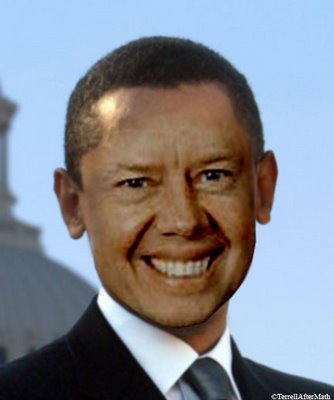
the_bible_jesusThe Portuguese star defends the physical similarity between the actor who plays Satan and the president of the United States.

Although History raised eyebrows for the controversial casting of a President Obama-esque Satan in The Bible mini-series, the actor who plays Jesus calls the situation “hilarious.”

“I don’t think that’s controversial at all, I think that’s so funny,” Diogo Morgado told The Hollywood Reporter. “It’s just funny.”

Mohamen Mehdi Ouazanni, who plays the devil, “did a nice job and it was awesome and never — not even for one second — were we even thinking about that, so I think it’s hilarious,” said Morgado. “At the same time, I think it’s just a sign of how successful the show is” because people are paying attention to “silly things.”

Before Sunday’s installment of The Bible, Ouazanni’s resemblance to Obama was first observed on Twitter by Glenn Beck, instantly sparking headlines about the striking physical similarity between the two.

PHOTO: In History’s ‘The Bible,’ Satan Looks Like President Obama

“This is utter nonsense,” executive producers Mark Burnett and Roma Downey said Monday in a statement, noting that Quazanni “is a highly acclaimed Moroccan actor. He has previously played parts in several biblical epics — including Satanic characters long before Barack Obama was elected as our president.”

The husband-and-wife pair stepped out alongside Morgado on Tuesday night for the opening-night gala for The Bible Experience, an exhibit in downtown Manhattan featuring photography from the mini-series as well as biblical artifacts by way of the Vatican and a giant, two-ton crown of thorns hanging from the ceiling. A spooky Old World ambiance was enhanced by dim lighting, a fog machine and Hans Zimmer‘s musical score in the background as guests wandered through a cavernous space built to seem centuries-old with earthy walls and barely any heat circulating.

“This is a gift to New York City,” mused Burnett of the week-long event, a half-museum/half-marketing gimmick. “I bet [people] would come from California to see this this week. People are gonna come from Canada to see parts of the Dead Sea scrolls.”

When asked about the Obama/Satan flap, the veteran reality TV mogul reiterated that Ouazanni was not cast for his Obama-like visage.

“It’s all about the light,” emphasized Burnett. “Can you ask everyone to tweet Jesus? Because we want everyone to spread the light!”

By Erin Carlson

Filed Under: All Stories, Foreign, Religion

Actor Diogo Morgado Portrays Jesus in ‘The Bible’

March 25, 2013 By Editor Leave a Comment

diogo-morgadoPortuguese actor Diogo Morgado, who plays Jesus in the highly-popular “The Bible” miniseries, recently responded to the recent “Hot Jesus” nickname given to him on social media platforms, saying that although he is flattered, he would prefer to affect someone on a spiritual level.

“I take the [Hot Jesus] nickname as a compliment obviously, but I’m waiting for the good stuff, and the good stuff for me is if someone just nabbed me on the shoulder and said ‘look you did a pretty good job,'” Morgado said in a recent interview with USA Today.

“Something like this more than anything, something like playing Jesus, for me, if only I can have one person go straight to me and say ‘you touched me, and you brought me something I thought I’d lost,’ that would be my best compliment,” Morgado added.

The Portuguese actor’s portrayal of Jesus on the History Channel’s “The Bible” miniseries sparked a wave of Twitter comments with the trending hashtag “HotJesus,” referring to Morgado’s good looks.

The actor, who in spite of his 16 years in television and film was virtually unknown outside of Portugal before his role as Jesus, went on to tell USA Today that he hopes his portrayal of Jesus will bring hope to those living in these “confused times.”

“I think we’re living really confused times. You turn on the news and there’s a lot of violence, but it’s not just violence, it’s getting to the insane point of violence when you don’t have any reasonable explanation for stuff that is happening nowadays. It’s getting to a point that it’s alarming,” Morgado said.

“I think people are just needing for something positive, something that can touch them in a way that can bring them some hope.”

This isn’t the first time Morgado has been complimented for his good looks.

British actor Darwin Shaw, who plays the character of Peter in “The Bible” miniseries, told The Christian Post in a previous interview that along with being a kind person, Morgado is also “incredibly handsome.”

“Diogo is one of the most generous, compassionate and kind actors I have ever met – he’s also incredibly handsome. He’s a great guy. To work with him was a privilege because once we were together, there was already a real chemistry, a real brotherhood, and I hope that is something that comes across on camera,” Shaw told CP.

“The Bible” miniseries, which is produced by Mark Burnett of “Survivor” fame and his wife, Roma Downey from “Touched By An Angel,” has received continuous, record-breaking ratings since its debut on March 3, making it the most watched program in all of television on Sunday nights.

The show will conclude on March 31, Easter Sunday, with a two-hour episode featuring Jesus’ crucifixion and resurrection.

“The Bible” airs on the History Channel at 8 p.m. Eastern Time on Sunday.

By Katherine Weber , Christian Post Reporter

Filed Under: All Stories, Foreign, Religion

US Pastor Imprisoned in Iran Abondoned by Obama

March 22, 2013 By Editor Leave a Comment

Saeed Abedini is seen with his family.The American pastor imprisoned in Iran, in a vivid letter to his wife, described how he was beaten to the point where parts of his face were “swollen three times what they should have been” and was denied medical treatment because he was seen as an “unclean” Christian.

The letter was received by Saeed Abedini’s family this week, though it may have been written weeks ago. The new details come as his family, the attorneys representing them, and several Capitol Hill lawmakers urge the Obama administration to exert more pressure on Iran to release the pastor.In a sign of movement, the U.S. ambassador to the U.N. Human Rights Council on Thursday directly called for Abedini’s release during a meeting in Geneva, which an attorney for the family called the “first pro-active statement by … our administration” in the case.

The letter from Saeed Abedini to his wife Naghmeh described in detail how he’s been mistreated at Iran’s notorious Evin Prison. He described how he saw his face for the first time in the mirror of an elevator.

“I said hi to the person staring back at me because I did not recognize myself,” Abedini wrote. “My hair was shaven, under my eyes were swollen three times what they should have been, my face was swollen, and my beard had grown.”

The pastor explained how, despite his situation, he is trying to focus on “forgiveness.” He said he forgave the “interrogator who beat me” as well as the doctor who “did not give me the medication that I needed.”

Abedini wrote that a nurse would not provide him with treatment because she said “in our religion we are not suppose to touch you, you are unclean.” He wrote that he could not fall to sleep one night because of the pain, as he listened to the sound of “dirty sewer rats with their loud noises and screeches.”

Attorney Jordan Sekulow, though, told Fox News on Friday that he has since received a medical review. Sekulow said Abedini was promised he’d be moved to a hospital outside the prison, though cautioned that the family would have to see that happen to believe it.

Sekulow, meanwhile, drew attention to a statement delivered Thursday in Geneva by Eileen Chamberlain Donahoe, the U.S. representative on the U.N. Human Rights Council.

She said: “Iranian officials continue to restrict these communities’ freedom to practice their religious beliefs free from harassment, threat, or intimidation. Christian pastor Saeed Abedini’s continuing harsh treatment at the hands of Iranian authorities exemplifies this trend.

“We repeat our call for the Government of Iran to release Mr. Abedini, and others who are unjustly imprisoned, and to cease immediately its persecution of all religious minority communities. The United States also repeats its call for the Government of Iran to provide without delay the urgent medical attention Mr. Abedini needs.”

Donahoe came under criticism for neglecting to specifically address the case at a recent meeting in Geneva on Iran’s human rights record. Donahoe instead broadly criticized “the Iranian government’s ceaseless campaign of abuse” against those who dissent. Administration officials had discussed Abedini’s case in public before, but only when questioned about it by reporters and others.

The State Department also declined to provide a witness to testify last week during a Capitol Hill hearing where Naghmeh Abedini spoke.

Rep. Frank Wolf, R-Va., and other lawmakers expressed disappointment at the State Department’s absence. In a letter to Secretary of State John Kerry earlier this week, Wolf and other lawmakers urged him “in the strongest possible terms, to make this case and the broader issue of religious freedom a priority as Secretary of State.”

The wife and her attorneys did meet with State Department officials following last Friday’s hearing in Washington.

Abedini has been held in Iran’s Evin Prison since September of last year and was sentenced to eight years in prison in January — accused of evangelizing and threatening national security.

Naghmeh Abedini met Saeed in 2002 and they married two years later. Both had converted from Islam to Christianity — Saeed became a U.S. citizen in 2010.

The Iranian government does not recognize his American citizenship, though it had enabled him to travel freely between both countries until this past summer, when he was pulled off a bus and placed under house arrest, according to his supporters.

Published March 22, 2013 / FoxNews.com

Filed Under: All Stories, Elections, Ethics, Foreign, Religion

Paris, Europe, an Islamic Stronghold

March 21, 2013 By Editor Leave a Comment

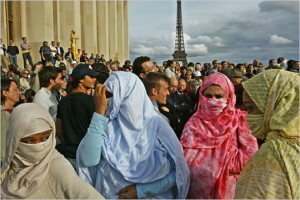
Friday in Paris. A hidden camera shows streets blocked by huge crowds of Muslim worshippers and enforced by a private security force.
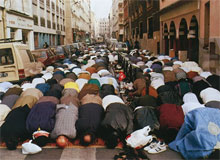
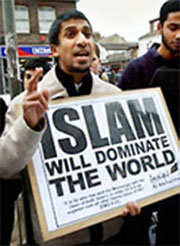
This is all illegal in France: the public worship, the blocked streets, and the private security. But the police have been ordered not to intervene.

It shows that even though some in the French government want to get tough with Muslims and ban the burqa, other parts of the French government continue to give Islam a privileged status.

An ordinary French citizen who has been watching the Islamization of Paris decided that the world needed to see what was happening to his city. He used a hidden camera to start posting videos on YouTube. His life has been threatened and so he uses the alias of “Maxime Lepante. ”

Lepante’s View

His camera shows that Muslims “are blocking the streets with barriers. They are praying on the ground. And the inhabitants of this district cannot leave their homes, nor go into their homes during those prayers.”

“The Muslims taking over those streets do not have any authorization. They do not go to the police headquarters, so it’s completely illegal,” he says.

The Muslims in the street have been granted unofficial rights that no Christian group is likely to get under France’s Laicite’, or secularism law.

“It says people have the right to share any belief they want, any religion,” Lepante explained. “But they have to practice at home or in the mosque, synagogues, churches and so on.”

Some say Muslims must pray in the street because they need a larger mosque. But Lepante has observed cars coming from other parts of Paris, and he believes it is a weekly display of growing Muslim power.Muslim_2

“They are coming there to show that they can take over some French streets to show that they can conquer a part of the French territory,” he said.

France’s Islamic Future?

If France faces an Islamic future, a Russian author has already written about it. The novel is called “The Mosque of Notre Dame, 2048,” a bestseller in Russia, not in France.

French publisher Jean Robin said the French media ignored the book because it was politically incorrect.

“Islam is seen as the religion of the poor people, so you can’t say to the poor people, ‘You’re wrong,’ otherwise, you’re a fascist,” Robin explained.

The book lays out a dark future when France has become a Muslim nation, and the famous cathedral has been turned into a mosque.

Whether that plot is farfetched depends on whom you ask. Muslims are said to be no more than 10 percent of the French population, although no one knows for sure because French law prohibits population counts by religion.

But the Muslim birthrate is significantly higher than for the native French. Some Muslim men practice polygamy, with each extra wife having children and collecting a welfare check.

“The problem of Islam is more than a problem of numbers,” said French philosopher Radu Stoenescu, an Islamic expert who debates Muslim leaders on French TV. “The problem is one of principles. It’s an open question. Is Islam an ideology or just a creed?”

“It doesn’t matter how many there are,” he aded. “The problem is the people who follow Islam; they’re somehow in a political party, which has a political agenda, which means basically implementing Sharia and building an Islamic state.”

In Denial or Fed Up

From the 1980s until recently, criticizing or opposing Islam was considered a social taboo, and so the government and media effectively helped Islam spread throughout France.

“We were expecting Islam to adapt to France and it is France adapting to Islam,” Robin said.

About the burqa controversy, one French Muslim man told a reporter that Europeans should respect Muslim dress. One Parisian woman wearing a headscarf said “the veil is in the Koran” and “we only submit to God and nobody else.”

But even if many government elites are in France are in denial over Islam, the people in the streets increasingly are not. Some have become fed up with what they see as the growing Islamization of France.

They’ve started staging pork and wine “aperitifs,” or cocktail parties in the street. They’re patriotic demonstrations meant to strike back against Islam. Another national demonstration is planned for Saturday, Sept. 4.

A Warning to the West

The French parliament debated the burqa law in this year. Jean-Francois Cope, president of the Union for a Popular Movement political party, has a warning for the West and for America.

“We cannot accept the development of such practice because it’s not compatible with the life in a modern society, you see,” he said. “And this question is not only a French question. You will all have to face this challenge. ”

For more insight on the slide toward a post-Christian Western society, check out Dale Hurd’s blog Hurd on the Web.

For more insight on ‘Islamization’ around the world, check out Stakelbeck on Terror.

Reprinted from CBN.com

By Dale Hurd, CBN News Sr. Reporter

Filed Under: All Stories, Foreign, Religion

Our Children Forced into Islam?

March 21, 2013 By Editor Leave a Comment

Islam is self-proclaimed to be “the religion of peace,” and in our uncompromising quest for political correctness we deny ourselves the merest observation that “they” may be different from “us” in any measurable respect. Indeed, as Muslims walk the streets of western countries they do so in relative equality, and to the extent they are polite and attempt to blend with the local populations, they are welcomed as fellow citizens of the world, and extended the hand of brotherhood.
Each of us is free (as of this writing) to see the world from his own view, and we would hope that true bigotry, religious or otherwise, would not be condoned in any civilized society. However, there is a growing elephant in the room, and at some point one of us is going to have to point it out and we will all have to discuss it.

The Federalist Press editors enjoy many connections with friends and associates in Europe, and for years have listened with growing concern as anecdotal stories of increasing troubles with Muslim immigrants have been shared. Political correctness has run completely amok in Europe, and leftist governments and their state controlled media are loathe to admit that Muslim immigrants have gotten the best of them.

Indeed, as Muslim populations swell in Western countries we find certain patterns emerging—patterns which we are beginning to see in the Western hemisphere as well.

As the emphasis on marriage and the traditional family in Western countries has diminished, and the practice of abortion has increased, native local populations have sputtered.

Few seem to understand that the Fertility Rate (FR) of most of Western Europe has fallen below 2.11—the point of sustainability. A rate of 1.8 is considered extremely difficult to recover from, and 1.3 is nearly impossible. At this rate a culture will simply fade to oblivion. As of 2008 these are the Fertility Rates of a few European nations: France-1.8; England-1.6; Greece-1.3; Germany-1.3; Italy-1.2; and Spain-1.1. The average FR in 31 European Union countries is 1.38.

So why is the population of Europe growing so rapidly? Muslim immigration, and Muslim Fertility Rates.

For example, France’s FR of 1.8 is offset by the Muslim FR of 8.1. In fact, the south of France now has more Islamic Mosques than Christian churches. Also, 30% of its children under the age of 21 are Muslims, and the number climbs to 45% in large cities. At these rates, France will be an Islamic Republic within a generation.

In the Netherlands 50% of all newborns are Muslim, and in 10 years the population will approach 50% Muslim. These numbers hold true in Belgium as well.

England, where Muslim men were just discovered to be running sex slavery rings of local white girls, has seen a 30-fold increase in its Muslim population since 1970, and now has over 1,000 mosques.

There is a pattern to Muslim immigration into western countries. First, we see a wholesale drain on social services. In some publicized cases we find Muslim men collecting over $15,000 monthly from state welfare systems, receiving per capita stipends for each of their many children and wives (yes, wives). The social welfare systems of most chic EU members are depleted as a result, adding to the already heavily strained budgets that must pay out large pensions and benefits to union members who retired at young ages.

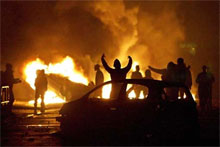
Then, these “peaceful” Islamic adherents tend to become more demanding and violent as their percentage of population grows in these countries, and leaders and agitators begin to demand “religious rights” (extended privileges and Sharia Law) for Muslims, occupying the streets or rioting and burning in protest.

Are western alarmists the only ones who see an imminent takeover of the West?

“There are signs that Allah will grant victory to Islam in Europe without swords, without guns, without conquest. We don’t need terrorists, we don’t need homicide bombers. The fifty-plus million Muslims there will turn it into a Muslim continent within a few decades.” Muammar Gaddafi.

Perhaps Americans can afford complacency, many seem to believe. In fact, Canada, with its FR of 1.6, has had an increase in its population of over 2,000,000 in this past decade. How is that possible? Muslim immigration and FR.

What is America’s FR? It is down to a nearly unrecoverable 1.6. However, with the rapid Latino influx, our combined FR is 2.11—the bare minimum required to sustain a population, albeit a changing one. How about America’s Muslim population, you ask? In 1970 it was 100,000. Since then, it is difficult to tell, because the government doesn’t track them very closely (it’s not PC), but they tell us it is somewhere between a few million and 9,000,000.

Muslims are indeed beginning to become extremely vocal about demanding their “religious rights” in America. Demands for Sharia Law and examples of honor killings are springing up all around us. Liberal PC is enabling the behavior. We have witnessed that if Bill O’Reilly merely mentions on The View that it was Muslims who attacked Americans on 9/11 there is an orchestrated and exaggerated protest exodus of the hosts to enforce their PC speech limits—thus ensuring that no practical discussion occurs about safety or self-preservation.

With the rise of militant Islam in the West, it is time for a serious discussion on the direction we want our nations to take. If we do not make some tough, non-PC decisions soon, our granddaughters will be wearing burkas and will be stoned to death in the streets for whispering the name of Jesus. The current talk of gay marriage will be reduced to public beheadings for homosexuality. This is not speculation, but a mathematical certainty. If we continue at the current rate, Muslims will become the majority populations in all Western countries, and guess how they’ll vote. Violence that invariably attends Islam will be widespread, filling our streets, just as it does every day in countries with majority Muslim populations.

Of course, the liberal sophist will scoff publically at such an assertion; but one day in the streets of a majority Muslim population is all the proof needed to support it.

To those truly peace loving practitioners of Islam who live among us, and who refuse to follow their Eastern leaders into paths of Jihad, Dar-es-Salaam, Sharia, and cleansing violence, we encircle you in arms of brotherhood and welcome you as fellow-citizens. But we are at the point where we need to receive extremely clear declarations of peace and non-violence from any Muslim that seeks a place among us. To blindly pretend that a rogue elephant is not standing in the middle of the room is a foolish and dangerous path.

PUBLIUS

Filed Under: All Stories, Elections, Foreign, Religion

Iran’s Leader Threatens to Level Cities if Israel Attacks

March 21, 2013 By Editor Leave a Comment

iranIran’s leader said in a speech that the country would annihilate the Israeli cities of Tel Aviv and Haifa if it were attacked by Israel, and criticized the U.S. over nuclear talks.

The Supreme Leader Ayatollah Ali Khamenei, who has final say on all key decisions in Iran, says Israel is too small to be called an enemy, and that the United States is the “center of animosity” toward the Islamic republic.

“Sometimes, leaders of the Zionist regime threaten us. They threaten to take military action. They are not in the size to be put in the list of Iranian nation’s enemies,” Khamenei said in comments broadcast live on state TV.

In a strong warning to Israel, Khamenei said that if Israel attacked Iran, the “Islamic Republic will raze Tel Aviv and Haifa to the ground.”

He made the comments on Thursday to a crowd in northeastern Iran on the first day of the new Persian calendar year. His speech in the city of Mashhad was broadcast live on state radio.

Israel, which is believed to have the only nuclear weapons arsenal in the Mideast, has threatened to take military action against Iran if diplomacy fails to stop Iran’s alleged nuclear weapons program.

Iran says its nuclear program is peaceful.

In the speech, Khamenei said he’s not opposed to direct talks with the U.S. to resolve its nuclear standoff with the West.

But he added that he’s not optimistic that such talks would yield results unless Washington stops imposing sanctions against the Islamic Republic.

“The Americans constantly send messages to us through various ways, saying let’s hold (bilateral) talks on the nuclear issue,” Khamenei said. “I’m not optimistic on these talks. Why? Because our previous experiences show that dialogue, in the logic of American gentlemen … means let’s sit down and talk so that you (Iran) accept our views. This is not dialogue. This is imposition and we won’t give in to it.”

Iran is living under stepped-up Western sanctions that include a total oil embargo and banking restrictions that make it increasingly difficult for Iran’s Asian customers to pay for oil deliveries. Iran’s income from oil and gas exports has dropped by about 50 percent as a result of sanctions.

Khamenei said the U.S. has sent messages to Tehran, sometimes in writing, saying it is willing to hold bilateral talks with Tehran separately from the negotiations Iran is holding with five permanent members of the U.N. Security Council plus Germany.

“I’m not optimistic about these talks, but I’m not opposed to it either,” he said.

However, Khamenei said the best way to resolve the standoff would be for the West to recognize Iran’s right to enrich uranium and agree to a monitoring process to ensure that it won’t be used for weapons.

“Iran only wants that the world recognize its enrichment right which is its natural right,” he said.

Khamenei said there is no reason why Tehran should trust the U.S. when Washington doesn’t trust Tehran.

“We have repeatedly told you that we are not after nuclear weapons. You say you don’t believe us. Why should we believe you? When you are not ready to accept an honest and logical remark, why should we accept your words that have been disproved many times?” he asked.

Khamenei alleged that the U.S. wants the nuclear issue to remain unresolved so it will continue to have basis for the sanctions, which he said have harmed, but not crippled the Iranian economy.

“Yes, sanctions have had an effect. If they (U.S.) want to be happy, let them be,” he said.

“Our economy suffers from the problem of being dependent on oil,” he said. “We have to distance our economy (from oil dependence).”

Published March 21, 2013 / FoxNews.com / The Associated Press contributed to this report.

Filed Under: All Stories, Foreign, Religion

Cyprus Lawmakers Reject Bill to Nationalize Bank Deposits

March 19, 2013 By Editor Leave a Comment

NICOSIA, Cyprus –  Lawmakers in Cyprus rejected a bill Tuesday that aimed to seize part of residents’ bank deposits in order to qualify for an international bailout.

cyprus-bailoutZero lawmakers voted in favor of the bill, and 36 voted against it.

Earlier Tuesday, The government amended its initial proposal to shield small savers from the plan, which aims to raise euro5.8 billion ($7.5 billion) in return for euro10 billion ($12.9 billion) from other eurozone countries and the International Monetary Fund. The total bailout money would go to prop up the country’s banks and public finances.

But even the modification, which will allow those with up to euro20,000 ($25,858) in the bank to escape the confiscation, opposition to the bill remained strong. Four parties and an independent deputy, accounting for 34 of the total 56 seats in Parliament have all said they recommend voting against the bill. The bill needs 29 votes to pass.

With the bill is rejected, Cyprus’ international bailout is now endangered, raising the very real possibility that Cypriot banks could collapse, and the country could face bankruptcy and may even have to leave Europe’s single currency.

Officials have said a “Plan B” should be sought in case the bill is rejected.

Under the amendment, people with between euro20,000 and euro100,000 in the bank would pay a tax of 6.75 percent on their deposits, and those with higher amounts would pay euro9.9 percent. In the initial proposal agreed on in Brussels late Friday, there would have been no exemptions for those with small amounts in the bank.

The plan has been met with fury in Cyprus and has sent jitters across financial markets.

In a heated debate, lawmakers spoke of “raw blackmail” from Europe in forcing Cyprus into the deal, while hundreds of protesters gathered outside Parliament chanting anti-government slogans.

Banks on the island nation will stay shut until Thursday in an effort to prevent a bank run.

In a sign of the scale of disagreement over the deposit charge, the country’s central bank governor, Panicos Demetriades, recommended that no accounts below euro100,000 be touched. That level represents the amount of savings that are supposed to be insured if a bank collapses.

“The credibility of, and trust in the banking sector depends on this,” said Demetriades, who conceded that he expects at least 10 percent of deposits to be withdrawn when the banks eventually re-open.

Failure to pass the bill could mean no bailout money from the eurozone and IMF and lead to Cyprus’s bankruptcy, which could reignite concerns in financial markets over the single currency’s future. That would likely put deposits in the country’s banks under even more threat.

Although Cyprus is the smallest eurozone country to be bailed out, the details of the plan sent shockwaves through the single currency area as it was the first time savers’ banks accounts have been directly targeted. Other bailed out countries such as Greece, Ireland and Portugal have raised funds by imposing new taxes.

Proponents of the deposit seizure argue that this way gets foreigners who have taken advantage of Cyprus’s low-tax regime to share the cost of the bailout of the banks, which have been hit hard by their over-exposure to bad Greek debt.

About a third of all deposits in Cypriot banks are believed to be held by Russians.

Finance Minister Michalis Sarris was flying to Moscow Tuesday afternoon to meet with his Russian counterpart.

Andreas Charalambous, a senior official at the ministry, said the aim is to extend repayment of a euro2.5 billion loan Russia granted Cyprus in late 2011 when the country could no longer borrow from international markets.

He said Cyprus was also looking for “potential interest for further investment in the country.”

Opponents say a blanket charge on people’s bank accounts will hurt ordinary Cypriots more, and could shake the confidence of all in the country’s banking sector. And by going after deposits, European policymakers have set a precedent that could be repeated in the future. The worry of bank runs across Europe lies at the heart of market concerns.

Charalambous said Cypriot authorities believe depositors should be protected, but that a wholesale exemption for those below euro100,000 would mean a “disproportionate” burden on large savers, and a “very detrimental” knock-on effect on economic growth.

“Because of the size of the estimated (bailout) needs, the burden on those above euro100,000 would be such that it would again impact small people because it would destroy the ability of the country to attract foreign investment,” Charalambous said.

In a Monday night teleconference, eurozone finance ministers concluded that small depositors should not be hit as hard as others. They said Cyprus should stagger the seizures more, but insisted that the overall take should stay the same.

President Nicos Anastasiades, who was elected less than a month ago, told German Chancellor Angela Merkel Monday night that “the possibility of reducing the requirements from self-raised funds is being explored,” a Cypriot government spokesman said.

The two leaders were expected to speak again on Tuesday, he added.

Christine Lagarde, the head of the International Monetary Fund which is participating in Cyprus’s bailout, said in Frankfurt that the IMF was “extremely supportive of the Cypriot authorities’ intentions to introduce more progressive rates in the one-off tax.”

Published March 19, 2013 / Associated Press

Filed Under: All Stories, Economy, Entitlement, Foreign

Cyprus’ Decision to Seize Bank Deposits

March 19, 2013 By Editor Leave a Comment

PARIS –  Lawmakers in Cyprus are still scrambling for a way to raise €5.8 billion ($7.5 billion) to help pay for an international bailout of the country’s banks and government.

cyprusA plan to seize up to 10 percent of people’s savings has been met with fury and it has raised concern, if not panic, in the rest of Europe about the security of bank deposits in times of financial turmoil.

On Tuesday, Cypriot lawmakers are scheduled to vote a revised plan that would not be so burdensome for people with less than €100,000 in the bank. Any plan must be approved by the other eurozone countries, which would then commit €10 billion in rescue loans to Cyprus.

Banks in Cyprus will remain shut until Thursday to give political leaders time to hash out a deal.

Here’s a look at the plan and the problems it may pose.

HEY, HOW CAN THEY DO THAT?

As a member of the euro currency, Cyprus can to raise or lower taxes whenever it wants. It isn’t the first time that a eurozone nation has raised taxes to cope with mounting debt and to prop up struggling banks. Residents of Greece, Portugal and Ireland — all bailout recipients — have seen their tax bills skyrocket in recent years as those countries tried to reduce their debts. But Cyprus is charting new ground here, and there could be legal — and political — challenges.

AND HOW EXACTLY WILL IT WORK?

Banks have already acted to seal off the amount of the levy — a 6.75 percent tax on deposits under €100,000 and 9.9 percent on those above — so depositors can’t access it. Banks will remain closed until Thursday to avoid a rush of withdrawals while lawmakers finalize the move. They will vote on Tuesday, but some are seeking modifications, mainly to lower the tax rate on deposits under €100,000. To do that, however, they have to raise the rate for the larger depositors, since the overall scheme has to raise a total of €5.8 billion.

HAS THIS EVER HAPPENED BEFORE?

So far in the euro crisis, depositors have been protected. But European countries have taxed bank deposits before. In the 1990s, Italy levied a tax on every bank account to stave off the collapse of its lire currency. The rate, however, was miniscule — 0.06 percent — compared to what Cyprus is enacting. Iceland — another island with an outsized financial sector, although worse weather — also relied on depositors to prop up its banks. When the crisis hit there in 2008, Iceland protected its domestic deposits but reneged on deposit insurance for overseas, Internet-based accounts held by British and Dutch. Those two governments stepped in to help their citizens to the tune of $5 billion. The U.K. and the Netherlands sued Iceland unsuccessfully in a European court to get their money back, but Iceland has nevertheless started to repay some of that money.

European officials are promising this Cyprus is a unique case, and they are right in one aspect: Cypriot banks are overwhelmingly funded by deposits, not bondholders. So it wouldn’t have been very fruitful to go after bondholders.

WHO IS AFFECTED?

All people with money in Cypriot banks — except those with money in Greek branches, which will be sold to Greek banks. EU and IMF creditors clearly wanted to protect struggling Greece, but perhaps also saw that Greece is the most likely place in the eurozone for a bank run. Protecting depositors there minimizes that possibility. Of the more than €68 billion on deposit in Cypriot banks, foreigners hold about 40 percent — and most of those are Russians. Cyprus could have only gone after non-EU depositors, but it may have been hard to distinguish between Cypriot and Russian savers, said Jacob Kirkegaard, senior fellow at the Peterson Institute for International Economics in Washington. That is because many Russians have dual citizenship and many Russian businesses are registered on the island. Kirkegaard said Cypriots may paradoxically welcome this measure since the government just managed to widen its tax base to include a lot of Russians; the taxes levied in Greece, Portugal and Ireland were for residents alone to shoulder.

WHY DID CYPRUS NEED A BAILOUT?

Cyprus built its economy in recent years by becoming a financial center, much the way Ireland and Iceland before it did. Its banks offered Internet accounts to foreigners, were renowned for their service, provided substantial privacy to clients and had very low taxes. It worked so well that Cyprus’ banking industry ballooned to nearly eight times the country’s gross domestic product at the height of the boom. In December, it was still more than seven times Cyprus’ €17.5 billion GDP. Russians — looking for warmer climes, lower tax rates and shared culture in the form of Orthodox Christianity — are thought to hold the majority of those accounts, with about €20 billion in the island’s banks.

But Cyprus’ banks held a lot of Greek debt and suffered significant losses when they took a writedown of those bonds as part of the Greek bailout. Much of Cyprus’ bailout money will be used to recapitalize Cypriot banks to prevent them from collapsing. Like other eurozone countries, Cyprus has also seen its deficit and debt explode as growth has ground to a halt. And with the banking system so large, the government wouldn’t have been able to bail it out even in a healthy economy.

WHY DO RUSSIANS KEEP SO MUCH MONEY IN CYPRUS?

Russian businessmen have preferred to place their savings in offshore jurisdictions, partly to escape political uncertainty and corruption in Russia. Cyprus offers a 10 percent corporate tax rate and relatively stable political situation. Cyprus is also believed to be a top destination for money-laundering. It is much safer for a corrupt Russian official to keep proceeds from illegal activities abroad, hiding information about their fortunes and holdings away from the prying eyes of Russian banking regulators. Russian officials estimated that about $49 billion, which is equivalent to 2.5 percent of Russia’s gross domestic product, was wired to foreign accounts illegally last year.

WHAT HAS THE MARKET REACTION BEEN?

Stock markets and the euro dropped on Monday but not too much. Kirkegaard says that the decision to tap depositors indicates that the European Central Bank is confident that the risk of a bank run elsewhere in the eurozone is low — and by excluding Greek branches of Cypriot banks, they have reduced the possibility even further.

But Heather Conley, director of Europe program for the Center for Strategic and International Studies, says it’s hard to know the far-reaching implications of this one-off deal. The “exceptions” created to solve Europe’s debt crisis are adding up, she said. And some investors may look at this late-night, three-day-weekend deal and see what she saw: a dress rehearsal for a country dropping out of the euro.

___

Published March 19, 2013 / Associated Press / AP Writer Menelaos Hadjicostis contributed to this report from Nicosia, Cyprus.

Filed Under: All Stories, Economy, Elections, Entitlement, Foreign

UN Reopens Talks on NRA-opposed Arms Treaty

March 18, 2013 By Editor Leave a Comment

Negotiators will reconvene this week to try to hammer out a landmark U.N. treaty designed to regulate the multibillion-dollar global arms trade amid objections from a bipartisan group of legislators and the most powerful gun-rights lobbying group in the U.S.

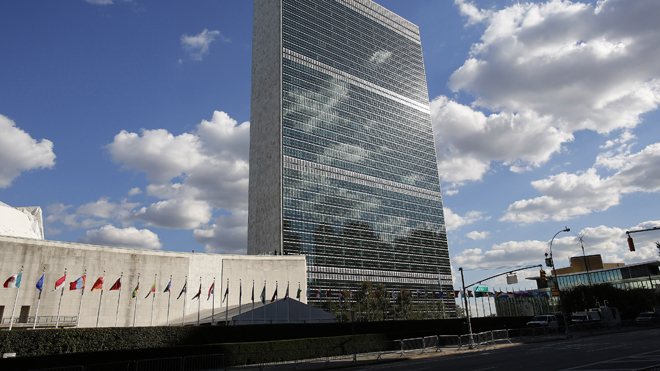
Clouds are reflected off the Secretariat Building of the UN headquarters during the 67th United Nations General Assembly, in New YorkGovernmental representatives will meet in New York starting Monday to try to reach consensus on the Arms Trade Treaty, which would require all countries to establish national regulations to control the transfer of conventional arms and to regulate arms brokers.

The draft treaty under consideration does not control the domestic use of weapons in any country, but it would prohibit states that ratify the treaty from transferring conventional weapons if they would violate arms embargoes or if they would promote acts of genocide, crimes against humanity or war crimes.

In considering whether to authorize the export of arms, the draft says a country must evaluate whether the weapon would be used to violate international human rights or humanitarian laws or be used by terrorists, organized crime or for corrupt practices.

Many countries, including the United States, control arms exports, but there has never been an international treaty regulating the estimated $60 billion global arms trade. For more than a decade, activists and some governments have been pushing for international rules to try to keep illicit weapons out of the hands of terrorists, insurgent fighters and organized crime.

Hopes of reaching agreement on what would be a landmark treaty were dashed last July when the United States said it needed more time to consider the proposed accord — then Russia and China also asked for a delay.

The National Rifle Association has portrayed the treaty as a threat to gun ownership rights enshrined in the U.S. Constitution. The politically controversial issue of gun regulations has re-emerged since a gunman opened fire on Dec. 14 at an elementary school in Newtown, Conn., killing 20 children and six educators.

Last July, the NRA’s CEO Wayne LaPierre told the U.N. that “the NRA wants no part of any treaty that infringes on the precious right of lawful Americans to keep and bear arms.” He added that “any treaty that includes civilian firearms ownership in its scope will be met with the NRA’s greatest force of opposition.”

On Thursday, Rep. Mike Kelly, R-Pa., introduced a bipartisan resolution opposing the treaty, which states the proposal “places free democracies and totalitarian regimes on a basis of equality” and represents a national security threat.

“As the greatest defender of liberty and freedom in the world – and we have been for the last 236 years – why would we ever sit down with bad actors and let them decide what our policy will be going forward? [It is a] bad, bad idea. It doesn’t make sense,” Kelly said at a press conference Thursday.

An identical companion resolution was introduced last week by Sen. Jerry Moran of Kansas, according to Kelly’s office.

Secretary of State John Kerry said in a statement Friday that the United States looks forward to working with other countries to reach consensus on an Arms Trade Treaty “that helps address the adverse effects of the international arms trade on global peace and stability” by helping to stem the illicit flow of weapons across borders.

He stressed that the U.S. will not support a treaty that would be inconsistent with U.S. law and the right of Americans under the Constitution to bear firearms, or a treaty that would impose new requirements on the U.S. domestic trade in firearms and U.S. exporters.

“The United States could only be party to an Arms Trade Treaty that addresses international transfers of conventional arms solely,” Kerry said.

Kerry said that while the international arms trade affects every country, more than 100 nations don’t have a system for controlling international arms transfers.

“We support a treaty that will bring all countries closer to existing international best practices, which we already observe, while preserving national decisions to transfer conventional arms responsibly,” he said.

Kerry said that means responsible nations should have control systems that reduce the risk that conventional arms transfers will be used “to carry out the world’s worst crimes, including those involving terrorism, and serious human rights violations.”

Amnesty International’s Deputy Executive Director Frank Jannuzi said President Barack Obama “must not be cowed or intimidated by the U.S. gun lobby and the NRA.”

Jannuzi added: “The unfettered trade of conventional arms has contributed to the deaths of more than 500,000, the displacement of millions, widespread rape and the recruitment and exploitation of children as soldiers. The global arms trade must be regulated, and the United States — the world’s largest exporter — should lead the way.”

U.N. Secretary-General Ban Ki-moon said he is confident that the U.N.’s 193 member states will overcome their differences during the upcoming negotiations and muster the political will to reach agreement on a treaty. The U.N. chief reiterated his support for a treaty that regulates international transfers of both weapons and ammunition and sets common standards for exporting states.

Kerry’s statement made no mention of the key issue of ammunition.

Jannuzi said the draft treaty in July had a provision that would ban the export of ammunition in cases where a country decided that the export of weapons was prohibited.

Published March 18, 2013 / FoxNews.com /The Associated Press contributed to this report.

Filed Under: All Stories, Elections, Ethics, Foreign

Senator Claims Benghazi Survivors ‘told to be quiet’ by Administration

March 16, 2013 By Editor Leave a Comment

Republican Sen. Lindsey Graham, in an extensive interview with Fox News, alleged that the injured survivors of the Benghazi terror attack have been “told to be quiet” and feel they can’t come forward to tell their stories — as he urged the House to subpoena the administration for details if necessary.

Libya_Consul_DamageThe South Carolina senator said he’s “had contact” with some of the survivors, calling their story “chilling.” He told Fox News that “the bottom line is they feel that they can’t come forth, they’ve been told to be quiet.”
The White House is denying any attempt to exert pressure on the surviving victims.

“I’m sure that the White House is not preventing anyone from speaking,” White House Press Secretary Jay Carney said, when asked about the survivors.

But Graham said he thinks the administration is “trying to cover it up,” citing the valuable information the survivors hold.

“The best evidence of what happened in Benghazi is not a bunch of politicians in Washington trying to cover their political ass,” Graham said. “This is the people who lived through the debacle, and I’m going to do all I can to get them before the Congress and American people.”

He continued: “We cannot let this administration or any other administration get away with hiding from the American people and Congress, people who were there in real time to tell the story.”

Graham continued to voice concern about the inaccurate or incomplete accounts that came from the Obama administration in the days following the attack. He is among a handful of Republican lawmakers pressing for access to and more information about the survivors.

But he had pointed words for the House Republican leadership, as he urged them to issue subpoenas if the administration does not release the names of the survivors.

“To our leadership in the House, you’re gonna have to up your game on Benghazi,” he said.

For his part, Graham vowed to “make life difficult in the Senate” in order to get the information he wants, suggesting that would involve holding up nominations.

“(The public needs) to hear from people who were on the ground, their desperate situation. They need to understand from people who were there for months how bad it was getting and how frustrated they were that nobody would listen to them and provide aid when they were requested,” Graham said. “This is a story of an administration deaf and blind to the reality of what people were living with every day in Libya.”

He said they should be able to “tell their story without fear,” accusing the administration of “hiding from the American people and Congress the primary source of truth in Benghazi – people who lived through it.”

A congressional source tells Fox News that Hill staffers investigating the attack believe about 37 personnel were in Benghazi on behalf of the State Department and CIA on Sept. 11. With the deaths of Ambassador Chris Stevens and three others, about 33 people were evacuated. Of them, a State Department official confirmed there were three diplomatic security agents and one contractor who were injured in the assault — one seriously.

A diplomatic security source told Fox News the State Department diplomatic security agent who was in the most serious condition suffered a severe head injury during the second wave of the attack at the annex.
This agent was described as the likely State Department employee visited at Walter Reed Medical Center by Secretary of State John Kerry in January.

While not denying the details, the State Department official offered no comment on the nature of the injuries or whether the agent was visited by Kerry or Hillary Clinton before she left office.

Leading Republicans in the Senate and House have been calling on the State Department to identify the injured and make them available to congressional investigators. So far, they say their calls have gone unanswered.

Rep. Jason Chaffetz, R-Utah, said the administration has provided “zero” documents on the matter and has not provided names of those attacked.

Rep. Frank Wolf, R-Va., has gathered about 60 signatures in support of a select committee to investigate the Benghazi terrorist attack. Wolf has said the committee is the most thorough and efficient approach to resolving the lingering underlying questions rather than the competing and overlapping committee jurisdictions.

Wolf, along with Rep. Dana Rohrabacher, R-Calif., and leading Senate Republicans Graham, John McCain of Arizona, and Kelly Ayotte of New Hampshire have pressed the State Department for answers.

Published March 15, 2013 / FoxNews.com  / Fox News’ Bret Baier and Catherine Herridge contributed to this report.

Filed Under: All Stories, Elections, Ethics, Foreign

Egyptian Christians Describe Torture at the Hands of Libyan Captors

March 15, 2013 By Editor Leave a Comment

A group of Egyptian Christians who were detained in Libya where they had gone for work say they were tortured to the point they wanted to die.

coptsThe Copts, who were swept up last month in a raid on a Benghazi market and held on charges of proselytizing because they had Christian symbols on their stalls, told MidEast Christian News the para-police organization the Ansar el-Sharia forced them to make pro-Islam declarations and insult the late Coptic Pope Shenouda.  The claims came a day after another Copt arrested in the roundup was buried after dying while in Libyan custody. His family says he was tortured, as well.

“I will never forget the torture my colleague, Matta Younan, suffered when he refused to say ‘Pope Shenouda was despicable,’” said Amgad Makar Zaki, 26, who had worked in Libya since 2003. The group of as many as 100 immigrants from neighboring Egypt was held for nearly a month before being deported back home.
Younan’s life was threatened and he was beaten over the head with a stick until a police officer told the torturers to stop.

“From time to time, an Islamic preacher came to tell us about Islam and question our Christian faith and the Bible,” added Zaki. “We constantly heard them shouting ‘Obama, Obama, all of us are Osama’, in reference to al-Qaeda’s late leader Osama bin Laden.”

Zaki told the news service the Libyan Islamists arrested the priest of a Benghazi Christian church, shaving his mustache and torturing him.

Copts, who make up as much as 10 percent of Egypt’s population, have demonstrated against the Muslim Brotherhood government of Mohamed Morsi, saying it did little diplomatically to protect the rights of its Christian citizens who were working in Libya.

“I was deeply affected by the position of the Egyptian embassy,” said Zaki. “Some of us contacted the Egyptian ambassador to intervene and he said he could not do anything.”

Sherif Tawwab Nabil, a 15-year-old student, said his father went to work in Libya so he could provide for his family. The son relayed that while his father was selling clothes on a table in one of the markets in Benghazi, dozens of bearded men attacked the area and arrested Christians after checking their right hands for customary tattoos of the cross.

Atef Nadi Habib, a 33-year-old vendor from Minya, said Copts in Libya face violent oppression never seen during the reign of strongman Col. Muammar Qaddafi, who was ousted in a U.S.-backed revolution in 2011.

“I have worked in Libya for 13 years, and I hold a passport, a residence permit and all my documents are legal,” Habib said. “Conditions were stable, but suddenly the situation changed and Copts began to be subjected to constant threats.”

Habib said the tormentors forced the men to strip and repeat the phrase “Allahu Akbar.” He said the captives repeated the phrase ‘because God is great in all religions.’ But when they were ordered to state the two tenets of Islam – There is no god but Allah and Mohammad is His Messenger, they pronounced the first statement only until they were tortured further and relented.

Published March 15, 2013 / FoxNews.com

Filed Under: All Stories, Ethics, Foreign, Religion

State Department Ducks Hearing on American Pastor Imprisoned in Iran

March 15, 2013 By Editor Leave a Comment

The State Department ducked a hearing Friday that will focus on the case of imprisoned American pastor Saeed Abedini, just days after the leading U.S. representative to the U.N. Human Rights Council declined to specifically address the pastor’s case during a meeting on Iran’s human rights record.

pastor_iranRep. Frank Wolf, R-Va., chairman of the Capitol Hill commission holding the hearing, slammed the Obama administration for turning down the invitation to testify.

“It is amazing,” Wolf told FoxNews.com. “I can’t, almost, believe it.”

The hearing, which began Friday morning, focuses on the plight of religious minorities in Iran. Slated to testify are the group representing the Abedini family in the U.S. as well as Abedini’s wife, Naghmeh.

The Tom Lantos Human Rights Commission reached out to the State Department last Friday in a bid to bring in a State Department witness to speak on the lead-off panel.

A Wolf aide said despite repeated attempts they didn’t hear back from the department until Thursday, when the department said no one was available.

Wolf voiced skepticism at the excuse. “The building is loaded with people,” he said of the State Department.

“The very fact that the United States government is not speaking out sends a very powerful message,” Wolf said.

Abedini converted from Islam to Christianity in 2000 and became a U.S. citizen in 2010 after he married his American wife. The Iranian government does not recognize his American citizenship, though it had enabled him to travel freely between both countries until this past summer, when he was pulled off a bus and placed under house arrest, according to his supporters.

The Obama administration has publicly called for Abedini’s release. But Naghmeh Abedini recently told Fox News that she has not received a phone call from President Obama or the secretary of state.

In prepared testimony for Friday’s hearing, she plans to say she is “disappointed” with the U.S. government.

“I am disappointed that our president and our State Department have not fully engaged this case – disappointed that this great country is not doing more to free my husband, a U.S. citizen. We are both proud to be American citizens. And I expect more from our government,” she plans to say.

Jay Sekulow, chief counsel at the American Center for Law and Justice which represents the family of the pastor, called the State Department’s decision not to attend “extremely troubling and offensive to the many who face life-threatening abuse at the hands of the Iranian government.”

“The State Department’s decision to snub this commission cannot be seen as anything less than a wanton disregard to stand up and speak out for those who cannot,” he said in a statement.

The hearing comes after the U.N. Human Rights Council held a meeting in Geneva on Monday that focused on Iran’s human rights record. At that meeting, the European Union delegation specifically called for the release of “prisoners of conscience,” including Abedini and others.

The U.S. representative, though, did not mention Abedini by name. Ambassador Eileen Chamberlain Donahoe instead broadly criticized “the Iranian government’s ceaseless campaign of abuse” against those who dissent.

“We remind the government of Iran their obligation to allow individuals to exercise their rights to freedom of expression and association and to allow individuals and groups to maintain contact and cooperation with the mandates of this Council,” she said.

She also called the findings of a new report by the Special Rapporteur “serious” and “indicative of an ongoing and intensifying crackdown on human rights defenders and civil society actors.”

That report included a section on the Abedini case.

The State Department, when asked why Donahoe did not herself raise the Abedini case, noted that the U.S. delegation focused on that report, “which details the Iranian government’s ceaseless campaign of abuse against all who criticize or oppose it.”

A State Department official also said that in Geneva, “we made pointed reference to a number of our concerns regarding Iran, along with Syria, China, Cuba and North Korea.”

The official said religious freedom is a “top priority” of the administration, and the “White House and State Department have repeatedly and publicly called for Mr. Abedini’s release.”

“We continue to raise Mr. Abedini’s case with a variety of international actors to help raise awareness of his case and secure his release,” the official said.

But Wolf said the decision “not to even show up” at Friday’s hearing betrays what he described as “an inherent bias in the State Department against people of faith.”

Wolf wanted to hear from Suzan Johnson Cook, ambassador-at-large for international religious freedom, or an official in the human rights division. He said he specifically wanted to ask the witness what is being done to secure Abedini’s release.

The Obama administration has addressed his case in the past, when questioned by the press.

State Department spokeswoman Victoria Nuland said on March 7 that the administration is “deeply concerned that the Iranians have not yet granted access to him by our Swiss protecting power” and continues to believe “he should be released immediately.”

She has previously voiced concern about the fairness and transparency of his trial and claimed the administration is “actively engaged” in the case.

White House Press Secretary Jay Carney has said the same, and earlier this year he condemned “Iran’s continued violation of the universal right of freedom or religion.”

Abedini has been held in Iran’s brutal Evin prison since September of last year and was sentenced to eight years in prison in January – accused of evangelizing and threatening national security. The U.N. report said Abedini spent four weeks in solitary confinement and was subjected to tactics like sleep deprivation, after he was arrested in September. The report said he was then transferred to another ward where he was reportedly beaten and initially denied access to medical treatment.

His wife and their two children are in Idaho, though his wife traveled to Washington on Friday for the hearing.

Wolf said he can only assume the State Department’s message to Americans abroad is: “Just don’t get arrested in a foreign country.”

By Judson Berger / Published March 15, 2013 / FoxNews.com

Filed Under: All Stories, Foreign, Religion

ARGENTINE CARDINAL JORGE BERGOGLIO ELECTED POPE, WILL BE KNOWN AS POPE FRANCIS

March 13, 2013 By Editor Leave a Comment

White smoke billowed from the Vatican’s Sistine Chapel Wednesday, indicating the cardinals have selected a new pope after two days of voting.

pope_francis_firstCardinals have elected a successor to Benedict XVI, who stunned the Catholic world last month by becoming the first pope in 600 years to resign. Crowds packing St. Peter’s Square were seen waving flags and were cheering the announcement as bells were ringing.

Chants of “Long live the pope!” arose from the throngs of faithful, many with tears in their eyes. Crowds went wild as the Vatican and Italian military bands marched through the square and up the steps of the basilica, followed by Swiss Guards in silver helmets and full regalia.

The new pope, who has yet to be identified, became the winner after receiving at least 77 votes, which is more than two thirds of the cardinals.

The new pope is expected to appear on the balcony of St. Peter’s Basilica within an hour of the vote, after a church official announces “Habemus Papum” — “We have a pope” — and gives the name of the new pontiff in Latin.

Currently inside St. Peter’s Basilica, the elected cardinal will have been asked “Do you accept your canonical election as Supreme Pontiff?”

After giving his approval, the new pope is then asked which name he would like to be called, and other cardinals will approach him to make acts of homage and obedience.

The new pope will also have to be fitted into new robes, and there will be some time taken for prayer and reflection.

Cardinal Protodeacon Jean-Louis Pierre Tauran, of France, will then step out on the balcony of St. Peter’s Basilica and reveal the pope’s identity to the world.

Elected on the fifth ballot, the new pope was chosen in one of the fastest conclaves in years, remarkable given there was no clear front-runner going into the vote and that the church had been in turmoil following the upheaval unleashed by Pope Benedict XVI’s surprise resignation.

The conclave also played out against revelations of mismanagement, petty bickering, infighting and corruption in the Holy See bureaucracy. Those revelations, exposed by the leaks of papal documents last year, had divided the College of Cardinals into camps seeking a radical reform of the Holy See’s governance and those defending the status quo.

The names mentioned most often as “papabile” — a cardinal who has the stuff of a pope — include Cardinal Angelo Scola, the archbishop of Milan, an intellect in the vein of Benedict but with a more outgoing personality, and Cardinal Marc Ouellet, the Canadian head of the Vatican’s important bishops’ office who is also scholarly but reserved like Benedict.

Brazilian Cardinal Odilo Scherer is liked by the Vatican bureaucracy but not by all of his countrymen. And Cardinal Peter Erdo of Hungary has the backing of European cardinals who have twice elected him as head of the European bishops’ conference.

On the more pastoral side is Cardinal Sean O’Malley of Boston, the favorite of the Italian press, and Cardinal Timothy Dolan, the back-slapping, outgoing archbishop of New York who has admitted himself that his Italian is pretty bad — a drawback for a job that is conducted almost exclusively in the language.

For comparison’s sake, cardinals elected Benedict XVI on the fourth ballot in 2005 — but he was the clear front-runner going into the vote. Pope John Paul II was elected on the eighth ballot in 1978 to become the first non-Italian pope in 455 years.

The Vatican spokesman, the Rev. Federico Lombardi said it was a “good hypothesis” that the new pope would be installed next Tuesday, on the feast of St. Joseph, patron saint of the universal church. The installation Mass is attended by heads of state from around the world, requiring at least a few days’ notice.

Benedict XVI would not attend, he said.

Thousands of people braved a chilly rain on Wednesday morning to watch the 6-foot-high copper chimney on the chapel roof for the smoke signals telling them whether the cardinals had settled on a choice. Nuns recited the rosary, while children splashed in puddles.

The Vatican on Wednesday divulged the secret recipe used: potassium perchlorate, anthracene, which is a derivative of coal tar, and sulfur for the black smoke; potassium chlorate, lactose and a pine resin for the white smoke.

The chemicals were contained in five units of a cartridge that is placed inside the stove of the Sistine Chapel. When activated, the five blocks ignite one after another for about a minute apiece, creating the steady stream of smoke that accompanies the natural smoke from the burned ballot papers.

Despite the great plumes of white and black smoke that poured out of the chimney, neither the Sistine frescoes nor the cardinals inside the chapel suffered any smoke damage, Lombardi said.

The Associated Press contributed to this report.

Filed Under: All Stories, Foreign, Religion

Former Administration Insider Skewers Obama National Security Team

March 13, 2013 By Editor Leave a Comment

An administration riven with infighting. A commander-in-chief given to “dithering” on critical wartime decisions. A suspicious and devious White House staff erecting a “Berlin Wall” around a secluded and standoffish president, shielding him from those advisers — particularly at the Department of State — willing to convey unpleasant truths.

barack_obamaIt all sounds rather like the sensational literature that proliferated in the mid-to-late 1970s to chronicle the collapsed presidency of Richard Nixon — including the description of a White House “Berlin Wall,” originally applied, with great fanfare, to those much-maligned (and eventually imprisoned) Nixon aides H.R. Haldeman and John Ehrlichman.

Instead, it is President Obama’s turn to watch as former aides and journalists rush into print — with a warp speed that eluded the insider memoirists of the 1970s — their detailed and dishy accounts of the first Obama term.

A forthcoming book by former foreign policy aide Vali Nasr paints the above portrait, describing a president whose decisions “from start to finish were guided by politics.”

Nasr was a rising academic star, one of the leading scholarly voices on Iran and the Mideast, when the late Richard Holbrooke tapped him, at the dawn of the Obama administration, to join Holbrooke at a newly created office of the State Department: SRAP, short for Special Representative for Afghanistan and Pakistan.

‘The president had a truly disturbing habit of funneling major foreign-policy decisions through a small cabal of relatively inexperienced White House advisors whose turf was strictly politics.’   – Vali Nasr, former foreign policy aide

The voluble, outsized Holbrooke, one of the most celebrated diplomats of his age, always on the short list to become secretary of state but never chosen for the job, was expected to bring his formidable talents — and ego — to bear on the problem of integrating more fully the often contradictory policies applied to the two nations so central to U.S. counterterrorism and national security.

But by the time he died from a ruptured aorta, in December 2010, Holbrooke had been systematically marginalized by the Obama White House, Vasr writes. Due out next month, Vasr’s book “The Dispensable Nation: American Foreign Policy in Retreat” (Doubleday) depicts Holbrooke and his boss, Secretary of State Hillary Clinton, waging an often unsuccessful battle to pierce the “Berlin Wall” and present their views to the president. The book charges that White House aides used targeted leaks and other means to “undermine” Holbrooke — and worked hard to cut Clinton out of critical policymaking, too.

“Those in Obama’s inner circle, veterans of his election campaign, were suspicious of Clinton,” Nasr writes in an excerpt published on ForeignPolicy.com. “Even after Clinton proved she was a team player, they remained concerned about her popularity and feared that she could overshadow the president. … Had it not been for Clinton’s tenacity and the respect she commanded, the State Department would have had no influence on policymaking whatsoever.”

State Department spokesmen pushed back hard against Nasr’s charges. “We have an excellent working relationship with our White House and interagency colleagues,” Patrick Ventrell told reporters at the March 4 press briefing. “So we really stand behind the record of the progress we’ve made in Afghanistan.”

Ventrell’s boss, spokeswoman Victoria Nuland, said at the March 8 briefing that she “would reject … completely” the notion that Holbrooke had been sidelined by the National Security Council. “If you know Richard Holbrooke at all,” she told reporters, “you know that he was a formidable force in that job, as he had been in all previous jobs.”

Perhaps most arresting, however, is Nasr’s portrayal of President Obama. The commander-in-chief is depicted here as “dithering” on key Afghan war decisions, tasking national security aides with the same questions, rephrased in minor ways, over and over. Nasr also casts Obama as quick to abandon foreign policy promises made on the campaign trail and too reliant on individuals unqualified to weigh in on foreign policy.

“The president had a truly disturbing habit,” Nasr writes, “of funneling major foreign-policy decisions through a small cabal of relatively inexperienced White House advisers whose turf was strictly politics. … His actions from start to finish were guided by politics. … It was no surprise that our AfPak policy took one step forward and two steps back.”

Donald Camp, a retired Foreign Service officer who served under three presidents, worked on AfPak policy as both the principal deputy assistant secretary of state for South and Central Asia and as senior director for that region on the Obama National Security Council. Camp told Fox News that the excerpts from Nasr’s book appear to show that the author was perhaps unduly colored by the experiences of his boss, Holbrooke.

“President Obama is very much — was very much involved in those days in making Afghanistan and Pakistan policy,” Camp said in an interview this month. “And I believe that he sought out all views; and there were differing views in the interagency (process), and he made the final decision.”

Camp took specific issue with Nasr’s allegation that then-National Security Adviser Gen. James Jones improperly offered Pakistan a civilian nuclear deal, similar to the kind that the U.S. negotiated with India over several years, in exchange for Islamabad escalating its counter-terrorism efforts. Camp said he traveled with Jones to Islamabad, and that the general knew better than to imagine such a deal could pass muster with the U.S. Congress. “It was just not in the cards,” Camp told Fox News, “and James Jones would not have made that kind of proposal.”

Jones did not respond to requests for comment.

By James Rosen / Published March 12, 2013 / FoxNews.com

Filed Under: All Stories, Elections, Ethics, Foreign

Iran Puts Five Christians on Trial for Their Faith

March 11, 2013 By Editor Leave a Comment

Five Iranian Christian converts who were detained late last year will reportedly begin trial in Iran’s Revolutionary Court this week, according to a human rights group following the case.

Iran_ChristiansThe five men were among seven arrested in October when security forces raided an underground house church in the city of Shiraz during a prayer session. They will be tried at the Revolutionary Court in Shiraz’s Fars Province on charges of disturbing public order, evangelizing, threatening national security and engaging in Internet activity that threatens the government, according to Christian Solidarity Worldwide, a religious persecution watchdog group.

“Judging from recent cases, it is likely that, at the very least, those detained may face lengthy prison sentences,” said CSW spokesperson Kiri Kankhwende.

According to Kankhwende, the crackdown against Christian converts and house churches parallels a general increase in repression against many, including journalists, religious and cultural minorities and others as the government is leading up to June’s presidential elections.

The five imprisoned men, Mohammad Roghangir, Surush Saraie, Eskandar Rezaie, Shahin Lahooti and Massoud Rezaie are members of the Church of Iran denomination, one of the country’s largest house church movements.

“There has been a noticeable increase in the harassment, arrests, trials and imprisonments of converts to Christianity, particularly since the beginning of 2012,” Kankhwende said. “Any movement that differs from or offers an alternative to orthodox Shia Islam, and any persons who chooses to follow an alternative belief system, are interpreted as a challenge to the very state itself.”

The underground church network has been rapidly growing in Iran as a place where converts from Islam to Christianity can pray as they are forbidden to attend services at formal churches.

Alongside the growing network of home churches has been the increase in violent crackdowns and raids on these communities and arrests made on Christian converts, among them the internationalized case of Pastor Youcef Nadarkhani, held for almost three years on charges of apostasy and more recently American Pastor Saeed Abedini who is currently serving an eight-year sentence for evangelizing and threatening national security.

“House churches are growing because the converts have nowhere else to go,” said Tiffany Barrans, international legal director at the American Center for Law and Justice,

“When you’re a convert to Christianity in Iran, you can’t go worship at the church on the corner, because conversion is not acceptable. If they were allowed to go to an official place of worship, there wouldn’t be a house church movement,” Barrans said.

“Essentially they have created the house church problem and now use it to persecute its own people.”

Barrans and the ACLJ are also the U.S.-based family attorneys for Pastor Saeed Abedini,  held in Iran’s notoriously brutal Evin prison since September 2012 as his wife and two young children fear for him at their home in Idaho.

More than a decade ago, Abedini worked as a Christian leader and community organizer developing Iran’s underground home church communities for Christian converts who are forbidden from praying in public churches. He was arrested in 2005, but released after pledging never to evangelize in Iran again. When he left his wife and two kids in Idaho last summer to return to Iran to help build a state-run, secular orphanage, Iranian police pulled him off a bus and imprisoned him.

After months of imprisonment without any notice of charges, Abedini was sentenced at the beginning of this year to eight years in prison, as his family and attorneys continue to pressure the State Department and other public and private groups to facilitate his release.

Under Shariah, or Islamic law, a Muslim who converts to Christianity is on a par with someone waging war against Islam. Death sentences for such individuals are prescribed by fatwas, or legal decrees, and reinforced by Iran’s Constitution, which allows judges to rely on fatwas for determining charges and sentencing on crimes not addressed in the Iranian penal code.

All religious minorities in Iran, including Bahais, Zoroastrians, Jews and Christians, have faced various forms of persecution and political and social marginalization throughout the regime’s 30-year reign. But the government saves its harshest retribution for those who have abandoned Islam.

By Lisa Daftari / Published March 11, 2013 / FoxNews.com

Filed Under: All Stories, Ethics, Foreign, Religion

« Previous Page
Next Page »

Federalist Press Dispatch

Get breaking political news, investigations, and uncensored analysis delivered directly to your inbox.

Please wait...

Thank you for subscribing to the Federalist Press Dispatch.

Get free info to help your life

Get free info to help your life

Simple bite-sized guides for life, money, civics, and more . . . because some stuff school just didn’t cover.

Brit Axton Mysteries Series

Brit Axton Mysteries Series

Brit Axton Mysteries is a series of young adult adventure novels that lead young Brit Axton and her friends on whirlwind adventures to uncover hidden secrets and long lost treasures.

Byrna Non-lethal Self Protection

Byrna Non-lethal Self Protection

Byrna offers non-lethal self protection at an affordable price. Watch the short video, or click to learn more!

Understanding Cryptocurrency: Essentials for Building Wealth in Digital Currency

Understanding Cryptocurrency: Essentials for Building Wealth in Digital Currency

Understanding Cryptocurrency serves as a definitive guide for novice investors looking to understand the world of cryptocurrency and harness its potential for financial growth and prosperity.

Real Estate Wealth Strategies During High Inflation

Real Estate Wealth Strategies During High Inflation

Real Estate Wealth Strategies During High Inflation is a comprehensive guide on navigating the real estate market, offering strategies and insights for successful investing, during high inflation and interest rates.

Follow us

  • parler
  • welcome-widgets-menus
  • facebook
  • envato

Privacy Policy

Terms of Service

Economy

The “Authoritarian” Narrative vs. Reality: Why Trump’s Positions Are Historically Mainstream

Election Autopsy: What Yesterday’s Results Revealed

Why Is the United States Still Allowing Iran to Threaten the Strait of Hormuz?

Elections

Stephen Colbert’s Final Curtain: When Late Night Became Political Therapy Instead of Comedy

Where Are the Handcuffs?

Skid Row Vote-Buying Case Exposes How Dems Cheat America’s Election System

Foreign

BREAKING: President Trump Orders Devastating Airstrikes on Iran’s Nuclear Weapons Facilities in Historic Preemptive Strike

Jamie Lee Curtis Wept Over Kanye’s Antisemitism—But Where Is Her Outrage Now?

Trump confirms ‘comprehensive’ trade deal with UK

Crime

When Political Rhetoric Becomes a Security Threat—Yet Another Assassination Attempt

Where Are the Handcuffs?

Skid Row Vote-Buying Case Exposes How Dems Cheat America’s Election System

Science Tech

Fed Appeals Court Judge Stayed Silent for Decades. Now Witnesses Beginning to Talk.

Trump’s ISIS Strike in Nigeria Sends a Message: America Can Still Hunt Terrorists Anywhere

Trump’s UFO Disclosure Has Changed the Conversation — But Not Yet Answered the Biggest Question

Reader Responses

  • Linda Livaudais on Trump’s UFO Disclosure Has Changed the Conversation — But Not Yet Answered the Biggest Question
  • T059736 on Trump and Musk Announce Plans to Shut Down USAID
  • C.Josef.D on ‘Pay to Play’ at Clinton Foundation Under Investigation
  • John D Cole on Biden Says ‘You ain’t black’ If You Don’t Vote for Him
  • Ed on U.S. Attorney Huber Moving to Indict Clintons and Others

Copyright © 2026 by Federalist Press · All rights reserved · Website design by RoadRunner CRM · Content Wiriting by GhostWriter · Log in