
• Home
  • Mission
  • Federalist Papers
  • Foundation
  • U.S. Constitution
  • Bill of Rights

Federalist Press | Defending Liberty — Informing America

Breaking News and Political Commentary

  • All Stories
  • Economy
  • Elections
  • Entitlement
  • Ethics
  • Foreign
  • Gender
  • Religion
  • Sci-Tech

North Korea Able to Launch Nukes

April 12, 2013 By Editor Leave a Comment

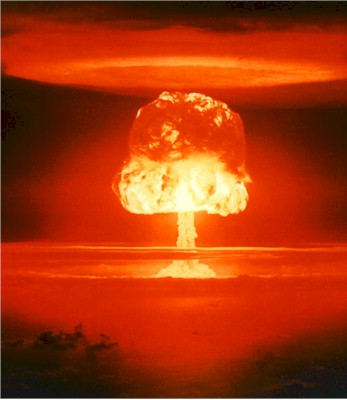
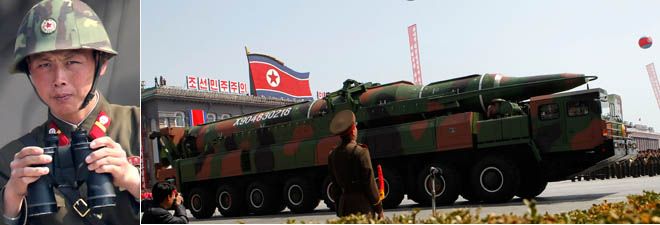
korea_nukeObama administration officials scrambled to downplay the errant disclosure of a classified portion of an intelligence report finding that North Korea has advanced its nuclear knowledge to the point that it could arm a ballistic missile with a nuclear warhead.

The analysis, disclosed Thursday at a hearing on Capitol Hill, says the Pentagon’s intelligence wing has “moderate confidence” that North Korea has nuclear weapons capable of delivery by ballistic missiles but that the weapon was unreliable.

The revelation was significant, because it has not been previously reported or believed that the country had the ability to miniaturize and deliver a nuclear weapon.

But top U.S. officials repeatedly stressed that the finding does not mean North Korea has the capabilities to launch a nuclear missile with any reliability at this point.

“It is inaccurate to suggest that the (North Korea) has the capability articulated in that report — they have a missile but that is very different than having the militarization, nuclearization, etcetera,” Secretary of State John Kerry said Friday, after landing in South Korea as part of a tour of Asian countries.

On Thursday night, the Pentagon and Director of National Intelligence James Clapper both downplayed the report.

“While I cannot speak to all the details of a report that is classified in its entirety, it would be inaccurate to suggest that the North Korean regime has fully tested, developed, or demonstrated the kinds of nuclear capabilities referenced in the passage,” Pentagon spokesman George Little said. Clapper echoed the assessment.

Meanwhile, North Korea was leveling new threats Friday. According to South Korea’s Yonhap News Agency, the regime warned that Tokyo would, in the event of a war, be the first target “if it continues to maintain its hostile posture.” North Korea was apparently threatening Japan because it vowed to destroy any missile heading toward the country.

Separately, South Korean President Park Geun-hye reportedly said she’s open to working with the North to resolve the standoff if the regime ends its provocative behavior.

The dispute over the North’s nuclear capability started with the Capitol Hill hearing Thursday. At the hearing, Rep. Doug Lamborn, R-Colo., read aloud what he said was an unclassified paragraph from a secret Defense Intelligence Agency report that was supplied to some members of Congress.

He said, reading from the report: “DIA assesses with moderate confidence the North currently has nuclear weapons capable of delivering by ballistic missiles, however the reliability will be low.”

The reading seemed to take Gen. Martin Dempsey, chairman of the Joint Chiefs of Staff, by surprise, who said he hadn’t seen the report and declined to answer questions about it.

Pentagon officials told Fox News that the memo he read from was in fact classified. However, someone at the Defense Intelligence Agency mistakenly marked it “unclassified,” which led to the confusion.

A U.S. official in Seoul said Friday it is “premature” to say North Korea has developed the expertise to make a nuclear weapon small enough to put on a ballistic missile.

“It is a very difficult task,” the official told Fox News. “They haven’t been able to put everything together.”

The official also says there is no indication a North Korea missile launch is imminent, saying officials “have not seen activity” that would show that a launch will happen soon, or that the country is planning a large scale attack.

“There has been no indication of massive troop movements or anything to back up the rhetoric going on,” the official said.

Meanwhile, Kerry’s trip to South Korea comes in the midst of bellicose threats from the unpredictable communist regime in the North.

Kerry and his South Korean counterpart said in a joint press conference Friday that North Korea will gain nothing by threatening tests of its missile or nuclear programs.

Kerry said the U.S. and its Asian ally won’t accept the North as a nuclear power, calling the country’s rhetoric “unacceptable.”

South Korean Foreign Minister Yun Byung-se called Pyongyang’s threats a “grave provocation” to the entire international community.

Since the beginning of March, the Navy has moved two missile defense ships closer to the coast of the Korean peninsula, in part to protect against a potential missile launch aimed at Guam, a U.S. territory in the Pacific.

The Pentagon also has announced it will place a more advanced land-based missile defense on Guam, and Hagel said in March that he approved installing 14 additional missile interceptors in Alaska to bolster a portion of the missile defense network that is designed to protect all of U.S. territory.

On Thursday, the Pentagon said it had moved a sea-based X-band radar — designed to track warheads in flight — into position in the Pacific.

Notably absent from that unclassified segment of the Pentagon report was any reference to what the DIA believes is the range of a missile North Korea could arm with a nuclear warhead. Much of its missile arsenal is capable of reaching South Korea and Japan, but Kim has threatened to attack the United States as well.

But David Wright, a nuclear weapons expert at the Union of Concerned Scientists, said the DIA assessment probably does not change the views of those who closely follow developments in North Korea’s pursuit of a nuclear weapon.

“People are starting to believe North Korea very likely has the capability to build a nuclear weapon small enough to put on some of their shorter-range missiles,” Wright said. “Once you start talking about warheads small enough and technically capable to be on a long-range missile, I think it’s much more an open question.”

The DIA assessment is not out of line with comments Dempsey made Wednesday when he was asked at a Pentagon news conference whether North Korea was capable of pairing a nuclear warhead to a ballistic missile that could reach Japan or beyond.

In response, Dempsey said the extent of North Korean progress on designing a nuclear weapon small enough to operate as a missile warhead was a classified matter. But he did not rule out that the North has achieved the capability revealed in the DIA report.

“They have conducted two nuclear tests,” Dempsey told a Pentagon news conference. “They have conducted several successful ballistic missile launches. And in the absence of concrete evidence to the contrary, we have to assume the worst case, and that’s why we’re postured as we are today.” He was referring to recent moves by the U.S. to increase its missile defense capabilities in the Pacific.

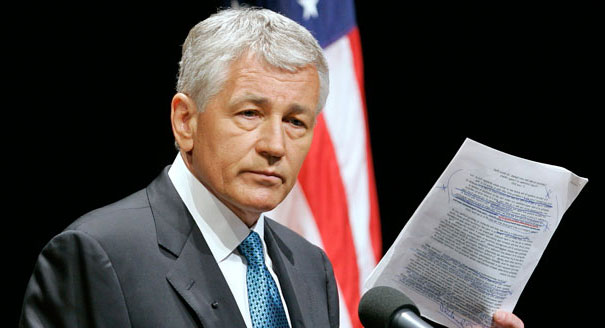
At the same House hearing where Lamborn revealed the DIA conclusion, Defense Secretary Chuck Hagel was asked a different version of the same question: Does North Korea have the capability to strike U.S. territory with a nuclear weapon? Hagel said the answer is no.

“Now does that mean that they won’t have it or they can’t have it or they’re not working on it?” Hagel added. “No. That’s why this is a very dangerous situation.”

“Now is the time for North Korea to end the belligerent approach they have taken and to try to lower temperatures,” Obama said in his first public comments since Pyongyang threatened the United States and its allies in East Asia with nuclear attack.

Obama, speaking from the Oval Office, said he preferred to see the tensions on the peninsula resolved through diplomatic means, but added that “the United States will take all necessary steps to protect its people.”

The North on Thursday delivered a fresh round of war rhetoric with claims it has “powerful striking means” on standby, the latest in a torrent of warlike threats seen by outsiders as an effort to scare and pressure South Korea and the U.S. into changing their North Korea policies.

Fox News’ Justin Fishel and Greg Palkot and The Associated Press contributed to this report.

Filed Under: All Stories, Elections, Foreign

Obama Plan: More Spending + Tax Hikes + SS Cuts = $3.77T

April 10, 2013 By Editor 1 Comment

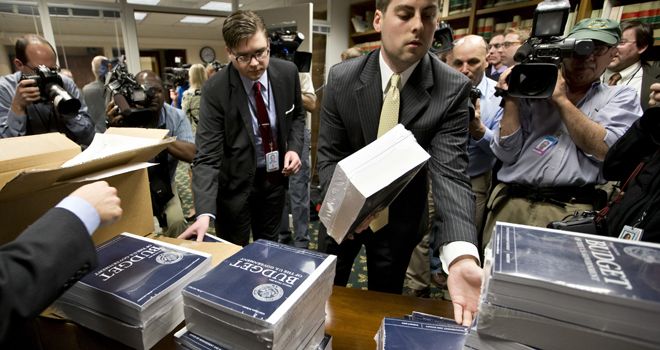
ObamaBudgetPresident Obama found himself weathering bipartisan broadsides Wednesday as he sent Congress his 2014 budget proposal, which in its effort to please both sides of the aisle has ended up angering both.

The budget arrived on Capitol Hill Wednesday morning, delivered 65 days after the legal deadline. The $3.77 trillion spending plan, which is over 2,000 pages, tries to curb deficits by further raising taxes on top earners and reining in the growth of Social Security.

But Republicans argue they already consented to increased taxes as part of the fiscal crisis deal and have expressed little interest in negotiating another hike. And liberal Democrats — particularly powerful advocacy groups — have launched a series of campaigns to oppose the changes to Social Security.

The president’s proposal being unveiled Wednesday includes an additional $1.8 trillion in deficit reduction over the next decade, bringing total deficit savings to $4.3 trillion, based on the administration’s calculations. It projects that the deficit for the 2014 budget year, which begins Oct. 1, would fall to $744 billion. That would be the lowest gap between spending and revenue since 2008.

The president’s plan tracks an offer he made to House Speaker John Boehner, R-Ohio, during December’s budget negotiations, which Boehner ended up walking away from because of his opposition to higher taxes on the wealthy.

The Obama budget proposal will join competing budget outlines already approved by the Republican-controlled House and the Democratic-run Senate.

The most sweeping proposal in Obama’s budget is a switch in the way the government calculates the annual cost-of-living adjustments for the millions of recipients of Social Security and other government benefit programs. The current method of measuring increases in the consumer price index would be modified to track a process known as chained CPI.

The new method takes into account changes that occur when people substitute goods rising in price with less expensive products. It results in slightly lower annual reading for inflation.

The switch in the inflation formula would cut spending on government benefit programs by $130 billion over 10 years, although the administration said it planned to protect the most vulnerable, including the very elderly. The change would also raise about $100 billion in higher taxes because the current CPI formula is used to adjust tax brackets each year. A lower inflation measure would mean more money taxed at higher rates.

In the tax area, Obama would raise an additional $580 billion by restricting deductions for the top 2 percent of family incomes. The budget would also implement the “Buffett Rule” requiring that households with incomes of more than $1 million pay at least 30 percent of their income in taxes. Charitable giving would be excluded.

Obama’s plan is not all about budget cuts. It also includes an additional $50 billion to fund infrastructure investments, including $40 billion in a “Fix It First” effort to provide immediate investments to repair highways, bridges, transit systems and airports nationwide.

Obama’s budget would also provide $1 billion to launch a network of 15 manufacturing innovation institutes across the country, and it earmarks funding to support high-speed rail projects.

The president also is proposing establishment of program to offer preschool to all 4-year-olds from low- and moderate-income families, with the money to support the effort coming from increased taxes on tobacco products.

The administration said its proposals to increase spending would not increase the deficit but rather are paid for either by increasing taxes or making deeper cuts to other programs.

Among the proposed cuts, the administration wants to trim defense spending by an additional $100 billion and domestic programs by an extra $100 billion over the next decade.

The budget proposes cutting $400 billion from Medicare and other health care programs over a decade. The cuts would come in a variety of ways, including negotiating better prescription drug prices and asking wealthy seniors to pay more.

It would obtain an additional $200 billion in savings by scaling back farm subsidies and trimming federal retiree programs.

Congress and the administration have already secured $2.5 trillion in deficit reduction over the next 10 years through budget reductions and with the end-of-year tax increase on the rich. Obama’s plan would bring that total to $4.3 trillion over 10 years.

It is unlikely that Congress will get down to serious budget negotiations until this summer, when the government once again will be confronted with the need to raise the government’s borrowing limit or face the prospect of a first-ever default on U.S. debt.

As part of the administration’s effort to win over Republicans, Obama will have a private dinner at the White House with about a dozen GOP senators Wednesday night. The budget is expected to be a primary topic, along with proposed legislation dealing with gun control and immigration.

Early indications are that the budget negotiations will be intense. Republicans have been adamant in their rejection of higher taxes, arguing that the $600 billion increase on top earners that was part of the late December agreement to prevent the government from going over the “fiscal cliff” were all the new revenue they will tolerate.

The administration maintains that Obama’s proposal is balanced with the proper mix of spending cuts and tax increases.

Obama has presided over four straight years of annual deficits totaling more than $1 trillion, reflecting in part the lost revenue during a deep recession and the government’s efforts to get the economy going again and stabilize the financial system.

The Obama budget’s $1.8 trillion in new deficit cuts would take the place of the automatic $1.2 trillion in reductions required by a 2011 budget deal. That provision triggered $85 billion in automatic cuts for the current budget year, and those reductions, known as a “sequester,” would not be affected by Obama’s new budget.

The budget plan already passed by the GOP-controlled House would cut deficits by a total $4.6 trillion over 10 years on top of the $1.2 trillion called for in the 2011 deal. The budget outline approved by the Democratic-controlled Senate tracks more closely to the Obama proposal, although it does not include changes to the cost-of-living formula for Social Security.

Published April 10, 2013 / FoxNews.com  / The Associated Press contributed to this report.

Filed Under: All Stories, Economy, Elections, Entitlement, Ethics, Foreign, Gender, Religion

Navy Will Deploy Lasers on Ships

April 8, 2013 By Editor Leave a Comment

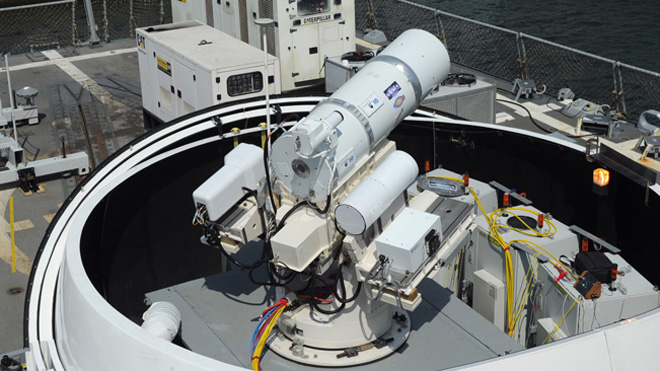
120730-N-PO203-141The Pentagon has plans to deploy its first ever ship-mounted laser next year, a disruptive, cutting-edge weapon capable of obliterating small boats and unmanned aerial vehicles with a blast of infrared energy.

Navy officials announced Monday that in early 2014, a solid-state laser prototype will be mounted to the fantail of the USS Ponce and sent to the 5th fleet region in the Middle East for real-world experience.

Video released by the Navy shows the laser lock onto a slow-moving target, in this case an unmanned drone, which bursts aflame in mid-flight. The drone soon catches fire and crashes into the sea below.

“It operates much like a blowtorch … with an unlimited magazine,” one official said.

There are potential targets for the laser in the 5th fleet region, which includes the Persian Gulf, where Iran operates small surveillance drones and is known for swarming and harassing U.S. Navy ships with small, armored speed boats.

Navy researches say so far the laser is 12 for 12 in testing, destroying its targets 100 percent of the time. Officials who briefed the press on the laser gun — which the Navy calls a “directed energy pulse weapon” — say it has non-lethal functions too, and may be used to send warning signals to other vessels.

One of its major advantages, the Navy said, is its relatively low cost to operate. “Its weapon round costs about $1 to shoot,” said Rear Admiral Matthew Klunder, chief of Naval Research. Although the unit cost is higher — at around $32 million to produce.

Still, Navy officials say this is a major accomplishment when compared to the Airborne Laser, the Air Force’s now cancelled project to put nose-mounted lasers on its aircraft. Those lasers cost nearly $1.5 billion a piece.

“This wasn’t demonstrated on a barge. This was on a naval warship. And the performance results were quite astounding,” Klunder said.

There are some concerns with the new technology, however. Navy officials expressed worries with its ability to fire in poor weather conditions and believe the 5th fleet region will be a great test of the weapon’s abilities. It’s also unclear if the laser can effectively take down faster moving objects, such as fighter jets.

Officials also would not reveal the range of this new weapon, describing it as more of a “close in” system. Energy levels were also classified. If successful, it will eventually be painted Navy grey and mounted on top of the ship with the rest of the major weapons systems.

The Navy and other armed forces have been experimenting for years with these directed energy weapons — laser guns to you and me. Such weapons could be the future of warfare.

In April 2011, the Navy conducted a more limited test of a similar weapon, blasting a boat from the water with a laser weapon. Nevin Carr, chief of Naval Research at the time, said this energy weapon would not handle all types of threats, however.

“To begin to address a cruise missile threat, we’d need to get up to hundreds of kilowatts,” Carr said.

The Navy is working on just such a gun of course.

Called the FEL — for free-electron laser, which doesn’t use a gain medium and is therefore more versatile — it was tested in February 2011, consuming blistering amounts of energy and burning through feet of raw steel.

The FEL will easily get into the kilowatt power range, experts say. It can also be easily tuned as well, to adjust to environmental conditions, another reason it is more flexible than the fixed wavelength of solid-state laser. But the Navy doesn’t expect to release megawatt-class FEL weapons until the 2020s; among the obstacles yet to be overcome, the incredible power requirements of such weapons.

Also in the Navy’s futuristic arsenal: a so-called “rail gun,” which uses an electomagnetic current to accelerate a non-explosive bullet at several times the speed of sound. Railguns are even further off in the distance, possibly by 2025, the Navy has said.

But lasers? Forget Buck Rogers and the 25th century. They’re here today.

By Justin Fishel  / Published April 08, 2013 / FoxNews.com

Filed Under: All Stories, Economy, Elections, Foreign, Sci-Tech

Former British Prime Minister Margaret Thatcher Has Died

April 8, 2013 By Editor Leave a Comment

thatcherFormer British Prime Minister Margaret Thatcher has died after suffering a stroke at the age of 87. Known as ‘The Iron Lady,’ Thatcher was Britain’s only female prime minister and led the Conservatives to three election victories, governing from 1979 to 1990.

The U.K. press is reporting that Thatcher suffered a stroke and her children said in a statement she passed “peacefully.”

“It is with great sadness that Mark and Carol Thatcher announced that their mother Baroness Thatcher died peacefully following a stroke this morning,” Lord Bell, Thatcher’s spokesperson, said.

Thatcher, known as the “Iron Lady,” was a staunch critic of Communism and delivered several memorable lines while defending Capitalism. For example, during her last speech in the House of Commons in 1990, she delivered a rousing rebuttal to a member of Parliament who questioned her policies and their affect on the poor.

The U.K. press is reporting that Thatcher suffered a stroke and her children said in a statement she passed “peacefully.”

“It is with great sadness that Mark and Carol Thatcher announced that their mother Baroness Thatcher died peacefully following a stroke this morning,” Lord Bell, Thatcher’s spokesperson, said.

Thatcher, known as the “Iron Lady,” was a staunch critic of Communism and delivered several memorable lines while defending Capitalism. For example, during her last speech in the House of Commons in 1990, she delivered a rousing rebuttal to a member of Parliament who questioned her policies and their affect on the poor.

She ruled for 11 remarkable years and imposed her will on a fractious, rundown nation – breaking the unions, triumphing in a far-off war, and selling off state industries at a record pace. She left behind a leaner government and more prosperous nation by the time a mutiny ousted her from No. 10 Downing Street.

For admirers, Thatcher was a savior who rescued Britain from ruin and laid the groundwork for an extraordinary economic renaissance. For critics, she was a heartless tyrant who ushered in an era of greed that kicked the weak out onto the streets and let the rich become filthy rich.

“Let us not kid ourselves, she was a very divisive figure,” said Bernard Ingham, Thatcher’s press secretary for her entire term. “She was a real toughie. She was a patriot with a great love for this country, and she raised the standing of Britain abroad.”

Thatcher was the first – and still only – female prime minister in Britain’s history. But she often found feminists tiresome and was not above using her handbag as a prop to underline her swagger and power. A grocer’s daughter, she rose to the top of Britain’s snobbish hierarchy the hard way, and envisioned a classless society that rewarded hard work and determination.

She was a trailblazer who at first believed trailblazing impossible: Thatcher told the Liverpool Daily Post in 1974 that she did not think a woman would serve as party leader or prime minister during her lifetime.

But once in power, she never showed an ounce of doubt.

Thatcher could be intimidating to those working for her: British diplomats sighed with relief on her first official visit to Washington, D.C., as prime minister to find that she was relaxed enough to enjoy a glass of whiskey and a half-glass of wine during an embassy lunch, according to official documents.

Like her close friend and political ally Ronald Reagan, Thatcher seemed motivated by an unshakable belief that free markets would build a better country than reliance on a strong, central government. Another thing she shared with the American president: a tendency to reduce problems to their basics, choose a path, and follow it to the end, no matter what the opposition.

She formed a deep attachment to the man she called “Ronnie” – some spoke of it as a schoolgirl crush. Still, she would not back down when she disagreed with him on important matters, even though the United States was the richer and vastly stronger partner in the so-called “special relationship.”

Thatcher was at her brashest when Britain was challenged. When Argentina’s military junta seized the remote Falklands Islands from Britain in 1982, she did not hesitate even though her senior military advisers said it might not be feasible to reclaim the islands.

She simply would not allow Britain to be pushed around, particularly by military dictators, said Ingham, who recalls the Falklands War as the tensest period of Thatcher’s three terms in power. When diplomacy failed, she dispatched a military task force that accomplished her goal, despite the naysayers.

“That required enormous leadership,” Ingham said. “This was a formidable undertaking, this was a risk with a capital R-I-S-K, and she demonstrated her leadership by saying she would give the military their marching orders and let them get on with it.”

Thatcher served from 1979-1990.

This is a breaking story. Updates will be added. ​The Associated Press contributed to this report.

Filed Under: All Stories, Elections, Foreign

North Korea Moves Missile Launchers, Warns Foreign Embassies

April 5, 2013 By Editor Leave a Comment

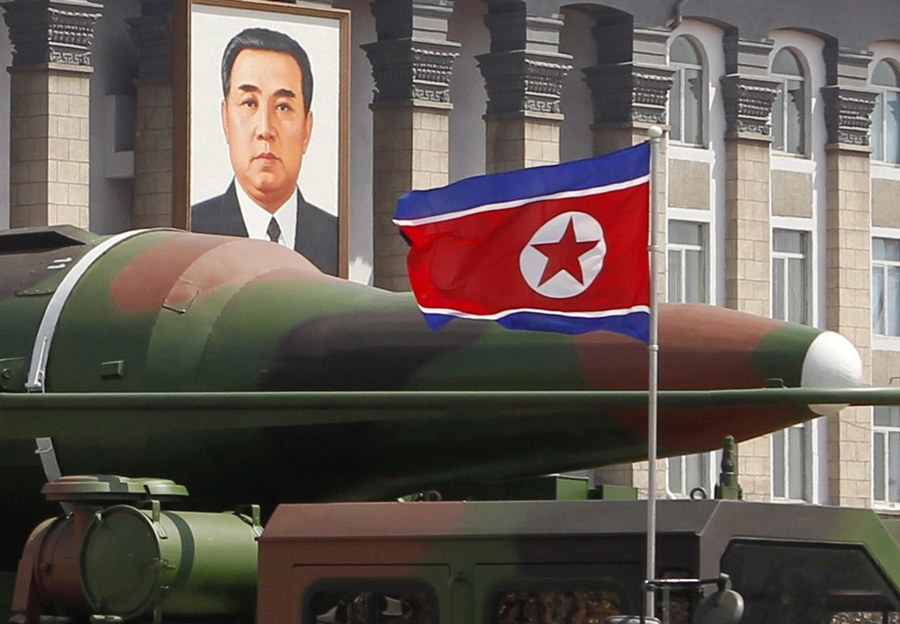
Korea_Missles_MovedAs tensions continued to mount on the Korean peninsula, the communist dictatorship in the North deployed mid-range missile launchers to its east coast and reportedly warned foreign embassies Friday it cannot guarantee the safety of diplomats after April 10.

Reuters reported early Friday that North Korea deployed two of its intermediate range missiles on mobile launchers and hid them on the east coast of the country, citing a South Korean news agency.

South Korea said Thursday North Korea moved a missile with “considerable range” to its east coast after an unnamed spokesman for the North Korean army warned the U.S. Wednesday that its military has been cleared to wage an attack using “smaller, lighter and diversified nuclear” weapons.

Meanwhile, the United Kingdom foreign office confirmed in a statement Friday that North Korea asked a number of foreign embassies in Pyongyang  to consider moving staff out since they could not assure their safety in the event of conflict.

“We are consulting international partners about these developments.  No decisions have been taken, and we have no immediate plans to withdraw our Embassy,”  the UK foreign office statement said.

Under the Vienna Convention that governs diplomatic missions, host governments are required to assist in the evacuation of embassy staff from the country in the event of conflict.

North Korea has railed for weeks against joint U.S. and South Korean military exercises taking place in South Korea and has expressed anger over tightened sanctions for a February nuclear test.

“The current question was not whether, but when a war would break out on the peninsula,” because of the “increasing threat from the United States”, China’s state news agency Xinhua quoted the North’s Foreign Ministry as saying, according to a Reuters report.

U.S. National Security Council spokesperson Caitlin Hayden has called North Korea’s threats “unhelpful and unconstructive.”

“It is yet another offering in a long line of provocative statements that only serve to further isolate North Korea from the rest of the international community and undermine its goal of economic development,” she said. “North Korea should stop its provocative threats and instead concentrate on abiding by its international obligations.”

South Korean Defense Minister Kim Kwan-jin dismissed reports in the Japanese and South Korean media that the missile moved this week could be a KN-08, which is believed to be a long-range missile that if operable could hit the United States.

Kim told lawmakers at a hearing that the missile’s range is considerable but not far enough to hit the U.S. mainland. He said he did not know the reasons behind the missile movement, saying it “could be for testing or drills.”

The range he described could refer to a mobile North Korean missile known as the Musudan, which has a range of 1,800 miles. That would make Japan and South Korea potential targets, but little is known about the missile’s accuracy.

Despite North Korea’s rhetoric, analysts say they do not expect a nuclear attack, which knows the move could trigger a destructive, suicidal war that no one in the region wants.

“The rhetoric is off the charts,” said Victor Cha, former director for Asian affairs at the White House National Security.

Following through on one threat Wednesday, North Korean border authorities refused to allow entry to South Koreans who manage jointly run factories in the North Korean city of Kaesong.

Washington calls the military drills, which this time have incorporated fighter jets and nuclear-capable stealth bombers, routine annual exercises between the allies. Pyongyang calls them rehearsals for a northward invasion.

Published April 05, 2013 / FoxNews.com /Fox News’ Justin Fishel and the Associated Press contributed to this report.

Filed Under: All Stories, Elections, Foreign

N. Korea: US Nuke Attack Approved

April 4, 2013 By Editor Leave a Comment

korea_missleSouth Korea says North Korea has moved a missile with “considerable range” to its east coast after an unnamed spokesman for the North Korean army warned the U.S. Wednesday that its military has been cleared to wage an attack using “smaller, lighter and diversified nuclear” weapons.

South Korea’s defense minister said Thursday the missile moved is not capable of hitting the United States.

Kim Kwan-jin dismissed reports in Japanese and South Korean media that the missile could be a KN-08, which is believed to be a long-range missile that if operable could hit the United States.

Kim told lawmakers at a hearing that the missile’s range is considerable but not far enough to hit the U.S. mainland. He said he did not know the reasons behind the missile movement, saying it “could be for testing or drills.”

The range he described could refer to a mobile North Korean missile known as the Musudan, which has a range of 1,800 miles. That would make Japan and South Korea potential targets, but little is known about the missile’s accuracy.

North Korea has railed for weeks against joint U.S. and South Korean military exercises taking place in South Korea and has expressed anger over tightened sanctions for a February nuclear test.

The army spokesman said in a statement carried by the Korean Central News Agency that troops have been authorized to counter U.S. aggression with “powerful practical military counteractions.”

National Security Council spokesperson Caitlin Hayden called the threats “unhelpful and unconstructive.”

“It is yet another offering in a long line of provocative statements that only serve to further isolate North Korea from the rest of the international community and undermine its goal of economic development,” she said. “North Korea should stop its provocative threats and instead concentrate on abiding by its international obligations.”

The Pentagon said in Washington that it will deploy a missile defense system to the U.S. Pacific territory of Guam to strengthen regional protection against a possible attack from North Korea. The defense secretary said the U.S. was seeking to defuse the situation.

Despite the rhetoric, analysts say they do not expect a nuclear attack by North Korea, which knows the move could trigger a destructive, suicidal war that no one in the region wants.

The strident warning from Pyongyang is latest in a series of escalating threats from North Korea, which has railed for weeks against joint U.S. and South Korean military exercises taking place in South Korea and has expressed anger over tightened sanctions for a February nuclear test.

Following through on one threat Wednesday, North Korean border authorities refused to allow entry to South Koreans who manage jointly run factories in the North Korean city of Kaesong.

Washington calls the military drills, which this time have incorporated fighter jets and nuclear-capable stealth bombers, routine annual exercises between the allies. Pyongyang calls them rehearsals for a northward invasion.

The foes fought on opposite sides of the three-year Korean War, which ended in a truce in 1953. The divided Korean Peninsula remains in a technical state of war six decades later, and Washington keeps 28,500 troops in South Korea to protect its ally.

U.S. Defense Secretary Chuck Hagel said Washington was doing all it can to defuse the situation, echoing comments a day earlier by Secretary of State John Kerry.

“Some of the actions they’ve taken over the last few weeks present a real and clear danger and threat to the interests, certainly of our allies, starting with South Korea and Japan and also the threats that the North Koreans have leveled directly at the United States regarding our base in Guam, threatened Hawaii, threatened the West Coast of the United States,” Hagel said Wednesday.

In Pyongyang, the military statement said North Korean troops had been authorized to counter U.S. “aggression” with “powerful practical military counteractions,” including nuclear weapons.

“We formally inform the White House and Pentagon that the ever-escalating U.S. hostile policy toward the DPRK and its reckless nuclear threat will be smashed by the strong will of all the united service personnel and people and cutting-edge smaller, lighter and diversified nuclear strike means,” an unnamed spokesman from the General Bureau of the Korean People’s Army said in a statement carried by state media, referring to North Korea by its formal name, the Democratic People’s Republic of Korea. “The U.S. had better ponder over the prevailing grave situation.”

However, North Korea’s nuclear strike capabilities remain unclear.

Pyongyang is believed to be working toward building an atomic bomb small enough to mount on a long-range missile. Long-range rocket launches designed to send satellites into space in 2009 and 2012 were widely considered covert tests of missile technology, and North Korea has conducted three underground nuclear tests, most recently in February.

“I don’t believe North Korea has to capacity to attack the United States with nuclear weapons mounted on missiles, and won’t for many years. Its ability to target and strike South Korea is also very limited,” nuclear scientist Siegfried Hecker, a senior fellow at the Center for International Security and Cooperation at Stanford University, said this week.

“And even if Pyongyang had the technical means, why would the regime want to launch a nuclear attack when it fully knows that any use of nuclear weapons would result in a devastating military response and would spell the end of the regime? ” he said in answers posted to CISAC’s website.

In Seoul, a senior government official said Tuesday that it wasn’t clear how advanced North Korea’s nuclear weapons capabilities are. But he also noted fallout from any nuclear strike on Seoul or beyond would threaten Pyongyang as well, making a strike unlikely. He spoke on condition of anonymity because he wasn’t authorized to speak publicly to the media.

North Korea maintains that it needs to build nuclear weapons to defend itself against the United States. On Monday, North Korean leader Kim Jong Un led a high-level meeting of party officials who declared building the economy and “nuclear armed forces” as the nation’s two top priorities.

Published April 04, 2013 / FoxNews.com

The Associated Press contributed to this report.

Filed Under: All Stories, Elections, Foreign

Hagel Calls N. Korea ‘Real and Clear Danger’

April 3, 2013 By Editor Leave a Comment

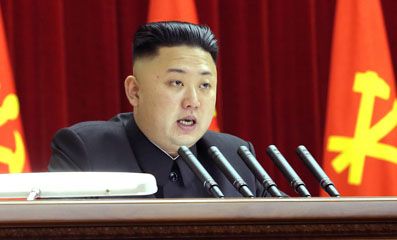
Kim_dangerDefense Secretary Chuck Hagel said Wednesday that North Korea’s rising threats pose a “real and clear danger,” as the Pentagon continued to take precautions with a plan to deploy a missile-defense system to Guam.

A senior U.S. official confirmed to Fox News that the military will deploy an Army system shown as a Terminal High Altitude Area Defense battery to Guam. The system is capable of shooting down short-, medium- and intermediate-range ballistic missiles.

This follows the positioning of two U.S. destroyer ships in the region, along with plans to have two sea-based radar systems in the western Pacific.

At the same time, North Korea seemed to ramp up its rhetoric even further Wednesday, warning that it’s military had been cleared to attack the U.S. with “smaller, lighter and diversified nuclear” weapons. The National Security Council responded by saying such “unhelpful and unconstructive threats … only serve to further isolate North Korea.”

Hagel, speaking Wednesday at the National Defense University, said the cascade of threats out of North Korea must be taken “seriously,” given the country’s nuclear and missile-delivery capacity — though analysts say the country still could not fire a nuclear-tipped missile all the way to the continental United States.

“As they have ratcheted up (their) bellicose, dangerous rhetoric — and some of the actions they’ve taken over the last few weeks present a real and clear danger and threat to the interests, certainly of our allies, starting with South Korea and Japan,” Hagel said. He also cited the “threats that the North Koreans have leveled directly at the United States regarding our base in Guam, threatened Hawaii, threatened to the West Coast of the United States.”

The Kim Jong Un regime has toggled in recent weeks between threatening the U.S. and threatening South Korea.

In addition to announcing through an unnamed army spokesman that it had cleared a strike plan for a potential attack on the U.S., North Korea said Wednesday it had decided to bar South Korean managers and trucks delivering supplies from crossing the border to enter a jointly run factory park called Kaesong.

The Kaesong industrial park started producing goods in 2004 and has been an unusual point of cooperation in an otherwise hostile relationship between the Koreas, whose three-year war ended in 1953 with an armistice, not a peace treaty.

The Kaesong move came a day after the North said it would restart its long-shuttered plutonium reactor and a uranium enrichment plant. Both could produce fuel for nuclear weapons that North Korea is developing and has threatened to hurl at the U.S., something experts don’t think it will be able to accomplish for years.

The North’s rising rhetoric has been met by a display of U.S. military strength, including flights of nuclear-capable bombers and stealth jets at annual South Korean-U.S. military drills that the allies call routine and North Korea says are invasion preparations.

In a telephone call Tuesday evening to Chinese Defense Minister Chang Wanquan, Hagel cited North Korea’s pursuit of nuclear weapons and ballistic missiles and said Washington and Beijing should continue to cooperate on those problems.

“The secretary emphasized the growing threat to the U.S. and our allies posed by North Korea’s aggressive pursuit of nuclear weapons and ballistic missile programs and expressed to General Chang the importance of sustained U.S.-China dialogue and cooperation on these issues,” Pentagon spokesman George Little said in a statement describing the phone call.

Little also disclosed that Gen. Martin Dempsey, chairman of the Joint Chiefs of Staff, will visit China later this month. It would be Dempsey’s first trip to China as head of the Joint Chiefs.

Hagel also invited the Chinese defense minister to visit the United States this year.

Fox News’ Justin Fishel and The Associated Press contributed to this report.

Filed Under: All Stories, Elections, Foreign

AP Imposes PC Gag on Itself

April 3, 2013 By Editor Leave a Comment

IllegalImmgrantFenceWASHINGTON –  The Associated Press is being accused of trying to influence the immigration debate following a decision to stop using the term “illegal immigrant” in its coverage — despite the fact it is still being used by U.S. government officials including Homeland Security Secretary Janet Napolitano.The decision comes as a bipartisan group of senators prepares to introduce sweeping immigration legislation which is expected to propose a pathway to citizenship for millions of illegal immigrants.

Indeed, the move by the influential wire service is being hailed as a victory by immigrant advocacy groups.

The conservative Media Research Center, though, described the change as a “politically-correct mumble.”

The new style guideline was first announced this week on the wire service’s blog by Senior Vice President and Executive Editor Kathleen Carroll, who said the change came out of conversations with people who opposed the term.

“Our goal always is to use the most precise and accurate words so that the meaning is clear to any reader anywhere,” Carroll said.

“The Stylebook no longer sanctions the term ‘illegal immigrant’ or the use of ‘illegal’ to describe a person,” Carroll said. “Instead, it tells users that ‘illegal’ should describe only an action, such as living in or immigrating to a country illegally.”

Still, some are wondering why the AP decided to nix the phrase when high-ranking government officials don’t seem to have a problem with it.

Last week, Napolitano told reporters that she didn’t “really get caught up in the vocabulary wars.”

“They are immigrants who are here illegally, that’s an illegal immigrant,” she said.

Previously, the AP rejected the term “undocumented immigrants,” favored by some activists, as inaccurate.

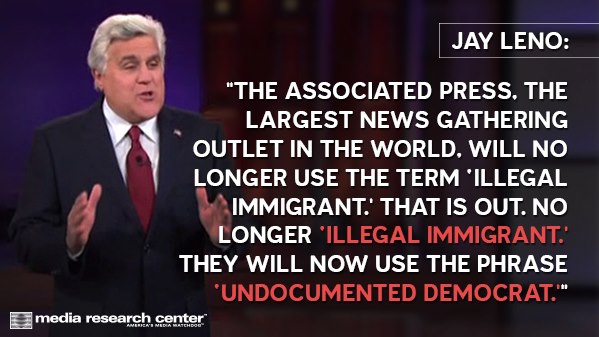
AP_PC_LenoChanges to the AP Stylebook, which is updated annually, have important and widespread repercussions in the media. The changes don’t just influence the AP’s writing, which is found in publications around the world. The book is the primary writing style guide for journalists in both print and broadcast.

The Congressional Hispanic Caucus, a group of 27 House Democrats, applauded the AP’s decision and called it “a great step forward.”

On a more tongue-in-cheek note, ALIPAC announced Wednesday it would be changing its “style” preference in all future articles to “illegal invaders” — “in response to the totalitarian steps by the Associated Press to make ‘illegal immigrants’ disappear with the stroke of a pen just days before legislation attempting to do the same is expected to be filed in Washington, DC, by the ‘Gang of 8.'”

Comedian Jay Leno joked that the phrase should be replaced with “undocumented Democrat.”

The AP said its decision to stop using the term “illegal immigrants” is part of a broader shift away from labeling people and toward labeling behavior — for example, referring to people “diagnosed with schizophrenia” instead of “schizophrenics.”

In 1986, the AP’s then-stylebook editor Christopher French used the same reasoning to support the wire service’s decision to use “anti-abortion” instead of “pro-life,” and abortion rights instead of “pro-abortion” or “pro-choice.”

“Until a specific rule is agreed upon at AP, the following existing guideline is being applied: Avoid labeling groups or individuals and instead spend an extra sentence on a more specific description,” French said at the time.

In February, it reversed a decision on gay marriage, saying people in same-sex marriages could now be referred to as “husbands” and “wives.”

Several news organizations are also dropping the term “illegal immigrant” from their reporting. CNN, ABC News and NBC News have all parted ways with the phrase in the past few years.

The debate on whether to change the term at The New York Times is still being debated, public editor Margaret Sullivan wrote in an article Tuesday.

“The Times, for the past couple of months, has also been considering changes to its stylebook entry on this term and will probably announce them to staff members this week,” she wrote.

“From what I can gather, The Times’s changes will not be nearly as sweeping as The AP’s,” Sullivan said, adding, “I would be surprised to see The Times ban the use of ‘illegal immigrant,’ as the AP has done.”

Published April 03, 2013 / FoxNews.com

Filed Under: All Stories, Economy, Elections, Entitlement, Ethics, Foreign

N. Korea Blocks S. Koreans From Entering Jointly-Run Industrial Park

April 3, 2013 By Editor Leave a Comment

south-koreans-factoryPAJU, South Korea –  North Korea on Wednesday barred South Korean workers from entering a jointly run factory park just over the heavily armed border in the North in the latest sign that Pyongyang’s warlike stance toward South Korea and the United States is moving from words to action.

The Kaesong move came a day after the North announced it would restart its long-shuttered plutonium reactor and a uranium enrichment plant, both of which could produce fuel for nuclear weapons that Pyongyang is developing and has threatened to hurl at the U.S. but which experts don’t think it will be able to accomplish for years.

The North’s rising rhetoric over recent weeks has been met by a display of U.S. military strength, including flights of nuclear-capable bombers and stealth jets at the annual South Korean-U.S. military drills that the allies call routine but that North Korea claims are invasion preparations.

The Kaesong industrial park started producing goods in 2004 and has been an unusual point of cooperation in an otherwise hostile relationship between the Koreas, whose three-year war ended in 1953 with an armistice. Its continued operation even through past episodes of high tension has reassured foreign multinationals that another Korean War is unlikely and their investments in prosperous dynamic South Korea are safe.

“The Kaesong factory park has been the last stronghold of detente between the Koreas,” said Hong Soon-jik, a North Korea researcher at the Seoul-based Hyundai Research Institute.

He said tension between the Koreas could escalate further over Kaesong because Seoul may react with its own punitive response and Pyongyang will then hit back with another move.

It is unclear how long North Korea will prevent South Koreans from entering the industrial park, which is located in the North Korean border city of Kaesong and provides jobs for more than 50,000 North Koreans. The last major disruption at the park amid tensions over U.S.-South Korean military drills in 2009 lasted just three days.

Seoul’s Unification Ministry spokesman Kim Hyung-suk said Pyongyang was allowing South Koreans to return home from Kaesong. Some 33 workers of about 860 South Koreans at Kaesong returned Wednesday. But Kim said about 480 South Koreans who had planned to travel to the park Wednesday were being refused entry.

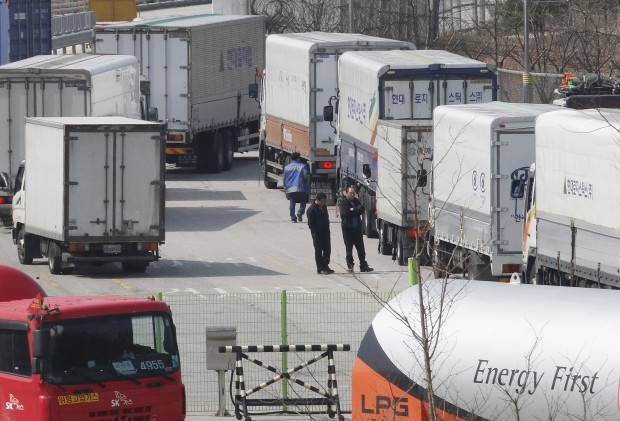
Trucks streamed back into South Korea through its Paju border checkpoint in the morning, just minutes after heading through it, after being refused entry into the North.

Pyongyang threatened last week to shut down the park, which is run with North Korean labor and South Korean know-how. It expressed anger over South Korean media reports that said North Korea hadn’t yet shut the park because it is a source of crucial hard currency for the impoverished country.

About 120 South Korean companies operate factories in Kaesong which produced $470 million of goods such as clocks, clothing and shoes last year that are trucked back to the South for export to other countries. The industrial park is crucial for the small businesses that operate there to take advantage of North Korea’s low wages but not important for the South Korean economy overall.

It has more significance to cash-strapped North Korea since, according to the South Korean government, wages for North Korean workers totaled some $81 million last year. That has underlined the risks that North Korea’s brinkmanship will result in a miscalculation that results in an even more dangerous polarization of the Korean peninsula.

Barring entry to South Koreas is a “slap in the face” after the South Korean government recently extended medical aid to the North, said Lee Choon-kun, a North Korea researcher at the Korea Economic Research Institute, a Seoul-based think tank. “I see this as a start for more provocative actions,” he said.

“The North has made too many threats not to stop short of any real action.”

Kaesong, initially conceived as a test case for reunification and reconciliation, also provides an irksome reminder for Pyongyang that what it lacks, the South has in abundance — material prosperity. An enormous gap emerged between the two Koreas in the decades after the Korean War as the South embraced a form of state-directed capitalism while the North adhered to communist central planning.

Every morning, North Korean workers commute to the complex on the edge of Kaesong on South Korean-made Hyundai buses. Once inside the gates of the complex, it’s a world apart. The paved streets and sidewalks are marked with South Korean traffic signals and signs and the parking lots are filled with the Hyundai, Samsung and KIA cars driven by South Korean managers.

Inside several factories visited by The Associated Press last year, the posters on the walls are not party slogans but safety warnings. “Beware of fires,” read one; “Wash your hands” read another. While most factories in North Korea are drafty, and few have running water, the facilities in Kaesong are equipped with hot water, flush toilets and air conditioners.

In the rest of the Korean Peninsula, it is illegal for Koreans from North and South to interact without government permission. But inside Kaesong, North Korean workers work side by side with South Korean managers, discussing orders and mapping out production.

However, they tend not to socialize with one another. At most factories, North Korean workers take their meals in cafeterias that serve basic stews and rice while the South Koreans dine separately.

Park Yun-kyu, who heads a men’s apparel maker that employs 700 North Korean workers in Kaesong, said he was worried he couldn’t send fresh food to his eight South Korean workers in Kaesong.

“They were working normally when I called them in the morning,” said Park who returned to Seoul after being refused entry into Kaesong. “The problem is food. I hope North Korea would at least let us send food. We have to send food and some materials for production every day.”

On Tuesday, a senior South Korean government official said Seoul has a contingency plan for its citizens in Kaesong. But he said the government hoped the tension would not lead to a shutdown of the complex. He spoke on condition of anonymity, saying he was not authorized to speak publicly to the media.

Published April 03, 2013 / Associated Press /Associated Press writers Foster Klug, Hyung-jin Kim, Jean H. Lee, Sam Kim and Youkyung Lee in Seoul contributed to this report.


Filed Under: All Stories, Elections, Foreign

Hagel Calls North Korea’s Nuclear Ambitions a ‘Growing Threat’

April 3, 2013 By Editor Leave a Comment

HagelWASHINGTON –  Defense Secretary Chuck Hagel said Tuesday that North Korea’s development of nuclear weapons poses a “growing threat” to the U.S. and its allies.

In a telephone call Tuesday evening to Chinese Defense Minister Chang Wanquan, Hagel cited North Korea’s pursuit of nuclear weapons and ballistic missiles and said Washington and Beijing should continue to cooperate on those problems.

“The secretary emphasized the growing threat to the U.S. and our allies posed by North Korea’s aggressive pursuit of nuclear weapons and ballistic missile programs and expressed to General Chang the importance of sustained U.S.-China dialogue and cooperation on these issues,” Pentagon spokesman George Little said in a statement describing the phone call.

Little also disclosed that Gen. Martin Dempsey, chairman of the Joint Chiefs of Staff, will visit China later this month. It would be Dempsey’s first trip to China as head of the Joint Chiefs.

Hagel also invited the Chinese defense minister to visit the United States this year.

North Korea on Wednesday barred South Korean workers from entering a jointly run factory park just over the heavily armed border in the North, officials in Seoul said, a day after Pyongyang announced it would restart its long-shuttered plutonium reactor and increase production of nuclear weapons material.

Seoul’s Unification Ministry spokesman Kim Hyung-suk said Pyongyang is allowing South Koreans to return home from Kaesong, but that about 480 South Koreans who had planned to travel to the park Wednesday were being refused entry.

North Korean authorities cited recent political circumstances on the Korean Peninsula when they delivered their decision to block South Korean workers from entering Kaesong, Kim said without elaborating.

The two sides do not allow their citizens to travel to the other country without approval, but an exception has previously been made each day for the South Koreans working at Kaesong.

Meanwhile, the Pentagon on Tuesday confirmed that it is positioning an array of military assets near the Korean Peninsula, as the White House stressed that the “entire national security team” is focused on the escalating threats out of Pyongyang — with the latest being a pledge to restart its plutonium reactor.

Secretary of State John Kerry, speaking Tuesday at a news conference with the visiting foreign minister of South Korea, said recent belligerent rhetoric from North Korea is “unacceptable” and that the U.S. will defend itself, as well as South Korea and Japan, from any threat from the North.

The declaration of a resumption of plutonium production — the most common fuel in nuclear weapons — and other facilities at the main Nyongbyon nuclear complex will boost fears in Washington and among its allies about North Korea’s timetable for building a nuclear-tipped missile that can reach the mainland U.S., technology it is not currently believed to have.

The amount of hostile language from North Korea in recent weeks was “extraordinary,” Kerry said, adding that the isolated state should have no doubt that the U.S. will fulfill its treaty obligations to allies in the region.

Pentagon spokesman George Little said that two destroyer warships, the USS Decatur and USS McCain, have arrived in the region as part of a missile-defense mission. Previously, the Pentagon had only revealed that it had moved the USS McCain to the region.

“They have arrived at predetermined positions in the western Pacific, where they will be poised to respond to any missile threats to our allies or our territory,” Little said Tuesday.

In addition, the Pentagon has already announced plans to have two sea-based radar systems in the western Pacific. One is already in northern Japan; the other has not yet deployed and is currently conducting non-North Korean related systems tests off Pearl Harbor.

The system in Japan can serve to protect the Korean peninsula as well as threats to the western United States that originate from North Korea.

Published April 03, 2013 / FoxNews.com /The Associated Press contributed to this report.

Filed Under: All Stories, Elections, Foreign

UN Adopts Pact to Regulate Multibillion-dollar Global Arms Trade

April 2, 2013 By Editor Leave a Comment

Clouds are reflected off the Secretariat Building of the UN headquarters during the 67th United Nations General Assembly, in New YorkThe U.N. General Assembly has overwhelmingly approved the first U.N. treaty regulating the multibillion-dollar international arms trade.

The resolution adopting the landmark treaty was approved by a vote of 154 to 3 with 23 abstentions.

The 193-member world body voted after Iran, North Korea and Syria blocked its adoption by consensus at a negotiating conference last Thursday. The three countries voted “no” on the resolution.

The vote capped a more than decade-long campaign by activists and some governments to regulate the $60 billion global arms trade and try to keep illicit weapons out of the hands of terrorists, insurgent fighters and organized crime.

It will not control the domestic use of weapons in any country, but it will require countries to establish national regulations to control arms transfers.

Published April 02, 2013 / Associated Press

Filed Under: All Stories, Economy, Elections, Entitlement, Ethics, Foreign

North Korea Vows to Restart Nuclear Facilities

April 2, 2013 By Editor Leave a Comment

korea_nukeSEOUL, South Korea –  North Korea vowed Tuesday to restart a nuclear reactor that can make one bomb’s worth of plutonium a year, escalating tensions already raised by near daily warlike threats against the United States and South Korea.The North’s plutonium reactor was shut down in 2007 as part of international nuclear disarmament talks that have since stalled. The declaration of a resumption of plutonium production — the most common fuel in nuclear weapons — and other facilities at the main Nyongbyon nuclear complex will boost fears in Washington and among its allies about North Korea’s timetable for building a nuclear-tipped missile that can reach the United States, technology it is not currently believed to have.

A spokesman for the North’s General Department of Atomic Energy said that scientists will begin work at a uranium enrichment plant and a graphite-moderated 5 megawatt reactor, which generates spent fuel rods laced with plutonium and is the core of the Nyongbyon nuclear complex.

The unidentified spokesman said the measure is part of efforts to resolve the country’s acute electricity shortage but also for “bolstering up the nuclear armed force both in quality and quantity,” according to a statement carried by the official Korean Central News Agency.

Pyongyang conducted its third nuclear test in February, prompting a new round of U.N. sanctions that have infuriated its leaders and led to a torrent of threatening rhetoric. The United States has sent nuclear-capable bombers and stealth jets to participate in annual South Korean-U.S. military drills that the allies call routine but that Pyongyang claims are invasion preparations.

Obama_N_Korea_nukesNorth Korea has declared that the armistice ending the Korean War in 1953 is void, threatened to launch nuclear and rocket strikes on the United States and, most recently, declared at a high-level government assembly that making nuclear arms and a stronger economy are the nation’s top priorities.

The threats are seen as efforts to force policy changes in Seoul and Washington and increase domestic loyalty to young North Korean leader Kim Jong Un by portraying him as a powerful military force.

“North Korea is keeping tension and crisis alive to raise stakes ahead of possible future talks with the United States,” said Hwang Jihwan, a North Korea expert at the University of Seoul. “North Korea is asking the world, `What are you going to do about this?”‘

North Korea added the 5-megawatt, graphite-moderated reactor to its nuclear complex at Nyongbyon in 1986 after seven years of construction. The country began building a 50-megawatt and a 200 megawatt reactor in 1984, but construction was suspended under a 1994 nuclear deal with Washington.

North Korea says the facility is aimed at generating electricity. It takes about 8,000 fuel rods to run the reactor. Reprocessing the spent fuel rods after a year of reactor operation could yield about 7 kilograms of plutonium — enough to make at least one nuclear bomb, experts say.

Nuclear bombs can be produced with highly enriched uranium or with plutonium. North Korea is believed to have exploded plutonium devices in its first two nuclear tests, in 2006 and 2009.

In 2010, the North unveiled a long-suspected uranium enrichment program, which would give it another potential route to make bomb fuel. Uranium worries outsiders because the technology needed to make highly enriched uranium bombs is much easier to hide than huge plutonium facilities.

But experts say plutonium is considered better for building small warheads, which North Korea needs if it is going to put them on missiles. Analysts say they don’t believe North Korea currently has mastered such miniaturization technology.

korea_nukesScientist and nuclear expert Siegfried Hecker has estimated that Pyongyang has 24 to 42 kilograms of plutonium — enough for perhaps four to eight rudimentary bombs similar to the plutonium weapon used on Nagasaki in World War II.

It’s not known whether the North’s latest atomic test, in February, used highly enriched uranium or plutonium stockpiles. South Korea and other countries have so far failed to detect radioactive elements that may have leaked from the test and which could determine what kind of device was used.

“North Korea is dispelling any remaining uncertainties about its intention for developing nuclear arms. It is making it clear that its nuclear arms program is the essence of its national security and that it’s not negotiable,” said Sohn Yong-woo, a professor at the Graduate School of National Defense Strategy of Hannam University in South Korea.

“North Korea is more confident about itself than ever after the third nuclear test,” Sohn said. “That confidence is driving the leadership toward more aggressive nuclear development.”

Published April 02, 2013 / Associated Press

Filed Under: All Stories, Elections, Foreign

US Navy Ship Moves Off Korean Coast

April 1, 2013 By Editor Leave a Comment

Keen Sword 2010The U.S. military has moved a Navy ship capable of intercepting missiles to waters off the coast of the Korean Peninsula, as threats from North Korea’s Kim Jong Un escalate and the White House signals it wants to head off any potential conflict by flexing America’s military might.

A U.S. defense official confirmed to Fox News that the Navy had moved the U.S. destroyer to a location near South Korea. The ship, the USS McCain, is equipped with the Aegis defense system and is capable of shooting down missiles. Officials initially misidentified the ship but later clarified the USS McCain had been dispatched.

The defense official said the decision is not part of the ongoing joint military exercise with South Korea but part of the Navy’s general movements. The Navy had the same type of ship in this location as recently as December.

But, the positioning comes after the Pentagon dispatched two F-22 stealth fighter jets to South Korea to join Seoul forces in a training exercise, and after other demonstrations of U.S. capability last week.

White House Press Secretary Jay Carney said Monday that Kim Jong Un’s steadily escalating threats follow a “pattern,” but one that must be taken seriously. He said the U.S. is now taking “prudent” measures to “reassure our allies, demonstrate our resolve to the North and reduce pressure on Seoul to take unilateral action.”

This would include efforts to boost missile defense, last week’s rare flight of B-2 bombers to South Korea and likely the decision Sunday to deploy F-22 Raptors to Osan Air Base in South Korea.

With analysts warning that the biggest threat from North Korea is that it could start a war by going too far and provoking South Korea, Carney suggested the shows of strength are aimed at deterring the North from crossing that line.

“We believe this has reduced the chance of miscalculation and provocation,” Carney said of the B-2 flights and other actions.

Carney, though, said that despite the “harsh rhetoric” out of Pyongyang, the U.S. is not seeing changes to the country’s “military posture,” such as any “large-scale” mobilizations or positioning of forces.

“This pattern of bellicose rhetoric is not new, it is familiar,” Carney said. “We take it very seriously, we take prudent measures in response to it.”

The F-22 flight came after North Korea warned that the Korean Peninsula had entered “a state of war.”

A Pentagon spokesman confirmed to Fox News that the F-22 Raptors were deployed to Osan Air Base in South Korea from Japan on Sunday to support ongoing U.S.-South Korean military drills.

“This exercise has been planned for some time and is part of the air component of the Foal Eagle exercise,” spokesman George Little told reporters Monday.

Meanwhile, the North Korean leader gathered legislators Monday for an annual spring parliamentary session that followed a ruling party declaration that nuclear bomb building and a stronger economy were the nation’s top priorities.

The meeting of the Supreme People’s Assembly follows near-daily threats from Pyongyang, including vows of nuclear strikes on South Korea and the U.S.

North Korea said Saturday its armed forces, “will blow up U.S. bases for aggression in its mainland and in the Pacific operational theaters including Hawaii and Guam.”

Kim also threatened to shut down a border factory complex that is the last major symbol of inter-Korean cooperation.

The threats are seen as part of an effort to provoke the new government in Seoul to change its policies toward Pyongyang and to win diplomatic talks with Washington in order to gain more aid.

Fox News’ Justin Fishel and The Associated Press contributed to this report.

Filed Under: All Stories, Elections, Foreign

China Mobilizing Troops and Jets to N. Korean Border

April 1, 2013 By Editor Leave a Comment

chinaChina has placed military forces on heightened alert in the northeastern part of the country as tensions mount on the Korean peninsula following recent threats by Pyongyang to attack, U.S. officials said.

Reports from the region reveal the Chinese People’s Liberation Army (PLA) recently increased its military posture in response to the heightened tensions, specifically North Korea’s declaration of a “state of war” and threats to conduct missile attacks against the United States and South Korea.

According to the officials, the PLA has stepped up military mobilization in the border region with North Korea since mid-March, including troop movements and warplane activity.

China’s navy also conducted live-firing naval drills by warships in the Yellow Sea that were set to end Monday near the Korean peninsula, in apparent support of North Korea, which was angered by ongoing U.S.-South Korean military drills that are set to continue throughout April.

North Korea, meanwhile, is mobilizing missile forces, including road-mobile short- and medium-range missiles, according to officials familiar with satellite imagery of missile bases.

Published April 01, 2013 / Washington Free Beacon

Filed Under: All Stories, Elections, Foreign

US Flies F-22 Jets Over South Korea

April 1, 2013 By Editor Leave a Comment

F22_jetThe United States has sent F-22 stealth fighter jets to South Korea to join Seoul forces in military drills after North Korea warned the Korean Peninsula has entered “a state of war.”

A senior U.S. official confirms to Fox News that the F-22 Raptors were deployed to Osan Air Base in South Korea from Japan on Sunday to support ongoing U.S.-South Korean military drills.

Meanwhile, North Korean leader Kim Jong Un gathered legislators Monday for an annual spring parliamentary session that followed a ruling party declaration that nuclear bomb building and a stronger economy were the nation’s top priorities.

The meeting of the Supreme People’s Assembly follows near-daily threats from Pyongyang, including vows of nuclear strikes on South Korea and the U.S. In a statement released Sunday, U.S. military in South Korea urged North Korea to restrain itself.

“(North Korea) will achieve nothing by threats or provocations, which will only further isolate North Korea and undermine international efforts to ensure peace and stability in Northeast Asia,” the statement said.

Meanwhile, North Korea said Saturday its armed forces, “will blow up U.S. bases for aggression in its mainland and in the Pacific operational theaters including Hawaii and Guam.”

Kim also threatened to shut down a border factory complex that is the last major symbol of inter-Korean cooperation, according to the Associated Press.

The threats are seen as part of an effort to provoke the new government in Seoul to change its policies toward Pyongyang and to win diplomatic talks with Washington in order to gain more aid.

The White House says the U.S. is taking North Korea’s threats seriously, but has also noted Pyongyang’s history of “bellicose rhetoric.”

On Thursday, U.S. military officials revealed that two B-2 stealth bombers dropped dummy munitions on an uninhabited South Korean island as part of annual defense drills that Pyongyang sees as rehearsals for invasion. Hours later, Kim ordered his generals to put rockets on standby and threatened to strike American targets if provoked.

Military analysts have said a full-scale conflict between North and South Korea is extremely unlikely, noting that the Korean Peninsula has remained in a technical state of war for 60 years. But the North’s continued threats toward South Korea and the United States have raised worries that a misjudgment between the sides could lead to a clash.

In addition to the military exercise, the U.S. will fortify its defenses against a potential North Korean missile attack by adding more than a dozen missile interceptors to the 26 already in place at Fort Greely, Alaska, Defense Secretary Chuck Hagel has also announced.

Fox News’ Justin Fishel and The Associated Press contributed to this report.

Filed Under: All Stories, Elections, Foreign

Easter Morning

March 31, 2013 By Editor 3 Comments

stone_resurrectionThe New Testament of the Bible contains the story of the life of Jesus Christ. Within its pages is recounted how He was crucified on Friday, and his body was hastily removed from the cross and placed into a tomb hewn into the rock, with very little time to appropriately prepare the body for final burial before the Jewish Sabbath started at sunset.

It was early Sunday morning when Mary Magdalene and other women disciples arrived at the tomb to see the sepulcher and prepare His body. Suddenly there was a great earthquake and an angel of the Lord descended from heaven, and came and rolled back the stone from the door, and sat on it. His countenance was like lightning, and his raiment white as snow.

The angel said, “Fear not: for I know that you seek Jesus, which was crucified. He is not here: for he is arisen. Come, see the place where the Lord lay.” He then instructed the women to go and tell Jesus’ disciples that He was risen from the dead and that He would go before them to Galilee; and there they would see Him.

The others ran to tell the Apostles what they had seen and heard, but Mary stood at the door of the sepulcher weeping. As she wept, she stooped down, and looked into the sepulcher, and saw two angels in white sitting, one at the head and the other at the feet where the body of Jesus had lain.

They said to her, “Woman, why are you weeping?”

empty-tombShe said, “Because they have taken away my Lord, and I know not where they have laid him.”

And when she had spoken she turned back, and saw Jesus standing, but knew not that it was Him. He spoke to her and said, “Woman, why are you crying? Whom do you seek?”

She, supposing him to be the gardener, said, “Sir, if you have borne him away, tell me where you have laid him, and I will take him away.”

Jesus said, “Mary.”

Suddenly recognizing His voice, she turned herself and said to him, “Rabboni,” which is to say, Master.

Jesus said to her, “Touch me not; for I am not yet ascended to my Father: but go to my brethren, and say to them, ‘I ascend unto my Father, and your Father; and to my God, and your God.’”

What is the significance of this story nearly 2,000 years later? Each of us must decide its implications and importance for ourselves, and apply its lessons in our own lives as we interpret the message for ourselves. John, the Apostle who recorded this version of the incident gives us his own explanation of why he recorded it: “But these are written, that ye might believe that Jesus is the Christ, the Son of God; and that believing, ye might have life through his name.”

Publius

Filed Under: All Stories, Ethics, Foreign, Religion

N. Korea in ‘State of War’ With South

March 30, 2013 By Editor Leave a Comment

In its latest threat, North Korea says it’s entering a ‘state of war’ with South Korea, and promises to respond to any provocations by the United States and South Korea without ‘any prior notice.’

NKoreaSEOUL, South Korea –  North Korea said Saturday it had entered “a state of war” with South Korea in its latest threat aimed at the United States and its ally after two American B-2 bombers flew a training mission in the region.

“From this time on, the North-South relations will be entering the state of war and all issues raised between the North and the South will be handled accordingly,” said a statement carried by the official North Korean news agency, according to a Reuters report.

The joint statement by the government, political parties and organizations said North Korea will deal with all matters involving South Korea according to “wartime regulations.” It also warned it will retaliate against any provocations by the United States and South Korea without “any prior notice.”

The divided Korean Peninsula is already in a technical state of war because the 1950-53 Korean War ended in a cease-fire, not a peace treaty. But Pyongyang said it was scrapping the war armistice earlier this month.

Reuters reported that North Korea’s statement said it would respond “without mercy” to any action by South Korea that harmed its sovereignty, indicating it was not about to mount a pre-emptive strike.

Analysts say a full-scale conflict is extremely unlikely and North Korea’s threats are instead aimed at drawing Washington into talks that could result in aid and boosting leader Kim Jong Un’s image at home. But the harsh rhetoric from North Korea and rising animosity from the rivals that have followed U.N. sanctions over Pyongyang’s Feb. 12 nuclear test have raised worries of a misjudgment leading to a clash.

South Korea’s Unification Ministry released a statement saying the latest threat wasn’t new and was just a follow-up to Kim’s earlier order to put troops on a high alert in response to annual U.S-South Korean military drills. Pyongyang sees those drills as rehearsals for an invasion; the allies call them routine and defensive.

In an indication North Korea is not immediately considering starting a war, officials in Seoul said South Korean workers continued Saturday to cross the border to their jobs at a joint factory park in North Korea that’s funded by South Koreans

On Friday, North Korean leader Kim Jong Un warned his forces were ready “to settle accounts with the U.S.” after two nuclear-capable U.S. B-2 bombers dropped dummy munitions on a South Korean island range as part of joint drills and returned to their base in Missouri.

North Korean state media later released a photo of Kim and his senior generals huddled in front of a map showing routes for envisioned strikes against cities on both American coasts. The map bore the title “U.S. Mainland Strike Plan.”

At the main square in Pyongyang, tens of thousands of North Koreans turned out for a 90-minute mass rally in support of Kim’s call to arms. Small North Korean warships, including patrol boats, conducted maritime drills off both coasts of North Korea near the border with South Korea earlier this week, South Korean Defense Ministry spokesman Kim Min-seok said in a briefing Friday. He didn’t provide details.

The spokesman said South Korea’s military was mindful of the possibility that North Korean drills could lead to an actual provocation. He said the South Korean and U.S. militaries are watching closely for any signs of missile launch preparations in North Korea. He didn’t elaborate.

Experts believe North Korea is years away from developing nuclear-tipped missiles that could strike the United States. Many say they’ve also seen no evidence that Pyongyang has long-range missiles that can hit the U.S. mainland.

Still, there are fears of a localized conflict, such as a naval skirmish in disputed Yellow Sea waters. Such naval clashes have happened three times since 1999. There’s also danger that such a clash could escalate. Seoul has vowed to hit back hard the next time it is attacked.

“The first strike of the revolutionary armed forces of the DPRK will blow up the U.S. bases for aggression in its mainland and in the Pacific operational theatres including Hawaii and Guam,” the North said Saturday in the statement carried by the official Korean Central News Agency. DPRK stands for the Democratic People’s Republic of Korea, the North’s official name.

Pyongyang uses the U.S. nuclear arsenal as a justification for its own push for nuclear weapons. It says that U.S. nuclear firepower is a threat to its existence.

Published March 30, 2013 / FoxNews.com /The Associated Press and Reuters contributed to this report.


Filed Under: All Stories, Elections, Foreign

N. Korea Threats Raise Concern Kim Backing Regime Into Corner

March 29, 2013 By Editor Leave a Comment

KimUNWith the threats billowing out of North Korean dictator Kim Jong Un’s regime at an unusually rapid clip, concern is mounting that the young leader could be backing himself into a corner — feeling compelled to do something or lose face.

Shortly after midnight local time, North Korean state television reported that Kim signed orders to put the nation’s rockets on combat-ready status. In a photo released on state-run media, a chart titled “U.S. mainland strike plan” could be seen and a map showed missiles arcing into Hawaii, Washington, Los Angeles and Austin, Texas.

The Pentagon is worried Kim may put himself in a position where he feels he has to act on his threats.

The North Koreans, while having made progress in their ballistic missile program, still have not mastered the technology of delivering a nuclear device by a long-range missile. But they are making progress, and that is what has the Pentagon concerned. Plus there is the concern that North Korea could strike at South Korea, a top U.S. ally.

“The North Koreans seem to be headed in a different direction here. So we will unequivocally defend and we are unequivocally committed to that alliance with South Korea, as well as our other allies in that region of the world.  And we will be prepared — we have to be prepared to deal with any eventuality there,” Defense Secretary Chuck Hagel said Thursday.

Kim warned Friday he is preparing to “settle accounts with the U.S.” after the U.S. deployed B-2 stealth bombers to South Korea to participate in a training exercise Thursday.

The third-generation dictator’s comments in a meeting with senior generals are part of a rising tide of threats meant to highlight anger over the drills and recent U.N. sanctions over Pyongyang’s nuclear test.

State media says Kim signed a rocket preparation plan and ordered rockets on standby to strike the U.S. mainland, South Korea, Guam and Hawaii.

Later Friday at the main square in Pyongyang, tens of thousands of North Koreans turned out for a 90-minute mass rally in support of Kim’s call to arms.

Men and women, many of them in olive drab uniforms, stood in arrow-straight lines, fists raised as they chanted, “Death to the U.S. imperialists.” Placards in the plaza bore harsh words for South Korea as well, including, “Let’s rip the puppet traitors to death!”

The U.S. military says the two B-2 stealth bombers sent to South Korea were meant to demonstrate the Pentagon’s commitment to defend its ally against threats from North Korea.

The two B-2 Spirit bombers flew more than 6,500 miles from Whiteman Air Force Base in Missouri to South Korea, dropping inert munitions before returning to the U.S., according to a statement released by U.S. Forces Korea.

“The United States is steadfast in its alliance commitment to the defense of the Republic of Korea, to deterring aggression, and to ensuring peace and stability in the region,” the statement said.

The B-2 Spirit is capable of delivering both conventional and nuclear weapons. The Pentagon said the mission was part of its ongoing Foal Eagle training exercise series, which began March 1 and ends April 30.

Hagel said Thursday afternoon that the move was part of normal exercises and not intended to provoke a reaction from North Korea.

The exercise, though, was announced a day after North Korea said it had shut down a key military hotline usually used to arrange passage for workers and goods through the Demilitarized Zone.

North Korea, which says it considers the U.S.-South Korean military drills preparations for invasion, has pumped out a string of threats in state media. In the most dramatic case, Pyongyang made the highly improbable vow to nuke the United States.

On Friday, state media released a photo of Kim and his senior generals huddled in front of a map showing routes for envisioned strikes against cities on both American coasts.

Experts believe the country is years away from developing nuclear-tipped missiles that could strike the United States. Many say they’ve also seen no evidence that Pyongyang has long-range missiles that can hit the U.S. mainland.

Still, there are fears of a localized conflict, such as a naval skirmish in disputed Yellow Sea waters. Such naval clashes have happened three times since 1999. There’s also the danger that such a clash could escalate. Seoul has vowed to hit back hard the next time it is attacked.

North Korea’s threats are also worrisome because of its arsenal of short- and mid-range missiles that can hit targets in South Korea and Japan. Seoul is only a short drive from the heavily armed border separating the Koreas.

“The North can fire 500,000 rounds of artillery on Seoul in the first hour of a conflict,” analysts Victor Cha and David Kang wrote recently for Foreign Policy magazine. They also note that North Korea has a history of testing new South Korean leaders; President Park Geun-hye took office late last month. “Since 1992, the North has welcomed these five new leaders by disturbing the peace,” they wrote.

Published March 29, 2013 / FoxNews.com / The Associated Press contributed to this report.

Filed Under: All Stories, Elections, Foreign, Sci-Tech

UN Arms Treaty Will Regulate Your Gun Ownership

March 28, 2013 By Editor 1 Comment

gun_controlThe U.N.’s Arms Trade Treaty, which seemed dead last July, is beginning to wrap up negotiations.  The Obama administration is committed to getting it passed . Secretary of State John Kerry confirmed: “The United States is steadfast in its commitment to achieve a strong and effective Arms Trade Treaty.”

The treaty was resurrected on Nov. 8 – the very day after President Obama’s re-election. Very conveniently, that the Obama administration delayed the U.N. vote in favor of renewing negotiations delayed until the president was no longer constrained by public opinion.

The Arms Trade Treaty will regulate individual gun ownership all across the world. Each country will be obligated to “maintain a national control list that shall include [rifles and handguns]” and “to regulate brokering taking place under its jurisdiction for conventional arms.”  In fact, the new background check rules approved by the Senate Judiciary Committee include just those rules — a registration system and a record of all transfers of guns.

The treaty pretends that individual weapons smugglers are the main problem.

But nations themselves will be responsible for enforcing the rules. That means Iran, China, Russia – the leading countries for the truly troubling parts of the international arms trade – are supposed to curb it.  Does anyone actually believe these nations will actually enforce these regulations against themselves?

Democracies are a different story.  Many of their civilians have freedoms to lose. And they are much more transparent on whether they are actually honoring the rules that apply to their governments.

Just like with gun control, in general, it is only the “good guys” who will obey the new rules. The U.N. Arms Trade Treaty, if passed, would only be effective against those countries that choose to obey them.

The treaty pretends that individual weapons smugglers are the main problem. But governments, not private individuals, are the primary source of weapons. For example, the FARC guerrillas fighting in Colombia get their guns from the Venezuelan government.

Unsurprisingly, the U.N. treaty provisions are the long-time favorites of American gun control advocates: registration and licensing of guns and ammunition, along with restrictions on the private gun transfers. Unfortunately, these expensive measures have a long history of failing to curb crime wherever they have been tried and primarily end up disarming law-abiding gun owners.

The treaty pushes gun registration and licensing as a way to trace those who supply these illicit weapons. Yet, to see the problem with these regulations, one only needs to look at how ineffective they have been in solving crime. Canada just ended its long gun registry last year, as it was a colossal waste of money.

Indeed, it is a costly scheme. Beginning in 1998, Canadians spent a whopping $2.7 billion on creating and running a registry just for long guns. With more people and more guns in the United States, the estimated costs for a similar registration scheme for 13 years would be about $67 billion.

Gun control advocates have long claimed registration is a safety issue. Their reasoning is straightforward: If a gun is left at a crime scene, and it was registered to the person who committed the crime, the registry will link it back to the criminal.

Unfortunately, it rarely works out this way. Criminals are seldom stupid enough to leave behind crime guns that are registered to themselves.

As to restrictions on the private transfers of guns, the most common type of regulation discussed in the U.S. today involves background checks. Yet, whether one is talking about the Brady Act or the so-called gun show loophole, economists and criminologists who have looked at this simply don’t find evidence those regulations reduce crime.  It may even increase crime, as fewer would-be victims acquire guns. Unfortunately, just like criminal gangs in the U.S. obtaining guns, it is simply wishful thinking that a United Nations treaty – no matter how well intended – can do much to stop rebel groups from getting weapons.

Obama likes to believe that his re-election gives him a mandate for sweeping changes. Well, he certainly lacks a mandate for these new gun restrictions, as he tried so hard to avoid the U.N. treaty until after the election.

The good news is that even if President Obama signs the U.N. Arms Trade Treaty, it is unlikely to be ratified by the US Senate. Nonetheless, by promoting gun control elsewhere in the world, it might eventually lead to more pressure for gun control here at home.

By John R. Lott, Jr., an economist and former chief economist at the United States Sentencing Commission; also a leading expert on guns. He is the author of several books, including “More Guns, Less Crime.” His latest book is “At the Brink: Will Obama Push Us Over the Edge? (Regnery Publishing 2013).” Follow him on Twitter@johnrlottjr.

Filed Under: All Stories, Economy, Ethics, Foreign

UN Arms Treaty

March 28, 2013 By Editor 1 Comment

Clouds are reflected off the Secretariat Building of the UN headquarters during the 67th United Nations General Assembly, in New YorkUNITED NATIONS –  Supporters of a U.N. treaty designed to regulate the multibillion-dollar global arms trade were optimistic that a final draft circulated a day before Thursday’s deadline will reach consensus.Negotiators reconvened last week in a final attempt to reach a deal on the Arms Trade Treaty, which would require all countries to establish national regulations to control the transfer of conventional arms and to regulate arms brokers.

U.N. diplomats, speaking on condition of anonymity because negotiations have been private, said Wednesday the United States was virtually certain to go along with the latest text.

Hopes of reaching agreement on what would be a landmark treaty were dashed last July when the U.S. said it needed more time to consider the proposed accord — a move quickly backed by Russia and China. In December, the U.N. General Assembly decided to hold a final conference and set Thursday as the deadline for reaching agreement.

“We need a treaty,” China’s U.N. Ambassador Li Baodong told The Associated Press. “We hope for consensus.”

Questions remain on whether Iran, Egypt, India and several other countries that had serious concerns about the text would go along with the draft, which requires agreement of all 193 U.N. member states for adoption.

There has never been an international treaty regulating the estimated $60 billion global arms trade. For more than a decade, activists and some governments have been pushing for international rules to try to keep illicit weapons out of the hands of terrorists, insurgent fighters and organized crime.

“It’s important for each and every country in the world that we have a regulation of the international arms trade,” Germany’s U.N. Ambassador Peter Wittig told the AP. “There are still some divergencies of views, but I trust we can overcome them.”

The draft treaty does not control the domestic use of weapons in any country, but it would require all countries to establish national regulations to control the transfer of conventional arms, parts and components and to regulate arms brokers. It would prohibit states that ratify the treaty from transferring conventional weapons if they would violate arms embargoes or if they would promote acts of genocide, crimes against humanity or war crimes.

The final draft makes this human rights provision even stronger, adding that the export of conventional arms should be prohibited if they could be used in the commission of attacks on civilians or civilian buildings such as schools and hospitals.

The National Rifle Association has portrayed the draft treaty as a threat to gun ownership rights enshrined in the U.S. Constitution and has lobbied to defeat the proposal at the U.N.

The NRA last week praised the Senate’s passage of an amendment to the Democratic budget proposal that would prevent the U.S. from entering into the treaty.

The measure, introduced by Sen. James Inhofe, R-Okla., passed on a 53-46 vote.

“Thanks to the efforts of Senator Inhofe, we are one step closer to ensuring the U.N. will not trample on the freedoms our founding fathers guaranteed to us,” Chris W. Cox, executive director of NRA’s Institute for Legislative Action, said in a statement released following the vote.

Ammunition has been a key issue, with some countries pressing for the same controls on ammunition sales as arms, but the U.S. and others opposed such tough restrictions. The draft calls for each country that ratifies the treaty to establish regulations for the export of ammunition “fired, launched or delivered” by the weapons covered by the convention.

The Control Arms coalition, which represents about 100 organizations worldwide campaigning for a strong treaty, and diplomats from countries that support them, said this wouldn’t cover hand grenades and mines.

India and other countries had insisted that the treaty have an opt-out for government arms transfers under defense cooperation agreements. The new text appears to keep that loophole, stating that implementation of the treaty “shall not prejudice obligations” under defense cooperation agreements by countries that ratify the treaty.

“Making this treaty was like making a sausage: Everyone has added an ingredient,” said Ted Bromund, a senior research fellow at The Heritage Foundation, a conservative think tank.

“Unfortunately, that has produced a document that leans much too far towards satisfying the concerns of the Arab Group and Mexico. The former view it as a rebellion prevention plan, while the latter wants a text that edges towards its view that the domestic firearms market in the U.S. should be subject to treaty regulation,” he said.

But Daryl Kimball, executive director of the independent Washington-based Arms Control Association, said, “The emerging treaty represents an important first step in dealing with the unregulated and illicit global trade in conventional weapons and ammunition, which fuels wars and human rights abuses worldwide.”

He said the text could have been stronger and more comprehensive, but it can still make an important difference.

“The new treaty says to every United Nations member that you cannot simply ‘export and forget,'” Kimball said.

In considering whether to authorize the export of arms, the draft says a country must evaluate whether the weapon would be used to violate international human rights or humanitarian laws or be used by terrorists or organized crime. The final draft would allow countries to determine whether the weapons transfer would contribute to or undermine peace and security.

Anna Macdonald, Oxfam’s head of arms control, said the scope of the weapons covered in the latest draft is still too narrow.

“We need a treaty that covers all conventional weapons, not just some of them,” she said. “We need a treaty that will make a difference to the lives of the people living in Congo, Mali, Syria and elsewhere who suffer each day from the impacts of armed violence.”

Published March 28, 2013 / FoxNews.com / The Associated Press and Reuters contributed to this report.

Filed Under: All Stories, Economy, Elections, Ethics, Foreign

« Previous Page
Next Page »

Federalist Press Dispatch

Get breaking political news, investigations, and uncensored analysis delivered directly to your inbox.

Please wait...

Thank you for subscribing to the Federalist Press Dispatch.

Get free info to help your life

Get free info to help your life

Simple bite-sized guides for life, money, civics, and more . . . because some stuff school just didn’t cover.

Brit Axton Mysteries Series

Brit Axton Mysteries Series

Brit Axton Mysteries is a series of young adult adventure novels that lead young Brit Axton and her friends on whirlwind adventures to uncover hidden secrets and long lost treasures.

Byrna Non-lethal Self Protection

Byrna Non-lethal Self Protection

Byrna offers non-lethal self protection at an affordable price. Watch the short video, or click to learn more!

Understanding Cryptocurrency: Essentials for Building Wealth in Digital Currency

Understanding Cryptocurrency: Essentials for Building Wealth in Digital Currency

Understanding Cryptocurrency serves as a definitive guide for novice investors looking to understand the world of cryptocurrency and harness its potential for financial growth and prosperity.

Real Estate Wealth Strategies During High Inflation

Real Estate Wealth Strategies During High Inflation

Real Estate Wealth Strategies During High Inflation is a comprehensive guide on navigating the real estate market, offering strategies and insights for successful investing, during high inflation and interest rates.

Follow us

  • parler
  • welcome-widgets-menus
  • facebook
  • envato

Privacy Policy

Terms of Service

Economy

The “Authoritarian” Narrative vs. Reality: Why Trump’s Positions Are Historically Mainstream

Election Autopsy: What Yesterday’s Results Revealed

Why Is the United States Still Allowing Iran to Threaten the Strait of Hormuz?

Elections

Stephen Colbert’s Final Curtain: When Late Night Became Political Therapy Instead of Comedy

Where Are the Handcuffs?

Skid Row Vote-Buying Case Exposes How Dems Cheat America’s Election System

Foreign

BREAKING: President Trump Orders Devastating Airstrikes on Iran’s Nuclear Weapons Facilities in Historic Preemptive Strike

Jamie Lee Curtis Wept Over Kanye’s Antisemitism—But Where Is Her Outrage Now?

Trump confirms ‘comprehensive’ trade deal with UK

Crime

When Political Rhetoric Becomes a Security Threat—Yet Another Assassination Attempt

Where Are the Handcuffs?

Skid Row Vote-Buying Case Exposes How Dems Cheat America’s Election System

Science Tech

Fed Appeals Court Judge Stayed Silent for Decades. Now Witnesses Beginning to Talk.

Trump’s ISIS Strike in Nigeria Sends a Message: America Can Still Hunt Terrorists Anywhere

Trump’s UFO Disclosure Has Changed the Conversation — But Not Yet Answered the Biggest Question

Reader Responses

  • Linda Livaudais on Trump’s UFO Disclosure Has Changed the Conversation — But Not Yet Answered the Biggest Question
  • T059736 on Trump and Musk Announce Plans to Shut Down USAID
  • C.Josef.D on ‘Pay to Play’ at Clinton Foundation Under Investigation
  • John D Cole on Biden Says ‘You ain’t black’ If You Don’t Vote for Him
  • Ed on U.S. Attorney Huber Moving to Indict Clintons and Others

Copyright © 2026 by Federalist Press · All rights reserved · Website design by RoadRunner CRM · Content Wiriting by GhostWriter · Log in